Category: Columns

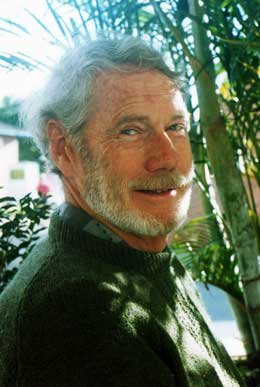
Geoff has written for publications as diverse as PC User and The Northern Star His weekly columns have been a source of humour and inspiration for tens of thousands of readers and his mailbox is always full.
Here you can find his more recent contributions.

  • Rally unwelcome in rainforest

    The residents of the upper Tweed rainforest do not collectively spend half a billion a year preserving their peace and quiet but know it will not be enhanced by burning thousands of litres of high-grade fossil fuel in worship of the machine. Unlike the Italian Futurists, they believe that immersing oneself in nature and its rhythms can enhance human existence.

    Rally Australia director, Peter Marcovich, is a Futurists through and through. After the rally’s new home was announced on September 10th 2008, he met with Tweed residents led by Greens councillor Katie Milne. He quipped at the time, that a 100 percent approval rating is difficult to achieve. When Mullumbimby residents complained that Byron Council had not even been informed about 90 high-speed racing cars snaking through the Brunswick Valley, he said the organisers would simply withdraw from the Green-leaning shire if residents felt that way.

    This week, an enthusiastic Kyogle Shire Council and enthusiasts in Tweed Shire Council hosted meetings of residents who live along the route. The letter from the councils to the residents emphasised the opportunities available to locals who wanted to train for one of the thousands of volunteer positions the rally will create. Many residents not reading between the lines and not familiar with scale of the international circus of camp followers trailing in the wake of Fédération Internationale de l’Automobile, thought it was a picnic day for a car club.

    It is, but now that they understand that 90 high speed racing cars will have exclusive use of the roads for a week, the reality is beginning to sink in. The news that all road repairs and improvements on the route will be subject to contractual arrangements with the FIA until 2017 has caused a few mouths to drop and suddenly, the hundreds of thousands of dollars to be pumped into the local economy over the next 12 years is beginning to look like small change.

    Given that the environmental policy of the organisers is to avoid areas of high biodiversity and to minimise waste and potential pollution, Hanging Rock residents think that organisers should simply go elsewhere or plan a bicycle rally instead.

    If you, Dear Reader, are tempted to dismiss this as an environmental wet-blanket spoiling somebody’s red-blooded fun, you might want to review the history of the fox hunt, or bear baiting as public entertainment. Regulators have to walk a fine line between providing what people think they want, and maintaining the thin veneer that is civilisation. Tearing up the bush to demonstrate the power of the machine will be remembered historically as a prime example of twentieth century excess. We need not invite it into our homes.
  • Don’t fool with the rules of the pool

    More lanes for locals will be available in the swimming pools of the Tweed this week as banana benders head back across the border to swim in their own back yard. They have been down here, using up our water, because the Gold Coast Council closed 23 pools last month as a result of stray electrical currents.

    As everyone knows, electricity and water do not mix, well they do mix, but not safely. The discovery that a number of pools exhibited quite strong electrical currents had council safety officers scratching their heads, caluthumpians convinced that aliens had finally arrived, pool managers tearing out their hair, and swimming clubs renting lanes from local high schools, gymnasiums and people with very big back yards. The scare is now officially over. Gold Coast Council will bring the pools back on line over the week (weather permitting) as the repairs to deteriorating electrics that affect all pools eventually are tested and approved. Conspiracy theorists know this is a cover up proving that aliens have taken over Ron Clarke’s mind.

    The municipal pool has been iconic since the Melbourne Olympics in 1956. That spectacular event kick-started a national campaign to get a pool in every community. Some communities, like Mullumbimby on the Brunswick River, raised the money themselves, selling scones and doileys to each other, with local men digging the hole. The Mullumbimby men did it twice, digging up the original pool to go Olympic for local legend Petria Thomas.

    Against this background, Mur’bah celebrated the return of the local pool, now officially known as TRAC(IM). “’Owju find Wayne, Darleen?” “Oi tracked ‘im down at TRAC(IM).” The Tweed River Aquatic Centre (In Murwillumbah) features the standard Olympic Pool, toddler pool, hill slide and that’s all outside. Inside, there is a 25m pool, diving pool, hydrotherapy pool and learn to swim pool. That’s really more pools than you can poke a stick at, and the Mullumbimby men have given up keeping up. If we dug that many holes in Mullumbimby the place would look like a Swiss cheese, or Darwin after Baz Luhrman.

    Amidst the crowds of swimmers enjoying a free gawp at the TRACIM celebrations, there were a few cautionary notes. Some families balked at the $14 family ticket, which is cheaper than buying four tickets at $4.50 but more expensive than getting every one to take turns lying in the bath. Others had a little grumble at the length of the lines at the water slide, but the ticket prices will soon take care of that. In fact you could say that one problem will solve the other.

    The deepest fears come from those with bitter experience. A number of parents in the tragic position of having buried a child are concerned about the lack of safety fences around the toddler pool. Ironically, in the same issue of the Tweed Daily News that celebrated the pool opening another story ran under the heading, Third child drowns in horror week. Safety fences are a legal requirement to prevent tragedies, which often happen in neighbour’s pools. No-one, least of all me, Dear Reader, likes over regulation but most suburban pools do have fences around the toddler zone. It allows a parent with more than one child, or a less able grandparent, to glance at a magazine once every fifteen minutes and let the child off the leash for five minutes every hour. For the sake of those people, I encourage our councillors and pool managers to fence the toddlers in. Besides, it’s so much fun taunting them with ice-creams from outside the fence.


  • Greens and farmers unite against trees

    The Summerland Highway between Lismore and Grafton wends its way through plantations of pinus radiata and eucalyptus maculata, grandis and pilularis. These plantations have been predominantly owned and managed by State Forests but recently, a number of government incentives have made planting trees on private land commercially attractive. The latest is a tax break offered to plantation owners based on the carbon sequestered in the trees they grow.

    Last week, the Nationals and the Greens moved in the Senate to overturn the tax rort that will see hundreds of thousands of acres on the northern rivers taken out of agricultural use and converted into tree farms. The scheme was originally proposed as a way to reforest marginal country that was denuded of red gums a century or more ago. A range of amendments have made it more attractive for large companies, especially heavy polluters, to buy fertile land and plant fast growing trees.

    The Nationals are fighting on behalf of both graziers and irrigators who see valuable land and water being commandeered for trees. The Greens are also concerned that the whole scheme is a smoke screen to allow coal mines and aluminium smelters to continue polluting on the basis that the trees will clean up after them.

    The ironies of the Greens voting against tree planting and the Greens and the Nationals voting together was not lost on the Liberal and Labor parties who joined forces to protect the commercial interests of the miners, energy companies and their financiers.

    The Greens and the Nationals are finding they have significant common ground. Despite wide differences over social policy, both parties have strong grass roots and represent constituencies concerned about the long term future of the land and community and suspicious of the international financial sector that seems to have run the Lib Lab agenda for the last two decades.

    Last week, Nationals and Greens joined forces to protest at the closure of the Tweed Heads hospital. Similar scenes were played out across the state as parliamentary representatives from both parties stood with their constituents to defend community projects against the cuts of a state government in its death throes.

    Every time the Labor and Liberal parties join forces to protect the big end of town from the common people, they drive the Nationals and the Greens closer together. The long term implications for Australian politics may be enormous.

  • Commonsense Human Values – #20

    Commonsense Human Values – #20

    Laurie Stubbs -  Commonsense Human Values
    Laurie Stubbs – Commonsense Human Values

    A series by Laurie Stubbs – first published in the Nimbin Good Times

    The series sets out a trial set of values based on the principle Life Develops Itself (LDI)

    Take anything you want from the Earth and use it, but when you have finished with it return it to the Earth in the same form as when you took it.

    Natural breakdown and change of all things on Earth happens on a rational and predictable base. Interference by humanity upsets rationality, produces massive problems. To fail at recycling robs Earth of what it needs to continue to sustain life. Here again the LDI principle is directly involved.

    Industrial and mining wastes must be fully recycled. Minerals will always be taken from the earth’s crust, but the earth must be restored to the function level that applied before the mining. Equally, the junk which most of these minerals become must be recycled as resources for repeat products — not merely buried or put out of sight. For example, nuclear wastes are a huge potential for damage temporarily locked away in one form or another. Humanity has so far baulked at the cost of reprocessing but allows an unrealistic profit to be taken today.

    Taking materials from the earth in future carries an obligation to reprocess whatever wastes are involved and return them safely to the earth. Action is — in the long run — agreed to (or allowed) and therefore is done by the people as a whole whether the immediate actor is Governments or corporations.

    We must review collectively what is done in our name.

    Do whatever you like on the Earth as long as it does not change the systems that make the Earth our home, nor deprive a species of its livelihood.

    This is an extension of the value above Take anything you want from the Earth and use it, — but includes a wider framework so as to maintain earth systems, and existing species. The current example is global warming, and its effect on weather change. In turn, weather change could be catastrophic.

    Take any living thing for food, but acknowledge your debt to it, and do enough work to replace it.

    All living things ‘work for a living’. Ant and termite colonies function to allow the breakdown of materials into a form plants can use. Bacteria, insects fish, reptiles, mammals and all the rest have interrelated functions in a marvellously complex chain of action that works to allows all to survive as species. Complexity and diversity is part of the way life develops itself. But humanity has the choice to decide whether a particular person may work.

    Though the meaning of “work” changes when we look at mankind, it is still input to a complex exchange between humans and the environment. But some humans do not work, and so are denied the self respect and status which comes from the western idea of work. If such a person were to create a vegetable garden and grow what they eat, they would have stepped outside the conventional wisdom, would have “worked” within the work notion of this value.

    The work of growing is a process of understanding a personal relatedness to the earth and all its species. That relatedness is the essence of the work idea contained in this value. One life form preys on another throughout the gamut of species. Today’s human numbers don’t accept that foodstocks have a life. An element of human balance has thus been lost.

    Accepting the contribution of other living things to our lives recognises our dependence on other species and the planet’s interlocking systems. All living things contribute in one way or another to the lives of all the rest.

    Resources are conserved; used carefully without wastefulness or selfishness.

    Natural use of and changes of materials from one form to another sets the standard. Humankind must conform to this natural law.

    Human wastes are returned safely to the soil.

    What comes from the earth must go back to the earth. All natural life forms do it. Man is no exception.

    Regard the Earth as held in trust by you for your descendants.

    It is axiomatic the LDI principle insists on preserving the earth in good shape. That it can be preserved is shown by Australian Aboriginal experience. As a value it is in direct contrast to the conventional Western resources to rubbish paradigm; many of the worlds problems have origins which flow from that outlook.

    Next article looks at the second group.

  • Tweed councillors change tack not direction

    Tweed Mayor Madam Lashout has not gone Green, despite rumblings to that effect from Youngblood and the Poltergeist. The decision last week to disengage from the race to the bottom and put quality above quantity at Hastings Point makes commercial as well as environmental sense. As Lashout herself put it, “Byron Bay is hyper-expensive because it is not over-developed.”

    The people of Hastings Point are celebrating the victory of Green over Greed not because of any ideology, but because they love their corner of paradise and do not want to see it trashed for cash. You only need to visit the richest suburbs of any capital city in Australia to find that the community values espoused by the Greens are exactly the way that the rich choose to live. The mansions along the Yarra in Melbourne’s Heidelberg or in Sydney’s St Ives have no fences, the villages on the peninsula in Sydney’s Pittwater have no supermarkets or traffic lights and richest regional towns sell organic food and local, hand-made produce.

    Developers seeking short term profit forget the basic equation of commerce; if you compete on price, the only way forward is down. Eventually, margins are squeezed as competitors exercise the one differentiator available. This truism is masked when a commodity, such as beach front property, is highly sought after and in limited supply but it remains fundamentally true.

    You only need one hiccup in the market – such as a credit squeeze, rising sea levels or limited water supply – and the whole house of cards collapses. Wealthy developers only want to build ticky tacky little boxes on other people’s land, when it comes to their own backyards they are conservationistes extraordinaire.

    If there is any lesson to be learned from the collapse of the vast Ponzi scheme that we once called global capitalism it is that greed is not good, and fundamental values matter. Warren Buffet is once again the richest man in the world precisely because his investment strategy is to give long term-backing to well run companies with a unique advantage.

    All this begs the question of fairness and equity. When the wealthy call the shots they tell the ordinary folk that the rules have been established for the common good. Work hard, buy more, obey authority, or else. When ordinary folk attempt to regulate the excesses of the wealthy they are strung up as radicals, trouble makers and ne’er-do-wells. Yet it is obvious to any observer of the rich and famous that they live by different rules than they foist on everyone else. They buy their way out of trouble, receive huge handouts of taxpayers money and leave the toxic byproducts of their excess for someone else to clean up.

    Tweed Shire Council has seen the writing on the wall in terms of developing for long term gain, but it is a long way from learning this fundamental lesson. Denying the public reduced parking fines and the opportunity to comment on Bay Street alienates not only the quarter of the population that votes Green, but also traditional party supporters who hope their representatives will one day come to their senses.

    No-one will thank them for refusing to accept climate change as the rising sea eats into real-estate values and the real estate itself. By saving Hastings Point but refusing to give teeth to the regulations governing rogue developers, six out of seven councillors have identified themselves as opportunists.

    They will face the consequences in four years.

  • Old school cares about the future, too

    “One more thing,” the finger could have sent me to purgatory, I’m sure.

    “You moved the teenagers into the shed because of the noise, so please don’t blame my paying guests.”

    I skulked inside to ponder the dangers of placing real neighbours in newspaper columns when the phone rang. An hour later I freed my steamy ear, doubly chastened and with renewed respect for one Max Boyd, councillor for 44 years and president, mayor or administrator for 21.

    He and I had crossed swords during the protests against the Oxley River dam. At the time, he used the term “idealistic” in reference to plans to capture water domestically and use water more efficiently instead of building more dams. Last week, I portrayed him as an old-school dam-builder, an advocate of big engineering and a proponent of pipelines.

    Max was prepared to let this go as hot-headed ranting – he has seen a lot of that over forty four years in public office – but then Angela from Eungella publicly thanked me for exposing the real Max.

    Now, Dear Reader, I must set the record straight. For years, Max advocated domestic rainwater tanks, local storage and environmentally integrated dams as reserves for hard times. His knowledge of the history of the water supply of the Tweed Valley is detailed, deep and crystal clear. It is also impossible to summarise here.

    He believes that the greatest damage done to a sustainable water supply was the sixties doctrine that outlawed suburban water tanks and still insists that we drink only treated water, approved by government authorities.

    Max proposes that we limit population to that which we can guarantee a water supply in the worst drought years. It reminds me of Tim Flannery’s proposition that a sustainable population for Australia is around two million people.

    And there’s the rub.

    Just as it is a bit hard to tell eighteen million people that they are surplus to national requirements, so it is tough on the people of Pottsville or Kingscliffe to say, sorry mate, there is simply not enough water here. Load your house onto your back and move to a nearby river.

    Max does think that it is idealism to propose that we all live organically and drink rainwater not because he opposes the ideal, but because he knows we have to deal with the real.

    I put it to him that the current global financial crisis is evidence that at some point we have to take the hard decisions, and that it is the job of governments to make those decisions before the sticky brown stuff hits the fan. “I agree with your sentiments,” he said, “but they do involve a fair degree of idealism.”

    I accept that Max, and I take my hat off to you for walking the line between pragmatism and your desire for the best possible world for the forty years you have contributed to public life in this area.

    Most of all, I apologise for painting you as Genghis Khan when you clearly channel the spirit of his grandson Kubla.

    Giovanni Ebono is founder of The Ebono Institute. www.ebono.org