A submission to the Parliamentary Enquiry into the funding of fossil fuel exports shows that one trillion dollars, or 37% of Australian’s superannuation funds, is managed by members of the Responsible Investment Association of Australia, the RIAA, and so is unavailable for investment in fossil fuels, logging and other environmentally harmful activities. The RIAA submission says that 2 out of 3 Australians do not want their investments being used for environmental harm.
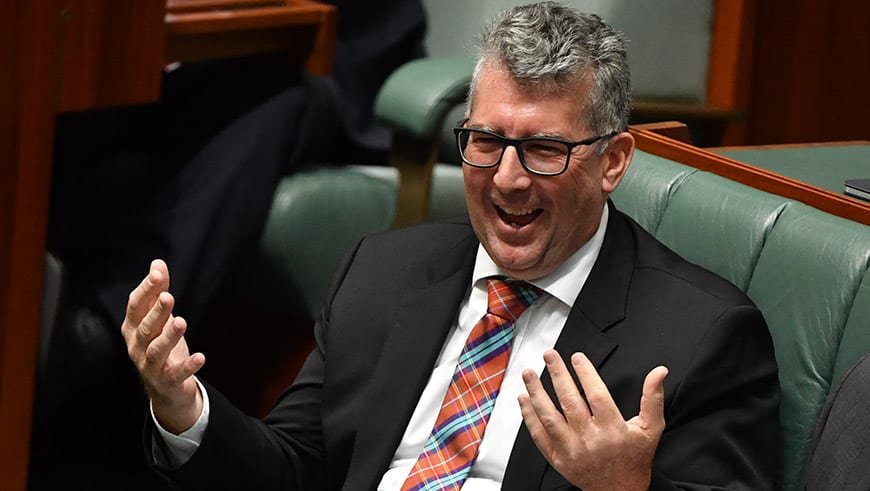
Keith Pitt representing the people of Rockhampton in the Australian Parliament
“It is of great concern to me that a legitimate industry like coal mining, which makes a significant contribution to the national economy and employs thousands of Australians, is being held back by what can only be described as corporate activism.”
Resources Minister Keith Pitt
Last week, Minister Pitt addressed the Australian Petroleum Production and Exploration Association conference in Perth last Wednesday to attack activist groups such as Greepeace. He urged petroleum companies to make submissions to the inquiry to prevent activism that “ignores the fact that resources development in Australia is carried out safely and responsibly and that Australia’s economy was built off the back of the resources sector”.
The terms of the inquiry are to inquire into:
The domestic and foreign investment opportunities and challenges for Australia’s export industries and their associated businesses, arising from changes in prudential standards and practices across banking, insurance and superannuation institutions, in addition to publicly-listed companies, with particular reference to:
The existing and future contribution of Australia’s export industries;
The investment guidance and advice provided by Australia’s financial regulators, including the Australian Prudential Regulation Authority (APRA), the Reserve Bank of Australia (RBA) and the Australian Securities and Investments Commission (ASIC), to banking, insurance and superannuation institutions, and also to publicly-listed companies, in relation to investment in Australia’s export industries;
The approach and motivations of our financial institutions, including banks, insurers and superannuation funds, as well as publicly-listed companies, to their investment in Australia’s export industries;
The consequential impacts of (2) and (3): a) For legitimate. law-abiding businesses connected to Australia’s export industries; b) On regional and rural economies that are reliant on Australia’s export industries. particularly in light of the COVID-19 recession; c) Our national economy. particularly in light of the COVID-19 recession;
The Generator’s Geoff Ebbs puts Professor Ross Garnaut in the Cage to discuss his new book RESET. A blueprint for a green, socially just future for Australia.
Professor Garnaut, outlines the technology solutions he highlighted in his previous book Superpower, noting that the government’s current technology roadmap largely follows his lead. He discusses the value of clean hyrdrogen in building a clean manufacturing and export business.
In the second part of the interview Geoff and Ross discuss his economic measures to ensure that future growth is socially just. The Australian Income Security and the tax on wealth rather than income.
In this segment, the third part of the interview, Geoff asks Professor Garnaut about the differences between Green Growth and deGrowth, the reality of decoupling economic growth from environmental impact and whether we are creating a scientific dystopia in which wilderness is a theme park.
The insults hurled by David Leyonhjelm at Sarah Hanson-Young recently put parliamentary discourse in the gutter. Leyonhjelm was roundly condemned, but not by our leaders. A limp slap across the knuckles from Turnbull and Shorten, then on to more pressing matters, hoping it will all go away.
But not so fast; in governance parlance “the fish rots from the head”. Our leaders need to acknowledge the amoral, unethical parliamentary morass they have created, and its implications.
Ian Dunlop was formerly an international oil, gas and coal industry executive, chair of the Australian Coal Association and CEO of the Australian Institute of Company Directors. He is a Fellow of the Centre for Policy Development, a Director of Australia21 and a Member of the Club of Rome.
Australian society today is not a pretty sight. Despite the hype around Australian “values”, years of neoliberal policy have seen money corrupt everything. The Banking Royal Commission, long resisted by the incumbency, is exposing not just a few bad apples but an industry rotten to the core from excessive remuneration, greed which is certainly not restricted to the finance sector. In sport, winning is everything, whatever the cost, but it long ceased to be sport in any true sense. Violence against women and minorities escalates, egged on by the Leyonhjelms of this world. Population pressure sees tolerance disappear. Inequality increases in leaps and bounds, exacerbated by mythical “trickle-down” economics. Drug and alcohol abuse is widespread. Terrorism threats and migration justify massive over-reaction in restricting individual liberties. Crass commercial media and shock jocks incite vindictive extremism. Continuing scandals suggest that few people in positions of public trust have any idea of the moral and ethical responsibilities which go with those roles.
Above it all sits a national parliament incapable of sane discussion on anything. Screamed abuse replaces reasoned debate, any sense of civility long gone. Little wonder societal standards decline when “leaders” set such an appalling example. But there are far more fundamental implications.
Concepts of left and right in politics long since became irrelevant to solving the critical issues facing Australia. The imperative is that those issues do actually get addressed, which is patently not happening.
The first priority of government, we are told, is to ensure the security of the people. In theory, we elect politicians to govern on our behalf to provide that security; politicians who, pre-election, profess undying commitment to public service.
What we get, with a few notable exceptions, are politicians who, once elected, focus largely on party machinations, getting re-elected or otherwise feathering their nest. Much sound and fury around minor issues, whilst the critical ones are ignored. It was not always thus; historically in politics and business there were statesmen and women prepared to set aside their personal interests in favour of the common good, but they are long gone since money came to dominate. Good people are elected to parliament, but their good qualities are rapidly subsumed by party politics.
Behind it all, the creeping cancer of the neoliberal agenda dominates the current government. Driven by right wing apparatchiks in the Institute of Public Affairs, the Minerals Council of Australia, the Business Council of Australia, the Murdoch press and elsewhere, every opportunity is taken to push deregulation, reduce the size of government, emasculate and politicise the public service making it subservient to ideologically-blinkered political advisers, with no regard for the “common good”. Power is concentrated in a few wealthy hands in the interests of “conservatism”, shorthand for maintaining the status quo for the benefit of existing elites. So dissent must be suppressed, activist groups muzzled, the ABC silenced, academic freedom undermined, public debate dumbed down and the public treated as fools. Few are even aware it is happening, except when the occasional stuff-up occurs as with Tony Abbott spilling the beans on the real intentions of the Ramsay project for the promotion of Western Civilisation [1]. This is where facism begins; the cancer must be stopped if we want a prosperous, sustainable and fair society [2].
In this, Australia is following the US, where the process is far more advanced. The insidious efforts of right wing billionaires such as the Koch brothers, to seize the levers of power has been going on for decades, the inevitable outcome flagged by Lord Acton long ago: “Remember, where you have a concentration of power in a few hands, all too frequently men with the mentality of gangsters get control. History has proven that. All power corrupts; absolute power corrupts absolutely”
The deterioration of US society, with increasing inequality, violence, crumbling infrastructure and much more has, to a significant extent been brought about by this venality. US and Australian neoliberals are inextricably linked in moving this agenda forward.
Except that the status quo can no longer be maintained, as neoliberalism has long since sown the seeds of its own destruction. The inevitable result of decades of exponential growth in both population and consumption is that we are now hitting the limits of the global biosphere, which cannot be circumvented. This is manifest in multiple ways, inter alia: increasing water stress, massive biodiversity loss, decreasing productivity of agricultural land, escalating social conflict over declining resources and associated migration. To the point that the economic growth model under which our economies operate is no longer sustainable, despite desperate efforts to keep it afloat with massive financial interventions such as “quantitative easing”.
Overshadowing it all is human-induced climate change.
Its risks are intensifying and the physical impact worsening, with global climate-related losses running at record levels [3]. Despite 30 years of political and corporate rhetoric, nothing has been done to seriously address it, notwithstanding increasingly urgent warnings [4][5].
The result is that climate change is now an immediate existential risk to humanity. That is, a risk posing large negative consequences which will be irreversible, resulting inter alia in major reductions in global and national population, species extinction, disruption of economies and social chaos, unless carbon emissions are rapidly reduced. The risk is immediate in that it is being locked in today by our insistence on expanding the use of fossil fuels when the carbon budget to stay below sensible temperature limits is already exhausted.
To prevent temperatures rising above the upper 20C limit of the 2015 Paris Climate Agreement, it is no longer possible to follow a gradual transition path. We have left it too late; emergency action, akin to wartime regulation, is inevitable. Market-based measures alone are insufficient [6][7].
Those still sceptical of this reality only have to look at the Northern Hemisphere now, particularly the Arctic [8], Asia [9][10][11]and the US [12], as extreme temperatures trigger positive feedback loops, creating global climate conditions which make normal life impossible .
Neoliberals in the US and Australian fossil fuel industries long ago saw climate change as the greatest threat to the stranglehold on power from which they have benefited for so long. Accordingly billions of dollars have been devoted to discrediting climate science, raising doubts about its authenticity through every possible means, with much US money flowing in to support Australian campaigns. A process which has been remarkably successful, albeit nothing less than a crime against humanity.
But even the Koch brothers, the IPA and the MCA cannot change the laws of physics. The climate science has been rock-solid for decades and the cost of neoliberal disinformation is now coming home to roost. Unfortunately that cost is being borne by the poor who can least afford it, and groups like Australian farmers, rather than the elites who created it.
As Churchill put it: “Want of foresight, unwillingness to act when action would be simple and effective, lack of clear thinking, confusion of counsel until the emergency comes, until self-preservation strikes its jarring gong—these are the features which constitute the endless repetition of history”
Which places Australia in an extremely dangerous position. We are one of the countries most exposed to the impacts of climate change, particularly our agricultural sector. Yet our dysfunctional parliament has left the country totally unprepared for what is to come.
The crux of the problem is that our government is in total climate change denial. Climate and energy policy is a shambles, the result of endless contortions trying to reconcile the irreconcilable. Namely expanding our fossil-fuel based economy, particularly coal, whilst pretending to meet our wholly inadequate voluntary commitments under the Paris Agreement. An Agreement which the government is doing its damndest to undermine, despite having ratified it in 2016.
Policy is dictated by scientifically and economically illiterate right wing hard-coalers, such as Messrs Canavan, Abbott, McCormack, Kelly and Abetz who cannot understand that reliable, dispatchable and lower-cost power is now available from renewable energy sources far more effectively and cheaply than from coal. Even when coal continues to be massively subsidised, far more than renewables, by the lack of a sensible carbon price to account for its externalities, namely the enormous damage done by the health and climate impacts of coal use, which have been ignored since the Industrial Revolution. None of which matters if you are in climate denial.
They stamp their feet like petulant schoolboys whose favourite coal toy is being taken away. They lie and dissemble, misrepresenting and cherry-picking sound technical reports, twisting them to achieve their preferred pro-coal outcomes, irrespective of the severe implications for the wider Australian community, egged on by the serried ranks of the neoliberal cheer squad.
Just because we have large coal resources does not give us the right to use them if the result is an existential threat to humanity. Commodities come and go; coal is no different. Coal has created great wealth, but it’s time has passed as its climate impact, along with that of other fossil fuels, is now destroying the societies it helped create. The development of Galilee Basin coal, along with CSG in NSW and Queensland, and shale gas in the NT and WA, would be suicidal in current circumstances.
As Sheikh Yamani put it in the oil context: “The Stone Age did not end for lack of stone, and the Oil Age will end long before the world runs out of oil”
Australia was built upon the innovative application of science. That is also its future, which the government is destroying with third-rate, anti-science policy such as the National Energy Guarantee. The certainty for energy investment which business and politicians crave will be non-existent until action on climate change is accepted as the absolute priority in determining energy policy. The solutions are available and blindingly obvious, including a realistic price on carbon and bans on any further fossil fuel expansion.
We have many opportunities to invest in low-carbon alternatives for both domestic and export use which provide far greater potential than traditional commodities such as coal. Particularly in providing distributed energy across the rural community. This is where our aspirations must lie, not in massive investment in propping up coal-fired power stations or investing in new ones. The cost to Australia as these investments inevitably become stranded assets, will be enormous, along with physical damage to the country from their climate impact. Rather than holding back renewable energy development, which is clearly the objective of current policy, we should be accelerating it to the maximum extent possible along with dramatic improvements to energy efficiency and conservation.
Neoliberal climate denialists insist that Australia’s domestic carbon emissions, 1.3% of the global total, are such as small amount that nothing we do will have any effect in addresssing climate change globally. That is nonsense; if exports are included, which they must be given the rapidly accelerating climate impact, Australia is already the sixth largest carbon polluter globally and will soon be fourth given the ramping up of our LNG exports. In short, we are a very big emissions player. What Australia does mattters.
The pretence that the government is serious about addressing climate change becomes ever more ludicrous. The most recent example is the $500 million allocated in a futile attempt to repair climate damage to the Great Barrier Reef, via the Great Barrier Reef Foundation [13], whilst simultaneously advocating the opening up of massive new coal mines in the Galilee Basin which would compound that damage, totally decimating the reef, along with tourism and other industries far more valuable than coal.
Likewise the announcement from Minister for Agriculture , David Littleproud, about an agreement with state ministers to help farmers adapt to climate change [14]. Why was this needed? Because the climate is changing. What are we doing to stop it? Nothing, just attempting to adapt whilst making the problem far worse by building new coal-fired power stations and mines. Just how long can this cognitive dissonance continue?
The Prime Minister proclaimed in 2010 that: “Our efforts to deal with climate change have been betrayed by a lack of leadership, a political cowardice, the like of which I have never seen — “. He promised never to lead a political party that did not take climate change seriously. He now revels in doing exactly that, placing the future of generations of Australians in jeopardy. An abject failure of principled leadership.
The Opposition are little better, continually sitting on the fence denying the urgency for climate action, and ambivalent toward new coal development such as Adani. Equally lacking in leadership and principle.
Many parliamentarians are climate deniers, but that does not absolve them of the fiduciary responsibility to set aside their personal prejudices and to act in the public interest with integrity, fairness and accountability. This requires them to understand the latest climate science; it is not acceptable for those in positions of public trust to dismiss scientific warnings in the cavalier manner which has typified the last few years. Particularly when the risk is existential.
Ministers in particular do not seem to understand that they have that fiduciary responsibility, along with the related public duty and a public trust.
“A fiduciary is a person to whom power is entrusted for the benefit of another. ——- Power is reposed in members of Parliament by the public for exercise in the interests of the public and not primarily for the interests of members or the parties to which they belong. The cry ‘whatever it takes’ is not consistent with the performance of fiduciary duty ———- All decisions and exercises of power should be taken in the interests of the public, and that duty cannot be subordinated to, or qualified by, the interests of the (parliamentarian or Minister)”
Effective action on climate change must be raised above political infighting if the government’s first responsibility to ensure the security of the Australian people is to have meaning. But nowhere in the political spectrum is there evidence of leadership that might step up to the challenge.
In the corporate sector, the widespread abuse of power, declining ethical standards and falling community trust in business is calling into question corporations’ “social licence to operate”, and their right to enjoy the privilege of limited liability, which has been the cornerstone of business since the early 1800s [16], on the grounds that it should be a privilege to be earned, not an inalienable right.
Trust “is a belief that a person or institution will perform their role or function in accordance with its obligations, or where not bound by duty, in a predictable manner”
Beyond trust is legitimacy “ a recognised and well-founded right to claim a certain status, role or function.” [17]
Our parliament must be held to higher standards than the corporate world. But community trust in parliamentarians is non-existent. Further, a parliament that is incapable of firstly, understanding, secondly, addressing and thirdly, is deliberately worsening, the critical issues which Australia faces, particularly climate change, has forfeited any legitimacy. It has no right to continue in its present form.
When the risks are existential, it is not acceptable to allow parliamentary renewal to await the next election and the likely continuation of dysfunctional government. The parliament is on Winter Break; it should not reconvene. The Governor General should disband it and consider alternative national governance arrangements.
Different forms of democratic structure are being canvassed widely, recognising the profound weaknesses of the current system [18][19]. This expertise should be used to create something akin to a wartime Government of National Unity, with leaders of foresight and integrity.
Because the brutal reality is that climate risk now has to be handled as an emergency. Either we act, or we face a bleak future. Parliament must work for the people, not destroy them.
Ian Dunlop was formerly an international oil, gas and coal industry executive, chair of the Australian Coal Association and CEO of the Australian Institute of Company Directors. He is a Fellow of the Centre for Policy Development, a Director of Australia21 and a Member of the Club of Rome.
References
1] “Academic Independence Threatened by US-Style Philanthropy”, Mike Seccombe, Saturday Paper. 30th June 2018:
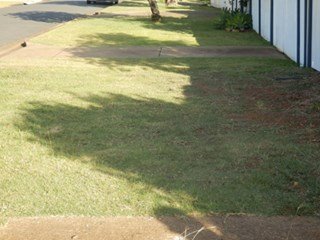
The evil of grass: fossil fuel and water intensive, worse still: inedible!
On occasion conservationists are portrayed as party poopers. Green wowsers, in contrast to the wee green people who epitomise a party wherever they appear; lepers rather than leprechauns, perhaps.
The occasions vary. The Howard government felt we spoiled their fun locking refugees in cages in the desert. Woodchipping and land clearing companies feel we spoil their fun trashing a major national asset. That’s rules for you. Every time the police breathalyse someone at 0.15%, POOF, another party’s over – replaced by an instant hangover.
Of course, one person’s party is another’s riot. The music that soothes my teenage daughters disturbs the paying guests of the Catholic retreat next door. The sound of lawn mowers may be music to someone’s ears, to mine it is the mad clatter of petrol addicts fighting nature with all the sanity of an acid-freak battling lizards in the bath.
You, I suspect, do not consider graffiti to be art. Personally, I think graffiti is mostly silly and occasionally wonderful, but I am equally offended by bad and boring architecture.
I am never as offended by visual pollution as I am by noise. You can look the other way or close your eyes, but your ears are always open.
Given my distaste for the timbre of the two stroke engine, it will not surprise you, Dear Reader, that I do not like leaf blowers.
I believe that creating order gently through the humble act of sweeping is meditation. I revel in my efficiency with the yard broom and the crisp swish of bristles relaxes me as does a babbling brook.
By comparison, donning the earmuffs and eyeglasses to wave the noisy, smelly beast that blows is like smashing through the window of the florist in your four wheel drive to buy a bunch of long stemmed roses.
Apparently, I am not the only weirdo to feel this way. 20 cities in California have banned them outright. Celebrity gardeners argue on television for their right to peace and quiet, or the freedom to blow leaves as they see fit.
While I have restrained myself from crash-tackling the local newsagent at 6.30 in the morning, I do discourage our elected representatives from spending rate monies on energy intensive machines that can be replaced with a little, old-fashioned elbow grease.
The Cage is on 4ZZZ FM, 102.1FM Wednesdays between 12 and 2am.
London is an island in the British Isles, celebrating Brexit with gin, tonic and champagne, while Scotland and Ireland plan to Leave the United Kingdon to Remain in Europe. The working class that feed London are in revolt.
Others have predicted (a decade ago) the fall of the nation-state and the rise of the city state to replace it. City states are easier to defend than nations and they breed innovation and nurture trade.
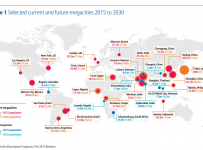
Magacities will shape the economy of the 21st Century
The world’s mega cities have economies larger than most nations and are the hubs of commerce that fuel the globalisation that disenfranchises the working and middle classes that support Western democracy.
In these megacities, life is cheap, slavery is rife and global commerce is not always top of everyone’s mind.
To survive, these cities must maintain their food, water and energy supplies and sufficient infrastructure to remain connected to their sources of revenue.
Theory has it that these Cities will battle directly with the mercenary armies of global corporations to demarcate the ungoverned spaces between them.
BrExit brings this future one step closer to realisation.
I repeat: London is an island in a hostile United Kingdom. Scotland and Wales will vote to Leave the UK so they can Remain in the EU.
By the time that is untangled Wales will join a plethora of other subnations that enjoy ersatz independence until a new overlord decides they are worth incorporating and taxing.
In this, Crimea is two steps ahead. Russia will not hesitate to reincorporate the near, loose pieces as Europe falls apart.
China will continue its imperial project in Africa and the securing of its new silk road(s). It will bring the US to its knees financially with a gold backed currency and its trillions of dollars in US bonds.
Thus the nation state may collapse, but the Imperial project is not dead. The major change as a result of BrExit is that the corporations of the West will be forced to recentre themselves in Asia and South America as the military ambitions of the US implode with its southern border. This means lots of failed states or independent states in previously fairly orderly Western enclaves: The Caribbean, the Mediterranean, the Pacific.
While the realities of this power shift sink in for the West, huge opportunities exist in South America and South East Asia. Neither are directly in the path of clashing empires and are largely sheltered from the fall out across the North Atlantic.
South America is poised for greatness but is crippled by internal chaos (largely due to US interference).
India has no choice but to lock in the coastal connections to its West and expand its trade with South East Asia. South East Asia still reels from a century of geopolitical chess (largely due to US interference) and has a major opportunity to bounce back. Indonesia is the third most populous nation in the world and remains vigorously expansionary.
We must re-read and reappraise the work of Sayyid Qutb to understand the impact of Islamism on these events. We must also understand the realities of Peak Oil and Climate Change.
We are heading for the rapids and it pays to understand the rivers that feed this cataract.
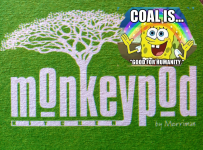
There is a room at the Parliament House where disaffected ex-ministers meet. Other Parliamentarians refer to it as the Monkey Pod. Chief monkey was once famous for three word slogans. It was thought quite impressive that a monkey could string three words together convincingly enough to cause humans to repeat and discuss them as a meaningful phrase.
Westender can reveal, however, that the ape did not invent the phrases on its own. Humans were employed to invent them and teach them to him. Yes, that’s right, Moulah changed hands.
Of course, the monkey did not pay the money. Money is poured into the monkey pod – not generated there. The money was paid by vested interests for global use and the monkey was just trained to use the important lines. The fossil fools are those who are bought, not those who do the buying.
“Coal is good for humanity” was developed by Burston Marstellar for a global campaign by Peabody Energy, the world’s largest privately held company. It was such an important campaign that they decided to use five words. Not only that, but there are a flotilla of other phrases: energy poverty, little black rock, amazing things, watch what coal can do for you. Murston Marstellar used the same techniques for decades on the payroll of big tobacco.
Even after the world wildlife fund successfully took Peabody to court in the UK for misrepresenting the facts, those phrases are still being used. “This little black rock can do amazing things” is still being promoted across social media as I write. The moulah is still being spent even though the monkey is rattling the bars of a much smaller cage.
It was something of a slap in the face then, for Westender to be offered a tiny amount of money to run a piece of PR fluff on the civil contribution of the fracking industry. At a word rate we are talking here around thirty cents a word. While competition from out of work journalists has caused word rates to drop, both owners of Westender have earned considerably more than a dollar a word at many points in their somewhat chequered careers.
Only a dozen words actually did the work, the rest was designed to carry them. Thousands of jobs; world class natural gas; exciting economic and employment boost. There was a mangled piece of logic about falling oil prices that makes no sense when you parse it.
Compared to the hundreds of thousands spent on three word slogans it is an absolute pittance. Of course, Westender was not being asked to craft the words, merely mouth them like a member of the monkey pod. And that is the greater insult.
Of course, Westender has to live. We regularly write puff pieces for local eateries, we run advertisements for local politicians, and once – without payment – we even ran a puff piece for the Australian Air Force about a local girl who was allowed into a plane.
Our reporting on coal has gone through a similar arc to the rest of the media. During the 2013 election campaign (doesn’t Gillard and the Carbon Tax seem like a century ago) we argued internally whether anti-coal campaigns were too Green or just too radical, divestment was still considered weird, an idea that students had got out of Rolling Stone and coal was generally considered reliable, even though it had not yet been found to be good for humanity.
Since then, the Greens have started winning lower house seats in rural areas with the backing of farmers, Glen Lazarus has reinvented himself as a representative of Lock the Gate, conveniently forgetting it was a coal magnate who put him into power in the first place, and the banks have walked away from Adani in the Gallilee Basin.
What has changed is the hysteria with which the fossil fuel advocates are screaming from the sidelines. Even though they are now throwing money at small independent publications to try and build grass roots support, we’re not picking it up.
In the interests of fairness and even-handed reporting we have given you the three key phrases, free of charge, in the context of the truth. Anyone who wants the original press release which we were offered a hundred bucks to publish, just ask.