Category: Water

  • How can we make urban water smart?

    How can we make urban water smart?

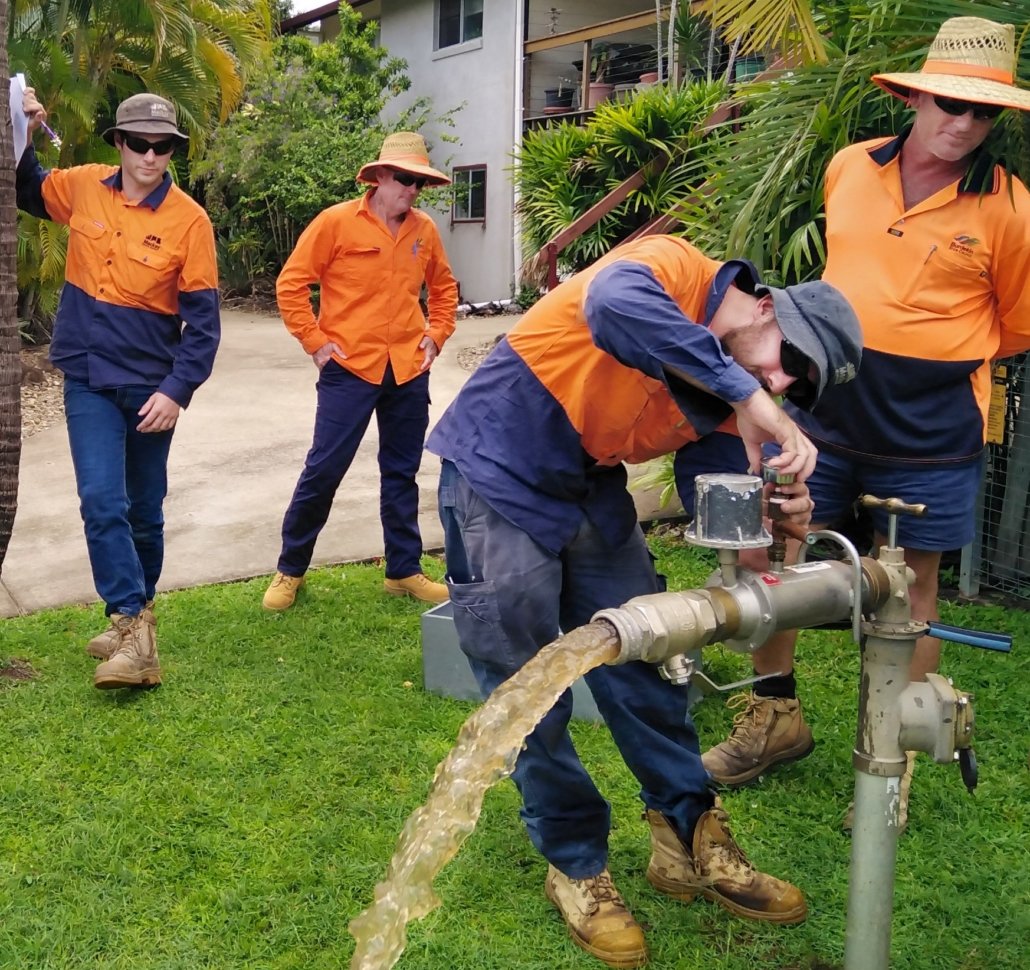
    Simmonds & Bristow trainees on the job
    Simmonds & Bristow trainees on the job

    The next in our series of episodes about water management, is a series of interviews with David Bristow, water engineer, expert witness and owner of the water services, training and engineering firm Simmonds & Bristow.

    Two weeks ago Dave Whitfield interviewed Dr Aysin Dederkofut-Howes about Smart Urban Water, this week, Geoff Ebbs interviews David Bristow about some of the challenges to realising that ambition and how we overcome them.

    The interview is in three parts:

    • the first part discusses the existing urban water system and the possibility of recycling,
    • the second part discusses current attempts to be smart about how we use water and what impact that has on our overall use and
    • the third part discusses mining the sewer for energy and nutrients.

    You can catch the entire interview by visiting the playlist.

    https://soundcloud.com/thegeneratornews/sets/david-bristow-discusses-urban-water
  • Smart Urban Water interviews

    Smart Urban Water interviews

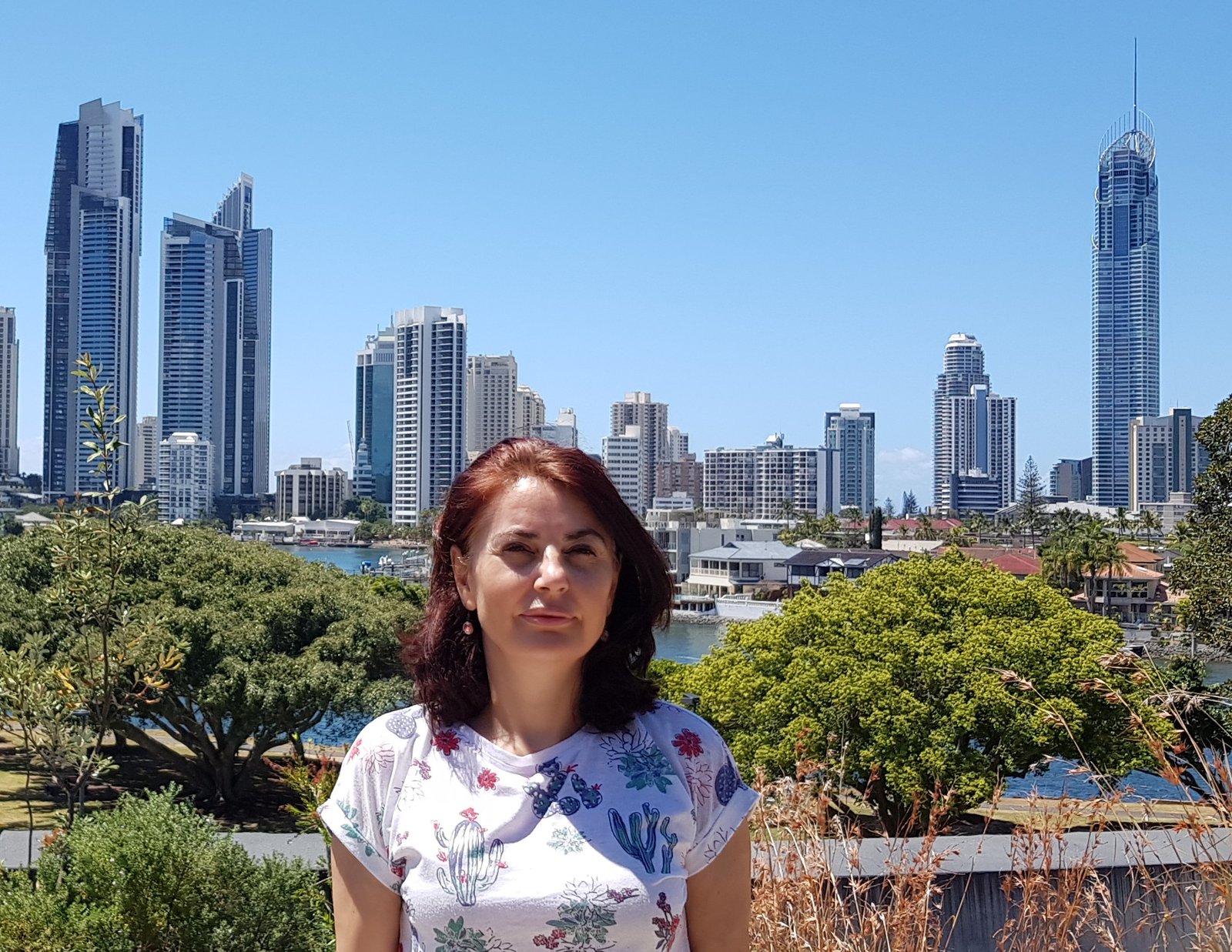
    On today’s EcoRadio, Dave Whitfield interviewed Dr Aysin Dedkorkut-Howes about her work in Urban Water Management.

    Dr Aysin Dedekorkut-Howes is a Senior Lecturer of Urban and Environmental Planning at the Griffith School of Engineering and Built Environment and a member of the Cities Research Institute.
    Her current research focuses on climate change adaptation and urban/disaster resilience, water resource management, and urbanisation in subtropical areas and coastal cities.

    https://soundcloud.com/thegeneratornews/dr-aysin-dedekorkut-howes-pt-3?in=thegeneratornews/sets/ecoradio
    The first part of the three part interview

    The other two parts and many other EcoRadio interviews are available in the playlist.

    https://soundcloud.com/thegeneratornews/sets/ecoradio
  • After the floods: the Border Rivers

    After the floods: the Border Rivers

    The Equinox flooding of the East Coast of Australia may not have broken the drought but it has filled the border rivers full to overflowing. Geoff Ebbs took a trip along the border of NSW and Queensland the week after Easter, when the rivers had settled down and most roads were passable.

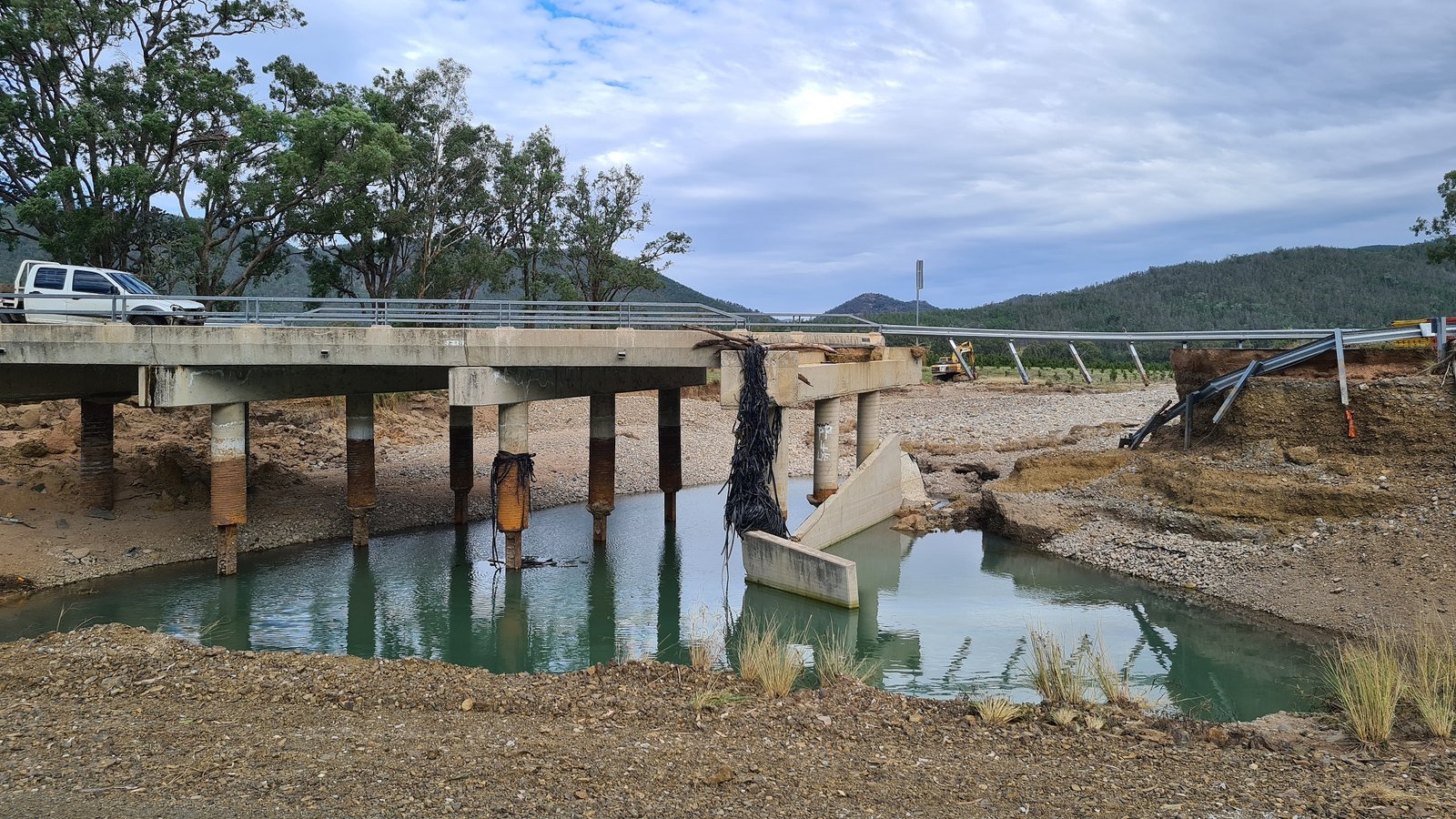
    The Bruxner is broken near Bonshaw
    The Bruxner Highway is broken near Bonshaw

    He picked up the border near Carney’s Creek on Falls Rd which follows the border Queen Mary’s Fall and then follwed it through the mountains to the Lindsay Highway where it heads around the South Eastern edge of Sundown National Park. That being rugged country, he followed the Severn River, through Stanthorpe and around the north westedn edge of Sundown National Park where it joins the Dumaresq (and the border). Both River and border flows north west to Texas and then west to Goondiwindi. That’s Texas Queensland, in case you haven’t been there.

    Along the way he crossed the Condamine a couple of times. The Condamine does not flow along the border, though it rises only a couple of kilometres from it. It runs through Killarney and then north through Warwick before heading West. They both eventually flow into the Darling, but that’s a long way West and another story.

    The border follows the ridge separating the Tweed River in NSW from Qld, then the Great Divide until it meets the Dumaresq at the junction of the Dumaresq and Severn River. The pictures above are: Falls Rd near Carney’s Creek x2. The view from Carrs Lookout at the head of the Condamine. Queen Mary’s Falls and Daggs Falls on Spring Creek, only metres from the border but the water flows into the Condamine at Killarney. Criss crossing the border through the hills South West of Killarney, then the Severn North West of Sundown National Park, The Severn at Broadwater in Sundown National Park, The Dumaresq where it meets the Severn and picks up the border, the Dumaresq Valley at Heynes Bridge, a tributary takes out the Bruxner Highway and the Dumaresq at Texas.

  • National Guard razes camp at Standing Rock, arresting 76

    National Guard razes camp at Standing Rock, arresting 76

    In this image provided by Morton County Sheriff’s Department, law enforcement and protesters clash near the site of the Dakota Access pipeline on Sunday, Nov. 20, 2016, in Cannon Ball, N.D. The clash came as protesters sought to push past a bridge on a state highway that had been blockaded since late October, according to the Morton County Sheriff’s Office. (Morton County Sheriff’s Department via AP)

    Seventy six protesters were arrested at the Cannon Ball protest camp at Standing Rock in Dakota last week and the camp was razed to the ground. The police and National Guard acted with the US Army Corp of Engineers under direct orders from President Trump to waive a review of environmental impacts and expedite the pipeline. Trump has initiated a vast rollback of environmental legislation and has formally threatened to cut funding from organisations as diverse as University of California Berkeley and the Environmental Protection Authority.

    http://www.countercurrents.org/2017/02/03/police-national-guard-raid-dakota-access-pipeline-protest-camp-arrest-76/

    Sierra Club on Trump’s Fire Sale on Clean Air and Water Safeguards

    Trump signed an executive order this morning requiring that for every new federal regulation implemented, two must be rescinded. “This a pathetic marketing scheme by Donald Trump, not a way to run a country.”

    http://www.commondreams.org/newswire/2017/01/30/sierra-club-trumps-fire-sale-clean-air-and-water-safeguards

    Massive Rollback of Environmental Protections

    http://www.commondreams.org/newswire/2017/01/30/trump-orders-massive-rollback-environmental-protections

    Trump Threatens UC Berkeley Funding Cut After Protest Against Fascistic Provocateur

    Berkeley, one of the top public research institutions in the United States,

    http://www.countercurrents.org/2017/02/03/trump-threatens-uc-berkeley-funding-cut-after-protest-against-fascistic-provocateur/

    US Congress Begins Repeal Of Anti-Pollution Regulations 

    that restricts the dumping of waste by coal companies engaged in a technique known as “mountaintop removal.”

    http://www.countercurrents.org/2017/02/03/us-congress-begins-repeal-of-anti-pollution-regulations/


  • Listening Brief 1 – Rachel Rothschild – Lessons from acid rain  

    Listening Brief is a series of podcasts compiled by Charles Worringham on topics of interest to followers of The Generator.  They are generally 45 minute pieces. Let me know if you would like precis style summaries.

    Our very first guest, Rachel Rothschild, is working on her book RR2 A Poisonous Sky: Acid Rain and the Emergence of Environmental Science and Diplomacy, outlining the history of acid rain and how the world dealt with it from its emergence as a global problem in the sixties.

    There are important lessons here for current diplomacy on greenhouse emissions in the lead-up to the Paris climate talks.

    Rachel is an Assistant Professor at New York University where you can visit her profile page, or alternatively, her personal website.


    Play
  • Global majority faces water shortages ‘within two generations’

    Global majority faces water shortages ‘within two generations’

    Experts call on governments to start conserving water in face of climate change, pollution and over-use

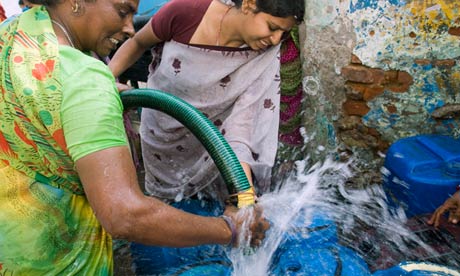
    Slum dwellers scramble for water

    Most of the areas where water will be scarcest soonest are in poor countries, which have little resilience to cope. Photograph: Stuart Freedman

    The majority of the 9 billion people on Earth will live with severe pressure on fresh water within the space of two generations as climate change, pollution and over-use of resources take their toll, 500 scientists have warned.

    The world’s water systems would soon reach a tipping point that “could trigger irreversible change with potentially catastrophic consequences”, more than 500 water experts warned on Friday as they called on governments to start conserving the vital resource. They said it was wrong to see fresh water as an endlessly renewable resource because, in many cases, people are pumping out water from underground sources at such a rate that it will not be restored within several lifetimes.

    “These are self-inflicted wounds,” said Charles Vörösmarty, a professor at the Cooperative Remote Sensing Science and Technology Centre. “We have discovered tipping points in the system. Already, there are 1 billion people relying on ground water supplies that are simply not there as renewable water supplies.”

    A majority of the population – about 4.5 billion people globally – already live within 50km of an “impaired” water resource – one that is running dry, or polluted. If these trends continue, millions more will see the water on which they depend running out or so filthy that it no longer supports life.

    The threats are numerous. Climate change is likely to cause an increase in the frequency and severity of droughts, floods, heatwaves and storms. The run-off from agricultural fertilisers containing nitrogen has already created more than 200 large “dead zones” in seas, near to rivermouths, where fish can no longer live. Cheap technology to pump water from underground and rivers, and few restrictions on its use, has led to the over-use of scarce resources for irrigation or industrial purposes, with much of the water wasted because of poor techniques. And a rapidly rising population has increased demand beyond the capability of some water resources.

    In some areas, so much water has been pumped out from underground that salt water has rushed in to fill the gap, forcing farmers to move to other areas because the salination makes their former water sources unusable.

    Most of the areas where water will be scarcest soonest are in poor countries, which have little resilience to cope. Many are also in areas where there is already political instability, tension or outright conflict, and the competition for water resources will heighten these problems.

    Water in the Anthropocene from WelcomeAnthropocene on Vimeo.

    But the scientists warned that the developed world would also suffer. For instance, there are now 210 million citizens of the US living within 10 miles of an “impaired” water source, and that number is likely to rise as the effects of global warming take hold. In Europe, some water sources are running dry because of over-extraction for irrigation, much of which is carried on in an unsustainable fashion.

    Pollutants are also causing severe problems in the rich world – the scientists highlighted the role of endocrine disruptors, which can cause fish to change gender, and the long-term effects of which on human populations are as yet barely known.

    “There is no citizen of the world who can be complacent about this,” said Janos Bogardy, director of the UN University’s Institute for Environment and Human Security.

    On Wednesday, UN secretary general, Ban Ki-moon, added his voice to concerns about water security: “We live in an increasingly water insecure world where demand often outstrips supply and where water quality often fails to meet minimum standards. Under current trends, future demands for water will not be met,” he said.

    The scientists, meeting in Bonn this week, called on politicians to include tough new targets on improving water in the sustainable development goals that will be introduced when the current millennium development goals expire in 2015. They want governments to introduce water management systems that will address the problems of pollution, over-use, wastage and climate change.