Category: Articles

  • New Technique Can Fast-track Better Ionic Liquids for Biomass Pre-treatments

    July 14, 2009

    New Technique Can Fast-track Better Ionic Liquids for Biomass Pre-treatments


    by DOE/Lawrence Berkeley National Laboratory

    California, United States [RenewableEnergyWorld.com]

    They’ve been dubbed “grassoline” – second generation biofuels made from inedible plant material, including fast-growing weeds, agricultural waste, sawdust, etc. – and numerous scientific studies have shown them to be prime candidates for replacing gasoline to meet our transportation needs. However, before we can begin to roll down the highways on sustainable, carbon-neutral grassoline, numerous barriers must be overcome, starting with finding ways to break lignocellulosic biomass down into fermentable sugars.


    The use of ionic liquids — salts that are liquids rather than crystals at room temperature — to dissolve lignocellulose and later help hydrolyze the resulting liquor into sugars, shows promise as a way of pre-treating biomass for a more efficient conversion into fuels. However, the best ionic liquids in terms of effectiveness are also prohibitively expensive for use on a mass scale. Furthermore, scientists know little beyond the fact that ionic liquids do work. Understanding how ionic liquids are able to dissolve lignocellulosic biomass should pave the way for finding new and better varieties for use in biofuels.


    A new technique that is providing some much needed answers has been developed by researchers at the Joint BioEnergy Institute (JBEI), a U.S. Department of Energy Bioenergy Research Center led by the Lawrence Berkeley National Laboratory (Berkeley Lab). Based on the natural auto-fluorescence of plant cell walls, this technique enables researchers for the first time to dynamically track solubilization during an ionic liquid pretreatment of a biomass sample, and to accurately and quickly assess the liquid’s performance without the need of labor-intensive and time-consuming chemical and immunological labeling.


    “Working with switchgrass and using the ionic liquid known as EmimAc (1-n-ethyl-3-methylimidazolium acetate), which is currently the most effective in terms of pre-treating biomass, we observed a rapid swelling of the secondary plant cell walls within three hours of exposure at relatively mild temperatures (120 degrees Celsius),” says Blake Simmons, a chemical engineer who is Vice President of JBEI’s Deconstruction Division and was the principal investigator for this research. “We attributed the swelling to disruption of inter- and intra-molecular hydrogen bonding between cellulose fibrils and lignin. The swelling was followed by complete dissolution of biomass. This is the first study to show the process by which biomass solubilization occurs in an ionic liquid pre-treatment.”


    Simmons says that once the EmimAc had dissolved the switchgrass biomass into its three components — cellulose and hemicellulose sugars, plus lignin, the woody fiber that gives strength and structure to plant cell walls — the subsequent addition of an anti-solvent, such as water, resulted in the sugars being precipitated out while the lignin remained in solution, a requirement for recovering the sugars. This confirmed that the ionic liquid pre-treatment effectively disrupted the recalcitrance of the switchgrass biomass and helped liberate the fermentable sugars.


    “In comparison to untreated biomass, ionic liquid pretreated biomass produces cellulose that is efficiently hydrolyzed with commercial cellulase cocktail and provides sugar yields over a relatively short time interval,” Simmons says. “We are now in the process of evaluating other ionic liquids to discover the optimal combination of cost and performance.”


    The results of this study were reported in the journal Biotechnology and Bioengeering in a paper entitled: “Visualization of Biomass Solubilization and Cellulose Regeneration During Ionic Liquid Pretreatment of Switchgrass” Co-authoring the paper with Simmons were his JBEI colleague Seema Singh, and Kenneth Vogel, of the Agricultural Research Service. Simmons and Singh also hold appointments with Sandia National Laboratories.


    Auto-fluorescence is an intrinsic optical property of biological materials that has often been viewed as a nuisance by scientists trying to image specific biological objects. Living cells contain molecules which fluoresce when excited by the right light and this fluorescence can compete with the signals obtained from the fluorophore dyes or markers used to label biological objects of interest. Simmons and Singh have turned this “nuisance” into an effective tool. Using auto-fluorescence in combination with a variety of microscopy and spectroscopy techniques, they were able to map and visualize cellulose and lignin first in pristine switchgrass and then during treatment with the EmimAc ionic liquid. Their results demonstrate that this label-free visualization and mapping technique can provide a means of rapidly screening a wide range of ionic liquids for pre-treating switchgrass and other biomass material.


    “Our approach can be used to evaluate the deconstruction of lignocellulosics in biomass of different chemical compositions, and also to assist in determining the impact of genetically engineered feedstocks,” Simmons says. “By utilizing this technique, the development and selection of pre-treatment conditions for the selective solubilization and fractionation of either polysaccharides or lignin could be tailored for the development of cost-effective biomass pre-treatments with enhanced yields of sugars.”


    The ultimate goal, Simmons says is to find an ionic liquid that can efficiently pre-treat biomass, then scale its use up into a cost-effective process for biorefineries. Ideally, he and his colleagues would like to identify a single versatile ionic liquid that is capable of producing enriched polysaccharide and lignin output streams irrespective of fuel types. But there is much more basic research ahead.


    “Right now ionic liquids are a bench-top technique,” Simmons says, “and there are research and engineering obstacles that must be solved before this technology is ready for prime time. But the drivers are clear, and ionic liquids offer processing advantages that no other current commercial pre-treatment technology can provide.”


  • 250.000 jobs and 70bn revenue-the forecast for a thriving UK renewables sector

    250,000 jobs and £70bn revenue – the forecast for a thriving UK renewables sector


    Study from the Carbon Trust warns that potential of renewables sector will only be realised if government invests in research and removes regulatory barriers


    Rain And High Winds Battering The UK

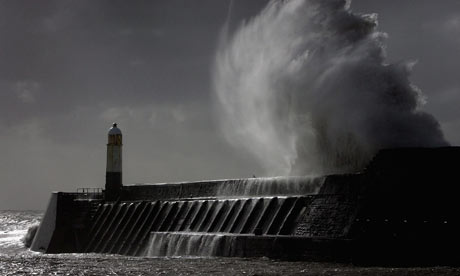
    Waves crash over the harbour wall on the seafront at Porthcawl in Wales. Photograph: Matt Cardy/Getty Images


    The UK could benefit from 250,000 jobs and up to £70bn in revenue from offshore wind and wave technologies by 2050, according to a study by the Carbon Trust. This potential will only be realised, however, if the government gives clear signals to industry, so that investors know where to put their money, rather than leaving new technologies to face the market alone.


    The Carbon Trust, a government-backed agency that studies ways to promote low-carbon technologies, carried out economic analyses in six areas of low-carbon industry including offshore wind, wave, solid-state lighting and micro combined heat and power.


    The studies, published today, looked at the current status and costs of the technology, how these would develop and what research and development costs there might be in the coming decades.


    The studies for offshore wind and wave power showed these technologies could provide at least 15% of the total carbon savings required to meet the UK’s 2050 CO2 reduction targets. “The UK’s greenhouse gas targets mean that by 2050 We must reduce our emissions to just one-10th of today’s levels, per unit of output,” said John Beddington, the government’s chief scientific adviser.


    “This is a formidable challenge, requiring step changes in the rate at which we improve our energy efficiency and in low-carbon innovation.The Carbon Trust’s proposals recognise the need for us to be smarter in focusing our investments, including to help businesses seize the economic opportunities of the transition.”


    According to the new analysis, published just a few weeks ahead of the forthcoming government white paper on energy, the UK could attract 45% of the global offshore wind market by 2020, delivering £65bn of net economic value and 225,000 total jobs by 2050.


    This would only happen with an investment of up to £600m into research, the removal of regulatory barriers and incentives to increase the deployment of the turbines. In the UK this means installing around 29GW of wind by 2020 and upwards of 40GW by 2050. A large part of the economic benefit would come from exporting technology developed here.


    For wave, the outlook is more modest. Around a quarter of the world’s wave technologies are being developed in the UK and the Carbon Trust said Britain should be the “natural owner” of the global market in this area. It could generate revenues worth £2bn per year by 2050 and up to 16,000 direct jobs.


    “These technologies are not green ‘nice to haves’ but are critical to the economic recovery of the UK,” said Tom Delay, the chief executive of the Carbon Trust. “To reap the significant rewards from their successful development we must prioritise and comprehensively back the technologies that offer the best chance of securing long-term carbon savings, jobs and revenue for Britain. Rather than following in the footsteps of others, this new analysis shows it is an economic no-brainer to be leading from the front.”


    In addition to the direct jobs in these in industries, there would be further benefits to the economy. “The UK’s also very good at the secondary service industries – things like the financing of wind farms, the legal documents, environmental assessments,” said Paul Arwas, a consultant who wrote the new Carbon Trust report. “Those jobs would be in addition – for offshore wind, it would be another 70,000 by 2050.”


    None of this will happen, though, without government support. Arwas said that when encouraging new industries, authorities tended to swing between two poles – either direct state funding or allowing markets to decide. “Either the governments didn’t intervene at all or, if they did they did it by market mechanisms which are totally undifferentiated by technology. There you end up with a situation where, to take a footballing analogy, you’ve got the under 21s playing the under 12s.”


    Instead the Carbon Trust has proposed a new, semi-interventionist, model where the government chooses a family of technologies to invest in, for example wave power, and tells developers there will be subsidies or long-term help available to develop the sector as a whole but without backing individual technologies.


    John Sauven, Greenpeace’s executive director, welcomed the Carbon Trust’s proposed approach. “Every country now needs a decarbonisation plan to help solve three of our greatest challenges – climate stability, energy security and economic prosperity. The UK has an enormous untapped supply of clean, green renewable energy and a world class engineering industry well placed to develop it.”


    Martin Rees, the president of the Royal Society, said the UK had little choice but to develop these new technologies, given the dwindling supplies of fossil fuels: “In the past we have let opportunities to capitalise on our scientific leadership slip through our fingers. The US and others are investing heavily in low carbon technologies; we must not fall behind and waste the scientific expertise that we have in the UK.”

  • Vanadium redox battery

    Vanadium redox battery


    From Wikipedia, the free encyclopedia


    Battery specifications
    Energy/weight 10–20 Wh/kg
    Energy/size 15-25 Wh/L
    Power/weight ? W/kg
    Charge/discharge efficiency 80% [1]
    Energy/consumer-price ? Wh/US$
    Self-discharge rate ? %/month
    Time durability 10-20 years
    Cycle durability >10000 cycles
    Nominal Cell Voltage 1.15-1.55 V

    The vanadium redox (and redox flow) battery in its present form (with sulfuric acid electrolytes) was patented by the University of New South Wales in Australia in 1986 [2]. It is a type of rechargeable flow battery that employs vanadium redox couples in both half-cells, thereby eliminating the problem of cross contamination by diffusion of ions across the membrane. Although the use of vanadium redox couples in flow batteries had been suggested earlier by Pissoort[3], by NASA researchers and by Pellegri and Spaziante in 1978 [4], the first successful demonstration and commercial development was by Maria Skyllas-Kazacos and co-workers at the University of New South Wales in the 1980s [5]. The vanadium redox battery exploits the ability of vanadium to exist in solution in four different oxidation states, and uses this property to make a battery that has just one electroactive element instead of two.


    The main advantages of the vanadium redox battery are that it can offer almost unlimited capacity simply by using larger and larger storage tanks, it can be left completely discharged for long periods with no ill effects, it can be recharged simply by replacing the electrolyte if no power source is available to charge it, and if the electrolytes are accidentally mixed the battery suffers no permanent damage.


    The main disadvantages with vanadium redox technology are a relatively poor energy-to-volume ratio, and the system complexity in comparison with standard storage batteries.


    [edit] Operation

    A vanadium redox battery consists of an assembly of power cells in which the two electrolytes are separated by a proton exchange membrane. Both electrolytes are vanadium based, the electrolyte in the positive half-cells contains VO2+ and VO2+ ions, the electrolyte in the negative half-cells, V3+ and V2+ ions. The electrolytes may be prepared by any of several processes, including electrolytically dissolving vanadium pentoxide (V2O5) in sulfuric acid (H2SO4). The solution remains strongly acidic in use.


    In vanadium flow batteries, both half-cells are additionally connected to storage tanks and pumps so that very large volumes of the electrolytes can be circulated through the cell. This circulation of liquid electrolytes is somewhat cumbersome and does restrict the use of vanadium flow batteries in mobile applications, effectively confining them to large fixed installations, although one company has focused on electric vehicle applications, using rapid replacement of electrolyte to refuel the battery.


    When the vanadium battery is charged, the VO2+ ions in the positive half-cell are converted to VO2+ ions when electrons are removed from the positive terminal of the battery. Similarly in the negative half-cell, electrons are introduced converting the V3+ ions into V2+. During discharge this process is reversed and results in a typical open-circuit voltage of 1.41 V at 25 °C.


    Other useful properties of vanadium flow batteries are their very fast response to changing loads and their extremely large overload capacities. Studies by the University of New South Wales have shown that they can achieve a response time of under half a millisecond for a 100% load change, and allowed overloads of as much as 400% for 10 seconds. The response time is mostly limited by the electrical equipment. Round trip efficiency in practical applications is around 65-75%[6].


    Generation 2 vanadium redox batteries (vanadium/polyhalide) may approximately double the energy density and increase the temperature range in which the battery can operate.


    [edit] Energy density


    Current production vanadium redox batteries achieve an energy density of about 25 Wh/kg of electrolyte. More recent research at UNSW indicates that the use of precipitation inhibitors can increase the density to about 35 Wh/kg, with even higher densities made possible by controlling the electrolyte temperature. This energy density is quite low as compared to other rechargeable battery types, e.g. lead-acid (30-40 Wh/kg) and lithium ion (80-200 Wh/kg).


    [edit] Applications


    The extremely large capacities possible from vanadium redox batteries make them well suited to use in large power storage applications such as helping to average out the production of highly variable generation sources such as wind or solar power, or to help generators cope with large surges in demand.


    Their extremely rapid response times also make them superbly well suited to UPS type applications, where they can be used to replace lead-acid batteries and even diesel generators.


  • The challenge for green energy: how to store excess electricity

    The challenge for green energy: how to store excess electricity


    For years, the stumbling block for renewable energy has been how to store electricity for days when the sun isn’t shining and the wind isn’t blowing. But new technologies suggest this goal may be within reach, writes Jon R Luoma from Yale Environment 360, part of the Guardian Environment Network


    “Why are we ignoring things we know? We know that the sun doesn’t always shine and that the wind doesn’t always blow.” So wrote former U.S. Energy Secretary James Schlesinger and Robert L. Hirsch last spring in the Washington Post, suggesting that because these key renewables produce power only intermittently, “solar and wind will probably only provide a modest percentage of future U.S. power.”


    Never mind that Schlesinger failed to disclose that he sits on the board of directors of Peabody Energy, the world’s largest private-sector coal company — a business with much to lose if a solar- and wind-powered future arrives. But at least he and his co-author got it partly right. The benefits from wind and solar are mostly intermittent — so far. But the pair somehow missed the fact that a furious search for practical, affordable electricity storage to beat that intermittence problem is well underway.


    For decades, “grid parity” has been the Holy Grail for alternative energy. The rap from critics was that technologies like wind and solar could not compete, dollar-for-dollar, with conventional electricity sources, such as coal and nuclear, without large government tax breaks or direct subsidies. But suddenly, with rapid technological advances and growing economies of manufacturing scale, wind power is now nearly at grid parity — meaning it costs roughly the same to generate electricity from wind as it does from coal. And the days when solar power attains grid parity may be only a half-decade away.


    So with grid parity now looming, finding ways to store millions of watts of excess electricity for times when the wind doesn’t blow and the sun doesn’t shine is the new Holy Grail. And there are signs that this goal — the day when large-scale energy storage becomes practical and cost-effective — might be within reach, as well. Some technologies that can store sizeable amounts of intermittent power are already deployed. Others, including at least a few with great promise, lie somewhere over the technological horizon.


    New storage approaches include improvements to existing lithium ionbatteries and schemes to store energy as huge volumes of compressed air in vast geologic vaults. Another idea is to create a network of small, energy-dense batteries in tens of millions of homes. Under such a “distributed storage” scheme, utility computers could coordinate electricity flows over a “smart grid” that continually communicates with — and adjusts the flow of power to and from — local batteries. This would even include batteries in future plug-in hybrid or all-electric vehicles.


    And one 2008 breakthrough could even fulfill chemists’ long-held dreams of producing a squeaky-clean and storable fuel by using excess electricity generated from renewable sources to cheaply produce hydrogen, which could then be used in fuel cells to power homes and cars.


    In a world run mainly on fossil fuels, finding ways to store electricity was not a pressing concern: Power plants across a regional electrical grid could simply burn more fuel when demand was high. But large-scale electricity storage promises be an energy game-changer, unshackling alternative energy from the constraints of intermittence. It would mean that if a wind or solar farm were the cheapest and cleanest way to generate power, it wouldn’t matter when the sun shone or the wind blew.
    One storage approach seems obvious: to improve battery technologies. Picture efficient, enormous batteries that can store tens of millions of
    watt-hours of juice. Today, the vast majority of new rooftop solar photovoltaic panels are connected to the grid, using it as a giant battery, pushing excess power onto the grid when solar panels provide excess power. The building then draws power from the grid when the sun doesn’t shine, with its meter spinning backward and forward with the ebb and flow of power. With relatively few solar roofs yet in play, utilities manage any ebb and flow by drawing down and ramping up generation at conventional power plants designed to balance fluctuating supply and demand.
    A more robust world of solar and wind power might be better served by some sort of giant battery — or, more likely, many of them, widely distributed. The basic concept has been proven. Since 2003, the world’s largest battery backup has been storing energy for an entire city: Fairbanks, Alaska. Isolated as it is, and not part of any regional electricity grid, the metropolitan area of about 100,000 residents needs an electricity backstop more than most: In its sub-zero winters, pipes can freeze solid in as little as two hours. Six years ago, the city installed a huge nickel-cadmium battery, the same technology used for years in laptop computers and other portable devices.


    Housed in a giant warehouse, the 1,300-metric ton battery is larger than a football field, and can crank out 40 million watts of power. Still, the Fairbanks battery provides only enough electricity for about 12,000 residents for seven minutes. That was enough to prevent 81 blackouts in the city in the battery’s first two years of operation.


    Yet effective storage of electricity from solar or wind arrays that generate power equivalent to one large coal plant implies batteries on a breathtaking scale — hundreds of units the size of the Fairbanks array.


    One possible answer? In Japan, so-called “flow” batteries have been used for years to store backup power at industrial plants. Conventional batteries store energy in chemical form.With flow batteries, charged chemicals are pumped into storage tanks, allowing still more chemical to be charged and pumped away, then pumped back into the active portion of the battery and drawn down as needed. One big advantage: Battery “size” can be expanded by simply adding more chemicals and more storage tanks. In 2003, the local utility on small King Island, off the coast of Australia, installed a large flow battery to sop up and later release excess power from a wind farm.
    As with the alternative generation technologies, cost will be key for determining which battery or other storage technologies might prevail. Aside from such typical economic concerns as raw material and maintenance costs and durability, storage technologies all face some losses in “round-trip efficiency.” Inevitably, some energy is lost as it goes into storage, and more is lost as it comes out.


    Right now, hopes are riding high on lithium ion batteries, because they have impressive round-trip efficiencies, can pack in high densities of energy, and can charge and discharge thousands of times before becoming degraded. Because of those attributes, lithium-ion battery technology has become increasingly dominant in laptop computers and cell phones. On a far larger scale, a powerful lithium ion battery pack powers the pricey all-electric Tesla Roadster, and is slated to power the plug-in hybrid Chevy Volt next year.


    On the grid, lithium ion experiments are already underway. One company, General Electric-backed A123 Systems, announced late in 2008 that it had been contracted to install a two-megawatt lithium ion storage unit at a California power plant owned by global utility giant AES.


    Still, lithium ion remains a relatively expensive technology — 10 times more expensive than lead acid batteries with equivalent capacity. Technological improvements and manufacturing scale should bring lithium costs down over time, but by the time that happens, the world could be beating a path to the door of someone who’s found a way to build an even better battery.


    Early this year, IBM revealed that it was launching a major research program into what looks like an even more promising technology — the lithium metal-air battery. Last month, a company called PolyPlus announced that it had already succeeded in developing one.


    The PolyPlus battery and the IBM technology deliver an astonishing 10 times more energy density than even today’s best lithium ion technology. That means that, pound for pound, they offer about the energy density of gasoline. The key reason they can store so much energy is that they use oxygen, drawn from the air, in place of some of the chemical reactants used along with lithium in their lithium ion cousins.
    There’s one big rub: Air isn’t just oxygen. Notably, it also contains humidity, and the lithium has a bad habit of acting like ignited gasoline when exposed to moisture, creating a real risk of fire and explosion. Chandrasekhar Narayan, manager of science and technology at IBM’s Almaden Research Center near San Jose, Calif., has suggested that it will take five to 10 years to develop an effective membrane that will let oxygen into the battery while keeping moisture out.


    Still in pie-in-sky mode, there’s “vehicle to grid” storage, or “carbitrage.” This enticing notion relies on idled storage in the batteries of the millions of plug-in hybrid or all-electric automobiles that will be in use in the future. There’s reason to believe this scheme could work. More than 90 percent of the time cars sit idled, and aside from days they’re used for long trips, most of their full energy storage capacity goes unused.


    A single idle, electric-powered car could generate as much as 10 kilowatts of power, enough to meet the average demand of 10 houses, according to Willett Kempton, director of the Center for Carbon-free Power Integration at the University of Delaware. With vehicle-to-grid technology, controlled by an array of smart meters, car owners plugged in at home or work could allow the grid to draw off unused chunks of power at times when short-term demand is high. Conversely, cars could be recharged when demand is low.


    The stored power in those electric cars, or anywhere on the grid, might not come from batteries after all. In March, Texas-based EEStor announced that it had received third-party verification of its “ultracapacitor” technology. The company claims the lightweight device, which was awarded a U.S. patent last December, can bottle up huge amounts of electricity far more quickly than any battery and can do so at lower cost.


    Like batteries, capacitors store and mete out electricity. Small conventional capacitors have been ubiquitous in electronic devices as far back as the early days of radio. But capacitors, so far, haven’t been able to store electricity for long enough to come close to competing with batteries. They have found use as devices that level out fluctuations in voltage or that briefly store power for near-instant release.


    EEStor claims that its device, which is one-quarter the weight of a similar
    lithium ion battery, can hold a large charge for days. Its patent describes a 281-pound device that would hold almost the same charge as a half-ton lithium ion battery pack installed on the Tesla Roadster. The company’s ultracapacitors have yet to prove themselves in commercial products. But industrial giant Lockheed Martin has already signed up with EEStor to use future ultra capacitors in defense applications, and Toronto-based Zenn Motors, which has also taken an ownership stake in EEStor, says it will have electric cars on the road using the technology in 2010.
    If advanced batteries or ultracapacitors aren’t the ultimate answer, maybe using excess electricity to make hydrogen that can be stored will do the trick. Hydrogen can be produced through simple electrolysis, but technical and cost hurdles have made electrolysis impractical. Today, industrial-scale hydrogen is produced using natural gas as a not-so-clean feedstock.


    But that may have begun to change last summer when MIT announced that a team lead by chemist Daniel Nocera had made a “major discovery” that employs a new kind of catalyst using cobalt and phosphate — abundant and non-toxic materials — to kick-start electrolysis.


    Outside observers say the process could be revolutionary: opening up the possibility that electricity made at any time by the sun or wind could be stored by simply splitting (and later recombining) abundant water molecules, perhaps even undrinkable sea water. The breakthrough has been hailed by scientist British scientist James Barber of Imperial College London as having “enormous implications for the future prosperity of humankind.” The website Xconomy reported in April that Nocera had quietly formed a startup company called Sun Catalytics. Efforts to reach Nocera for comment were unsuccessful.


    And there is progress being made on an entirely different front — using excess electricity to pump compressed air into caverns, salt domes, and old natural gas wells, and then releasing the air to help state-of-the-art natural gas power plants spin turbines, lowering the amount of fuel consumed by as much as 70 percent. A consortium of utilities in Iowa, Minnesota, and the Dakotas is already working with the U.S.’s Sandia National Laboratories to develop a giant, 268-megawatt compressed air system. Called the Iowa Stored Energy Park, it would store excess energy from the region’s burgeoning wind industry.


    • This article was shared by our content partner Yale Environment 360, part of the Guardian Environment Network
  • South west of England to become world centre for wave and tidal energy

    South west of England to become world centre for wave and tidal energy


    Business secretary Lord Mandelson names Cornwall as the UK’s first low carbon economic area with pioneering Wave Hub project


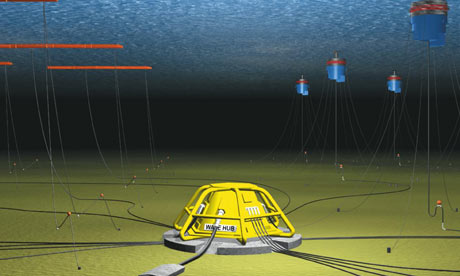
    Wave Hub

    The Wave Hub socket, part of the pioneering wave power project off the coast of Cornwall Photograph: Public Domain


    The south west of England will become a world centre for wave and tidal energy under plans published by the government today.


    Business secretary Lord Mandelson named the region as the UK’s first low carbon economic area at the launch of the low carbon industrial strategy.


    The government also announced an investment of £9.5m for the pioneering Wave Hub project, which will see a giant national grid-connected “socket” built on the seabed off the coast of Cornwall.


    The project, which will become the world’s largest wave farm, also received the official go-ahead today from the South West Regional Development Agency (RDA) and could create more than 1,800 jobs.


    Stephen Peacock, enterprise and innovation executive director of the South West RDA, said: “Being identified as the UK’s first low carbon economic area is a tremendous accolade and recognition of our commitment to develop this unprecedented economic opportunity.


    “We want to forge a new industry from the seas around our shores and today’s announcements cement our position as a global leader in wave and tidal technologies.


    “We also welcome the low carbon industrial strategy which sets out a range of opportunities to ensure that we take advantage of a global market for low carbon products and services that could be worth £4.3 trillion by 2015.”


    A further £10mm has been made available for the South West RDA to support other marine energy projects in the region.


    The European Regional Development Fund Convergence Programme also announced it would invest £20m in Wave Hub, which will be commissioned next summer.


    The first equipment orders for the project were placed this week.


    The combined government, RDA, European and private sector funding in the south west’s marine energy programme in the next two years is expected to exceed £100m.Today’s announcements form part of the government’s low carbon industrial strategy including a white paper on the low carbon transition plan as well as the UK’s renewable energy strategy, the low carbon industrial strategy and carbon reduction strategy for transport.

  • A Rising Tide for Water Power Funding?

    July 10, 2009

    A Rising Tide for Water Power Funding?


    by Justin Moresco, Contributor

    California, United States [RenewableEnergyWorld.com]

    Power generated from the movement of water has enormous potential for growth in the United States, but funding for the renewable energy source lags behind other technologies like solar and wind. Institutional investors have been hesitant to enter the market, and while the U.S. Department of Energy has increased its budget for water power, industry experts say more funding is needed, particularly for emerging technologies.


    “I think part of the lack of funding is tied to the regulatory issue…If you want to put [renewable energy] megawatts online, you see that you can put money into wind or solar with a simpler regulatory environment.”

    — Mike Bahleda, Consultant


    Consider the DOE’s budget for its water-power program, whose mission is to research, test and develop innovative technologies for generating electricity from water. The good news for the industry is that funding quadrupled this year, from about US $10 million last year to $40 million this year. But advocates of more water-power funding are quick to point out that the program was allocated no money in 2006 and 2007 and that it took a concerted lobbying effort to have it restored last year.


    But even with the funding increase this year, the budget for the DOE’s water power program still pales in comparison to other sources of renewable energy. The department has allocated $175 million this year for solar energy technologies, $55 million for wind technologies, and $169 million for fuel cell technologies.


    “Considering that just a few years ago the federal government provided no funding for hydropower R&D,” said Kristen Nelson, a spokeswoman for the trade group National Hydropower Association, “this [funding] will at least start us on the road toward meeting the Obama administrations goal of doubling renewable energy resources.”


    Part of the new budget is planned to support ocean-based power, such as technologies that harness energy from tides and waves. The department said its priority is to reduce barriers to the development and deployment of these technologies and projects, including research and development funding for components and devices and more accurate ways to assess water-power potential. Money will also go toward environmental studies and what the department calls integrated national marine renewable energy centers.


    DOE funding last year, for example, went toward a demonstration ocean wave power system developed by White River Junction, Vt.-based Concepts ETI and the expansion of national marine energy centers at Oregon State University, the University of Washington at Corvallis and Seattle and the University of Hawaii.


    The DOE’s budget this year also includes money for conventional hydropower, such as power plants attached to dams and pumped storage, where water is pumped from a lower reservoir to a higher reservoir to meet anticipated peaks in electricity demand. The DOE’s budget is supposed to fund efforts to assess the current state of U.S. hydroelectric infrastructure and identify opportunities for increased and more valuable generation, such as through efficiency and capacity gains at existing power stations. Some funding also may be used for placing power stations at existing non-powered dams and in constructed waterways.


    The Obama stimulus package, which has millions of dollars for renewable energy and other clean technology projects, wasn’t particularly kind to water-power either. It included $32 million specifically targeted for the industry to improve existing hydropower infrastructure, but not for emerging technologies, though there may be funding in broader-defined allocations, such as those to research institutes.


    Hydropower has great potential as a source of renewable energy. At 96,000 megawatts (MW) of installed capacity, almost all of which is from conventional plants, it’s also already the largest source of renewable energy in the country. A 2007 report by the Electric Power Research Institute, a nonprofit research organization, estimates that the country could increase hydropower capacity by 23,000 MW by 2025. The increase would come from ocean and conventional sources and from fresh water hydrokinetic technologies, like those that harness power from rivers.


    To achieve that build-out, however, three broad changes are needed, said Mike Bahleda, an independent consultant who was principal investigator for the institute’s report. They include more research and development funding, better economic incentives (water power is only given half as much as wind in federal production tax credits), and a streamlined regulatory environment (water projects are the only renewable source that need a federal approval). The study called for the DOE to allocate at least $37 million per year to water power, though the National Hydropower Association has called for $91 million starting in 2010 (the DOE will likely get $30 million in 2010 according to a tentative budget). 


    “I think part of the lack of funding is tied to the regulatory issue,” said Bahleda. “If you want to put [renewable energy] megawatts online, you see that you can put money into wind or solar with a simpler regulatory environment.” Another reason is widespread lack of appreciation of the potential for generating electricity from water, Bahleda said. 


    Of course the growth of any industry can’t fully depend on government support, and some would argue that industries shouldn’t depend on it at all, regardless of their potential. But venture capitalists, the traditional source of funding for emerging technologies, have largely resisted entering the water-power sector. Since 2002, U.S. water-power startups raised a total of $500,000 in 2004 and $2.6 million in 2008, according to Dow Jones VentureSource. That’s compared with $55 million in 2004 and $2.4 billion last year for solar startups.


    Some of the reasons include high capital costs and regulatory and technological risks, according to John Miller, director of the New England Marine Renewable Energy Center, a center within the University of Massachusetts that promotes the development of ocean-based renewable energy for New England. Miller said the industry isn’t lacking for ideas — he gets a call a week from someone looking to develop a new ocean power technology. And he says there at least a few dozen startups in the country focused on ocean power, almost all of which are backed by private money, from angel investors and the like.


    But the ocean power industry is relatively immature — there are no commercial plants in the United States, only a handful of pilot projects — and Miller believes that venture capital will start flowing once companies have proven their technologies. He forecasts that there will be commercial generation from wave and tidal plants within five years. Offshore wind is also considered ocean-based power, and that is further along, Miller said.


    Houston, TX-based Hydro Green Energy is one of the few U.S. water-power startups to have attracted venture capital — it alone accounted for the $2.6 million raised last year.


    The company has developed systems for generating power downstream from existing hydro plants and in the downstream portion of auxiliary or active navigational locks. One is a floating platform that suspends underwater hydrokinetic turbines at existing hydropower plants, and the other is a metallic lock gate with rows of underwater turbines. The lock gate systems could each generate between 5 and 50 MW of power.


    “We got venture funding because we had a strong business plan and intellectual property, and we had tested our technology,” said Mark Stover, vice president of corporate affairs. The company already has installed a platform system in Hastings, Minn., and it hopes to install its first lock gate for a separate project in Minnesota next year. By 2011, Stover said the company could be developing 10 to 15 projects a year.


    As forward thinking as venture capitalists often are, they’ve also been known to behave like pack animals. If Hydro Green Energy and a handful of other leading water-power startups can prove the economic viability of their businesses, venture capitalists might start jumping into the sector. Government funding might not change, but there’s nothing like the promise of profits to spur more investment in emerging industries.


    Justin Moresco has been writing about sustainability and green issues since 2005, first as a correspondent in West Africa for IRINnews. He now focuses mainly on emerging clean technology and is based in the San Francisco Bay Area. Before becoming a journalist, he was a licensed civil engineer.


    Image Gallery (1)