Category: Articles

  • Fukushima disaster paves way for new geothermal plants

    Fukushima disaster paves way for new geothermal plants

    Drive to find alternatives to nuclear power overrides fears that natural hot springs will be damaged by energy development

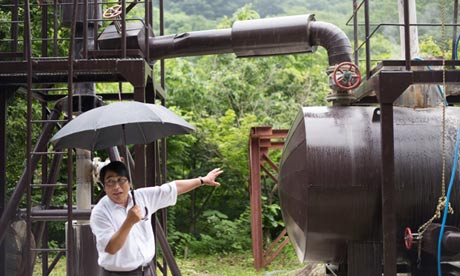
    Kazuya Ikeda explains the future location and logistics of a geothermal plant in Fukushima, Japan

    Kazuya Ikeda explains the future location and logistics of a geothermal plant in Fukushima prefecture, Japan. Photograph: Jeremy Sutton-Hibbert for the Guardian

    Before last year’s triple disaster in north-east Japan, Tsuchiyu Onsen drew tens of thousands of tourists in search of the recuperative qualities of its piping hot spring water.

    Almost 18 months after the nuclear accident at nearby Fukushima Daiichi power plant, that same natural resource is about to turn this spa resort into a trailblazer for the country’s push towards renewable energy.

    By spring 2014, Tsuchiyu, 9 miles (15km) from Fukushima, will be generating 250 kilowatts of electricity – about a quarter of the city’s total needs – at a geothermal plant hidden away in the surrounding mountains.

    The plant will be the first to be built inside a national park, a controversial move that only became possible after the environment ministry recently relaxed regulations on developing protected areas.

    If all goes to plan, the project could not only help the town become self-sufficient in power generation, but revive its role as a tourist destination after visitor numbers plummeted amid lingering fears over radiation. In the past, hot-spring operators have been among the fiercest opponents of geothermal energy, an obvious source of energy given Japan’s huge subterranean reserves of volcanic water.

    Many fear the plants would affect the flow and quality of the water, which is pumped up from the depths and then cooled for the benefit of Japan’s enthusiastic bathers.

    In Tsuchiyu, however, where half a dozen hotels remain closed with earthquake damage, spa owners are among the new geothermal generator’s keenest backers. “The plant won’t affect the water quality or the temperature,” said Kazuya Ikeda, general manager of the Tsuchiyu Onsen Tourist Association. “We have surveyed opinion in the town, and no one has raised any objections.”

    The move also makes economic sense. Under a new feed-in tariff system introduced last month, utilities are required to pay premium prices for renewable energy – 42 yen (34p) per kilowatt for geothermal power.

    “The structure itself will be quite small and unobtrusive,” Ikeda added. “And with the feed-in tariff, we should be able to cover our initial costs in about seven years.”

    The 300m-yen (£2.5m) facility will use water pumped from below ground and combine it with an ammonia-like substance with a lower boiling point than water to propel a turbine.

    Resistance to geothermal power, coupled with the pre-Fukushima faith in nuclear, means that until now Japan has failed to tap into a resource that energy experts believe has huge potential. Its 18 geothermal plants account for 0.2% of electricity output, according to the trade and industry ministry, and no new plants have been built for a decade.

    Scientists believe the sector’s share could rise enormously thanks to the feed-in tariff, new subsidies to fund feasibility studies and test-drilling, and official recognition that nuclear’s heyday has passed.

    According to one estimate, Japan’s gGeothermal capacity could reach 24m kilowatts – the third biggest in the world after the US and Indonesia – compared with less than 550,000 kilowatts now. Tsuchiyu has other compelling reasons to embrace geothermal power. Visitor numbers dropped dramatically after the Fukushima nuclear disaster, and while a recovery is under way, fears of radiation persist, even though recorded levels here pose no health threat.

    Profits from the venture will be used to repair three damaged hotels and rebuild three others that were destroyed in the earthquake.

    In the long term, Ikeda believes Tsuchiyu will become a model for other small towns struggling to find clean and stable sources of energy, while experts debate if nuclear has any role to play in Japan’s future energy mix.

    If the experiment works, it should allay anxiety among other Onsen operators about potential damage to hot-spring water flows – the financial lifeblood of countless similar resorts around Japan.

    Eventually, the geothermal plant will be capable of generating 1,000 kilowatts, according to Ikeda. That is a tiny fraction of the capacity of just one of Fukushima Daiichi’s now crippled reactors. But with opposition to nuclear restarts unlikely to waver, towns such as Tsuchiyu have no choice but to turn to alternatives, he said.

    “If it hadn’t been for the nuclear disaster, we would never have given this project a second thought.”

  • Putting a price on the rivers and rain diminishes us all

    Putting a price on the rivers and rain diminishes us all

    Payments for ‘ecosystem services’ look like the prelude to the greatest privatisation since enclosure

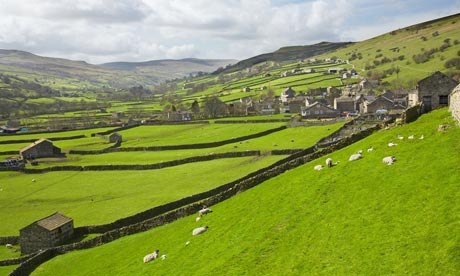
    Gunnerside village Swaledale Yorkshire Dales

    Our rivers and natural resources are to be valued and commodified, a move that will benefit only the rich, argues George Monbiot. Photograph: Alamy

    ‘The first man who, having enclosed a piece of ground, bethought himself of saying ‘This is mine’, and found people simple enough to believe him, was the real founder of civil society. From how many crimes, wars and murders, from how many horrors and misfortunes might not anyone have saved mankind, by pulling up the stakes, or filling up the ditch, and crying to his fellows, ‘Beware of listening to this impostor; you are undone if you once forget that the fruits of the earth belong to us all, and the earth itself to nobody’.”

    Jean Jacques Rousseau would recognise this moment. Now it is not the land his impostors are enclosing, but the rest of the natural world. In many countries, especially the United Kingdom, nature is being valued and commodified so that it can be exchanged for cash.

    The effort began in earnest under the last government. At a cost of £100,000, it commissioned a research company to produce a total annual price for England’s ecosystems. After taking the money, the company reported – with a certain understatement – that this exercise was “theoretically challenging to complete, and considered by some not to be a theoretically sound endeavour”. Some of the services provided by England’s ecosystems, it pointed out, “may in fact be infinite in value”.

    This rare flash of common sense did nothing to discourage the current government from seeking first to put a price on nature, then to create a market in its disposal. The UK now has a natural capital committee, an Ecosystem Markets Task Force and an inspiring new lexicon. We don’t call it nature any more: now the proper term is “natural capital”. Natural processes have become “ecosystem services”, as they exist only to serve us. Hills, forests and river catchments are now “green infrastructure”, while biodiversity and habitats are “asset classes” within an “ecosystem market”. All of them will be assigned a price, all of them will become exchangeable.

    The argument in favour of this approach is coherent and plausible. Business currently treats the natural world as if it is worth nothing. Pricing nature and incorporating that price into the cost of goods and services creates an economic incentive for its protection. It certainly appeals to both business and the self-hating state. The Ecosystem Markets Task Force speaks of “substantial potential growth in nature-related markets – in the order of billions of pounds globally”.

    Commodification, economic growth, financial abstractions, corporate power: aren’t these the processes driving the world’s environmental crisis? Now we are told that to save the biosphere we need more of them.

    Payments for ecosystem services look to me like the prelude to the greatest privatisation since Rousseau’s encloser first made an exclusive claim to the land. The government has already begun describing land owners as the “providers” of ecosystem services, as if they had created the rain and the hills and the rivers and the wildlife that inhabits them. They are to be paid for these services, either by the government or by “users”. It sounds like the plan for the NHS.

    Land ownership since the time of the first impostor has involved the gradual accumulation of exclusive rights, which were seized from commoners. Payments for ecosystem services extend this encroachment by appointing the landlord as the owner and instigator of the wildlife, the water flow, the carbon cycle, the natural processes that were previously deemed to belong to everyone and no one.

    But it doesn’t end there. Once a resource has been commodified, speculators and traders step in. The Ecosystem Markets Task Force now talks of “harnessing City financial expertise to assess the ways that these blended revenue streams and securitisations enhance the ROI [return on investment] of an environmental bond”. This gives you an idea of how far this process has gone – and of the gobbledegook it has begun to generate.

    Already the government is developing the market for trading wildlife, by experimenting with what it calls biodiversity offsets. If a quarry company wants to destroy a rare meadow, for example, it can buy absolution by paying someone to create another somewhere else. The government warns that these offsets should be used only to compensate for “genuinely unavoidable damage” and “must not become a licence to destroy”. But once the principle is established and the market is functioning, for how long do you reckon that line will hold? Nature, under this system, will become as fungible as everything else.

    Like other aspects of neoliberalism, the commodification of nature forestalls democratic choice. No longer will we be able to argue that an ecosystem or a landscape should be protected because it affords us wonder and delight; we’ll be told that its intrinsic value has already been calculated and, doubtless, that it turns out to be worth less than the other uses to which the land could be put. The market has spoken: end of debate.


    All those messy, subjective matters, the motivating forces of democracy, will be resolved in a column of figures. Governments won’t need to regulate; the market will make the decisions that politicians have ducked. But trade is a fickle master, and unresponsive to anyone except those with the money. The costing and sale of nature represents another transfer of power to corporations and the very rich.

    It diminishes us, it diminishes nature. By turning the natural world into a subsidiary of the corporate economy, it reasserts the biblical doctrine of dominion. It slices the biosphere into component commodities: already the government’s task force is talking of “unbundling” ecosystem services, a term borrowed from previous privatisations. This might make financial sense; it makes no ecological sense. The more we learn about the natural world, the more we discover that its functions cannot be safely disaggregated.

    Rarely will the money to be made by protecting nature match the money to be made by destroying it. Nature offers low rates of return by comparison to other investments. If we allow the discussion to shift from values to value – from love to greed – we cede the natural world to the forces wrecking it. Pull up the stakes, fill in the ditch, we’re being conned again.

    Twitter: @GeorgeMonbiot

  • Strong population growth registered in 13 Eastern cities

    News 10 new results for POPULATION GROWTH
    Population growth prompts Phoenixville to redraw political boundaries
    The Mercury
    All members of the committee, which include Mayor Lee Scoda, council members Jennifer Mayo and Christopher Bauers, and citizens Larry Tillotson and Mike Kuznar, attended the Aug. 2 meeting which featured much poring over maps colored by ward and 
    See all stories on this topic »
    Archivist looks at ebbs and flows of Montana’s population growth
    Montana Watchdog
    Not only is Montana a state with peaks and valleys, but its population growth – which ballooned during good times and ebbed during bad — reflects that as well, said a government records archivist with the state Historical Society. Jeff Malcomson has been 
    See all stories on this topic »
    Strong population growth registered in 13 Eastern cities
    Bizjournals.com
    Thirteen Eastern cities added more than 1000 residents during the past 15 months. New York City leads the region with a population increase of 69777 between April 2010 and July 2011, the latest period for which official figures are available. It’s followed by 
    See all stories on this topic »
    Amish report staggering growth in Midwest
    Washington Post
    Nearly 250000 Amish live in the U.S. and Canada, and the population is expected to exceed 1 million around 2050. The growth may not be visible outside Amish country, but the rural settlements definitely see the boom. “This place has grown,” said Daniel 
    See all stories on this topic »
    Population management needed to spur growth
    BusinessWorld Online Edition
    THE PHILIPPINES must manage its population in order to achieve higher levels of per capita income and economic growth, a Cabinet official yesterday said amid renewed national debate over the issue of birth control.
    See all stories on this topic »
    VIEW : Need to contain surging population — Saleem Shaikh
    Pakistan Daily Times
    According to the 1998 census, Pakistan’s population growth rate during the decade stood at about 2.6 percent per annum. Since then, the rate has plummeted. With a two percent growth rate per annum, the population in the next two decades will exceed that 
    See all stories on this topic »
    Enrile grills Neda chief on population, economics
    Inquirer.net
    “What in your opinion as an economist and in charge of national economic development, what should be the ideal level of population growth for the country?” “I, I, I, sir, I think that we can move naturally in the same way…” Balisacan stammered. “You’re the 
    See all stories on this topic »

    Inquirer.net
    Hispanic Population and its Impact on the Economy and Political Process
    NJBIZ
    The Hispanic population increased from 35.3 million in 2000 when this group made up 13 percent of the total population. More than half of the growth in the total population of the United States between 2000 and 2010 was due to the increase in the Hispanic 
    See all stories on this topic »
    A Slowdown in Growth, an Increase in Income Inequality
    New York Times (blog)
    The income stagnation of the last decade stems, in the simplest terms, from two factors: a slowdown in economic growth and a rise in inequality, which has concentrated the economy’s modest gains among a small share of the population. In this post, I want to 
    See all stories on this topic »

    New York Times (blog)
    British economic growth is weaker than it looks
    Christian Science Monitor (blog)
    Throw population growth into the mix, and not so much. By Stefan Karlsson / August 6, 2012. Fans wave a British flag as they watch swimming competitions at the Aquatics Centre in the Olympic Park during the 2012 Summer Olympics in London last week.
    See all stories on this topic »

    Christian Science Monitor (blog)


    This once a day Google Alert is brought to you by Google.

    Delete this alert.
    Create another alert.
    Manage your alerts.

  • Oil Companies Still Hiding the True Risks of Deepwater Drilling from Investors

    Oil Companies Still Hiding the True Risks of Deepwater Drilling from Investors

    Posted: 03 Aug 2012 04:38 PM PDT

    Oil and gas companies are doing a terrible job of disclosing climate and deepwater drilling risks, even in light of the tragic Gulf of Mexico oil spill, according to a new report.While companies are making extensive capital investments related to climate change and deepwater drilling, they are generally failing to adequately disclose the associated risks in a manner consistent with US Securities and Exchange Commission’s (SEC) rules and growing investor expectations, according to a report co-authored by Boston-based investor coalition Ceres…

    Read more…

    Iraq’s Kurdish Region Pulling Away from Baghdad Control

    Posted: 03 Aug 2012 04:34 PM PDT

    To paraphrase Apollo 13, “Baghdad, we have a problem.” Iraq’s Kurdistan Regional Government’s (KRG) is increasingly signing unilateral oil deals with international oil giants, bypassing Baghdad. Iraq’s central government is insisting that all such regional deals first be cleared by the Iraqi government, but the oil majors have apparently concluded that such diplomatic niceties are largely irrelevant in their search for profits, and are now cutting deals directly with the KRG in Iraqi Kurdistan’s capital Erbil. The…

    Read more…

    India’s Future in the Dark Following the Latest Blackouts

    Posted: 03 Aug 2012 04:28 PM PDT

    Electric power was restored across northern India on Wednesday after an electric grid failure on July 30 and 31 resulted in the world’s largest blackout. More than 600 million people, or nearly one tenth of the global population, were affected.As the country’s economy and population continues to rapidly expand, the energy crisis has sharpened fears about India’s ability to invest in the infrastructure needed to support it.“As one of the emerging economies of the world, which is home to almost a sixth of the world population, it is imperative…

    Read more…

    Tax Breaks – Big Oil Makes Massive Profits whilst the Federal Budget Struggles

    Posted: 03 Aug 2012 04:26 PM PDT

    Second-Quarter Earnings Race Ahead, Boosted by Tax BreaksMiddle-class families may have gotten some relief in the second quarter of 2012 due to slightly lower gasoline prices compared to the first quarter of the year, but billions of dollars in big profits continue to pile up at the Big Oil companies. In the first half of 2012, the five biggest oil companies—BP plc, Chevron Corp., ConocoPhillips, ExxonMobil Corp., and Royal Dutch Shell Group—earned a combined $62.2 billion, or $341 million per day. This compares to an average dip in…

    Read more…

    Panasonic’s New Process for Artificial Photosynthesis Looks Promising

    Posted: 03 Aug 2012 04:08 PM PDT

    Tuesday the web started noticing that Panasonic has developed an artificial photosynthesis system, which converts carbon dioxide (CO2) to organic materials.  A quick review of the web site commentary revealed how far the assumptions got before Panasonic got the press release open and out in English on the corporate site in Japan.What Panasonic has developed is three major improvements in one process.The first part is Panasonic has taken CO2 directly to formic acid, a valuable precursor to numerous petroleum like compounds including fuels. …

    Read more…

    Sanctions Cost Iran $133 Million a Day in Lost Revenue

    Posted: 03 Aug 2012 04:01 PM PDT

    According to a recent report by Bloomberg, the US and EU sanctions have already caused a 52% fall in shipments exporting oil from Iran, equating to 1.2 million barrels per day, about $133 million worth of crude.US Congress has now passed a new set of sanctions aimed at punishing banks, insurance companies, and shipping companies which deal with Tehran in oil trades.Republican Representative Ileana Ros-Lehtinen, chair of the House Foreign Affairs Committee, said that the new sanctions seek “to tighten the chokehold on the regime beyond anything…

    Read more…

  • We’ll all look like fuels if we don’t unite to save jobs at Kurnell refinery

    We’ll all look like fuels if we don’t unite to save jobs at Kurnell refinery

    0
    Paul Howes

    AWU National Secretary Paul Howes. Source: PerthNow

    WHEN you think of Woolworths, you don’t think of fuel. And yet, Woolworths – the Australian fresh food people – are helping to kill off Australian-refined fuel, writes Paul Howes

    Thanks in no small part to the supermarket chain, within two short years the biggest state in the Commonwealth will have no ability to refine fuel and oil products.

    The problem started a few months ago with the announcement by Shell that they would shut their refinery at Clyde in Sydney. Last week Caltex announced that their Sydney refinery at Kurnell would also be shut within two years.

    It’s a major blow to the workers employed in the facilities. It will result in a hit to motorists at the bowsers, and, worst of all, it’s a huge problem for the state and the nation – because very soon, if we’re not really careful, we’ll be completely reliant on overseas sources for our nation’s energy security.

    The AWU is proud to represent the workers employed by Caltex at Kurnell and we’re not going to sit idly by and watch these jobs and critical industries be moved offshore.

    We’re obviously extremely concerned for the livelihoods of our members employed at Kurnell but equally we are concerned about the future for the nation’s fuel and oil supplies.

    Being an island nation Australia needs to have certainty when it comes to energy security. Having secure and reliable fuel supplies is critically important for any nation, but even more so for Australia, which, thanks to the tyranny of distance, is dependent on a secure source of fuel.

    Australia already imports a significant proportion of our fuel supplies. Of course, this is likely to grow to keep pace with the growing population and economy. But we need to ask the question – by simply shutting down our own facilities and relying completely on imports, how reliable will the supply lines be? And what will happen to our country if supply chains from Asia are disrupted by natural disasters or other global events? Do we want to have no ability whatsoever to refine our own fuel?

    Caltex’s decision to walk away from their profitable – profitable being the operative word here – refinery at Kurnell and import fuels from Singapore also raises questions about the ethics in the marketing coming from the people that sell Caltex fuel.

    So what does all this have to do with Woolworths?

    A large proportion of the fuel currently refined at Kurnell is sold through service stations co-branded with Woolworths. The supermarket giant has taken great pride in recent months boasting about how ‘Aussie’ they are.

    They’ve changed their branding from being the “Fresh food people” to become “Australia’s fresh food people” and they boast about how much produce they source from Australian suppliers.

    However, as Caltex’s largest customer and the people who retail Caltex’s fuel, it is disappointing to say the least that Woolworths haven’t done more to stay true to their “Aussie” branding.

    I think that if Woolworths really want to be “Australian through and through” as their ads state, then they need to ensure that they source Australian refined fuel for bowsers.

    To try to save the Australian refined fuel, and Australian jobs, the AWU and the workers at Caltex have launched a campaign calling on Australians to tell Woolworths to do the right thing. Ads about the campaign started this week and appear in this paper today.

    Unfortunately, as soon as we launched the campaign Woolworths sent of a flurry of letters from their lawyers threatening legal action.

    One of their letters went as far as to threaten us with injunctions every time we questioned Woolworth’s procurement policies. We haven’t been intimidated by the legal threats from Woolworths and, despite their posturing, we’ve decided to continue running our campaign because we believe that it’s the right thing to do.

    We believe in saving Australian jobs wherever possible. And we believe it’s the right of Australian motorists to know what’s happening to the country’s fuel supplies and to know that corporate giants might be putting our fuel security at risk.

    There are some who say that closing down Kurnell is a good thing. That the refinery is an ugly blight on the landscape that would be better used for parks.

    Those people have failed to understand that being able to refine fuel is a big requirement for a functioning society in the 21st century. I believe that Australia needs to be a country that actually makes things, grows things, and develops things.

    AWU members make things. They grow things. They do real jobs. They do hard jobs. And yes, refineries may not be pretty but, if we want to guarantee our future, we need to be able to fuel it at the same time.

    Paul Howes is the national secretary of the AWU.

  • New Murray-Darling plan criticised

    New Murray-Darling plan criticised

    ABCUpdated August 6, 2012, 7:18 pm
    Water targets in the Murray-Darling Basin may change under the new plan.

    ABC © Enlarge photo


    Premiers and ministers from three states have criticised a published by the Murray-Darling Basin Authority.

    The authority published a new draft this morning in response to a series of proposals put forward by state water ministers last month.

    The authority says it supports an adjustment mechanism which could see the amount of water available for irrigation move between 2,400 and 3,200 gigalitres a year.

    The previous target was 2,750 gigalitres – a figure New South Wales and Victoria argued was too high and South Australia thought was too low.

    The authority says the targets should be flexible, in case environmental or irrigation works improve the system’s efficiency.

    Federal Environment Minister Tony Burke says he wants more water returned to the Murray-Darling Basin before he approves a plan for the river system.

    “I do still want to see how far we can push the envelope to secure better environmental outcomes,” he said.

    “The authority is currently doing modelling on a 3,200 [gigalitre] figure, at the request of myself and the state ministers, and once that modelling comes back I’ll be in a stronger position to argue exactly where we think things should land.”

    Victoria’s Water Minister Peter Walsh says he believes the changes do not go far enough.

    “I’m interested in making sure we get a good outcome out of this that reflects balance between the environment and the socio-economic issues, and balance between the states,” he said.

    “[The plan] has not actually achieved that in what was out today.”

    Greens Senator Sarah Hanson-Young says allowing the flows to be adjusted will not protect the river system.

    “There is no basis for an adjustment mechanism that allows for less water to be returned to the river at a time when we are meant to be tackling huge over-allocation,” she said.

    South Australian Premier Jay Weatherill says he will not resile from High Court action over the draft in its current form.

    “We’ve seen some minor improvements … but they do not go far enough and we’ll continue to fight for a better plan,” he said.

    New South Wales Primary Industries Minister Katrina Hodgkinson says she has concerns over funding.

    “It’s a Commonwealth plan. We’ve said all along the funding for the implementation therefore should lie with Canberra [and] with the Commonwealth,” she said.

    “New South Wales shouldn’t have to fund that. I certainly don’t want to be responsible for it.”

    She says the authority has not worked with the state’s hydrologists when setting groundwater extraction limits.