Category: Articles

  • World Water Forum will pander to corporate self-interest, say critics

    World Water Forum will pander to corporate self-interest, say critics

    Campaigners pan global water conference for allowing business access to senior government officials and raise concerns that delegates are watering down human rights commitments

    • guardian.co.uk, Monday 12 March 2012 13.00 GMT
    • Article history
    • MDG : Water shortage in Tuvalu

      Drought on the Polynesian island of Tuvalu offers a stark reminder of the deprivations caused by water scarcity, the theme of the World Water Forum. Photograph: 350.org

      Diplomats, business leaders, and scientific experts are gathering in southern France this week for an international conference billed as a “platform for solutions” to the global water crisis, but denounced by critics for lacking legitimacy and promoting the interests of large transnational corporations.

      Organisers say more than 20,000 delegates from 180 countries will attend the six-day World Water Forum (WWF) in Marseille. French president Nicolas Sarkozy is expected to attend, along with European Commission president José Manuel Barroso, King Mohammed VI of Morocco, and the CEOs of Nestlé and Coca-Cola.

      The meeting comes amid growing global concern about resource scarcity and future water shortages. The UN’s world water development report, published on Monday, warned that unprecedented growth in the demand for water is threatening global development goals and will exacerbate inequalities between and within countries.

      “Because allocation will inevitably go to the highest paying sector or region, this may result in an increasingly significant portion of people not being able to satisfy their basic needs for food, energy, water and sanitation. This would not be mere stagnation, but would likely take the form of a distinctly regressive trend compared to current conditions,” said the report.

      It added that it is no longer sufficient for water experts to draft technical proposals behind closed doors. Instead, it is necessary to open up water management to society as a whole, and recognise that “efficiency and productivity gains alone cannot alter global patterns of unequal supply of resources and consumption or access to benefits”.

      A separate OECD study on global water challenges, published last week, said rapid urbanisation, climate change and shifts in the global economy will push demand for water up by 55% by 2050, when it expects more than 40% of the world’s population to live in areas of severe “water-stress”.

      Both reports say rising resource scarcity will make it more difficult, and more urgent, to address competing demands from farmers, energy producers, and other water users.

      Organisers of the water forum say the event will bring together delegates from government ministries, civil society groups, the private sector and the scientific community to promote concrete proposals for tackling global water issues including access to water and sanitation.

      Some forum delegates view the meeting as an important step on the road to the Rio+20 summit on sustainable development in June.

      But critics say the forum, which costs as much as 700 euros for full access, caters to the interests of big business and gives corporations opportunities to advance their interests by facilitating direct access to high-ranking government officials. Starting on Wednesday, activists are staging an Alternative World Water Forum to promote alternatives to privatisation and share experiences on how to promote public and community-led water management from the bottom-up.

      On Friday, UN special rapporteur Catarina de Albuquerque warned that government delegates to the WWF appeared to be watering down their human rights commitments to water and sanitation. These rights, formally recognised by the UN in 2010, must form the basis of any proposals to expand access to essential services, said De Albuquerque in a statement.

      A draft of the declaration from government ministers gathering at the WWF, seen by the Guardian, fails to explicitly reaffirm the human rights to water and sanitation. Instead, it commits signatories to pursue the implementation of “human rights obligations relating to access to safe and clean drinking water and sanitation”.

      While the declaration, due to be released on Tuesday, will not be legally binding, campaigners argue that this language inserts loopholes for countries to dodge their legal and financial obligations to uphold these rights.

      NGOs, advocacy groups, and civil society organisations said the draft declaration is dangerously ambiguous and that “a small number of states will use [this] to try to undermine progress on the right to safe drinking water and sanitation at the United Nations level and in other international processes”.

      At the 2009 forum in Istanbul, Turkey, which saw riot police turn water cannons on protesters opposing the privatisation of water utilities, delegates opted to describe water as a “basic human need” rather than a right.

      Last week, the UN announced that the international target to halve the number of people without access to safe drinking water – part of the millennium development goals (MDGs) – had been met, five years ahead of the 2015 deadline. The news was tempered, however, with a warning that nearly 800 million people are still without access to safe water and that the MDG target to improve basic sanitation, such as latrines and hygenic waste collection, is still far from being met.

  • Post-Fukushima world must embrace Thorium. not ditch nuclear

    Thorium is much cheaper and more plentiful- but is it better than Uranium ? India is considering using Thorium. because of the economics.

    Post-Fukushima world must embrace thorium, not ditch nuclear

    The man whose inventions led to nuclear power proliferation knew thorium was preferable to uranium – it’s time we caught up

    What is thorium and how does it generate power?

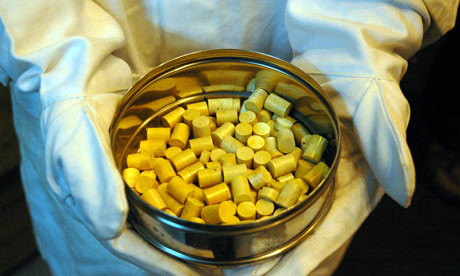
    • India nuclear plans: Thorium pellets at the Bhabha Atomic Research Centre (BARC) in Mumbai

      Thorium pellets at the Bhabha Atomic Research Centre (BARC) in Mumbai, India. Photograph: Pallava Bagla/Corbis

      A year ago this Sunday, a dreadful and terrifying natural disaster was sweeping a trail of death and destruction along the north-eastern coast of Japan. The Tohoku earthquake and ensuing tsunami claimed an estimated 20,000 lives, washing away entire towns and wreaking havoc with the nation’s infrastructure. An oil refinery was set ablaze leading to the death of six workers and a reservoir also failed, killing a further four people. The nuclear reactors at Fukushima experienced a partial meltdown causing the release of radiation, but killing no one.

      The media’s treatment of the entire disaster, however, was completely out of kilter with these facts. The unfolding events at the stricken power station quickly dominated the coverage, ousting the actual earthquake and its dreadful aftermath from the headlines and, it seems, our collective memories. A year later we talk of the anniversary of the Fukushima disaster, not the far, far greater tragedy of the Tohoku earthquake.

      In no way do I wish to make light of the suffering of the thousands evacuated from the exclusion zone around the power station, nor to undervalue the immense bravery of the workers who, under extreme pressure, worked tirelessly to minimise the impact of the accident. But we need to keep things in perspective. This was a terrible event, caused by a much more terrible event, which again brought to the surface the many troubling aspects of how the nuclear industry operates.

      For instance, the siting of reactors on the eastern seaboard of a country highly vulnerable to earthquakes ought to have necessitated far more preventative measures or, better yet, the decision not to build there at all. The reactor itself was over 40 years old and operating company Tepco had been criticised ahead of the accident for lax safety standards.

      The events in Fukushima do not justify a wholesale rejection of nuclear power. We have been able to harness the fissioning of the nucleus of an atom for good and evil, for life-saving medical treatments and to create the atom bomb. Somewhere on this scale of achievements lies our use of nuclear energy. And even within this, not all nuclear power is equal.

      The inventor of the technology upon which most of today’s operating nuclear power stations are based, Alvin Weinberg, was all too aware of this. He worried about some of the safety issues involved in using solid uranium fuel in his water-cooled reactors. He believed this configuration, though useful for creating materials for nuclear weapons, posed too many safety risks and created too much hazardous waste for widespread civilian use. As a result, he also directed a research team that invented a radically differently designed reactor, based on using chemically stable liquid salts as the coolant, and thorium as the fuel. Sadly, though he advocated safer, cleaner nuclear designs for the rest of his life, the world took no heed and the reactors we live with today are still fundamentally the same as those that he considered unnecessarily complex and vulnerable to accident.

      Fortunately, one of the legacies of Fukushima is that while investment in today’s current reactor designs may have slowed, there is a renewed interest in Alvin’s alternative designs and in other fundamentally different approaches. In China, a major R&D programme into thorium molten salt reactors is underway, with the first test reactors to be completed in 2015 and a larger-scale demo ready by the end of the decade. In the US, safer, molten salt cooled pebble bed reactors are being developed. In Europe, there are various research programmes into new designs. Even here in the UK, where nuclear R&D has been starved of investment, important but fragmented research is underway and, with the help of the Weinberg Foundation, I have helped to set up an all-party parliamentary group dedicated to exploring the potential of thorium-based energy.

      Fukushima must mark a turning point in the history of nuclear power. The proponents of the existing technologies should be chastened by the reminder it provided of how things can go wrong. Even if they are not, the providers of investment, both public and private, have had a wake-up call and will proceed with far greater caution.

      But the twin concerns of climate change and energy security mean we cannot afford to turn our back on nuclear altogether, as there is no greater potential source of energy on the planet. It is still an amazing achievement to have harnessed the vast energy forged into the heart of an atom during the dying moments of a star, and a safer, cleaner form of nuclear power is possible. As we move forward we need to admit to the failings of the current technologies and commit to developing new ones now.

      To try to use Fukushima to justify a complete disavowal of the use of nuclear power would be a gross distortion of the extent of the threat it posed. It would also consign the world to greater use of fossil fuels and higher concentrations of greenhouse gases, unleashing many more natural disasters with huge loss of life. This is the real risk we need to be vigilant against.

  • Danger to Nuclear Reactors

    News 9 new results for DANGER TO US NUCLEAR PLANTS
    It should be noted that there 14.474 nuclear reactors in the
    world and How safe are these and what is happening to the     Nuclear Waste?
    Federal regulators say Nebraska nuclear plant fire represented serious safety
    Washington Post (blog)
    A fire that briefly knocked out the cooling system for used fuel at an idled Nebraska nuclear plant last June represented a serious safety threat, federal regulators said in a report released Monday. The Fort Calhoun plant north of Omaha was shut down
    See all stories on this topic »
    Southern California Residents Risk Radioactive Exposure to Demand End to
    OpEdNews
    SONGS has been classified as one of the two most dangerous nuclear power plants in the United States, the other major threat being Indian Point, near New York City. SONGS is located close to houses and within three miles of an elementary school.
    See all stories on this topic »

    OpEdNews
    Feds: Neb. nuclear fire was “serious” threat
    CBS News
    Federal regulators say a fire that briefly knocked out the cooling system for used fuel at a Nebraska nuclear plant last June represented a serious safety threat. The Nuclear Regulatory Commission says in a preliminary report Monday that the Fort
    See all stories on this topic »
    A Fukushima end to the nuclear argument
    Climate Spectator
    The problems in Japan have probably ended the risk of Australia going down the nuclear path for the foreseeable future. Fukushima is also a reminder that financial considerations can lead to dangerous short cuts in design and operation.
    See all stories on this topic »
    Ft. Calhoun fire serious threat, report says
    Omaha World-Herald
    By Leslie Reed An electrical fire last June posed a high safety risk for the Fort Calhoun nuclear power plant, the Nuclear Regulatory Commission has ruled in a preliminary finding released Monday. A spokesman for the Omaha Public Power District said
    See all stories on this topic »
    Fukushima still affecting US nuclear industry
    Power Engineering Magazine
    As the world tries to understand the benefits and dangers of nuclear energy, there seems no end to contradictions about the “lessons” of Fukushima Dai-ichi — the near twin of TVA’s Browns Ferry Nuclear Plant in Athens, Ala. Three Fukushima reactors
    See all stories on this topic »
    One year after Fukushima, time for a more mature debate on nuclear
    MercoPress
    Since Fukushima, important developments have taken place. Germany has decided to shut down its fission plants. Moreover, in a referendum, 95% of the Italian public opposed plans to restart a nuclear programme in the country. However, the United States
    See all stories on this topic »

    MercoPress
    Fukushima – one year later
    Malaysia Star
    By MARTIN KHOR As the world marks the first anniversary of Japan’s triple tragedy, lessons are still being drawn from the Fukushima nuclear accident and the dangers of nuclear power plants. IT’S been a full year since Japan’s triple disaster of
    See all stories on this topic »
    A year after Fukushima, U.S. public turns negative on nuclear power
    Houston Chronicle (blog)
    A few years ago, with energy costs rising, some government subsidies and the threat of climate change, it appeared like nuclear energy might be making a comeback. But now there are so many headwinds it’s hard to see a bunch of nuclear power plants
    See all stories on this topic »

    Houston Chronicle (blog)


    This once a day Google Alert is brought to you by Google.

    Delete this alert.
    Create another alert.
    Manage your alerts.

  • Dogs take lead in sniffing out Arctic oil

    Our Faithful and Loyal friends ‘DOGS’

    Dogs take lead in sniffing out Arctic oil

    Shell has been training a dachshund and two border collies to detect oil spills beneath snow and ice

    • guardian.co.uk, Monday 12 March 2012 14.46 GMT
    • Article history
    • trained dogs to detect oil spills

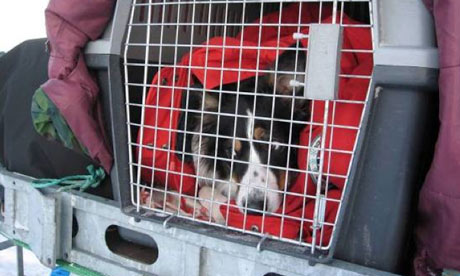
      Trained dogs are transported by snowmobile sledge to detect oil spills – a study has shown they can do so from up to 5km away. Photograph: Sintef

      When it comes to drilling for oil in the harsh and unpredictable Arctic, Shell has gone to the dogs, it seems. A dachshund and two border collies to be specific.

      The dogs’ ability to sniff out oil spills beneath snow and ice has been tested and paid for by Shell – and other oil companies and government research organisations – in preparation for the industry’s entry into the forbidding Arctic terrain. The company hopes to begin drilling for oil off the north-west coast of Alaska in June.

      The project, conducted by independent Norwegian researchers Sintef off the Svalbard archipelago in northern Norway in 2009, set out to find a low-tech fix to a nightmare scenario for Arctic drilling: how to clean up a spill in remote waters?

      The technology for detecting and tracking spilled oil in the Arctic is still in the early stages. To make clean-up even more challenging, the areas in the Chukchi Sea to be drilled are 1,000 miles from the nearest coastguard base.

      As the study itself notes: “Today, no proven operational system exists for detecting oil spill covered by snow and/or ice or hidden under beach sediments.” The remote and challenging Arctic environment made it difficult to rely on sensitive technological equipment, it added.

      However, the campaign group Greenpeace said dachshund sniffer dogs were not the answer.

      “The idea that small dogs can track leaking oil deep under the Arctic pack ice in the middle of winter is absurd,” said Ben Ayliffe, Arctic campaigner for Greenpeace. “The fact that they are paying good money to seriously use this as an option shows how much they are scrabbling around for a solution.”

      Others said the study should be an embarrassment to the industry. “This is another example of how we do not have adequate science and technology yet to drill in the Arctic Ocean – particularly in ice,” Marilyn Heiman, the director of the US Arctic Programme for the Pew Environment Group said in an email.

      “It is embarrassing that using dogs to sniff out oil is the best technology we have to track oil under ice. Industry needs to invest in research to determine how to track oil under ice, as well as significantly improve spill response capability in ice, before [being] allowed to drill in ice conditions.”

      A spokesman for Shell said the company had done additional research on oil-sniffing dogs since the 2009 study but “nothing major”. Curtis Smith, the spokesman, said Shell has no plans to deploy the dogs in Alaska.

      The company’s oil spill response plan, approved by the interior department last month, calls for a fleet of vessels to be on standby at all times, as well as for the construction of a special capping system that would be able to capture and store up to 80,000 barrels of oil a day.

      “Shell and others are looking mainly at technology like advanced radars [and] satellite to detect oil under ice,” Smith wrote in an email.

      The absence of canine participation is in no way the dogs’ fault. The dogs – border collies Jippi and Blues, and dachshund Tara – were able to pick up the scent of oil up to 5km downwind of a spill, the researchers found.

      They held up well to long flights, -40C temperatures, and bumpy snowmobile journeys. They were also able to focus on their mission – and did not go tearing off after polar bear or seals, the study said.

      “This gives us future possibilities in using specially trained dogs to search large areas covered with snow and ice to detect possible oil spills,” the study added.

  • Oil Price Daily News Update

    Oil Price Daily News Update


    Tripoli Should Keep its Oil House in Order

    Posted: 11 Mar 2012 10:27 AM PDT

    OPEC in its monthly report for March notes a steady increase in Libyan oil production since the conflict began last year. Production for February, the cartel reports, was about 75 percent of the pre-war levels. This week, the country’s prime minister received accolades from Washington as Tripoli marched closer to June elections for a constitutional assembly. OPEC, however, warned that unrest could resume if the interim administration in Tripoli fails to generate broad-based national support. If lingering political issues in Iraq provide any insight,…

    Read more…

    High Oil Prices Cushion Iran from Sanctions

    Posted: 11 Mar 2012 10:22 AM PDT

    So far, high petroleum prices are helping Iran beat the new, ‘crippling’ US and EU sanctions. And, ironically, it is the Obama re-election campaign that is suffering most from the sanctions, not IranWhile Iran is producing about 500,000 barrels a day less today than was typical for it in recent years, the price has risen over 20% in recent months. As the Bernama article points out, if Iran made $250 million a day on petroleum exports of 2.5 million barrels a day at $100 a barrel (the Brent crude price of last fall), and if the exports…

    Read more…

    Petrodollar Exiting Through the Back Door?

    Posted: 11 Mar 2012 10:17 AM PDT

    “When the dollar collapse comes, it will happen two ways – gradually then suddenly. That formula, famously used by Hemingway to describe how one goes bankrupt, is an apt description of critical state dynamics in complex systems. The gradual part is a snowflake disturbing a small patch of snow, while the sudden part is the avalanche. The snowflake is random yet the avalanche is inevitable. Both ideas are easy to grasp. What is difficult to grasp is the critical state of the system in which the random event occurs.” Jim Rickards,…

    Read more…

    Estonia Strives to Shake off Soviet Energy Dependence

    Posted: 11 Mar 2012 09:53 AM PDT

    The three Soviet republics of Estonia, Latvia and Lithuania were always undigested morsels in the maw of the USSR. Liberated by the 1919 Treaty of Versailles into independence, the three nations enjoyed freedom until the cynical Nazi-Soviet Nonaggression Pact of August 1939 assigned them to the Soviet sphere of influence between Hitler and Stalin. Subsequently absorbed by the USSR, the states were “liberated’ by the Nazis in their 1941 Soviet invasion plan Operation Barbarossa, only to be “re-liberated” in 1944 by the Red…

    Read more…

    Successful Cultivation of Seaweed Could be Biofuels Greatest Hope

    Posted: 11 Mar 2012 09:50 AM PDT

    The numbers for productivity of seaweed are stunning compared to everything other than algae on land. The problem is the cultivation, growing the preferred species, harvesting it and getting it to shore for processing. Prof. Avigdor Abelson of Tel Aviv University’s Department of Zoology and the new Renewable Energy Center, with his colleagues Dr. Alvaro Israel of the Israel Oceanography Institute, Prof. Aharon Gedanken of Bar-Ilan University, Dr. Ariel Kushmaro of Ben-Gurion University, and their Ph.D. student Leor Korzen are now developing…

    Read more…

    You are subscribed to email updates from OilPrice.com Daily News Update
    To stop receiving these emails, you may unsubscribe now.
    Email delivery powered by Google
    Google Inc., 20 West Kinzie, Chicago IL USA 60610
    Reply
    Forward
  • Peak Oil News

    News 2 new results for PEAK-OIL
    Peak Oil Breakthru: 600 Miles To The Gallon
    World Of WallStreet
    Per passenger that is. That’s 8 passengers at 75 mpg. Great piece by Chris Nelder on oil demand if you click thru the photo. Scariest Peak Oil piece I’ve read in more than a year. By the way, I’m seeing more 50cc scooters here in the USA.
    See all stories on this topic »
    Green quiz at the inn
    Ripley Today
    The group comprises local people who are trying to tackle the challenges of peak oil and climate change with action at a community level. Chairman Ian Jackson said: “We will also be running a Climate Week quiz, starting at 8pm. All are welcome.
    See all stories on this topic »


    Tip: Use site restrict in your query to search within a site (site:nytimes.com or site:.edu). Learn more.

    Delete this alert.
    Create another alert.