Category: Articles

  • More Nuclear news

    News 9 new results for DANGER TO US NUCLEAR PLANTS
    Letters: Concerns grow over threat from Iran, defense cuts
    USA TODAY
    By Majid Asgaripour, AP In southern Iran: A worker bikes in front of the Bushehr nuclear power plant last year. The greatest danger is $500 billion in “sequestration” cuts that would affect virtually all new weapons systems, including the stealth
    See all stories on this topic »

    USA TODAY
    German Offshore Wind Energy Delays Threaten Energy-Plan Overhaul
    Bloomberg
    ‘Not in Danger‘ The German government says the delays won’t affect its goal of shutting all nuclear reactors by 2022 and raise the share of renewables to 35 percent of the total installed capacity from about 20 percent last year.
    See all stories on this topic »
    US Nuclear Weapons Summit Addresses Terrorism Threat
    Eurasia Review
    Key members from the US military and from federal law enforcement agencies joined scientists and laboratory administrators on Wednesday, Thursday and Friday in Arlington, Virginia for the Defense Department’s Nuclear Deterrence Summit.
    See all stories on this topic »
    Close Coordination Keeps Nuclear Weapons from Terrorists, US Official Says
    defpro
    Navy reactors, emergency operations, nuclear security and counterterrorism. The interface between agencies is part of what President Barack Obama called “looking at countering the single biggest threat to the United States‘ security,” he said.
    See all stories on this topic »
    Nuclear officials meet Iranian leaders amid rising tensions in region
    CNN International
    US and European diplomats were still trying to gauge the sincerity of the Iranian offer, but US Secretary of State Hillary Clinton called it “an important step.” Israel has made clear it considers a nuclear-armed Iran a threat to its existence and has
    See all stories on this topic »
    ‘Many aspects’ of nuclear safety of concern to Azerbaijan
    News.Az
    Going back to the upcoming summit in Korea, I would like to ask what aspects of nuclear safety are the most relevant to Azerbaijan? Besides our own problems (for example, the idea of constructing our own nuclear power plants), the threat to nuclear
    See all stories on this topic »

    News.Az
    An American warning
    Haaretz
    A worker in the nuclear power plant in Bushehr, Iran. Photo by: AP The United States in particular, or the West in general, cannot be accused of ignoring the Iranian threat. The burden of sanctions imposed on Iran, together with Washington’s frequent
    See all stories on this topic »

    Haaretz
    Another Look at the Inside of Fukushima Daiichi
    Wall Street Journal (blog)
    By WSJ Staff AP As the clock ticks down toward the first anniversary of Japan’s big nuclear accident last March, the press got its second peek at the state of the stricken Fukushima Daiichi plant. This account is based on a pool report of the tour,
    See all stories on this topic »
    Panel finds little danger from tsunami debris
    Juneau Empire
    affected by a damaged nuclear power plant, poses little danger to Alaska people or seafood. (AP Photo/Dan Joling) Dr. Ward Hurlburt, director of the Alaska Division of Public Health, speaks at a tsunami debris panel discussion organized by US Sen.
    See all stories on this topic »
  • Oil Price Daily News Update

    Oil Price Daily News Update


    UK’s Nuclear Sector Set to Expand Following New Energy Pact with France

    Posted: 20 Feb 2012 08:57 AM PST

    On Friday the British Prime Minister David Cameron signed a new energy pact with French President Nicolas Sarkozy that will lead to the construction of more nuclear power plants in the UK and attract more than £500 million ($791 million) of private sector investment. Cameron said that, “as two great civil nuclear nations, we will combine our expertise to strengthen industrial partnership, improve nuclear safety and create jobs at home. Deals signed today will create more than 1,500 jobs in the UK.” After the Fukushima incident…

    Read more…

    Keystone XL Likely to be Reviewed After US Presidential Elections

    Posted: 20 Feb 2012 08:56 AM PST

    In January President Barack Obama delayed any decisions on the Keystone XL Pipeline, citing that he needed more time to assess the environmental impacts. He has not rejected the pipeline, which gives TransCanada, the company behind the proposal, hope for a permit grant in the future. Many believe that Obamas delay is merely a political ploy to avoid making a controversial decision during an election year, which is bound to upset many people no matter which way he votes. As such, the belief is that talks will reopen after the presidential election…

    Read more…

    Australia Look to Free Market Economics for their Energy Security

    Posted: 20 Feb 2012 08:54 AM PST

    The general energy objective in the US is to achieve energy independence, because they believe it will ensure energy security. In Obamas State of the Union speech he proclaimed that “with only 2% of the world’s oil reserves, oil isn’t enough. This country needs an all-out, all-of-the-above strategy that develops every available source of American energy.” Mitt Romney showed his agreement that energy independence is linked to energy security when he said “it doesn’t make sense to me to send $1 billion a day out of our…

    Read more…

    China’s Benign Foreign Policy Image at Odds with South China Sea Stance

    Posted: 19 Feb 2012 10:35 AM PST

    Beijing for years has relentlessly projected a benign image in its foreign policy, but as its maritime neighbors are discovering, China’s pacifist representations do not extend to energy issues, most notably in the disputed South China Sea. Now, Chinese “imperial” overreach may bring U.S. naval forces once again into the western Pacific, as Beijing’s southeast Asian neighbors feel increasingly threatened by China’s overarching territorial claims in the South China Sea. China currently contends sovereignty of the Spratly…

    Read more…

    If Oil is a Barometer, Beijing is Rising

    Posted: 19 Feb 2012 10:30 AM PST

    Beijing said recently it wanted to increase the amount of oil it gets from Russia through a major oil pipeline running to the Pacific Ocean. Beijing, however, would likely have to fend off other Asian economies, as well as the United States, in order to get that extra crude. With the Pentagon talking about shifting its pressure points to the Asia-Pacific region, Beijing’s growing energy appetite highlights the broader geopolitical realignment toward the East. The United States and China together sit on top of the international economic hierarchy.…

    Read more…

    The Time of Big Government is Coming to an End

    Posted: 19 Feb 2012 10:26 AM PST

    As economies contract, a global popular uprising confronts power elites over access to the essentials of human existence. What are the underlying dynamics of the conflict, and how is it likely to play out? 1. PrologueAs the world economy crashes against debt and resource limits, more and more countries are responding by attempting to salvage what are actually their most expendable features—corrupt, insolvent banks and bloated militaries—while leaving the majority of their people to languish in “austerity.” The result, predictably,…

    Read more…

    Why Algal Biofuels May Never Hold the Key to the Future

    Posted: 19 Feb 2012 09:59 AM PST

    The depletion of world rock phosphate reserves will restrict the amount of food that can be grown, a situation that can only be compounded by the production of biofuels, including the potential large-scale generation of diesel from algae. The world population has risen to its present number of 7 billion in consequence of cheap fertilizers, pesticides and energy sources, particularly oil. Almost all modern farming has been engineered to depend on phosphate fertilizers, and those made from natural gas, e.g. ammonium nitrate, and on oil to run tractors…

    Read more…

    Natural Gas Analysis for the Week of February 20, 2012

    Posted: 19 Feb 2012 09:56 AM PST

    April Natural Gas futures finished at a three week high while continuing its base-building process. This is important from a technical perspective because typically, the wider the base, the stronger the impending breakout. Now that the market has crossed over to the bullish side of a pair of steep downtrending Gann angles, traders are probably setting their sights on the next Gann angle at 2.8050. Breaking through this price along with the January 30 high at 2.9420 is likely to trigger an acceleration to the upside. The week-ending January 27,…

    Read more…

    You are subscribed to email updates from OilPrice.com Daily News Update
    To stop receiving these emails, you may unsubscribe now.
    Email delivery powered by Google
    Google Inc., 20 West Kinzie, Chicago IL USA 60610
  • Pathways to a lower Carbon & more Electrified Future – Unveiling the Equinox

    News 2 new results for PEAK-OIL
    Pathways to a Lower Carbon & More Electrified Future – Unveiling the Equinox
    Einnews Portugal
    How different would our human civilization be with fewer energy limitations – less risk of climate change, no peak oil, and more renewable ways to provide power to an exploding global population? But, this is not our present scenario.
    See all stories on this topic »
    ISU may be striking gold, but at what cost?
    Indiana Statesman
    Our new institute for Community Sustainability (ICS) began seeking answers to the world’s dire issues, such as climate change, carbon emissions and peak oil. ISU has been passionate about its intentions to go carbon neutral by 2050,
    See all stories on this topic »
  • Nuclear power is an expensive gamble that may (or may not )pay off

    Nuclear power is an expensive gamble that may (or may not) pay off

    Energy deals could suck in vast resources for generations, or prove one of the most far-sighted government decisions ever

    • Hinkley Point at Bridgwater

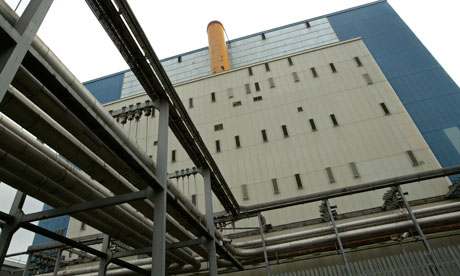
      A picture of the now decomissioned Hinkley A nuclear power plant. A new Hinkley C plant is proposed near the Bridgwater site in Somerset. Photograph: Martin Argles for the Guardian

      Britain’s energy future starts in Paris with David Cameron and Nicolas Sarkozy signing formal agreements for the UK and France to work together on nuclear power. Attention will soon shift to a 500-hectare (1,250-acre) plot in Somerset where the French state energy giant EDF hopes to start work on Hinkley C. If all goes to plan, the first nuclear power station to be built in Britain since 1995 will generate 2,000MW of electricity a year by 2018-2019.

      The reality is that few, if any, of the world’s 435 working nuclear power stations were built to cost, or on schedule – the prototypes of the two stations EDF wants to build in Britain have taken far longer and proved much more expensive to build than anyone ever expected.

      The Paris agreements only allow preparatory work to start, but they do establish one version of the low-carbon electricity future that climate change demands. The deals also address the fact that Britain has very few young engineers to run what may eventually be eight or more nuclear stations, by providing money for a training centre in Bridgwater, Somerset.

      However, while EDF’s earth-movers arrive in Somerset for Hinkley C, questions about radioactive waste management, long-term fuel supplies, vulnerability to terrorist attack, the risk of radiation, decommissioning, coastal siting, flooding, exorbitant costs and accident liabilities which were all skated over in consultations last year, have not been answered and are likely to come back to haunt governments for generations.

      Nuclear critics, like the former energy secretary Chris Huhne, argue that nuclear energy is a tried and failed technology which has needed hundreds of billions of pounds of state subsidies and sweeteners but still generates expensive and dangerous energy.

      The question hanging over Britain’s new stations will be whether cheaper, safer, alternatives become available. If so, Britain will be embarrassed, chained to a massively expensive technology that will suck in resources for ever. If they do not, the decision to build them may prove to be one of the most far-sighted taken by any government.

  • Re the provision of Solar Trains.

    Re the provision of Solar trains.

    It should be noted that the costs of the necessary infrastructure involved in providing Solar Trains

    needs to be evaluated and may be an inhibiting factor in the provision of such trains.

    This has been drawn to my attention after recent posts. Financing these trains may pose problems.


  • Works starts on World’s largest solar bridge at Blackfriars

    Work starts on world’s largest solar bridge at Blackfriars

    By

    13:16 October 5, 2011

    The new Blackfriars railway station, being built on the foundations of a Victorian bridge ...

    The new Blackfriars railway station, being built on the foundations of a Victorian bridge spanning the River Thames in London, has started to have the first of over 4,400 solar panels installed on its roof (All photos: Solarcentury/Network Rail)

    Image Gallery (4 images)

    Get 3 Solar Quoteswww.solarmarket.com.au
    Solar Market Free service, no obligation to buy

    Ads by Google

    Blackfriars Bridge, a Victorian rail bridge in the heart of London, is now well on its way to becoming the biggest solar array in the city and the world’s largest solar bridge. When the installation is complete, the roof of the new Blackfriars railway station will be home to over 6,000 square meters (64,583 sq.ft.) of solar panels, satisfying half of the station’s power needs.

    We recently featured a two mile stretch of rail tunnel with 16,000 solar panels on the roof, providing power to signaling, lighting, and heating of railway stations, and also to some of the trains using the Belgian rail network.

    Now, Blackfriars Bridge has started to have over 4,400 high-efficiency Sanyo HIT photovoltaic panels installed on its newly-built roof by London-based Solarcentury and engineers from Jacobs. Blackfriars spans the River Thames, and was originally built during the age of steam in 1886.

    The new Blackfriars Station is currently being redeveloped as part of a Network Rail Thameslink program upgrade (with funding from the Department for Transport’s safety and environment fund), which aims to have longer trains – meaning more seats for commuters – running from Bedford to Brighton via London. The solar installation will generate a claimed 900,000kWh of electricity every year, and will be joined by other energy-saving measures such as rain harvesting systems and sun pipes for natural lighting.

    High Quality Solar Powerwww.cbdsolar.com.au
    German solar panels and inverters Backed by ASX-listed