Category: Climate chaos

The atmosphere is to the earth as a layer of varnish is to a desktop globe. It is thin, fragile and essential for preserving the items on the surface.150 years of burning fossil fuel have overloaded the atmosphere to the point where the earth is ill. It now has a fever. Read the detailed article, Soothing Gaia’s Fever for an evocative account of that analogy. The items listed here detail progress on coordinating 6.5 billion people in the most critical project undertaken by humanity. 

  • Extreme weather becoming more common, study says

    Extreme weather becoming more common, study says

    Rise in blocking-patterns – hot or wet weather remaining stuck over regions for weeks – causing frequent heatwaves or floods

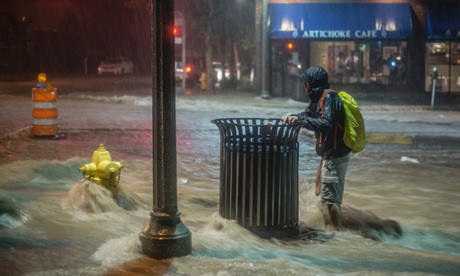
    A pedestrian hangs on to a trash can along Central Avenue as rainwater flows towards downtown Albuquerque, N.M.,  August 1, 2014.  Heavy rains late Friday night caused the flash flooding and road closures in parts of downtown and in other areas.
    A man hangs on to a trash can as rainwater gushes towards Albuquerque in New Mexico, US. Heavy rains caused flash flooding and road closures in the city earlier this month. Photograph: Roberto E. Rosales/AP

    Extreme weather like the drought currently scorching the western US and the devastating floods in Pakistan in 2010 is becoming much more common, according to new scientific research.

    The work shows so-called “blocking patterns”, where hot or wet weather remains stuck over a region for weeks causing heatwaves or floods, have more than doubled in summers over the last decade. The new study may also demonstrate a link between the UK’s recent flood-drenched winter and climate change.

    Climate scientists in Germany noticed that since 2000 there have been an “exceptional number of summer weather extremes, some causing massive damage to society”. So they examined the huge meanders in the high-level jet stream winds that dominate the weather at mid-latitudes, by analysing 35 years of wind data amassed from satellites, ships, weather stations and meteorological balloons. They found that blocking patterns, which occur when these meanders slow down, have happened far more frequently.

    “Since 2000, we have seen a cluster of these events. When these high-altitude waves become quasi-stationary, then we see more extreme weather at the surface,” said Dr Dim Coumou, at the Potsdam Institute for Climate Impact Research. “It is especially noticeable for heat extremes.” The intense heatwaves in Russia in 2010, which saw 50,000 people die and the wheat harvest hit hard, and in western Europe in 2003, which saw 30,000 deaths, were both the result of blocking patterns. The Intergovernmental Panel on Climate Change concluded in 2011 that extreme weather would become more common as global warming heats the planet, causing both heatwaves and increasingly severe rain storms.
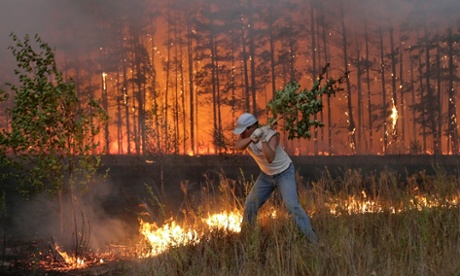
    A Russian man tries to stop fire near village Dolginino on August 4, 2010. Russia's worst heatwave for decades shows no sign of relenting, officials warned as firefighters battled hundreds of wildfires in a national disaster that has claimed at least 40 lives.
    In 2010, heatwaves caused hundreds of wildfires across Russia. Above, a man tries to stop a fire near Dolginino village. Photograph: Artyom Korotayev/AFP/Getty Images

    The rise in blocking patterns correlates closely with the extra heating being delivered to the Arctic by climate change, according to the research which is published in the journal Proceedings of the National Academies of Science (PNAS). Coumou and his colleagues argue there are good physical reasons to think there is a causal link, because the jet streams are driven by the difference in temperature between the poles and the equator. As the Arctic is warming more quickly than lower latitudes, that temperature difference is declining, providing less energy for the jet stream and its meanders, which are called Rossby waves.

    Prof Ted Shepherd, a climate scientist at the University of Reading, UK, but not involved in the work, said the link between blocking patterns and extreme weather was very well established. He added that the increasing frequency shown in the new work indicated climate change could bring rapid and dramatic changes to weather, on top of a gradual heating of the planet. “Circulation changes can have much more non-linear effects. They may do nothing for a while, then there might be some kind of regime change.”

    Shepherd said linking the rise in blocking events to Arctic warming remained “a bit speculative” at this stage, in particular because the difference between temperatures at the poles and equator is most pronounced in winter, not summer. But he noted that the succession of storms that caused England’s wettest winter in 250 years was a “very good example” of blocking patterns causing extreme weather during the coldest season. “The jet stream was stuck in one position for a long period, so a whole series of storms passed over England,” he said.
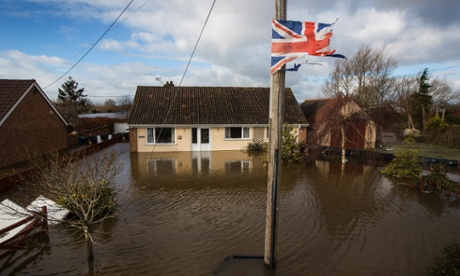
    Flooding in the town of Northmoor Green (Moorland), where almost all residents have now been evacuated, Somerset, 10 February 2014
    Flooding in Northmoor Green (Moorland) in Somerset, UK, in February this year. Photograph: David Levene for The Guardian

    Coumou acknowledges his study shows a correlation – not causation – between more frequent summer blocking patterns and Arctic warming. “To show causality, computer modelling studies are needed, but it is questionable how well current climate models can capture these effects,” he said.

    Prof Tim Palmer, at the University of Oxford, wrote in a PNAS article in 2013 that understanding changes to blocking patterns may well be the key to understanding changes in extreme weather, and therefore to understanding the worst impacts of climate change on society. But he said climate models might have to run down to scales of 1km to do so. “Currently, national climate institutes do not have the high-performance computing capability to simulate climate with 20km resolution, let alone 1km,” he wrote. “[I] look forward to the day when governments make the same investment in climate prediction as they have made in finding the Higgs boson.”

  • Coal bed methane: sorting the information from misinformation

    Join us on Linkedin

    Coal bed methane: sorting the information from misinformation

    Sam Dodson looks to sieve through the reams of misrepresented facts and misinformation in the hunt for accurate data on the benefits – or otherwise – of coalbed methane.


    A recently published report in the Proceedings of the National Academy of Sciences (PNAS) in the US has extolled some of the benefits of coalbed methane (CBM) and other unconventional resources, while also noting the need for further study to determine both the benefits and risks associated with developing such fuel sources.

    The report has been held up by industry lobbyists as a sign of the potential benefits of CBM: for example, the report noted that CBM would release “half the CO2 of coal”.  Meanwhile, activists pitted against the development of unconventionals have either refuted the report or drawn attention to its stance that further study into the industry is needed.

    Both groups would look to sway public opinion to their own way of thinking and, as such, choose to grasp at and support any report or news development that would appear to back up their claims, regardless of how accurate any such thing may be.

    Indeed, there is a growing body of research showing that, when a person’s worldview is threatened by scientific evidence, they interpret the science in a biased manner. People choose the data that supports their views, or views of those closest to them, and place greater weight on evidence that confirms those beliefs, while ignoring or resisting conflicting evidence.

    Mass communication and social media

    With the advent of mass communication, activists and lobbyists are able to spread the evidence that supports their views with ease. Both groups will also respond to each other’s actions in kind: an industry lobby group posts an article extolling the benefits of CBM, and attacking those that refute such benefits; activists post information that claims the opposite is true.

    As Michael Roche, CEO of Queensland Resources Council (QRC), at last year’s Coaltrans World Coal Conference in Berlin explained: “with so much of the world now connected and active on social media platforms,” it is easy to “hi-jack the good will of social media users and exploit this in order to spread a false message to serve [a group’s] own purpose.”

    In a classic example of the way groups can spread disinformation, a number of activist “eco groups” spread false or doctored images that claim to show the negative effects of dredging and seaborne coal transport. Roche said that to believe this was in any way the case was entirely false, explaining that the coal and shipping industries have worked alongside reef authorities and their interaction with the Great Barrier Reef has been under close scrutiny for many years with no evidence that the industry does any damage. Roche also said it would not make sense for any industry professional to claim otherwise or do anything that in anyway endangered the reef: “We all have a vested interest in ensuring the reef continues to survive,” Roche said.

    Roche, of course, has his own vested interest in supporting the coal industry – evidence indicates that the QRC receives AU$ 103 million from the coal industry to press the case for the state’s coal miners. Attacking the source of this income does not necessarily pay such rich dividends.

    Another example, is the recent spat between the Australian Petroleum Production & Exploration Association (APPEA) and the Australian Medical Association (AMA). The AMA had recently suggested that natural gas from coal seams poses a risk to human health, a claim the APPEA accused of having more political overtones than scientific foundation. The AMA, in turn, argued that the opposite was the case.

    Trying to find true, real and accurate information among all the misinformation can therefore be a significant challenge.

    Fact and fiction

    Alex Wonhas, from the Gas Industry Social and Environmental Research Alliance (GISERA), explains that: “deciding whether CBM is good or bad is wholly dependent on the individual’s definition of the words ‘good’ or ‘bad’.”

    “It is in the interests of the industry to make you believe that CBM is good, while the opposite is true for other groups. The role of scientists and organisations such as the Commonwealth Scientific and Industrial Research Organisation (CSIRO) is to act as an honest broker and try to bring some clarity to the debate,” Wonhas adds.

    CSIRO is currently set to investigate whether CBM activity is causing methane seeps in Queensland’s Surat Basin. The study will give authorities baseline data to compare over the life of the CBM industry. “We’ll be able to follow the eventual impacts on methane seeps to the atmosphere from these sources,” Dr Damian Barrett, Spokesman for Australia’s national science agency, said.

    The project will be funded through a partnership between CSIRO and CBM companies operating in Australia.

    It is through scientific research, such as that conducted by the CSIRO, as well as by gathering information in reports, such as the one released in the PNAS, that the information needed to ground our opinions in fact will be provided; rather than selectively choosing the misinformation generated by activists on both sides of the argument.

    One thing else is clear: the world needs energy, yet the fact that human activity (including the creation of energy) effects climate change is almost universally accepted. A balance between these two pressing matters must therefore be struck – and struck quickly. As demand for power and electricity around the globe grows, energy production must increase. All sources of energy – from CBM and other unconventionals to mainstays like coal and gas, as well as renewables – must be considered as viable options in meeting energy needs until scientific fact proves otherwise. To spend time trying to win battles – be they with activists or lobbyists – to conjecture and form biased opinions over a subject as crucial to global development as energy resources is to only ever be on the losing side of an entirely bigger struggle.

  • Daily update: Abbott praises coal, gas, dog-whistles to nuclear

    to enable desktop notifications for Gmail.   Learn more  Hide

    1 of 1
    Why this ad?
    Learn about coal seam gasyoursayagl.com.au – Ask us a question about our natural coal seam gas projects

    Daily update: Abbott praises coal, gas, dog-whistles to nuclear lobby

    Inbox
    x

    Renew Economy editor@reneweconomy.com.au via mail67.atl51.rsgsv.net

    3:16 PM (10 minutes ago)

    to me
    Abbott praises coal, gas, dog-whistles to nuclear lobby; Why “experts” get it wrong on wind and solar; Carnergie receives first ARENA payment for CETO 6 project; Tritium partners with James Cameron for deep-sea dive; Community calls on Alcoa to shut down coal plant; A climate of terror?Keystone XL will spike oil demand and c02, study says; Increase in flights will outweigh carbon cuts; and EV-Lite project reduces battery weight 41%.
    Is this email not displaying correctly?
    View it in your browser.
    RenewEconomy Daily News
    The Parkinson Report
    Australian wave energy developer, Carnegie Energy, have received its first payment from ARENA as part of an $11 million grant for the CETO 6 Project.
    So who has got it right on predicting the growth of wind and solar – green NGOs or the traditional “experts”.
    Australian wave energy developer, Carnegie Energy, have received its first payment from ARENA as part of an $11 million grant for the CETO 6 Project.
    Australian electric vehicle charging company and solar racing car Brisbane business, Tritium, have helped support James Cameron’s deep-sea expedition.
    A 700-people-strong community march in Anglesea has called for Alcoa to shut down its polluting coal power plant.
    Replacing divisive changes to the Racial Discrimination Act with an equally divisive ramping up of counter-terrorism laws suggests the government is using up the last reserves of its political capital.
    A new study says the State Department may have underestimated the Keystone XL pipeline’s CO2 emissions by as much as four times.
    Whatever the industry’s efforts to reduce its carbon emissions, they will be outweighed by the growth in air traffic
    UK-based Cenex has just completed a two-year project to reduce both the weight and cost of EV batteries.
  • Churches want all sides to make climate change an election issue

    Churches want all sides to make climate change an election issue

    MUSLIM, Uniting, Catholic and Hindu religious leaders are to write to the Federal Government and Opposition, urging quick climate change action to help avert a devastating 4C rise in global temperatures.

    The religious leaders say they are as one on human-induced climate change and have called for bipartisan support for carbon pricing, the fast-tracking of renewable energy and the winding back of coal exports.

    Carbon pricing is opposed by Opposition Leader Tony Abbott but supported by Labor.

    The letter follows a prediction from scientists at a conference in Tasmania this week that sea level rises will likely be double the .5m forecast by the Intergovernmental Panel on Climate Change for the end of this century.

    HEATING UP: Religious leaders have issued a dire warning that temperatures are on the rise.
    HEATING UP: Religious leaders have issued a dire warning that temperatures are on the rise. Source: News Limited

    Professor Tim Naish, director of the Antarctic Research Centre at Victoria University of Wellington, said the window was closing quickly on mitigation options in terms of a world response.

    “Rises could be higher than what the upper bounds of IPCC would suggest,” Prof Naish said. “We have got to prepare for a world with extreme climate. Wetter areas will be wetter and warmer places will get warmer.”

    CO2 levels have passed 400 ppm for the first time in 3 million years.

    Weather bureau chief Rob Vertessy said humankind was changing the earth at a rapid pace and in a way that had never happened before.

    “Change on the planet largely stems from population growth, growing consumption and that is going to accelerate all kinds of environmental processes,” Dr Vertessy said.

    “We are going to lose a lot more natural capital and the climate and earth will change with it.”

    Prominent religious leaders to sign the letter include the Grand Mufti Dr Ibrahim Abu Mohammad; the Chair of Catholic Earthcare Australia, Archbishop Philip Wilson; the President of the Uniting Church Assembly, Rev Professor Andrew Dutney; and the Chair of the Hindu Council of Australia, Professor Nihal Agar.

    The letter, which has gone viral on social media a week before its formal launch, says: “Influential bodies are now warning us about an unthinkable 4C rise in temperatures if greenhouse gas emissions continue to increase. Recent experiences of extreme weather events, both here and overseas, are a mild foretaste of what this will mean.”

    Uniting Church NSW-ACT Moderator, the Reverend Dr Brian Brown said: “We urge all Australians to give this moral issue the attention it demands. If we don’t, our children and grandchildren will face devastating consequences because of our failure to act now.”

    In the 2011 Census, more than 67 per cent of Australians identified themselves with the religions from which the signatories are drawn.

  • Coal kills 22,000 Europeans a year

    Burning coal also costs companies and governments billions of pounds in disease treatment and lost working days

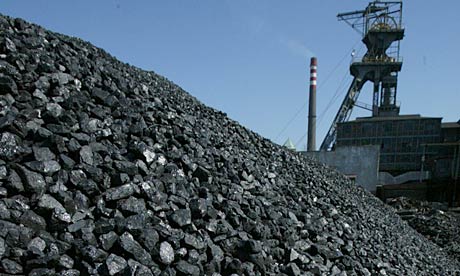
    Freshly mined, high quality coal awaits transport in Katowice, Poland
    Coal awaits transport in Katowice, Upper Silesia. According to the study, Polish coal power plants have the worst health impact in the European Union. Photograph: Sean Gallup/Getty Images
    Air pollution from Europe‘s 300 largest coal power stations causes 22,300 premature deaths a year and costs companies and governments billions of pounds in disease treatment and lost working days, says a major study of the health impacts of burning coal to generate electricity.

    The research, from Stuttgart University’s Institute for energy economics and commissioned by Greenpeace International, suggests that a further 2,700 people can be expected to die prematurely each year if a new generation of 50 planned coal plants are built in Europe. “The coal-fired power plants in Europe cause a considerable amount of health impacts,” the researchers concluded.

    Analysis of the emissions shows that air pollution from coal plants is now linked to more deaths than road traffic accidents in Poland, Romania, Bulgaria and the Czech Republic. In Germany and the UK, coal-fired power stations are associated with nearly as many deaths as road accidents. Polish coal power plants were estimated to cause more than 5,000 premature deaths in 2010.

    The cumulative impact of pollution on health is “shocking”, says an accompanying Greenpeace report. A total of 240,000 years of life were said to be lost in Europe in 2010 with 480,000 work days a year and 22,600 “life years” lost in Britain, the fifth most coal-polluted country. Drax, Britain’s largest coal-powered station, was said to be responsible for 4,450 life years lost, and Longannet in Scotland 4,210.

    According to the study, Polish coal power plants have the worst health impact in the European Union. The Polish government and Polish utilities are planning to build a dozen new power plants. The utility companies with the worst estimated health impacts, according to the report, are PGE (Poland), RWE (Germany and UK), PPC (Greece), Vattenfall (Sweden) and ČEZ (Czech Republic).

    Acid gas, soot, and dust emissions from coal burning are, along with diesel engines, the biggest contributors to microscopic particulate pollution that penetrates deep into the lungs and the bloodstream. The pollution causes heart attacks and lung cancer, as well as increasing asthma attacks and other respiratory problems that harm the health of both children and adults.

    “Tens of thousands of kilogrammes of toxic metals such as mercury, lead, arsenic and cadmium are spewed out of the stacks, contributing to cancer risk and harming children’s development,” says the Greenpeace report, which does not emphasise the impact of coal burning on climate change.

    The 300 plants produce one-quarter of all the electricity generated in the EU but are responsible for more than 70% of the EU’s sulphur dioxide emissions and more than 40% of nitrogen oxide emissions from the power sector. The Greenpeace report notes that coal burning has increased in Europe each year from 2009 to 2012.

    “The results are staggering. The only way to eliminate the health impacts associated with burning coal in Europe is to phase out these dirty power plants and replace them with clean renewable energy. The current EU renewable energy target has been proven to boost renewable energy and help modernise energy systems and the economy. Europe must continue down the path of clean renewable energy by setting an ambitious, binding 2030 renewable energy target,” said Greenpeace International energy campaigner Lauri Myllyvirta.

    The air pollution from coal burning comes on top of transport emissions that are still increasing despite attempts by the EU to force reductions. According to the European Environmental Agency, more than 90% of urban population in the EU is exposed to fine particle (PM2.5) and ozone pollution levels above the World Health Organisation guidelines.

    Greenpeace International is calling on the European commission to come forward with proposals for a binding renewable energy target of 45% and a greenhouse gas reduction target of at least 55% by 2030

  • From the Antarctic Ocean Alliance Team:

    Dear INGA,

    Thank you for Joining The Watch and showing your support for protecting Antarctica’s marine environment. Thanks to you our campaign to save Antarctica’s waters has momentum with over 190,000 global citizens joining you in becoming part of The Watch  – but we need to do more.

    The body that regulates Antarctica’s waters, the Commission for the Conservation of Antarctic Marine Living Resources (CCAMLR), has a crucial meeting coming up in July in Germany. This is our chance to send them a strong message they can’t ignore, that we support the protection of these unique and vital marine environments.

    We need as many people as possible to support Antarctic marine protection and to send that message to CCAMLR, we need 300,000 signatures by July.

    Thanks to you, we already have over 190,000

    Can you help us reach our goal?

    Antarctic waters make up almost 10% of the world’s seas and are some of the most pristine left on earth. They are home to almost 10,000 unique and diverse species including penguins, Weddell seals, albatross and Antarctic toothfish. But unlike Antarctica’s land these waters are not protected.

    Together we can change this.

    Please forward this email to five friends who you think will care about this issue, ask them to Join The Watch with you and help us ensure these waters are protected as a legacy for future generations.

    With your support we can save this precious and truly unique part of the world.

    Thank you again INGA for being part of The Watch to protect the Antarctica’s ocean.

    From the Antarctic Ocean Alliance Team: Steve, Blair, Grigory, Geoff, Donna, Ricardo, Amanda, Cary and Emily

    Edit your subscription | Unsubscribe