Category: Climate chaos

The atmosphere is to the earth as a layer of varnish is to a desktop globe. It is thin, fragile and essential for preserving the items on the surface.150 years of burning fossil fuel have overloaded the atmosphere to the point where the earth is ill. It now has a fever. Read the detailed article, Soothing Gaia’s Fever for an evocative account of that analogy. The items listed here detail progress on coordinating 6.5 billion people in the most critical project undertaken by humanity. 

  • Study says Warming Poses Peril to Asia

    Study Says Warming Poses Peril to Asia


    Published: April 26, 2009

    With diminished rice harvests, seawater seeping into aquifers and islands vanishing into rising oceans, Southeast Asia will be among the regions worst affected by global warming, according to a report scheduled for release on Monday by the Asian Development Bank.

    The rise in sea levels may force the sprawling archipelago of Indonesia to redraw its sea boundaries, the report said.

    All these changes will occur progressively over the next century, the bank estimated, giving countries time to improve their flood control systems, upgrade their irrigation networks and take measures to prevent forest fires, which the report predicts will become more common.

    “Our modeling shows that sea levels will rise up to 70 centimeters,” or about 28 inches, said Juzhong Zhuang, an economist at the bank and one of the authors of the report. “That will force the relocation of many millions of people.”

    Brackish water seeping into the water table in Jakarta, Indonesia, and the rice paddies of the Mekong Delta in Vietnam is already a growing problem, the report says.

    Some of the 92 outermost small islands that serve as a baseline for the claims of coastal waters by Indonesia could disappear, according to the report.

    The margin of error of such complex projections so far into the future remains a nagging question but the report’s conclusions are nonetheless sobering for Southeast Asian nations, which have a combined population of more than 563 million.

    The report focuses on Indonesia, the Philippines, Thailand, Singapore and Vietnam.

    A projected one foot rise in sea levels in the Philippines by 2045 would flood about 5,000 acres, affecting 500,000 people, the report says. Under another sequence of events, sea levels could rise 39 inches by 2080, affecting 2.5 million people in the Manila Bay area.

    The authors of the report urged governments to build infrastructure adapted to climate change, arguing that the current economic crisis was not incompatible with combating and adapting to global warming.

    “The investment in climate change adaptation can serve as an effective fiscal stimulus,” said Tae Yong Jung, another author of the report.

    Southeast Asia is particularly vulnerable to global warming because of the number of people who live near coastlines and the high rate of poverty. About 19 percent of those in Southeast Asian, some 93 million people, live on less than $1.25 a day and are more vulnerable to the projected increase in typhoons, drought and floods.

    The region also has a high percentage of agricultural workers, more than 40 percent of the population, who would face a decline in the production of rubber, rice, corn and other crops because of extreme weather, the report said.

    The number of fish in the oceans is also likely to decline because of changes in currents caused by a warmer atmosphere.

    In cities like Manila, Bangkok and Jakarta, which are already stiflingly hot for several months of the year, average temperatures in 2100 could be nine degrees hotter, the report says, using data from the Intergovernmental Panel on Climate Change.

    “If that’s the case, the cities will be like an oven,” Mr. Zhuang said.
  • Moore’s Law and the Law of More

    Op-Ed Columnist

    Moore’s Law and the Law of More

    Published: April 25, 2009

    It is not an exaggeration to say that the team that President Obama appointed to promote his green agenda is nothing short of outstanding — a great combination of scientists and policy makers committed to building an energy economy that is efficient, clean and secure. Now there is only one vacancy left for him to fill. And it’s one that only he can fill: Green President. Is he ready to do that job with the passion and fight that will be required to transform America’s energy future? Hope so. Not sure  

    Fred R. Conrad/The New York Times

    Thomas L. Friedman

    Related

    Times Topics: Global Warming

    Have no doubt, the president is off to a terrific start: His stimulus package will provide an incredible boost for all forms of renewable energy. The energy bill being drafted by House Democrats Henry Waxman and Ed Markey contains unprecedented incentives for energy efficiency and clean-tech innovation. And the ruling from Mr. Obama’s Environmental Protection Agency saying that carbon dioxide is a pollutant that threatens public health was courageous and historic.

    But while all of that is hugely important, we must not fool ourselves, as we have done for so many years: Price matters. Without a fixed, long-term, durable price on carbon, none of the Obama clean-tech initiatives will achieve the scale needed to have an impact on climate change or make America the leader it must be in the next great industrial revolution: E.T., or energy technology. At this stage, I’d settle for any carbon price mechanism — cap and trade, fee-bates, carbon tax and/or gasoline tax — as long as it real and provides consumers and investors a long-term incentive to shift to clean cars, appliances and buildings.

    Bob Lutz, a vice chairman at General Motors, offers a useful example of why price matters. When Congress demands that Detroit make smaller, lighter, better mileage vehicles, but then refuses to put a higher price on carbon — like with a gasoline tax — so more consumers will want to buy these smaller cars, said Lutz, it is the equivalent of ordering all American shirtmakers to make only size smalls while never asking the American people to go on a diet. You’re not going to sell a lot of size smalls.

    Have no doubt: From right-wing tea parties to coal states to manufacturers, there is going to be a no-holds-barred campaign to kill any carbon price signal, including cap and trade. A vast army of lobbyists is already working against it. Only President Obama can blunt this. Only he has the platform for framing and elevating the issue properly and taking it to the American people with the passion and clarity needed to move the country. It will take more than one speech.

    Here’s one way to start: “My fellow Americans, I want to speak to you about a new economic law. You’ve heard of Moore’s Law in information technology. I’d like to speak to you about the ‘Law of More’ in energy technology. Americans, Indians, Chinese, Africans, we all want more — more comfort in our homes, more mobility in our lives, more technologies with which to innovate. But there is only one way all 6.3 billion of us can have more and not make this an unlivable planet, and that is by living our lives and running our businesses in more sustainable ways and properly accounting for it.

    “Right now we’re paying a huge price — a tax — for everyone trying to achieve more in an unsustainable way. But the ‘More Tax’ is not imposed by the U.S. government. It is a tax imposed by the market and will continue rising indefinitely as more and more people want more and more stuff. It will steadily drive up gasoline prices, home heating prices and factory electricity prices. But because this ‘More Tax’ is set by the market and not the government, many opponents contend that there’s nothing to be done: ‘Oh, $4.50 a gallon gasoline — that’s just the market at work. We can’t do anything about that.’ And then all that tax money out of your pocket goes to enrich oil companies and petro-dictators.

    “My proposal is that today we fix a durable price on carbon-based fossil fuels, but set it to begin only in 2011, after we’re out of this recession. Every home builder, air-conditioning manufacturer, gasoline refiner, carmaker will know that it’s coming and will, I believe, immediately look for ways to profit from and invest in more energy efficient systems. Yes, the cost of gasoline or kilowatt hours will rise in the short term. But in the long term, your actual bills and expenses will go down because your car, appliances and factory will become steadily more productive and give you more power for less energy.

    “I call it the ‘Carbon Tax Cut.’ You won’t receive the dividend in the first week or month, but you will get it soon, and it will be a permanent tax cut, a gift that will keep on giving.

    “So those are our choices, folks — an escalating ‘More Tax’ forever, premised on immediate gratification and short-term thinking, or a ‘Carbon Tax Cut’ forever, which is exactly what you’ll get from establishing a carbon price signal that shapes the market in favor of American interests and not those of our adversaries and competitors. If you’re with me, write your member of Congress and senator today

  • Nicholas Stern: We must not give in to pessimism

    Nicholas Stern: We must not give in to pessimism

    The author of the Stern Review was upbeat in a talk given to promote his new book, A Blueprint for a Safer Planet.


    Lord Nicholas Stern urged people to be optimistic. “The one way of guaranteeing to fail is to assume that we will.” Photograph: Sarah Lee


    It was heartening to hear last night that even the most influential economist in the world on impacts of climate change sometimes feels weighed down by the massive global challenge we face.

    Nicholas Stern, the former chief economist of the World Bank, former head of the UK Government Economic Service and author of the hugely influential Stern Review on climate change in 2006 was speaking at the London School of Economics – where he now heads the Grantham Research Institute on Climate Change and the Environment.

    In the Q&A at the end of Stern’s talk, the Guardian blogger Ed Gilespie asked him how he could be optimistic in the face of contradictory policies by the UK government. Stern confessed that sometimes he could not help focussing on the negatives: “The Russians will cheat, the Americans are not going to give up their SUVs, the Chinese don’t care anyway and the Brits are too lazy to do anything. I can sit in a bar and tell these stories – and I have done – but that doesn’t mean that they are a good basis for action,” he said.

    But if we give in to pessimism then we have already failed to solve the climate crisis, he said. “What’s the alternative to optimism? Unless we act as if we can sort this out you might as well just get a hat and some sun tan lotion and write a letter of apology to your grandchildren. The only way we can think of going forward is to try to make the best of a bad starting point.”

    “The one way of guaranteeing to fail is to assume that we will,” he added.

    Stern’s description of the scale of the problem was characteristically uncompromising – “this is the biggest market failure the world has ever seen”, “the world is more risky than I articulated [in the Stern Review]”, we risk a “transformation of the planet”. But the talk itself, which was to promote his new book, A Blueprint for a Safer Planet, had an upbeat tone. His message was that we have a pretty good idea what the solutions are and what we need to avoid. New technologies like better renewable energy are vital, energy efficiency is a must, deforestation has to be halted and massive fiscal stimulus packages designed to deal with the economic crisis can and should transform the world economy with a greener hue.

    In particular, Stern said the world has to get a move on with carbon capture and storage. Currently around half the world’s electricity comes from burning coal so we have to find a way of doing that without releasing stacks of CO2. “If coal is going to be used, the only response – because it is the dirtiest of all fuels – is that we have to learn how to do carbon capture and storage and we have to learn how to do it quickly on a commercial scale,” he said.

    If CCS won’t work on a large scale we have to find out quickly. “If we can’t then it’s plan B and plan B will be more expensive probably,” he added.

    He repeated his call that the proposed Kingsnorth coal-fired power station should not go ahead unless it is fitted with CCS. “We can’t ask India and China to use new clean coal technologies if we are not prepared ourselves to demonstrate that they work and share those technologies,” he said.

    The UK government’s announcement on Kingsnorth is imminent. It remains to be seen whether it is listening.


    • We will be podcasting a recording of the event. I’ll post a link in the comments when it is up.

  • Threat to European biodiversity ‘as serious as climate change’

    Threat to European biodiversity ‘as serious as climate change’

    Most of Europe’s species and habitats are in poor condition and the risk of extinction continues to rise, environment chiefs are to warn at a major biodiversity conference in Athens this week


      The natural world across Europe is suffering a crisis as serious as the threat of climate change, Europe’s environment chiefs are to warn this week.

    A report from the European Environment Agency (EEA) to be published next month sounds the alarm that most species and habitats across the continent are in poor condition and the risk of extinction continues to rise.

    New figures for the UK also show that even the most important and rare plants and animals are suffering: eight out of 10 habitats and half of species given the highest level of European protection are in an “unfavourable” condition.

    Species at risk in the UK range from insects like the honeybee and swallowtail butterfly, to mammals and birds at the top of the food chain such as the otter and the golden eagle, said the Centre for Ecology & Hydrology (CEH).

    The losses threaten to undermine vital ecosystem services like clean water and fertile soils, which underpin both quality of life and the economy, said Jacqueline McGlade, the EEA’s executive director.

    “Much of our economy in Europe relies on the fact we have natural resources underpinning everything,” McGlade told the Guardian. The losses of wildlife and habitat are a threat to being able to live sustainably within the enviroment in the future, she said. “Some of the losses are irreversible.”

    McGlade will present findings from the agency report at a major conference next week called by the European environment commissioner Stavros Dimas. He is worried that the European commission has failed to meet a pledge to halt biodiversity loss by 2010, and recently warned “the loss of biodiversity is a global threat that is every bit as serious as climate change”.

    “The reasons that we are losing biodiversity are well known: destruction of habitats, pollution, over-exploitation, invasive species and, most recently, climate change,” Dimas will tell the conference in Athens. “The compound effect of these forces is terrifying.”

    At another high-level conference in London on Wednesday, organised by the CEH, leaders from business, government, academics and NGOs will warn that ecosystems underpin human lifestyles from air, water and food to resources for industry.

    Professor Lord May of Oxford, a former government chief scientific adviser and president of the Royal Society, said: “Our massive and unintended experiment on the planet’s reaction to unsustainable levels of human impacts is approaching crisis point. The future is not yet beyond rescue, provided we take appropriate action with due urgency.”

    The EEA report says although there have been some conservation successes, including halting the decline of common songbirds, the “overall status and trends of most species and habitats give rise to concern”.

    Figures for the habitats and species awarded special protection under the EU habitats directive reveal that across 40 countries of Europe and the former Soviet Union, 50-85% of habitats and 40-70% of species were in an “unfavourable” condition, and many more could not be assessed because of a lack of information.

    Across Europe, the biggest declines from 1990 to 2000 had been for bogs and fenland, heathland and coastal habitats. Woodland, forests and lakes had grown, but these increases were dwarfed by the biggest habitat expansion, which was “constructed, industrial, artificial habitats”.

    Populations of some European common birds stopped falling in the 1990s, but all groups of birds had fallen in numbers since 1980, and other species groups like butterflies, amphibians and pollinating insects had declined dramatically, said the report.

    The report notes that habitats and species in the habitats directive were chosen because they were under threat, and so were harder to conserve.

    “Ecosystems generally show a fair amount of resilience,” it adds. “Beyond certain thresholds, however, ecosystems may collapse and transform into distinctly different states, potentially with considerable impacts on humans.”

    Reforms to be put to the conference in Athens include better management of protected areas, which now make up more than 17% of the European Union territory; targets for economic sectors, such as transport, to ensure they do not have a negative impact on the environment; and more work on putting a “value” on ecosystem services so conservationists can argue their case against developers, said McGlade.

    “This is not about putting a price on everything, it’s a value. This will transform the discussion because somebody can say ‘you’re eating away at our capital – grassland’, or whatever the landscape or species is.”

    In a statement, Defra, the UK environment department, said the government fully supported strong international targets, but said many conservation schemes were working.

    “For example, England’s Sites of Special Scientific Interest are in better condition than ever at 88.4% in favourable or recovering condition compared with 57% in 2003,” it added.

    Globally, last year’s annual “red ist” of endangered species from the IUCN conservation organisation warned that the world’s mammals face an extinction crisis, with almost one in four of 5,487 known species at risk of disappearing forever.


  • Groups see Added Risks From Change in Climate

    Groups See Added Risks From Change in Climate

    Published: April 24, 2009

    The effects of climate change, especially rising seas, threaten trillions of dollars’ worth of coastal property, and flood-hazard maps, zoning laws, building codes and insurance rates in the United States do not accurately reflect the risk, an unusual coalition of groups reported Thursday.

    The coalition — organized by the Heinz Center, a research organization that focuses on environmental issues, and Ceres, an organization of environmentally conscious investor, insurance and other groups — said the nation had failed to take “reasonable steps” to reduce economic losses and protect residents of the coast.

    In a report, it urged that government flood-hazard maps be updated and that local land-use policies bar people from building or rebuilding in areas at high risk of flooding.

    Property owners should be encouraged to make their buildings more storm-resistant, the coalition added. It cited research by the Wharton School indicating that tougher construction codes could reduce damage from coastal storms by more than 60 percent.

    Spokesmen for the coalition acknowledged at a telephone conference that the report’s recommendations were not new. But Mindy Lubber, president of Ceres, said she hoped the coalition’s broad range — a mix of investment, insurance, government and conservation groups — would bring “unique leverage” to the issue.

    The coalition members, who are supporting one another’s initiatives, include insurance companies like Travelers and Fireman’s Fund, the Wharton School, the Nature Conservancy, the National Oceanic and Atmospheric Administration, Calvert Investments and other groups.

    In an earlier interview, Sharlene Leurig, who manages the insurance program at Ceres, said storms in recent years had caused such immense economic losses along the coasts that many insurance companies had limited or even halted underwriting there.

    Given that half of Americans live in coastal counties, “that is not a sustainable business plan,” Ms. Leurig said, adding, “They are stepping away from a sizable portion of their business.”

    But she and other members of the coalition said federal and state efforts to help people obtain insurance at low rates were not the answer.

    At the news conference, Ms. Leurig acknowledged that if insurance on coastal property were priced according to risk, premiums would rise, resulting in declines in values in some areas. Nonetheless, she said, insurance premiums can be a powerful tool for communicating risk to potential buyers.

    In the telephone conference, the mayor of Charleston, S.C., Joseph P. Riley, pointed with pride to a county and city initiative that would restrict most development of Johns Island, a rural area south of the city, to a small part of its interior.

    Mr. Riley conceded, however, that island residents were complaining that their property values would decline under the plan and that one developer had sued to block it.

  • The sun’s cooling down- so what does that mean for us ?

    The sun’s cooling down – so what does that mean for us?

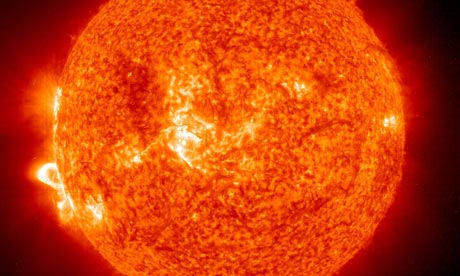
    Region 486 that unleashed a record flare on the sun

    Region 486 that unleashed a record flare on the sun. Photograph: NASA/Getty Images

    The sun’s activity is winding down, triggering fevered debate among scientists about how low it will go, and what it means for Earth’s climate. Nasa recorded no sunspots on 266 days in 2008 – a level of inactivity not seen since 1913 – and 2009 looks set to be even quieter. Solar wind pressure is at a 50-year low and our local star is ever so slightly dimmer than it was 10 years ago.

    Sunspots are the most visible sign of an active sun – islands of magnetism on the sun’s surface where convection is inhibited, making the gas cooler and darker when seen from Earth – and the fact that they’re vanishing means we’re heading into a period of solar lethargy.

    Where will it all end? Solar activity varies over an 11-year cycle, but it experiences longer-term variations, highs and lows that can last around a century.

    “A new 11-year cycle started a year or two ago, and so far it’s been extremely feeble,” says Nigel Weiss of the University of Cambridge. With Jose Abreu of the Swiss Federal Institute of Aquatic Science and Technology in Dübendorf and others, Weiss recently predicted that the long-term solar high we’ve been enjoying since before the second world war is over, and the decline now under way will reach its lowest point around 2020. Their prediction is based on levels of rare isotopes that accumulate in the Earth’s crust when weak solar winds allow cosmic rays to penetrate the Earth’s atmosphere.

    There’s even a chance, says Weiss, that we might be heading for a low as deep as the Maunder minimum of the 17th century. Either side of that trough, Europe shivered through the Little Ice Age, when frost fairs were held on the Thames and whole Swiss villages disappeared under glaciers. So should we expect another freeze?

    Those who claim the rise in temperatures we’ve seen over the last century are predominantly the result of intense solar activity might argue that we should, but they’re in the minority. Most scientists believe humans are the main culprit when it comes to global warming, and Weiss is no exception. He points out that the ice remained in Europe long after solar activity picked up from the Maunder minimum. Even if we had another, similar low, he says, it would probably only cause temperatures on Earth to drop by the order of a tenth of a degree Celsius – peanuts compared to recent hikes. So don’t pack your suncream away just yet.