The atmosphere is to the earth as a layer of varnish is to a desktop globe. It is thin, fragile and essential for preserving the items on the surface.150 years of burning fossil fuel have overloaded the atmosphere to the point where the earth is ill. It now has a fever. Read the detailed article, Soothing Gaia’s Fever for an evocative account of that analogy. The items listed here detail progress on coordinating 6.5 billion people in the most critical project undertaken by humanity.Â
Australia’s national indigenous forestry strategy 2005
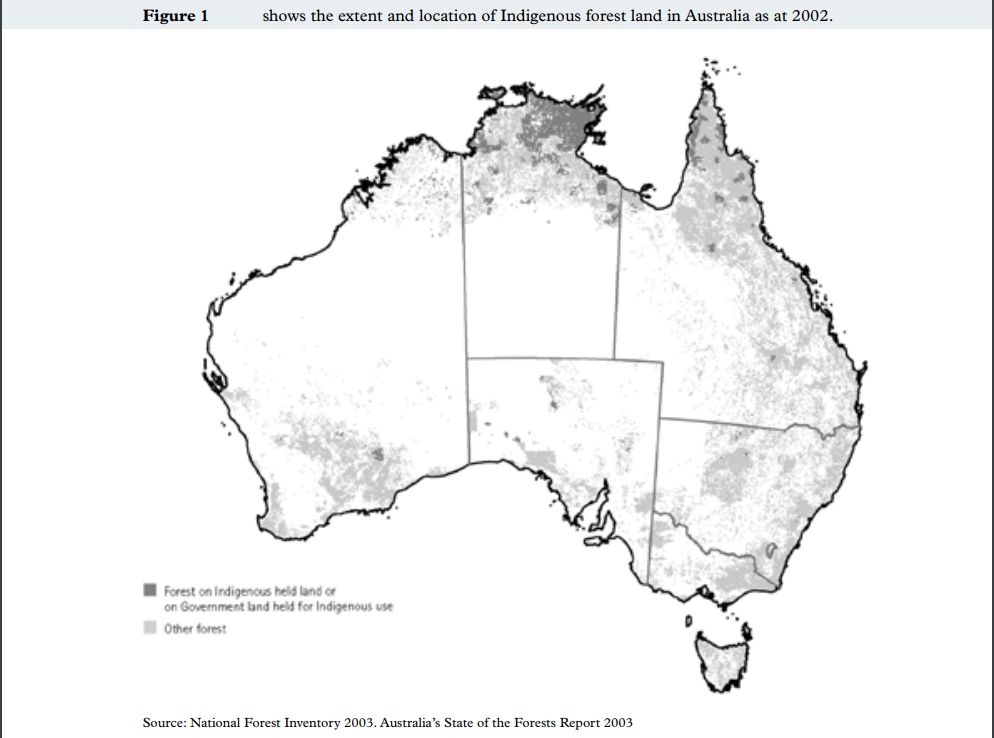
Indigenous forest management is an essential component of the global climate strategy, according to the UN Food and Agriculture Organisation. Senior Forestry officer, David Kaimowitz points out that forests cover one third of the earth’s land surface and must be maintained and nurtured as a living carbon sink, and that process is most effectively and sustainably achieved by working with indigenous people. “Currently, Indigenous Peoples and local communities manage at least 24% of the total above-ground carbon stored in the world’s tropical forests,” he said. A fraction of Australia’s land mass is under indigenous forest management, according to Australia’s national indigenous forestry strategy 2005.
The Minister of State in Belize, Christopher Coye, demanded climate compensation last week saying, “We should be compensated for suffering the excesses of others and supported in mitigating and adapting to climate change effects.”
The Honorable Christoper Coye, Minister of State, Belize
Belize is one of a number of developing countries suffering major effects of climate change while emitting minute amounts of greenhouse gases, and also struggling financially in the face of huge debts to the Global North, including China. The issue is on the agenda for November’s climate conference in Glasgow and will highlight the failure of wealthy nations to keep their 2015 promise to deliver US$100 billion per year to assist poor countries to build resilience and adaptation responses to the spiraling climate chaos. Australia formally withdrew in 2019 from the Green Climate Fund set up to deliver the promised money.
The future is already here, it just not evenly distributed
My social media feed is full of people desperately wondering
why governments have responded to the spread of CoViD19 caused by the
SARS-CoV-2 virus in a reasonably urgent and coordinated manner over days and
weeks but have actively opposed action on Climate Change over decades.
Of course, the content of one’s feed tells us more about the
person than the world in general, but the question is an important one and has
probably occurred to you.
The general consensus is that the immediate and personal
danger triggers much greater fear than an abstract and distant one. Logically, we
should also blame the well-funded campaign by the coal lobby and the world’s
largest investment banks, and the general resistance to management by government
from the neo-liberal right.
It is important to note that the neo-liberal resistance to government interference has emerged in response to SARS-CoV-2 in the form of statements promoted by Donald Trump “the cure should not be worse than the disease” and the lieutenant-governor of Texas Dan Patrick “I would rather die than see public-health measures damage the economy”. It is also important to note, though, that while this has derailed the attempts to provide a nationwide response in the US, many states have ignored the President and have acted on their own. The neo-liberal control of public-affairs is not complete.
Long term considerations about how we manage global heating and the ensuing climate chaos need to take account of these responses. That learning will guide our efforts to lobby government and loosen the hold of their corporate masters at the same time as we act independently to build resilient and robust communities.
This article examines our actual responses to the existing
threat to support that learning rather than attempting to discern the reasons
why responses to climate chaos have been less than robust. The basis for that
is that we have a rare and unusual social experiment where one single factor
has caused major social change. The different responses around the world allow
us to examine other variables and so separate the observations about
effectiveness of different responses from the arguments about the nature of the
threat. The climate debate has become toxic largely because of the deliberate
fouling of the waters by a well-funded denialist lobby. That distraction has
been removed in the response to the SARS-CoV-2 virus, providing us with a clear
view of many things that have previously seemed confusing.
It is also worth noting that this article assumes that the term “intelligence” is a combination of its meaning in “military intelligence” (notwithstanding its common use as an example of an oxymoron) and its use in the term IQ (intelligence quotient), by which we mean someone’s ability to perceive solutions to problems.
We collect intelligence as a series of data points, which requires context to build knowledge and experience to produce wisdom, so data by itself is not intelligence. But our view of the world is, like Plato’s shadows on the wall of a cave, a crystal ball that captures all that data and holds it for our examination. In that sense, the clarity of that ball, the lack of cracks and fissures such as might be caused by brain damage or trauma, or the cloudiness and lack of clarity that might be caused by drug use, tiredness or dementia mean that intelligence of the IQ type depends on a combination of the completeness of the intelligence of the military category and the clarity of the crystal ball.
This is important because the CoViD 19 pandemic provides us with an enormous, global data set, unclouded by the vagueness of the future and the deliberate obfuscation of facts by a denialist lobby.
Lives versus economy
The underpinning Darwinist ‘survival of the fittest’ ethic implicit in the response of Donald Trump and Dan Patrick is so well embedded in our psyche that when the UK chief scientific adviser Patrick Vallance said on Sky News that “probably 60% of the population would need to be infected to achieve herd immunity” it was widely reported that the UK government had adopted a ‘business as usual’, ‘let it rip’ strategy to save the economy at the cost of tens of thousands of lives.
Radio National’s Dr Norman Swan told Fran Kellly on RNBreakfast early in March that there is a simple trade off between lives and the economy. He said that the US response at that time had been to preserve the economy while, “thankfully”, the Australian government’s response had been to save lives. The echoes of the Climate response boom loudly in my ears as I write … unless that is an impending stroke.
The message has been confused, though.
Keeping schools open is an attempt to preserve the economy. We must keep the economy ticking over to build a bridge to “the other side”. We have not been able to walk away from the mantra that economic growth is the engine that underpins prosperity and we cannot afford to invest in a social safety net, a universal basic income or decent widespread internet because it would harm the economy. The first response was to underwrite banks, give money to airlines (who promptly stood down 80% of their workforce) in a classic neo-liberal injection of money at the big-end of town so that it might ‘trickle down’.
As the sheer weight of scientific evidence, and the deaths of thousands of Europeans, started to sink in we realised that this virus did present a real, immediate and personal threat and that we had to act to manage society in a strong and direct manner and implement strategies that would not only hurt the economy but also be unpopular.
The confusion comes about because of the number of factors at work.
Firstly, if it is a matter of lives versus the economy, then the traditional left right divide drives the political urge to act in particular ways but, apart from loonies like Trump and Patrick, few politicians have the stomach to paraphrase Mao and sacrifice millions of citizens in the name of glory (or the economy).
More subtly, the entire basis of the neo-liberal project and its more recent outcrops like the Koch brothers’ Market Based Management are built on the fiction that the economy is a thing, an entity, that needs protection. Of course, the joint stock company has acted as an entity, spending billions bribing politicians to legislate that fiction to the point where we have all come to believe it, but a fiction it remains. The reason it is so passionately and expensively defended is that it is the mechanism by which the one in ten million people (the one per crore) govern us via their control of the economic system.
The economy, as it is theoretically and ideally presented, is a tool for measuring commercial activity. It is built on the notion of profit and loss and uses the double entry accounting system developed in pre-Mughal India and perfected by the Venetians to manage risk and maximise profit. An ancient chippie once said “the worship of money is the root of all evil” and, though executed for insolence and sedition and misrepresented by the institutions formed in his name, his words ring true today. The neoliberal project conflates money and power as the moral framework for society. When something like the disease CoViD 19 comes along, it presents an unfortunate and inconvenient reminder that nature works in mysterious ways that the ‘economy’ has no means of accounting for.
Again, the echoes of the Climate Wars boom loudly in my ears but this time I don’t think it is an impending stroke I think it is smouldering anger. I could spend pages dissecting the implications of that observation but there is much more to learn from our response to CoViD 19 and so I will move on.
The Hammer and the Dance
The observation that schools were not closed in Singapore, that South Korea had suppressed and contained the virus and that China is going back to work inspired both a groundswell from an observant and intelligent public ‘why can’t we just isolate for a couple of weeks and then get back to normal?’ and letters signed by hundreds of scientists demanding that governments do more.
On 20th March, Tomas Pueyo published in Medium.com an article entitled the Hammer and the Dance analysing in detail the actions taken by various governments and the corresponding infection and mortality rates.
He argues that there is a significant difference between Mitigation and Suppression.
He pointed out that South Korea, Singapore and China had totally locked down infected areas, tested everybody who possibly had come in contact with the disease and so isolated and controlled the outbreak. After hitting it with the ‘hammer’ those societies then went into a dance of returning to work but maintaining rigorous and widespread testing and enforced isolation of ill people and possible carriers.
By March 24, newspapers were reporting on the difference between flattening the curve (Mitigation) and bending the curve (Suppression). Scientists around the word had already penned letters to governments questioning the failure to enact strict isolation regimes but had not found an effective rhetoric to win the debate. ‘Flatten the curve’ was such a powerful rhetorical tool that it was not until ‘Bending the curve’ emerged that it was a publicly digestible argument. Dr Pankah Jain introduced those terms to the Australian public in an opinion piece in the Sydney Morning Herald on March 24, “China achieved it through an unprecedented lockdown, South Korea through widespread testing and contact tracing.”
On March 26th, Dr Norman Swan’s podcast CoronaCast asserted that “we could defeat this virus in six to eight weeks but it would take widespread testing and massive behavioural change.” Australia does not currently have the volume of test kits to test everybody that might have the virus, or the willing cooperation of its population or the security apparatus that would allow the rigorous isolation of all possibly affected people.
There are a number of lessons here for the formation of good climate policy.
The differences between amelioration, mitigation and suppression need to clear, well researched and spelled out.
The direct impact on people’s lives need to be simple and straightforward. “If you want this to be over in weeks instead of months, you will not go out or contact other people, as simple as that.”
The examples of events elsewhere in the world need to be brought home. The vision of Italians in corridors of modern well-equipped hospitals scared Australians in a way similar to that which the Australian bushfires scared the rest of the West. “That could be me.”
The best policy often fails on the inability to implement it. In the absence of sufficient test kits, China used draconian lockdown measures to bide time. South Korea could be more scientific and less ruthless as it is more affluent and has a smaller population.
The long term corrosion of trust in government and promotion of ‘greed is good’ policies makes it impossible for governments to lead. This is related to but not the same as the fact that are politicians are expert in winning elections and amateurs at management.
What about me?
And so we come to the really difficult part of the problem: the villain in the mirror.
Many of us know someone who is out there on the front line, swabbing potential victim’s saliva, packing and delivering food parcels to self-isolated candidates, showering and spongeing the frail, disabled and elderly, but most of us are hiding at home whingeing about the comforts we have had to give up.
I have personally spent a large part of the week chasing and securing payments to me and minimising the payments I will have to make as the lock-down proceeds. Of course, we must secure our own oxygen masks first, it is just that many of us forget to help the person next to us once that good clean air starts to flow.
The tourists still travelling around remote Australia, the hoarders emptying the supermarket shelves, the people who could not bear to cancel that dinner party … they are not the ‘other’, we are all guilty. We all put our interests ahead of the common interests. It is not only instinctual, it is sensible. If you do not apply your own oxygen mask first, you cannot help others.
We all know someone who is more selfish than we are, we see the neighbour’s partying, the family down the road hoarding and setting up for the black market that we pray will never come … ‘I don’t want to buy my toilet paper from “them”.’ Most of us know someone more selfless than we are, more caring, more prepared to risk their own well-being to help the community. Doctors and nurses do that everyday and, so, are our current heroes. Two months ago it was firefighters.
There is a spectrum. It is our task to acknowledge where we are on that spectrum, to look at ourselves squarely and say, ‘I have done everything I can to protect myself, now what can I do to help others?’ If that urge does not well up within you, that’s your business, it is your life, live it as you see fit but, for your own sake, do not start complaining about the privileges you have lost. Maintain your privilege quietly, lest the tide of envy turn to anger and wash up against your door.
What difference do I make?
Perhaps the most significant outcome of this self-examination is that it brings us right back to the opening question about our governments’ responses to global heating and the consequent climate chaos. In a democracy, we get the government we choose. Those choices are limited, stage managed and may only change the puppets but, regardless of the form of governance under which we live, the choices we make ultimately influence the society in which we live.
If we are not prepared to help others, who do we think is going to help us? If we are not prepared to resist tyranny when we see it applied to others we cannot complain when the tyrant tips us onto the street. If we are governed by the survival of the fittest, are you really prepared to get out there and defend your life with tooth and claw?
The answer will be very different depending on the nation you live in, your cultural and moral background. I cannot speak for you or tell you how you should respond.
I can remind you though, that the people you turn to for help when you are in trouble are the people who you should acknowledge as the keepers of your destiny. We call the police when a party turns into a riot, we call the ambulance when a neighbour falls down ill. It is the apparatus of the State that creates the fabric of society and, like it or not, it is the State that holds our destiny. To put our faith in the economy, or our bank account, is short sighted. As Cat Empire put it “there are no credit card advantages on a dead planet.”
The Greeks invented democracy on the basis that the Gods do not rule in our interests. If they exist, they are capricious. To the extent that we can control our own destinies we are the only ones who control our destinies. We make our decisions in the light of the intelligence we have and we are completely responsible for the consequences of those decisions. The blind selection of the Archon by lot using coloured stones was not a popularity contest, it was a lottery. The coloured stones were also used in the same way that we use secret ballots for making choices between two options, but the acceptance of a lottery to choose the first among equals is a fundamental recognition that we are all responsible for our own destinies. If our leader might be any one of us we might pay more attention to good manners and active listening.
This is not a lecture on democracy, it is a reminder that we must put our faith in the institutions we believe in, and so we must individually act to strengthen and preserve those institutions to be the best they can. We invoke this principle in modern safety protocols, Do not walk past a hazard, for example. If we do not take responsibility for the dangers among us, we surrender our well being to those we appoint to look after us. This is at the heart of the divide between the libertarian right and the communal left. The challenge is to provide for both individual freedom and responsibility when we are dependent on a government to protect us from the brutally selfish among us.
When the Black Plague swept through Asia and Europe in the fourteenth century, ordinary people beseeched the gods to spare them and died bemoaning the fact that God had forsaken (or sacrificed) them. By contrast, during the cholera pandemic of the 1850s, people turned to the government to manage the outbreak, provide compensation for the disruption to commerce and to fix the water and sanitation that was discovered by scientists to be the cause of the disease.
We have called for governments to step in and compensate us for lost wages and income, but the government response is muddled because it is torn between protecting the ‘economy’ and the ‘people’. It knows it should but cannot bring itself to exercise the power to banish us all to our homes and test everyone with a sniffle. Our response is muddled because we are torn between protecting our privilege and acting communally.
Both these dilemmas are central to the policies on greenhouse gas emissions.
The dilemma is largely caused by the relationship between affluence and the social contract. The social cooperation required for civilisation to flourish is procured by a contract that we behave properly (communally) and in return get the benefits of cultural, social and economic improvement. As soon as this contract breaks down, we default to the selfish position of looking after ourselves first.
The rapid economic growth of the twentieth century has provided affluence unrivalled in the history of humanity. We each have the luxuries beyond the dreams of ancient kings, we ride in smooth, fast chariots and communicate using polished rocks that send our thoughts to each other through the ether. You could not explain that to a medieval gold smith without invoking magic and alchemy.
That growth has come to an end. It was built on cheap energy, exponential population growth and the ‘democratisation’ of debt. Cheap energy is running out, population growth is killing the environment that sustains us and we cannot personally carry any more debt. We must now take responsibility for our future.
The CoViD 19 pandemic is a window into the future and the way that we individually and communally respond now is the template that we will carry forward to deal with the next challenge and the next challenge and the one after that, as the global systems that support our unsustainable lifestyle fail in the face of increasingly complex challenges.
The future is already here, and this time it is widely distributed.
Postscript
Future is already here it is not just evenly distributed – usually attributed to William Gibson, author of Neuromancer, who is described in 1992 as having said it. I first heard it in 1990 from Bob Metcalfe, the inventor of Ethernet, who was describing the rise of the graphical user interface (the Mac was the only point and click computer at the time) and the potential of the touch screen (then still a laboratory pipe dream). Metcalfe had worked in Xerox PARC where the first point and click interface was built and driven by the first electronic mouse.
The central notion of the quote, though, is older. Marshal McLuhan wrote in 1967, “the future has already happened”. Futurist Alvin Toffler wrote in 1982, “the future has already begun, which is to say that the present has long since begun to grind to a halt”.
The other part of the adage, that the future is not evenly distributed was used by Gibson to explain his prescience and by Metcalfe to point out that the future has to be invented somewhere, by someone, using existing bits and pieces.
Professor Ian Lowe provided the foreword and cover phrase for my 2008 book, Sydney’s Guide to Saving the Planet: “The future is not somewhere we are going, it is something we are creating.” Our engagement with the future is not passive.
If we can imagine a sustainable world, we can prototype it. We can test that prototype on our friends and neighbours. And that is the way in which the future is created.
Democracy has become a business plan, with a bottom line for every human activity, every dream, every decency, every hope. The main parliamentary parties are now devoted to the same economic policies – socialism for the rich, capitalism for the poor – and the same foreign policy of servility to endless war. This is not democracy. It is to politics what McDonalds is to food. John Pilger
Help one person at a time, and start with the one nearest to you. Mother Teresa
The Plague Species grows by nearly 1/4 million daily. Extinctions (excluding micro organisms) and toxification will only worsen.
Steve Kurtz
This was not a good year for journalists. 80 members of the press have been killed in 2018, at least 60 are currently being held hostage, and nearly 350 are being detained. Of those who were killed over 40 were targeted murders. Julian Assange still held hostage. Reporters Without Borders
Who will rebuild after a climate disaster as workers retire and weather worsens? We simply don’t have enough tradespeople to rebuild after an event. Presently we are three months out from the next tornados hitting Ottawa and there are whole apartment units that haven’t been touched and are filled with snow because there hasn’t been anybody available to work on them. David Burke
‘Conservation never ends’: 40 years in the kingdom of gorillas
While studying Rwanda’s critically endangered mountain gorillas in the 1970s, newlywed graduate students Amy Vedder and Bill Weber learned that the government was considering converting gorilla habitat into a cattle ranch. At the time, conventional wisdom held that the mountain gorillas would inevitably go extinct. But Vedder and Weber believed the species could be saved, and proposed a then-revolutionary ecotourism scheme to the Rwandan government. Forty years later, that scheme has proved its worth. Mountain gorilla populations have rebounded, and tourism generates hundreds of millions of dollars per year. Vedder and Weber now work to inspire the next generation of conservationists both in Rwanda and abroad.
PICA year of hard-fought wins in conservation
There were other things happening out there too: conservation successes, huge wins for global health, more peace and tolerance, less war and violence, rising living standards, some big clean energy milestones, and a quiet turning of the tide in the fight against plastic. Stories of human progress, that didn’t make it into the evening broadcasts, or onto your social media feeds.
And for more happy news click here. Lets hope we may be in time
In 2017, Darebin Council in Victoria, Australia, became the first council in the world to declare a climate emergency. They wrote a Climate Emergency Plan and in 2018 held a Climate Emergency Conference. https://www.yoursaydarebin.com.au/climateaction
Recently, London became the third city in the UK to declare a Climate Emergency, after Bristol and Manchester, with Totnes and Stroud following soon after. The London emergency transition program will include retrofitting buildings, creating a national electricity system that runs without creating greenhouse gas emissions, and electrifying the transportation system.
There are now 21 councils and cities that have declared a climate emergency and eight of these declarations were in the last two weeks!
In the US, The Climate Mobilization succeeded in having emergency climate action and a World War two-scale mobilisation written into the platform of the Democratic Party. Newly elected Democrats are pushing hard for a Green New Deal.
So, now we have the story. Stage wars in small S**hole countries to strike terror, and against the bigger more determined like Russia and China only threaten and rattle the sabres, but under no circumstances risk a real war. That might hurt. The expensive might of America may be used only to destroy the weak but merely to bully the strong.
The Pentagon Wants You to Go Shopping While the Experts Go to War
People are calling the US wars failures – Afghanistan, Syria, etc. But suppose this was not their purpose? Suppose the most powerful military on earth was not created to conquer but to destabilise and overawe? Suppose that institutional instability was the real aim? The benefits are many. People in these countries are then too busy surviving to prevent the theft of their assets; leadership too fragmented to construct a defence against the Empire; nations too deeply in shock to realise what is being done to them. In this scenario every country should be made into willing allies – like the UK and Australia – or shambles. Then there is nobody to oppose the Imperial will.
Americans are in the dark about the near-global warfare being waged in their name. Societal degradation and democratic implosion, caused in part by endless phoney war and the lies associated with it, are this country’s real existential enemies, even if you can’t find them listed in any National Defence Strategy. Indeed, the price tag for America’s wars may in the end prove not just heavy but catastrophic.Iceland elects 41-year-old environmentalist as prime minister
One of the most well-liked politicians in Iceland, Katrín, a former education minister and avowed environmentalist, has pledged to set Iceland on the path to carbon neutrality by 2040. As Iceland’s fourth prime minister in only two years, Katrín will take office at a time when national politics have been tainted by public distrust and scandal. A democratic socialist, Katrín is viewed as a bridge-building leader that may lead the country towards positive, incremental change. “She is the party leader who can best unite voters from the left and right,” Democratic Party Platform
The US cannot wait for another nation to lead the world in combating the global climate emergency. We must move first in launching a green industrial revolution, because that is the key to getting others to follow; and because it is in our own national interest to do so. Our generation now must lead a World War II-type national mobilisation to save civilisation from catastrophic consequences. In the first 100 days of the next administration, the President will convene a summit of the world’s best engineers, climate scientists, climate experts, policy experts, activists and indigenous communities to chart a course toward the healthy future we all want for our families and communities.40 years ago we had the chance to save the planet.
In the 1970s it was clear we needed to act on fossil fuels, and even the big producers supported action. By 183 the voices of caution and uncertainty were dampening any sense of urgency. Within ten years the sense of urgency was gone and the US government and the press moved to counter action. Attention was concentrated on diversions, such as the hole in the ozone layer which took the pressure off the fossil fuel industry. Inaction has just solidified since then, with hints of progress to still the opposition.
Rise of carbon dioxide–absorbing mountains in tropics may set thermostat for global climate
Many mountains in Indonesia and neighbouring Papua New Guinea consist of ancient volcanic rocks from the ocean floor that were caught in a colossal tectonic collision between a chain of island volcanoes and a continent, and thrust high. Lashed by tropical rains, these rocks hungrily react with CO2 and sequester it in minerals. That is why, with only 2% of the world’s land area, Indonesia accounts for 10% of its long-term CO2 absorption. Its mountains could explain why ice sheets have persisted, waxing and waning, for several million years (although they are now threatened by global warming). Now, researchers have extended that theory, finding that such tropical mountain-building collisions coincide with nearly all of the half-dozen significant glacial periods in the past 500 million years.
If anyone thinks that mass protests and marching on the streets is going to achieve anything, then watch these two. If the streets can be cleared how do our greater numbers have any impact. With this system, now well-developed in China, you wont want to march any more – not if the pollies feel threatened. A new strategy is needed. Its urgent to consider this, for the media is owned by the fossil fuel industry and the internet and social media can be switched off at the first hint of real trouble. Do we have any other role than to be consumers? ????? And to this add swarms of miniature killer drones, and we the people may be forced to stay home and be mindlessly entertained.
620 KM Long Women’s Wall of Kerala Challenges Brahmanical Patriarchy
About 3-5 million women formed a wall across Kerala to protect to protect Kerala’s renaissance values and for women empowerment. About three million women stood shoulder to shoulder across Kerala and formed 620 KM “wall” from Thiruvananthapuram to the northern district of Kasaragod. They also pledged to protect the renaissance values of Kerala. The wall was organised against the backdrop of the Supreme Court verdict on Sabarimala temple entry of menstruating women. Chief minister Pinarayi Vijayan said the wall was to save Kerala being ‘dragged back into the era of darkness’. The wall saw massive participation cutting across class/caste/religious barriers. Expressing solidarity, thousands of men also lined up parallel forming a second human ‘wall’.
PIC The Gathering Climate Storm and the Media Cover-up
With the exception of the few who comprehend the nature of a Faustian Bargain, some billionaires, captains of industry and their political and media mouthpieces are driving humanity toward self-destruction through the two biggest enterprises on Earth, the fossil fuel industry, which is devastating the Earth atmosphere, and the industrial-military machine leading toward nuclear war. The rest of the world is dragged subconsciously, induced by bread and circuses. The Emissions Gap Report 2018 from the UN lays out the past failure with brutal clarity.
This year will most likely be the fourth warmest year on record since 1880, with the past five years the warmest ever recorded. Worse, in 2017 emissions increased once again, after three years of stagnation. We are still to turn this corner.
Furthermore, the “determined commitments” made in Paris in 2015, would be insufficient, even if implemented, to keep the temperature below 1.5C. Instead, current commitments imply global warming of about 3C, with warming continuing afterwards. Moreover, the shift has to start now.
The commitments announced so far are inadequate. The climate talks in Katowice, Poland, have not changed this, particularly now that the US is an egregious free-rider. Yet, even without US backsliding, the commitments are inadequate.
What makes this so depressing is that a zero-carbon economy is now both feasible and affordable. The tragedy is that while the scientists and technologists have won the argument, the climate sceptics and deniers have effectively won the policy debate: we are doing far too little, far too late.Here’s what may be driving a US troop withdrawal from Syria
Turkish forces want to push their troops into Syria. The U.S.-backed Syrian Kurds want to keep the Turkish forces out. And the U.S. has struggled for months to keep both players happy.mA confrontation between the U.S and Turkey, officially NATO allies, would create a geopolitical crisis at the heart of the world’s most powerful military alliance.
National debt interest will soon exceed national defence spending
The Congressional Budget Office estimates the interest payments will surpass Medicaid costs within 18 months and that they will exceed all national defence spending by 2023. By 2025, the interest will surge past the combined totals of all non-defence discretionary programs together, including funding for national parks, scientific research, health care, education, the court system and infrastructure. Between now and 2023 nearly three-quarters of the federal debt will mature and must be refinanced at whatever the presumably higher interest rates are in effect then.
$800M in Taxpayer Money Went to Funding For-Profit Immigrant Prisons in 2018
While President Trump’s anti-immigrant agenda has been disastrous—and deadly—for asylum-seekers fleeing violence and persecution in their home countries, a Daily Beast investigation published on Thursday found that the White House’s xenophobic policies have been a major boon for the private prison industry at the expense of American taxpayers.The beginning of the water wars
There is no doubt, Egypt will be in serious problems if the level of the Nile actually sinks. And it is not only Ethiopia with its new Renaissance Dam threatening the water flow of the Nile. The African countries around Lake Victoria also make their claims. East Africa seeks more Nile water from Egypt. Egypt considers such claims as a declaration of war. The countries recognise that, without co-operation, if you add climate change and growing populations the future is a very risky. Egypt and Ethiopia have tried their best to defuse the potential armed conflict, and with some success so far. The negotiations are based on the Nile water treaty of 1929, in which Egypt and Sudan were given rights to a stipulated amount of water and safeguard Egypt’s historic rights by giving Egypt full reservations on any agreement concerning the flow of the water. The East African countries no longer accept old agreements made by the colonial rulers in the Nile countries.
Peak Trump
Whatever you might think of Trump’s record in office, the last two years were something of a honeymoon for Donald Trump. The president will never again have so many levers of power at his disposal. After the mid-term elections, the Democrats control the House of Representatives by a significant margin of more than 30 seats, and able to block Trump’s legislative agenda. They will also use their control of committees to launch multiple investigations into Trump personally (such as his tax returns), into his 2016 campaign (including campaign financing), and into the actions of his administration (for instance, the use of his office to increase his family’s wealth). In 2019, Trump will face greater pressure from the investigation by Robert Mueller. So far, this investigation under the auspices of the FBI has resulted in five guilty verdicts for Trump associates. Growth of CO₂ in the atmosphere to be accelerating.
And it’s not just carbon dioxide emissions that are rising. Methane emissions are rising as well. Sadly, politicians typically ignore this elephant in the room, i.e. seafloor methane emissions that threaten to trigger a huge temperature rise within years. In December sea surface temperature anomalies were as high as 8.9°C in the Pacific and as high as 10.1°C in the Atlantic. Albedo change is one of the feedbacks that the IPCC has yet to come to grips with, and merely hoped it would somehow compensated for by albedo gain in the Antarctic.
PICTo unsubscribe from any future messages, please click the unsubscribe link below.
In some future AI-saturated world the role of humans, even in nuclear decision-making, is likely to be progressively diminished or disappear entirely, leaving machines to determine humanity’s fate.
Michael Klare
Most people do not see their beliefs; instead their beliefs tell them what to see. This is the simple difference between clarity and confusion Dom Perignon
The volatile US president complied with the Turkish leader’s demands and took his own advisers by surprise in the latest example of a pattern in which Trump tends to side with authoritarian foreign leaders, over the advice of US officials. Julian Borger
In spite of all we have done, so much written and so many meetings, more fossil fuels are being extracted than ever before. We have not made even a small dent in the system. Not one iota. So don’t bother to ask why so many of us retain little hope for our future. John James
Huawei is the only game in town! If your country wants 5G in the next year or three, Huawei is the man with the plan, the maven with the moxie, the monster with the mojo, the Master of the Universe. This means the United States, Five Eyes and every other country Team Trump attacks with the imperial toolbox, to stop using Chinese equipment, are going to be dangerously outdated and exposed, compared to those who go Sino. Jeff Brown
As the Club of Rome pointed out 50 years ago, we would, around now, run out of economically extracted resources that would trigger a general collapse. Fracking is one more example of the desperation to extract the last drop of oil no matter that we destroy the land around it. We pay for these resources with the soil that feeds us. We get oil and we lose our food. These expensive attempts to extract the last resources out of the earth are the final act in our madness. We are consuming the home we live in and leaving ……… We not only kill life in the sea, eliminate insects and the multitude of creatures, large and small that have made the earth such a precious place, but when we recognise what we are doing we cannot stop ourselves. We have had two generations to turn recognition into action, but have failed to even marginally limit the slaughter. As a species none can mourn our end.
A ‘Gold Rush’ at The Bottom of The Ocean Could Be The Final Straw For Ecosystems
As the world’s population scales to ever-greater heights, a growing demand for resources is driving humans to new lows. In the next few years, commercial mining on the deep ocean floor could become a real possibility. But with several permits already issued, a new report suggests the mining industry is racing to the bottom in more ways than one in a deep sea “gold rush” for minerals and metals could wind up causing irreversible damage to what are already fragile ocean ecosystems.Ocean Dead Zones
In the 1960s there were 49, now there are over 400. Not only do the fish die without oxygen, but so does the Phytoplankton which is the basis of the food chain. All that survives is algae, a smelly stuff that no one anywhere near the sea can smell without puking. A very effective display from Bernie Sanders – worth the watch if you love our oceans.Arthropod Armageddon?
Researchers returned to the island recently and repeated the study using the exact same methods. To their surprise, they found that arthropod biomass was just one-eighth to one-sixtieth of that in the 1970s — a shocking collapse. And the carnage didn’t end there. A bevy of lizards, birds, and frogs that feed on arthropods had fallen sharply in abundance as well. For the Earth’s ecosystems, a collapse loss of arthropods could be downright apocalyptic. Arthropods pollinate plants, disperse seeds, recycle nutrients, and form the basis of food chains that sustain entire webs of life and agricultural production.
Ten feelgood environment stories you may have missed in 2018
Let’s be honest – environment news isn’t always the jolliest, and 2018 was no exception. From climate change, to recycling, to energy policy, at times it has felt like we’ve been lurching from one crisis to the next. So here are ten upbeat environmental stories from this year that prove it’s not all doom and gloom.
Jichang Liu captured this charming image of a swan and ducks swimming on a lake in China. The image landed him a highly commended honor in the “tranquility single” category. Lets hope for a Tranquil 2019.
Indian Agencies Snooping Into Your Computer: The Orwellian Nightmare Is Here
The BJP government legalised “Hacking or Spying of Data by 10 Agencies of the Central government” just replicated “1984” in India. The ten agencies that have been authorised to intercept, monitor and decrypt “any information generated, transmitted, received or stored in any computer resource” include the two intelligence agencies — internal spy body Intelligence Bureau and external agency Research and Analysis Wing.2019 may be the warmest year on record as a result of an El Niño event exacerbated by global warming
El Niño is a part of a routine climate pattern that occurs when sea-surface temperatures in the tropical Pacific Ocean rise to above-normal levels for an extended period of time. It can last anywhere from 4 to 16 months and it typically has a warming influence on the global temperature. 2018 started out under La Niña conditions, which usually has a cooling influence on global temperatures, but it was not nearly enough to cancel out the warming from the release of man-made greenhouse gases. Since late April 2018, sea-surface temperatures across much of the east-central tropical Pacific returned to neutral. With the return of El Nino, 2019 may be the warmest year on record.
2018 – the hottest La Niña year ever recorded
The past five years are the five hottest since the launch of reliable global measurements more than a century ago. Since 1970 there have been 15 El Niño years, 15 La Niña years, 13 neutral years, and six volcanic years. 2018 was a fairly weak La Niña year similar to 2009 and 2012, but the global temperature was about 0.16-0.18°C hotter in 2018 despite solar activity’s also remaining relatively low.
Greenland’s Rapid Ice Melt Persists Even in Winter
In the latest troubling study regarding how the climate crisis is affecting the world’s iciest regions. The ice sheet’s persistent melting even in winter has come about because huge waves below the surface of the Atlantic Ocean, created by unusually strong winter winds, are pushing warm water up to Greenland tocreate an environment that’s hostile for the country’s icy ecosystem. Accelerating, year-round run-off that persists even in the coldest months of the year is the greatest contributor to sea level rise.Big Business Wants You To Think It’s Fixing The Plastic Crisis. Don’t Buy It.
New plastic production is expected to increase by some 40% over the next decade. In the US about $180 billion has been invested in new petrochemical plants for plastic manufacturing. A new report from the International Energy Agency foresees rising demand for virgin plastics sustaining the global oil and gas sector to 2050, offsetting a projected slowdown in demand for transport fuels. Meanwhile, more than 4 million tons of plastic debris pour into marine ecosystems every year. It’s estimated that, by 2050, there will be more plastic garbage than fish in the oceans. Much of this will be single-use packaging. “The only way we solve the problem is if we reduce the use of plastic in the first place, and single-use consumer goods packaging is really the place where we need to do that,”
Demand for glass milk bottles triple as more people try to reduce their plastic waste.
Once finished glass milk bottles are returned to the dairy, they are washed out and refilled to be delivered again. This stops hundreds of plastic bottles being used which only have a single life-span. By switching to glass we worked out that we will save 3000 bottles every year.
40 million Americans depend on the Colorado River. It’s drying up.
Decades of warming temperatures have finally forced a confrontation with an inescapable truth: There’s no longer enough water to go around. This past winter was a preview of what the future will look like: A very low amount of snow fell across the mountains that feed the river, so water levels have plummeted to near-record low levels in vast Lake Mead and Lake Powell — the two mega-reservoirs that are used to regulate water resources during hard times. Since then, the news has only gotten worse. Water managers project that Lake Powell will lose 15 percent of its volume within the next 12 months. Lake Mead, which feeds hydroelectricity turbines at the Hoover Dam and is the region’s most important reservoir, will fare even worse — falling 22 percent in the next two years, below a critical cutoff point to trigger mandatory water rationing. In a dystopian twist, Las Vegas has already been planning for the worst-case scenario: Three years ago, the city completed a three-mile long tunnel to suck water from directly below Lake Mead. The tunnel will provide last-resort access to every drop of water. Las Vegas will survive even when Californian farms close down. This is the way we will go, fighting each other for the last bit of whatever we think we need to preserve what we’ve got.
Where is the truth in an era of Faux-News? I published an article from a Russian source condemning the White Helmets in Syria. I publish below two articles defending their work. In steering a path between fact and fiction we can rely only on what we would like to call evidence, not just selected photos or staged videos. When both sides talk about evidence, and neither presents any that is unambiguous, where do we go?
Are the Syrian ‘White Helmets’ Rescue Organisation Terrorists?
Through the course of the bloody seven-year war in Syria a network of Western pro-Assad activists and bloggers have helped spread to English-speaking audiences a series of conspiracy theories that deflect blame for atrocities away from the regime. A common theme is the baseless but relentless claim that the White Helmets, known officially as Syria Civil Defence, are either terrorists or are “staging” mass casualty events like chemical weapons attacks. They claim to have rescued 60,000 people since they began tracking that figure in 2014, and say more than 140 volunteers have died while serving. The group claims to be impartial, only interested in saving lives amid the chaos and atrocities of war. Their motto, taken from the Muslim holy book, the Quran, is “To save a life is to save all of humanity.”
White Helmets ‘staging fake attacks’ in Syria? We sort fact from fiction
For the past few months, however, the White Helmets have been the target of a smear campaign on social media, mainly led by supporters of Syrian President Bashar al-Assad and Russian President Vladimir Putin. Social media accounts, especially those belonging to conspiracy theorists and media with pro-Russian leanings, accuse the White Helmets of being allies of jihadist rebel groups. They also claim the White Helmets are carrying out a communications war with the Syrian regime.
Ten Charts Show How the World is Progressing on Clean Energy
Rapid progress towards clean energy is needed to meet the global ambition to limit warming to no more than 1.5C above pre-industrial temperatures. But how are countries doing so far? In our Energy Revolution Global Outlook report we rank progress in 25 major world economies to provide tables of their efforts to clean up electricity generation, switch from oil to electric vehicles, deploy carbon capture and storage, eliminate fossil fuel subsidies and tackle energy efficiency. To unsubscribe from any future messages, please click the unsubscribe link below.
Modern urban-industrial man is given to the raping of anything and everything natural on which he can fasten his talons. He rapes the sea; he rapes the soil; the natural resources of the earth. He rapes the atmosphere. He rapes the future of his own civilisation. Instead of living off of nature’s surplus, which he ought to do, he lives off its substance. He would not need to do this were he less numerous, and were he content to live a more simple life. But he is prepared neither to reduce his numbers nor to lead a simpler and more healthful life. So he goes on destroying his own home, like a vast horde of locusts. And he must be expected, persisting blindly as he does in this depraved process, to put an end to his own existence within the next century. The years 2000 to 2050 should witness the end of the great Western civilisation. The Chinese, more prudent and less spoiled, no less given to over-population but prepared to be more ruthless in the control of its effects, may inherent the ruins.
George Kennan, diary entry, March 21, 1977
The extraordinary censorship of anti-racist Jewish opinion by Google is not directed at all Jews but only against the very best of Jews – the anti-racist Jewish humanitarians who believe that the post-WW2 Jewish Holocaust crie de coeur of “never again” means “never again to anyone”, including the sorely oppressed Palestinians . The clear advice for those seeking reputable information on the Web is “Bing it!” Gideon Polya
As I grow older I realise how limited a part reason plays in the conduct of men. They believe what they want to—and although liable to shipwreck they generally get off with a hole in the bottom of their boat and just stick an old coat over it.
Oliver Wendell Holmes
Humankind is a runaway project. With more than 7.3 billion, we are a Malthusian plague species. This is not a condemnation or indictment, nor some kind of ironic boast. It is an observable fact. The evidence is now overwhelming that we stand at a crossroads of history and of nature and our own nature. Unfolding catastrophic change is is undeniable. But before we can devise solutions of mitigation, we have to admit that we are problem. Michael Duggan
The Big Picture – a serious attempt at an overview
Serious discontinuities tend to disrupt the timelines of all complex societies (another name for civilisations—that is, societies with cities, writing, money, and full-time division of labor). The ancient Roman, Egyptian, and Mayan civilisations all collapsed. Archaeologists, historians, and systems thinkers have spent decades seeking an explanation for this pattern of failure—a general unified theory of civilisational collapse, if you will.
Crimes Against the Earth
A critical parameter in Drake’s Equation, which seeks to estimate the number of planets that host civilisations in the Milky Way galaxy, is L – the longevity of technological civilisations. Estimates of L range between a minimum of 70 years and 10,000 years, but even for the more optimistic scenarios, only a tiny fraction of such planets would exist in the galaxy at the present time. It is another question whether an intelligent species exists in this, or any other galaxy, which has brought about a mass extinction of species on the scale initiated by Homo sapiens since the mid-18th century and in particular since 1945.
To hinder the rich from taking control of the news, and limiting and recasting our views to their benefit, we have to support alternative news sources, like this Newsletter. Do get the non-faux news out, enrolled your friends. It is depressing for a good reason – the situation IS depressing. Until we all do something to press home our needs and our views we will become increasingly slaves to the rich and have been denied the possibility of formulating change.
World’s Journalists Have Never Faced ‘As Much Violence and Abusive Treatment’ as This Year
Eighty journalists around the world were killed due to their reporting work from January to November 2018, while 348 were detained and 60 were held hostage, according to the the group’s annual “Worldwide Round-up” of dangers faced by journalists. “Violence against journalists has reached unprecedented levels this year, and the situation is now critical,”The new World Order is already here
A significant number of Americans believe that they’re still relatively safe behind the walls of Donald Trump’s Fortress America. Homeland Security protects them from international terrorists. Border patrol agents block caravans of refugees and asylum-seekers. By refusing to ratify membership in institutions like the International Criminal Court, Congress keeps the US safe from foreign influences. President Trump has only reinforced such feelings by pulling the US out of international pacts like the Paris climate accord and global bodies like the UN Human Rights Council. All such precautions, however, have done nothing to prevent the establishment of an actual New World Order on American soil. Yes, it’s happened, even if the conspiracy mongers haven’t cared to notice. There is indeed a new global order. It’s called climate change and, unlike the scenarios imagined by the anti-globalists, it’s wreaking its dystopian havoc right in the here and now. Bizarre ‘Dark Fluid’ with Negative Mass Could Dominate the Universe
Our best theoretical model can only explain 5 percent of the universe. The remaining 95 percent is famously made up almost entirely of invisible, unknown material dubbed dark energy and dark matter. They can only be inferred from gravitational effects. Dark matter may be an invisible material, but it exerts a gravitational force on surrounding matter that we can measure. Dark energy is a repulsive force that makes the universe expand at an accelerating rate. The two have always been treated as separate phenomena. But now they may both be part of the same strange concept — a single, unified “dark fluid” of negative masses – a hypothetical form of matter that would have a type of negative gravity — repelling all other material around them if pushed, it would accelerate towards you rather than away from you. Terror management theory
TMT posits that while humans share with all life-forms a biological predisposition toward self-preservation in the service of reproduction, we are unique in our capacity for symbolic thought, which fosters self-awareness and the ability to reflect on the past and ponder the future. This spawns the realization that death is inevitable and can occur at any time for reasons that cannot be anticipated or controlled.
The awareness of death engenders potentially debilitating terror that is “managed” by the development and maintenance of cultural worldviews: humanly constructed beliefs about reality shared by individuals that minimise existential dread by conferring meaning and value. All cultures provide a sense that life is meaningful by offering an account of the origin of the universe, prescriptions for appropriate behaviour, and assurance of immortality for those who behave in accordance with cultural dictates. Literal immortality is afforded by souls, heavens, afterlives, and reincarnations associated with all major religions. Symbolic immortality is obtained by being part of a great nation, amassing great fortunes, noteworthy accomplishments, and having children. NOAA Arctic report card 2018
Record sea-ice minimums have occurred every year for the past 12 years. During two weeks in February—normally the most important weeks for sea-ice growth in the year—the Bering Sea actually lost an area of ice the size of Idaho
In the spring, the sea ice vanishes early, allowing algae blooms to envelop the open ocean. One warm-water species of algae produces toxins that trigger a disease called paralytic shellfish poisoning when absorbed by shellfish and then eaten by humans. Toxins in a single animal can kill a person in as little as two hours, according to the Alaska Division of Public Health. There is no antidote.
Caribou and reindeer herds have lost more than half their animals since the 1980s, said Howard Epstein, a professor at the University of Virginia. About 4.7 million caribou and reindeer roamed the tundra a few decades ago. Only 2.1 million do so today.
The Arctic Ocean has a higher concentration of micro-plastics than any other global basin in the world,Australia experiencing more heat, longer fire seasons and rising oceans
State of the climate report points to a long-term increase in the frequency of extreme heat events, fire weather and drought. There’s been around a five-fold increase in extreme heat and that is consistent whether you look at monthly temperatures, day time temperatures or night time temperatures.
Fire seasons have lengthened and become more severe
The number of extreme heat days continues to trend upward.
Drier conditions in south-east and south-west from April to October.
Rainfall across northern Australia has increased
Oceans around Australia have warmed by about 1C since 1910
Sea levels have risen by 200+ mm since records began and is accelerating.
30% increase in ocean acidity since the 1800s
Possessed by a conscious fear of death, craving a god-like immortality and omniscience, Homo developed the absurd faculty to simultaneously create and destroy, culminating with the demise of the atmospheric conditions that allowed its flourishing in the first place. Andrew Glikson
Land-clearing figures show 314,000 hectares felled in Great Barrier Reef catchment. More than 700,000 hectares cleared over two years, 40% of it in the reef catchment area. “It’s an environmental disaster and it shows why laws to end deforestation are desperately needed,”
Queensland
Massive ocean carbon sink spotted burping CO2
The Southern Ocean’s complex contribution to the global carbon cycle is coming to light, thanks to a fleet of robotic floats that are gathering detailed data for the first time. The waters around Antarctica slow global warming by absorbing heat and carbon dioxide from the atmosphere. But, during the winter months, the deep waters that rise to the surface release massive quantities of centuries-old carbon. The latest findings reveal that winter emissions reduce the Southern Ocean’s net uptake of CO2 by more than 1.4 billion tonnes per year — roughly equal to Japan’s annual carbon emissions.Risks of ‘domino effect’ of tipping points greater than thought
The study collated existing research on ecosystem transitions that can irreversibly tip to another state, such as coral reefs bleaching and being overrun by algae, forests becoming savannahs and ice sheets melting into oceans. It then cross-referenced the 30 types of shift to examine the impacts they might have on one another and human society. Only 19% were entirely isolated. Another 36% shared a common cause, but were not likely to interact. The remaining 45% had the potential to create either a one-way domino effect or mutually reinforcing feedbacks. “It’s a little depressing knowing we are not on a trajectory to keep our ecosystem in a functional state, but these connections are also a reason for hope; good management in one place can prevent severe environmental degradation elsewhere. Every action counts.”
Domino-effect of climate events could move Earth into a ‘hothouse’ state
A domino-like cascade of melting ice, warming seas, shifting currents and dying forests could tilt the Earth into a “hothouse” state beyond which human efforts to reduce emissions will be increasingly futile, a group of leading climate scientists has warned. This grim prospect is sketched out in a journal paper that considers the combined consequences of 10 climate change processes, including the release of methane trapped in Siberian permafrost and the impact of melting ice in Greenland on the Antarctic. Long-Hidden ‘Pyramid’ Found in Indonesia Was Likely an Ancient Temple
It spread over an area of around 15 hectares and had been built up over millennia, with layers representing different periods. At the very top were pillars of basalt rocks framing step terraces, with other arrangements of rock columns “forming walls, paths and spaces”. They estimated this layer to be about 3,000 to 3,500 years old. Underneath the surface, to a depth of about 3 m, was a second layer of similar rock columns, thought to be 7,500 to 8,300 years old. And a third layer, extending 15 m below the surface, is more than 9,000 years old; it could even date to 28,000 years ago, Surveys also detected multiple chambers underground.
Sydney and Melbourne vow to ditch coal power at COP24
The cities of Sydney and Melbourne committed themselves to phasing out coal on Thursday, joined an international coalition of states, regions, cities and businesses who have committed to ending coal power generation. Australia is the fourth largest coal producer in the world. Its federal government is known for its fierce support for the sector and signalled on Wednesday that it would use taxpayer money to underwrite new coal plants. Scotland, gas and electricity company Scottish Power, Senegal and Israel are also joining the alliance, which has been convened by Canada and the UK.A Texas Elementary School Speech Pathologist Refused to Sign a Pro-Israel Oath, Now Mandatory in Many States — so She Lost Her Job
She was prepared to sign her contract renewal until she noticed one new pledge that she “does not currently boycott Israel,” that she “will not boycott Israel during the term of the contract,” and that she shall refrain from any action “that is intended to penalise, inflict economic harm on, or limit commercial relations with Israel, or with a person or entity doing business in Israeli or in an Israel-controlled territory.” … That language would bar Amawi not only from refraining from buying goods from companies located within Israel, but also from any Israeli companies operating in the occupied West Bank (“an Israeli-controlled territory”). The oath given to Amawi would also likely prohibit her even from advocating such a boycott given that such speech could be seen as “intended to penalise, inflict economic harm on, or limit commercial relations with Israel.” China is building a new Great Wall
The sand lands that cover about 18% of China have expanded rapidly. By 2006, they were devouring usable land at a rate of almost 1,000 square miles per year, up from 600 square miles per year in the 1950s. The Green Great Wall, was launched in 1978, and is slated to continue until 2050. It aims to plant some 88 million acres of protective forests, in a belt nearly 3,000 miles long and as wide as 900 miles in places. Prompted by China’s ever-worsening environmental conditions, the government has added a handful of other major afforestation projects in more recent years. It all adds up to what is easily the biggest tree-planting project in human history.
If this is believed in the Pentagon, then a preventative war to knock them out before they become a swarm may come very soon. The wrong people are in the White House, and our bigoted “leaders” are slaves to US interests and, more under cover, those of Israel.
Putin: Russia’s advanced weapons will make those accustomed to militarist rhetoric think
The Kinzhal air-launched precision hypersonic weapon has been successfully placed on combat duty and Peresvet combat lasers have entered duty. Putin stressed that “these weapons significantly increase the potential of the army and the fleet,” thus ensuring Russia’s security for decades to come.
US Demands Europe to Join Its War Against Russia
On December 16th, the Russian Senator, Konstantin Kosachev, who heads that body’s foreign-affairs committee, accused the US Government of coercing German corporations to abandon their investments in the key Russia-EU gas-pipeline project, which is now nearing completion. It’s a joint project of Russia and of corporations in some EU countries. He called this US pressure against European corporations an affront to the national sovereignty of both the German and the Russian Governments, and, more broadly, an affront against the sovereignty of the entire EU, which, he pointed out, is not like America’s NATO alliance with Europe is, an instrumentality of war, but is supposed to be, instead, an economic and political union — an instrumentality of peaceful international cooperation, not of any sort of international coercion.How Trump Made War on Angela Merkel and Europe
The German Chancellor and other European leaders have run out of patience with the President. Europe has had many fights with American Presidents over the years, but never in the seven decades since the end of the Second World War has it confronted one so openly hostile to its core institutions. Since Trump’s election, Europe’s leaders have feared that it would come to this, but they have disagreed about how to respond to him. Many hoped to wait Trump out. A few urged confrontation. Others, especially in nations more vulnerable to Russia, urged accommodation. (Poland offered to name a new military base Fort Trump.) Macron tried flattery, and then, when that failed, he reverted to public criticism of Trump-style nationalism. The challenge from Trump has been especially personal for Germans, whose close relationship with the United States has defined their nation’s postwar renaissance. ‘Organ traders, terrorists and looters’: Evidence against Syrian White Helmets presented at UN
The ‘White Helmets’ are not a rescue group but an extension of jihadist militants, and should be designated a terrorist organisation, Russia’s envoy to the UN argued at the presentation of evidence into the group’s wrongdoing. Praised in the West as humanitarian rescue volunteers, in reality the ‘White Helmets’ work with Islamist militants in Syria, harvest organs from the victims they pretend to be “rescuing,” stage false chemical weapons and other attacks for cameras, and loot the bodies and homes of Syrians killed and injured in the war, according to Maxim Grigoriev, director of the Russia-based Foundation for the Study of Democracy…It was in the Douma suburb of Damascus that the White Helmets staged the “chemical attack” that served as the pretext for French, UK and US missile strikes against the Syrian government in April this year. El Nino events to become ‘stronger’ and more intense
A 15% increase in temperature variance in a key region of the Pacific translates into 50% more extreme El Ninos. The likelihood of intense El Nino events as measured by sea-surface temperatures will increase from about one every 15 years now to every 10 years. The results add to a string of recent studies pointing to accelerating impacts of climate change, such as the loss of almost all the thick, multi-year Arctic ice, and the discovery by NASA that glaciers in a large region of eastern Antarctica have “woken up” and are melting. The El Ninos – and their reverse, La Ninas – as “the dominant and most consequential climate variation on Earth”. Conditions are primed in the Pacific for an El Nino, with sea-surface temperatures in the eastern equatorial Pacific at about the threshold level that such events can begin. All it needs is for the atmosphere to “couple” with the ocean, creating a process that reinforces the up-welling of warm waters as normally easterly trade winds stall or reverse. According to projections, the Pacific Ocean, and most others, become more stratified, meaning more heat and therefore energy stays near the surface rather than gets mixed to lower depths. Nigeria’s deadly land feuds
It was the biggest bloodbath yet in a cycle of retaliatory killings between farmers and herders competing for space across Nigeria’s hinterlands. At least 1,300 were killed in just the first six months of 2018. Nigeria’s population has grown exponentially and is projected to surpass the US by 2050, although Nigeria is 11 times smaller in area. Amid the boom, land has become increasingly scarce, and disputes over ownership are frequently turning bloody. New generations of farmers are planting on land traditionally used for grazing, and out of desperation, herders are grazing their cattle in fields still full of crops, destroying harvests. Many in the two groups now see each other as existential threats. How Britain stole $45 trillion from India
Patnaik calculated that Britain drained a total of nearly $45 trillion from India during the period 1765 to 1938. It’s a staggering sum. For perspective, $45 trillion is 17 times more than the total annual gross domestic product of the United Kingdom today. It happened through the trade system. Prior to the colonial period, Britain bought goods like textiles and rice from Indian producers and paid for them in the normal way – mostly with silver – as they did with any other country. But something changed in 1765, shortly after the East India Company took control of the subcontinent and established a monopoly over Indian trade.
Here’s how it worked. The East India Company began collecting taxes in India, and then cleverly used a portion of those revenues (about a third) to fund the purchase of Indian goods for British use. In other words, instead of paying for Indian goods out of their own pocket, British traders acquired them for free, “buying” from peasants and weavers using money that had just been taken from them. It was a scam – theft on a grand scale.
I live in the southeast corner. We are very aware of the dryness that now reaches deep into the soil; of the heating water that extends the swimming season; the massive Brogo bushfire in mid-winter. We are not yet aware of the accelerating sea-level rise, but the first cyclonic storm barrelling down from Queensland could fix that.







 21 December 2018


