Category: Climate chaos

The atmosphere is to the earth as a layer of varnish is to a desktop globe. It is thin, fragile and essential for preserving the items on the surface.150 years of burning fossil fuel have overloaded the atmosphere to the point where the earth is ill. It now has a fever. Read the detailed article, Soothing Gaia’s Fever for an evocative account of that analogy. The items listed here detail progress on coordinating 6.5 billion people in the most critical project undertaken by humanity. 

  • Pacific iron fertilisation is ‘blatant violation’ of international regulations

    Pacific iron fertilisation is ‘blatant violation’ of international regulations

    Controversial US businessman’s geoengineering scheme off west coast of Canada contravenes two UN conventions

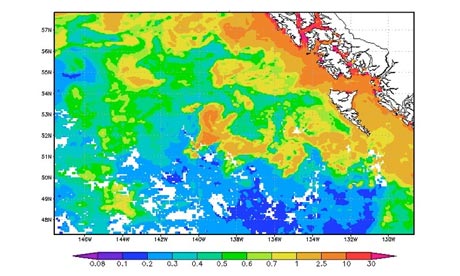
    Geoengineering with bloom : high concentrations of chlorophyll in the Eastern Gulf of Alaska

    Yellow and brown colours show relatively high concentrations of chlorophyll in August 2012, after iron sulphate was dumped into the Pacific Ocean as part of a controversial geoengineering scheme. Photograph: Giovanni/Goddard Earth Sciences Data and Information Services Center/NASA

    A controversial American businessman dumped around 100 tonnes of iron sulphate into the Pacific Ocean as part of a geoengineering scheme off the west coast of Canada in July, a Guardian investigation can reveal.

    Lawyers, environmentalists and civil society groups are calling it a “blatant violation” of two international moratoria and the news is likely to spark outrage at a United Nations environmental summit taking place in India this week.

    Satellite images appear to confirm the claim by Californian Russ George that the iron has spawned an artificial plankton bloom as large as 10,000 square kilometres. The intention is for the plankton to absorb carbon dioxide and then sink to the ocean bed – a geoengineering technique known as ocean fertilisation that he hopes will net lucrative carbon credits.

    George is the former chief executive of Planktos Inc, whose previous failed efforts to conduct large-scale commercial dumps near the Galapagos and Canary Islands led to his vessels being barred from ports by the Spanish and Ecuadorean governments. The US Environmental Protection Agency warned him that flying a US flag for his Galapagos project would violate US laws, and his activities are credited in part to the passing of international moratoria at the United Nations limiting ocean fertilisation experiments

    Scientists are debating whether iron fertilisation can lock carbon into the deep ocean over the long term, and have raised concerns that it can irreparably harm ocean ecosystems, produce toxic tides and lifeless waters, and worsen ocean acidification and global warming.

    “It is difficult if not impossible to detect and describe important effects that we know might occur months or years later,” said John Cullen , an oceanographer at Dalhousie University. “Some possible effects, such as deep-water oxygen depletion and alteration of distant food webs, should rule out ocean manipulation. History is full of examples of ecological manipulations that backfired.”

    George says his team of unidentified scientists has been monitoring the results of what may be the biggest ever geoengineering experiment with equipment loaned from US agencies like Nasa and the National Ocean and Atmospheric Administration. He told the Guardian that it is the “most substantial ocean restoration project in history,” and has collected a “greater density and depth of scientific data than ever before”.

    “We’ve gathered data targeting all the possible fears that have been raised [about ocean fertilisation],” George said. “And the news is good news, all around, for the planet.”

    The dump took place from a fishing boat in an eddy 200 nautical miles west of the islands of Haida Gwaii, one of the world’s most celebrated, diverse ecosystems, where George convinced the local council of an indigenous village to establish the Haida Salmon Restoration Corporation to channel more than $1m of its own funds into the project.

    The president of the Haida nation, Guujaaw, said the village was told the dump would environmentally benefit the ocean, which is crucial to their livelihood and culture.

    “The village people voted to support what they were told was a ‘salmon enhancement project’ and would not have agreed if they had been told of any potential negative effects or that it was in breach of an international convention,” Guujaaw said.

    International legal experts say George’s project has contravened the UN’s convention on biological diversity (CBD) and London convention on the dumping of wastes at sea, which both prohibit for-profit ocean fertilisation activities.

    “It appears to be a blatant violation of two international resolutions,” said Kristina M Gjerde, a senior high seas adviser for the International Union for Conservation of Nature. “Even the placement of iron particles into the ocean, whether for carbon sequestration or fish replenishment, should not take place, unless it is assessed and found to be legitimate scientific research without commercial motivation. This does not appear to even have had the guise of legitimate scientific research.”

    George told the Guardian that the two moratoria are a “mythology” and do not apply to his project.

    The parties to the UN CBD are currently meeting in Hyderabad, India, where the governments of Bolivia, the Philippines and African nations as well as indigenous peoples are calling for the current moratorium to be upgraded to a comprehensive test ban of geoengineering that includes enforcement mechanisms.

    “If rogue geoengineer Russ George really has misled this indigenous community, and dumped iron into their waters, we hope to see swift legal response to his behavior and strong action taken to the heights of the Canadian and US governments,” said Silvia Ribeiro of the international technology watchdog ETC Group, which first discovered the existence of the scheme. “It is now more urgent than ever that governments unequivocally ban such open-air geoengineering experiments. They are a dangerous distraction providing governments and industry with an excuse to avoid reducing fossil fuel emissions.”

  • Sea levels on the U.S. east coast rising 5 times faster than global average

    Sea levels on the U.S. east coast rising 5 times faster than global average
    God Discussion (blog)
    The sea level on the east coast of the United States is rising five times faster than the global average, Al Jazeera reports. It is a major threat to the millions who live in the region and is a source of concern for the government. Along the Delaware
    See all stories on this topic »

  • Scientists uncover mystery of ball lightning

    Scientists uncover mystery of ball lightning

    Updated 8 hours 5 minutes ago

    A team of Australian scientists believe they have uncovered the cause of one of nature’s most bizarre phenomenon – ball lightning.

    Ball lightning is typically the size of a grapefruit and lasts up to 20 seconds.

    “Ball lightning has been reported by hundreds of people, for hundreds of years and it has been a mystery,” said CSIRO scientist John Lowke, lead author of a new study published in the Journal of Geophysical Research Atmospheres.

    Previous theories have suggested microwave radiation, oxidising aerosols, nuclear energy, dark matter, antimatter, and even black holes as possible causes.

    One recent theory suggests burning silicon that has been vaporised by a lightning strike.

    To unravel the mystery Mr Lowke and colleagues at the CSIRO and the Australian National University, turned their attention to reports of ball lightning forming near windows.

    “There are many observations of ball lightning appearing from a glass window either in a house (or) in the cockpit of an aircraft,” he said.

    “If it’s burning silicon, how did it come in?”

    After hitting the ground and lighting the sky, lightning strikes leave behind a trail of charged particles, or ions. In most cases, these positive and negative ions recombine in a split seconds. Any remaining ions travel down to the ground.

    Mr Lowke’s theory is that some of these ions can accumulate on the outside of non-conducting surfaces such as a window.

    “These ions pile up and produce an electrical field which penetrate the glass,” he said.

    Mr Lowke says the field gives free electrons on the inside of the window enough energy to knock off electrons from surrounding air molecules, as well as release photons, creating a glowing ball.

    Recreating it in the lab

    “This is the first paper which gives a mathematical solution explaining the birth or initiation of ball lighting,” Mr Lowke said.

    He says the next step is to use the theory to replicate ball lightning in the laboratory. That may still prove difficult, as it would require equipment capable of producing 100 million volts.

    But a ball lightning event seen by a former US Air Force pilots suggests another approach.

    While flying a C-133A cargo plane from California to Hawaii, former Lieutenant Don Smith saw two horns of Saint Elmo’s fire appear on the plane’s randome (radar cover).

    “It looked as if the airplane now had bull’s horns…they were glowing with the blue of electricity,” he said.

    “[It] was driven by ions from the aircraft radar operated at maximum power during a dense fog.”

    One aspect of ball lightning that the study did not tackle is the loud bang that can occur at the end of a display.

    “About a third of the sightings end in a bang,” Mr Lowke said.

    “[It may be that] the electric field tends to heat the gas and the whole thing takes off getting hotter and hotter and hotter and the bang is caused by the expansion of the gas.”

    But he says that is just speculation and is happy to leave that for another study.

    Topics:weird-and-wonderful, science-and-technology, physics, australia

    First posted Fri Oct 12, 2012 11:33pm AEDT

  • Scientists uncover diversion of Gulf Stream path in late 2011; Warmer waters flowed to shelfbreak south of New England

    Scientists uncover diversion of Gulf Stream path in late 2011; Warmer waters flowed to shelfbreak south of New England

    Posted: 12 Oct 2012 09:26 AM PDT

    The Gulf Stream made an unusual move well north of its normal path in late October and early November 2011, causing warmer-than-usual ocean temperatures along the New England continental shelf, according to physical oceanographers.

  • Scientists uncover diversion of Gulf Stream path in late 2011; Warmer waters flowed to shelfbreak south of New England

    Scientists uncover diversion of Gulf Stream path in late 2011; Warmer waters flowed to shelfbreak south of New England

    Posted: 12 Oct 2012 09:26 AM PDT

    The Gulf Stream made an unusual move well north of its normal path in late October and early November 2011, causing warmer-than-usual ocean temperatures along the New England continental shelf, according to physical oceanographers.

  • Revisiting a Major Methane Study

    Google Alert – METHANE

    Inbox
    x

    Google Alerts googlealerts-noreply@google.com
    3:47 PM (27 minutes ago)

    to me
    News 6 new results for METHANE
    Revisiting a Major Methane Study
    Council on Foreign Relations (blog)
    The ongoing fight over whether shale gas operations are leaking dangerous amounts of methane – a question that many have called critical to determining whether shale gas is good or bad – has suffered from a paucity of data. That’s why a much talked
    See all stories on this topic »
    Delayed harvest of fodder corn: higher starch, lower methane
    Western Farm Press
    Harvesting fodder corn at an increased stage of maturity improves the starch content of maize silage and the proportion of rumen by-pass starch without negative effects on silage preservation, feed intake or milk production.
    See all stories on this topic »
    Natural gas producers open up in joining leak study
    FuelFix (blog)
    The companies’ support of the first significant effort to measure methane emissions at drill sites is markedly more proactive than the industry’s efforts to respond to initial public outcry over hydraulic fracturing and other advanced techniques that
    See all stories on this topic »

    FuelFix (blog)
    Report: Pa. has 200000 abandoned oil, gas wells
    Ventura County Star
    A subsidiary of Shell Oil Co. was drilling in Tioga County last summer when a 30-foot geyser of methane gas and water erupted from the ground, prompting the evacuation of several homes until the leak was brought under control. The gas most likely came
    See all stories on this topic »
    Gas to energy
    Williamsport Sun-Gazette
    ALLENWOOD – It takes about two years for organic materials found in garbage dumps to decompose into methane, but the Lycoming County Landfill is using the waste byproduct right now to produce electricity and heat in an environmentally friendly way.
    See all stories on this topic »

    Williamsport Sun-Gazette
    Firm boosts production of plastics from greenhouse gases
    Plastics News
    The partners claim the system can use a wide range of carbon sources, including greenhouse gases such as carbon dioxide and methane from wastewater treatment systems, landfills and power plants. If proved commercially, the system would be a highly
    See all stories on this topic »


    This once a day Google Alert is brought to you by Google.

    Delete this alert.
    Create another alert.
    Manage your alerts.