Category: Climate chaos

The atmosphere is to the earth as a layer of varnish is to a desktop globe. It is thin, fragile and essential for preserving the items on the surface.150 years of burning fossil fuel have overloaded the atmosphere to the point where the earth is ill. It now has a fever. Read the detailed article, Soothing Gaia’s Fever for an evocative account of that analogy. The items listed here detail progress on coordinating 6.5 billion people in the most critical project undertaken by humanity. 

  • Department issues coal seam gas emissions warning

    This is an issue that needs much more research before making any unsubstantiated claims.

    Department issues coal seam gas emissions warning

    Date
    September 21, 2012 – 1:17PM
    • 2 reading now
    • 1

    No one knows precisely how much methane leaks from Australia’s growing coal seam gas fields, and more research is needed to back up industry claims about greenhouse emissions, a report produced for the federal government has found.

    Methane is a far more potent gas than carbon dioxide, so accurate measurements are needed to work out the industry’s contribution to global warming, said the report commissioned by the Department of Climate Change and Energy Efficiency.

    “There is effectively no public information about methane emissions associated with unconventional gas production in Australia,” it said. “This is a matter of some public policy concern, given the projected large growth in production of CSG.”

    The issue was a “growing source of controversy in Australia”, according to the report, prepared at consultancy Pitt & Sherry by Hugh Saddler, an adjunct professor at the Australian National University’s Energy Change Institute.

    The government is calling for public submissions on the best methods for measuring emissions from coal seam gas drilling. The deadline for submissions has been extended to October 19.

    The report found that greenhouse emissions from Australian gas wells were likely to be lower, on average, than those of US gas wells, because of different geological conditions and the more frequent use in America of hydraulic fracturing, or fracking.

    There is no published data on methane emissions, and no systematic emissions measurement program under way, but both the CSIRO and the University of Queensland are proposing to do research.

    The coal seam gas industry is marketing itself as “up to 70 per cent cleaner than coal”.

    The industry body, the Australian Petroleum Production and Exploration Association, said the report showed that gas drilling in the US was not relevant to Australia.

    “The key thing to note is that the review does not conclude emissions in Australia are underreported or misreported,” a spokesman for the association said.

    “APPEA also thinks that moves to allow for more accurate measurement of emissions from other and all industry sources across the Australian economy, is positive.”

    The Department of Climate Change and Energy Efficiency said the report was a “positive contribution” to debate as it worked to refine better methods for measuring coal seam gas emissions.

    Read more: http://www.smh.com.au/environment/energy-smart/department-issues-coal-seam-gas-emissions-warning-20120921-26b47.html#ixzz276LVxPTD

  • Green News Round-up (The Guardian)

    Green news roundup: Arctic sea ice, badger cull and mega mine

    The week’s top environment news stories and green events

    If you’re not already receiving this roundup, sign up here to get the briefing delivered to your inbox

    • Environment editor
    • guardian.co.uk, Thursday 20 September 2012 11.22 EDT
    Arctic Iceberg

    An iceberg off Alaska, 30 miles long and 12 miles wide, halted Shell’s oil drilling operation. It is expected to resume soon. Photograph: Raimund Linke/Getty Images

    Environment news

    • Arctic ice shrinks 18% against record, sounding climate change alarm bells
    • Arctic expert predicts final collapse of sea ice within four years
    • Australian ‘mega mine’ plan threatens global emissions target
    • Mass slaughter of farm animals set to push food prices up 14%
    • UK windfarms generate record amount of power
    • Man-made English saltmarshes ‘failing to meet European plant standards’
    • First badger cull licence issued in England

    On the blogs

    Bike blog : An exemple of iconographic use of a bicycle : Dishroom restaurant in London

    • Is there even less Arctic sea ice than the satellites show?
    • Get used to ‘extreme’ weather, it’s the new normal
    • New cycle safety campaign says: it’s everyone’s responsibility
    • Donald Trump anti-wind power fundraiser fails to get off the ground

    Multimedia

    Week in wildlife : Wild flowers in South Africa

    • Morocco’s renewable energy future – video
    • Arctic sea ice before and after record low – interactive map
    • The week in wildlife – in pictures

    • Life on the shoreline – your Green shoots photographs

    • Surviving off rubbish in Kenya’s slums – in pictures

    … And finally

    • How a smartphone could become an endangered cicada detector
    • Scottish anti-wind turbine group’s ad rapped for using images of Hawaii

    • SKY_Int_Dev_Achievement_Award_Voting_071012
    • Button_Sustainable_Business_NY_101012
    • Button_Guardian_ebooks_230812


    You are receiving this email because you are a Green Light subscriber.

    Click here if you do not wish to receive Green Light emails from the Guardian News and Media.
    Click here to find out about other Email Services from the Guardian.

    Guardian News & Media Limited – a member of Guardian Media Group PLC. Registered Office: Kings Place, 90 York Way, London, N1 9GU. Registered in England No. 908396

  • Researchers uncovered the mystery behind the rapid sea level rise in the past

    Researchers uncovered the mystery behind the rapid sea level rise in the past
    Balkans.com Business News
    Researchers from the University of Bristol in the United Kingdom have uncovered the mystery behind the rapid sea level rise in the past by using climate and ice sheet models. Funded in part by a Marie Curie Action grant under the EU’s Seventh Framework
    See all stories on this topic »
    Man-made salt marshes fail to meet European demands on plants-study
    Orlando Sentinel
    The south of England is naturally subsiding into the sea, meaning that it is already experiencing coastal erosion similar to that predicted for many other regions of the world this century because of sea level rise. “In the face of rising sea levels
    See all stories on this topic »
    Coastal Federation members not discouraged by sealevel rise bill
    Lumina News
    The North Carolina Coastal Federation presented a summary of the 2012 North Carolina General Assembly Thursday to its members and guests with a focus on the highly publicized sealevel rise bill. Rob Lamme, lobbyist for the NCCF, showed several
    See all stories on this topic »

    Lumina News
    How Broward County is Tackling Climate Change
    Natural Resources Defense Council (blog)
    The low-lying nature of much of the county, in addition to its proximity to the Atlantic Ocean, makes it extremely vulnerable to sea level rise. According to an analysis by Climate Central, Broward County is second only to Miami-Dade County in terms of
    See all stories on this topic »

    Natural Resources Defense Council (blog)
    Nature of Antarctica’s ice sheet revealed
    Voxy
    Small changes in the temperature of the Southern Ocean can contribute to far-reaching changes on the Antarctic ice sheet that could lead to future sealevel rise, new research from Victoria University has found. The researchers have revealed that sea
    See all stories on this topic »
    Scientists want to weigh the ocean
    DVICE
    Figuring out precisely how much the ocean weighs will help us to model sea level rise, and so some oceanographers want to go drop a scale into the Pacific and see what it says. The ocean fills a bit and empties a bit every year in a seasonal cycle
    See all stories on this topic »

    DVICE
    Councillors ‘gagged’ on policies
    Northern Star
    Along with the impact the bill could have on beaches, Ms Faehrmann claimed there were also “serious questions” being raised about the North Coast councils’ ability to plan for a sea level rise in a sensible manner and the potential for increased
    See all stories on this topic »
  • Hot, dry summer predicted

    Hot, dry summer predicted

    Date
    September 20, 2012 – 2:55PM
    • 55 reading now
    • 69

    Australia will be hotter and drier than normal this spring and summer as a weak El Niño pattern develops across the Pacific Ocean.

    This will be in stark contrast to the past two years, which were dominated by La Niña conditions that contributed to heavy rainfall and cooler temperatures across much of the country, Weatherzone meteorologist Josh Fisher said.

    This year’s El Niño will also combine with a phenomenon known as the “Indian Ocean Dipole” (IOD). During the next few months, we are expected to experience a drier phase of the IOD as a result of cooler waters off the north-west coast of Australia. The drier phase, combined with weakening easterly trade winds across the tropical Pacific, will lead to lower moisture levels over much of the country and warmer daytime temperatures.

    Temperatures this spring and summer are expected to be near average or warmer for all capital cities – and are also likely to be warmer than temperatures in the past two years. These warmer days also come with in an increased risk of heatwaves, particularly for the southern capitals of Adelaide, Melbourne and Canberra.

    While heatwaves in Sydney are rarer, they cannot be ruled out. The city experienced an unexpected heatwave in February 2011, a strong La Niña year, which is usually associated with cooler conditions.

    Bushfire risk will be higher this season, exacerbated by increased vegetation growth following two years of wet weather. Southern states are at greatest risk due to the prevalence of stronger winds in summer.

    Another feature of the warm season is thunderstorm activity. Widespread storms have already battered eastern Australia in the past week.

    Quantifying the thunderstorms that we will see is difficult as the correlation to long-term climate drivers (such as El Niño) is low. Storm activity is more dependent on short-range weather patterns.

    However, there is an elevated risk of severe thunderstorms, particularly in eastern Australia, due to expectations of high surface temperatures and moderate moisture levels. Compared to the past two years, there is an increased risk of large hail with storms. Localised flash-flooding remains a risk, but we are not likely to see the widespread flooding of the past two years.

    Current indications show that tropical cyclone activity will be near-normal for the Australian region this season. While El Niño years typically produce lower cyclone activity over this region, the upcoming El Niño is not expected to be strong and is not expected to have a large impact on the number of cyclones.

    smh.com.au

    Read more: http://www.smh.com.au/environment/weather/hot-dry-summer-predicted-20120920-268ns.html#ixzz26zD9bTfG

  • Arctic ice shrinks 18% in a year, sounding climate change alarm bells

    Arctic ice shrinks 18% in a year, sounding climate change alarm bells

    Scientists and environment groups say the fall is unprecedented and the clearest signal yet of global warming

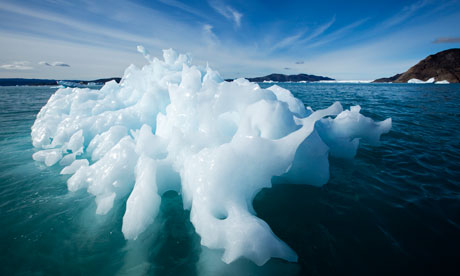
    Arctic melting ice : Icebergs, Disko Bay, Greenland

    ‘Our response [so far] has not been alarm, or panic, or a sense of emergency. It has been: ‘Let’s go up there and drill for oil’. There is no more perfect indictment of our failure to get to grips with the greatest problem we’ve ever faced,’ says author and environmental campaigner Bill McKibben. Photograph: Paul Souders/Corbis

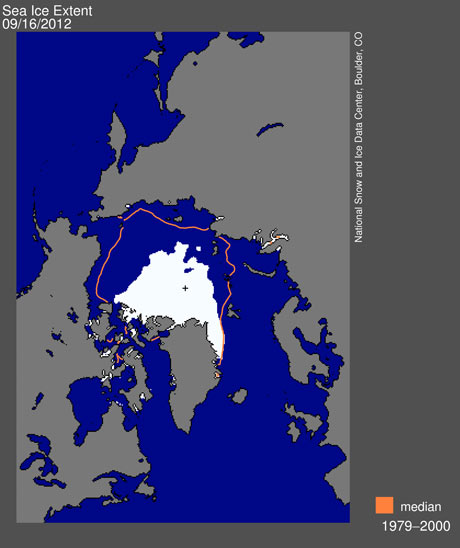
    Sea ice in the Arctic shrunk a dramatic 18% this year to a record low of 3.41m sq km, according to the official US monitoring organisation the National Snow and Ice Data Centre in Boulder, Colorado.

    Scientists and environment groups last night said the fall was unprecedented and the clearest signal yet of climate change.

    The data released showed the arctic sea beginning to refreeze again in the last few days after the most dramatic melt observed since satellite observations started in 1979.

    This year’s sea ice extent was 700,000 sq km below the previous minimum of 4.17m sq km set in 2007.

    “We are now in uncharted territory,” said Nsidc director Mark Serreze. “While we’ve long known that as the planet warms up, changes would be seen first and be most pronounced in the Arctic, few of us were prepared for how rapidly the changes would actually occur.”

    Julienne Stroece, an Nsidc ice research scientist who has been monitoring ice conditions aboard the Greenpeace vessel Arctic Sunrise, said the data suggested the Arctic sea ice cover was fundamentally changing and predicted more extreme weather.

    “We can expect more summers like 2012 as the ice cover continues to thin. The loss of summer sea ice has led to unusual warming of the Arctic atmosphere, that in turn impacts weather patterns in the northern hemisphere, that can result in persistent extreme weather such as droughts, heatwaves and flooding,” she said.

    Arctic sea ice Arctic sea ice extent for September 16, 2012 was 3.41m sq km. The orange line shows the 1979 to 2000 median extent for that day. The black cross indicates the geographic North Pole. Photograph: National Snow and Ice Data Center

    Other leading ice scientists this week predicted the complete collapse of sea ice in the Arctic within four years. “The final collapse … is now happening and will probably be complete by 2015/16,” said Prof Peter Wadhams of Cambridge University.

    Sea ice in the Arctic is seen as a key indicator of global climate change because of its sensitivity to warming and its role in amplifying climate change. According to Nsidc, the warming of Arctic areas is now increasing at around 10% a decade.

    Along with the extent of the sea ice, its thickness, or volume, has also significantly decreased in the last two decades. While this is harder to measure accurately, it is believed to have decreased around 40% since 1979.

    The collapse of the ice cap was last night interpreted by environment groups as a signal of long-term climate warming caused by man.

    “I hope that future generations will mark this day as a turning point, when a new spirit of global cooperation emerged to tackle the huge challenges we face. We must work together to protect the Arctic from the effects of climate change and unchecked corporate greed. This is now the defining environmental battle of our era,” said Kumi Naidoo, director of Greenpeace International.

    Other groups called on the UK government, and industries across the world to heed the warning signs from the Arctic and act “with urgency and ambition” to tackle climate change.

    Rod Downie, polar expert at WWF-UK said: “With the speed of change we are now witnessing in the Arctic, the UK government must show national and global leadership in the urgent transition away from fossil fuels to a low carbon economy.

    “This is further evidence that Shell’s pursuit of hydrocarbons in the Arctic is reckless. It is completely irresponsible to drill for oil in such a fragile environment; there are simply too many unmanageable risks.”

    Author and environmental campaigner Bill McKibben said: “Our response [so far] has not been alarm, or panic, or a sense of emergency. It has been: ‘Let’s go up there and drill for oil’. There is no more perfect indictment of our failure to get to grips with the greatest problem we’ve ever faced.”

    Arctic sea ice follows an annual cycle of melting through the warm summer months and refreezing in the winter. It has shown a dramatic overall decline over the past 30 years.

    Sea ice is known to play a critical role in regulating climate, acting as a giant mirror that reflects much of the sun’s energy, helping to cool the Earth.

    The UN Environment programme warned that the extra shipping and industry likely to result from the thawing of sea ice could further accelerate sea ice melting.

    “There is an urgent need to calculate risks of local pollutants such as soot, or black carbon, in the Arctic. Soot darkens ice, making it soak up more of the sun’s heat and quickening a melt,” said UNEP spokesman Nick Nuttall in Nairobi.

  • Sea surface temperatures reach record highs on Northeast continental shelf

    Sea surface temperatures reach record highs on Northeast continental shelf

    Posted: 18 Sep 2012 09:15 AM PDT

    During the first six months of 2012, sea surface temperatures in the Northeast Shelf Large Marine Ecosystem were the highest ever recorded. The annual 2012 spring plankton bloom was intense, started earlier and lasted longer than average. This has implications for marine life from the smallest creatures to the largest marine mammals like whales. Atlantic cod continued to shift northeastward from its historic distribution center.