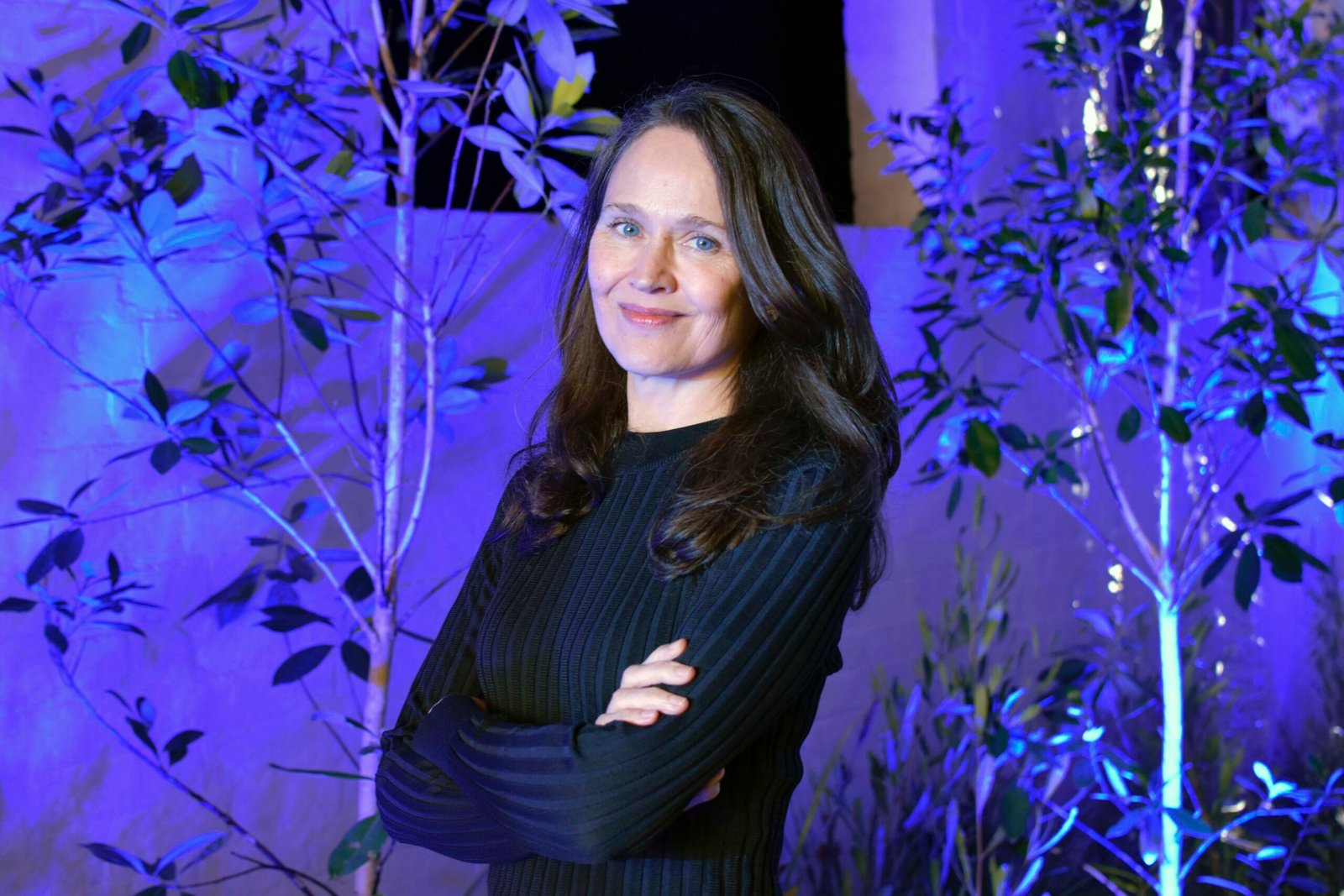
Managing director of Ebono Institute and major sponsor of The Generator, Geoff Ebbs, is running against Kevin Rudd in the seat of Griffith at the next Federal election. By the expression on their faces in this candid shot it looks like a pretty dull campaign. Read on
Trek2Reconnect will visit schools across Australia to reconnect communities to nature.
Lizz from Wild Mountains chats with Geoff, Dave and Issy about her 6,000km (is that 6Mm?) trek from the Border Ranges on the East Coust, to the Ningaloo Reef on the West Coast to connect communities to nature.
There is a launch event at Griffith University’s EcoCentre on January 25th, and more information at #trek2reconnect or https://wildmountains.org
Geoff Interviews Professor Sarah Pink about her latest book, Life at the Edge of the Future.
The premise is that we are always at the Edge of the Future, change is uncertain, unpredictable and so we cannot examine it as we examine the past. Instead, as an anthropologist Professor Pink describes herself as being in research. She says that the hope and trust that enables a positive future emerges from our everyday use of emerging technology, not from the technology itself.
The interview falls into four parts. Hope, Trust, Process and Inclusion.
A short version of the interview will be played on 4ZZZs EcoRadio, next Wednesday.
Click on individual tracks to focus on a specific part of the Interview.
Howard Whelan is an Antarctic Tour Guide and past editor of Australian Geographic. He put together this sound package with Geoff Ebbs over a number of shows.
Like the Rings that rule Tolkein’s Middle Earth, the challenges of implementing the SDGs are manifold but there is one challenge that ‘binds them all’. That challenge is our addiction to economic growth.
Geoff talks to Dick Smith about capitalism and sustainability in 2008
Here’s Dick Smith talking to me in 2008. There is a longer version of that interview on this site. In the longer interview Dick talks about attempting to run the Australian Geographic magazine as a non-growth company. He believes that the tenets of capitalism, even the most destructive of its characteristics, are a function of human nature.
Geoff in 2010 on sustainability and the economy
In 2010, running for the Federal seat of Richmond, I talked a lot about the relationship between economic growth and environmental harm. As I say in this clip, the maths are simple. You cannot keep using finite resources for ever, it just does not add up.
The obvious challenges of increasing economic growth on a finite planet led to a recasting of the debate and a lot of attempts to introduce sustainable growth and green growth. Abundance became a popular catch word.
That emphasis on consumers and consumer choice making green purchasing decisions underpins a lot of advertising.
Consider this advertisement from 2019 selling SodaStream, a product that ships carbon dioxide around the planet in aluminium containers. The environmental benefits of SodaStream are the packaging that it replaces. Whether that justifies the claims made in this ad, you will have to determine yourself.
Your Life Your Planet used the SodaStream ad to introduce a conversation about degrowth.
A more sophisticated response to the blunt mathematics I used in the 2010 election are that we can decouple economic growth from environmental harm. That is, we can have economic growth and a clean environment by focusing on green growth. Here is Ross Garnaut explaining to me how decoupling works.
Ross Garnaut and Geoff Ebbs discussing decoupling
The challenges of decoupling are too complex to go into here, but they include the amount of time it takes to change what we are doing compared to how fast we need to change to avoid environmental catastrophe as well as the gap between what is technically feasible and what we manage to achieve.
If you watch the discussion after the SodaStream advertisement, above, you will hear Sabrina Chakori discussing Jarven’s paradox which explains that when we get efficient at managing a precious resource we start using more of it instead of saving it for a rainy day. Here is Sabrina chatting to me on EcoRadio about other ways that we might look at the economy instead of putting growth in conflict with our existential survival.
These different views of the relationship between the economy, especially economic growth, and the environment are useful starting points for discussion about what is greenwash and what are genuine attempts to build a sustainable future.
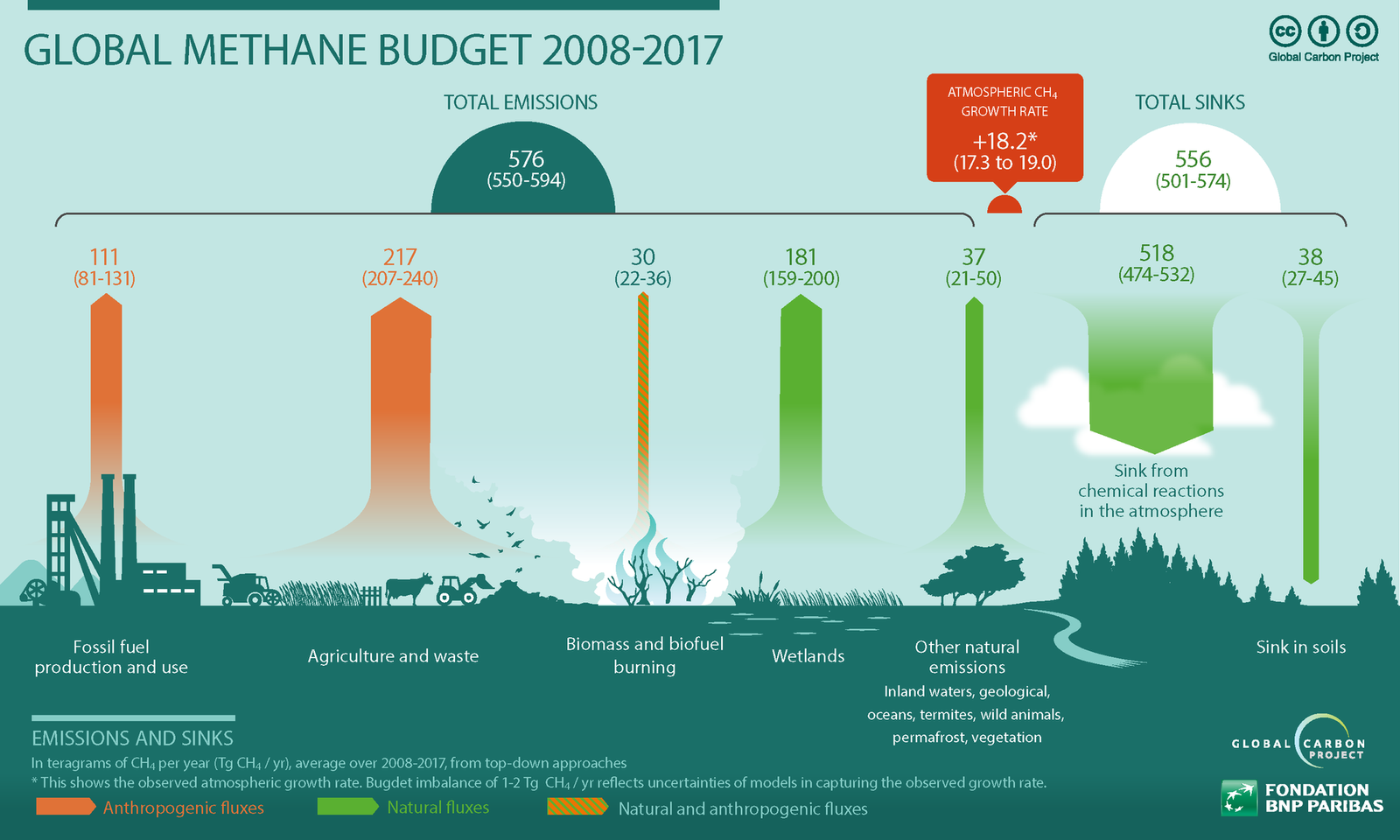
By The Global Carbon Project – http://www.globalcarbonatlas.org/en/CH4-emissions
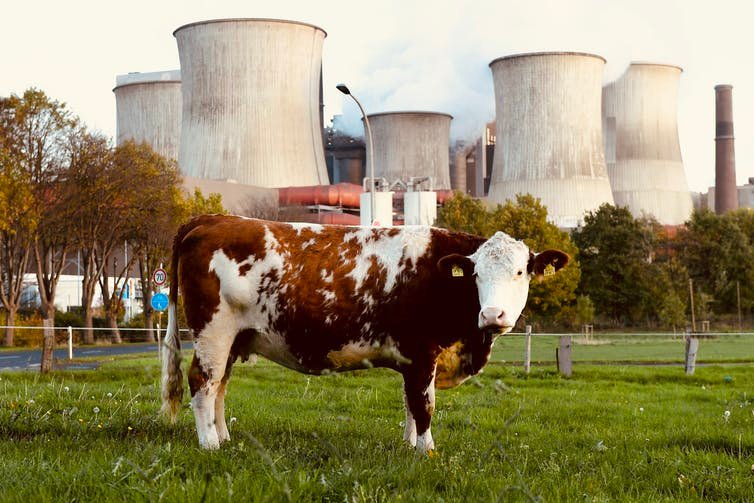
The European Union and the United States have led a coalition of 103 countries at COP 26 in Glasgow to sign a pledge to reduce methane emissions to 70% of 2020 levels by 2030. The impact is expected to shave 0.2 degrees off the predicted temperature rise in the next decade. Methane is an extremely powerful greenhouse gas and only stays in the atmosphere for years, unlike carbon dioxide which persists for centuries. This makes it a desirable target, though it is notoriously hard to control. Over 40% of methane is emitted by natural processes such as rotting vegetation in swamps. 15% is emitted in agricultural activities, closely followed by fossil fuel production. Australia has not signed up, citing the economic impact on agriculture.
Speaking on ABC Radio last week, former head of the Department of Prime Minister’s legal section, Ian Cunliffe told Geraldine Doogue that both Australia and East Timor have been robbed of more than $3billion in revenue from the helium extracted in the Timor Sea.
That deal is the subject of international hearings into Australia’s bugging of East Timor offices during negotiations designed to give Australia a negotiating advantage. Cunliffe said that it has not been widely reported that the contract was changed, without the knowledge of either government, by persons unknown, to give the helium to the exploration companies Woodside and Conoco-Phillips.
Former ACT Attorney General, Bernard Collaery and witness K, who were taking the Australian Government to court in the Hague, are both being prosecuted under the Intelligence Services Act and legally prevented from releasing the evidence they have about the contract. Helium has been classed as a “fully imported critical defence commodity” since 1945.
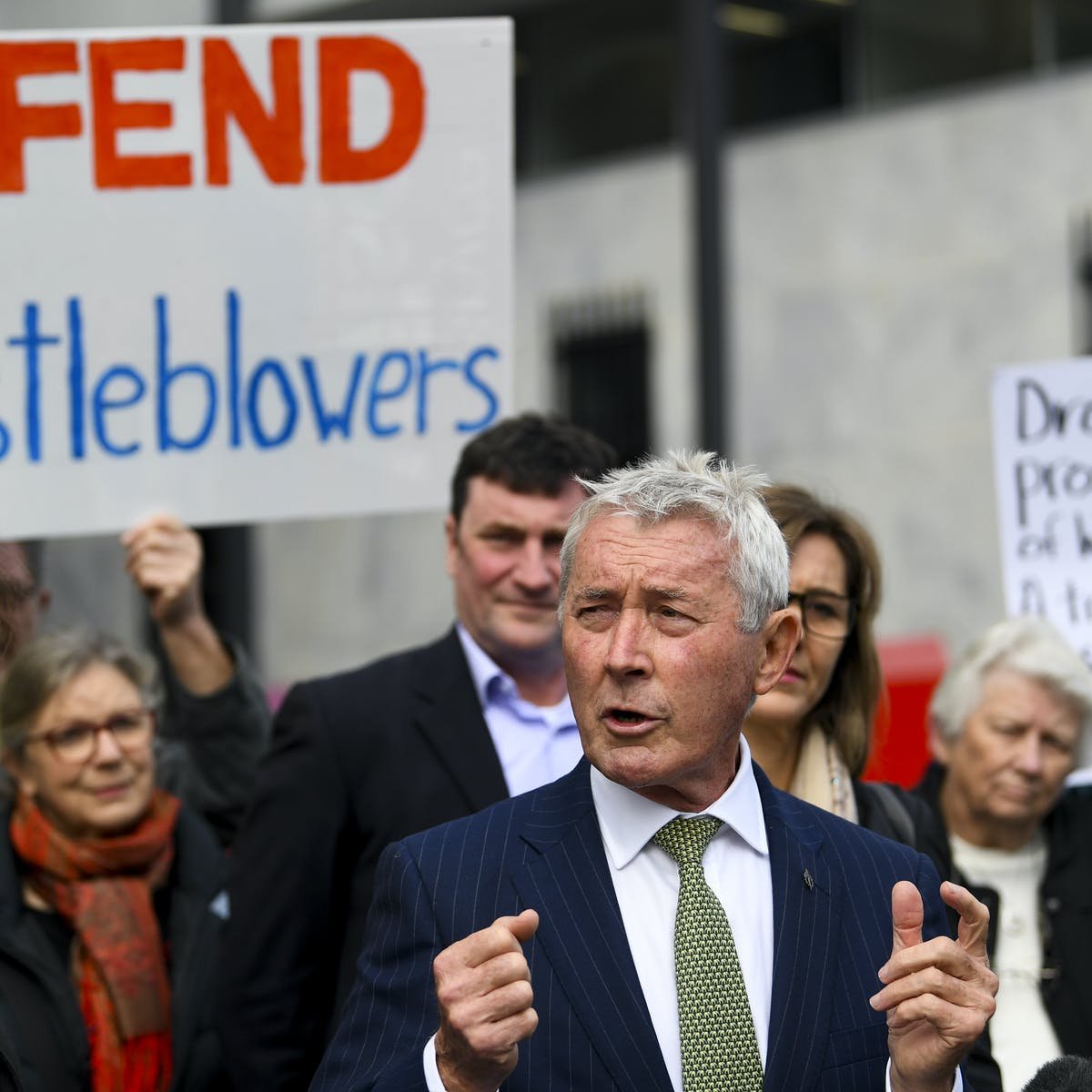
Bernard Collaery at a pro-whistleblower rally – The Conversation
Cunliffe speculates that the unusual charges against Collaery and Witness K may be designed to protect those responsible for the changes to the contract that have cost the Australian taxpayer billions of dollars and weakened our national security.
Post Script
This story has echoes of the “granting” of WestPapua to Indonesia by the international community in 1969 What the Indonesian, Dutch and Australian governments did not know at the time the deal with Indonesia was set up was that the US government had allowed US oil companies the exclusive rights to the richest source of sweet crude oil in the region as well as the rights to the world’s largest gold mine. https://www.smh.com.au/politics/federal/oil-and-politics-prove-fatal-mix-for-the-people-of-west-papua-20091230-lju6.html
So the death of over 600.000 Papuans at the hands of the Indonesian military with the silent complicity of the Australian government has been bought by billions of dollars going straight into the pockets of these mega-corporations.