Category: Sustainable Settlement and Agriculture

The Generator is founded on the simple premise that we should leave the world in better condition than we found it. The news items in this category outline the attempts people have made to do this. They are mainly concerned with our food supply and settlement patterns. The impact that the human race has on the planet.

  • GET-UP Reef update: it’s working

    Reef update: it’s working

    Inbox
    x

    GetUp!
    2:04 PM (9 minutes ago)

    to me

    Dear NEVILLE,

    Well, it seems to be working.

    Within a day of launching our new ad about the Great Barrier Reef World Heritage Area, our phone was ringing with Government MPs trying to convince us to pull the campaign. We’ve never seen a response quite like it — and it proves our strategy is cutting through.

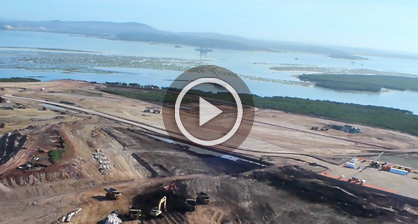
    Click here to see the ad, featuring scary new footage of the threats to our Reef: https://www.getup.org.au/campaigns/mining/gladstone/watch-this-video-now

    1,623 GetUp members have already chipped in to put this ad on cinema screens across Queensland, but we’re locking in the final ad buys over the next week. Every extra donation means more voters will see this message – and that means more leverage for our campaign. A $42 contribution can pay for five days worth of cinema ads this Christmas blockbuster season.

    We’re not asking for much. All Environment Minister Tony Burke has to do is commission the independent scientific review of mining operations on the Reef that UNESCO have asked for. So far there’s no word about the scientific review, but if it is planned, the Government will have our congratulations, we will withdraw our ads immediately, and offer all those GetUp members who have donated a full refund. Until then, it’s up to all of us to ramp up the pressure:

    https://www.getup.org.au/campaigns/mining/gladstone/watch-this-video-now

    In hope,
    the GetUp team.

    —original email—

    We just got back from filming this video in Northern Queensland, and we can’t believe what we saw. The damage being done to the Great Barrier Reef World World Heritage Area will shock the country. Check it out here: https://www.getup.org.au/campaigns/mining/gladstone/watch-this-video-now

    Dear NEVILLE,

    The Great Barrier Reef is already under great pressure from climate change. But to make things worse, the Australian Government is giving Gina Rinehart and others the green light to build the world’s biggest coal export facility at Abbot Point, right on the edge of the Reef.

    Near Gladstone they’re literally cutting channels through the seafloor for huge coal ships in a practice known as dredging. It releases toxins trapped in sediment which then find their way into our food chain. Locally, the effects are clear: fishers are bringing in catch that are so sick it’s not safe to sell. Globally, we are losing one of the natural wonders of the world, and doing it so we can export more coal to warm the planet. It’s absolutely crazy!

    There’s something we can do about it. Environment Minister Tony Burke keeps saying publicly that he wants to save the Reef. He’s trying to walk both sides of the street – saying he’ll save the Reef but at the same time approving massive new coal and coal seam gas terminals – and so far he’s getting away with it, because only locals know what’s really going on. Together, we’re going to change that, and show both major parties that voters will know what they doing to the reef:

    In our new ad, new footage and scientific interviews show Australia what’s really going on. Please watch and join the campaign now.

    https://www.getup.org.au/campaigns/mining/gladstone/watch-this-video-now
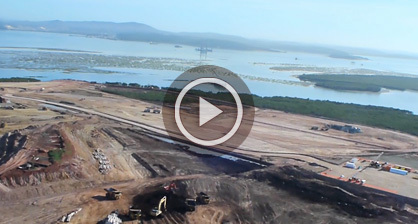
    Here’s the plan: there’s an election not far away. Queensland is full of important marginal electorates. The Great Barrier Reef employs 10 per cent of the population of Gladstone and adds $5 billion to the State’s tourism economy annually – we’re talking major economic ramifications, not just conservation – and politicians know it.

    That’s why we’re kicking this campaign off by blanketing cinemas across Queensland. If we raise enough we’ll screen it in Tony Burke’s electorate too. Are you able to help this thing go big?

    https://www.getup.org.au/campaigns/mining/gladstone/watch-this-video-now

    Our Environment Minister Tony Burke and his government really don’t want destroying the Reef to become their legacy. Neither do we.

    Thanks for standing up for the Reef,
    the GetUp team.


    GetUp is an independent, not-for-profit community campaigning group. We use new technology to empower Australians to have their say on important national issues. We receive no political party or government funding, and every campaign we run is entirely supported by voluntary donations. If you’d like to contribute to help fund GetUp’s work, please donate now! If you have trouble with any links in this email, please go directly to www.getup.org.au. To unsubscribe from GetUp, please click here. Authorised by Sam Mclean, Level 2, 104 Commonwealth Street, Surry Hills NSW 2010.

  • Urban farmland to create 100 jobs

    Urban farmland to create 100 jobs

    AAPUpdated November 25, 2012, 8:03 pm
    Jobs will be created through farmland rejuvenation, says NSW premier Barry O Farrell.

    AAP © Enlarge photo

    Farmland within the Western Sydney Parklands will be rejuvenated, creating 100 jobs and providing up to $45 million of investment, NSW Premier Barry O’Farrell says.

    Mr O’Farrell released the Horsley Park Urban Farming Master Plan on Sunday, which will see 159 hectares of existing farmland within the Western Sydney Parklands set aside exclusively for glasshouses, greenhouses, market gardens and orchards.

    Under the plan, 11 farm lots will be leased ranging in size from five to 31 hectares.

    “The farming boost will see 100 agricultural jobs created in Western Sydney and up to $45 million of public and private investment in the local economy over the next 10 years,” Mr O’Farrell said in a statement.

    “It’s also great for the environment because the plan will result in more food being grown in western Sydney reducing the food miles needed to transport fresh produce from the farm gate to dinner plates in the city’s west.

    “The Horsley Park farming precinct will become a popular tourist destination with a new farm gate trail created, allowing consumers to buy fresh produce directly from the people who grew it.”

    Environment minister Robyn Parker said the 159 hectares of existing farmland included as part of this plan is made up entirely of underutilised land.

  • Italy floods prompt fears for future of farming

    Italy floods prompt fears for future of farming

    Experts blame warming ocean and climate change for rash of storms that farmers fear risk Italian signature crops

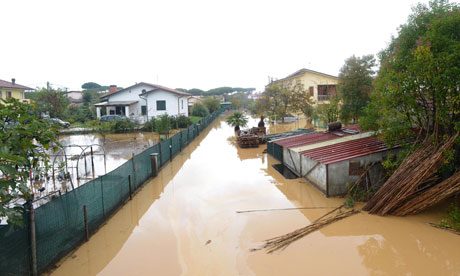
    Floods in Tuscany

    The floods reach Romagnano, Massa, Tuscany. Photograph: Riccardo Dalle Luche/EPA

    The floods that have devastated Italy over the past week could become even more severe in the future, threatening food production and destroying the country’s natural beauty, experts warn.

    Storms have battered ancient towns and left large swaths of farmland in Tuscany under water, prompting a warning from the region’s governor, Enrico Rossi, that “climate change is making us get used to ever more violent flooding“.

    Three people were found dead on Tuesday after their car fell from a collapsed bridge near Grosseto, while the town of Albinia was under two metres of water. As army units were called in to help locals evacuate, towns in neighbouring Umbria were also put on alert and sections of the main road linking north and south Italy were blocked by water. On Monday a 73-year-old man was drowned in his car by rising floodwaters near the walled town of Capalbio, with residents evacuated near Cortona, the setting for the novel Under the Tuscan Sun. Much of the rich farmland of the Maremma had become a lake of mud.

    In Venice water levels were receding after the city’s sixth-worst flooding since records began in 1872.

    Leading Italian meteorologist Mario Giuliacci said: “The Mediterranean has warmed up by 1C to 1.5C in the last 20 years, meaning that Atlantic weather fronts passing over it absorb more vapour and more heat, which means more energy. And that means ever more violent storms and more rain when the fronts hit Italy.

    “An average of 80mm of rain should fall in Italy in November. In the last 40 years it has gone over 100mm 11 times, seven of which are since 1999,” he added.

    Giuliacci said the lower pressure brought by the storms was producing stronger winds. “The Scirocco wind which blew north up the Adriatic this week prompted the unexpected high water which swamped Venice,” he said. The sea level rose by 149cm in Venice on Sunday, flooding 70% of the city.

    Italy is getting increasingly used to disastrous flooding. In 2010, 150,000 livestock were drowned by floods in the Veneto region. In 2009, 31 people were killed by floods and mudslides in Messina in Sicily, while six died last year when floods surged through Genoa.

    Floods have also been blamed on the number of illegally built homes in Italy which block water courses and prevent natural drainage.

    However, a clear pattern of climate change is emerging, and affecting Italy’s agricultural output, an official from Italy’s farmer’s lobby, Coldiretti, said.

    “This year Sicily produced its first crop of bananas, while oil is now being made from olives grown in the foothills of the Alps,” he said.

    “The Italian climate, with ever drier summers and violent rains in the winter, looks set to become more like north Africa than, say, France,” added Giuliacci.

    A hot, arid summer this year, followed by the floods, has ensured that more traditional Italian produce, which finds its way into kitchens around the world, is increasingly scarce, said Coldiretti.

    Italy’s wine harvest dropped 6% to a 40-year low, while the apple harvest was down by 22%, pears by 13%, chestnuts by 50% and honey by 25%. Production of flour destined for making pasta dropped by 12%.

    Said Coldiretti: “The risk is the increase of imports of ingredients pretending to be made in Italy, like Chinese tomato concentrate and Tunisian extra virgin olive oil.”

  • Giant pandas threatened by climate change

    Giant pandas threatened by climate change

    Global warming will wipe out much of the bamboo on which the bears rely for food, according to a new study

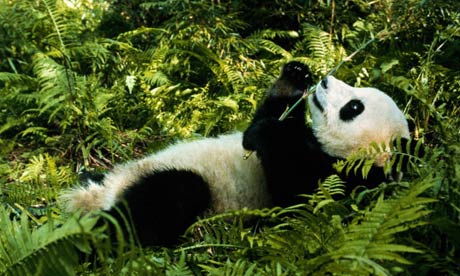
    A giant panda lying in bamboo

    The research, published in the journal Nature Climate Change, focused on the Qinling Mountains in Shaanxi Province, which is home to around 275 wild pandas. Photograph: guardian.co.uk

    Giant pandas could be left hungry and struggling to survive by global warming, scientists have warned.

    A new study predicts that climate change is set to wipe out much of the bamboo on which the bears rely for food.

    Prime panda habitat in China could be completely lost by the end of the century, say the researchers.

    Human development adds to the threat by blocking the bears’ access to places where bamboo is less affected by rising temperatures, they point out.

    “We will need proactive actions to protect the current giant panda habitats,” said lead researcher Mao-Ning Tuanmu, from Yale University in the US.

    “We need time to look at areas that might become panda habitat in the future, and to think now about maintaining connectivity of areas of good panda habitat and habitat for other species.”

    The research, published in the journal Nature Climate Change, focused on the Qinling Mountains in Shaanxi province, which is home to around 275 wild pandas. The animals make up around 17% of the entire wild giant panda population.

    Qinling pandas have been isolated for thousands of years due to a long history of human habitation around the mountain range. Their restricted range makes them particularly vulnerable to the loss of food resources.

    Bamboo, which carpets the forest floor where the pandas live, is the sole item in the bears’ diet and also provides essential food and shelter for other animals.

    The plant’s unusual reproductive cycle limits its ability to adapt to climate change. One species studied by the scientists only flowers and reproduces every 30-35 years.

    Tuanmu’s team assessed how three dominant bamboo species were likely to fare in the Qinling Mountains as the climate warmed.

    Even the most optimistic forecasts predicted major bamboo die-offs by the turn of the century.

    Conservation efforts should now aim to protect areas that have a better chance of supplying pandas with food, despite climate change, said the scientists. Natural “bridges” could also be created to help the pandas escape from a bamboo famine.

    Co-author Jianguo Liu, from Michigan State University in the US, said: “Understanding impacts of climate change is an important way for science to assist in making good decisions.

    “Looking at the climate impact on the bamboo can help us prepare for the challenges that the panda will likely face in the future.”

  • Greens highlight reef coal project worries

    Greens highlight reef coal project worries

    By Megan Hendry, ABCNovember 13, 2012, 9:27 am

    Greens Senator Larissa Waters says there is a high level of concern among the Capricorn Coast community in central Queensland about plans to “industrialise” the Great Barrier Reef.

    Ms Waters held a public meeting last night in Yeppoon, north of Rockhampton, about the future of the reef and will meet fishermen and local businesses in Gladstone tonight.

    She says several coal port projects are proposed in the Fitzroy and Keppel Bay area and the community is strongly opposed to the plans.

    “They’re worried about all the dredging impact on the local environment,” she said.

    “They’re worried about the turtle rookery and the snubfin dolphin and worried about their own health with these coal dust concerns.

    “People are worried that the Government doesn’t seem to be listening to the people’s concerns about the future of the reef.”

  • GET-UP Subject: VIDEO: how to protect the Great Barrier Reef

    From: GetUp! <info@getup.org.au>
    Date: Mon, Nov 12, 2012 at 10:20 AM
    Subject: VIDEO: how to protect the Great Barrier Reef
    To: nevilleg729@gmail.com

    We just got back from filming this video in Northern Queensland, and we can’t believe what we saw. The damage being done to the Great Barrier Reef World World Heritage Area will shock the country. Check it out here: https://www.getup.org.au/campaigns/mining/gladstone/watch-this-video-now

    Dear NEVILLE,

    The Great Barrier Reef is already under great pressure from climate change. But to make things worse, the Australian Government is giving Gina Rinehart and others the green light to build the world’s biggest coal export facility, right on the edge of the Reef.

    They’re literally cutting channels through the seafloor for huge coal ships in a practice known as dredging. It releases toxins trapped in sediment which then find their way into our food chain. Locally, the effects are clear: fishers are bringing in catch that are so sick it’s not safe to sell. Globally, we are losing one of the natural wonders of the world, and doing it so we can export more coal to warm the planet. It’s absolutely crazy!

    There’s something we can do about it. Environment Minister Tony Burke keeps saying publicly that he wants to save the Reef. He’s trying to walk both sides of the street – saying he’ll save the Reef but at the same time approving massive new coal and coal seam gas terminals – and so far he’s getting away with it, because only locals know what’s really going on. Together, we’re going to change that, and show both major parties that voters will know what they doing to the reef:

    In our new ad, new footage and scientific interviews show Australia what’s really going on. Please watch and join the campaign now.

    https://www.getup.org.au/campaigns/mining/gladstone/watch-this-video-now

    Here’s the plan: there’s an election not far away. Queensland is full of important marginal electorates. The Great Barrier Reef employs 10 per cent of the population of Gladstone and adds $5 billion to the State’s tourism economy annually – we’re talking major economic ramifications, not just conservation – and politicians know it.

    That’s why we’re kicking this campaign off by blanketing cinemas across Queensland. If we raise enough we’ll screen it in Tony Burke’s electorate too. Are you able to help this thing go big?

    https://www.getup.org.au/campaigns/mining/gladstone/watch-this-video-now

    Our Environment Minister Tony Burke and his government really don’t want destroying the Reef to become their legacy. Neither do we.

    Thanks for standing up for the Reef,
    the GetUp team.


    GetUp is an independent, not-for-profit community campaigning group. We use new technology to empower Australians to have their say on important national issues. We receive no political party or government funding, and every campaign we run is entirely supported by voluntary donations. If you’d like to contribute to help fund GetUp’s work, please donate now! If you have trouble with any links in this email, please go directly to www.getup.org.au. To unsubscribe from GetUp, please click here. Authorised by Sam Mclean, Level 2, 104 Commonwealth Street, Surry Hills NSW 2010.