The Generator is founded on the simple premise that we should leave the world in better condition than we found it. The news items in this category outline the attempts people have made to do this. They are mainly concerned with our food supply and settlement patterns. The impact that the human race has on the planet.
Within two decades, 60 percent of the world’s population will live in cities, and coping with the resulting urban drinking water and sanitation issues will be one of the greatest challenges of this century. A new study presents a new conceptual framework that addresses characteristics of watersheds that are affected by urban land uses.
Within two decades, 60 percent of the world’s population will live in cities, and coping with the resulting urban drinking water and sanitation issues will be one of the greatest challenges of this century. A new study presents a new conceptual framework that addresses characteristics of watersheds that are affected by urban land uses.
Transforming innovation for sustainable development and poverty reduction
13 June 2012
A radical new approach to science and innovation is urgently needed to steer us within planetary boundaries and secure human wellbeing, fostering diverse types of innovation and empowering the grassroots creativity of poorer people, say researchers from the Institute of Development Studies-based ESRC STEPS Centre.
As the world gears up for the Rio + 20 Earth summit, many are pinning hopes on a set of sustainable development goals (SDGs) that, by 2015, will be succeed the Millennium Development Goals (MDGs) in thinking and action on environment and development.
Safe operating space
New research by the STEPS Centre, the Stockholm Resilience Centre and the Tellus Institute argues that SDGs that keep human societies within a ‘safe operating space’ requires an approach to innovation that gives far greater recognition and power to grassroots actors and processes, involving them within an inclusive, multi-scale innovation politics.
In a jointly-authored paper, Transforming Innovation for Sustainability, current development goals focussing on one-track scientific solutions to global challenges are seen as failing to respond effectively to the uncertainty and shifting dynamics of today’s world, and to the diverse needs of the poor.
We are already pushing up against planetary boundaries that are near, or already past, breaking point. And if these one-direction approaches continue, the paper says, we risk breaching the boundaries which define a safe operating space for humanity, while undoing past progress on global poverty reduction.
‘Science, technology and innovation can help avert catastrophic developmental and environmental damage. But only if we move beyond outdated notions of whose innovation counts, to recognise the vital role different forms of innovation can play’ said Professor Melissa Leach, director of the STEPS Centre and one of the paper’s authors.
Research and experiences across the world, in areas like agriculture, water, energy and health, illustrate what the paper suggests are a set of underlying principles that need to guide innovation for sustainability and poverty reduction. Three interlinked dimensions need to be assessed together:
Direction
The specific Direction of change. This meansbeing clear on the particular goals and principles driving policy and innovation, not leaving these open, undiscussed or driven by general imperatives of growth or progress, but actively steering these towards the kinds of transformation needed to meet integrated sustainable development/poverty reduction aims.
Diversity
Second, Diversity is also crucial. Nurturing more diverse approaches and forms of innovation (social as well as technological) helps respond to the very varied ecological, social and economic contexts in which poorer people live, as well as to cope with uncertainty and surprise.
Distribution
A third dimension is Distribution. This means asking about who gains and who loses from particular innovations. Grassroots innovations offer particular value, helping to favour and prioritise more fairly the interests of the most marginal groups.
A ‘3D’ analysis, the paper suggests, can help to reveal the nature and stakes of choices made around science, technology and innovation, and to guide decision-makers as they grapple with challenges in their own particular settings.
Rio+20 is an opportunity to provide a global framework supporting different forms of innovation that address sustainable development challenges at local, national and global levels. Beyond setting targets, this is about enabling the grassroots and enhancing innovation capabilities for the longer term.
Transforming Innovation for Sustainabilitybrings together the Stockholm Resilience Centre’s work on planetary boundaries, the STEPS Centre’s innovation for development research and Tellus Institute’s focus on sustainable futures.
The Govt. is trying to improve a rail system designed around the early 1930’s to convey passengers into the city CBD. More lines and a second harbour crossing are badly needed. It would be an unwelcome impost to force passengers to change trains. Much decentralisation has already taken place, the Govt. should be looking at reducing the need for passengers to commute directly into the Sydney CBD. All lines run directly into the city to arrive and depart in the AM and PM peak periods.This is an insurmountable problem.
“Transport for NSW is undertaking the most fundamental re-write of the rail timetable in a decade to ensure we get the most out of the current network for customers” … Gladys Berejiklian. Photo: Janie Barrett
MORE commuters would have to change trains to get to the city centre under a planned overhaul of Sydney’s train system that will attempt to make trains run more frequently and reliably.
The overhaul would mean commuters from a clutch of stations in Sydney’s west and north-west would lose direct services to the city, but they would be promised better and more regular services on the express line when they change trains.
The principles behind the planned redesign, which remain controversial inside the transport bureaucracy, are expected to be laid out in the coming weeks.
Advertisement: Story continues below
They promise an easier to understand timetable and simpler and faster train movements.
But they contradict a long-standing feature of Sydney’s train system that enables commuters on any station to get a direct service to the core of the city. Presently, only commuters on the Carlingford line cannot take a direct train to the city in the morning peak.
The redesign will aim to reduce the number of train lines feeding into the western line, which runs from the Blue Mountains through Penrith, Blacktown, Parramatta and the inner west.
The idea is that by merging fewer train lines into the western line it will be able to accommodate an increased number of trains in the morning peak.
Under one scenario seen by the Herald, trains on the Richmond line would no longer continue through the city, but turn south at Granville and head to Campbelltown. This would mean commuters on these trains would need to change at either Blacktown or Seven Hills for services to the city.
From Blacktown or Seven Hills, they would be able to transfer to express city services running every three minutes. The western line does not reliably operate services every three minutes.
Another feature of the plan is that trains that run to the city from Epping via Strathfield, picking up passengers at stations such as Eastwood, Denistone, and the apartment-heavy area around Rhodes, would terminate at Central.
Commuters on these trains with jobs in the inner city would have to transfer for Wynyard and Town Hall.
Multiple sources have told the Herald running this plan would require RailCorp to use more trains. RailCorp would have to retain old non-airconditioned train sets even as it receives more new Waratah trains over the next three years. It had planned to retire the older trains.
The Herald put its understanding of the rail plan to the office of the Transport Minister, Gladys Berejiklian. She said: “Transport for NSW is undertaking the most fundamental rewrite of the rail timetable in a decade to ensure we get the most out of the current network for customers.
“There is a lot of work to do and plans have not been finalised. The new timetable will be implemented late next year to improve service reliability and increase capacity,” she said.
The plan being worked on would also affect commuters at smaller stations west of Parramatta. Commuters from stations such as St Marys, Rooty Hill, Toongabbie and Wentworthville would have to transfer at larger stations such as Blacktown and Parramatta to make it to the city.
The Herald this month revealed the government is preparing to commit to a second rail crossing of Sydney Harbour as its next major train project after the North West Rail Link is finished about 2019.
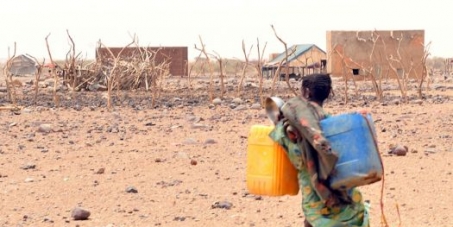
18 million people are desperate for food in Africa’s drought-struck Sahel, but urgent appeals for help are being met with deafening silence by governments worldwide. Senegalese musician Baaba Maal has started a petition to get the US, Japan, France and Germany to pledge their fair share of aid. Let’s join him — sign the urgent petition below and sound the massive alarm needed to shake these leaders into action:
My name is Baaba Maal, and I’m a Senegalese musician writing with a personal plea for help. I live in Africa’s drought-struck Sahel region where 18 million people are on the brink of disaster, including 1 million children at risk of starvation. But our urgent appeals for help are being met with deafening silence. Only a targeted and overwhelming demand for action can stop this catastrophe from turning deadly.
The UN says millions of lives could be destroyed unless $1.5 billion in aid is channeled in immediately, but governments have pledged less than half the required sum. The countries who can make all the difference are the US, Japan, France and Germany, but they’re stalling — that’s why I started a petition on Avaaz’s Community Petitions website to appeal to the world for help.
In days, world leaders will gather in Brussels to discuss the Sahel — if they decide right there and then to pledge their fair share, we can avert disaster. Sign this urgent petition now — Avaaz, Africans Act 4 Africa, and Oxfam will deliver it in a coordinated stunt when we reach 1 million signatures:
Terrible drought, political unrest, and sky high food prices have wreaked havoc on an area the size of the US, stretching from Senegal in the west all the way to Sudan in the east. People here are doing everything they can to survive, but the crisis has hit so hard that it’s difficult to stay hopeful. I’ve seen women and children trying to grow food in patches of land that are bone dry. They know that people are talking about what is happening in the Sahel, but they don’t know if aid will ever arrive.
The UN has only received 43 percent of the $1.5 billion needed — it’s a shortfall of gargantuan proportions. But this gap must be filled, and can be filled by the world’s richest countries, if there’s political will. We don’t have much time to avert mass suffering, and I’m determined to speak on behalf of the people here until they get the help they need.
The world has turned a blind eye to crises like this before, but this time we can make the difference between life and death by forcing our governments to respond. Sign this urgent petition now:
Avaaz members have come together time and time again to respond to natural disasters, saving thousands of lives by ensuring that crucial aid was delivered to Burma, Haiti, Somalia and Pakistan. We have the power to force our leaders to stop idling away in the face of a crisis we can prevent. Let’s stand together now to demand that the world respond to the pleas of the millions living in the vast Sahel region.
We’re entirely funded by donations and receive no money from governments or corporations. Our dedicated team ensures even the smallest contributions go a long way.
Avaaz.org is a 14-million-person global campaign network that works to ensure that the views and values of the world’s people shape global decision-making. (“Avaaz” means “voice” or “song” in many languages.) Avaaz members live in every nation of the world; our team is spread across 19 countries on 6 continents and operates in 14 languages. Learn about some of Avaaz’s biggest campaigns here, or follow us on Facebook or Twitter.
A new study eases concerns that irrigating crops with water released from sewage treatment plants — an increasingly common practice in arid areas of the world — fosters emergence of the antibiotic-resistant bacteria that cause thousands of serious infections each year.
NSW Premier Barry O’Farrell wants the federal government to fund the Pacific Highway upgrade from funds earmarked for the Parramatta to Epping rail link.
A 2016 deadline to turn Australia’s deadliest stretch of road into a dual carriageway appeared to be in jeopardy a day after the NSW budget was unveiled, as NSW and the commonwealth argued over funding and federal Infrastructure Minister Anthony Albanese threatened to divert commonwealth money towards road projects in other states.
On Wednesday Mr O’Farrell for the first time called on the Gillard government to dump its $2.1 billion election proposal for an Epping to Parramatta rail link, and instead put those funds into finishing the upgrade of the Pacific Highway.
Mr O’Farrell has previously called for that money to be spent on the North West Rail Link.
‘This issue could be resolved overnight if the federal government transferred its funding that was set aside allegedly for the Epping to Parramatta rail line and enabled that to be put into the Pacific Highway,’ he told reporters in northwest Sydney.
The NSW government’s war with the commonwealth escalated on Tuesday when state Treasurer Mike Baird pledged $1.5 billion over four years to convert the deadly stretch of road in northern NSW to a dual carriageway.
That was well below the $3.6 billion pledged by the federal government in the May budget on the condition NSW matched its funding commitment dollar for dollar.
‘But NSW argues the original agreement with the commonwealth provided for a 20/80 funding split, which would have meant $2.13 billion more.
Canberra is instead insisting on a 50/50 funding deal, dating back to 1996.
Roads Minister Duncan Gay said Canberra’s decision would jeopardise the 2016 deadline.
‘If the 2016 date is in doubt it’s because the federal minister has reneged … to remove $2.13 billion from NSW roads,’ he told reporters.
Mr Albanese said funds earmarked for the Pacific Highway could now be spent outside NSW because of the state government’s failure to match the commonwealth’s funding commitment.
‘If NSW doesn’t support what it said it would do obviously there will be other governments and projects putting themselves forward for that funding,’ he told reporters in Brisbane.
Meanwhile, with the NSW budget proposing 10,000 government job cuts over four years to save $2.2 billion, Mr O’Farrell said public servants would need to prove their worth.
‘What directors-general of departments have been asked to do over the next 12 months is identify and eradicate waste and mismanagement within departments and if that means that some public servants are going to have to do more, well that’s real life,’ he said.
Mr O’Farrell declined to say where an $1.24 billion in unspecified cutbacks to government programs and services flagged in the budget would be made.
 13 June 2012