Category: Sustainable Settlement and Agriculture

The Generator is founded on the simple premise that we should leave the world in better condition than we found it. The news items in this category outline the attempts people have made to do this. They are mainly concerned with our food supply and settlement patterns. The impact that the human race has on the planet.

  • If President Rousseff passes the forest code, it won’t be only Brazil that suffers

    If President Rousseff passes the forest code, it won’t be only Brazil that suffers

    Brazil has a proud record of protecting the environment, but a bill allowing deforestation would undermine the Rio+20 summit

    • guardian.co.uk, Thursday 24 May 2012 15.19 BST
    • Comments (56)
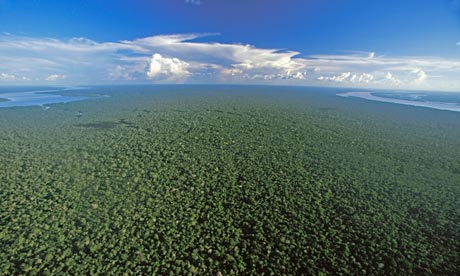
    • An aerial view of the Amazon rainforest near Nova Olinda, Brazil

      An aerial view of the Amazon rainforest near Nova Olinda, Brazil. Photograph: Gerd Ludwig/Corbis

      Never before has the survival of so much rainforest depended on one person. But that is where President Rousseff of Brazil finds herself. The Brazilian congress just passed a forest code that puts the Amazon and other forests in jeopardy.

      Dilma Rousseff’s imminent decision on whether to pass or veto the bill will have huge ramifications. If approved, it would give loggers and farmers free rein to chop down 190m acres of forest. A territory the size of France and Britain combined will be at risk. It would open forests and rivers up for grabs, putting 70% of Brazil’s river basins at risk. It would also give amnesty to anyone previously charged with illegal deforestation.

      This bill would be a catastrophe not just for Brazil, but for the world and all our futures. Brazil is home to 40% of the world’s last remaining rainforest – a lung that provides the earth with one fifth of our oxygen. So why is the congress passing such a destructive bill? And why would Rousseff not just veto it right away? Simple: industrial farmers and loggers have a stranglehold on congress and this powerful lobby claims current legislation is freezing development in Brazil. Others say forest must be converted into farmland to tackle rising food prices in Brazil.

      None of these arguments hold water. The incredible development of Brazilian agriculture in the past decade is due to investment in more efficient farming and has been fuelled by the rising price of food commodities over 10 years. It has nothing to do with needing more access to forests. In Brazil, 200 million cattle roam over 500m acres. More efficient farming will free more land without any need for deforestation.

      Every threat to the Amazon is a threat to indigenous life. The forest code would allow deforestation in previously protected areas. The interests of those that have lived in the forests for generations are being put second to those of commercial land speculators. Environmentalists who have spoken out to protect the forest have been harassed, threatened and even killed by thugs.

      But this is not just a dispute between businessmen and environmentalists. More than 79% of Brazilians reject the new bill. All former environment ministers , whatever their political leaning, have joined forces to express their strong opposition to this issue and recently, even some of the top businessmen in Brazil came out against the forest code. More than 2 million people have signed a global Avaaz campaign calling on Rousseff to use her veto. Tens of thousands have signed the petition and thousands have called Rousseff’s office and Brazilian embassies across the world. This bill is now as important to people living in the islands of São Tomé as it is for those in São Paulo.

      The government has a proud record of protecting the environment: in the past few years Brazil vastly reduced deforestation rates, achieving a 78% decline between 2004 and 2011. Rousseff came to office promising to firmly oppose any amnesty to the destroyers of the forest. It is now up to her to stick to her promises and maintain the environmental records of her predecessor.

      Brazil’s track record made it the natural host of next month’s critical Earth summit – the most important global environmental summit in 20 years. More than 50,000 people from all over the world will come to Rio and discuss the fate of the planet and how to accelerate the fight against environmental destruction, the collapse of biodiversity, and climate warming.

      Rousseff will host the summit – a massive responsibility that requires legitimacy. But if she allows this bill to pass, Brazil will not be seen as a credible host of Rio+20.

      A veto by Rousseff will be an act of global leadership, a gesture desperately needed to win the fight against climate change. An approval by her will cast a dark shadow over her presidency and Brazil’s authority in these global forums. Worse still, a victory for big business profits over the planet’s future will set a frightening precedent for the protection of the last remaining forests across our world. Brazil is seen by many countries as a model of 21st century development. This is a crucial moment to define what kind of model Brazil wants to be.

      Millions of people will be watching Rousseff as she comes to a decision on this forest code. It is a decision that will have an impact on all our futures.

      • Follow Comment is Free on Twitter @commentisfree

  • Though Greens sometimes get their science wrong, they’re better than most

    Though Greens sometimes get their science wrong, they’re better than most

    Some have threatened to quit the party for its stance on GM food, but scientists need to learn to engage with politics

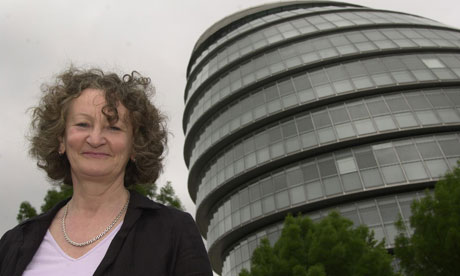
    • Green London assembly member Jenny Jones at City Hall

      Green London assembly member Jenny Jones said she was planning to attend the ‘Take the Flour Back’ protest at Rothamstead Research. Photograph: Johnny Green/PA

      On a regular basis I see someone complaining they won’t be supporting the Green party because it’s “anti-science”. This isn’t true of course. After some well-deserved criticism, party activists have taken steps to change those stances.

      Yet some scientists keep attacking them. Yesterday, the Green London assembly member Jenny Jones said she was planning to attend the “Take the Flour Back” protest at Rothamstead Research, which is against genetically modified foods. Naturally a mini-storm of criticism on Twitter followed.

      Green supporter Tom Chivers at the Telegraph vowed to stop voting Green and several people resigned from the party.

      “Take The Flour Back” are opposed to GM wheat. They aim to visit Rothamsted Park, where it is being grown as part of an experiment, and destroy the crops. In an unusual step, the scientists involved have tried to engage with the protesters too, to little avail.

      In this case I’ll agree with the scientists that many of the assertions made about the GM trial are false. The Greens should accept that, even if they remain opposed to GM foods more broadly.

      But some of the criticism is unfair.First, the Conservatives and Ukip are far more scientifically illiterate than the Greens. They are actively trying to sabotage the debate on how to deal with climate change, and most deny it is even taking place.

      Given that scientists are utterly failing to engage or lead the debate on climate change – why not spend more time dealing with that bigger problem than attacking Greens over small things? Our planet is dying thanks to global warming and some scientists think this GM outrage should be a top priority? Really?

      Second a newsflash for scientists: none of the major political parties will take on board all your recommendations. If you want one, then vote for the minuscule Science party. Every political party has to weigh up a range of interests that sometimes conflict with each other.

      Last night I attended a talk entitled “Science Communication and Political Divides” (Storifyed here) and I was relieved to hear one scientist admit: “Scientists are not very good at doing politics.” She went on to say: “Evidence has to be considered in a public light,” which is exactly right. They were referring to drugs policy in that context (Prof David Nutt and his firing around drugs policy), but the point was the same: don’t expect politicians and the public to formulate policy merely on the basis of scientific evidence.

      Science has real world results. In the case of GM foods, the industry has become concentrated in the hands of a few companies that have started patenting and exploiting farmers and consumers from developing countries.

      The divide is not between “pro-science” and “anti-science” political parties at all. Rather, politicians and parties will always side with science when it suits their constituency or aligns with their interests.

      Conservatives and Republicans will side with scientists when big corporations benefit (GM foods, nuclear power) and oppose it when big corporates are losing out (renewable energy). Greens support the science on climate change, but oppose GM food research and development for economic and sustainability reasons. Whether scientists like it or not, voters are also swayed by those concerns.

      The challenge for scientists isn’t to merely focus on what the evidence says. It is also to convince the public that their suggested course of action is the right one, even when the public is sceptical for perfectly valid reasons. Ignoring those concerns and calling them “luddites” just doesn’t work. Perhaps this is why scientists are failing to get faster action on climate change.

      • Follow Comment is free on Twitter @commentisfree

  • Greenpeace should not choose green over peace

    Greenpeace should not choose green over peace

    The organisation’s support of a marine reserve in the Chagos islands displays a lack of regard for islanders wanting to return

    • Chagos islanders in Mauritius

      Chagos islanders in Mauritius. The Chagossians ‘are now dispersed around the Seychelles, Mauritius and England’. Photograph: Graeme Robertson

      Greenpeace International is a fine organisation. It uniquely combined the aims of promoting “peace” – including enhancing human rights – and, as an element of that, protecting the green (and blue) environment. Remember the dove with the olive branch, and the campaigns against US atmospheric nuclear bomb tests in the north Pacific and French underwater ones in the south Pacific. When the French secret service sank the Rainbow Warrior in Auckland harbour, the ship had been engaged in a humanitarian action: helping move some Polynesians from their homes, where they felt threatened by pollution and explosions.

      But Greenpeace seems to have mislaid the “peace” half of its mission. That has been evident for some time to anyone reading its current programme and priorities on its website. This grand drift was on show again at a conference organised by Amnesty International in Oxford last week, where Greenpeace International’s executive director, Kumi Naidoo – a man with a proud record of anti-apartheid campaigning – was to talk about human rights and protection of the environment. The context was a hot question about the possible return of the Chagos islanders to their home in mid-Indian Ocean, a British Overseas Territory from which they were all deported in 1971 to make way for a US military base on an atoll, Diego Garcia. That involved moving, it is said, several million tons of coral and destroying the quasi-pristine nature of the world’s biggest atoll, making it suitable for aircraft-carriers. The islanders are now dispersed around the Seychelles, Mauritius and England. Some of the islanders are happy with their UK/EU passports, others want to return home and have been seeking permission through the courts, the House of Lords, and – soon – the European court of human rights.

      The mandarins of Whitehall have worked for decades to block their repatriation claim, arguing first that the archipelago was uninhabited, and only occasionally visited by migrant labourers to pick coconuts. Then someone in Whitehall had another brilliant idea: declare Chagos as a vast Marine Protected Area (MPA). Unlike nearly all the new MPAs in Britain it would be “no-take” zone – fishing would be largely prohibited.

      This scheme was applauded by some influential non-governmental groups, in particular the Pew Foundation, the Royal Society of London and the Royal Society for the Protection of Birds (RSPB). It is said that the RSPB’s former international director, Alistair Gammell, now with Pew, persuaded Greenpeace UK to join the ecologists’ cheers of support for a no-take MPA. Greenpeace International, to its shame, went along with this, only adding, tardily, “provided the rights of the Chagossians are respected”. The Foreign Office says they have no rights, so that’s hunky-dory.

      As a matter of fact Greenpeace had already supported this idea long before – in 2005, writing: “The Chagos islands, which the [proposed] reserve bounds, are uninhabited and almost unpolluted and little affected by direct human impacts except fishing”. No mention, of course, of the several thousand military folks deployed there, whose main outdoor recreation is recreational marlin and tuna fishing.

      The Greenpeace UK letter of support asserted that no-take MPAs are the accepted best way of saving world fisheries. But that’s nonsense. They are useful within comprehensive management systems, but control of fishing operations remains the basic way of saving fisheries and fishing communities.

      The UK government has declared a circular no-take zone around Chagos, 200 miles in radius. But it has no formal standing in international law, and is contested by neighbouring states. Some people hoped that, in Oxford, Naidoo would tack away from Greenpeace’s promotion of the MPA scam. Instead, Naidoo asserted that the no-take MPA was the better of two options, the other being free-for-all fishing. The argument is totally unacceptable: fishing can both be allowed, and be controlled.

      One can’t expect large organisations to publicly admit error, but Naidoo has a way out. He implied that the no-take rule would be good for the time being, but if and when the Chagossians return they could decide what should then be done. And how else would repatriated Chagossians make a living? They could not now rely on coconuts. Ecotourism requires big investments, imported skills and a substantial labour force; competition with the expert operators from neighbouring islands would be hard and possibly mutually destructive. There is only one way the repatriates could survive – by licensing commercial fishing. Greenpeace shouldn’t be choosing between peace and green and preferring the latter.

      • Follow Comment is free on Twitter @commentisfree

  • Ford, GM and BMW linked to illegal logging and slave labour in Brazil

    Ford, GM and BMW linked to illegal logging and slave labour in Brazil

    Car makers source iron from Brazil that contributes to Amazon deforestation, says Greenpeace ahead of Rio+20

    • guardian.co.uk, Thursday 17 May 2012 15.21 BST
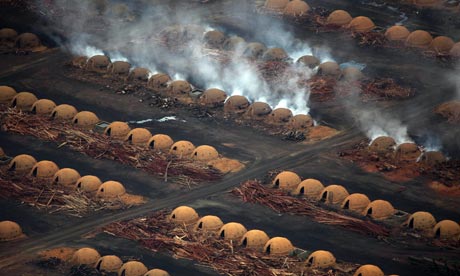
    • Pig iron in Brazil : Amazon and Cerrado deforestation and Illegal charcoal kilns in Pará state

      Pig iron blast furnaces in Pará state, Brazil, contribute to deforestation in the Amazon. Photograph: Rodrigo Baléia/Greenpeace

      Ford, GM and BMW are sourcing material from Brazil that is driving illegal logging and slave labour, according to campaigners at Greenpeace.

      Brazil is a major exporter of pig iron, a primary ingredient of steel and cast iron, that is produced using massive quantities of charcoal.

      Reports over the past decade from the Brazilian government, the International Labour Organisation (ILO), and the US Department of Labour have indicated that charcoal used by many pig iron suppliers in the Amazonian state of Pará was obtained through forced labour and illegal logging of protected and indigenous lands.

      A new report by Greenpeace uses customs data to link eight international companies to two major Brazilian exporters of pig iron, Viena Siderurgica do Maranhão (Viena) and Siderúrgica do Pará (Sidepar), that the green group says are linked through the supply chain to charcoal suppliers with histories of buying from illegal camps and concealing illicit behaviour.

      Ford, General Motors, BMW, Mercedes, Nissan are all linked through a Severstal steel mill in Columbus, Mississippi, that buys from Viena and Severstal, while John Deere and ThyssonKrupp are linked through foundries supplied by the Illinois-based National Material Trading, a metal broker that sources from Viena. Two other metal brokers, Environmental Materials Corporation in Pennsylvania and a division of Cargill in Minnesota were also said by Greenpeace to have imported pig iron from Viena.

      “By buying this steel, these well-known brands are helping to destroy the Amazon,” said Greenpeace Brazil Amazon campaign director Paulo Adario in a statement. “President Dilma [Rousseff] must protect the Amazon and the people who depend on it by ending deforestation, slavery and the invasion of indigenous lands.”

      Greenpeace said it hopes to raise awareness of deforestation and slave labour in the Amazon as the world’s leaders descend on Brazil next month for the Rio+20 Earth summit.

      Bloomberg broke a major story in 2006 on US car makers’ supply chains being linked to slave charcoal camps, but Greenpeace claims that despite promises from high profile American and European companies such as BMW and General Motors (GM), many continue to buy directly or indirectly from illicit companies.

      Ford, GM and Nissan were all named in the original Bloomberg story.

      In response to the report, GM stated it has a “zero tolerance” policy against employee abuse and corrupt business practices. A BMW spokesman said the company ensured suppliers “meet the same environmental and social standards we have set ourselves when they become our business partners” but ensuring sub-suppliers did so was a challenge. .

      Ford was the most forthcoming and indicated that it has been working with the ILO and Brazilian government, and has been training suppliers on labour codes since 2006 and sub-tier suppliers since 2011.

      Todd Nissen, of Ford Corporate Communications, said: “We are very familiar with the pig iron situation in Brazil. We were first made aware in 2006 that charcoal produced there with the use of slave labour was in our supply chain. We immediately stopped sourcing from the site identified in the 2006 investigation and took steps to work with our supply chain to safeguard human rights throughout their operations. Last year, we renewed our inquiry into the potential points of entry for Brazilian pig iron in our supply chain and are evaluating supplier progress to ensure responsible procurement of the material.”

      The grittier details in the Greenpeace report linking Viena and Sidepar with the charcoal suppliers and their alleged illicit activities are cited as confidential to protect the report’s sources. Activists battling illegal logging in the Amazon are frequently targeted for their actions.

      The Brazilian charcoal industry has a well-documented history of destructive environmental practices and human rights abuse.

      An ILO report indicates that in 2008, there were as many as 40,000 slave labourers in Brazil. About 1,200 were working in the charcoal industry, while 5,600 were working in the related industry of deforestation and forestry. The Brazilian government has attempted to tackle slave labour in the charcoal industry by establishing the Citizen’s Charcoal Institute (ICC) in 2004 to monitor the industry. Greenpeace claims there are no consequences for noncompliance, rendering the ICC moot, though the organisation has helped to rehabilitate at least 161 former slaves.

  • Greens mayor sees red over tree removal

    Greens mayor sees red over tree removal

    Posted May 17, 2012 11:27:37

    Loading…

    Map DataMap data ©2012 GBRMPA, Google, Whereis(R), Sensis Pty LtdTerms of Use
    Map Data
    Map data ©2012 GBRMPA, Google, Whereis(R), Sensis Pty Ltd
    Map data ©2012 GBRMPA, Google, Whereis(R), Sensis Pty Ltd
    Map
    Map
    Satellite

    Map: Byron Bay 2481

    The Byron Mayor has successfully stopped work on a road project being carried out by her own council at Broken Head.

    Jan Barham says 20 large Blackbutt trees have already been removed to allow widening of the coast road.

    She says councillors were not consulted on the issue, and a temporary stop-work will remain in place until an urgent motion is considered at this afternoon’s council meeting.

    Cr Barham says she’s appalled by the council’s actions.

    “My own council using a mechanism created by the state that disallows an open and transparent process and a proper consideration of the ecological values,” she said.

    “I am very upset and wondering how the hell Byron Council, well known for protecting and preserving bio-diversity could be doing something like this.

    “A private developer would not be allowed to do this sort of work.

    “Yet this is council doing the work, when it’s meant to be the protector and preserver of our natural wildlife and environment.”

    Topics:environment, local-government, road-transport, byron-bay-2481, lismore-2480

  • Live fast, die young: Urban plants are more closely related and live shorter lives than plants in the countryside

    ScienceDaily: Earth Science News


    Live fast, die young: Urban plants are more closely related and live shorter lives than plants in the countryside

    Posted: 18 Apr 2012 06:53 AM PDT

    Cities in both, the US and Europe harbor more plant species than rural areas. However, plant species of urban areas are more closely related to each other and often share similar functions. Consequently, urban ecosystems should be more sensitive towards environmental impacts than rural ecosystems.
    You are subscribed to email updates from ScienceDaily: Earth Science News
    To stop receiving these emails, you may unsubscribe now.
    Email delivery powered by Google
    Google Inc., 20 West Kinzie, Chicago IL USA 60610