Category: Sustainable Settlement and Agriculture

The Generator is founded on the simple premise that we should leave the world in better condition than we found it. The news items in this category outline the attempts people have made to do this. They are mainly concerned with our food supply and settlement patterns. The impact that the human race has on the planet.

  • Lack of business leadership places the whole sustainability movement at risk

    Lack of business leadership places the whole sustainability movement at risk

    Executives need to transcend their fear of being attacked, while NGOs and the media also need to rethink their approach

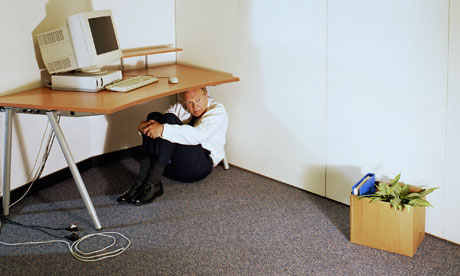
    • Mature businessman sitting under desk

      If anyone, and particularly a man, takes a step outside of his comfort zone, and gets immediately criticised, he is likely to retreat. Photograph: Alan Powdrill

      There is a fascinating dynamic which is not always well understood, which is that the more power you have, the more fragile and vulnerable you become.

      I was thinking about this in regard to companies being more open about their activities in the field of sustainability.

      They may make billions of pounds and determine the lives we live and the products and services we consume, but they are generally terrified of anyone saying a bad word against them.

      That’s part of the reason why they have a phalanx of lawyers and PR advisors at their beck and call.

      Many business leaders talk the talk abut the importance of transparency, but when I meet them, I am struck by how fearful they are about publicising their work in areas such as supply chain management and social impact.

      Is that because of what Unilever CEO Paul Polman told me, which is that “business leaders do not like to promise on things they are not sure they can deliver on, so they would rather work discretely on projects?”

      Or is it because they are personally scared of being attacked by NGOs or the media if they stick their heads above the parapet, and their brands being damaged in the process.

      I was recently speaking to the director of a major retailer who relayed that one bad experience with an NGO and the press had made the company wary of publicising any of its sustainability activities, even though it was proud of what was being achieved.

      This reticence poses great risks to the sustainability movement. In the last week, two senior global figures independently told me they are increasingly worried that not enough CEOs are speaking out and that there is too much reliance amongst sustainability professionals on the campaigning style of Unilever’s Polman.

      One said: “We need more business leaders to take a public stance on this issue. Polman is out on his own and if something negative happens to Unilever, then people will pin the blame on his Sustainable Living Plan, and the whole movement could be critically damaged.”

      Beyond this, the corporate sector needs desperately to rebuild its trust with society and that can only be achieved through transparency and holding up its actions to scrutiny.

      So it is absolutely essential for companies to be more proactive. This necessitates not only a change in their own behaviour but perhaps also a different approach from other players in society, such as NGOs and the media.

      To help make this happen, it’s helpful to understand the dynamics of change and what better place to look then in the area of personal relationships. I was taught that if your partner takes an emotional risk by sharing information that puts them in a vulnerable position, the most important initial response is to recognise the courage in doing this, even if you personally feel it’s no big deal.

      That’s because if anyone, and particularly a man, takes a step outside of his comfort zone, and gets immediately criticised, he is likely to retreat. If this happens a couple more times, he may well give up altogether.

      When I explained this process to the director of the major retailer I mentioned earlier, his eyes lit up and he said that was exactly how he was feeling.

      But the point is that understanding this dynamic should not be used as an excuse for inaction, but as a way to transcend it.

      That’s because true leadership in this space is to step out into the limelight, knowing full well there are snipers out there. The best protection is to have belief in what you are doing and personally embody the change. So far, only Polman and a handful of others like Ian Cheshire and Jochen Zeitz have shown the courage to put their necks on the line in this way.

      Where for instance is Marc Bolland, the chief executive of Marks and Spencer? Behind the scenes, I am told he is doing a great deal, meeting this week with Nick Clegg to advise ahead of Rio+20, challenging his peers at Davos on sustainable consumption and addressing his top 1000 suppliers in April on Plan A.

      But apart from his support for the company’s new clothes swapping scheme, we have not seen him take a leadership role on the public stage.

      Given the company’s reputation and history, he would do well to stand side by side with Polman, publicly challenging short-term investors and promoting political change.

      So what about the role of both NGOs and the media? First of all, let’s be absolutely clear. The primary purpose of both is to hold businesses to account, and not to give them an easy ride, especially when much of their current behaviour is pushing us ever closer towards the edge of an ecological and social precipice.

      So it’s also absolutely right that companies whose activities are clearly greenwash, or who are secretly lobbying governments to prevent progressive change, should be exposed. That’s why I so respect Guardian colleagues such as George Monbiot, as well as organisations such as Greenpeace who bring these disgraceful behaviours to the public gaze.

      But there is also some truth that NGOs and the media can sometimes be lazy and only go after companies who put information in the public domain, rather than taking the time and resources to dig deeper to expose laggards who hide in the shadows and do nothing at all.

      So I wonder whether civil society groups and the media do need to rethink their approach, by recognising when progress is being made, even whilst at the same time acknowledging that much more needs to be done.

      From the NGO perspective, we are already seeing how groups like Greenpeace are recognising the importance of working in collaboration with companies, whilst at the same time exposing unacceptable behaviour.

      It’s an extremely difficult balance to get right; ensuring their integrity is kept intact and they do not become co-opted by big business.

      But a question on my mind is should the media be taking a more nuanced approach? I continue to dismiss the bleatings of executives who complain that their press releases on sustainability issues are routinely ignored, and for good reason, since they normally do not add up to a row of beans.

      But what of those seeking to make a genuine contribution. Well, the creation of Guardian Sustainable Business is an attempt to recognise those businesses that are moving into a leadership position, whilst remembering that even these tend to be taking only iterative steps and need to become much bolder in fundamentally rethinking their business models.

      I personally think that while there is some truth in the old saying that good news does not sell newspapers, I increasingly believe that people do respond to inspiring news. With the constant tsunami of bad news out there, we do need also to hear many more stories of hope and of courage.

      What seems abundantly clear to me is that we are heading towards a time of unprecedented risk, and it is therefore critical that every single business, NGO and media company needs to stand back and reflect on how they can best contribute to the task of preventing us from tipping over the edge of that looming precipice.

      This content is brought to you by Guardian Professional. Become a GSB member to get more stories like this direct to your inbox

  • Petition calls on Brazilian president to veto ‘catastrophic’ forest code

    Petition calls on Brazilian president to veto ‘catastrophic’ forest code

    More than 1.5 million people have petitioned Dilma Rousseff to reject a bill that may lead to further destruction of the Amazon

    • guardian.co.uk, Friday 11 May 2012 12.38 BST
    • Comments (1)
    • Protest demanding Brazilian President Dilma Rousseff to veto a forest code in Sao Paulo, in Brazil

      Protesters raise banners demanding that the Brazilian president, Dilma Rousseff, vetoes a forest code approved by the congress last month. Photograph: Yasuyoshi Chiba/AFP/Getty Images

      More than 1.5 million people in Europe, the US and elsewhere have petitioned the Brazilian president, Dilma Rousseff, to veto a law that critics say could lead to the loss of 220,000 square kilometres of Amazonian rainforest, an area close to the combined size of the UK and France.

      The proposed new Brazilian forest code, pushed through parliament by the powerful farming lobby in the face of national opposition, would provide an amnesty for landowners who have illegally cleared forests in the past and will allow deforestation in previously protected areas like mountain tops and beside rivers. According to environment groups, it could allow loggers to chop down more of the Amazon than has been possible in the last 50 years.

      The president, who has the right to veto the bill, has been bombarded with emails, petitions and by social media appeals by more than 1.5 million people. This number is expected to rise dramatically in the next few days as Greenpeace, Avaaz and WWF International ask their 22 million supporters to sign up.

      “Nearly 80% of Brazilians want this catastrophic bill scrapped, and so far over 1 million people across the world support them. President Rousseff has a choice – sign the Amazon’s death sentence or protect the planet’s lungs and emerge a public hero,” said Ricken Patel, Avaaz director.

      “President Dilma Rousseff stands at a defining moment for her presidency,” said Kumi Naidoo, Greenpeace International director. “The choice is clear. She can ignore the Brazilian people and side with ‘destruction as usual’ as enshrined in the new forest code or exercise her veto and support the call for a new zero deforestation law. We urge her to take the visionary path of a leader who understands that with power comes responsibility.”

      The groups hope that Rousseff, who has until 25 May to exercise her veto, will bow to international pressure to avoid embarrassment when she plays host to the UN’s Rio +20 Earth summit next month. More than 125 heads of state as well as 45,000 delegates are expected to attend the world’s largest environment conference in a generation, pledging to protect forests and develop the “green economy”.

      The new forest code allows landowners to count woodland on river margins, hilltops and steep inclines towards a total proportion of forest that must be legally preserved on their land. It also allows for reserve areas in the Amazon to be reduced from 80% to 50%, as long as the state where the reduction is planned maintains 65% of protected areas.

      Landowners, who are growing in political importance as Brazil becomes a major exporter of commodity crops, said they were confident that the international pressure would not succeed.

      “Brazil is the only country that has the moral authority to discuss [Brazilian] environmental issues,” said Katia Abreu, senator and president of the Confederation of Agriculture and Livestock of Brazil. “I don’t understand why the NGOs oppose the changes. The main NGOs are European but I do not see them asking Europe to revive its forests. Why only in Brazil? We want to bring legal certainty for farmers with this bill. I am convinced [Rousseff] will not veto.” Patrick Cunningham, of the Indigenous People’s Cultural Support Trust, said: “The changes will overturn a law which even Brazil’s military dictatorship didn’t dare to challenge, and will be an abrogation of the country’s laudable and longstanding commitment to protection of the fragile rainforest environment.”

  • River ferries could service eight new sites

    River ferries could service eight new sites

    Jacob Saulwick

    May 11, 2012

    Wharf at the end of cove street Birchgrove is the proposed site for a ferry drop.

    In the frame … Cove Street, Birchgrove is under consideration as a site for a new ferry stop. Photo: Jacky Ghossein

    RESIDENTS on the Parramatta River and on the lower north shore could be served by eight new ferry wharves – if the state government was prepared to plan and pay for them.

    Internal government demand forecasts identified potential for nine new wharf sites – at places such as Balmoral Beach, Jacksons Landing, Rozelle Bay and Ermington – with most of them accessible by Sydney Ferries’ RiverCat fleet.

    The consideration of the new wharves was revealed in a consultant’s study into the depth of the upper Parramatta River, obtained by the Herald under freedom of information laws.

    The April 2011 study by Booz & Co was commissioned to look at the viability of running services to Charles Street Wharf at Parramatta. Low tides restrict services to the wharf on all but three days a month, on average.

    And while the river has not had a major dredging since 1992, Booz’s report recommends against another on environmental and cost grounds.

    The study looked at nine sites on the Parramatta River and lower north shore as possible RiverCat berths.

    The sites, the study says, were ”developed from initial demand forecasting in the separate Networking Planning Study, and suggestions from Sydney Ferries.” They include Balmoral Beach, which the report said could take a RiverCat at the jetty near the swimming baths, if it were upgraded.

    It showed there was enough water depth to allow a RiverCat access to Long Bay, between Northbridge and Cremorne but limited shore access around Le Gay Brereton Park.

    In the inner west, the study looked at Jacksons Landing, Pyrmont, and Rozelle Bay. At Rozelle, a new wharf would be needed, potentially at the northern end of Glebe Point Road.

    Another wharf would be possible at Cove Street, Birchgrove. Booz said this would be a better location than the present wharf at Louisa Road.

    Demographic analysis also suggested new wharves in Homebush Bay and Ermington, and one in Iron Cove to serve Russell Lea and Rodd Point.

    One of the nine sites, Bray’s Bay, in Rhodes, was ruled out due to the river’s shallowness.

    The Transport Minister, Gladys Berejiklian, indicated yesterday the government would not build new wharves soon.

    Ms Berejiklian said it was important to note the Booz study was an analysis of water depths and did not ”consider other important factors that needed to be considered when providing public transport services, such as demand and infrastructure”.

    “The NSW government will work with the new Sydney Ferries operator to look at how ferry services can be expanded and how we can give customers more options,” she said.

    Steffen Faurby, the chief executive of Harbour City Ferries, last week named as the new operator of Sydney’s ferry system, said he wanted to bed in the running of Sydney Ferries before looking at new routes.

    jsaulwick@smh.com.au

    Read more: http://www.smh.com.au/nsw/river-ferries-could-service-eight-new-sites-20120510-1yfph.html#ixzz1uVuAWLqj

  • Stop the Amazon Chainsaw Massacre

    Stop the Amazon Chainsaw Massacre

    Inbox
    x

    Luis Morago – Avaaz.org avaaz@avaaz.org
    7:17 AM (2 hours ago)

    to me
    Dear friends,

    Brazil’s Congress has just passed a bill that gives loggers and farmers free rein to cut down huge swaths of the Amazon. Only President Dilma can veto it. Domestic pressure is mounting, but a massive global outcry will prove her international reputation is at stake. Let’s tip her over the edge to stop the Amazon chainsaw massacre — sign the urgent petition and tell everyone:

    The Brazilian Congress has just passed a catastrophic forestry bill that gives loggers and farmers free rein to cut down huge swaths of the Amazon. Now only President Dilma can stop it.

    Fortunately, the timing is on our side — in weeks Dilma will host the world’s biggest environmental summit and insiders say she cannot afford to open it as the leader who approved the destruction of the rainforest. She’s facing mounting domestic pressure, with 79% of Brazilians rejecting this new bill. Now, if we join them we can turn up the global heat and push her to axe the bill, not the rainforest.

    Dilma could make her decision any day. Let’s get her to veto the bill now. Click below to sign the urgent petition to stop the Amazon chainsaw massacre and send this to everyone:

    http://www.avaaz.org/en/veto_dilma_global/?vl

    The Amazon is vital to life on earth — 20% of our oxygen comes from this magnificent rainforest, and it plays a key role in mitigating global climate change.  Over the last decade, Brazil has vastly reduced deforestation rates, achieving a 78% decline between 2004 and 2011. The reason? A world-acclaimed forestry law, strong enforcement and satellite monitoring.

    But this dangerous new bill would open up an area the size of France and Britain combined to clear-cutting and gives loggers amnesty for all past deforestation crimes. This would not only spark total forest devastation in Brazil, it would also set a bad precedent for other countries. That’s why it’s so crucial that we all protect it.

    Brazil is a rapidly developing country, battling to lift tens of millions out of poverty. Despite evidence that growth does not require deforestation, Dilma is under pressure from the powerful agriculture lobby that helped her get elected to cut down rainforest for profit. And it is an ugly battle — activists are being murdered, intimidated and silenced. But ex-Environmental Ministers and people across Brazil have sent a clear message to Dilma that they want to save the Amazon. Now, it’s up to all of us to stand with them and urge President Dilma to remain strong.

    The fate of Brazil’s rainforests is dangling by a thread. But, with President Dilma so vulnerable to public pressure right now, we can bring the global force of people power to get a win for our planet! Sign the urgent petition below and tell everyone — the petition will be delivered by Brazil’s former Environment Ministers directly to Dilma:

    http://www.avaaz.org/en/veto_dilma_global/?vl

    In the last three years, we have won battle after battle against the odds. Now, let’s come together before it is too late to stop the destruction of the Amazon, protect our planet and herald Dilma as a true international environmental leader.

    With hope and determination,

    Luis, Pedro, Maria Paz, Alice, Ricken, Carol, Lisa, Rewan and the entire Avaaz team

    MORE INFORMATION:

    Brazil’s Congress approves controversial forest law (BBC)
    http://www.bbc.co.uk/news/world-latin-america-17851237

    Brazil Forest Code Passes In Defeat For Dilma Rousseff (Huffington Post)
    http://www.huffingtonpost.com/2012/04/27/brazil-forest-code_n_1457149.html

    Revised Brazilian Forest Code good for environmental criminals, bad for forests (IB Times)
    http://www.ibtimes.co.uk/articles/20120501/revised-brazilian-forest-code-environmental-criminals-forests-common.htm

    Amazon deforestation record low (BBC)
    http://news.bbc.co.uk/2/hi/8358094.stm

    Brazilians reject axing of forest protections (WWF)
    http://wwf.panda.org/?uNewsID=200698

    Support the Avaaz Community!
    We’re entirely funded by donations and receive no money from governments or corporations. Our dedicated team ensures even the smallest contributions go a long way.


    Avaaz.org is a 14-million-person global campaign network
    that works to ensure that the views and values of the world’s people shape global decision-making. (“Avaaz” means “voice” or “song” in many languages.) Avaaz members live in every nation of the world; our team is spread across 19 countries on 6 continents and operates in 14 languages. Learn about some of Avaaz’s biggest campaigns here, or follow us on Facebook or Twitter.

    This message was sent to nevilleg729@gmail.com. To change your email address, language, or other information, contact us via this form. To unsubscribe, send an email to unsubscribe@avaaz.org or click here.

    To contact Avaaz, please do not reply to this email. Instead, write to us at www.avaaz.org/en/contact or call us at +1-888-922-8229 (US).

  • Treated effluent back on table for water supply

    Those of us who have installed water tanks for drinking water free of chemicles will now be vindicated.


    Treated effluent back on table for water supply

    Nicole Hasham

    May 7, 2012

    alt

    “Water experts say community perceptions remain a sticking point and the public will need to be persuaded that drinking purified wastewater is a safe, viable option.” Photo: Rodger Cummins

    THE state government will again consider introducing treated sewage into Sydney’s drinking water supply as a means of meeting the city’s future water needs, even though the idea was rejected by the Labor government five years ago.

    Water experts say community perceptions remain a sticking point and the public will need to be persuaded that drinking purified wastewater is a safe, viable option.

    But concerns about energy use associated with desalination, and environmental concerns about building additional dams, have propelled the unpalatable option into future planning.

    alt

    “[The government] needs a plan that brings in the obvious and most cost-effective options straight up, and others that are marginal in terms of costs and palatability if needed” … Chris Davis, the National Water Commissioner.

    The Coalition is reviewing the Metropolitan Water Plan to secure water supplies for Greater Sydney beyond 2025.

    The chairman of an independent panel advising the review, Chris Davis, confirmed that “all options are up for grabs”, including the reuse of highly treated effluent for drinking.

    “[The government] needs a plan that brings in the obvious and most cost-effective options straight up, and others that are marginal in terms of costs and palatability if needed,” said Mr Davis, who is also the National Water Commissioner.

    “The previous government had some constraints on what it was prepared to consider, but the new government doesn’t seem to have any hang-ups. [Now] it’s just a question of whether it stacks up.”

    Population growth and climate change impacts are expected to stretch water supply in most large Australian cities over the next 20 years.

    But previous attempts to introduce treated effluent into drinking water have run into staunch community opposition.

    “I think people need to be convinced that it’s safe and reliable,” Mr Davis said.

    “They need to get over the hang-up of thinking about where the water came from, and being offended by that.”

    The review will also examine options such as harvesting stormwater for drinking and the future role of desalination.

    In 2006, Toowoomba residents voted down a plan to drink their own purified sewage, even in the face of a critical water shortage. Two years later, public pressure forced the then Queensland premier, Anna Bligh, to mothball plans to add recycled wastewater to Wivenhoe Dam. A proposed scheme in Goulburn also failed to win support.

    But the notion has gained momentum in Perth, where a pilot plan is under way to replenish groundwater supplies with treated effluent.

    Schemes for recycling sewage for drinking exist in several countries, including Namibia and the US, and ”unplanned” recycled effluent already indirectly enters the drinking water systems of many cities.

    The NSW Finance and Services Minister, Greg Pearce, would not speculate on the review, but said the panel “will consider all options for water supply

    Read more: http://www.smh.com.au/environment/water-issues/treated-effluent-back-on-table-for-water-supply-20120506-1y76q.html#ixzz1uA2HHxId

  • It’s green growth or nothing

    It’s green growth or nothing

    We have no choice. High energy prices are here to stay and resource-frugality is our only hope for a sustainable future

    • Shale Gas Costing 2/3 Less Than OPEC Oil Converges With U.S.

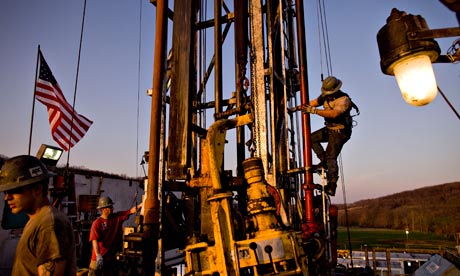
      Shale gas, seen here being drilled for in Bradford County, Pennsylvania, can be used responsibly to generate low-carbon electricity as long as the carbon is captured and stored. Photograph: Bloomberg/Getty

      Much of our economic debate implies we must choose between going green or going for growth. That view may be the opposite of the truth. There is now hard evidence that the real choice is between green growth or no growth at all.

      For the first time in the postwar period, energy and other commodity prices are unusually high for this point of the global recovery. Normally the cost of basic materials falls in real terms for at least two years after a recovery begins. In the past, this boosted real incomes, supported spending and fuelled recovery.

      No more. Today there is a different phenomenon in the developed world: the “squeezed middle”. Far from boosting incomes and spending, high energy and material prices have undermined an already fragile recovery buffeted by financial crisis and the legacy of debt. The new pattern of high prices and squeezed incomes has enormous consequences for our future.

      Since 1970, there have been four big global recessions. If we take the first three, energy prices in the two years after recovery began in the US were flat (on average, just 1%). In real terms, energy prices fell. By contrast, the rise since the global trough in 2008-9 has been a painful 63%. Nor is this just about energy. For commodities like food and minerals, price rises after those earlier recessions averaged 11%. This time it has been five times as big.

      The phenomenon has lasted too long and has been on too big a scale to blame the hedge funds. The century-long decline in commodity prices seems to have come to an end. The cause is Asia. China is growing at five times the rate of Britain during our industrialisation, and the numbers of people involved are unprecedented. Asia’s catch-up is on a scale never experienced in economic history.

      We can hope, of course, that new resources will gradually substitute for old as prices rise. The most promising candidate is shale gas, which has expanded dramatically in the US, leaving the gas price there at half the European level. Shale gas can be used responsibly to generate low-carbon electricity as long as the carbon is captured and stored, so this is a real option consistent with tackling climate change.

      We will need shale gas to compensate for the costly production of declining oil. However, not a single roast dinner has yet been cooked with shale gas outside the US.

      The speed of the US exploitation of shale gas is unlikely to be repeated in more densely populated regions like Europe. The footprint of shale wells is large, and environmental concerns about water pollution have already led to bans not just in France but also in US states like New Jersey and New York. Outside the US, mineral rights are usually owned by governments rather than landowners, which means there is less incentive to drill and more incentive to argue “not in my back yard”. Many shale-rich areas (China, for example) are short of the water that is essential to the fracking process.

      So far, shale gas has not stopped the rise in global gas prices even though cargoes of conventional gas have been diverted from the US. This partly reflects increased demand from the newly industrialising countries, but it also reflects a switch from nuclear in the wake of the Fukushima disaster. We will need a lot of shale gas to compensate for three of the biggest industrial economies – Germany, Italy and Japan – going non-nuclear.

      Given these trends, we can hope for cheaper energy in the long run, but it would be rash to bank on it. We should encourage resource-frugal growth wherever possible, an objective that tallies perfectly with Europe’s commitment to reducing carbon emissions. Tougher EU carbon limits, and consequently a higher carbon price, would send consistent signals to investors in the energy-saving, renewables, nuclear and carbon-storage sectors.

      Energy saving is the win-win: it has the potential for job creation (for example, in household improvements) and it supports growth by cutting bills and boosting spendable income. But there must be a wider agenda for resource efficiency too – recycling metals, repairing and reusing – as the Rio+20 summit in June will spell out.

      There is a facile view that our green commitments – to tackling climate change, avoiding air and water pollution, protecting natural habitats – are an obstacle to growth. The message of the commodity markets is surely different. Resource-hungry growth could rapidly stall due to commodity price rises, simply because so many of us want it. If we want sustainable growth, we do not have a choice. We must go green.

      • Follow Comment is free on Twitter @commentisfree