Category: Sustainable Settlement and Agriculture

The Generator is founded on the simple premise that we should leave the world in better condition than we found it. The news items in this category outline the attempts people have made to do this. They are mainly concerned with our food supply and settlement patterns. The impact that the human race has on the planet.

  • HAPPY CHRISTMAS TO ALL GENERATOR READERS

     I wish all readers a very Merry Xmas and a prosperous New Year.

    Giovanni asked if I would like to post the Generator early this year.
    I have been posting lists inside and outside the Greens for the last
    five years. 

    I began posting on the 21.4.09 and have made over 800 postings and
    have recerived well over 20.000 Hits. I have tried to cover all aspects
    of the issues we are facing.

    Should any of you require any further or more detailded info on any of these
    issues, please advise Giovanni, who will relay your comments to me.

    We are facing very turbulent times. I appreciate the facility of getting news
    and imfo out to the public arena via this medium.

    Regards.

    Neville Gillmore (Your Friendly List Poster)

  • Land grab in Mali forces local farmers off their land

    Land grab in Mali forces local farmers off their land

    Ecologist

    4th December, 2009

    Local population evicted as Mali sells long-term leases on large tracts of agricultural land to Libyan company

    A Libyan agribusiness has bought the farming rights for 100,000 hectares of land in northern Mali.
     
    The deal is part of the Malian government’s strategy to promote private investment in rice production and includes the construction of a 40km irrigation canal.  
     
    But the region’s farmers are concerned that the deal will have negative consequences for their livelihoods.

    Under the agreement, Malibya, a subsidiary of a Libyan sovereign wealth fund, has been granted a 50-year lease to the land in the Office du Niger region.
     
    Lamine Coulibaly, of Coordination Nationale des Organisations Paysannes (CNOP), an umbrella organisation representing the interests of farmers, said the agreement was driven by Libya’s concerns over food security.
     
    ‘Libya is dependent on multinationals for agricultural products. Following the example of other Arab countries, projects like this in Office du Niger are an attempt to end this dependency,’ he said.
     
    Land grab or opportunity?
     
    Mali’s Agricultural Minister Agatham Ag Alassane said that Mali had no choice if is going to feed its own population.
     
    ‘Our concern today is to modernise agriculture, especially rice cultivation. To do this, we need a lot of resources and a lot of land. We cannot give a tractor to a small producer who would use it on two or three hectares; that would be a waste,’ he is reported as saying.
     
    CNOP said the local population were already being evicted from their land.
     
    ‘The Chinese company contracted to build the canal has started work on the demolition of 150 houses.  Other families have had their gardens destroyed along with all the food that they grow. So far there has been no compensation,’ said Coulibaly.
     
    Competition for water
     
    Local farmers are expected to receive compensation in the form of irrigated land but there are fears that large-scale rice production by Malibya will mean they lose out on water.
     
    ‘The project will increase competition for the waters of the river Niger, the most important irrigation resource in the country,’ said Coulibaly.
     
    He added that Malibya had entered into negotiations to have priority over water resources in the low season, when water supplies are weak.
     
    Roger Wilson, of the World Land Trust, expressed concern at the apparent lack of transparency in the agreement being made.
     
    ‘This is a strategic decision with a 50 year lock-in. There needs to be more information about the social and environmental ramifications of this project.’

    Useful links
    CNOP
    World Land Trust

  • Copenhagen climate change talks must fail, says top scientist

    Copenhagen climate change talks must fail, says top scientist

    Exclusive: World’s leading climate change expert says summit talks so flawed that deal would be a disaster

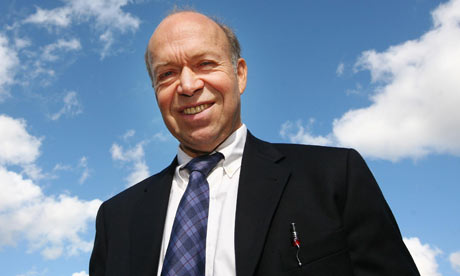
    James Hansen

    ‘We don’t have a leader who is able to grasp [the issue] and say what is really needed. Instead we are trying to continue business as usual,’ say James Hansen. Photograph: Gareth Fuller/PA

    The scientist who convinced the world to take notice of the looming danger of global warming says it would be better for the planet and for future generations if next week’s Copenhagen climate change summit ended in collapse.

    ” + __flash__argumentsToXML(arguments,0) + ““)); }” s_getversion=”function () { return eval(instance.CallFunction(“” + __flash__argumentsToXML(arguments,0) + ““)); }” s_getmovieid=”function () { return eval(instance.CallFunction(“” + __flash__argumentsToXML(arguments,0) + ““)); }” s_getpageurl=”function () { return eval(instance.CallFunction(“” + __flash__argumentsToXML(arguments,0) + ““)); }” s_getpagename=”function () { return eval(instance.CallFunction(“” + __flash__argumentsToXML(arguments,0) + ““)); }” s_getaccount=”function () { return eval(instance.CallFunction(“” + __flash__argumentsToXML(arguments,0) + ““)); }” s_gettrackclickmap=”function () { return eval(instance.CallFunction(“” + __flash__argumentsToXML(arguments,0) + ““)); }” s_getdomindex=”function () { return eval(instance.CallFunction(“” + __flash__argumentsToXML(arguments,0) + ““)); }” s_getswfurl=”function () { return eval(instance.CallFunction(“” + __flash__argumentsToXML(arguments,0) + ““)); }” returntype=”javascript” name=”name”>

  • Carbon trading is not enough to tackle climate change


    Shell’s chief executive, Peter Voser, was quoted as calling on governments to introduce a carbon tax or a minimum price for CO2 because “the ETS [emissions trading scheme] was failing to deliver sufficient incentives to kickstart expensive technologies such as carbon capture and storage”. This lack of incentive comes about because if industry surpasses expectations by cutting emissions far below the cap set within the ETS, or if the cap is unambitious, the price of carbon will be low and return on low-carbon investment reduced. This is exactly what has happened during this recession, where an economically induced reduction of emissions has caused the price of carbon to plummet.

    Emissions caps have an advantage over a carbon tax as they should guarantee emission levels are reduced at a specified rate. But, without a minimum price for CO2, they provide very little incentive to industry as a whole. Policies should encourage industry to reduce emissions as much as possible, not just to the level of the cap – which, if achieved, would still leave a good chance of dangerous climate change.

    Vincent de Rivaz, chief executive of EDF Energy, “warned of the dangers of a ‘sub-prime’ crisis inside the ETS if complex financial instruments were created by market participants”. There could indeed be a crisis, not because of the complexity of the financial instruments, but rather because of the quality of the underlying carbon credits. The EU common agricultural policy (CAP) gives us a great example of how large regional policies can be abused.

    The article also states that John Browne, “a former boss of BP and an early ETS promoter, has also expressed reservations about such schemes, saying it was ‘wrong’ to place all your faith in them”. He is entirely correct. Globally, where the greatest strides have been made in climate and energy policy, carbon markets have not played a role. Instead, government intervention and planning (such as in the Danish and now Chinese energy sector), guaranteed return on investment (such as through “feed in tariffs” for renewables in Germany and elsewhere), and heavy regulation of the energy sector (as in California’s energy efficiency improvements) have been key. My experience with UK industry was that any substantive decarbonisation was as a result of high energy costs and more direct policies such as the Renewables Obligation.

    Copenhagen will undoubtedly envisage a role for emissions trading. However, its shortcomings must be addressed and its limitations acknowledged through a commitment from all countries to a broad range of other policy measures.

  • Clamping down on logging in brazil moves it to paraguay

    Clamping down on logging in Brazil moves it to Paraguay

    Ecologist

    20th November, 2009

    Former Paraguayan government minister makes plea for West to intervene in runaway illegal logging situation displaced from Brazil


    Paraguay has called for urgent international assistance to cope with deforestation after 437,000 acres of the country’s forest have been destroyed in just eight months. 

    Authorities believe that ranchers from Brazil are buying up and deforesting huge swathes of the country’s remote Chaco region to make way for cattle farms. 

    The call comes as neighbouring Brazil announced last week that deforestation in the Amazon region had fallen by 45 per cent. 

    Paraguay’s Environmental Prosecutor, Dr Luis Casaccia, told MPs yesterday that ‘ranchers have turned their attention to the Chaco, as authorities in Brazil have clamped down on deforestation’.

    Speaking alongside Dr Alberto Yanosky of NGO Guyra Paraguay and John Burton, the CEO of the World Land Trust, Dr Casaccia showed photos of heavy machinery transported from Brazil being unloaded in the border city of Bahia Negra.

    ‘There is very little border supervision,’ he said.

    1500 football pitches of forest lost every day

    Using satellite imaging, Guyra Paraguay has estimated daily deforestation rates in the country at up to 3000 acres. 

    Dr Yanosky said that, at its peak in May, this ‘amounted to 1500 football pitches of forest being lost every day’.

    Dr. Casaccia, who was Minister of Environment in Paraguay until May of this year, expressed regret that Fernando Lugo, Paraguay’s President, had been unable to follow through the commitments he made to stem environmental damage.

    ‘As Minister of Environment, I took the emergency measure in March of suspending all licenses for deforestation in the Chaco. Unfortunately, the man who replaced me, Alfredo Molinas, used the same powers to reissue the licenses in May,’ he said.

    ‘He could not withstand the pressure from the ranchers…the guilds of producers are very strong.’

    Moving too fast to catch

    Dr Casaccia said that in his new role as Environmental Prosecutor, his work is being hampered by the speed of the land clearance.

    ‘We get calls telling us about illegal deforestation but by the time we get the vehicles to the site, the ranchers have moved on. They are able to move much faster than we are.’
     
    GIS monitoring equipment has allowed NGOs and government agencies to keep track of the destruction. But without sufficient resources they are powerless to respond. 

    Threats and intimidation

    ‘Ranchers are armed. It makes it impossible for wardens to act – there have been many examples of threats and intimidation,’ said Dr. Yanosky.

    He said that the sanctions available to the government were also inadequate.

    ‘The maximum fine for infringement of the laws is $10,000 – $12,000. It is no problem for the ranchers to pay this and carry on – it makes good business.’

    Although there have been some imprisonments as a result of Dr. Casaccia’s investigations, he admits that the deterrent is sometimes mistargeted. 

    ‘These are normally the people who have been contracted to do the work. We never get the people organising the deforestation. They are in Brazil,’ he said.  

    The World Land Trust, which organised Dr. Casaccia and Dr Yanosky’s visit, are calling for urgent funds to purchase and protect what is left of Paraguay’s forests.

    Useful links
    World Land Trust
    Guyra Paraguay
  • Spain’s windfarms set new national record for electricity generation


    At one stage on Sunday morning, the country’s wind farms were able to cover 53% of total electricity demand – a new record in a country that boasts the world’s third largest array of wind turbines, after the United States and Germany.


    For more than five hours on Sunday morning output from wind power was providing more than half of the electricity being used. At their peak, wind farms were generating 11.5 gigawatts, or two-thirds of their theoretical maximum capacity of almost 18GW.


    The new record, which beat a 44 % level set earlier last week, came as strong winds battered the Iberian peninsula.


    The massive output of wind turbines meant the Spanish grid had more electricity than was needed over the weekend. In previous years similar weather has forced windfarms to turn turbines off but now the spare electricity is exported or used by hydroelectric plants to pump water back into their dams — effectively storing the electricity for future use.


    José Donoso, head of the Spanish Wind Energy Association, recalled that just five years ago critics had claimed the grid could never cope with more than 14% of its supply from wind.


    “We think that we can keep growing and go from the present 17GW megawatts to reach 40GW in 2020,” he told El País newspaper.


    Windfarms have this month outperformed other forms of electricity generation in Spain, beating gas into second place and producing 80% more than the country’s nuclear plants.


    Experts estimate that by the end of the year, Spain will have provided a quarter of its energy needs with renewables, with wind leading the way, followed by hydroelectric power and solar energy.