Category: Sustainable Settlement and Agriculture

The Generator is founded on the simple premise that we should leave the world in better condition than we found it. The news items in this category outline the attempts people have made to do this. They are mainly concerned with our food supply and settlement patterns. The impact that the human race has on the planet.

  • Fish stocks recover as conservation measures take effect, analysis shows

    Fish stocks recover as conservation measures take effect, analysis shows


    Regions in Iceland, California and north-east US show signs of recovery but North Sea and Ireland still overfished


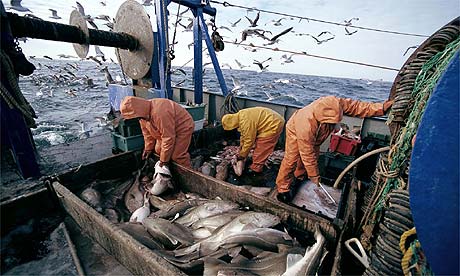
    Cod fishermen

    Cod stocks in European waters are among those under threat. Photograph: Jeffrey L Rotman/Corbis


    Global efforts to combat overfishing are starting to turn the tide to allow some fish stocks to recover, new analysis shows. Research from an international team of scientists shows that a handful of major fisheries across the world have managed to reduce the rate at which fish are exploited.


    The experts say their study offers hope that overfishing can be brought under control, but they warn that fishermen in Ireland and the North Sea are still catching too many fish to allow stocks to recover. Some 63% of assessed fish stocks worldwide still require rebuilding, the scientists report.


    “Across all regions we are still seeing a troubling trend of increasing stock collapse,” said Dr Boris Worm, an ecologist at Dalhousie University in Canada. “But this paper shows that our oceans are not a lost cause. The encouraging result is that exploitation rate, the ultimate driver of depletion and collapse, is decreasing in half the 10 systems we examined. This means that management in those areas is setting the stage for ecological and economic recovery. It’s only a start, but it gives me hope that we have the ability to bring overfishing under control.”


    Fisheries winning the battle against overfishing include regions in the US, Iceland and Australia. But fishermen in Ireland and the North Sea are still catching too many fish to allow stocks to recover, the research says.


    Pamela Mace of the New Zealand ministry of fisheries, who helped to write the new study, said: “Fisheries managers currently presiding over depleted fish stocks need to become fast followers of the successes revealed in this paper. We need to move much more rapidly towards rebuilding individual fish populations, and restoring the ecosystems of which they are a part, if there is to be any hope for the long-term viability of fisheries and fishing communities.”


    The new analysis used catch data as well as stock assessments, scientific trawl surveys, small-scale fishery data and modelling results. It highlighted catch quotas, localised fishing closures and bans on selected fishing gear to allow smaller fish to escape as measures that help fish stocks to recover. Agencies in Alaska and New Zealand have led the world in the fight against overfishing by acting before the situation became critical, says the study, which is published in the journal Science. Fish abundance is increasing in previously overfished areas around Iceland, the north-east US shelf, the Newfoundland-Labrador shelf and California. This has benefitted species such as American plaice, pollock, haddock and Atlantic cod.


    “Some of the most spectacular rebuilding efforts have involved bold experimentation with closed areas, gear and effort restrictions and new approaches to catch allocations and enforcement,” the scientists say. But they caution that the study covers less than a quarter of world fisheries, and lightly to moderately fished and rebuilding ecosystems comprise less than half of those.


    The isolated success stories, they say, “may best be interpreted as large scale restoration experiments that demonstrate opportunities for successfully rebuilding marine resources elsewhere.” Many nations in Africa have sold the right to fish in their waters to wealthy developed countries that have exhausted their own stocks, the experts said. The move could undermine local efforts to tackle overfishing made by small scale fisheries such as those in Kenya, which are highlighted in the new study.


    The North Sea, the Baltic and Celtic-Biscay shelf fisheries are all still declining. Here, Atlantic cod and herring as still declining, while globally populations of large predators such as sharks and rays are in rapid decline.


    The new survey marks a public truce in a war of words between Worm, a conservationist, and fellow author Ray Hilborn, a fisheries expert at the University of Washington in Seattle. The spat followed a 2006 study by Worm that made some dire predictions about the state of the world’s fisheries, including the claim that most stocks could collapse by 2048 if present trends continued. Hilborn criticised the research as “sloppy” and said the 2048 claim had “zero credibility” because it used simple records of fish catches to say whether stocks had collapsed.


    “I very much hope I will be alive in 2048 and I have given some thought to whether I will have a seafood party or not,” Worm joked at a press conference this week.


    Dr Ana Parma, an author of the paper with the Centro Nacional Patagonico in Argentina, said: “This is the first exhaustive attempt to assemble the best available data on the status of marine fisheries and trends in exploitation rates, a major breakthrough that has allowed scientists from different backgrounds to reach a consensus about the status of fisheries and actions needed.”
  • New Poll says Australians don’t want Pulp Mill

    New Poll says Australians don’t want Pulp Mill


    Media Release | Spokesperson Christine Milne, Bob Brown

    Friday 7th August 2009, 2:52pm


    A Galaxy poll commissioned by the Australian Greens shows massive opposition to the proposed Bell Bay pulp mill.


    The poll conducted on 24-26 July of 1100 Australians reveals 74 percent of Australians oppose the building of a mill in the Tamar Valley. The figures see an even greater opposition to the mill if the 12% without an opinion are excluded. This brings the figure to 84% in opposition.


    Australian Greens Leader Senator Bob Brown said the poll was solid evidence that mill proponent Gunns Ltd and the Rudd Government should end their support for the project.


    “This shows a clear decision by Australians that a pulp mill in the Tamar is a very bad idea.”


    “Prime Minister Rudd and Premier Bartlett are offside with the majority of Australians who can see that building this forest-hungry, polluting pulp mill is the wrong way to go.”


    Deputy Greens Leader Senator Christine Milne said the poll would give any international investor cause to rethink involvement.


    “What international company could even entertain the notion of partnering with Gunns when only 3% of the Australian population strongly support the development, compared to 42% standing in strong opposition – that is 14 to 1, an overwhelming opposition.”


    “The current interested partner – Södra of Sweden – should note the results of this poll because a partnership with Gunns will clearly harm its global reputation.”


    The Galaxy Poll:[Copy attached]
    Question: The logging company Gunns proposes to build a pulp mill in Tasmania’s Tamar Valley. A substantial amount of woodchips being used in the mill would be sourced from Tasmania’s native forests. Do you personally support or oppose the building of the pulp mill?


    Sample: 1100 Australians, 24-26 July, 2009
    Strongly Support: 3%
    Support: 11%
    Total Support: 14%
    Strongly Oppose: 42%
    Oppose: 32%
    Total Oppose: 74%
    Don’t Know/Refused: 12%

  • The claim: Refrigeration Preserves Nutrients

    The Claim: Refrigeration Preserves Nutrients


    Published: July 27, 2009


    THE FACTS


    Leif Parsons


    Summer is the time for fresh produce, from farmer’s markets to garden harvests. But consumers may not realize that many fruits and vegetables experience rapid losses in their nutritional value when stored for more than a few days.


    In part, that is because the produce has usually already spent days in transport and on shelves before you buy it, said Barbara P. Klein, a professor of food science and human nutrition at the University of Illinois at Urbana-Champaign. Once they hit the refrigerator, she added, some fruits and vegetables can lose as much as 50 percent of their vitamin C and other nutrients in the ensuing week, depending on the temperature.


    But there are several ways around this. One, look for fresh produce that was locally grown — it has usually traveled shorter distances and is still near its nutritional peak — and try not to stock up on more than a week’s supply.


    Another option is frozen produce. While frozen fruits and vegetables may lack the flavor and aesthetic appeal of fresh, they are subjected to flash freezing immediately after being picked. That can slow or halt the loss of vitamins and nutrients.


    THE BOTTOM LINE


    Refrigerating produce does not prevent the loss of its nutrients.


    ANAHAD O’CONNOR


    scitimes@nytimes.com

  • Earth system science: From heresy to orthodoxy

    Earth system science: From heresy to orthodoxy


    Earth system science is shorthand for the recognition that El Niño, climate change and the calamitous 2004 tsunami are all very complex events. El Niño is a natural cyclic blister of hot water in the Pacific that ruins the anchovy harvest off the coast of Peru. It also disturbs weather patterns to trigger floods on the western coasts of the Americas, stoke droughts and forest fires in Indonesia, and blight harvests in Africa. Human complicity in dangerous climate change is now well-established.


    The Boxing Day tsunami that killed 250,000 people in the Indian Ocean began with an arbitrary, unpredictable event – a submarine earthquake – but it claimed so many victims because natural mangrove forests and coral reefs that might have absorbed some of the shock had been destroyed, to make way for ports, tourist resorts and fish farms. That much is obvious, but earth system science goes deeper. It is based on recognition that, collectively, the planet’s living creatures – microbes, plants, nematodes, arthropods and vertebrates – both exploit and unconsciously manipulate oceans, atmosphere and rocks in ways that have kept conditions hospitable to life for more than three billion years.


    Air is a mix of oxygen and nitrogen, continuously replenished by green growth, and maintained at steady levels. Carbon dioxide released by volcanoes is absorbed by plants and consumed by animals and ultimately turned back into chalk or coal or other stone, in an intricate cycle that sustains all life. Last year Carnegie Institution scientists calculated that two-thirds of the 4,300 known minerals in the Earth’s crust had been fashioned or catalysed directly or indirectly by living things. Earth is not habitable because divine providence or freak conditions furnish the ideal home; it is habitable because life maintains the air-conditioning system, regulates the thermostat and keeps the water running. It is a shock to be reminded that this idea of the biosphere as a responsive organism that regulates its own environment is new, and just 20 years ago was hotly contested within science.


    The British scientist James Lovelock proposed what is now the Gaia theory in the 1970s, and defended it against derision from evolutionary biologists throughout the 1980s. Gaia, the ancient Greek earth goddess, provided a focus for a new way of exploring the planet. It made Lovelock – still active in science, and 90 yesterday – a hero not just to the public but also to his fellow scientists. The Gaia theory has gone from heresy to near-orthodoxy in less than four decades and now informs a series of international research programmes. Not bad going, but the exploration has barely begun.

  • The plight of Britain’s ancient trees

    The plight of Britain’s ancient trees


    We are home to some 100,000 of the oldest trees in Europe. But is our neglect and ill-treatment in danger of killing them off


    ancient trees

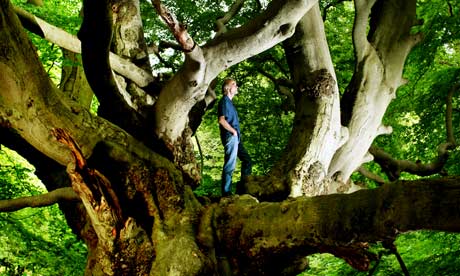
    National Trust’s ancient tree expert Brian Muelaner in the woods in the Chilterns, Photograph: Graeme Robertson


    Above crumpled grey roots like the enormous feet of a prehistoric elephant, leaves form a vaulted roof as grand as a cathedral. Huge limbs stretch out for 24 metres on each side. They smell damp. Stand beneath “the Tree”, as this magical old beech is known to anyone who walks this corner of the Chilterns, and you feel in the presence of something living and breathing. Its trunk is polished smooth from admirers who have scrambled into its embrace, and it has even brought its charisma and great girth to bear on films such as Harry Potter and the Goblet of Fire. This tree has lived for 400 years but now it is dying. Green summer weeds sprout on the ground below its huge canopy, sunlight now penetrating its thinning head of leafy hair. “The tree isn’t capturing all the light that it once did,” explains Bob Davis, head forester for the National Trust’s 5,000-acre estate at Ashridge. “It is slowly shutting down. We’ve decided not to do any surgery on it and allow it to decline naturally into senescence.”


    In its dotage, this great tree is being carefully nurtured. Across the country, however, many of our estimated 100,000 ancient trees – which could represent 70% of all ancient trees in Europe – are neglected or at risk of being felled. This week, they get a new guardian: Brian Muelaner, a forester turned conservationist, is to count all the ancient trees on land belonging to the National Trust, which could turn out to be the largest private owner of ancient and notable trees in northern Europe. Muelaner’s new job as the Trust’s ancient tree officer will help push along the Ancient Tree Hunt, a five-year project led by the Woodland Trust, which for the first time is recording every ancient tree in Britain. “If we don’t know where they are, we can’t protect them,” says Muelaner. “If we can’t protect them, we don’t know if they can survive.”


    A tree is defined as ancient if it is unusually old for its species. It is said that an oak spends 300 years growing, 300 years living and 300 years dying. Such a long-lived species would have to be 600 years old to be classified as ancient. Beeches are prone to fungal attack and are less long-lived: an ancient beech is anything over 300 years old. Birch trees have even shorter lives; one that has lived for two centuries is very old.


    Ancient trees are ecological treasures because they provide unique habitats for rare plants, insects, birds and mammals. When they become ancient, trees such as oaks and sweet chestnuts “grow down”, dying at the top and forming a new crown of leaves below so the tree shrinks and hunches like a very old man. Ancient trees also hollow out: fungi feed on the deadwood in the heart of the tree and invertebrates such as rare beetles move into the hollows, followed by birds and bats. Three-quarters of our 17 species of bat are known to roost in trees. Some plant species can only survive on ancient trees: over time, the pH of bark changes and certain rare lichens only grow on ancient bark.


    With a laughing Buddha around his neck, Muelaner looks like a hippie rock star, but he is not a tree-hugger. “That doesn’t do it for me, but I understand it,” he says. “The mood an ancient tree puts you in, it just takes your breath away; you know you are by something extremely important and significant. When you are under an ancient tree, it’s very good for your soul.” He compares a century-old beech nearby the 400-year-old tree. “It’s like the difference between an 80-year-old man who is full of knowledge and experience and a cocksure 15-year-old who thinks he knows everything. You can discard those people as doddery old folks or you could use them for their knowledge. You can learn so much from ancient trees about how a tree survives. How does an organism survive for 1,000 years in the same spot? It doesn’t get to move to a better position. So it adapts.”


    Standing beneath the huge old beech, contemplating its warty imperfections and huge stretch-marks where its trunk has bent and twisted, it seems incredible that it has stood witness to four centuries of humans scurrying around it. While this example partly owes its long life to being pollarded by humans over the centuries (the traditional way of harvesting its branches at head height, pollarding mimics the natural retrenchment of trees such as oaks, and ensures species like beech don’t grow too tall and fragile), trees have their own clever ways of prolonging their life. They can eat themselves. When fungus attacks the dead heartwood, a tree might send aerial roots into the hollow and start drawing the nutrients out, recycling itself so it lives longer. Trees can also walk. Slowly. If a branch touches the ground, it can send out roots and grow up again.


    Our wealth of long-lived trees is a happy accident: a legacy of our royal hunting forests, our domineering aristocracy and our lack of efficiency – compared with our north European neighbours – in harvesting our forests for timber. The last century, however, has not been kind to ancient trees. We have ploughed too close to them, grazed too intensively around them and used fertilisers and pesticides too wantonly, killing both trees and species of fungi that have a symbiotic relationship with them. Then there was the ripping out of native broad-leaved trees and planting of supposedly more productive non-native conifers after the second world war. “The Forestry Commission, the National Trust, private landowners, everyone was guilty in its day. There was a national drive for it,” says Muelaner. “Now we know the unique historical, cultural and biological importance of these trees, and there is a national movement to reverse the bad management of the past.”


    Trees may be impressively long-lived but they are more fragile than we imagine. Too many livestock sheltering under a tree and defecating there can fatally damage it. Even a footpath under a tree can compress its roots and destroy it. One day, Davis discovered a group of druids worshipping the great beech at Ashridge with a small fire. The tree did not look as if it had been harmed but even a mild scorching – with no visible damage – can cause a tree’s sap to boil and kill it. Ancient trees are often hollow: the holes make fantastic dens but children often light small fires in them. “You lose your ancient tree just like that,” Muelaner snaps his fingers. “We do things inadvertently and it’s gone. We can’t put it back. We can’t recreate that habitat like we can with grassland. If we kill an ancient tree, we have to wait 500 years to restore that habitat.”


    Trees can also die of sunburn. Close to the great beech at Ashridge, another beech is dying because a vast branch of another tree fell nearby, exposing this tree to the sun. Beech has thin bark and, just like a pale-skinned human, if it has grown up protected from the sun and is suddenly exposed, it burns horribly. Grey squirrels stripping bark is an increasing problem: holes in the bark allow fungal diseases in, which can weaken a tree and finally cause it to fall over. Fungal diseases introduced by squirrels also stain the quality beech wood that the Chilterns is renowned for, making it commercially worthless. “It’s a serious economic and ecological issue. It’s a total disaster,” says Muelaner.


    Ancient trees are not merely great statues to biodiversity, they document human history; they have a social and cultural significance, as well as an ecological one. The ancient trunk pictured at the top of this article bears the scars of decades of graffiti. “It is vandalism but then it becomes historic,” he says. During the second world war, American soldiers shot deer, chased local women and prepared for war in the woods at Ashridge. On 4 May 1944, a few weeks before D-Day, when many young men would perish, a group of GIs carved a “V” for victory and the names of their home states – from Texas to South Dakota – into the trunk of another Chiltern beech nearby. It is still there, a memorial in bark, the carving slowly fattening as the tree grows so you can rest a finger in the V now.


    Muelaner, whose post has been funded for three years by the Cadbury family, will accelerate the process of logging our ancient trees. So far, the Woodland Trust has logged 38,000 ancient trees through the work of ecologists and ordinary members of the public, who can record trees at ancient-tree-hunt.org.uk. Our great wealth of ancient trees may not remain unknown for much longer, but they are still relatively unprotected. Other countries preserve ancient trees by listing them like an old house or ancient monument. In Britain, the only protection is a tree preservation order, which can be circumvented by developers if it is proved trees are dead, dying or dangerous (and most ancient trees, by definition, are dying: it just takes them three centuries).


    Muelaner points to the enormous beech at Ashridge. “If France, Germany or the Scandinavian countries had a tree like that, there would be plaques everywhere and it would be a national monument,” he says. As well as better protection, he believes we need to create ancient tree-like habitat by planting young trees such as birches that age quickly and provide dead wood or by deliberately maiming some trees to create hollows and dead areas so beloved of smaller living things.


    “The speed of our societies nowadays mean that trees are that much more important to us as places where we are grounded and are at peace,” says Muelaner. “We need them now more than we ever needed them before”.

  • G8’s $25bn plan to aid poor farmers


    G8’s $25bn plan to aid poor farmers


    Correspondents in L’Aquila, Italy | July 11, 2009


    Article from:  The Australian


    BARACK Obama and other leaders of wealthy nations unveiled a $US20 billion ($25.7bn) fund to help feed the developing world yesterday as they were urged to help the poor survive the global economic downturn.


    On the last day of the G8 summit in Italy, the US President and his peers tried to answer criticism that they had turned their backs on those most vulnerable to the global economic crisis and held talks with African leaders.


    As Mr Obama prepared to embark on his first visit to sub-Saharan Africa, delegates said he played a key role in persuading about 30 wealthier countries to bankroll a fund aimed at helping smallholder farmers to increase crop yields.


    It was initially expected the fund would total $15bn, but Mr Obama said that figure had now reached $20bn.


    The US will reportedly stump up about $US3.5bn of the cash, and Japan and the European Union between will put in between $US3bn and $US4bn each.


    “We have committed to investing $20bn in food security, and agricultural development programs to help fight world hunger. This is in addition to the aid we provide,” Mr Obama said.


    “Going into the meeting, we had agreed to $US15bn. We exceeded that mark, and obtained an additional $US5bn of hard commitments.”


    The fund signifies a shift in focus by the rich nations away from food aid to giving practical help for local agriculture.


    “We believe the purpose of aid must be to create the conditions where it’s no longer needed to help people become self-sufficient, provide for their families and lift their standards of living,” Mr Obama said.


    The head of UN agricultural agency IFAD, Kanayo Nwanze, was among those who welcomed the plan, saying it represented a “shift from food aid — which is like providing medication after the child is ill — to providing assistance to help the countries … produce food by themselves”.


    British Prime Minister Gordon Brown said there was an urgent need for action to combat the hunger “that is now gripping over a billion people” worldwide.


    “It’s unacceptable that today people should go hungry in a climate as fertile as ours,” he said as he welcomed the fund.


    Aid agency Oxfam had initially criticised the amount of time devoted to Africa at the summit but later changed its tune, saying the G8 and other leaders had “upped their game today”.


    “Much of this funding is recycled, but the new money makes a downpayment on eliminating hunger,” said Oxfam spokesman Gawain Kripke.


    Irish pop star Bono, a long-time Africa aid campaigner, hailed Mr Obama’s contribution.


    “Of all the enemies of civilisation, hunger is the dumbest, the most mocking of all we hold true,” said the U2 frontman.


    “We are delighted President Obama has returned to this, the most fundamental of rights, with a stimulus package for the agricultural sector that is smart and innovative,” he said. “But he can’t do it alone.”


    At the talks between the African leaders and the G8, veteran Egyptian President Hosni Mubarak called for a freeze on the repayments of loans by African countries to help them weather the downturn.


    Mr Obama, whose father was Kenyan, and his wife, Michelle, a descendant of African slaves, were to leave for Ghana late last night on the first visit to sub-Saharan Africa by a black US president.


    But before he left Italy, he last night had his first audience with Pope Benedict XVI at the Vatican.


    Earlier, hundreds of Italian carabinieri police were deployed along the route of a march by anti-globalisation protesters towards the G8 summit venue.


    About 3000 anti-globalisation protesters and local residents set off from Paganica, where one of dozens of tented camps have been set up to house victims of the devastating April 6 earthquake.


    The three-day summit, which wrapped up yesterday, was dominated by the global downturn and disagreements over how to meet greenhouse gas emissions targets.


    On Thursday, Mr Obama said the world’s biggest economies had reached a “historic consensus” on cutting pollution, saying rich nations had a duty to set an example, as the leaders agreed to shun protectionism.


    AFP