Category: News

Add your news
You can add news from your networks or groups through the website by becoming an author. Simply register as a member of the Generator, and then email Giovanni asking to become an author. He will then work with you to integrate your content into the site as effectively as possible.
Listen to the Generator News online

 
The Generator news service publishes articles on sustainable development, agriculture and energy as well as observations on current affairs. The news service is used on the weekly radio show, The Generator, as well as by a number of monthly and quarterly magazines. A podcast of the Generator news is also available.
As well as Giovanni’s articles it picks up the most pertinent articles from a range of other news services. You can publish the news feed on your website using RSS, free of charge.
 

  • They wouldn’t, would they? 350 ORG AUST

    Click here to enable desktop notifications for Gmail.   Learn more  Hide
    More

    1 of 28

    They wouldn’t, would they?

    Inbox
    x

    Charlie Wood – 350.org Australia <350@350.org> Unsubscribe

    11:34 AM (0 minutes ago)

    to me

    Dear friend,

    Right now, Britain’s Standard Chartered Bank is helping Indian mining giant Adani to unlock one of the world’s largest coal mines and ship that coal right across the Great Barrier Reef.

    Standard Chartered has already loaned hundreds of millions of dollars to Adani.[1] Now, the Bank is helping them raise billions more to get the Galilee Basin carbon bomb launched. If Standard Chartered pulled out, it could sink this project once and for all.

    Click here to tell Standard Chartered to say no to this climate and Reef disaster.

    As we raise the heat on Australia’s banks to say no to the Galilee, the last thing we need is a big bank like Standard Chartered swooping in to prop up Adani and help cook the climate.

    It beggars belief that any Bank would be so dumb. Already, 11 global investment banks, from Wall Street to High Street, won’t touch the Galilee with a barge pole. And luckily, there are signs that Standard Chartered may have whiffed the bad smell too.

    Responding to questions about the project at their AGM last month, Standard Chartered agreed to put their involvement on hold whilst they review the project’s environmental credentials.[2] If we raise our voices now, we can show the Bank that the only credentials this project has are disastrous ones.

    Tell Standard Chartered to join their global peers in giving Galilee coal the flick.

    The more big banks say no to Adani, the sooner the Galilee will go down in history as a terrible idea that never saw the light of day. Help us make Standard Chartered the next big bank to join the chorus of financial institutions ringing the death knell of the Galilee and opting for a future beyond coal.

    Yours for a safe climate,

    Charlie for the 350.org team

    PS: Already 13 major organisations representing 50 million members have written to Standard Chartered urging them to say no to Adani. Join them – click here to tweet Standard Chartered or email their CEO here.

    [1] Standard Chartered faces pressure to cut links to Australian ‘carbon bomb’ project, The Guardian, 5 May 2015.

    [2] Standard Chartered vows to review role in Australian coal mine project, The Guardian, 6 May 2015.


    350.org is building a global climate movement.You can connect with us on Facebook, follow us on Twitter, and become a sustaining donor to keep this movement strong and growing.

  • Plebiscite

    In Australia, a plebiscite (also known as an advisory referendum) is used to decide a national question that does not affect the Constitution. It can be used to test whether the government has sufficient support from the people to go ahead with a proposed action. Unlike a referendum, the decision reached in a plebiscite does not have any legal force.

    Australia has held two national plebiscites, in 1916 and 1917, relating to the introduction of conscription during the First World War; both were defeated. No specific rules exist about the running of a plebiscite. In the event that another plebiscite was conducted, it may be that the Parliament will decide on the rules of operation.

  • Sustainable Population Australia Newsletter

    SPA Logo

    Sustainable Population Australia

    www.population.org.au

    info@population.org.au

    02 6288 6810

    Dear SPA members and supporters,
     
    Please find our latest newsletter attached and also on our website at http://population.org.au/sites/default/files/newsletters/nl201506_120.pdf.
    Regards,
    Sandra Kanck
    SPA President
  • The John James Newsletter 63

    1 of 33


    The John James Newsletter 63

    Inbox x

    John James

    12:52 PM (16 minutes ago)

    The John James Newsletter 63
    6 June 2015 – Provence


    The destruction of the natural world is a consequence of the evolutionary success of an exceptionally rapacious primate. Throughout all of history and prehistory, human advance has coincided with ecological devastationJohn Gray, STRAW DOGS

    Alert: Arctic methane levels skyrocketing

    Over the past few months, reporting stations around the Arctic have shown a ramping rate of atmospheric methane accumulation. The curves in the graphs are steepening, hinting at a growing release of methane from a warming Arctic environment.

    http://www.esrl.noaa.gov/gmd/

    Ground level measurements of methane have been spiking upwards over the last few years. 

    The implications to the breakdown of climate stability, causing jet stream fracturing and weather regime change that will rapidly worsen as Arctic temperature amplification continues, leading our planet to a much warmer and unrecognizable climate over the next 5 to 10 years.

    http://arctic-news.blogspot.fr/2015/05/arctic-methane-skyrocketing.html

    The tipping point for the Arctic sea ice has already passed. 

    “Governments must get a grip on a situation which IPCC has ignored.  A strategy of mitigation is doomed to fail as we can’t adapt to the worst consequences of global warming, as IPCC suggests. The Arctic must be cooled to prevent the sea ice disappearing with disastrous global consequences. Rapid warming in the Arctic has already disrupted the jet stream.  The resulting escalation in weather extremes is causing a food crisis in Asia and Africa”.

    http://www.ameg.me/

    Six facts you need to know about the Arctic methane timebomb

    1. Current Arctic methane levels are unprecedented
    2. The tipping point for continuous Siberian permafrost thaw could be as low as 1.5C
    3. A 50 Gigatonne decadal methane pulse is possible, say Met Office scientists
    4. Arctic methane hydrates are becoming increasingly unstable from climate change
    5. Arctic conditions during the Eemian interglacial (130,000 to 115,000bp) are a terrible analogy for today’s Arctic
    6. Paleoclimate records will not necessarily capture a large, abrupt methane pulse

    http://www.theguardian.com/environment/earth-insight/2013/aug/05/7-facts-need-to-know-arctic-methane-time-bomb

    “We are looking at a catastrophic effect on global climate consequent on this extremely fast sea ice retreat”

    http://www.bbc.com/news/science-environment-23432769

    Scorched earth: at the epicentre of the Queensland drought, a family sells the last of their cattle 

    You live on borrowed money. You live like a miser. And you wait for rain, if not this summer or the next. You wait for the grass to grow again, so you can buy back the bones of a new herd. Then you hope that in two years’ time you will have something to take to market and income will be a part of your life again. But this drought is now unprecedented in scale – affecting a record 80% of the state.

    http://www.theguardian.com/environment/2015/may/27/scorched-earth-at-the-epicentre-of-the-queensland-drought-a-family-sells-the-last-of-its-cattle?CMP=ema_632

    How to Keep Your Data Away From the NSA

    Intercept reporter Glenn Greenwald offers advice on how to make it harder for the NSA to collect private data.

    http://www.truthdig.com/avbooth/item/video_glenn_greenwald_personally_wouldnt_trust_data_facebook_20150521

    US Congress passes surveillance reform in vindication for Edward Snowden

    This is the most important surveillance reform bill since 1978, and its passage is an indication that Americans are no longer willing to give the intelligence agencies a blank check.

    http://www.theguardian.com/us-news/2015/jun/02/congress-surveillance-reform-edward-snowden?CMP=ema_632

    Australia is ‘one of most aggressive’ in mass surveillance

    Journalist who first reported on Edward Snowden revelations for the Guardian says Australia is ‘probably the country that has gotten away with things the most’

    http://www.theguardian.com/australia-news/2015/jun/05/glenn-greenwald-says-australia-is-one-of-most-aggressive-in-mass-surveillance?CMP=ema_632

    War is inevitable 

    The Global Times, an influential nationalist tabloid owned by the ruling Communist Party’s official newspaper the People’s Daily, said in an editorial that China was determined to finish its construction work, calling it the country’s “most important bottom line.”

    http://www.gmanetwork.com/news/story/492710/news/world/china-state-paper-warns-of-war-over-south-china-sea-unless-us-backs-down

    Cuban Life Expectancy Among the Highest in World at 78.45 Years :

    Life expectancy for women was slightly higher at 80.45 years, with the life span for men at 76.50 years. Cuba is in the top 25 countries in the world for life expectancy, which is considered an important indicator of human development and quality of healthcare.

    http://www.telesurtv.net/english/news/Cuban-Life-Expectancy-Among-the-Highest-in-World-at-78.45-Years-20150526-0011.html

    List of countries by life expectancy:

    The life expectancy is shown separately for males and females, as well as a combined figure.

    http://en.wikipedia.org/wiki/List_of_countries_by_life_expectancy

    Ageing population: Asia braces for grey future

    ASIA is undergoing one of the most profound demographic shifts the world has ever seen. By the middle of this century, the number of people aged over 65 is expected to rise from 300 million to around 1 billion.

    http://www.nationmultimedia.com/business/Ageing-population-Asia-braces-for-grey-future-30261267.html

    Is There A Multibillion Dollar Conspiracy To Make Sure we Stay Overweight?

    One of the primary reasons why most of us are overweight is due to how our food is made.  Our diet is highly processed and it is packed with obesity-causing ingredients such as sugar and high fructose corn syrup.  And some of the additives are highly addictive and make you want to eat more – some are about as addictive as “opiates“, “heroin” and “cocaine“.

    http://endoftheamericandream.com/archives/america-the-obese-is-there-a-multibillion-dollar-conspiracy-to-make-sure-americans-stay-overweight

    Consumption and Consumerism

    A solid report on this key issue including  children as consumers; sugar; beef; bananas; pineapples.

    http://www.globalissues.org/issue/235/consumption-and-consumerism

    Solar grid parity?

    The basic question is whether, when, and where solar might reasonably be expected to improve enough to reach general grid parity— depending on better efficiency and lower cost. Why do the media claim parity has been achieved?

    http://judithcurry.com/2015/05/31/solar-grid-parity/#more-18938

    Economy and Hockey on a Slippery Slope

    Economist, Professor Bill Mitchel, is convinced we are heading for a recession. “Now that we have more data, the reality is starting to look like recession if the Government does not radically alter its fiscal settings from austerity to stimulus.”

    http://theaimn.com/economy-and-hockey-on-a-slippery-slope/

    Isaac Newton Figured Out How Trees Work 200 Years Before the Botanists

    http://www.businessinsider.com/isaac-newtons-explanation-of-how-trees-defy-gravity-2015-2

    Syria: A Country Divided

    Weakened by years of war, Assad’s government now controls only a sliver of Syrian territory.

    http://www.aljazeera.com/indepth/interactive/2015/05/syria-country-divided-150529144229467.html


    UN General Assembly Demands Israel Mothball its Nuclear Arsenal

    Tel Aviv’s stockpile of nuclear bombs has been a deeply destabilizing factor in the Middle East. it is not too much to conclude that Israel’s nuclear weapons are indirectly what mired the US in a fruitless 8-year war in the Middle East.

    http://www.juancole.com/2014/12/general-assembly-mothball.html

    What if US & UN Sanctioned Israel over its Nukes as they did Iran over Enrichment?

    It was Israel’s bomb that, in part, impelled Iraq’s nuclear weapons program of the 1980s in turn convinced some in Iran that Iran needed at least a nuclear break-out capacity if two of its enemies were going to have bombs.

    http://www.juancole.com/2015/04/sanctioned-israel-nukes.html

    Israel’s Alliance with al-Qaeda

    Almost unnoticed by the mainstream media, Israel’s occupation forces in the Golan Heights have been in alliance with the Nusra Front, al-Qaeda’s official franchise in Syria.

    https://www.middleeastmonitor.com/articles/inquiry/18855-why-is-the-media-ignoring-israels-alliance-with-al-qaeda

    Rare Earth Elements and their Uses

    This chart clearly shows the US entry in the mid-1960s when colour television exploded the demand. When China began selling rare earths at very low prices in the late-1980s, mines in the US cut production. When China cut exports in 2010, rare earth prices skyrocketed. That motivated new production elsewhere.

    http://geology.com/articles/rare-earth-elements/

    Modeling Lindzen’s adaptive infrared iris

    In 2001 Prof. Richard Lindzen and colleagues published a controversial  paper “Does the Earth have an Adaptive Infrared Iris?” If there were a tropical adaptive infrared iris, then Earth’s sensitivity to GHGs would be much less than the IPCC had supposed.

    http://judithcurry.com/2015/05/26/modeling-lindzens-adaptive-infrared-iris/#respond

    Processes that may change the balance in favour of dry and clear regions in warmer climates have been proposed to constitute a possible negative feedback not represented by climate models.

    http://judithcurry.com/2015/05/26/observational-support-for-lindzens-iris-hypothesis/#more-18748

    Hungary Destroys All Monsanto GMO Corn Fields

    Unlike many European Union countries, Hungary is a nation where genetically modified (GM) seeds are banned. In a similar stance against GM ingredients, Peru has also passed a 10 year ban on GM foods.

    http://www.globalresearch.ca/hungary-destroys-all-monsanto-gmo-corn-fields/5342913

    A Prehistory of Violence

    Climate change was the commonest cause of mass extinction in prehistory. Mass extinction is caused by three impacts, occurring simultaneously: global warming, the acidification of the oceans and the loss of oxygen from seawater. All caused by large amounts of C02 entering the atmosphere.

    http://www.monbiot.com/2015/05/27/a-prehistory-of-violence/

    France to force big supermarkets to give unsold food to charities 

    French supermarkets will be banned from throwing away or destroying unsold food and must donate it to charities or for animal feed.

    http://www.theguardian.com/world/2015/may/22/france-to-force-big-supermarkets-to-give-away-unsold-food-to-charity

    Tombs Filled with Dozens of Mummies Discovered in Peru

    Archaeologists have excavated seven tombs containing at least 171 mummies. “Before rigor mortis set in, the mummies had their knees put up to the level of their shoulders and their arms folded along their chest”. The corpses were then bound with rope and wrapped in layers of textiles.

    http://www.livescience.com/50415-dozens-of-mummies-discovered-in-peru.html

    SE Asia: Home to Ethnic Cleansing, Slavery, and Hazardous Work

    Until his resignation from the House of Representatives of the Republic of the Philippines two months ago owing to differences with the Aquino administration, Telesur columnist Walden Bello chaired the House Committee on Overseas Workers’ Affairs.

    http://www.telesurtv.net/english/opinion/SE-Asia–Home-to-Ethnic-Cleansing-Slavery-and-Hazardous-Work-20150528-0052.html

    Finnegans Wake becomes a hit book in China

    Following billboard ads, James Joyce’s nigh-incomprehensible book leaps over language barrier to reach surprising readership.

    http://www.theguardian.com/books/2013/feb/05/finnegans-wake-china-james-joyce-hit?CMP=ema_565

    to John
  • It’s official: largest divestment commitment yet

    1 of 29

    It’s official: largest divestment commitment yet

    Inbox
    x

    Charlie Wood – 350.org Australia <350@350.org> Unsubscribe

    10:04 AM (2 minutes ago)

    to me

    Dear friends,

    It’s official and unanimous: overnight, Norway’s parliament voted to sell its country’s pension fund shares in companies that mine and burn coal. This is the largest fossil fuel divestment ever, with a staggering $8.8bn being moved out of the world’s dirtiest fossil fuel industry.

    Can you tell your super fund to follow in Norway’s footsteps by divesting from fossil fuels? Click here to email your fund today.*

    Norway’s decision sends the clearest possible signal to all investors and governments worldwide —  it’s time to get out of coal and move beyond fossil fuels, or you’ll be left behind.

    Will your super fund be next? Australia’s super funds have a whopping $1.8 trillion of our money in their hands, much of this invested in fossil fuels. But if the world’s largest fund can divest, then so can they.

    Send an email to your super fund asking them to divest today!

    Almost 50,000 people helped to shine an international spotlight on Norway’s dirty investments and rapidly shifted all of its political parties to support divestment — today’s vote was unanimous: coal is an unethical investment.

    Now it’s time to persuade Australia’s super funds that divestment is the right thing to do, right now.

    It’s thanks to divestment supporters like you that wins like Norway’s are possible. Well done and thank you to you all!

    Charlie for the 350.org team

    *Type in your fund, click on its profile and then select “ask for fossil fuel divestment” from the right hand side-bar options.

    P.S. Today is only the first (big) step in the campaign to #DivestNorway fully from fossil fuels — it has a long way to go to divest itself fully of fossil fuel companies. But, it’s a promising victory for our movement  and we’re in it for the long-haul — join us.

    P.P.S. Did you hear? On Wednesday, Australia’s largest specialist medical college announced they’ll divest all fossil fuel companies from their $90 million fund. Share this great news here.


    350.org is building a global climate movement.You can connect with us on Facebook, follow us on Twitter, and become a sustaining donor to keep this movement strong and growing.

  • Winning the carbon war: the Vatican talks climate code red

    Click here to enable desktop notifications for Gmail.   Learn more  Hide
    1 of 7

    climate code red

    Inbox
    x

    Climate Code Red <noreply+feedproxy@google.com>

    6:54 PM (2 minutes ago)

    to me

    climate code red


    Winning the carbon war: the Vatican talks

    Posted: 04 Jun 2015 05:49 AM PDT

    Jeremy Leggett

    “The UN negotiations are totally unsuited to the climate emergency”, and the process must change “otherwise the negotiators, who have been there for 15 or 20 years, will continue their folklore,” declared French Environment Minster Ségolène Royal to Le Monde on 1 June 2014. If the form of negotiations does not change, “the negotiators, who have been there for 15 or 20 years, will continue their folklore. You will find hundreds of people at their computers, discussing a point of the bracketed text or playing crosswords!”

    As the heat (if not the light) intensifies in the leadup to global climate talks in Paris in December, perhaps the most interesting development is the intervention of Pope Francis, who trained as a chemist and seems keenly aware of the urgency of the problem. A sense of where the Vatican may be headed is “Climate Change and the Common Good: A statement of the problem and the demand for transformative solutions” issued on 29 April by  The Pontifical Academy of Sciences and the Pontifical Academy of Social Sciences, with signatories including leading climate figures  such as Dasgupta, Ramanathan, Archer, Critzen, Scahs and Scellnhuber.

    As Pope Francis (who took his name from the saint seen as the patron of the animals and the environment) prepares to issue an encyclical on Nature on 18 June, followed by a tour of the USA including speeches to the UN General Assembly and the US Congress on 23 and 24 September, an international group of 12 experts on climate change met in Rome on 27-29 May in conjunction with the Vatican to craft a summary statement. Amonst those participating were Ian Dunlop from Australia and the environmental and climate activist, author and historian, Jeremy Leggett.

    The following is an extract from Jeremy Leggett’s new book, “The winning of the carbon war”. Leggett says he fought for the light side in the climate policy civil war for a quarter of a century as it lost battle after battle to the dark side. Then, in 2013, the tide began to turn. By 2015, it was clear the light side could win the war. Leggett’s front-line chronicle tells one person’s story of those turnaround years, and what they can mean for the world.  The book (to date) was published online on 3 June 2015, covering the period May 2013 to May 2015. Section will be added each month till the end of the Paris talks, and the final version will then be published as a print book in 2016.  The following extract covers the period of the expert group’s Rome talks.

    Rome, May 27th – 29th, 2015

    The Temple of Hadrian began life nearly 2,000 years ago. Today, it is a modern municipal building built on and around what remains of antiquity. It is a place of wonder.

    I have been invited here as part of an international group of 12 experts on climate change by the unlikely combination of Michael Gorbachev, the European Space Agency and the Italiani Foundation. The task of these experts is to craft a summary statement on climate change and world development, in consultation with the Vatican, in the shape of the Pontifical Council for Justice and Peace. Our work over the next two days will build on the outcome of a conference organized by the Pontifical Academy of Sciences, “Protect the Earth: Dignify Humanity” on 28th April, and draw on the action proposals in the report by the High Level Task Force on Climate Change convened by President Gorbachev with the support of Green Cross International: “Action to Face the Urgent Realities of Climate Change.”

    This is going to be a task worth doing, and I am relishing the days ahead. But sadly the former President of the Soviet Union will not be here with us: he is ill in hospital in Moscow. I was much looking forward to meeting him. I wanted to tell him what an impact he made on me the day he gave a speech to an audience of scientists and others interested in arms control, in the Kremlin, in 1987. The Cold War was still on then. He was in the full flow of his efforts to thaw it. His main thrust was the dysfunctional strategic nuclear overkill maintained by both sides then (and now), and how he wanted to negotiate it away. But even then, in that speech, he showed that he knew where another existential threat to civilisation lay. He was the first world leader I ever heard talk about global warming. I sat there in the Kremlin agog, the token young scientist on the UK board of Pugwash: next to the Archbishop of Smolensk as I recall. (But all that is another story, from another time).

    Alexander Likhotal, a key advisor of Gorbachev’s when he ruled the Soviet Union, now president of Gorbachev’s Green Cross organisation, reads a speech on behalf of his boss, by way of welcome. He reads of a clear and present danger of existential proportions. The window for strong action is rapidly closing. Paris is our last chance to escape an agonizingly unsustainable path. If we are to succeed, the world will need true leadership.

    I wonder what, or who, Gorbachev means by that. I have had e-mails from people who – hearing I was coming here – were keen to tell me how much they hope Pope Francis will emerge as one of the transformative leaders in the Paris endgame.

    The Vatican’s track record this year indeed offers encouragement for such hopes. Ban Ki-moon visited the Pope in April to talk climate, and emerged saying he expected the forthcoming Papal encyclical on the subject to be strong, and to lay great emphasis on the moral impartive to cut greenhouse-gas emissions.

    The emerging rhetoric from the Catholic Church on climate change has prompted a Conservative American thinktank, The Heartland Institute to visit Rome seeking to change Pope Francis’s mind. Within days of their appearance of the city, a senior Vatican official renewed the Vatican’s attack on fossil fuel overdependency.

    A recent poll of more than a thousand Catholics shows 76% of them feel moral obligation to help poor people hit by climate change. And two weeks ago, the Pope was very clear on how he sees the spiritual implications of the intersection between climate and world development.

    “We must do what we can so that everyone has something to eat, but we must also remind the powerful of the Earth that God will call them to judgment one day and there it will be revealed if they really tried to provide food for Him in every person and if they did what they could to preserve the environment so that it could produce this food.”

    I sit in the Piazza della Rotunda, nursing a beer solo at the table on the corner nearest by the Pantheon, surveying its amazing columns. A squadron of euphoric swifts swerves between them, emerging to further carve the air above the square, dodging other squadrons. I scan the Roman evening. Japanese students with orderly smiles and selfie sticks, much used. Italians walking home from work, supper in designer carrier bags. A club-foot cripple on a skateboard who all the locals seem to hold affection for. An African, coal black, offering designer handbags for sale to every passing lady save the nuns.

    The passegiata builds. The locals and their double kisses. The tourists and their Justifiable awe.

    Calm. Peace. Humanity.

    An acoustic guitarist with an amplifier, at just the right volume, offers Merry Christmas Mr Lawrence closely followed by What a Wonderful World.

    It is.

    A wonderful and oh so imperilled world. Mark Doherty of the European Space Agency spent half an hour this morning showing us the very latest full-colour time-series graphics of rising atmospheric carbon dioxide concentrations, rising global temperatures, rising sea level, shrinking Arctic ice, shrinking glaciers, and all the rest of the sorry tale.

    It’s happening right in front of our eyes. And still there are deniers.

    My fellow experts are a remarkable group. Let me take just two of them, to qualify that accolade, and give a feeling for the tenor of our discussions. Ian Dunlop is a former senior international oil, gas and coal industry executive who came to see the light on climate change. He is a past Chair of the Australian Coal Association, but now a thorn in the side of the incumbency. He has tried for the last two years to inject himself onto the board of BHP, arguing very publically that they are in process of losing their shareholders a lot of money by essentially ignoring climate change.

    Bill Ritter Jr is a former Governor of Colorado, now Director of the Center for the New Energy Economy at Colorado State University. He is an advisor to President Obama on climate change, having chaired an elite committee reporting on Presidential and Executive Agency Actions to drive Clean Energy in America.
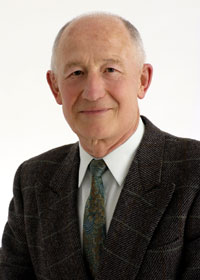
    Ian Dunlop

    The central thrust of Ian Dunlop’s analysis is that a two-degree target for capping global warming is too high. He is a man who understands the feedback processes in the climate system, and the considerable scope for significant natural amplifications of warming (those inappropriately named “positive” feedbacks). He follows the science closely, and makes a compelling case that the world would be on course for complete economic and environmental disaster at two degrees of global warming, up just 1.2 degrees from the 0.8 we have already unleashed since pre-industrial times. In Ian’s view, the whole Paris process is aiming to legitimise – as a best possible outcome – something that is guaranteed not to deliver a secure future for civilisation.

    Bill takes a different approach, one rooted in the realpolitik of contemporary American Society. For whatever combination of reasons, a significant proportion of the Republican party, plus some Democrats, cannot or will not be pursuaded that global warming is worth worrying about. In this context, Bill argues, we are lucky to have a President who has decided to make climate change the backbone of what legacy he can craft from his second term. That requires the course of action that Obama is actually on now: doing everything he can to favour a good outcome in Paris that does not involve going to the US Senate in search of consensus. Hence the White House focus on using executive orders, the Environmental Protection Agency’s right to regulate American air quality, bilateral agreement with the Chinese and extensive procurement of low-carbon technology for the federal estate. Bill makes a convincing case that his President is trying as hard as he realistically can, that this is as good as we are going to get from the modern United States. We had better do all we can to support the man and not undermine him.

    How to marry these two perspectives? One is seemingly too utopian, in the wider geopolitical context, to hit targets. The other appears too pragmatic, viewed through the prism of climate science, to offer hope of ultimate global success.

    My argument in the expert group is that there is a way. It hinges on the potential for profound disruptiveness inherent in the survival technologies. If a clear direction of travel can be set towards transition in the Paris process, the disruptive power of solar, storage and all the rest can be awakened.

    Readers who have made it this far in the book will be familiar with my line of argument. Ian Dunlop and those who think as he does must make as convincing case as they can, I contend, and not pull punches like so many scientists do when selling the problem. Bill Ritter and his colleagues must continue supporting Obama so that he has the best possible chance of delivering the most he can while surviving the Republican and (often related) incumbecy blowback. This, sadly, is unlikely to involve talk about a two-degrees target being too little too late.

    I am tempted to the view that the news of the day, each day since my day in Paris, sits comfortably with this analysis. On May 20th, President Hollande calls for a “miracle” climate agreement in December. Business will be key: there must be a business “revolution”, he says, invoking the spirit of the French revolution. President Obama, meanwhile, recasts climate change as a national security threat in a speech to the Coast Guard Academy. This is the kind of thing he has to do, to breathe life into his search for legacy.

    On May 21st, Saudi Arabian oil minister Ali Naimi astonishes Paris Climate Week by saying that the Kingdom built on oil can foresee a fossil fuel phase-out this century. Saudi Arabia could phase out fossil fuels, he says, by “I don’t know…. 2040,2050, or thereafter”.
    2040? OK, that’s 25 years from now.

    GDF Suez (now rebranded as Engie) also unveils a surprise this day. CEO Gerard Mestrallet, he who I saw tell the World Energy Congress not so long ago saying that gas can solve all problems and that renewables must be suppressed, now sings a different tune.

    “The choice we have made is very clear”, he says, “we have stopped investing in thermal power generation in Europe and we are investing in renewables.” Thermal power investment will only happen in the developing world, Mestrallet now says.

    Tony Hayward, Glencore chairman, tries to get in on the green-headline-grabbing act. He calls for an end to subsidies for fossil fuels. He still sees a big role for coal though, come what may, as any chair of Glencore would have to. He professes that solar cannot be expected to replace coal in India. Solar executives clash with him, saying that he is defending the past.

    On 22nd, insurance giant Axa announces it will divest from higher-risk coal funds and triple investment in green technology. The company has become motivated to sell €500m of assets by the risks inherent in climate change, it says.

    On 26th, the World Health Organisation targets the 8 million deaths per year caused by indoor and outdoor air pollution, and passes a landmark resolution. The co-operation they now intend, aiming to improve human health, will also improve the the prospects of progress on climate change, by dint of default emissions reductions.

    On 27th, activist investors win a historic vote at the Chevron AGM. In a breakthrough for corporate governance activists, 55% vote for large investors to nominate a quarter of directors to the board. People like Ian Dunlop will be polishing up their cvs.

    But at the ExxonMobil AGM, though, CEO Rex Tillerson stays true to form by mocking renewables. “We choose not to lose money on purpose,” he says.

    As for the impacts of climate change: “Mankind has this enormous capacity to deal with adversity”.

    A second day of deliberations. I multi-task, as I am forced to do so often these days if I am to keep up with the simple march of events.

    Norway’s $900bn sovereign wealth fund is today told by the government to divest from coal.
    Nina Jensen and the WWF team I worked with on coal investment in Oslo celebrate all over Twitter. Carbon Tracker colleagues are quick to talk up the significance of this great victory of the Norwegian environment movement. Norway’s sovereign wealth fund could trigger a wave of large fossil fuel divestments, Mark Campanale tells the press.

    Ambrose-Evans-Pritchard is at it again in the Telegraph today. He tours the Carbon War battlefields in masterful form, and reaches an inescapable headline conclusion: “Fossil industry faces a perfect political and technological storm.”

    The FT’s Lex column chases another key dimension of the drama. In Saudi Arabia as much as one million barrels of oil a day, or more than 15 per cent of oil exports, is going up in smoke for electricity production. This is unsustainable. Solar investments beckon, Lex observes.

    The FT’s Alphaville column picks stranded assets as its theme, in an article by Izabella Kaminski. “The idea of treating climate change as a financial market risk has gained a lot of traction the last few years in no small part due to the efforts of of Anthony Hobley and colleagues at the Carbon Tracker Initiative, who understood the issue had to be framed in the language of finance to make progress. That language is now blunt. Trillions of dollars worth of financial assets could be grossly mispriced due to the incorrect valuation of fossil fuel assets — many of which probably can’t ever be burned if the world is to limit global warming to 2 degrees.

    And, it’s fair to say, investors, asset managers and even central banks and regulators have begun to take note now the concept of a “Carbon bubble” has been popularised.”

    In the Rome expert group deliberations, we are running late. The agenda has long been abandoned. After the tea break, the chairman finally comes to my set-piece ten minutes on stranded assets and all the rest of the story FT Alphaville covered so succinctly. I have barely begun when a clergyman walks in, nods to some Italians he knows, and takes a seat.

    I finish my ten minute summary of Carbon Tracker’s work. An Italian colleague, Roberto Savio, then introduces the visiting priest as Monseigneur Zucchi. The Pope, Roberto explains, is the Bishop of Rome. Monseigneur Zucchi is Deputy Bishop of Rome.

    The Pope’s deputy welcomes us to the city, notes that the Pontifical Council on Justice and Peace will be most interested in the fruits of our deliberations, and takes his leave.

    I e-mail the outrageous coincidence to my colleagues at Carbon Tracker. Make of it what you will, I say.

    More deliberations on the final morning. Colleagues are debating the draft. My view is that the chairman, Martin Lees, has done a good job, one I can live with. A representative of the Pontifical Council on Justice and Peace, Tebaldo Vinciguerra, is with us this morning to observe the conclusion of the document.

    More multitasking. I find to my astonishment that the Pope is on Twitter. @Pontifex is his address. One of his tweets catches my eye.

    “Better to have a Church that is wounded but out in the streets than a Church that is sick because it is closed in on itself.”

    I love the honesty there. I retweet it.

    President Obama has also recently joined Twitter, as @POTUS. I risk a message aimed at them both.

    Someone has posted a comment about The Winning of the Carbon War. I repost it chancing my arm with a thought: “@POTUS and @Pontifex on the same side on this one. And I have just learned that a third of the House are Catholics.”