|
Web Clip
|
Have you heard?
|
Inbox
|
x |

|
9:44 AM (1 minute ago)
 |
|
|||
 |
|
||||
Add your news
You can add news from your networks or groups through the website by becoming an author. Simply register as a member of the Generator, and then email Giovanni asking to become an author. He will then work with you to integrate your content into the site as effectively as possible.
Listen to the Generator News online
The Generator news service publishes articles on sustainable development, agriculture and energy as well as observations on current affairs. The news service is used on the weekly radio show, The Generator, as well as by a number of monthly and quarterly magazines. A podcast of the Generator news is also available.
As well as Giovanni’s articles it picks up the most pertinent articles from a range of other news services. You can publish the news feed on your website using RSS, free of charge.
|
Web Clip
|
|
Inbox
|
x |
|
9:44 AM (1 minute ago)
|
|
|||
|
|
||||
|
Web Clip
|
|
Inbox
|
x |
|
6:31 PM (56 minutes ago)
|
|
|||
|
|
Web Clip
|
|
Inbox
|
x |

|
5:33 PM (11 minutes ago)
|
|
|||
Right now government officials from around the world are meeting in New York to negotiate the controversial Trans-Pacific Partnership Agreement (or “TPP” for short). If Australia signs onto the TPP, it will give multinational corporations the power to sue the Australian Government for decisions they claim may impact their investments in Australia.
We’ve already seen the dangerous implications of these powers played out right here in Australia. Similar provisions in an Australian-Hong Kong treaty are being used by US global cigarette and tobacco company, Phillip Morris, to sue the Australian Government over the introduction of plain-packaging laws.
Forces all around the world are banding together to stop this deal from going ahead, to ensure their governments can’t be sued for making decisions that are in the public interest. Watch the video that explains why this deal will be bad for all Australians, then sign the petition to sound the alarm.
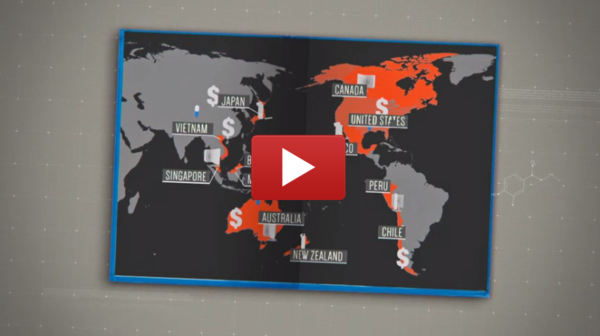
If foreign corporations are given the power to sue national governments when changes to domestic laws affect their profit margins, it will inevitably restrict our government’s ability to put in place regulations to protect our environmental assets and our health. What’s worse, these lawsuits would be played out in secret international courts, which only corporations have access to, with no rights of appeal.
It’s hard to believe this could happen in Australia, but there are already cases around the world of companies using what’s known as Investor State Dispute Settlement (ISDS) provisions to sue governments:
Do we want to live in a country where foreign-owned companies have the right to sue our government for introducing laws to protect our farms, land, water and our health? International corporations should not be able to take the Australian Government to court. It flies in the face of democracy, and will leave taxpayers at risk of paying corporations enormous amounts in compensation.
Worryingly, Trade Minister Andrew Robb has already indicated he’s willing to sign on to the deal, which is why we need to act quickly. Here in Australia, only one in ten voters have heard about the TPP.2 But if this deal goes ahead, it will be all of us who stand to lose – so it’s time we spoke up. We need as many Australians as possible to hear about the dangers of the TPP. Can you watch and share the video, which explains why this deal will be so dangerous? Click here: http://www.getup.org.au/tpp-isds
The deal is still being negotiated, but could be finalised when ministers from the 12 different countries next meet. So we need to get the word out there and make some noise before Minister Robb signs the dotted line. The fight to stop the TPP is a huge, coordinated, international resistance and the more people who join the fight, the better our chances will be.
Can you help sound the alarm before it’s too late?
Kelsey, Alycia, Sally and the GetUp team
~ References ~
[1] History shows the heavy price of free trade, Canberra Times, 21 February 2014
[2] Trans-Pacific Partnership is a big deal, but hardly anyone knows, SMH, 17 February 2014
Climate change
Climate change will hit Australia harder than rest of world, study shows
Science agency the CSIRO and Bureau of Meteorology predict temperature rises of up to 5.1c in Australia by 2090 in their most comprehensive forecast yet
adelaide hills bushfire
Embers glow after a bushfire in the Adelaide Hills in January, the worst the area has seen in d
Shares
5,975
Comments
354
Australia could be on track for a temperature rise of more than 5C by the end of the century, outstripping the rate of warming experienced by the rest of the world, unless drastic action is taken to slash greenhouse gas emissions, according to the most comprehensive analysis ever produced of the country’s future climate.
The national science agency CSIRO and the Bureau of Meteorology have released the projections based on 40 global climate models, producing what they said was the most robust picture yet of how Australia’s climate would change.
The report stated there was “very high confidence” that temperatures would rise across Australia throughout the century, with the average annual temperature set to be up to 1.3C warmer in 2030 compared with the average experienced between 1986 and 2005.
Temperature projections for the end of the century depend on how deeply, if at all, greenhouse gas emissions are cut. The world is tracking at the higher emissions scenario, meaning a temperature increase of between 2.8C and 5.1C in Australia by 2090.
According to the report, this “business-as-usual” approach to burning fossil fuels is set to cook Australia more than the rest of the world, which will average a temperature increase of 2.6C to 4.8C by 2090.
median temperatures
Australia’s surface air temperature has already increased 0.9C since 1910, with the number of extreme heat records outnumbering extreme cool records nearly three to one since 2001.
Australia experienced its third-warmest year on record in 2014, with 2013 its warmest year on record. The heat experienced in 2013 was “unlikely” to have been caused by natural variability alone, the report stated, with such temperatures now five times more likely due to humans releasing greenhouse gases into the atmosphere.
Other findings of the wide-ranging analysis, the first such Australian climate projection made since 2007, included:
The interior of Australia is set to warm more rapidly than coastal areas. Alice Springs will experience an average of 83 days a year over 40C in 2090, up from just 17 in 1995.
Melbourne will swelter through an average of 24 days above 35C by 2090, up from 11 in 1995. Sydney will experience 11 days above 35C by 2090, an increase from three days in 1995.
Australia is on course for a sea level rise of 45cm to 82cm by 2090, if emissions are not curbed. The report warned that if the Antarctic ice sheet was to collapse, sea levels would be a further “several tenths of a metre higher by late in the century”.
Extreme rainfall events will increase but overall rainfall is expected to drop in southern Australia, apart from Tasmania, during the winter and spring months – by as much as 69% by 2090.
There will be more extreme droughts, with the length of droughts increasing by between 5% and 20%, depending on how quickly greenhouse gases are cut.
Rising temperatures will result in a “greater number of days with severe fire danger”. Meanwhile, soil moisture will fall by up to 15% in southern Australia in the winter months by 2090.
Snow cover will decline, with the report stating there was “high confidence that as warming progresses there will be very substantial decreases in snowfall, increase in melt and thus reduced snow cover”.
These changes are likely to produce some benefits, such as enhanced agriculture in Tasmania and fewer deaths from cold weather. But they will be overshadowed by the negatives, such as rising numbers of deaths from heatwaves, water resource challenges, impacts upon agriculture and risks posed to coastal infrastructure by rising seas.
Advertisement
Some of the most profound transformations are set to take place in the seas that surround Australia, which will warm by a further 2C to 4C unless emissions are cut.
Excess carbon dioxide absorbed by the oceans causes the water’s pH level to drop. This acidification makes it more difficult for corals to form hard reef structures and other creatures such as oysters, clams, lobsters and crabs to develop their shells.
This phenomenon poses a major risk to ecosystems such as the Great Barrier Reef and is, according to the report, “likely to impact the entire marine ecosystem from plankton at the base to fish at the top”.
Kevin Hennessy, the principal research scientist at CSIRO, said the CSIRO and Bureau of Meteorology now had a greater confidence than ever in their forecasts of Australia’s climate.
“Australia will warm faster than the rest of the world,” he told Guardian Australia. “Warming of 4C to 5C would have a very significant effect: there would be increases in extremely high temperatures, much less snow, more intense rainfall, more fires and rapid sea level rises.”
Hennessy said even the internationally agreed limit of 2C of warming on pre-industrial times would cause severe problems for Australia.
Advertisement
“That intermediate emissions scenario would have significant effects for Australia,” he said. “Coral reefs are sensitive to even small changes in ocean temperature and a 1C rise would have severe implications for the Great Barrier Reef and Ningaloo reef.
“The situation is looking grim for the Great Barrier Reef unless we can significantly reduce greenhouse gas emissions. A 2C future would be very challenging.”
Hennessy said Australia should prepare for this altered climate by ensuring hospitals, transport infrastructure, construction codes and fire planning all considered the rising temperatures.
Cutting emissions would also help head off the worst of climate change, with nations set to convene in Paris later this year for crunch talks aimed at agreeing emissions reductions beyond 2020.
“Achieving that intermediate, rather than higher, emissions path would require significant reductions in global greenhouse gases,” Hennessy said. “It’s difficult to say what will be achieved, there are a lot of negotiations to come in Paris. We hope there will be an agreement until 2050 at least, but who knows what will happen in the coming decades.”
Climate change (Environment)
Climate change (Science)
Greenhouse gas emissions

Oceans are warming at an accelerated pace — forcing scientists at the National Oceanic and Atmospheric Administration (NOAA) to re-scale its heat chart to account for the warming that occurred in 2014.

The release of the Global Ocean Heat Content data follows figures which showed 2014 was also a record-breaking year for average global air temperatures, which are measured by recording the earth’s temperature near the ground or at the sea surface.
But, as Dr John Abraham, professor of thermal sciences at the University of St Thomas, explained in a recent Guardian article, the global ocean data – which also showed 2014 as the hottest year on record – is a much more relevant measure of global warming.
He explains:
We tend to focus on the global temperature average which is the average of air temperatures near the ground (or at the sea surface). This past year, global air temperatures were record-breaking. But that isn’t the same as global warming.
Global warming is properly viewed as the amount of heat contained within the Earth’s energy system. So, air temperatures may go up and down on any given year as energy moves to or from the air (primarily from the ocean). What we really want to know is, did the Earth’s energy go up or down?
By measuring the change in the energy of the oceans, he says, it shows that the energy stored within the ocean increased significantly, and the energy stored within the ocean makes up 90 per cent or more of the total “global warming” heat.
Dr Abraham says this is the “clearest nail in the coffin” that there has been no let up in global warming.
Agencies/Canadajournal


Last updated: January 26, 2015
Weather: Brisbane24C-33C
Business
Increase cost for families running an airconditioner
John Rolfe Cost of Living Editor
News Corp Australia Network
January 24, 2015 11:00PM
Share
Gareth and Nicole Timbs at their airconditioned home with their children Alissa, eight, a
Gareth and Nicole Timbs at their airconditioned home with their children Alissa, eight, and Jake, six, at The Ponds, Sydney. Picture: News Corp
FAMILIES face a $700-a-year increase in the cost of running an airconditioner and snap price rises of as much as 15,000 per cent under little-known changes to electricity laws.
To beat the changes some households may have to surrender control of their aircon to their power provider. Others could be forced to fork out for more energy-efficient coolers.
VITAL: Airconditioning making it easier for students to learn
RESEARCH REVEALS: The shocking high cost of public electricity
Those who can’t afford that investment — or spiralling running costs — may have to flee to more community “cooling centres” such as libraries.
To beat the new electricity changes some households may have to surrender control of thei
To beat the new electricity changes some households may have to surrender control of their aircon to their power provider. Picture: Supplied.
About three in four Australian homes have aircons — double the rate 20 years ago.
In NSW, 64 per cent of households have coolers and in the ACT, more than 70 per cent. In Victoria, 78 per cent of homes have an aircon. Queensland reflects the national average. In South Australia, more than 90 per cent of households have coolers. In Tasmania, less than half of homes have air-conditioning.
The rise of airconditioners is blamed for growth in “peak demand”. There has been about $8 billion of network upgrades in the past decade to deal with this growth and that investment has been recouped through big price rises for all households.
Charges for network services now account for half of a bill. The actual power is just
20 per cent.
Increasingly people are turning to solar panels to combat rising electricity costs. Pictu
Increasingly people are turning to solar panels to combat rising electricity costs. Picture: Supplied.
The Australian Energy Markets Commission (AEMC) says the way to curb future increases in peak demand is to give households “signals” to change power use.
The AEMC claims rule changes it made last month to send these signals will deliver modest savings of over the medium term to most households.
But not everyone will benefit.
“If you use a lot of electricity relative to the average at … tea time and if you don’t change your behaviour in any way, shape or form, you may pay more,” AEMC CEO Paul Smith told News Corp Australia.
Gareth and Nicole Timbs at their airconditioned home with their children Alissa and Jake.
Gareth and Nicole Timbs at their airconditioned home with their children Alissa and Jake. Picture: News Corp
Geographically, those who will contend with the biggest potential increases are households on the inland fringes of Sydney, Melbourne, Adelaide and Brisbane, where homes tend to be larger and there is more temperature variation, leading to a greater need for cooling and heating. Demographically, the heftiest hits will likely be to households with a stay-at-home parent, according to AGL research, along with those where both parents work.
The AEMC’s Mr Smith said: “This is about consumers taking … more of an ownership for their outcomes.”
Still, research for the AEMC’s own “consumer advocacy panel” has questioned the basis of the changes, finding they could hurt “customers who are least able to manage their consumption”.
Tariffs based on the rule changes won’t start until 2017 and no retailer or network has yet revealed pricing plans.
About three in four Australian homes have aircons — double the rate 20 years ago. Picture
About three in four Australian homes have aircons — double the rate 20 years ago. Picture: Supplied.
But energy policy expert Tony Wood of the Grattan Institute said the starting point would be removing “cross-subsidies” that have kept the annual cost of running a 5 kilowatt airconditioner to about $300 when the burden on the network is $1000.
Owners of such coolers “will lose”, Mr Wood said.
“People who are currently subsidising them will win,” he said.
Other research for the AEMC into how the rule changes may affect tariffs says a “critical peak surcharge” of $47 per kilowatt hour could be applied. The average price paid by households at the moment is about 30c/kWh.
Such a hike would likely be rare, only apply with at least a day’s notice and last for no more than four hours. The goal would be to curb usage on the hottest days.
The trade-off would be price cuts in normal weather. By curtailing peak demand, less money would need to be spent on network expansion.
Originally published as The real cost of running your aircon









The oceans have two orders of magnitude more undersea volcanos than land. I’m just saying we do not know the cause and effect.
You are such an idiot.
@Fran Manns
you can do the math yourself. look for the average energy release during a volcanic eruption, then apply that to the number of submerged volcanoes, then compare it to the chart above.
here is real quick evaluation for you:
8×10^17 Joules released during Krakatoa eruption.
30 000 – Estimate of submerged volcanoes on earth
24×10^21 Joules if all 30 000 erupted with the force of Krakatoa since 1985.
20×10^22 – the amount of joules the ocean energy level has risen since 1985.
conclusion: volcanoes are not the source.
as a percentage, if 30 000 Krakatoa’s occurred in 30 years (and trust me, one would be a story to remember) then the ocean energy rise would still only be 12% of the measured energy increase.
Looks like math is easier than denial.
Why does satellite data show no increase in temperature for the last 15 years? Of course this year was the hottest (by fractions of a degree), we are still at the peak we saw start in 1998. No new warming has happened despite co2 continually being pumped out the last 15 years. The temperature pause continues…
Tne graph says that oceans were actually cooling each year until about 1975, were more or less in thermal equilibrium for the next 15 years until 1990, and are now getting hotter at approximately twice the rate. Scientists predicted an impending ice age in the first period, were relatively quiet in the second, and are pitching anthropogenic initiated thermal apocalypse in the third. Perhaps the problem is, as the article unintentionally suggests, their ability to create and interpret graphs is a bit too narrow in scope.
True enough, Fran Manns, the heat could be causing volcanoes, as well as pollution!
Whales are mammals so they are warm blooded and thus warm urine too.
Maybe the whales are pissing more and warming up the oceans.
I know that when I drink green tea I piss like a race horse,
From the graph and headline I’m led to believe that the global average oceanic temperature in the 60’s was -10 degrees. But no once you start looking closer it’s all organized in a cleaver way to fit the crime. One of the main revelations from climate gate was the framing of data to make it appear that we are in an abnormal heating trend. So we focus away from the off the record ice levels in the Antarctic humanity has never seen before and we focus on the arctic where ice is melting from a underground volcano. But we don’t mention the volcano. We also don’t mention the sun at all the driver of heat. We talk about carbon we are burning and releasing into the atmosphere. But we don’t talk about the fact that this carbon was once free in the first place. If the earths oceans begin to warm it will create more vapour and wart will cool not warm up. But who knows since we don’t get the whole picture or all the science. Just what fits the global agenda.
The graph clearly states “Heat Content (10 to the 22nd Joules)” on the Y axis. A -10 degree average (I’m not sure if you assumed Celsius or Fahrenheit) would mean that the oceans were frozen in 1960, and I can’t imagine you think that tricking people into thinking our oceans were iced over 50 years ago is part of a conspiracy to trick the public into believing in global warming. I’m not sure if you read the accompanying article, but Carbon is not mentioned anywhere. It sounds as though you have decided ahead of time that anything that has to do with global temperatures is part of a conspiracy. Starting from that perspective, you miss out on a lot of interesting information.
These “experts”, after all they can hardly be called scientists and climate science can hardly be call a science, having only existed as a discipline for at the most 30 years, these experts have absolutely no idea about global energy storage or for that matter, the mechanism of global warming.
Everyone, and I mean everyone, needs to take their respective blinders off and try to see, “The Big Picture”. Not just the oceans. Not just the atmosphere. Not just the planet…………………………
Climate is about, “the whole package”, the planet, the oceans, the continents, the atmosphere, yes, “the whole ball of wax”. Any climate science that omits any one of these elements in its analysis, is erroneous and irrelevant.
Welcome to the erroneous and irrelevant.
Who do we blame for this?
Greed and selfishness.
If one was to give, which obviously yu don’t,
Those who could afford ecology protective energy would have it and there would be less pollution that causes ocean temp. to rise.
And you who are the ones who think well I’ll leave it to the other guy.
We could start by blaming the Jews… History shows us that that always works.
And how do they measure that?
1. Deep ocean water is very cold – just a few degrees above freezing.
How do you fantasize that deep, cold , ocean water is warming warm ocean surface water?
2. If there are plumes of hot water rising to the surface of the ocean they must be taking some pumice to
the ocean surface with them.
Why are none of the warm plumes visible?
3. If there are plumes of hot water rising to the surface of the ocean then they why aren’t they visible on global ocean temperature maps?
4. If these volcanoes are mostly along the thin crust of the mid Atlantic ridge where the sea floor is spreading apart, then why is there no evidence of warm water above the ridge?
Surface temperature measurements taken from satellite, buoy, and boat show no ocean temperature variation above the mid Atlantic ridge.
5. If the ocean is warming due to magic, invisible volcanoes that leave no signatures, then why have these volcanoes increased their energy output over the last 200 years?
6. Why does the temperature increase of the ocean match that projected from increased levels of atmospheric CO2, if the real cause of ocean warming is magic, invisible volcanoes?
Welcome to the erroneous and irrelevant.
Thank God! At least we can’t blame Him!
Lets hear it from the denial crowd now – volcanos, sunspots, commie science, Gore clones, etc, etc
Anything but the gigatonnes of GHG produced by burning fossil fuels in the last century. Ignore the science and trust the CAPP PR flaks who come up with these talking points. We have a decade to reduce our carbon emissions before we hit the run away feedback loops that threaten the viability of our children’s future. Make this an election issue! Any politician that wont face facts is out the door. We owe it to our children’s children.