The Generator news service publishes articles on sustainable development, agriculture and energy as well as observations on current affairs. The news service is used on the weekly radio show, The Generator, as well as by a number of monthly and quarterly magazines. A podcast of the Generator news is also available.
As well as Giovanni’s articles it picks up the most pertinent articles from a range of other news services. You can publish the news feed on your website using RSS, free of charge.
Large bands of food producing areas will dry out
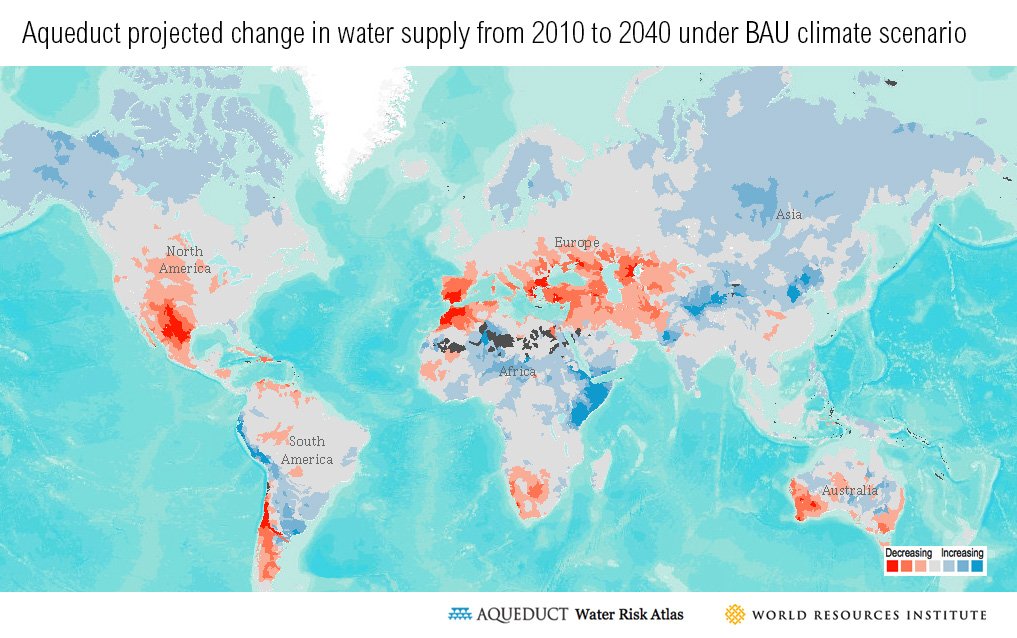
The global shift in rainfall will see many current food producing areas suffer from drought or low crop yields by 2020 according to an article published in the journal Nature this week.
While Europe, North America, Chile, West Africa and Australia are all headed for an overall reduction in rainfall, East Africa, Pakistan, western and northern China, Siberia and Alaska will be much wetter.
It is expected that rainfall events will be much more chaotic and dramatic, leading to disastrous floods rather than increased food production.
The food shortages resulting from this change will be compounded by disputes over the increasingly limited water supply.
Time to Prepare for Food and Water Shocks
A changing climate means less rain in regions where much of the planet’s food is produced. Future scenarios for water supply show that diminished water supplies will be apparent by 2020 and are expected to grow worse by 2030. Just like the retreat of glaciers and polar sea ice, now clouds and rain are retreating poleward. This will have huge implications for agricultural production, industrial and energy output, and municipal water provisioning.
Detailed measurements of ocean temperatures this week reveal that the world’s oceans have absorbed over 90% of the additional heat trapped within the Earth’s atmosphere as the result of additional carbon dioxide.
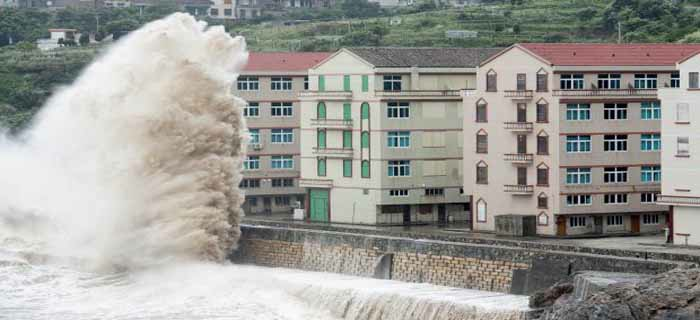
As a result, ecosystems are shrinking away from the equator, disease is spreading among fish populations, wild storms are on the increase resulting in mega typhoons and hurricanes such as the one that flooded the Southern USA six weeks ago.
A little known side effect of this incredible warming event is the marked increase in hydrogen sulphide in the ocean. Used as a chemical weapon in World War I, hydrogen sulphide was characteristic of the primordial ocean before plant life evolved and oxygen became common place. The gas is highly toxic to most living things.
Soaring ocean temperature is ‘greatest hidden challenge of our generation’
A ‘truly staggering’ rate of warming is changing the behaviour of marine species, reducing fishing zones and spreading disease. The ocean has absorbed more than 90% of the extra heat created by human activity. If the same amount of heat that has been buried in the upper 2km of the ocean had gone into the atmosphere, the surface of the Earth would have warmed by a devastating 36C, rather than 1C, over the past century.
The oceans are heating up. That’s a big problem on a blue planet
The extra heat that our greenhouse gases trap is actually absorbed by the oceans. That means that the upper few meters of the sea have been steadily warming more than a tenth of a degree celsius per decade, a figure that’s accelerating. When you think of the volume of water that represents, and then try to imagine the energy necessary to raise its temperature, you get an idea of the blowtorch that our civilization has become.
Super typhoons becoming more powerful and more frequent
Those hitting south-east Asia with a category 4 or 5 strength have more than doubled in number, with the increase even more for China and Taiwan and regions north. The increase in sea-surface temperature is key to providing extra energy to tropical storms, with the outcome for the megacities of the region looking grimmer. “With global warming of the oceans and atmosphere, we can expect tropical cyclones to increase in frequency and intensity in all the basins,”
Climate Change Has Doubled the Number of Category 4 and 5 Storms
The destructive power of typhoons in East and Southeast Asia has increased by nearly 50 percent since 1977. Meanwhile, the number of category 4 and 5 storms striking land has doubled. Standing alone, any one of these findings would be significant. Taken together, they paint a picture of significantly rising risk of storm damage and related loss of life due to climate change in one of the world’s most highly populated regions.
The Oxaca Commune lives on a decade after its brutal repression
Writing in CounterCurrents this week, Gustavo Esteva reports that the Oxaca Commune in Southern Mexico has continued to evolve and grow despite brutal repression by the Mexican government in 2006.
A gentle revolution by the largely indigenous population of 4 million people set out to displace the economy from the center of social life, reclaiming a communal way of being, encouraging radical pluralism, and advancing towards real democracy.
Construction and agriculture are both communal activities carried out on common land. Justice focuses on consolation and compensation of the victim and engages the perpetrator in the solution under the supervision of the community.
Esteva reports that the Zapitastas have taken advantage of the collapse of the Mexican State to continue their unique approach to democracy.
Finns will get paid to live independently of whether they work
The Finnish Government has moved ahead with plans to trial a Basic Income Scheme on 2,000 random citizens to study the impact on employment.
Under the scheme, recipients receive a basic income of $US600 per month. Prime Minister Sipila wants to see if the measure can boost employment and simplify the welfare benefits system. “The primary goal of the basic income experiment is to promote employment,” he said.
Canada is trialling a similar system. A Swiss referendum in June rejected a more generous scheme to pay adults $US2,500 per month and children $US600.
The John James newsletter this week collated a number of statistics about the Australian take up of solar energy
Australians have invested $8 billion of their own money in rooftop solar over the last 8 years, and they now save around $1 billion in electricity bills each year [1]
Rooftop solar systems will prevent over 6.3 million tonnes of carbon pollution in 2016 [2]
There are now 19,000 people employed in the solar industry, far more than in coal and gas electricity generation [3]
If we transition to 100% renewable energy by 2050 we’d actually save $90 billion [5]
Editor, John James commented, “Seems like solar is working pretty well”
Beetles following a warming climate have infested Californian forests killing 66 nillion trees
Global efforts at reforestation are accelerating, gollowing commitments made in the Paris Agreement of November last year.
Volunteers in India smashed a world record by planting 49.3 million tree saplings on July 11. Last year, volunteers in Ecuador planted 647,250 trees from 200 species in one day. In 2014, Men of the Trees planted 100,450 trees in Perth, Australia in a single hour.
Richard Houghton, a senior scientist with the Woods Hole Research Center in the US, though, warns that the impacts may not be as effective as predicted.
“In general, [reforestation] is all good in the sense that trees, as they grow, take carbon out of the atmosphere,” he said. Complications occur when forests shade the snow, absorbing sunlight and adding to warming, or when reforestation is used as a carbon offset for extracting fossil fuels or cutting down old forests.
Climate chaos itself threatens forests with increasing fire damage and attacks by exotic insects moving into forests as the climate warms.