Category: News

Add your news
You can add news from your networks or groups through the website by becoming an author. Simply register as a member of the Generator, and then email Giovanni asking to become an author. He will then work with you to integrate your content into the site as effectively as possible.
Listen to the Generator News online

 
The Generator news service publishes articles on sustainable development, agriculture and energy as well as observations on current affairs. The news service is used on the weekly radio show, The Generator, as well as by a number of monthly and quarterly magazines. A podcast of the Generator news is also available.
As well as Giovanni’s articles it picks up the most pertinent articles from a range of other news services. You can publish the news feed on your website using RSS, free of charge.
 

  • On the streets where we live

    West End Street musicians Stunn.

    You’ve probably seen Ray, River and Oits (members of the band Stunn) jamming on Melbourne St in West End. I stopped by for a chat and discovered that the three indigenous musicians are enchanting and charming. Ray told me a little about the band.

    “We got together to produce ethnic and cultural music that’s selected from our various cultures. All three of us are from different backgrounds. Our ethnic backgrounds include Eastern-Polynesian, Samoan, Aboriginal and Malay cultures. We combine that with modern music and our own style. We try to create some sort of fusion and identity based on this.”

    “Do you think there are any other artists or bands draw on various cultures like you guys do?”

    “Well if they don’t they’re limiting themselves. They should do it and explore what’s out there. The collaboration that we have is pretty good.”

    “Do you think music is a big deal in West End?”

    “Music is one of the major spiritual forces in West End, without a doubt. West End wouldn’t have the commercial success that it’s enjoying today without music. West End has boosted from music. It’s a street energy. The business people here should take note. Without the freedom to creatively express on a street level or at any level really, you have a dead street.”

    “Do you think other suburbs in Brisbane have as much street music as West End does?”

    “We’ll we’re from outside the West End area but we play here because it’s already been created for us. We hope that other musicians take advantage of what West End has to offer.”

    Three weeks from now Stun will be hitting the road. However there are no concrete plans for the tour.

    “We don’t have a plan as such, simply because we don’t believe in planning. You can only live life for today, not tomorrow or yesterday. You can only live right now. I cannot tell you what’s going to happen tomorrow. In the present, right now, I’m doing music and that’s all I can guarantee. That’s all I can give.”

    Ray’s advice for life: “Create your own culture and become yourself. Seek a wider perspective rather than an individual one.”

    Â

    There’s no place like home

    Brendan Barclay was born and grew up in West end. After a long time away from the area, Brendan has returned home.

    “I moved back to settle down. It’s the best place in Brisbane. There’s a real community vibe, there are gardens on every corner. Everyone is really friendly and lovely. They like bringing everyone into their homes and sharing their lives with everyone. It’s the best community around, easily in Brisbane.”

    “There’s no place like home. I think West End is one of the last places in Brisbane that still has culture. I like the Valley and New Farm, but West End still has a lot of old culture. It’s still holding onto it, whereas new development has really changed the city. West End is the most amazing place.”

    “What’s your day been like so far?”

    “I had some coffee and breakfast at Blackstar. It’s a cafe that’s tucked away in Thomas Street. It’s serves amazing coffee. Now I’m going to buy a lantern at Dandelion. I love that shop. I’m like a kid in a candy store there.”

    “Later on I’ll go out for evening drinks at Rumpus (Rumpus Room). It’s happy hour for all of Monday. It has a really nice evening feel too. It has a garden outside and a lot of the locals will gather around that area. You can drink and smoke at the same time. It’s a nice little place to hang out.

    Brendan’s advice for life: “Don’t sweat the small stuff.”

    Â

    West End’s movie buff

    Â

    John Swain has been a West End resident for only 12-months and says he loves the location, restaurants and shops.

    “Saturday and Sunday is very busy around here. I lived near by a while ago. It’s changed quite a bit, there used to be trams, double-decker buses and steam trains. But we shouldn’t be losing our hospitals and although we have some good police, we need more.”

    John’s a trusted local around west end with close relationships with restaurant owners and the South Bank cinema.

    “I’m waiting to go to an Italian restaurant across the road. They’ll give me a meal today and let me pay them tomorrow.”

    “You must be a pretty trustworthy person, for them to believe that you’ll pay them back.”

    “I’m pretty good that way. I’ve known them for a while.”

    When I ask what John’s plans are for the rest of the day, I discover his great joy- going to the movies.

    “I’m going to see the Titanic, they reckon it’s pretty damn good.”

    “Have you never seen the Titanic?”

    “Not yet, I also want to see the new car racing movie, The Fast and The Furious. I get a good deal at the South Bank cinemas; I’ve been going there since the place was opened. I sure do love my movies. The South bank cinema is great, the Imax screens are terrific and it’s real cheap too. I’m also really excited to see the new cartoons they have coming out. The new Superman movie looks good too.

    John claims he sees at least two movies a week at the local cinema.

    “Who’s your favourite actor?”

    “Mel Gibson.” John’s advice for life: “Wear sunscreen.”

    Â
  • Coal kills 22,000 Europeans a year

    Burning coal also costs companies and governments billions of pounds in disease treatment and lost working days

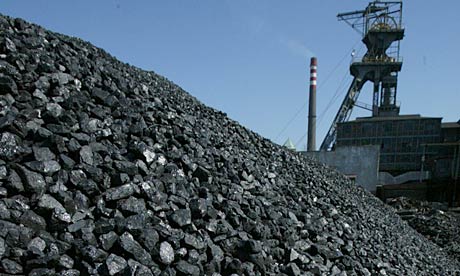
    Freshly mined, high quality coal awaits transport in Katowice, Poland
    Coal awaits transport in Katowice, Upper Silesia. According to the study, Polish coal power plants have the worst health impact in the European Union. Photograph: Sean Gallup/Getty Images
    Air pollution from Europe‘s 300 largest coal power stations causes 22,300 premature deaths a year and costs companies and governments billions of pounds in disease treatment and lost working days, says a major study of the health impacts of burning coal to generate electricity.

    The research, from Stuttgart University’s Institute for energy economics and commissioned by Greenpeace International, suggests that a further 2,700 people can be expected to die prematurely each year if a new generation of 50 planned coal plants are built in Europe. “The coal-fired power plants in Europe cause a considerable amount of health impacts,” the researchers concluded.

    Analysis of the emissions shows that air pollution from coal plants is now linked to more deaths than road traffic accidents in Poland, Romania, Bulgaria and the Czech Republic. In Germany and the UK, coal-fired power stations are associated with nearly as many deaths as road accidents. Polish coal power plants were estimated to cause more than 5,000 premature deaths in 2010.

    The cumulative impact of pollution on health is “shocking”, says an accompanying Greenpeace report. A total of 240,000 years of life were said to be lost in Europe in 2010 with 480,000 work days a year and 22,600 “life years” lost in Britain, the fifth most coal-polluted country. Drax, Britain’s largest coal-powered station, was said to be responsible for 4,450 life years lost, and Longannet in Scotland 4,210.

    According to the study, Polish coal power plants have the worst health impact in the European Union. The Polish government and Polish utilities are planning to build a dozen new power plants. The utility companies with the worst estimated health impacts, according to the report, are PGE (Poland), RWE (Germany and UK), PPC (Greece), Vattenfall (Sweden) and ČEZ (Czech Republic).

    Acid gas, soot, and dust emissions from coal burning are, along with diesel engines, the biggest contributors to microscopic particulate pollution that penetrates deep into the lungs and the bloodstream. The pollution causes heart attacks and lung cancer, as well as increasing asthma attacks and other respiratory problems that harm the health of both children and adults.

    “Tens of thousands of kilogrammes of toxic metals such as mercury, lead, arsenic and cadmium are spewed out of the stacks, contributing to cancer risk and harming children’s development,” says the Greenpeace report, which does not emphasise the impact of coal burning on climate change.

    The 300 plants produce one-quarter of all the electricity generated in the EU but are responsible for more than 70% of the EU’s sulphur dioxide emissions and more than 40% of nitrogen oxide emissions from the power sector. The Greenpeace report notes that coal burning has increased in Europe each year from 2009 to 2012.

    “The results are staggering. The only way to eliminate the health impacts associated with burning coal in Europe is to phase out these dirty power plants and replace them with clean renewable energy. The current EU renewable energy target has been proven to boost renewable energy and help modernise energy systems and the economy. Europe must continue down the path of clean renewable energy by setting an ambitious, binding 2030 renewable energy target,” said Greenpeace International energy campaigner Lauri Myllyvirta.

    The air pollution from coal burning comes on top of transport emissions that are still increasing despite attempts by the EU to force reductions. According to the European Environmental Agency, more than 90% of urban population in the EU is exposed to fine particle (PM2.5) and ozone pollution levels above the World Health Organisation guidelines.

    Greenpeace International is calling on the European commission to come forward with proposals for a binding renewable energy target of 45% and a greenhouse gas reduction target of at least 55% by 2030

  • South Korea says no to GMO

    News about the GMO contamination of U.S. wheat crops seems to be spreading faster than the GMOs themselves. On Friday, South Korea joined Japan in announcing a halt on imports of U.S. wheat due to the USDA’s recent announcement that commercial wheat grown in the USA is contaminated with Monsanto’s genetically engineered wheat.

    Some Americans may still not realize this, but GMOs are outlawed or shunned nearly everywhere around the world. Only in the USA have GMOs managed to avoid being labeled or outlawed — and that’s primarily due to Monsanto’s financial influence over lawmakers.

    Monsanto shares plummeted 4 percent on Friday following the announcement by South Korea. This is completely in line with predictions made here at Natural News, where I said earlier in the week, before Japan and South Korea announced their wheat boycotts.

    All wheat produced in the United States will now be heavily scrutinized — and possibly even rejected — by other nations that traditionally import U.S. wheat. This obviously has enormous economic implications for U.S. farmers and agriculture.

    How much of the U.S. wheat supply is now contaminated with GMOs?

    “…the mysterious appearance of the Monsanto wheat has raised questions about how the strain traveled there and whether it is lurking in the commercial wheat crop,” reports the Washington Post.

    WashPo goes on to report that Monsanto, “is still testing strains of gene-altered wheat in Hawaii and North Dakota.”

    In truth, nobody knows how much of the wheat is contaminated. Every more shockingly, food companies don’t bother testing wheat for GMOs, either!

    Until now, that is. All of a sudden, food importers all around the world are wondering whether they are inadvertently buying U.S. wheat that’s contaminated with GMOs. Consumers, too, are asking the question, “Have I been eating GMO wheat without even knowing it?” These Monsanto wheat experiments, after all, have been taking place since 1998.

    Is Monsanto lurking in your Wheaties?

    U.S. farmers suddenly seeing the economic damage that Monsanto can do.

    The real issue in all this, however, is an economic issue. Suddenly U.S. farmers are seeing the kind of economic destruction that can be caused by Monsanto’s genetic engineering experiments.

    Thanks to Monsanto and the USDA — which approved the open-field experiments — every U.S. farmer who grows wheat is now at high risk of losing enormous sums of money on a food crop that’s increasingly being rejected around the world. This means Monsanto is pushing U.S. farmers toward bankruptcy while harming America’s exports and GDP. Monsanto has become a force of economic destruction in America.

    Will Monsanto reimburse all these farmers who suffer an economic loss? Not without being sued, of course. Perhaps it’s time for a nationwide class-action lawsuit against Monsanto, supported by all commercial farmers who hope to be able to protect their crops from market-crushing GMO contamination.

    Nobody wants GMOs except Monsanto!

    Consumers don’t want GMOs, farmers don’t want GMOs, foreign nations don’t want GMOs and food companies don’t want to deal with the hassle of GMOs either. The only entity that still wants GMO in America is the very company making money off GMO: Monsanto.

    Republised from http://www.naturalnews.com/040604_GMO_contamination_wheat_South_Korea.html

    Â

  • Gabba goes up-market

    On site for the momentous occasion were Brisbane City Lord Mayor, Graham Quirk, General Manager-Locations for Quest Serviced Apartments Andrew Weisz, with Michael Kent and Nando Pellicano from the Pellicano Group.

    Lord Mayor Graham Quirk said the development would be a wonderful addition to the community and the local economy.

    “We are thrilled that Quest has committed to this development which is another vote of confidence in the strength of the city’s economy,” he said.

    “Quest has recently fast-tracked its growth in Queensland by announcing plans to open five new properties in the next 12 months.

    “I am delighted that Woolloongabba and the surrounding suburbs will benefit from the investment Quest is making in the area as not only will jobs be created but we will have a quality accommodation option for visitors doing business in the area.”

    The Quest property will be located at 130 Logan Rd in Woolloongabba and is expected to open in March 2014. Woolloongabba is approximately 4km South of Brisbane CBD with the Quest property about 1km away from “The Gabba” – Queensland’s major sporting venue.

    The property will feature 70 apartments comprising of Studio, 1 bedroom, 2 bedroom and 3 bedroom apartments. There will be a conference room, gymnasium, and a rooftop BBQ area in the complex.

    Andrew Weisz, General Manager – Locations, Quest Serviced Apartments, says the project is in line with Quest’s growth strategy.

    “Our focus is to provide corporates with flexible quality accommodation in the locations that need it. Simply, our business growth is based on supply and demand and in recent times the greatest demand has been in suburban and regional locations, and Woolloongabba is definitely one of those areas,” he said.

    Quest Woolloongabba is the Pellicano Group’s second project under construction in the area, with the highly successful 82 apartment project Eastwood Apartments due for completion in July 2013.

    The Pellicano Group is a privately-owned family business that has been in operation for 45 years and focuses on property development and management and construction funds management. The group has offices in Melbourne and Brisbane.

    Â

  • Super Slam finale jars Jam Jar

    Walking off with the door takings was Joe (Jonathon Sri). Also famous for his band Rivermouth and one of the founding hosts of Courtyard Conspiracy, Joe is quickly becoming a West End institution.

    Hosted by Scotty (Scott Sneddon) with huge passion, energy and a creative approach to judging, the afternoon was attended by thirty or forty lovers of poetry. Sine that includes the ten poets and probably their ten lovers my mental arithmetic indicates that proprietor topped up the envelope to round out the prize money.

    Given that the winner probably took home more on the day than the owner did, it is easy to see why this might be the last instalment of this particular creative outbreak of Westendism.

    Not content with his commercial support, our host also thanked Scotty for his work in keeping the slam up and running over the last two years, and graciously acknowledged the hilarious sending up of his own poetry from one of the performers.

    Westender is assured that future Sunday afternoons will still revolve around performance poetry in a form that packs the place with punters and rebalances the scales toward commerce without killing the creativity.

    Sunday poetry at the Jam Jar is dead, long live Sunday poetry at the Jam Jar.

  • Decoding ‘orphan crop’ genomes could save millions of lives in Africa

    Decoding ‘orphan crop’ genomes could save millions of lives in Africa

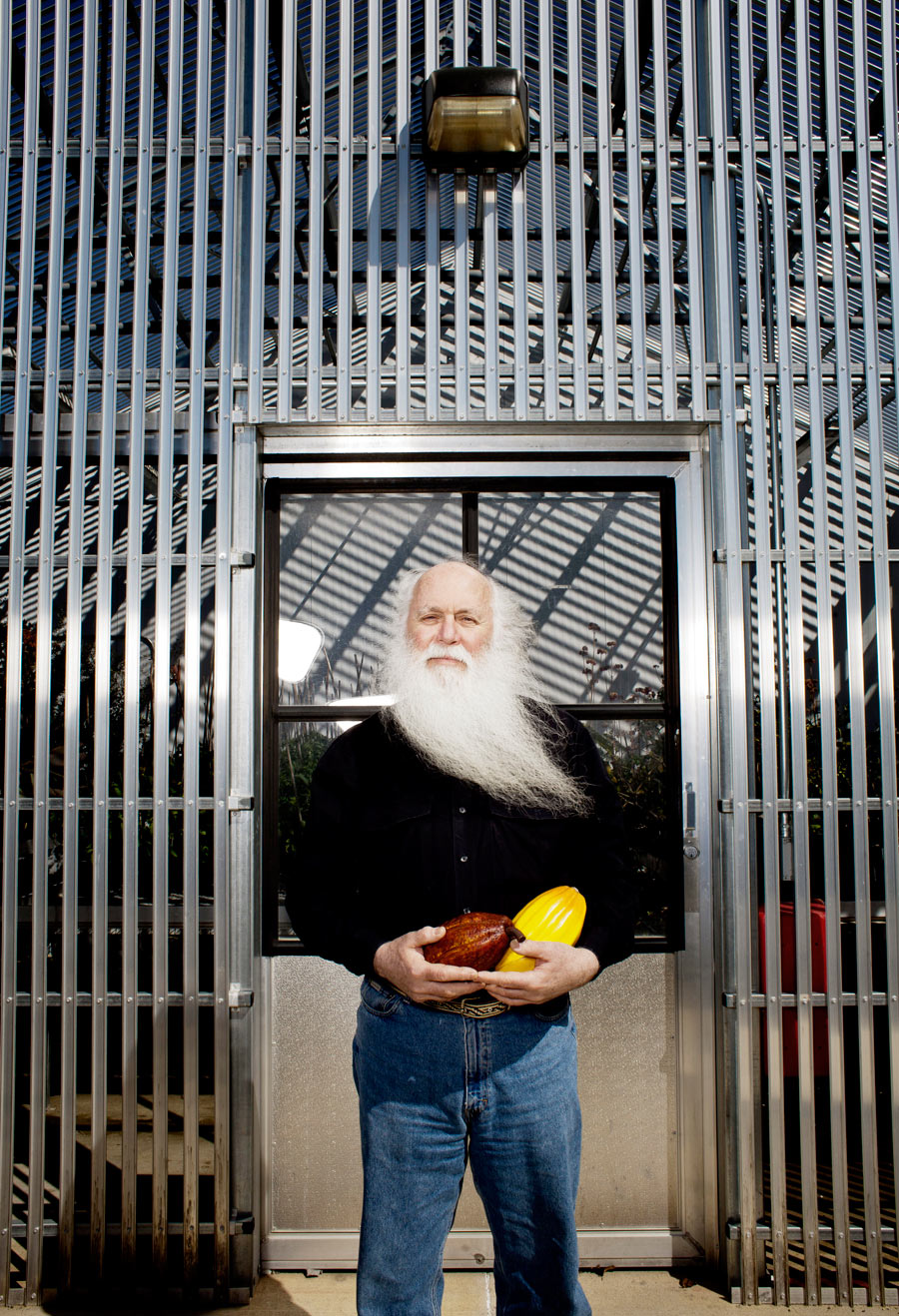
    Howard-Yana Shapiro, a scientist with the Mars confectionery company, will make the information free to boost harvests

    Howard-Yana Shapiro wants to make the genetic makeup of some crops freely available on the internet. View larger picture

    Howard-Yana Shapiro wants to make the genetic makeup of some crops freely available on the internet. Photograph: Gabriela Hasbun/Redux/eyevine

    The future wellbeing of millions of Africans may rest in the unlikely hands of a vegan hippy scientist working for a sweet company who plans to map and then give away the genetic data of 100 traditional crops.

    Howard-Yana Shapiro, the agriculture director of the $36bn US confectionery corporation Mars, led a partnership that sequenced and then published in 2010 the complete genome of the cacao tree from which chocolate is derived. He plans to work with American and Chinese scientists to sequence and make publicly available the genetic makeup of a host of crops such as yam, finger millet, tef, groundnut, cassava and sweet potato.

    Dubbed “orphan crops” because they have been ignored by scientists, seed companies and governments, they are staples for up to 250 million smallholder African farmers who depend on them for food security, nutrition and income. However, they are considered of little economic interest to large seed and chemical companies such as Monsanto, Bayer and Syngenta, which concentrate on global crops such as maize, rice and soya.

    According to Shapiro, there is huge potential to develop more resilient and higher-yielding varieties of most orphan crops by combining traditional plant breeding methods with new biotech tools such as “genetic marking”. This does not involve the altering or insertion of genes that takes place with controversial genetic modification.

    “The genetic information will be put on the web and offered free to plant breeders, seed companies and farmers on condition it is not patented. A new African plant-breeding academy will also be set up in Nairobi, Kenya,” he said.

    “It’s not charity. It’s a gift. Its an improvement of African agriculture. These crops will never be worked on by the big five [seed] companies. They don’t see them as competition.”

    Shapiro, a leading plant scientist who founded organic seed company Seeds of Change but sold it to Mars in 1997, now cuts an idiosyncratic figure in the corporate food world, sporting a long beard and listing motorcycles as a favourite pastime. But he said that the culture of the family-owned corporation had advantages. “It took less than a nanosecond to decide not to patent. Ownership was not an issue,” he said.

    Shapiro is angered by the stunting caused by malnutrition that affects 30% of African children. By improving the crops, he said, the African orphan crop consortium, which includes corporations such as Life Technologies and the conservation group WWF, could eradicate a “plague” that costs Africa $125bn a year. “We will start with genomics, go to analysis, then to plant breeders, then to the field, then the seed companies, and then to the farms,” he said.

    Open-access publication of the cacao genome in 2010 is now bearing fruit. The genes that determine resistance to fungal infections and yield have been found and a new generation of cacao trees is being grown which should eventually quadruple production. “We haven’t changed a single gene. It’s inheritability. It’s all done with grafting.”

    But the “improved” seeds expected to come out of the $40m orphan programme could change Africa in unexpected ways. Nearly 80% of all seed used in Africa is selected, saved and exchanged by farmers without money changing hands. The result has been an immense diversity of crops suited to particular localities and cultures. The new, “improved” seeds of the orphan crops may increase yields or disease resistance but could be unaffordable and might oust traditional varieties. It is also possible that the genetic decoding could open the door to genetic modification.

    yam Yam harvests could increase significantly as hardier varieties are developed.”Anything that keeps the [genetic] information out of proprietary hands is a good thing. But it’s important to maintain the traditional varieties that have not been ‘improved’ and to keep a non-monetised path for the farming economy,” said Camilla Toulmin, director of the International Institute for Environment and Development in London. “It’s important to recognise improvements in crops are not just about genetics. How plants are managed is equally important.”

    Agricultural investment in Africa will be a key point at the G8 hunger summit in Northern Ireland next weekend. Governments and 45 of the largest agribusiness corporations are expected to unveil initiatives to boost African farming.

    West and east African small farmers’ groups have joined British charities to say that small-scale family farmers were being excluded from the talks even though they feed 80% of Africans. “It’s very important that governments prioritise investment to support family farmers and their more ecological food production,” said Patrick Mulvany, chair of the UK Food group.

    “Technological advances in food production can be part of the solution to increase yields. But the world already grows enough food yet one in eight people go hungry every day. G8 leaders can begin to tackle the scandal of global hunger by closing the tax loopholes, improving land rights and increasing public investment in developing country agriculture,” said Lucy Brinicombe, spokesperson for the If coalition of 200 groups which includes Oxfam and ActionAid.