Category: News

Add your news
You can add news from your networks or groups through the website by becoming an author. Simply register as a member of the Generator, and then email Giovanni asking to become an author. He will then work with you to integrate your content into the site as effectively as possible.
Listen to the Generator News online

 
The Generator news service publishes articles on sustainable development, agriculture and energy as well as observations on current affairs. The news service is used on the weekly radio show, The Generator, as well as by a number of monthly and quarterly magazines. A podcast of the Generator news is also available.
As well as Giovanni’s articles it picks up the most pertinent articles from a range of other news services. You can publish the news feed on your website using RSS, free of charge.
 

  • No match for the bagman and the bogeyman

    No match for the bagman and the bogeyman

    Posted Fri Nov 23, 2012 10:15am AEDT

    Never mind the historic deals on the Murray Darling and Tasmania’s forests: it was asylum seekers v the AWU in a tussle for the media’s attention this week, writes Barrie Cassidy.

    The Federal Government has done some nice work on the environment and conservation in recent days, but none of it was a match for the bagman and the bogeyman.

    It started with the extension of the marine reserves around Australia to cover an area of ocean equal to a third of the country’s land mass.

    Then, as the week progressed, the Government reached an agreement on the Murray-Darling Basin plan, designed to safeguard irrigation towns while ensuring the stressed river gets all the water it needs.

    And by the end of the week, a 30-year battle over the protection of Tasmania’s forests was finally over, with conservation and industry groups bringing to an end often acrimonious negotiations.

    Not a bad result really.

    In all cases, individuals on either side of the arguments will continue to agitate for a better deal, but the major players have nevertheless signed up to compromises. These are all historic, long-term outcomes, among the biggest ever struck in this country.

    But as we have seen for years now, it takes a truly super-human political initiative to knock any new development in the asylum seekers issue off the front pages.

    The Government continues to be its own worst enemy, of course, tacking one way then the other, and all the time getting nearer to the policy introduced by former prime minister John Howard.

    The fact that the policy is attacked with equal venom, but for very different reasons, by the Coalition and human rights advocates does, however, confuse the politics.

    And the politics vary greatly anyway depending on where you live.

    Thursday’s Daily Telegraph in Sydney included the headline “Asylum Open Door Policy”, and declared the Government had waved the white flag and decided to “pay (asylum seekers) to live in the community while their claims are processed”.

    The front page of the Hobart Mercury, on the other hand, reported on the news that a detention centre had been reopened north of Hobart, saying that the decision “was roundly applauded by local residents as well as political and business leaders”. Premier Lara Giddings said the decision was “a positive move for the rights of asylum seekers and for jobs and the local economy”.

    The reality of harsh conditions on Nauru and Manus Island – and the prospect of living, poverty stricken, on a bridging visa and denied the right to work – might scare off some potential asylum seekers.

    Both prospects – the harsh conditions offshore and the poverty here at home – might even appeal to some voters in key marginal seats. That, it seems, is precisely the way they think it should be.

    So it then follows that media reporting along those lines might help the Government and aid its objectives.

    But on the other hand, every time the Government changes direction, it loses credibility, and the more it appears not to have a handle on the issue. The electorate sees consistency in one party alone, with the Coalition never budging from the policy that they say was so successful during the Howard years.

    The opposition struggles to justify its ‘turn back the boats’ policy, and indeed Tony Abbott hasn’t yet plucked up the courage to raise it directly with the Indonesian president. But flawed or not, it has been part of a package of measures that has never varied.

    While asylum seekers stole the front pages, the Australian Workers Union slush fund scandal was prominent inside the papers and on much of the broadcast media. What was the latest incentive to stoke the issue along? The bagman arrived!

    A former AWU official, Ralph Blewitt, flew in from Malaysia claiming he had a deal with the Victorian fraud squad to tell all he knows about the slush fund scandal in return for immunity.

    He said the prime minister, Julia Gillard, had questions to answer, though he didn’t say what they were. His memory was vague; he was trying to trigger recollections by reading documents. Most importantly, he wanted to ensure that freedom of speech and the press was not shut down.

    What else do we know about this man, other than the fact that he admits to being a part of the fraud, and that he has taken 17 years to speak to authorities about it?

    There was quite an insight into his character on Radio 6PR in Perth with Paul Murray back in August.

    Murray was interviewing the deputy leader of the opposition, Julie Bishop, who was going through her now familiar lines on the issue. “It goes to her character, Paul – her ethics, her judgment, whether people can have trust and confidence in her. I think people are entitled to answers from her so that they can make a judgment about whether she is fit to be prime minister of the country.”

    Then Murray took a call from Penny.

    Murray: “What can you tell us about this?”

    Penny: “… Ralph Blewitt is my brother, he is my older brother. He is as crooked as they come. It wasn’t Julia Gillard that stole the money. She might have set up the fund, and Wilson and Blewitt, Ralph Blewitt, were the crooks, not Julia Gillard. Ralph is out to make whatever he can make out of this for himself.”

    Murray: “… he appeared on the front page of The Australian newspaper saying ‘I’ll tell my whole story as long as I don’t get prosecuted’.”

    Penny: “Yeah, well, he is crooked as they bloody come. Sorry, but he is my older brother and I am telling you now he is rotten to the core.”

    Jon Faine, the host of the morning show on ABC 774 in Melbourne, read out the transcript on Thursday and asked: “Why hasn’t that appeared on the front page of The Age or The Australian? Why hasn’t that appeared so that we can factor that in, and judge his reliability as a whistleblower?”

    Meanwhile, Minister for Agriculture Tony Burke fronted the National Press Club to talk about the three big environment initiatives, and in particular, the Murray Darling agreement.

    Two questions on water, one on ICAC, another on fishing, then: “Minister can I ask you a question on another topic?”

    Burke: “We’ve been waiting 100 years and no one will ask!”

    The question was on the slush fund.

    Barrie Cassidy is presenter of the ABC programs Insiders and Outsiders. View his full profile here.

    Topics:unions, fraud-and-corporate-crime

    Comments (544)

  • Magnesium oxide: From Earth to super-Earth

    ScienceDaily: Earth Science News


    Magnesium oxide: From Earth to super-Earth

    Posted: 22 Nov 2012 12:29 PM PST

    The mantles of Earth and other rocky planets are rich in magnesium and oxygen. Due to its simplicity, the mineral magnesium oxide is a good model for studying the nature of planetary interiors. New work studied how magnesium oxide behaves under the extreme conditions deep within planets and found evidence that alters our understanding of planetary evolution.

  • Hansen 2007 : Sea Level Rise 50 mm/Year | Real Science

    Hansen 2007 : Sea Level Rise 50 mm/Year | Real Science
    By stevengoddard
    In an interview on Australian ABC Television program, The 7.30 Report, James Hansen, a prominent NASA climatologist, predicted the liklihood that the earth will pass a tipping point resulting in Sea Level Rise of up to a metre every 20 …
    Real Science

    Web 1 new result for SEA LEVEL RISE
    Sea Level Rise Continues Strong Upward Trend Says NASA
    In August 2011, scientists at NASA’s Jet Propulsion Laboratory, Pasadena, Calif., and the University of Colorado in Boulder reported that global sea level rise
    nanopatentsandinnovations.blogspot.com/…/sea-level-rise-cont…
  • Ocean currents play a role in predicting extent of Arctic sea ice

    Ocean currents play a role in predicting extent of Arctic sea ice

    Posted: 21 Nov 2012 10:08 AM PST

    Researchers have developed a new method to accurately simulate the seasonal extent of Arctic sea ice and the ocean circulation beneath.

  • Global Power Shift 360 ORG

    Global Power Shift

    Inbox
    x

    Will Bates – 350.org organizers@350.org
    9:44 AM (40 minutes ago)

    to me

    Dear friends,

    It’s time to try something new.

    The last few weeks have seen some remarkable movement activity — the US Do the Math tour, India Beyond Coal, and the Arab Youth Climate Movement. These efforts have been game-changing and are mobilizing tens of thousands of people worldwide.

    While we’ve made inspiring progress, nothing we’ve done so far as a movement has been quite large enough. That’s the hard truth. To take on this planetary climate crisis, we need to create truly transformative change.

    That’s why today we’re publicly calling for a Global Power Shift. Click to learn more.

    Global Power Shift (GPS) will be a multi-pronged project to scale up our movement and establish a new course, like never before. The basic plan is this:

    1. In June of 2013, 500 of us will gather in Turkey — from leaders to engaged community members
    2. We’ll train in grassroots and digital organizing, share our stories, and chart a strategy for the coming year
    3. Attendees will then return to their home countries in teams to organize mobilizations
    4. These national or regional events will be launchpads for new, highly-coordinated campaigns targeting political and corporate levers of power
    5. Together, we will truly shift the power and spark the kind of visionary transformation we need to fight the climate crisis

    In other words, 2013 is going to be our biggest year yet: www.globalpowershift.org.

    Not everyone will be able to attend the gathering in Istanbul, so we’re asking interested individuals to apply. This will ensure that a great diversity of folks are able to attend and see through the full GPS vision — from Turkey to national mobilizations worldwide. Even if we can’t meet you in Turkey, we’ll need all hands on deck to be part of the massive organizing work that will take place throughout 2013. So get ready!

    Power Shift was established in the US in 2007. Since then, we’ve seen similar mobilizations throughout Europe, in Russia, Australia, Canada, and several other countries.

    We’ve never undertaken a project like this before, but believe now is the time to take it truly worldwide. We hope you’ll join us.

    Let’s shift the power!

    Will Bates

    350.org Global Campaigns Director


    350.org is building a global movement to solve the climate crisis. Connect with us on Facebook and Twitter, and sign up for email alerts. You can help power our work by getting involved locally, sharing your story, and donating here.

    To stop receiving emails from 350.org, click here.

  • More than 1,000 new coal plants planned worldwide, figures show

    More than 1,000 new coal plants planned worldwide, figures show

    World Resources Institute identifies 1,200 coal plants in planning across 59 countries, with about three-quarters in China and India

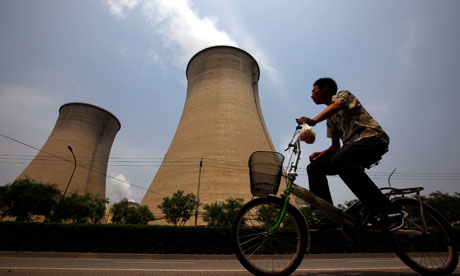
    Coal-burning power station in Beijing, China

    A coal-burning power station in Beijing, China – the country is planning to build 363 new coal-fired power plants. Photograph: David Gray/Reuters

    More than 1,000 coal-fired power plants are being planned worldwide, new research has revealed.

    The huge planned expansion comes despite warnings from politicians, scientists and campaigners that the planet’s fast-rising carbon emissions must peak within a few years if runaway climate change is to be avoided and that fossil fuel assets risk becoming worthless if international action on global warming moves forward.

    Coal plants are the most polluting of all power stations and the World Resources Institute (WRI) identified 1,200 coal plants in planning across 59 countries, with about three-quarters in China and India. The capacity of the new plants add up to 1,400GW to global greenhouse gas emissions, the equivalent of adding another China – the world’s biggest emitter. India is planning 455 new plants compared to 363 in China, which is seeing a slowdown in its coal investments after a vast building programme in the past decade.

    “This is definitely not in line with a safe climate scenario – it would put us on a really dangerous trajectory,” said the WRI’s Ailun Yang, who compiled the report, considered to be the most comprehensive in the public domain. But she said new emissions limits proposed in the US and a voluntary cap on coal use in China could begin to turn the tide. “These policies would give really strong signals about the risks to the future financial performance of coal of climate policies.”

    Nick Robins, head of the Climate Change Centre at HSBC, said: “If you think about low-carbon energy only in terms of carbon, then things look tough [in terms of not using coal]. But if you take into account all factors, then dealing with coal [ie not using it] looks a little less difficult.”

    He cited the increasing replacement of coal with shale gas and renewable energy, tightening air pollution regulations, the gradual cleaning of economies like China’s and the increasing scarcity of water, which is needed in large quantities by coal-fired power stations.

    “We expect financiers and investors increasingly to include these factors into investment decisions for coal to avoid the threat of stranded assets,” Robins said.

    The WRI report also found that, after a slight dip during the economic troubles of 2008, the global coal trade has rebounded and rose by 13% in 2010. A structural shift has moved the bulk of the international coal trade from the Atlantic, serving Europe and the US, to the Pacific. China became a net importer of coal in 2009 but the biggest changes are fast-rising imports by Japan, South Korea and Taiwan, which all have large numbers of coal-fired plants but produce virtually no coal of their own.

    However, Germany, the UK and France remain in the top 10 importers, and coal use rose 4% in 2011 in Europe as prices fell and plants due to close under clean air rules use up their allotted running hours. Indonesia and Australia are the largest coal exporters, with the latter planning to triple its mine and port capacity to almost 1bn tonnes a year.

    Many developing countries, such as Guatemala, Cambodia, Morocco, Namibia, Senegal and Sri Lanka, and Uzbekistan, are planning new coal-fired plants even when they produce almost no coal at all. “There is a long way to go to raise awareness that you can meet energy needs from sources other than coal,” said Yang.

    Most new coal-fired plants will be built by Chinese or Indian companies. But new plants have largely been financed by both commercial banks and development banks. JP Morgan Chase has provided more than $16.5bn (£10.3bn) for new coal plants over the past six years, followed by Citi ($13.8bn). Barclays ($11.5bn) comes in as the fifth biggest coal backer and the Royal Bank of Scotland ($10.9bn) as the seventh. The Japan Bank for International Co-operation was the biggest development bank ($8.1bn), with the World Bank ($5.3bn) second.

    Guy Shrubsole, at Friends of the Earth, said of the WRI report: “This is a scary number of coal-fired plants being planned. It is clear that the vested interests of coal companies are driving this forward and that they will have to be reined in by governments.”

    In January, the Bank of England was warned that fossil fuel sub-prime assets posed a systemic risk to economic stability, because only 20% of the reserves of the top 100 coal and top 100 oil and gas companies could be burned while keeping the global temperature rise under the internationally agreed limit of 2C.