Category: News

Add your news
You can add news from your networks or groups through the website by becoming an author. Simply register as a member of the Generator, and then email Giovanni asking to become an author. He will then work with you to integrate your content into the site as effectively as possible.
Listen to the Generator News online

 
The Generator news service publishes articles on sustainable development, agriculture and energy as well as observations on current affairs. The news service is used on the weekly radio show, The Generator, as well as by a number of monthly and quarterly magazines. A podcast of the Generator news is also available.
As well as Giovanni’s articles it picks up the most pertinent articles from a range of other news services. You can publish the news feed on your website using RSS, free of charge.
 

  • Heart Rot MONBIOT

    Monbiot.com


    Heart Rot

    Posted: 12 Oct 2012 11:54 AM PDT

    If we lose the ash tree, we’ll lose culture as well as nature.


    By George Monbiot, published on the Guardian’s website 12th October 2012

    Reading the shocking news about ash die-back, the disease that has now killed most of Denmark’s ash trees and many of those across the rest of northern Europe, I was reminded that when we lose our wildlife we lose some of our stories.

    The death of a species, especially a species as significant as the ash, punches a hole not only in nature, but also in our culture.

    Throughout northern Europe, the ash tree was associated in pagan thought with the guardianship of life. As Paul Kendall explains on the Trees for Life site, in the mythology of the Vikings (and several other northern peoples), an ash known as Yggdrasil or the World Tree was the scaffolding on which the universe was built. It

    “grew on an island surrounded by the ocean, in the depths of which the World Serpent lay. This ash tree’s trunk reached up to the heavens, and its boughs spread out over all the countries of the Earth. Its roots reached down into the Underworld. A squirrel ran up and down the tree carrying messages from the serpent gnawing at the roots to the eagle in the canopy, and back. A deer fed on the ash leaves and from its antlers flowed the great rivers of the world. A magical goat grazed by the tree, and its udders dispensed not milk but mead for the warriors in Odin’s Great Hall. The gods held their councils under the canopy of their guardian tree.”

    Odin, the king of the gods, hung himself from the tree to obtain cosmic wisdom. During his vigil, one of his eyes was pecked out by ravens. You can see in this myth, as JG Frazer pointed out in the Golden Bough, an obvious correlate of the crucifixion story.

    Wagner developed the saga in the The Ring of the Nibelung. Wotan (Odin), the one-eyed king of the gods, tore the shaft of his spear from the World Ash Tree (spear shafts were typically made from ash poles). On the shaft were inscribed the holy laws and treaties by which the world and the heavens were governed.

    The mortal hero Siegfried fights Wotan (his grandfather) and hews the shaft of the sacred spear in two, literally breaking the law of the gods. Wotan then suicidally instructs his warriors to hack down the World Ash Tree and pile its branches around Walhall (Valhalla). At the end of the last opera, Wotan’s valkyrie daughter Brünnhilde casts a brand onto this pyre, and Valhalla is consumed by flame. The source of life becomes the means of destruction.

    Children love this story (I find it helps if you skim over the incest and the suttee). But if ash die-back follows the same course as Dutch elm disease, I can imagine telling it one day and being asked what an ash tree is. I see this is as a loss that goes beyond the great sadness of picturing the end of the magnificent, well-used trees I know (some of which have been pollarded or coppiced for hundreds of years), which are laden with both wildlife and human history.

    If the fungus reaches them, they will, as if on Wotan’s instructions, be brought down and hacked to pieces. It feels like a kind of Götterdämmerung, a twilight of the gods. There is something of the norse deity about an ancient ash tree, grey and clawing and bearded with lichen.

    Already, though not as a result of the disease, the cultural significance of the tree has begun to slip from our minds. For example, anyone who has split an ash trunk cannot help but be aware of what ash blonde means. The fresh wood is almost white (it darkens, when it had been seasoned and polished, to a beautiful bright gold). Walking through a chemist’s shop a few months ago, my eye was caught by a packet of hair dye labelled “ash blonde”. The model’s hair was a charcoal-grey colour. Ash, it seemed, had been interpreted as fire-ash. It felt like a small but sad impoverishment of the language.

    Other European nations are now begging Britain to ban imports of ash asplings, so that the tree retains an uninfected stronghold. As ever, when faced with a call to impose even the slightest restrictions on business (think of its failure to ban the class of pesticides that are killing the bees), the government has dithered and made excuses, and the fungus is now spreading across the country.

    One of the effects of ash die-back is what foresters call heart rot: the fungus penetrates into the core of the wood. To me this term is freighted with another meaning.

    www.monbiot.com

  • Days to Save the Antarctic ocean

    Days to Save the Antarctic ocean

    Inbox
    x

    Leonardo DiCaprio with Avaaz.org
    12:16 AM (10 hours ago)

    to me
    Dear friends,

    I’m writing to ask for your help. In days, governments could turn stretches of the Antarctic ocean into the world’s largest marine sanctuary, saving thousands of majestic polar species from the threat of industrial fishing fleets. But a small group of countries could drown the deal unless we act now:

    I’m writing to ask for your help. Within days, governments could begin turning wide stretches of the Antarctic ocean into the world’s largest marine sanctuary, saving the habitat of whales, penguins, and thousands of other polar species from industrial fishing fleets.

    But they won’t act unless we speak out now.

    Most countries support the sanctuary, but Russia, South Korea and a few others are threatening to vote it down so they can plunder these seas now that others have been fished to death. This week, a small group of negotiators will meet behind closed doors to make a decision. A massive people-powered surge could break open the talks, isolate those attempting to block the sanctuary, and secure a deal to protect over 6 million square kilometers of the precious Antarctic ocean.

    The whales and penguins can’t speak for themselves, so it’s up to us to defend them. Let’s change negotiators’ minds with a massive wave of public pressure — Avaaz will surround the meeting with hard-hitting ads, and together we’ll deliver our message to delegates via a deafening cry on social networks. Sign this urgent petition and share it with everyone you know:

    http://www.avaaz.org/en/save_the_southern_ocean_5/?bhPqncb&v=18906

    More than 10,000 species call these remote Antarctic waters their home, including blue whales, leopard seals, and emperor penguins, and many are found nowhere else on Earth. Climate change has already taken a cruel toll on their fragile habitat, but they will come under further threat from the industrial fishing fleet’s mile-long nets cast over these precious waters. Only a marine sanctuary will increase their odds for survival

    The 25-member governing body that regulates the Antarctic oceans has already committed to creating these marine protected areas. But the two plans being negotiated — one to protect part of the fragile Ross Sea and one for East Antarctica — are at risk of dilution or delay. Shockingly, the talks have been off the media’s radar and countries like Russia and South Korea are betting their opposition will go unnoticed, but if we cast a public spotlight on the talks we can force them to back off, and encourage champions like the US and EU to push for even stronger protections.

    The future of the Southern ocean is in our hands. Let’s unleash a massive surge of global pressure and ensure governments don’t put profits before our planet. Please sign and share this petition with everyone you know:

    http://www.avaaz.org/en/save_the_southern_ocean_5/?bhPqncb&v=18906

    The Avaaz community has come together time and time again to protect our oceans. We’ve already helped win two of the largest marine reserves in the world. But the threats to our oceans continue, and one by one species are coming closer to the brink. Join me in saving the Antarctic ocean before it’s too late.

    With hope,

    Leonardo DiCaprio, with the Avaaz team

    MORE INFORMATION

    Protect Antarctic waters before it’s too late, says environment coalition (The Guardian)
    http://www.guardian.co.uk/environment/2012/may/22/protect-antarctic-waters

    Alliance Seeks Vast Marine Reserves in Antarctic (New York Times)
    http://green.blogs.nytimes.com/2012/02/28/alliance-seeks-vast-marine-reserves-in-antarctic/

    Milestone discussions on marine protected areas in Antarctica scheduled for CCAMLR’s 31st annual meetings in Hobart (Commission for the Conservation of Antarctic Marine Living Resources)
    http://www.ccamlr.org/en/news/2012/milestone-discussions-marine-protected-areas-antarctica-scheduled-ccamlr%E2%80%99s-31st-annual

    Antarctic oceans are under threat (Antarctic Ocean Alliance)
    http://antarcticocean.org/whats-at-stake.php

    Antarctic seas in the balance (Nature)
    http://www.nature.com/news/antarctic-seas-in-the-balance-1.11600

    Support the Avaaz Community!
    We’re entirely funded by donations and receive no money from governments or corporations. Our dedicated team ensures even the smallest contributions go a long way.


    Avaaz.org is a 16-million-person global campaign network
    that works to ensure that the views and values of the world’s people shape global decision-making. (“Avaaz” means “voice” or “song” in many languages.) Avaaz members live in every nation of the world; our team is spread across 19 countries on 6 continents and operates in 14 languages. Learn about some of Avaaz’s biggest campaigns here, or follow us on Facebook or Twitter.

    You are getting this message because you signed “Save our dying planet!” on 2011-12-08 using the email address nevilleg729@gmail.com.
    To ensure that Avaaz messages reach your inbox, please add avaaz@avaaz.org to your address book. To change your email address, language settings, or other personal information, https://secure.avaaz.org/act/index.php?r=profile&user=6be3e9aa63582c9b1397464fcc49baa9&lang=en, or simply go here to unsubscribe.

    To contact Avaaz, please do not reply to this email. Instead, write to us at www.avaaz.org/en/contact or call us at +1-888-922-8229 (US).

    Inbox
    x

    Leonardo DiCaprio with Avaaz.org
    12:16 AM (10 hours ago)

    to me
    Dear friends,

    I’m writing to ask for your help. In days, governments could turn stretches of the Antarctic ocean into the world’s largest marine sanctuary, saving thousands of majestic polar species from the threat of industrial fishing fleets. But a small group of countries could drown the deal unless we act now:

    I’m writing to ask for your help. Within days, governments could begin turning wide stretches of the Antarctic ocean into the world’s largest marine sanctuary, saving the habitat of whales, penguins, and thousands of other polar species from industrial fishing fleets.

    But they won’t act unless we speak out now.

    Most countries support the sanctuary, but Russia, South Korea and a few others are threatening to vote it down so they can plunder these seas now that others have been fished to death. This week, a small group of negotiators will meet behind closed doors to make a decision. A massive people-powered surge could break open the talks, isolate those attempting to block the sanctuary, and secure a deal to protect over 6 million square kilometers of the precious Antarctic ocean.

    The whales and penguins can’t speak for themselves, so it’s up to us to defend them. Let’s change negotiators’ minds with a massive wave of public pressure — Avaaz will surround the meeting with hard-hitting ads, and together we’ll deliver our message to delegates via a deafening cry on social networks. Sign this urgent petition and share it with everyone you know:

    http://www.avaaz.org/en/save_the_southern_ocean_5/?bhPqncb&v=18906

    More than 10,000 species call these remote Antarctic waters their home, including blue whales, leopard seals, and emperor penguins, and many are found nowhere else on Earth. Climate change has already taken a cruel toll on their fragile habitat, but they will come under further threat from the industrial fishing fleet’s mile-long nets cast over these precious waters. Only a marine sanctuary will increase their odds for survival

    The 25-member governing body that regulates the Antarctic oceans has already committed to creating these marine protected areas. But the two plans being negotiated — one to protect part of the fragile Ross Sea and one for East Antarctica — are at risk of dilution or delay. Shockingly, the talks have been off the media’s radar and countries like Russia and South Korea are betting their opposition will go unnoticed, but if we cast a public spotlight on the talks we can force them to back off, and encourage champions like the US and EU to push for even stronger protections.

    The future of the Southern ocean is in our hands. Let’s unleash a massive surge of global pressure and ensure governments don’t put profits before our planet. Please sign and share this petition with everyone you know:

    http://www.avaaz.org/en/save_the_southern_ocean_5/?bhPqncb&v=18906

    The Avaaz community has come together time and time again to protect our oceans. We’ve already helped win two of the largest marine reserves in the world. But the threats to our oceans continue, and one by one species are coming closer to the brink. Join me in saving the Antarctic ocean before it’s too late.

    With hope,

    Leonardo DiCaprio, with the Avaaz team

    MORE INFORMATION

    Protect Antarctic waters before it’s too late, says environment coalition (The Guardian)
    http://www.guardian.co.uk/environment/2012/may/22/protect-antarctic-waters

    Alliance Seeks Vast Marine Reserves in Antarctic (New York Times)
    http://green.blogs.nytimes.com/2012/02/28/alliance-seeks-vast-marine-reserves-in-antarctic/

    Milestone discussions on marine protected areas in Antarctica scheduled for CCAMLR’s 31st annual meetings in Hobart (Commission for the Conservation of Antarctic Marine Living Resources)
    http://www.ccamlr.org/en/news/2012/milestone-discussions-marine-protected-areas-antarctica-scheduled-ccamlr%E2%80%99s-31st-annual

    Antarctic oceans are under threat (Antarctic Ocean Alliance)
    http://antarcticocean.org/whats-at-stake.php

    Antarctic seas in the balance (Nature)
    http://www.nature.com/news/antarctic-seas-in-the-balance-1.11600

    Support the Avaaz Community!
    We’re entirely funded by donations and receive no money from governments or corporations. Our dedicated team ensures even the smallest contributions go a long way.


    Avaaz.org is a 16-million-person global campaign network
    that works to ensure that the views and values of the world’s people shape global decision-making. (“Avaaz” means “voice” or “song” in many languages.) Avaaz members live in every nation of the world; our team is spread across 19 countries on 6 continents and operates in 14 languages. Learn about some of Avaaz’s biggest campaigns here, or follow us on Facebook or Twitter.

    You are getting this message because you signed “Save our dying planet!” on 2011-12-08 using the email address nevilleg729@gmail.com.
    To ensure that Avaaz messages reach your inbox, please add avaaz@avaaz.org to your address book. To change your email address, language settings, or other personal information, https://secure.avaaz.org/act/index.php?r=profile&user=6be3e9aa63582c9b1397464fcc49baa9&lang=en, or simply go here to unsubscribe.

    To contact Avaaz, please do not reply to this email. Instead, write to us at www.avaaz.org/en/contact or call us at +1-888-922-8229 (US).

  • The art of sustainable development

    The art of sustainable development

    Posted: 19 Oct 2012 10:06 AM PDT

    Einstein said that we can’t solve problems by using the same kind of thinking used when we created them. Wise words, except few people heed them when it comes to sustainable solutions for our ailing planet. Despite decades of scientific research into everything from air pollution to species extinction, individuals are slow to act because their passions are not being ignited.
    You are subscribed to email updates from ScienceDaily: Severe Weather News
    To stop receiving these emails, you may unsubscribe now.
    Email delivery powered by Google
  • Climate change bill of $1b for suburbs

    Scientists warn of rising sea levels in Fla.
    CBS News
    (CBS News) Florida is a battleground state, but there’s another fight that President Obama and Mitt Romney are hearing about. More than a hundred scientists and economists signed a letter to both presidential candidates warning about the dangers of
    See all stories on this topic »
    The public benefit in saving beaches?
    The News Journal
    Collin O’Mara has the calculation just right. The secretary of the state’s Department of Natural Resources and Environmental Control says Delaware’s taxpayers should get something in return for any money they put up to save beaches from sealevel rise.
    See all stories on this topic »
    Climate change bill of $1b for suburbs
    The Age
    WATERFRONT communities from Southbank to the Mornington Peninsula face a damage bill of more than $1 billion from severe storms and rising sea levels over the next 90 years, according to a confidential climate change report. The report, by federal
    See all stories on this topic »
  • Every part of our society depends on energy. Yet we don’t have a plan

    Every part of our society depends on energy. Yet we don’t have a plan

    Cutting household costs is vital, but that can only be part of a much wider approach to how we keep the nation going

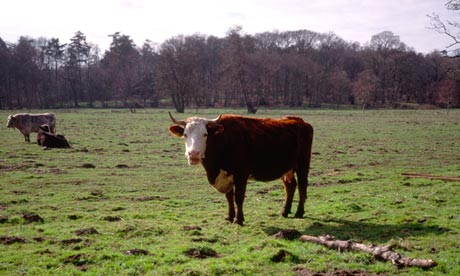
    Cow in field Suffolk England

    The use of energy is woven into the fabric of our society from farming to transport. Photograph: geogphotos / Alamy/Alamy

    Why is Britain not better insulated against volatile energy prices? It’s an issue much bigger than how we heat our homes. More than a decade ago, rising fuel prices triggered protests by truck drivers that revealed the fragile nature of the nation’s infrastructure. The government and the protesters seemed equally stunned at the swiftness with which a blockade of a handful of fuel depots could interrupt so many vital supply lines and services.

    In an atmosphere of near panic, Whitehall met supermarket bosses who were warning that their shops had just three days’ worth of food on the shelves. In 2008, there was a triple whammy of the banking crisis, rocketing oil costs and food prices driven both by the price of oil and crop failures due to extreme weather. It can’t be exaggerated how much the fate of transport, farming, households and industry is sewn into the fabric of the energy system. It carries a kind of DNA for our livelihoods. Everything relies on energy and changes in the industry have impacts that work through the wider economy in complex and interwoven ways. Now the fabric of the system has worn thin and could be ripped apart by the economic and environmental pressures pulling on it.

    Faced with this picture, end-of-pipe policy reforms, such as David Cameron‘s voter-friendly but ill-prepared pledge to force the big utilities to offer customers their cheapest deal, are entirely inadequate. They are no substitute for grabbing the overdue economic opportunity of investing in a modern, resilient, low-carbon energy system.

    The big picture is important. Debate could easily get bogged down in technology versus technology point scoring. And it easy to pick off those who overclaim for certain technologies That would simply continue the locked-in mess we already have. But if we ask questions such as how many jobs can be created, how much carbon can you cut and how much energy do you get back for the amount of energy invested, a mix of renewable technologies will be first in queue

    Since 2008, two different governments have had the chance to create countless jobs, build a better energy system, ensure Britain has warmer homes in winter and tackle climate change by investing at scale in a “green new deal”.

    It is still the case that a tiny fraction of the public resources used to underpin the banking system could revolutionise energy generation and radically reduce consumption and dependence through energy efficiency measures in the nation’s building stock. Why not, for example, inject productive capital in a targeted way into the real economy through green bonds via the Green Investment Bank?

    Last week, the IMF noted that the negative, “reverse leverage” of spending cuts was worse than it thought. To no one’s surprise, George Osborne’s faith in the exotic economic notion of “expansionary fiscal contraction” didn’t work. At the same time, in response to voices from business, the government acknowledges that some kind of industrial policy is now necessary to get the nation back to work and energy is key to this.

    Yet, in spite of high prices and climate change targets, there is still a sense in which energy policy is stuck in the mindset that characterised transport policy back in the 1970s and 1980s – one of predict and provide, rather than simply pushing the utilities to offer lower prices.

    It is oddly appropriate that the banking sector’s former chief lobbyist, Angela Knight, who represented the British Bankers’ Association, is now the voice of the big energy companies at Energy UK. For complacency on energy policy today ranks with the overconfident thinking in 2006 on banking and finance. While all energy issues matter, it is still the case that the greatest overall threat comes from our dependence on oil – high and volatile in price, environmentally destabilising in use and explosive in terms of geopolitics.

    George Osborne gives the oil companies tax breaks and self-serving reports from within the industry tell us that oil is entering a new golden age, exploiting its newer “unconventional” sources such as Alaskan shale oil. Such a case was made recently in a report funded by the oil company BP, written by a former oil company executive Leonardo Maugeri and published by the Harvard Kennedy School. Nothing could be more wrong and ranks in terms of complacency with Gordon Brown’s 2006 Mansion House speech boast on the success of the UK’s “light touch” financial regulation.

    A recent and methodologically more complete analysis than Maugeri’s by the IMF on the future of oil notes that diminishing increases in production can only be bought at a likely doubling of the price of oil over the next decade. This is likely to usher in the phenomenon of what might be called economic peak oil – “a pain barrier” beyond which the level of oil prices has a dramatic effect. The IMF calls it a “shock” that will have “large and persistent” macro-economic effects.

    Then there is the climate question. The UK and the EU are committed to a course of action that will prevent temperatures rising by more than 2°C. And the latest science tells us that to meet that we can only afford to burn around one-fifth of the available, and economically recoverable, fossil fuel reserves between today and 2050.

    There must be a strong sense of deja-vu in households bewildered by how their energy costs float up against a backdrop of rising international fuel prices but don’t seem to float down when they reduce. Several factors explain why. The market is over-concentrated, with too few, too large self-interested energy companies that regulators either cannot or won’t regulate in the public interest. Second, it is precisely because Britain has failed aggressively to diversify its energy supply, so that it remains highly vulnerable to changes in the prices of fossil fuels. Equally, the economic opportunity to invest at scale in energy efficiency and the insulation of Britain’s old, draughty building stock would more than pay for itself bringing jobs, lower fuel bills, warmer homes in winter and boost the overall economy.

    As it is, we suffer an uncompetitive market, with too little diversity of supply and a clean, renewables sector crying out for the investment conditions to expand, which is further hampered by a government too hidebound by economic doctrine to see the one policy – a green new deal – that could solve all these problems. So here is that rare political thing – a win-win situation. It’s the sort of thing that great legacies are made of. With so many other problems around, wouldn’t any politician want to grab it with both hands?

  • Permanent cloud-seeding gets green light

    Permanent cloud-seeding gets green light

    Friday October 19, 2012 – 12:35 EDT

    A plan to boost snowfall in the New South Wales Snowy Mountains has passed through State Parliament.

    The Government announced last month that cloud seeding trials had proved successful and that it would seek to make the process permanent.

    The Member for Monaro, John Barilaro, says the trial resulted in a 14 per-cent increase in snowfall.

    He says the legislation will help safeguard the region’s ski industry

    â??Itâ??s great for tourism and great for the local economy,â?? Mr Barilaro said.

    â??There are other benefits of course such as the alpine environment with the extra snow depth.

    â??That’ll mean when the snow melts, there’ll be additional water for our river systems, for the dams, for the environment.

    â??Thereâ??s also another benefit about green energies through the hydro electric reduction that comes out of the snowy scheme.”

    The State opposition has welcomed the cloud-seeding legislation.

    The former Member for Monaro and Opposition spokesman for Primary Industries, Steve Whan, says the plan to increase snowfalls will boost water flows and snow cover.

    â??I moved a small amendment which the government accepted to ensure that if there are different elements used as the chemicals that they would be properly tested,â?? he said.

    â??Apart from that it went through very smoothly and I’m very pleased that this – initially a Labor initiative – is allowing cloud-seeding.

    â??It has now turned into a permanent feature of the winter in the Snowy Mountains.”

    – ABC

    © ABC 2012

    Friday October 19, 2012 – 12:35 EDT

    A plan to boost snowfall in the New South Wales Snowy Mountains has passed through State Parliament.

    The Government announced last month that cloud seeding trials had proved successful and that it would seek to make the process permanent.

    The Member for Monaro, John Barilaro, says the trial resulted in a 14 per-cent increase in snowfall.

    He says the legislation will help safeguard the region’s ski industry

    â??Itâ??s great for tourism and great for the local economy,â?? Mr Barilaro said.

    â??There are other benefits of course such as the alpine environment with the extra snow depth.

    â??That’ll mean when the snow melts, there’ll be additional water for our river systems, for the dams, for the environment.

    â??Thereâ??s also another benefit about green energies through the hydro electric reduction that comes out of the snowy scheme.”

    The State opposition has welcomed the cloud-seeding legislation.

    The former Member for Monaro and Opposition spokesman for Primary Industries, Steve Whan, says the plan to increase snowfalls will boost water flows and snow cover.

    â??I moved a small amendment which the government accepted to ensure that if there are different elements used as the chemicals that they would be properly tested,â?? he said.

    â??Apart from that it went through very smoothly and I’m very pleased that this – initially a Labor initiative – is allowing cloud-seeding.

    â??It has now turned into a permanent feature of the winter in the Snowy Mountains.”

    – ABC

    © ABC 2012