Category: News

Add your news
You can add news from your networks or groups through the website by becoming an author. Simply register as a member of the Generator, and then email Giovanni asking to become an author. He will then work with you to integrate your content into the site as effectively as possible.
Listen to the Generator News online

 
The Generator news service publishes articles on sustainable development, agriculture and energy as well as observations on current affairs. The news service is used on the weekly radio show, The Generator, as well as by a number of monthly and quarterly magazines. A podcast of the Generator news is also available.
As well as Giovanni’s articles it picks up the most pertinent articles from a range of other news services. You can publish the news feed on your website using RSS, free of charge.
 

  • Environmental science agencies told to help oil firms drilling in polar regions

    Environmental science agencies told to help oil firms drilling in polar regions

    Natural Environment Research Council says science agencies should help ‘de-risk’ investment by UK oil companies

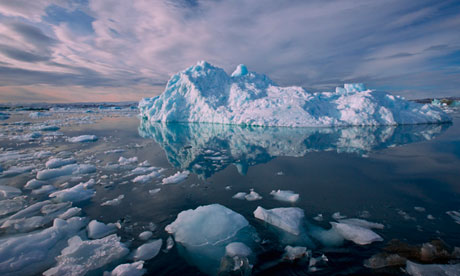
    Arctic iceberg

    A House of Commons committee has called on the government to stop drilling by Shell in the Arctic. Photograph: Jenny E Ross/Corbis

    Some of Britain’s top environmental science agencies are being told to use their skills to help “de-risk” investment for UK oil companies in the polar regions.

    The demands are contained in a consultation document on an already controversial move to merge the British Antarctic Survey (BAS) with the National Oceanographic Centre.

    The “outrageous” new strategy direction is at odds with a House of Commons committee calling on the government to stop drilling by Shell in the Arctic over safety concerns and worries that the sea ice is melting faster than ever, warn critics.

    Some banks have already decided they will not support operations in the far north, but the Natural Environment Research Council (NERC), which is pushing the tie-up between the BAS and the National Oceanographic Centre, says in its consultation brief: “A long-term vision is needed to equip UK business and UK investors with the edge needed for de-risking major investment decisions in hostile, unfamiliar environments.”

    The merged group would seek to exploit opportunities by “strengthening the business and commercial expertise within a reshaped leadership team” while “building and broadening business engagement, particularly in the seeking of regional innovation clusters”, adds the NERC document, which was sent out ahead of a consultation exercise which ended earlier this week.

    NERC is the UK’s main agency for funding and managing research in the environmental sciences and its desire to merge the two highly respected institutions has upset scientists and even some Conservative backbenchers.

    Critics presumed the real reason for the merger was the desire to cut budgets but the consultation documents suggest it could also be partly about turning the combined body into a better support system for the business community.

    Duncan Wingham, the NERC chief executive, said all scientific institutes were now under pressure to ensure they were providing value to the UK economy.

    But he denied that a more business-focused approach meant that the council necessarily supported drilling in the Arctic, although future work would provide relevant information to oil companies.

    “It is not the function of NERC to take a policy decision but to provide scientific information upon which someone else can make such a decision. There is no question there is a perceived tension between the regulatory approach to retaining a clean environment and on the other hand our [the UK’s] need to provide new energy supplies,” he said.

    Greenpeace has recently launched a major campaign to make parts of the far north off limits to Big Oil and fears for the future of Antarctica as drilling picks up in areas such as the South Atlantic.

    “The British Antarctic Survey is a world-renowned institution, and has done great work in helping us to understand and protect one of the most fragile and wonderful regions on the planet,” said the Greenpeace head, John Sauven.

    “So dismantling this leading scientific centre and using the leftovers to do the bidding of oil companies is both wrong and outrageous. BAS must not be used to make it easier to extract resources from the Arctic and Antarctic. These regions need to be protected.”

    NERC argues that putting the Cambridge-based BAS together with the National Oceanographic Centre in Southampton should make it more dynamic and insists budgets have been protected.

    The environmental audit committee of the House of Commons warned in its report that the vulnerable Arctic region was being endangered by a misguided search for hydrocarbons.

    “The shocking speed at which the Arctic sea ice is melting should be a wake-up call to the world that we need to phase out fossil fuels fast,” said the committee chair, Joan Walley MP. “Instead we are witnessing a reckless gold rush in this pristine wilderness as big companies and governments make a grab for the world’s last untapped oil and gas reserves.”

    Since the report was unveiled last month, one of the world’s major oil companies, Total of France, has declared that it will not drill for oil, saying it realised a spill would ruin its corporate reputation.
  • UK tidal power potential estimated at 153GW

    UK tidal power potential estimated at 153GW

    Crown Estate unveils findings of a new study designed to help predict the future growth of the marine energy industry

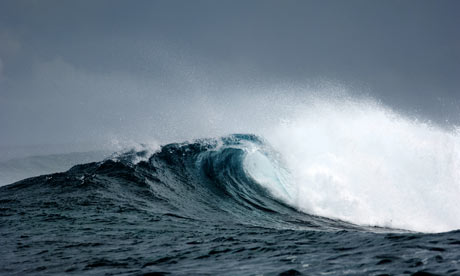
    Wave and tidal energy

    The UK has the largest wave and tidal resource in Europe. Photograph: Matt Oldfield/Getty Images/Dorling Kindersley

    The UK has the potential to install tens of gigawatts (GW) of tidal and wave power capacity, according to a new report from the Crown Estate designed to help predict the future growth of the marine energy industry.

    The Crown Estate today unveiled the findings of a new study into the UK’s potential marine energy resource, which show that there is the potential to harness up to 153GW of tidal power capacity in the UK, using three types of technology.

    The report predicts tidal stream devices could produce 95 terawatt hours (TWh) a year from 32GW of installed capacity, tidal range barrage schemes could supply 96 TWh/year from 45GW of capacity, and tidal range lagoon schemes could produce 25TWh/year, drawing on 14GW of capacity.

    Meanwhile, there is the potential for 27GW of wave energy capacity, which could produce 69TWh of electricity a year.

    However, the report stresses that the figures for different technologies should be read separately and that the results are theoretical.

    Rob Hastings, director of the Crown Estate energy and infrastructure portfolio, said the report was designed as a reference to help inform the development of the industry.

    “While the science of wave and tidal resource assessment is still emerging, and future work will clarify the resources that are practically available, it is clear that wave and tidal energy could contribute substantially to the UK’s electricity needs.,” he said.

    “Improving understanding about the extent and locations of resources will help to accelerate development in a sustainable way.”

    In related news, Secretary of State for Energy and Climate Change Ed Davey, yesterday visited the European Marine Energy Centre (EMEC) in Orkney and hailed the potential growth of wave and tidal power.

    “[EMEC is a huge asset to the development of wave and tidal energy in the UK and has helped secure UK leadership in the global market,” he said.

    “The UK has the largest wave and tidal resource in Europe, which could produce 20 per cent of current UK electricity demand and cut carbon emissions.”

  • Conservationists slam logging of 600-year-old trees

    Conservationists slam logging of 600-year-old trees

    Updated 4 hours 50 minutes ago

    A conservation group is calling on the West Australian Government to change the criteria for classifying old growth forest after it found karri trees up to 600 years old are being wood-chipped.

    The Forest Alliance sent two karri samples – one from a stump in a clear-fell area and the other from a woodchip mill – to a laboratory in New Zealand for testing.

    Alliance spokeswoman Jess Beckerling says the results are astounding.

    “We’ve gone to the best radio carbon dating laboratory that is available and we’ve gone to the head of that school and he’s given us a 91.4 per cent probability that the sample that we sent from the woodchip mill is between 511 and 596 years old,” Ms Beckerling said.

    “These 600 year old trees – ancient trees – are trees that are our natural heritage and for them to be getting torn down predominantly for woodchips, and those woodchips are being exported to Japan and coming back to us as junk mail brochures, is shocking to everybody in Western Australia, I’m sure.”

    Environment Minister Bill Marmion has been contacted for comment.

    Topics:forestry, bunbury-6230, albany-6330, perth-6000

    First posted 5 hours 27 minutes ago

  • In California, a Grand Experiment to Rein in Climate Change

    Alert Name: CLIMATE CHANGE NEWS
    October 14, 2012 Compiled: 12:36 AM

    By FELICITY BARRINGER (NYT)

    On Jan. 1, California will become the first state in the nation to charge industries across the economy for the greenhouse gases they emit.

    By MICHAEL POLLAN (NYT)

    Is this the year that the food movement finally enters politics?

  • Waking the methane monster is madness

    Waking the methane monster is madness (2)
    Record-Searchlight (blog)
    The total amount of methane stored beneath the Arctic is calculated to be greater than the overall quantity of carbon locked up in global coal reserves so there is intense interest in the stability of these deposits as the polar region warms at a
    See all stories on this topic »
    Waking the methane monster is madness (1)
    Record-Searchlight (blog)
    I was about six or seven years old when I saw my first King Kong and Godzilla movies. I even recall one movie where the two giant killers fought each other. In the real world, people have feared monstrous killers like hurricanes, earthquakes, wildfires
    See all stories on this topic »
    Gas producers open up in joining leak study [Houston Chronicle]
    Equities.com
    Oct. 12–After months of insistence from natural gas producers that methane leaks are not a concern, nine energy companies are supporting research that may prove the opposite. The move could signal a more head-on approach from the industry to tackling
    See all stories on this topic »


    Web 1 new result for METHANE
    Doomsday Methane Bubble Rupture?: How the BP Gulf Disaster
    251 million years ago a mammoth undersea methane bubble caused massive explosions, poisoned the atmosphere and destroyed more than 96 percent of all
    www.globalresearch.ca/doomsday-methane-bubble-rupture-ho…


    This once a day Google Alert is brought to you by Google.

    Delete this alert.
    Create another alert.
    Manage your alerts.

  • Scientists uncover mystery of ball lightning

    Scientists uncover mystery of ball lightning

    Updated 8 hours 5 minutes ago

    A team of Australian scientists believe they have uncovered the cause of one of nature’s most bizarre phenomenon – ball lightning.

    Ball lightning is typically the size of a grapefruit and lasts up to 20 seconds.

    “Ball lightning has been reported by hundreds of people, for hundreds of years and it has been a mystery,” said CSIRO scientist John Lowke, lead author of a new study published in the Journal of Geophysical Research Atmospheres.

    Previous theories have suggested microwave radiation, oxidising aerosols, nuclear energy, dark matter, antimatter, and even black holes as possible causes.

    One recent theory suggests burning silicon that has been vaporised by a lightning strike.

    To unravel the mystery Mr Lowke and colleagues at the CSIRO and the Australian National University, turned their attention to reports of ball lightning forming near windows.

    “There are many observations of ball lightning appearing from a glass window either in a house (or) in the cockpit of an aircraft,” he said.

    “If it’s burning silicon, how did it come in?”

    After hitting the ground and lighting the sky, lightning strikes leave behind a trail of charged particles, or ions. In most cases, these positive and negative ions recombine in a split seconds. Any remaining ions travel down to the ground.

    Mr Lowke’s theory is that some of these ions can accumulate on the outside of non-conducting surfaces such as a window.

    “These ions pile up and produce an electrical field which penetrate the glass,” he said.

    Mr Lowke says the field gives free electrons on the inside of the window enough energy to knock off electrons from surrounding air molecules, as well as release photons, creating a glowing ball.

    Recreating it in the lab

    “This is the first paper which gives a mathematical solution explaining the birth or initiation of ball lighting,” Mr Lowke said.

    He says the next step is to use the theory to replicate ball lightning in the laboratory. That may still prove difficult, as it would require equipment capable of producing 100 million volts.

    But a ball lightning event seen by a former US Air Force pilots suggests another approach.

    While flying a C-133A cargo plane from California to Hawaii, former Lieutenant Don Smith saw two horns of Saint Elmo’s fire appear on the plane’s randome (radar cover).

    “It looked as if the airplane now had bull’s horns…they were glowing with the blue of electricity,” he said.

    “[It] was driven by ions from the aircraft radar operated at maximum power during a dense fog.”

    One aspect of ball lightning that the study did not tackle is the loud bang that can occur at the end of a display.

    “About a third of the sightings end in a bang,” Mr Lowke said.

    “[It may be that] the electric field tends to heat the gas and the whole thing takes off getting hotter and hotter and hotter and the bang is caused by the expansion of the gas.”

    But he says that is just speculation and is happy to leave that for another study.

    Topics:weird-and-wonderful, science-and-technology, physics, australia

    First posted Fri Oct 12, 2012 11:33pm AEDT