Category: News

Add your news
You can add news from your networks or groups through the website by becoming an author. Simply register as a member of the Generator, and then email Giovanni asking to become an author. He will then work with you to integrate your content into the site as effectively as possible.
Listen to the Generator News online

 
The Generator news service publishes articles on sustainable development, agriculture and energy as well as observations on current affairs. The news service is used on the weekly radio show, The Generator, as well as by a number of monthly and quarterly magazines. A podcast of the Generator news is also available.
As well as Giovanni’s articles it picks up the most pertinent articles from a range of other news services. You can publish the news feed on your website using RSS, free of charge.
 

  • Premiers cry poor ahead of disability scheme talks

    Premiers cry poor ahead of disability scheme talks

    Updated July 24, 2012 15:50:44

    The Prime Minister’s plan for a national disability insurance scheme (NDIS) co-funded by all states and territories is on shaky ground.

    Queensland Premier Campbell Newman is demanding his state be granted a trial site for the scheme but maintains his government cannot afford to contribute one cent of funding.

    State and territory leaders are arriving in Canberra for a Council of Australian Governments (COAG) meeting tomorrow.

    Julia Gillard says there is an expectation all governments will contribute to the scheme.

    “We’ve got $1 billion on the table to get launch sites in operation, making a difference for people and teaching us lessons about the full rollout of the scheme,” she said.

    “I will be putting the case very strongly to my state and territory colleagues that this is a shared task, a shared responsibility and we’ve got to get it done.”

    While Mr Newman reaffirmed his support for the NDIS, he said the Commonwealth must pay for it.

    He says Queensland risked becoming “the Spain of Australia” if it funded projects like the NDIS.

    “We’re prepared to support the program, we’re prepared to support a trial site in Gympie, but (the Commonwealth) must fund it and that’s what the Productivity Commission said,” Mr Newman said.

    “Frankly, Queenslanders are sick and tired of the Prime Minister putting her hand in their pockets, particularly with things like the carbon tax but also with the mining tax.

    “It’s take take take. What do we want to see? Some give, give, give.

    “If we had the money it might be a different matter, but we do not have the money right now.”

    South Australian Premier Jay Weatherill says Government cannot increase its contribution to the NDIS.

    Mr Weatherill says South Australia has budgeted for a substantial contribution and he is hopeful that will be enough.

    “Part of that was putting our $20 million on the table to fund a trial or launch site for the NDIS and we’re committed to that, but we don’t have the budget capacity to go further at this time.”

    Opposition frontbencher Christopher Pyne says the Federal Government has short-changed people with disabilities by failing to provide adequate funding.

    He says the states should be asking why the Commonwealth has under-funded the scheme.

    “The Productivity Commission talked about several billion dollars being necessary to kick-start the disability insurance scheme,” he said.

    “This Government under-funded that in the budget and discounted what was necessary by $2.9 billion, so the Government’s already let Australians with a disability down.”

    Topics:health, disabilities, federal-government, states-and-territories, australia, qld, sa

    First posted July 24, 2012 14:55:10

  • Margaret River coal mining applications terminated

    Margaret River coal mining applications terminated

    ABCUpdated July 24, 2012, 2:34 pm
    There have been a number of protests held against proposed coal mining.

    ABC © Enlarge photo


    The State Government has moved to prevent future coal mining in the Margaret River area by terminating all pending applications for coal exploration.

    Under the Mining Act, the Minister for Mines and Petroleum has the power to dismiss coal exploration licences that are pending.

    After months of community protests, the Minister Norman Moore has used the provisions in the act to terminate all current applications within a 230-square kilometre radius of Margaret River.

    Earlier this year, the Government rejected a proposal by Vasse Coal to develop a mine in the area after the Environmental Protection Authority advised that coal mining in the area posed an unacceptable environmental risk.

    Mr Moore says his decision is based on unique and local circumstances existing only in the Capes region.

    As of last month, there were 25 applications pending for coal exploration licences.

    Mr Moore has previously resisted calls by the Greens to consider amendments to the Mining Act.

    He said the current legislation gave an adequate level of scrutiny of mining tenement applications.

    The State Government had been considering other ways to protect the Margaret River region, including a review of the Leeuwin-Naturaliste Ridge state planning policy and the South West framework.

  • US drought could trigger repeat of global food crisis, experts warn

    US drought could trigger repeat of global food crisis, experts warn

    As the mid-west bakes and food prices soar, threats of a ripple effect in the Middle East could lead to more uprisings

    Drought Afflicting Much of the US Midwest

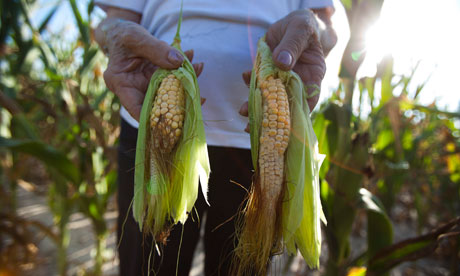
    A corn farmer holds drought-stricken ears of corn plucked from fields outside Eldorado, Illinois. Photograph: Jim Lo Scalzo/EPA

    America’s drought threatens a recurrence of the 2008 global food crisis, when soaring prices set off riots and unrest to parts of Africa, the Middle East, and Latin America, food experts warn.

    Corn prices reached an all-time high on Friday, as the drought expanded across America, trading at $8.24 a bushel on the Chicago exchange. Soybeans were also trading at record levels.

    The US department of agriculture meanwhile predicted there would be less corn coming onto global markets over the next year, because of a sharp drop in US exports.

    America is the world’s largest producer of corn, dominating the market. Corn is also connected to many food items – as feed for dairy cows or for hogs and beef cattle, as a component in processed food – expanding the impact of those price rises.

    That means the effects of the drought will travel far beyond the mid-western states baking under triple-digit temperatures, said Robert Thompson, a food security expert at the Chicago Council of Global Affairs.

    “What happens to the US supply has an immense impact around the world. If the price of corn rises high enough, it also pulls up the price of wheat,” he said.

    He went on: “I think we are in for a very serious situation worldwide.”

    Some analysts are predicting a repetition of the 2008 protests that swept across Africa and the Middle East, including countries like Egypt, because of food prices.

    In 2008, the food shock was due to rising prices for rice and wheat. This time, it’s because of corn and soybean, and there were no signs of shortfall in rice or wheat production.

    But the full effects of the American drought will likely take several months to emerge. Its severity will be determined by a number of additional risk factors.

    Global grain stocks have reached a new low, with the US and other countries running down their reserves. “There are no reserves of these foods in the US anymore,” said Sophia Murphy, a fellow at the Institute for Agriculture and Trade Policy.

    That means there is no room for manoeuvre for countries forced to import grains.

    Thompson also warned that countries could make matters worse by stockpiling – putting further pressure on prices. That was the pattern during the 2008 food crisis when Russia, Ukraine, India and Argentina all cut off grain exports.

    It was unclear as well whether America’s demand for ethanol would further limit the amount of corn on the world market. About 40% of America’s corn is used for ethanol – which helps drive up the price of corn, analysts say. But there were some reports that American ethanol plants were in shutdown across the mid-west, because high corn prices made production uneconomic.

    “What’s difficult is that we see a drought happen today but people really are going to be feeling that six months from now, possibly a year from now,” said Marie Brill, a policy analyst at ActionAid.

    But she said it was already clear the reduced supply and high prices of corn and soybean were set to cause serious hardship – especially among poor people in poor countries which depend on imported grain.

    Countries that are net importers of corn be hit the hardest including South Korea, Japan, Peru, Guatemala, El Salvador and Columbia. Much of East Africa will be badly affected, she said.

    Even those African countries that produce their own corn will suffer because they are locked into the higher global prices, she said. West Africa is already in food crisis. “If supply is as awful as the US government is predicting we’re going to see another round of high prices and another increase in hunger,” Murphy said.

  • Food price crisis feared as erratic weather wreaks havoc on crops

    Food price crisis feared as erratic weather wreaks havoc on crops

    ‘What the world economy really needs right now is a break’, one economist says, but instead it appears headed toward upheaval

    corn drought food

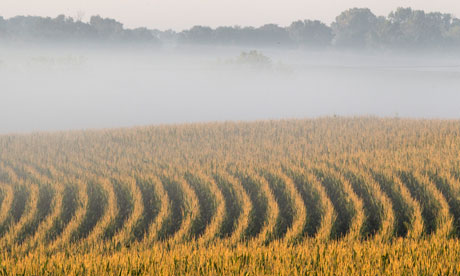
    Fog rolls over a corn field in Nebraska. The drought gripping the United States is the widest since 1956. Photograph: Nati Harnik/AP

    Freak weather in some of the world’s vital food producing regions is ravaging crops and threatening another global food crisis like the price shocks that unleashed social and political unrest in 2008 and 2010.

    As the US suffers the worst drought in more than 50 years, analysts are warning that rising food prices could hit the world’s poorest countries, leading to shortages and social upheaval.

    The situation has sparked comparisons to 2008 when high food prices sparked a wave of riots in 30 countries across the world, from Haiti to Bangladesh.

    Researchers say rising food prices also helped trigger the Arab Spring in 2011.

    Nick Higgins, commodity analyst at Rabobank, said: “Food riots are a real risk at this point. Wheat prices aren’t up at the level they got to in 2008 but they are still very high and that will have an effect on those who are least able to pay higher prices for food.”

    In America’s agricultural heartland, searing heat and sparse rainfall have left farmers helpless as their corn and soy bean crops wither in dry fields. Earlier this month, the US department of agriculture (USDA) slashed forecasts for the corn crop by 12%.

    US agricultural secretary Tom Vilsack said: “I get on my knees every day, and I’m saying an extra prayer right now. If I had a rain prayer or a rain dance I could do, I would do it.”

    As it is, current weather forecasts suggest the drought will continue and experts fear the USDA may have to cut its targets again in August.

    Dan Basse, president of AgResources in Chicago, said the government’s prediction would prove too optimistic if the drought continues. “We’ve been traipsing through the fields of southern Illinois, and it is worse than the government says.”

    The US is crucial to global food markets as the world’s largest exporter of corn, soy beans and wheat, so the impact of the drought will be felt across the globe.

    Corn prices have already shot up 40% since June to hit all-time highs, soy bean prices have jumped 30% to record levels, and wheat has surged 50%.
    It is not just the US. Unseasonal weather, thought to be caused by climate change, is affecting farmers across the world.

    South America has been hit by a drought, which could damage the soy bean harvest, while UK wheat has been damaged by the rain.

    Flash flooding in Russia could also affect the wheat harvest. Traders are particularly concerned about the latter as Russia might limit exports if it is worried about wheat supplies at home, causing further price spikes.
    Shortages have been compounded by huge orders for corn and soy beans to make biofuels, in order to meet quotas in the US and Europe.

    The US agriculture secretary said last week the situation was not bad enough to warrant a reduction in government mandates for biofuels, driving the price of corn even higher. Traders say China also buys and stores grain strategically, putting more pressure on limited supplies.

    Consumers will soon feel the effects of these spikes. A high price of wheat leads directly to higher prices in the shops, as it is the main ingredient for bread and other staples.

    The link is less direct with other crops. Corn and soy beans are used to feed livestock, so rising prices will ultimately cause the price of meat to rise. In the short-term, however, they will have the reverse effect. As the cost of feed rises, farmers kill cattle at lighter weights to avoid having to feed them. That will briefly flood the market with meat, causing prices to fall, but subsequent shortages will causes prices to rise sharply.

    Higgins at Rabobank said meat will then remain expensive for a long time. “It is very hard to rebuild cattle herds and these inflationary effects will be long and lingering.”

    Rising food prices have a disproportionate effect on the poorest people in the world.

    Ruth Kelly, Oxfam’s food policy adviser says people in the Western world spend around 15% of their income on food, but that rises to around 75% in developing countries, so any change in food prices has a dramatic impact on household budgets.

    Kelly says problems will be compounded by the previous two food price spikes in 2008 and 2011:

    “People are already in debt from previous spikes and suffering the consequences. When the first food crisis hit people were forced to sell off their assets, their cattle and jewellery, and take on debt to make ends meet. After multiple crises, people run out of savings and that can be quite disastrous.

    “People can find it much harder to cope when you have multiple shocks like this, without time to recover between them, rather than just a single shock.”

    Economists fear food price inflation will exacerbate the global economic crisis, as it limits the ability of emerging markets to provide any kind of stimulus to drive a recovery. Karen Ward, senior economist at HSBC, said: “What the world economy really needs right now is a break. Any inflationary pressure, particularly that stops the emerging world loosening policy and providing the boost to the global economy, would be a problem.”

  • SAVE OUR BEACHES (0LD BAR BEACH)

    The foreshore is disappearing faster than my wages, with twenty metres of beach front lost in the past decade. This loss of sand has accelerated in the past couple years due to storms and other elements, with more than three metres of beach front lost in the past 18 months. Old Bar is part of an erosion problem facing many parts of the east coast- line from Sydney to Byron Bay. Coastal towns and villages are working with their Councils and other agencies to save these major assets.

    Old Bar is a seaside town near Taree. The town has already witnessed the demolition of two homes located at the southern end of Lewis Street due to erosion. These two homes were the subject of development applications to rebuild on the rear of their blocks; however, the development applications had to be fast tracked by Taree Council. The Council had to act quickly with demolition orders, as the rapid loss saw one of the homes with part of its structure hanging over the cliff face.

    Another two neighbouring homes appear certain to head the same way, as they also succumb to the rapid erosion. The problem is highlighted at the site of one the demolished homes, which was originally on land that was 5,500 square metres in size and purchased in 2001. This property has pristine views of the ocean, and the original residence was located a healthy 27 metres from the back fence. The fast moving erosion problem has seen this distance vanish.

    Lewis Street backs onto the eroding areas, and its residents are expressing major concerns. Experts predict the beach front street may have a five to ten year life span at the current rate of erosion.

    The crisis has caused Old Bar residents to form an action group: Old Bar Beach Sand Replenishment Group Inc. under the Presidency of Elaine Pearce. The group is urging immediate work to protect the foreshore and dunes, to eliminate any further loss.

    The group formed in late 2008 and has completed a Draft Management Plan, met local Federal Member Rob Oakeshott, Greater Taree City Council, and Worley Parsons, the consultants currently compiling a report on behalf of the Council as a Coastal Hazard Assessment.

    “We have covered a lot of ground since we formed,” said Elaine Parsons. “Currently we have compiled our own solution and are applying for a Federal grant to head towards a permanent solution.”

    The action group is advised by Tim Minty, a local geological engineer who has decades of experience studying and stopping erosion problems.

    “If something is not done now, then the beach will be gone, and there is a risk the sea will enter Racecourse Creek,” said Minty. “The shore-line is now eighty metres closer to the dune.”

    Minty has suggested a solution: building a series of groins (breakwalls) at right angles to the shore-line, which will capture the sand and severely slow the erosion. Minty believes that six to eight groins varying in length from 15 to 45 metres are necessary to overcome the problem. He has estimated the cost to be between $800,000-$900,000 – something, he says, that can easily be put into place.

    “The system can be either an Elcorock (bags) or Tetra pods (interlocking) – both will be effective.”

    Resident Mark Searles, a local surveyor, is also a major contributor to the solution plan. He has been surveying the shore-line regularly and reports that his records show five to six metres of the dunes/beach have been lost in the past two years. This is in contrast to the original predications in 1997 that a metre a year would be lost.

    The Greater Taree City Council’s coastal management plan developed in 1992 is now under review, with a new coastal management line to be established citing a minimum distance for future developments.

    With some affected residents heading to the legal fraternity to be advised about their rights of compensation, the disaster appears headed to the courts for a decision. Who is responsible? The Greater Taree City Council, or the various agencies of the Federal or New South Wales Governments for approving these developments?

    Residents claim all three agencies were aware of the future losses of coast-line as far back as the mid 1990s and are legally responsible – a situation denied by all three bodies. Residents whose homes are now under threat are alarmed and annoyed at having to bear the cost of reports, after receiving written advice from Council for engineering assessments on their properties.

    “We believe the Council should cover the costs of any reports,” said Elaine Parsons. “The owners of the affected properties see it as a dismissal of responsibilities by our bureaucrats.”

    It may sound alarmist, but if the current rate of erosion continues, in 20 years we will see the shore-line decrease and the elimination of the caravan park, amenities around the reserve, the entirety of Lewis Street, Pacific Parade, part of Rose Street and the Old Bar Public School.

    So it is evident that a solution has to be found soon.

    In the early 1990s the Council recognised there was a problem and successfully built a groin-wall to divert Racecourse Creek, which at the time was eroding the fore-dunes in front of the reserve and houses located in Lewis Street. The re-direction of the creek created a build-up of sand located in the south. Since that action – which worked well – conditions have changed, with the barrier now only visible during storms.

    During the last decade, the dunes south of Racecourse Creek at Old Bar have slowly changed along with the natural coastal system, which is now a residential area.

    With the coastlines of New South Wales eroding, it is puzzling that there has been an absence of action from governments.

    Our beaches are one of the lifebloods of our tourist industry, and if the erosion is allowed to go unchecked we will have reduced revenue and a reduced amount of venues for our growing population to enjoy.

    Where does the responsibility stop? Does it rest with all levels of government, with owners of the properties or with the developers who applied and were granted permission to erect buildings?

    If history repeats itself, it is evident they will all blame each other; however, the bottom line is that we must protect our coast-line and the current residential areas from further erosion.

    Many blame climate change, while others say the change in currents and weather conditions are related to a cycle that happens every five decades. Whatever the reason, we simply cannot afford to procrastinate.

    Old Bar is not unique with its problems. Laurieton, near Port Macquarie, is becoming a victim, and recently the foreshore of Sydney had a block of units under threat after it lost an enormous amount of sand, exposing the units’ foundations.

    Protection of our coast-line has been on government agendas, as they have instigated many laws to protect marine life, vegetation etc. The Greater Taree City Council is awaiting a report on a Coastal Hazard Assessment from Worley Parsons – a group of consultants engaged to investigate and make recommendations about our coastline.

    Director of Planning and Building, Graham Gardiner says: “We are aware and concerned about the Old Bar situation. Whatever recommendations are made by the Worley Parsons report, Council will discuss what the next steps will be. Council has fast tracked the demolition orders and pending development application/s of the affected residents.

    “In the circumstances we have done everything possible and cannot do any more until we do an analysis of the Worley Parsons report due in March.”

    Residents are working hard to stop the pending demise of their beachside village, and as a tight community they are united to gain a positive outcome.

    The Old Bar village has just experienced its best ever holiday period and is fast becoming a desired venue for holiday makers – a situation that could possibly be lost if the beach front disappears.

  • Sea rise threatens ‘paradise’ Down Under July 20, 2012 by Amy Coopes‏

    • Sea rise threatens ‘paradise’ Down Under July 20, 2012 by Amy Coopes‏

    Here is proof of what is happening  our coastlines


    Sea rise threatens ‘paradise’ Down Under July 20, 2012 by Amy Coopes Enlarge Felt sheeting is seen draped over sandhills to help slow the progress of erosion in front of the Meridien holiday apartments at Old Bar Beach at the coastal town of Old Bar in Australia’s New South Wales state. Old Bar is the most rapidly eroding and at-risk piece of coast in populous New South Wales state, losing an average one metre of seafront every year. When Elaine Pearce left Sydney for the seaside peace of Old Bar 12 years ago she was assured her new house was a solid investment, with a century’s worth of frontage to guard against erosion. Ads by Google USA Property for Aussies – We are the Experts in USA Property Investments for Australians – www.usinvest.com.au/freegift But three neighbours have already lost their homes to the rising ocean and there are scores more at risk as roaring seas batter the idyllic beachside town, ploughing through 40 metres (131 feet) of foredune in just eight years. “I wanted water frontage, and frontage I’m going to get,” Pearce joked. Property values have dived along her once exclusive cul-de-sac, with homes once worth Aus$1.5 or Aus$2 million (US$1.5 or $2 million) now abandoned and offered for Aus$300,000. Weathered ‘For Sale’ signs dot the sidewalk. Insurers will not cover homes for erosion and long-time local resident Allan Willan said the banks were even struggling to sell off the land on which the repossessed homes stand. “They can’t even give it away,” said Willan, who estimates that another five metres of frontage could “easily” be lost in the next storm period. “If it continues at this rate in seven years it’s going to be at the front door.” Old Bar is the most rapidly eroding and at-risk piece of coast in populous New South Wales state, losing an average one metre of seafront every year and far outstripping other areas in terms of property at risk. Enlarge Elaine Pearce from the Old Bar Sand Replenishment Group, seen here outside her home at the coastal town of Old Bar, in Australia’s New South Wales state. Old Bar is the most rapidly eroding and at-risk piece of coast in populous New South Wales state, losing an average one metre of seafront every year and far outstripping other areas in terms of property at risk. Andrew Short, director of Sydney University’s coastal studies unit and a government planning advisor, said the 4,000-person town was among the worst erosion sites in Australia, with huge volumes of sand routinely lost in storms. Currently there are 14 similar “hot-spots” along the densely populated NSW coast — a region home to some 5.8 million Australians — with about 100 properties at risk. But Short said “many hundreds of properties, if not thousands” would be at risk in the next 50-100 years as sea levels rise due to climate change, with planning authorities factoring in a one-metre increase over the next century. Australia’s government estimates that more than Aus$226 billion in commercial, industrial and residential property and road and rail infrastructure is at risk from erosion and inundation by 2100. Ads by Google Get Solar Quotes now – 3 free quotes from Solar Installers 1 Form, 2 Minutes, 3 Solar quotes – Solar-Power-Australia.com.au That forecast includes 274,000 homes. Old Bar has been in the grip of an unprecedented storm period, in terms of both frequency and strength, and University of New South Wales oceanographer Matthew England said it was a trend likely to intensify. “The sea level rise is one thing, but we’re expecting storms to become more intense and storm surges are what really hits these low-lying coastal communities,” said England. England said a one-metre sea level rise could “really quickly” become four metres during a wild weather event, bringing “a really incredible rise of water right up the coast that just can do huge amounts of damage”. Enlarge Coastal erosion is evident in front of the Meridien holiday apartments at Old Bar Beach at the coastal town of Old Bar, in Australia’s New South Wales state. Old Bar is the most rapidly eroding and at-risk piece of coast in the populous state, losing an average one metre of seafront every year and far outstripping other areas in terms of property at risk. Even with a 50 centimetre sea-level rise the government has warned that severe weather events currently considered to be once in a century, such as the major flooding of Brisbane in 2010, would happen several times a year by 2100. More than 30 people died and tens of thousands of homes were swamped in the floods that swept across northern Australia and peaked in Brisbane, forcing Australia’s third-largest city to a standstill for several days. Major cities were expected to face profound challenges from erosion and inundation, with the government warning in a 2009 report that Sydney’s airport faced closure in the next 100 years due to its low-lying waterfront location. Ports, hospitals, power stations and other critical infrastructure were also deemed to be at risk. Short said the issue was at a “tipping point” in the public’s consciousness, with new local planning guidelines showing future sea level projections and requiring people to take measures such as elevating their property. In the longer term, authorities faced a mammoth task to counter the problem, with roads, drainage systems and other infrastructure also needing lifting, he added. England said Australia “certainly stands to be hit with massive increased costs” from sea level rise, with 85 percent of its population living near the coast and insurance and liability battles already looming in the courts. “We’ve seen some properties already across the New South Wales coast being devalued by as much as 50 percent because of their vulnerability to storm surges,” he said. “And we’re only at the very start of the projected trend from human-induced climate change.” The residents of Old Bar are banking on a government lifeline to help them build a Aus$10 million artificial reef offshore to protect their dwindling beach. For her part, Pearce has little doubt about the cause: “Climate change. It’s worldwide, isn’t it.” (c) 2012 AFP

    Read more at: http://phys.org/news/2012-07-sea-threatens-paradise.html#jCp