Category: News

Add your news
You can add news from your networks or groups through the website by becoming an author. Simply register as a member of the Generator, and then email Giovanni asking to become an author. He will then work with you to integrate your content into the site as effectively as possible.
Listen to the Generator News online

 
The Generator news service publishes articles on sustainable development, agriculture and energy as well as observations on current affairs. The news service is used on the weekly radio show, The Generator, as well as by a number of monthly and quarterly magazines. A podcast of the Generator news is also available.
As well as Giovanni’s articles it picks up the most pertinent articles from a range of other news services. You can publish the news feed on your website using RSS, free of charge.
 

  • Forbes magazine ( a bastion of the USA establishment) cheering solar-power. The World’s First Baseload (24/7) Solar Power Plant


    THIS IS A REAL BREAKTHROUGH.


    G’day Neville,
    Forbes magazine ( a bastion of the USA establishment) cheering solar-power.
    The World’s First Baseload (24/7) Solar Power Plant
    http://www.forbes.com/sites/tonyseba/2011/06/21/the-worlds-first-baseload-247-solar-power-plant/


  • cLIMATE CODE RED Record warmth at the top of the Greenland Ice Sheet

    climate code red


    Climate News

    Posted: 21 Jul 2012 07:03 PM PDT

    Week ending 22 July 2012
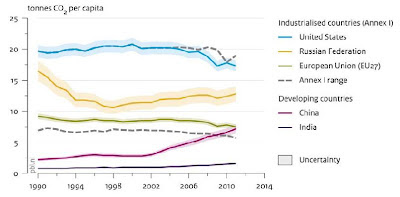
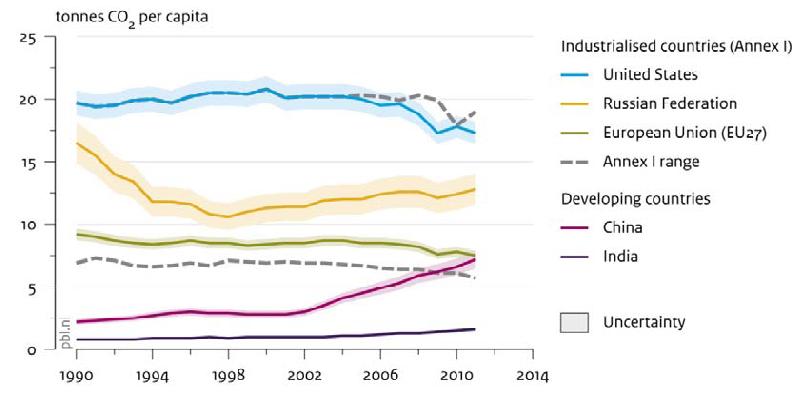
    Carbon dioxide emission per head of population – see first story

    PICKS OF THE WEEK

    As emissions rise, China loses moral high ground
    http://blogs.nature.com/news/2012/07/as-emissions-rise-china-loses-moral-high-ground.html
    Jeff Tollefson, Nature News Blog, 18 July 202
    For years China has dismissed concerns about its rising carbon emissions by pointing out that, on a per-capita basis, Chinese citizens still emit far less than their counterparts in the industrialized world. But now that China’s per-capita emissions are on par with those of the European Union, that argument will be much harder to make.
    AND
    A da xiang in the room: new emissions data
    http://www.crikey.com.au/2012/07/20/theres-a-da-xiang-in-the-room-new-greenhouse-emission-data/
    Cathy Alexander, Crikey, 20 July 2012
    There’s a dà xiàng in the room when it comes to addressing climate change. Dà xiàng is mandarin for elephant. And if you want to get your head around the latest data on greenhouse gas emissions, you’ll need to look to China.

    Remembering Stephen Covey: The Seven Habits Of Highly Effective Climate Hawks
    http://thinkprogress.org/climate/2012/07/17/530861/remembering-stephen-covey-the-seven-habits-of-highly-effective-climate-hawks
    Joe Romm, Climate Progress, July 17, 2012
    Stephen Covey, author of the mega-seller, The 7 Habits of Highly Effective People, died Monday at the age of 79

    Record warmth at the top of the Greenland Ice Sheet
    http://www.wunderground.com/blog/JeffMasters/comment.html?entrynum=2156
    Jeff Masters, Wunderblog, July 18, 2012
    The coldest place in Greenland, and often the entire Northern Hemisphere, is commonly the Summit Station.
    AND
    Climate alarm as iceberg breaks
    http://www.smh.com.au/environment/climate-change/climate-alarm-as-iceberg-breaks-20120718-22aqm.html
    SMH, July 19, 2012
    A chunk of ice twice the size of Manhattan has parted from Greenland’s Petermann glacier, a break researchers at the University of Delaware and Canadian Ice Service attributed to warmer ocean temperatures.

    Sea Level Rise: It Could Be Worse Than We Think
    http://thinkprogress.org/climate/2012/07/21/516171/sea-level-rise-it-could-be-worse-than-we-think/
    Michael D. Lemonick, Climate Central, 21 July 2012
    A new analysis released Thursday in the journal Science implies that the seas could rise dramatically higher over the next few centuries than scientists previously thought — somewhere between 18-to-29 feet above current levels, rather than the 13-to-20 feet they were talking about just a few years ago.
    AND
    Sea rise threatens ‘paradise’ Down Under
    http://phys.org/news/2012-07-sea-threatens-paradise.html
    Amy Coopes, PhysOrg, 20 July 2012
    When Elaine Pearce left Sydney for the seaside peace of Old Bar 12 years ago she was assured her new house was a solid investment, with a century’s worth of frontage to guard against erosion.

    A World Without Coral Reefs
    http://www.nytimes.com/2012/07/14/opinion/a-world-without-coral-reefs.html
    Roger Bradbury, NYT, 13 July 2013
    It’s past time to tell the truth about the state of the world’s coral reefs, the nurseries of tropical coastal fish stocks. They have become zombie ecosystems, neither dead nor truly alive in any functional sense, and on a trajectory to collapse within a human generation.

    Global Warming’s Terrifying New Math
    http://www.rollingstone.com/politics/news/global-warmings-terrifying-new-math-20120719
    Bill McKibben, Rolling Stone, 19 July 2013
    Three simple numbers that add up to global catastrophe – and that make clear who the real enemy is.

    Following the Ice: Is this global warming?
    http://blogs.scientificamerican.com/expeditions/2012/07/20/following-the-ice-is-this-global-warming-continued/
    Ben Linhoff, Scientific American, July 20, 2012
    If this were a movie, the music would be tense and building; this was the moment of truth.

    WEATHER EXTREMES AND GLOBAL WARMING

    Record Heat Wave Pushes U.S. Belief in Climate Change to 70%
    http://www.businessweek.com/news/2012-07-18/record-heat-wave-pushes-u-dot-s-dot-belief-in-climate-change-to-70-percent
    Mark Drajem, Business Week,  July 18, 2012
    A record heat wave, drought and catastrophic wildfires are accomplishing what climate scientists could not: convincing a wide swath of Americans that global temperatures are rising.

    High-Speed Research On Climate Change and Extreme Weather
    http://earthfix.opb.org/energy/article/earthfix-conversations-high-speed-research-on-clim/
    David Steve, earthfix, 16 July 2012
    By the time some of the top climate scientists published their research into the possible links between the 2003 heat wave in France and global warming, five years had passed. That was so last decade.

    Inside Story Americas – Extreme weather: Linked to climate change?
    http://www.youtube.com/watch?v=4rOi4usmINY
    AlJazeeraEnglish, July 11, 2012 
    Extreme weather has gripped much of the United States recently and thousands of heat records have been broken. At least 46 deaths have been linked to the July heat wave alone.

    The Big Heat
    http://www.newyorker.com/talk/comment/2012/07/23/120723taco_talk_kolbert
    Elizabeth Kolbert, New Yorker,  July 23, 2012
    Up until fairly recently, it was possible—which, of course, is not the same as advisable—to see climate change as a phenomenon that was happening somewhere else.

    US forecast: Hot, dry weather to linger into fall
    http://www.google.com/hostednews/ap/article/ALeqM5jtby5WdDdYzawxySOTxPJSK-7RFA
    Seth Borenstein, AP, 20 July 2012
    The unusually hot dry weather that has gripped the nation will not let up its stranglehold over the next few months, federal weather forecasters said Thursday. And that means the heartland’s “flash drought” will linger at least until around Halloween and even spread a bit farther north and east.

    Top Ten Things Climate Change Is Making Worse Right Now
    http://thinkprogress.org/climate/2012/07/21/553551/ten-impacts-climate-change-is-worsening-climate-right-now
    Rebecca Leber and Ellie Sandmeyer, Climate Progress, 21 July 2012
    The onslaught of extreme weather and record temperatures this year have had an impact on people globally, directly through drought and temperature, and more indirectly impacting food prices and public transportation.

    ENERGY AND INNOVATION

    Why the RET is gold medal-winning energy policy
    http://reneweconomy.com.au/2012/why-the-ret-is-gold-medal-winning-energy-policy-34331
    Fiona OHehir, ReNewEconomy, 17 July 2012
    There’s a reason why the Renewable Energy Target is supported by all federal political parties – it works.

    Wind turbine syndrome: a classic ‘communicated’ disease
    http://theconversation.edu.au/wind-turbine-syndrome-a-classic-communicated-disease-8318
    Simon Chapman, the Conversation, 20 July 2012
    At the beginning of this year I started collecting examples of health problems some people were attributing to wind turbine exposure. I had noticed a growing number of such claims on the internet and was curious about how many I could find. Within an hour or two I had found nearly 50 and today the number…

    Dirt cheap solar
    http://www.climatespectator.com.au/commentary/dirt-cheap-solar
    Braden Reddall, reuters, 19 July 2012
    New US import tariffs have prompted China’s solar panel makers to buy more expensive supplies elsewhere and avoid the new duties, but prices for the renewable energy equipment continue to decline.

    Digging deep into Yallourn mine failures
    http://www.climatespectator.com.au/commentary/digging-deep-yallourn-mine-failures
    Mark Wakeham, Climate Spectator, 19 July 2013
    On June 6 the Morwell River collapsed into the Yallourn coal mine in the Latrobe Valley. The river, perhaps Australia’s most poorly treated, has been moved six times to allow access to new coal deposits.

    10 Reasons Clean Coal Is Offensive
    http://www.huffingtonpost.com/kevin-grandia/clean-coal_b_1676906.html
    Kevin Grandia, Huffington ost, 17 July 2013
    According to the Washington Examiner yesterday, President Obama’s campaign team is going “on the offensive to promote [the President’s] support for clean coal”.

    Kooragang coal workers face increased cancer risk: study
    http://www.smh.com.au/environment/kooragang–coal-workers-face-increased-cancer-risk-study-20120720-22e2v.html
    Jacqui Jones, SMH, 20 July 2012
    Past and present employees of Port Waratah Coal Services’ Kooragang Island terminal in the Hunter are up to two to three times more likely to be diagnosed with cancer than the NSW and Australian populations, or colleagues based at Carrington in Newcastle, a study has found.

    Shale gas fever develops as firms see a new gold rush
    http://www.chinadaily.com.cn/cndy/2012-07/16/content_15583281.htm
    Zhou Yan, China Daily, 16 July 2012
    With China having put shale gas near the top of the government agenda for energy security concerns, the scramble for this game-changing unconventional gas is gathering momentum

    Dumping iron at sea can bury carbon for centuries, study shows
    http://www.guardian.co.uk/environment/2012/jul/18/iron-sea-carbon
    Damian Carrington, Guardian, 18 July 2012
    Iron fertilisation creates algae blooms that later die off and sink, taking the absorbed carbon deep towards the ocean floor

    POLITICS AND POLICY

    Apocalypse Soon: Has Civilization Passed the Environmental Point of No Return?
    http://www.scientificamerican.com/article.cfm?id=apocalypse-soon-has-civilization-passed-the-environmental-point-of-no-return
    Madhusree Mukerjee, Scientific American, May 23, 2012 
    Although there is an urban legend that the world will end this year based on a misinterpretation of the Mayan calendar, some researchers think a 40-year-old computer program that predicts a collapse of socioeconomic order and massive drop in human population in this century may be on target

    We’re All Climate-Change Idiots
    http://www.nytimes.com/2012/07/22/opinion/sunday/were-all-climate-change-idiots.html
    Beth Gardiner, NYT Review, 21 July 2012
    Climate change is staring us in the face. The science is clear, and the need to reduce planet-warming emissions has grown urgent. So why, collectively, are we doing so little about it?

    Generation X on climate change: Meh
    http://wwwp.dailyclimate.org/tdc-newsroom/2012/07/gen-x-climate-attitude
    Brett Israel, The DailyClimate, July 17, 2012
    Preoccupied with careers and families, the Gen Xers – adults in their 30s and 40s  – remain almost as indifferent to climate change impacts as their parents

    Time to accept that soon, the climate science deniers will be in charge
    http://www.readfearn.com/2012/07/time-to-accept-that-soon-the-climate-science-deniers-will-be-in-charge/
    Graham Readfearn, 17 July 2012
    Anyone who places any stock in safeguarding the current and future climate (and for that matter anyone who doesn’t) should prepare themselves for the risk that very soon, climate science deniers, contrarians and sceptics will be running the show.

    Global warming will accelerate without climate deal, Merkel warns
    http://www.guardian.co.uk/environment/2012/jul/17/global-warming-accelerate-deal-merkel
    Reuters/Guardian, 17 July 2012
    German chancellor says world leaders must reach a deal on limiting greenhouse gas emissions as soon as possible

    Carbon tax pledge stands, says Pyne
    http://www.theage.com.au/opinion/political-news/carbon-tax-pledge-stands-says-pyne-20120716-225ia.html
    The Age, 16 July 2012
    The Coalition will call a double dissolution election if it wins government but is prevented by the Senate from getting rid of the carbon tax, says frontbencher Christopher Pyne.

    Slow Ride Stories: Kick-starting conversations about climate change
    http://grist.org/climate-energy/slow-ride-stories-kick-starting-conversations-about-climate-change/
    By Aaron Reuben, Grist, 18 July 2012
    The climate is a-changin’ — but the debate on climate change isn’t. As a result, climate scientists and environmental advocates appear to be fighting a losing battle.

    A healthy climate change battle
    http://www.climatespectator.com.au/commentary/healthy-climate-change-battle
    David Shearman, Climate Spectator, 18 July 2012
    The tide of public opinion on climate change may be turning in the US with the impacts of massive drought, floods, storms and bushfires. A recent poll suggests so. Perhaps the removal of climate change from the realm of science to personal experience of physical and economic harm was always necessary for realisation.

    Who Needs Cute? A Jab at Shell and Arctic Drilling
    http://green.blogs.nytimes.com/2012/07/19/who-needs-cute-a-jab-at-shell-and-arctic-drilling/
    Clifford Klauss, NYT blog, 19 July 2012
    Royal Dutch Shell’s plan to drill in the Arctic waters of Alaska next month is no laughing matter for most environmentalists, who still hope the Obama administration will deny the company some permits at the last minute. But Greenpeace is having some fun all the same.

    Melbourne byelection: Kanis rated low on climate issues
    http://www.melbournetimesweekly.com.au/news/local/news/general/melbourne-byelection-kanis-rated-low-on-climate-issues/2625829.aspx
    Chris Hingston, Melbourne Times, 17 July 2012
    A Vote Climate scorecard favouring Green candidates will be delivered to more than 15,000 homes in the Melbourne electorate.
    AND
    Climate the key as inner-city voters turn from Labor
    http://www.theaustralian.com.au/national-affairs/state-politics/climate-the-key-as-inner-city-voters-turn-from-labor/story-e6frgczx-1226426661207
    Adam Shand, The Australian,  July 16, 2012 
    The Australian Labor Party lost Megan O’Connor’s vote in the ruins of Kevin Rudd’s disastrous prime ministership. Like many North Melbourne residents, she switched her allegiance to the Greens candidate Adam Bandt in the 2010 federal election, helping to deliver the party its first seat in House of Representatives.
    AND
    Vote climate assesses candidates
    http://www.stateelection.net.au/

    SCIENCE AND IMPACTS

    Following this summer’s Arctic sea-ice melt…
    http://nsidc.org/arcticseaicenews/

    Record Amount of Arctic Sea Ice Melted in June
    http://www.climatecentral.org/news/record-amount-of-arctic-sea-ice-melted-in-june/
    Andrew Freedman, Climate Central, July 13, 2012
    The Arctic melt season is well underway, and sea ice extent — a key indicator of global warming — declined rapidly during June, setting a record for the largest June sea ice loss in the satellite era. Sea ice extent is currently running just below the level seen at the same time in 2007, the year that set the record for the lowest sea ice minimum in the satellite era.

    Fossils show ocean rise risk
    http://www.sciencealert.com.au/news/20121507-23568.html
    Australian National University, 16 July 2012
    Sea levels may rise much higher than previously thought, according to scientists from The Australian National University, who have used fossil corals to understand how warmer temperatures in the past promoted dramatic melting of polar ice sheets

    Majority of Tibetan Plateau Glaciers Retreating Increasingly Rapidly
    http://www.treehugger.com/climate-change/majority-tibetan-glaciers-retreating-increasingly-rapidly.html
    Mat McDermott, treehugger, July 17, 2012
    The most comprehensive survey of glaciers on the Tibetan plateau and the surrounding areas in the Himalaya, Karakoram, Pamir, and Qilian mountain ranges has found, based on study of satellite data and field  measurements, that the majority of glaciers there are in rapid retreat—and over the past 30 years the rate has been increasing.
    AND
    For Climbers, Risks Now Shift With Every Step
    http://www.nytimes.com/2012/07/15/us/for-climbers-risks-now-shift-with-every-step.html
    AND
    Our frozen assets slowly melting away (New Zealand)
    http://www.stuff.co.nz/the-press/news/7279904/Our-frozen-assets-slowly-melting-away

    The wet side of Greenland
    http://www.climatecodered.org/2012/07/wet-side-of-greenland.html
    Arctic Sea Ice blog, 16 July 2012
    When writing The dark side of Greenland, a recent blog post on decreasing reflectivity of the Greenland ice sheet, with images comparing the southwest of Greenland with satellite images from previous years, I of course realized that when that ice sheet becomes less reflective, it will soak up more solar energy and thus melt faster. But the practical aspect of this theory never really dawned on me, until I saw this video:

    Mexico’s drought turns farms to dust
    http://www.globalpost.com/dispatch/news/regions/americas/mexico/120716/drought-farms-climate-change
    Simeon Tegel, Global Post, July 17, 2012
    ‘Is it really a drought or the region’s new climate?’ asks a climate expert.

    You are subscribed to email updates from climate code red
    To stop receiving these emails, you mayunsubscribe now.
    Email delivery powered by Google
    Google Inc., 20 West Kinzie, Chicago IL USA 60610
    YouTube – Videos from this email
    Click here to Reply or Forward
  • Ten dead as record rain pounds Beijing


    MORE SEVERE GLOBAL WEATHER!!!! CLIMATE CHANGE.????

    Ten dead as record rain pounds BeijinG

    Updated July 22, 2012 17:28:27

    The heaviest rain to hit Beijing in 61 years left at least 10 people dead over the weekend.

    Torrential rain pounded the capital all day on Saturday, flooding roads and forcing the cancellation of more than 200 flights.

    More than 30,000 people were forced to evacuate amid the heavy rain, mostly from Beijing’s outlying mountainous districts..

    State media reports said a policeman who was electrocuted by a fallen power line during a rescue operation was among the fatalities.

    Others were killed in traffic accidents and roof collapses, the Xinhua news agency said.

    One woman died after her car was engulfed with water in an underpass on Beijing’s central second ring road that was flooded with up to three metres of water.

    The death toll could rise with media reports on Sunday saying numerous people, including rescue workers, are missing.

    Meanwhile three bodies were recovered in Beijing’s mountainous Fangshan region where several landslides were reported, China National Radio reported.

    It is not immediately clear if the three are already counted in the death toll.

    Up to 46 centimetres of rain fell in Fangshan district, the most rain to hit the city in a 14-hour period since records began in 1951, Xinhua said.

    The average rainfall throughout the capital during the period amounted to 16.4 centimetres, the report said, citing the Beijing meteorological bureau.

    Numerous roads in the city were submerged under up to a metre of water, while 475 flights were cancelled.

    On Sunday, clean-up crews were out repairing damage from the downpour under largely sunny skies, while workers scrambled to drain up to one million cubic metres of water from the sewer system.

    Despite the damage, the rain was largely welcomed in drought-prone northern China which has suffered from a lack of rain over the last decade.

    More torrential rain was forecast in China’s north-east and south-west.

    AFP

    Topics:weather, storm-event, storm-disaster, china

    First posted July 22, 2012 17:00:35

    Updated July 22, 2012 17:28:27

    The heaviest rain to hit Beijing in 61 years left at least 10 people dead over the weekend.

    Torrential rain pounded the capital all day on Saturday, flooding roads and forcing the cancellation of more than 200 flights.

    More than 30,000 people were forced to evacuate amid the heavy rain, mostly from Beijing’s outlying mountainous districts..

    State media reports said a policeman who was electrocuted by a fallen power line during a rescue operation was among the fatalities.

    Others were killed in traffic accidents and roof collapses, the Xinhua news agency said.

    One woman died after her car was engulfed with water in an underpass on Beijing’s central second ring road that was flooded with up to three metres of water.

    The death toll could rise with media reports on Sunday saying numerous people, including rescue workers, are missing.

    Meanwhile three bodies were recovered in Beijing’s mountainous Fangshan region where several landslides were reported, China National Radio reported.

    It is not immediately clear if the three are already counted in the death toll.

    Up to 46 centimetres of rain fell in Fangshan district, the most rain to hit the city in a 14-hour period since records began in 1951, Xinhua said.

    The average rainfall throughout the capital during the period amounted to 16.4 centimetres, the report said, citing the Beijing meteorological bureau.

    Numerous roads in the city were submerged under up to a metre of water, while 475 flights were cancelled.

    On Sunday, clean-up crews were out repairing damage from the downpour under largely sunny skies, while workers scrambled to drain up to one million cubic metres of water from the sewer system.

    Despite the damage, the rain was largely welcomed in drought-prone northern China which has suffered from a lack of rain over the last decade.

    More torrential rain was forecast in China’s north-east and south-west.

    AFP

    Topics:weather, storm-event, storm-disaster, china

    First posted July 22, 2012 17:00:35


  • Deadly mudslides sweep through Austria

    Deadly mudslides sweep through Austria

    Updated: 13:44, Sunday July 22, 2012

    A person has been killed in Austria after torrential rains triggered mudslides and flooding across several provinces.

    360 people living in an alpine region were forced to evacuate their homes after a torrent of mud swept through.

    The rain has destroyed houses, cut off villages and damaged roads.

    More rain is forecast over the coming days.

    SHARE THIS ARTICLE:

  • Labor claims victory in Melbourne by-election

    GREENS TOP PRIMARY VOTE- LOSE ON PREFERENCES

    Labor claims victory in Melbourne by-election

    ABCJuly 22, 2012, 10:56 am
    Claiming victory: Jennifer Kanis with son Blake and state Labor Leader Daniel Andrews this morning

    ABC © Enlarge photo


    Labor says it has pipped the Greens at the post and claimed victory in the crucial by-election for the state seat of Melbourne.

    With 66 per cent of the vote counted, Labor’s Jennifer Kanis is leading the Greens’ Cathy Oke 51 per cent to 49 on a two-party preferred basis.

    Victorian Labor Leader Daniel Andrews claimed victory at a press conference this morning.

    The Greens had been confident of making history by taking the seat which has been held by Labor for more than a century.

    They will hold a press conference at midday.

    Mr Andrews earlier said the result had sent a clear message to the Baillieu Government, and to the Greens.

    “I think Melbourne voters have endorsed a local member in Jennifer Kanis, who won’t just be a commentator, but someone who can deliver real things for vulnerable Victorians in the seat of Melbourne and well beyond the seat of Melbourne,” he said.

    “Melbourne voters are pretty savvy, they’re pretty edgy.

    “They take their politics pretty easily and they understand how the system works and lets wait and see what the wash-up is.

    “I hardly think bagging voters for marking their ballot papers as they see fit is necessarily something the party of ‘values’, the Greens, ought be doing.”

    But the Greens’ Member for Melbourne in the Federal Parliament, Adam Bandt, that the result is still a victory for his party.

    “The Greens have got the highest vote we’ve ever received in a Victorian election,” he said.

    “We have won the primary vote with a primary somewhere in the order of 38 per cent on current figures and we have seen a huge swing of somewhere between 5 and 6 per cent to the Greens, while Labor’s vote has collapsed.”

    In a surprise twist, the Sex Party’s Fiona Patten has claimed just under 7 per cent of the primary vote, edging out Crikey founder and media commentator Stephen Mayne, who currently sits on 4 per cent.

  • Arctic wilderness faces pollution threats as oil and gas giants target its riches

    Arctic wilderness faces pollution threats as oil and gas giants target its riches

    Melting ice caps, the influx of trawlers and tourists, and Shell’s £4bn investment to drill for fossil fuels in the Chukchi Sea all raise fears

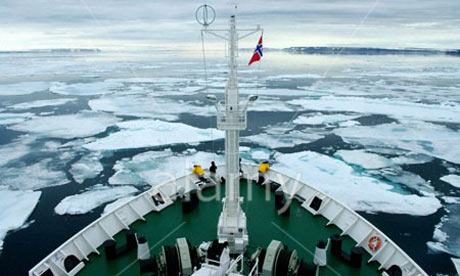
    Sergey Vavilov , a Russian ship, breaking through the ice in Svalbard, Norway

    Sergey Vavilov, a Russian ship, breaking through the ice in Svalbard, Norway. Photograph: Alamy

    It is home to a quarter of the planet’s oil and natural gas reserves, yet humans have hardly touched these resources in the far north. But in a few days that could change dramatically if Shell receives approval to drill for oil in the Arctic.

    The company has invested $4bn to set up exploratory wells in the Chukchi Sea, north of the Bering Straits. Once permission is given by the US Bureau of Safety and Environmental Enforcement, – possibly in a few weeks – exploration will begin using wells in Arctic waters.

    And that will bring trouble. Environment campaigners say that drilling could have terrible effects on the waters and wildlife of the Arctic. “It took a vast effort to clean up the recent spill in the Gulf of Mexico,” said John Sauven of Greenpeace. “There are no such resources to stop a spill in the Chukchi. The consequences could be devastating and very long lasting.”

    But Shell rejects this claim. It has an oil spill response capability that includes barges, helicopters, booms, and other equipment should anything happen, said an official. Drilling will be safe.

    Exploiting the Arctic’s vast oil reserves is just one cause of environmental unease, however. The far north is melting and far faster than predicted. Global temperatures have risen 0.7C since 1951. In Greenland, the average temperature has gone up by 1.5C. Its ice cap is losing an estimated 200bn tonnes a year as a result. And further rises are now deemed inevitable, causing the region’s ice to disappear long before the century’s end.

    As a result, global powers are beginning to look to the region for its gas and oil, minerals, fish, sea routes and tourist potential. All were once hidden by ice. Now it is disappearing, raising lucrative prospects for Arctic nations, in particular Russia, the US, Canada, Norway and Denmark, which controls Greenland. Large-scale investment could bring riches to areas of poverty, it is argued. However, development could destroy pristine ecosystems and the ways of life for people like the Inuit of Greenland and the Sami of Scandinavia.

    One example is highlighted by Professor Callum Roberts, a York University marine biologist. An ice-free Arctic could be stripped of its rich fisheries in a matter of years, he told the Observer. “There are significant fish resources under the Arctic ice at present. But as that ice disappears, that protection will be removed and we can expect a rush from fishing fleets to exploit them. They have already stripped the North Atlantic of its cod, ling and other fish. Now they have their eyes on the Arctic.”

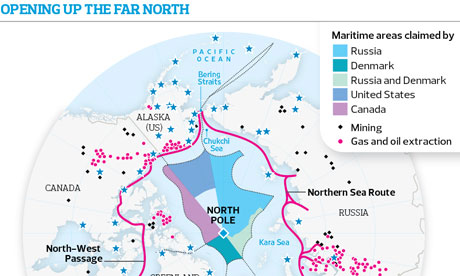
    Arctic graphic detailClick here to view the full graphic. Credit: Giulio Frigieri

    Currently only one fishing ground in the Arctic is protected: the area around the Bering Straits, where the US has imposed a moratorium. Elsewhere there is nothing to stop fleets moving in as ice disappears. “The north polar seas have provided fish like the cod with a last refuge. That may not last much longer.”

    Other changes are less worrying. Two new sea routes have opened up as ice has retreated: the Northwest Passage across the northern edge of Canada and the Northern Sea Route across Russia. The latter is seen as the most promising. Instead of heading south, and through the Suez canal, to get to western Europe, ships from east Asia can sail through the Bering Straits and slip along the coast of Siberia, shaving a third off their journey. In 2010, four ships took this route. Last summer, this increased to 34, with many more expected this year.

    Then there is tourism. Today, thanks to that disappearing ice, you can follow the route John Franklin took on his doomed 1845 expedition. Adventure Canada, a tour company, operates a cruise ship that can carry up to 200 people through the islands of northern Canada where Franklin and his men becoming trapped by ice and turned to cannibalism in a bid to survive. The voyage begins in Greenland and ends in Coppermine, in western Canada, at a price of $7,000-$17,000 a head. in western Canada. “We have had the market much to ourselves since we started in 2008, but this year we have found other companies have started sniffing around,” said Rebecca Burgum of Adventure Canada.

    However, it is the prospect of oil drilling that causes most unease. Apart from Shell, Norway’s Statoil, Chevron, ExxonMobil and Russia’s Rosneft have all revealed plans to drill in the Arctic. Given the huge amounts of hydrocarbons there, this enthusiasm is not surprising. But there are dangers in drilling in the far north that do not exist elsewhere, warns a recent report by the insurance market Lloyds, Arctic Opening: Opportunity and Risk in the High North. In particular, there is the problem of drilling through the permafrost, which could warm up and destabilise a well’s foundations, “potentially leading to a blowout”. In addition, icebreakers are in short supply along with Arctic-class mobile rigs that could drill relief wells in the event of a spill. In short, great caution will be needed before the Arctic oil industry moves from exploration to full production by the end of the decade.

    Changes are certainly coming to the Arctic. Indeed, if some scientists are correct, it could be transformed at a far quicker rate than politicians or businessmen realise. Most follow current advice that it will take at least a couple of decades for the Arctic to lose its ice. However, Peter Wadhams, a professor of ocean physics at the University of Cambridge, believes that it will take much less time. “I think it could be gone in summer in four years. It sounds unlikely but that is what the figures indicate,” he told the Observer from Longyearbyen, in Svalbard, in Norway’s northern Arctic archipelago.

    Wadhams has just completed a study of ice thickness. Using robot submarines, he has made detailed measurements of the depths of ice sheets, while aircraft have surveyed the heights of these floes. “Our work indicates that Arctic ice has lost 70% of its volume in the past 30 years thanks to global warming. If you extrapolate, it means it could disappear completely for a month or two in summer by 2016. Certainly it is going to go sooner rather than later.”

    The consequences for the planet will be grim. Without the white brilliance of the ice to reflect sunlight back into space, it will warm even more. Seabed temperatures will rise and methane deposits will melt, evaporate and bubble into the atmosphere. “We can already see plumes appearing in many areas,” said Wadhams. “Given that methane is a particularly powerful greenhouse gas, that again will accelerate global warming.” Finally, the ice sheets of Greenland, no longer insulated by sea ice around its shores, will melt faster, raising sea levels. “In effect, we are at the mercy of events up here,” said Wadhams.