Category: News

Add your news
You can add news from your networks or groups through the website by becoming an author. Simply register as a member of the Generator, and then email Giovanni asking to become an author. He will then work with you to integrate your content into the site as effectively as possible.
Listen to the Generator News online

 
The Generator news service publishes articles on sustainable development, agriculture and energy as well as observations on current affairs. The news service is used on the weekly radio show, The Generator, as well as by a number of monthly and quarterly magazines. A podcast of the Generator news is also available.
As well as Giovanni’s articles it picks up the most pertinent articles from a range of other news services. You can publish the news feed on your website using RSS, free of charge.
 

  • New buildings on coast should be given time-limited approval of 90 years, planning review finds

    WHAT GENIUS CAME UP WITH 90 YEARS. 50 YEARS WOULD BE MORE REALISTIC ACCORDING TO SCIENTIFIC REPORTS. ?????

    New buildings on coast should be given time-limited approval of 90 years, planning review finds

    0

    NEW buildings on the coast should be given a time-limited approval of up to 90 years in case of sea-level rises caused by climate change, a review of state’s planning laws found.

    The review comes after coastal property owners fought sea-level projections prepared by NSW councils, fearing they would strip billions of dollars from the value of coastal family homes.

    The independent chairmen of the NSW Planning System Review, Tim Moore and Ron Dyer, found granting approvals for a set period of time was the only way to stop the “sterilising” of coastal development.

    They found the caveat of a time limit would stop councils from rejecting all proposals for coastal development.

    It would also save councils from running the long-term risk of breaching a duty of care to future residents.

    “Time-limited development consents of up to 90 years are to be permitted for areas subject to projected sea level rise as a consequence of climate change,” the report recommends.

    “Such time limits are to be reviewed at regular intervals to permit extension (if warranted) in light of emerging scientific knowledge.

    “This will enable planning for climate change in a fashion that would not entirely sterilise the development potential of land.”

    The review found that coastal NSW had to strategically plan for “significant growth pressures”.

    The NSW Coastal Society submission called for time-limited approvals that would allow people to live in “currently zoned residential land in at-risk areas until such time as the actual risk to life and property becomes unsustainable”.

    But Coastal Residents Incorporated secretary Pat Aiken said the review ignored the concerns raised by NSW property owners affected by sea-level rise projections.

    “Timed limited consent is no different to planned retreat, managed retreat or abandonment – at least 60,000 properties in NSW are affected,” he said.

  • IMF downgrades global growth forecast

    IMF downgrades global growth forecast

    Posted July 17, 2012 10:05:03

    The International Monetary Fund has cut its forecast for global growth to the lowest level in three years, saying the world’s economic recovery remains at risk.

    In its World Economic Outlook update, the IMF says it expects the world economy to grow 3.5 per cent this year – that is 0.1 per cent lower than its forecast three months ago.

    It is forecasting global growth of 3.9 per cent next year, down from a previous 4.1 per cent prediction.

    However, the fund has also warned that a sharper downturn is possible if Europe and the United States fail to act.

    The IMF’s Jose Vinal says he is heartened that Europe finally seems determined to overcome its economic crisis.

    “Well I think that the largest single risk to global growth is associated with a potential escalation of the crisis in Europe, in the Euro area,” he warned.

    “And this is why it’s very important that the efforts that had been put in place in recent weeks bear fruit.”

    Among the biggest revisions to the IMF’s forecasts was a 0.6 per cent cut to Britain’s expected growth this year and next, taking the Olympic host down to an expected economic expansion of just 0.2 per cent this year and 1.4 per cent next year.

    Europe is expected to experience a 0.3 per cent economic contraction this year, largely led by recessions in the big economies of Italy and Spain.

    Among the emerging economies, China and India’s growth forecasts have both been revised down, but the two countries are expected to grow at 8 and 6.1 per cent respectively this year.

    The Federal Treasurer Wayne Swan says the International Monetary Fund’s world economic outlook points to ongoing uncertainty in the global economy.

    However, he remains confident China will continue growing strongly, saying the Chinese government engineered the slowdown and would act to stimulate growth if required.

    “There were inflationary pressures in China and also challenges in their property sector,” he commented.

    “They deliberately slowed their economy to deal with those challenges, and also to fundamentally reform their economy and to move to more domestic consumption and away from their export led model.”

    Wayne Swan says the weakness in Europe continues to pose the most significant risk to the global recovery.

    He says it is critical that European leaders implement a range of reforms to boost growth and restore fiscal sustainability.

    Topics:business-economics-and-finance, economic-trends, australia, china, european-union, india, united-kingdom

  • Selling and Tolling Existing Roads Just Stupid LABOR MP KELVIN THOMSON

    Selling and Tolling Existing Roads Just Stupid

    Inbox
    x
    Hamilton, Tim (K. Thomson, MP) Tim.Hamilton@aph.gov.au
    11:46 AM (17 minutes ago)

    to Tim

    Tim Hamilton
    Electorate Officer
    Office of Kelvin Thomson MP
    Member for Wills
    (P) 9350 5777
    (M) 0424 138 558

  • Greenpeace activists shut down 53 Shell petrol stations

    Greenpeace activists shut down 53 Shell petrol stations

    Activists protesting against plans to drill for oil in the Arctic have targeted London and Edinburgh, with nine arrested

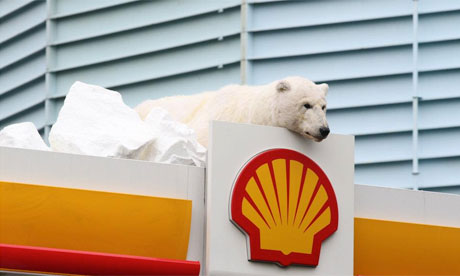
    Polar Bear at a Shell protest

    The Shell protest in Battersea. Activists have shut down 45 Shell petrol stations in London and Edinburgh. Photograph: Greenpeace UK

    Greenpeace activists have shut down 53 Shell petrol stations in Edinburgh and London in a protest against the company’s plans to drill for oil in the Arctic that has seen nine campaigners arrested so far.


    The campaigners are attempting to shut off petrol to London’s 105 Shell stations and Edinburgh’s 14; 50 have been closed in London and three in Edinburgh.


    There have been nine confirmed arrests, four in London and five in Edinburgh. The police in Edinburgh have reportedly parked cars outside all the Shell stations across the capital.


    Protesters have scaled the roof of the Shell stations on Queenstown Road near Battersea Park in London and on Dalry Road in Edinburgh, with police and fire crews attending the scene in Edinburgh.


    Activists arrived at the Battersea Park branch at 6.45 am this morning and used the station’s barriers to close down the forecourt. They have since covered the Shell sign with a Save the Arctic banner and positioned a lifesized polar bear model on the station’s roof.


    The activists are shutting down the stations by using an emergency shut-off switch to stop petrol going to the pumps and then removing a fuse to delay it being switched on again. The organisation has since posted a picture of an activist posting one of the fuses to Shell’s head of Arctic drilling, with the message: “We’re being careful not to destroy property. Even the carefully removed components will go back to Shell.”


    The protest is part of Greenpeace’s Save the Arctic campaign, which is aiming to prevent oil drilling and industrial fishing in the Arctic by having the region recognised as a world park. The organisation understands that Shell is going to begin drilling in the Alaskan Arctic in the coming weeks, with the Russian oil company Gazprom also due to work in the region.


    The campaign group’s website is running a TV talkshow-style live broadcast covering the protest and showing interviews and videos about the Arctic campaign.


    Sara Ayech, a campaigner at the Battersea Park station, said: “Shell is preparing, for the first time, to unleash a drilling fleet of huge vessels upon the fragile and beautiful Arctic, home of the polar bears.


    “It’s time to draw a line in the ice and tell Shell to stop. That’s why today we’re going to shut down all of Shell’s petrol stations in the capital cities of London and Edinburgh. We’ve got dozens of people who will hit over 100 Shell garages throughout the day.”


    A spokesman for Shell said: “Shell recognises that certain organisations are opposed to our exploration programme Offshore Alaska, and we respect the right of individuals and organisations to engage in a free and frank exchange of views about our operations.


    “Recognising the right of individuals to express their point of view, we only ask that they do so with their safety and the safety of others, including the general public and Shell personnel, in mind.


    “Shell has met with numerous organisations and individuals who oppose drilling offshore Alaska. We respect their views and value the dialogue. We have extended this same offer for productive dialogue to Greenpeace.”


    Protests are also taking place across Europe, with activists targetting Shell stations in Denmark and Germany. On Twitter, @greenpeace_ch have posted a picture of a protester dressed as a polar bear picketing the home of Shell chief executive, Peter Voser.


    Last Friday, 13 Greenpeace activists were detained by police in The Hague, Netherlands, after they blocked access to Shell’s headquarters. According to the organisation, 70 activists took part in the demonstration, which involved hanging a Stop Shell, Save The Arctic banner across the building and occupying the office of Voser.

  • America is going broke

    c

    More oil has been found than in Saudi Arabia, the military is stronger than ever before, yet the US is on the verge of collapse – morally, socially and economically. The gun and the dollar’s international primacy may keep it afloat, but the people are suffering.

    In the largest state of California three cities have now filed for bankruptcy.

    With the massive shift of wealth in the USA to the top 2% the bottom 50% now share only 2.5% of total wealth. Those at the bottom 25% (half of the bottom 50%) are basically destitute. More Americans need food-stamps now just to survive than just about any time in our history. Yet, no politician running for President mentions any of this. It is not a “plank” on any major (or minor) political parties agenda. None of the self proclaimed religious candidates mention poverty. It is a dirty big secret that we do not talk about in public. In fact, with nearly all attention being focused on cutting spending, only social spending not military spending, poverty is certainly going to increase even more.

    In 2008, 17 million households, 14.6 percent of households (approximately one in seven), were food insecure, the highest number ever recorded in the United States. Four million households became food insecure in 2008, the largest increase ever recorded (p. iii, USDA 2008). (To get population figures from family size figures, multiply family size numbers by 2.58, the average family size.)

    Researchers find 14.7 million children were poor in 2009, 2.5 million more than in 2000 hild poverty increased in 38 states from 2000 to 2009. As a result, 14.7 million children, 20 percent, were poor in 2009. That represents a 2.5 million increase from 2000, when 17 percent of the nation’s youth lived in low-income homes.

    With the country in its worst economic crisis since the Great Depression, four million additional Americans found themselves in poverty in 2009, with the total reaching 44 million, or one in seven residents. Millions more were surviving only because of expanded unemployment insurance and other assistance.

    Using an expanded definition of poverty, the U.S. Census Bureau said it determined that 15.7 percent of Americans — 47.8 million — live in poverty. Some 43 Million Use Food Stamps More than 14% of the population drew food stamps in November to purchase groceries as high unemployment and muted wage growth crimped budgets.

  • The wet side of Greenland (climate code red

    climate code red


    The wet side of Greenland

    Posted: 15 Jul 2012 05:29 PM PDT

    An Arctic Sea Ice blog crosspost 

    When writing The dark side of Greenland, a recent blog post on decreasing reflectivity of the Greenland ice sheet, with images comparing the southwest of Greenland with satellite images from previous years, I of course realized that when that ice sheet becomes less reflective, it will soak up more solar energy and thus melt faster. But the practical aspect of this theory never really dawned on me, until I saw this video:

    More videos here and here.

    Levels in the Akuliarusiarsuup Kuua river, also knows as the Watson river, have reached such heights that they have smashed the two bridges connecting the north and south of Kangerlussuaq, a small settlement in southwestern Greenland, located at the head of the fjord of the same name. The river water stems from different meltwater outflow streams from Russell Glacier (an outflow of the Greenland ice sheet), and is a tributary of Qinnguata Kuussua, the main river in the Kangerlussuaq area.
    Of course the local media are covering the story. Here are a few excerpts from different news articles from Sermitsiaq (via Google translate): 

    What has happened in detail over the inland ice, which caused this incident, is not yet known, but the fierce heat has certainly been an important player. And unfortunately it looks like the weather will not come to the Greenlanders’ rescue, as the air temperatures over the ice sheet are expected to remain warmer than normal at least the next 7-10 days, writes Greenland meteorological Jesper Eriksen at dmi.dk.

    However, it’s not only hot on the icecap at Kangerlussuaq. Deep in the ice, there are also plus degrees: In Greenland, it has been very hot over the inland ice in comparison to normal conditions. On July 11th at 15 UTC the recorded temperature at the Summit Camp weather station, which is located at the ice cap’s highest altitude (3200 metres), was 2.2 degrees Celsius. That is quite high for this height, particularly in light of the fact that ice has a relatively high albedo.

    Just 2.2 °C doesn’t sound like much (although it looks to be a new record for July), until one realises that we are talking Summit Camp here. At an altitude of 3200 metres. In the middle of the Greenland ice sheet. Nothing but ice.

    3.5 million liters of water pressed through the narrow river every second. It’s almost a doubling of previous records. It’s no wonder that a 20 ton wheel loader was torn away from the bridge in Kangerlussuaq like a toy.

    It’s difficult for me to assess whether this is correct, flipping through thisresearch paper by Van As et al: Large surface meltwater discharge from the Kangerlussuaq sector of the Greenland ice sheet during the record-warm year 2010 explained by detailed energy balance observations. I’ll get back on this.
    Quote from the conclusion:

    Due to the early onset of melt in 2010, combined with lower winter accumulation, surface albedo was below the 2000–2010 average as determined from calibrated MODIS imagery. This in turn allowed for larger solar radiation absorption, resulting in higher melt (melt-albedo feedback). As a consequence, energy available for surface melt was larger in 2010 than in 2009, particularly in the upper ablation zone. While the warmer atmosphere caused increased melt over the entire elevation domain, in the upper ablation zone the relatively low albedo allowed for higher solar radiation absorption rates, contributing over half to the melt increase…
    During warm episodes in the future, a melt response of at least this magnitude should be expected unless large wintertime snowfall offsets the melt-albedo feedback.

    Albedo of the Greenland ice sheet wasn’t so great this year, judging from these regularly updated graphs on the Meltfactor blog, particularly at higher elevations:

    2000-2500m_Greenland_Ice_Sheet_Reflectivity_Byrd_Polar_Research_Center
    There’s another first-hand report near Kangerlussuaq, written by Ben Linhoff on the Scientific American blog:
    From the mess tent, we can hear huge boulders crashing through rapids half a kilometer away. The boulders sometimes sound like approaching footsteps, and as we’re all just a tiny bit nervous about an unlikely polar bear visit, conversations trail off and we listen.

    Ben Linhoff sampling the stream formed by glacial melt early in the season.
    Ben Linhoff sampling the stream formed by glacial melt early in the season.

    In the four years our camp has existed on this glacial river, more meltwater is spilling out from beneath Leverett Glacier than we’ve ever seen. What’s more, the river has spilled over its banks and is now eroding a glacial moraine near our camp that was likely pushed there in the 1700’s during the Little Ice Age. It’s only June and the river is still rising.

    The Greenland Ice Sheet is the most impressive thing I’ve ever seen. Looking out over its seemingly endless expanse of white, grey, and black textures of crevasses and rolling hills of ice, one feels close to infinity. On my last trail run, I ran to the top of a small mountain surrounded on three sides by the ice sheet. I was wearing running shorts and a tee shirt; the sun was bright and a steady wind coming off the ice kept the mosquitoes away. I sat down on a slab of granitic gneiss and leaned against a warm boulder. The wind was surprisingly balmy and humid, despite having just crossed the Greenland Ice Sheet. I closed my eyes and soaked in the heat and sun. Later that day I reformatted my air temperature graphs from last year’s season to fit the data collected this June. The y-axis had to be expanded by 10 degrees.

    I’m sure we’ll hear more about this in the weeks to come.

    You are subscribed to email updates from climate code red
    To stop receiving these emails, you may unsubscribe now.
    Email delivery powered by Google
    Google Inc., 20 West Kinzie, Chicago IL USA 60610
    YouTube – Videos from this email