Category: News

Add your news
You can add news from your networks or groups through the website by becoming an author. Simply register as a member of the Generator, and then email Giovanni asking to become an author. He will then work with you to integrate your content into the site as effectively as possible.
Listen to the Generator News online

 
The Generator news service publishes articles on sustainable development, agriculture and energy as well as observations on current affairs. The news service is used on the weekly radio show, The Generator, as well as by a number of monthly and quarterly magazines. A podcast of the Generator news is also available.
As well as Giovanni’s articles it picks up the most pertinent articles from a range of other news services. You can publish the news feed on your website using RSS, free of charge.
 

  • Scientists warn US east coast over accelerated sea level rise

    Scientists warn US east coast over accelerated sea level rise

    Study says sea level is rising far faster than elsewhere, which could increase incidence of New York flooding

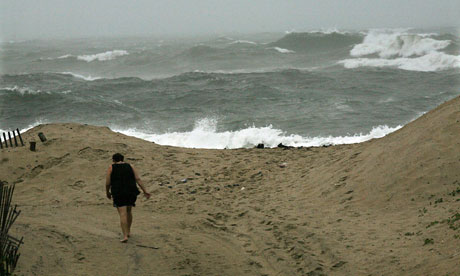
    Damian on sea levels rising on North East Cost of US : Hurricane Irene Crosses North Carolina Coast

    A stormy Atlantic ocean hits the coast of Buxton, North Carolina. Photographer: Ted Richardson/Bloomberg via Getty Images

    Sea level rise is accelerating three to four times faster along the densely populated east coast of the US than other US coasts, scientists have discovered. The zone, dubbed a “hotspot” by the researchers, means the ocean from Boston to New York to North Carolina is set to experience a rise up a third greater than that seen globally.

    Asbury Sallenger, at the US geological survey at St Petersburg, Florida, who led the new study, said: “That makes storm surges that much higher and the reach of the waves that crash onto the coast that much higher. In terms of people and communities preparing for these things, there are extreme regional variations and we need to keep that in mind. We can’t view sea level rise as uniform, like filling up a bath tub. Some places will rise quicker than others and the whole urban corridor of north-east US is one of these places.”

    The hotspot had been predicted by computer modelling, but Sallenger said: “Our paper is the first to focus on using real data to show [the acceleration] is happening now and that we can detect it now.”

    The rapid acceleration, not seen before on the Pacific of Gulf coasts of the US, may be the result of the slowing of the vast currents flowing in the Altantic, said Sallenger. These currents are driven by cold dense water sinking in the Arctic, but the warming of the oceans and the flood of less dense freshwater into the Arctic from Greenland’s melting glaciers means the water sinks less quickly. That means a “slope” from the fastest-moving water in the mid-Atlantic down to the US east coast relaxes, pushing up sea level on the coast.

    “Coastal communities have less time to adapt if sea levels rise faster,” said Stefan Rahmstorf, at the Potsdam Institute Germany, who published a separate study in the same journal, Nature Climate Change, on Sunday. Rahmstorf’s team showed that even relatively mild climate change, limited to 2C, would cause global sea level to rise between 1.5 and 4 metres by the year 2300. If nations acted to cutting carbon emissions so the temperature rise was only 1.5C, the sea level rise would be halved, the researchers found.

    The impacts of the rising seas are potentially devastating, said the scientists. “As an example, 1 metre of sea level rise could raise the frequency of severe flooding for New York City from once per century to once every three years,” said Rahmstorf, adding that low lying countries like Bangladesh are likely to be severely affected. His colleague Michiel Schaeffer, at Wageningen University in the Netherlands, said: “Sea level rise is a hard to quantify, yet a critical risk of climate change. Due to the long time it takes for the world’s ice and water masses to react to global warming, our emissions today determine sea levels for centuries to come.”

    Sallenger’s work on the hotspot off the US east coast showed that the extreme acceleration in sea level rise could add 20-30% to the rise seen globally. “If this turns out to be a metre by 2100, it would add 20 to 30cm.” In May, North Carolina legislators drew ridicule from experts by proposing a law that would require estimates of sea level rise to be based solely on historical data and to rule out any acceleration in future rises.

    Rahmstorf said: “Sallenger’s paper shows that, far from being spared accelerating sea level rise, [the coast here] has been over the past decades a hotspot of accelerating sea level rise.” But he added that the cause of the hotspot was not fully understood, meaning it was uncertain whether the acceleration would continue.

    Sallenger said: “We came up with a very clear correlation between the acceleration of sea level rise and rising temperature in the hotspot area. That suggests to me that as long as temperature continues to rise the hotspot will continue to grow.”

  • Palmer seeks permission to pollute reef: Burke

    Palmer seeks permission to pollute reef: Burke

    ABCJune 25, 2012, 3:02 pm

    The Federal Government says an application to pump waste water from a north Queensland nickel refinery into the Great Barrier Reef is not being taken lightly.

    Mining magnate Clive Palmer is seeking approval from the Great Barrier Reef Marine Park Authority to take contaminated water held in tailing tanks at his nickel refinery plant near Townsville, and release it into nearby Halifax Bay.

    The waste water would only be released if levels in tailing tanks reached crisis levels.

    Federal Environment Minister Tony Burke says Mr Palmer is effectively applying for “permission to pollute” the Great Barrier Reef.

    He says the level of nutrients in the water tanks is significantly below the standard required for the marine park.

    “Nitrogen levels, when they get too high, can in the extreme levels cause fish kills and take away all the oxygen that’s needed for marine life,” he said.

    The Marine Park Authority does have scope to allow the nutrient-rich water into the reef under strict guidelines, if it can be proved the waste water being held is at crisis levels.

    Mr Burke says that should only happen as a last resort.

    “There’s specific equipment that can be used in trying to get the water to a better standard,” he said.

    “There’s issues of raising dam walls but there’s questions whether that can be done in time.

    “And then as I said there’s options if the water were to be released whether it could be done at very, very slow pace, but none of it’s easy.”

    He says it is up to the Marine Park Authority to decide if it is possible to do so and not compromise the reef.

    “Is there such a thing where it could be done more slowly at lower volumes and not have a negative impact on the marine park?” he said.

    “Those sorts of questions are being considered. But if it was all to go out to the marine park in a short amount of time, the potential impact of this could be extraordinary.”

    Libby Connors from the Queensland Greens says the release of nickel tailings would have a detrimental effect on the reef.

    “It’s pretty insulting for him to claim that there is the jobs of 1,000 of his employees at risk because what the people of Queensland have to weigh up is the damage to the reef – which employees 60,000 people through tourism and related industries – versus Mr Palmer’s nickel refinery,” she said.

    The refinery, Queensland Nickel, has declined to comment.

  • Greens want refugee intake to be 25,000

    Greens want refugee intake to be 25,000

    AAPUpdated June 25, 2012, 9:34 am

    The Australian Greens want the country to almost double its annual humanitarian refugee intake.

    Greens senator Sarah Hanson-Young said the minor party does not want people to make the dangerous sea journey to Australia.

    Instead she wants Australia to increase its refugee intake from about 14,000 now to 25,000.

    “That would go a long way to dealing with the numbers of people (coming) currently,” she told ABC Radio on Monday.

    The senator rejected suggestions onshore processing was an incentive for asylum seekers to come by boat.

    “In 2011/12, we have seen an increase of 20 per cent of asylum seekers around the world,” she said.

    “Of course that has meant an increase, in our region, in the number of people seeking asylum.”

    Both Labor and the coalition are under pressure to reach a compromise on asylum-seeker policy in the wake of a fatal boat capsize late last week in which more than 90 people are feared dead.

    The Greens have rejected suggestions they are responsible for large numbers of asylum seekers coming to Australia because of their onshore processing policy.

    Liberal MP Judi Moylan says both the government’s people swap deal with Malaysia and the coalition’s preferred Nauru option are crude policies.

    “If we think that by shoving people out of sight, out of mind into Malaysia … we’re mistaken,” she told ABC Radio.

    The MP said she had not changed her mind on the Nauru solution, noting her consistent opposition since it was introduced by the Howard government.

    Ms Moylan says a regional solution is needed to address the issue including Australia working closely with Indonesian authorities to stop the people-smuggling trade at its source.

    “But that in itself alone won’t stop it,” she said.

    Better processing of refugee applications in countries where they are now is also required.

    Ms Moylan said while she agreed with Opposition Leader Tony Abbott’s view that it was the government’s problem to solve, there was no reason why both parties could not sit around the table and come up with a solution.

    Opposition immigration spokesman Scott Morrison said it was “outrageous” the government was suggesting the coalition was holding back support for the Malaysia swap deal because it wanted the boats to keep coming.

    “The government is putting forward a bad deal,” he told ABC Radio, suggesting it was seeking to abolish all human rights protections for offshore processing in the Migration Act.

    “The government needs to focus on what is poor legislation and that doesn’t seem to be their focus.”

    “The government won’t change a letter of it.”

    The legislation is stalled in the lower house as the government struggles to garner sufficient support.

    Greens leader Christine Milne said her party won’t support any “dog-eat-dog” solution on asylum seekers.

    “There’s no way the Australian Greens will support abandoning international law,” she told Sky News.

    Liberal Senate leader Eric Abetz rejected suggestions the public debate over asylum seeker policy had become “grubby”.

    “It is not the Australian people’s fault … that these people drowned at sea,” he told reporters in Canberra.

    “The question is, how do you put these criminals out of business?”

    Labor senator Doug Cameron says he fears the moral aspect of the debate has been lost.

    “The issue for the Labor party is to develop a policy that is a humane policy that can assure we have a regional response to this,” he said.

    The Left faction senator said he supported the Malaysia deal on the condition it guaranteed people would be treated reasonably, and not returned to their country of origin if they feared for their life.

    AAPUpdated June 25, 2012, 9:34 am

    The Australian Greens want the country to almost double its annual humanitarian refugee intake.

    Greens senator Sarah Hanson-Young said the minor party does not want people to make the dangerous sea journey to Australia.

    Instead she wants Australia to increase its refugee intake from about 14,000 now to 25,000.

    “That would go a long way to dealing with the numbers of people (coming) currently,” she told ABC Radio on Monday.

    The senator rejected suggestions onshore processing was an incentive for asylum seekers to come by boat.

    “In 2011/12, we have seen an increase of 20 per cent of asylum seekers around the world,” she said.

    “Of course that has meant an increase, in our region, in the number of people seeking asylum.”

    Both Labor and the coalition are under pressure to reach a compromise on asylum-seeker policy in the wake of a fatal boat capsize late last week in which more than 90 people are feared dead.

    The Greens have rejected suggestions they are responsible for large numbers of asylum seekers coming to Australia because of their onshore processing policy.

    Liberal MP Judi Moylan says both the government’s people swap deal with Malaysia and the coalition’s preferred Nauru option are crude policies.

    “If we think that by shoving people out of sight, out of mind into Malaysia … we’re mistaken,” she told ABC Radio.

    The MP said she had not changed her mind on the Nauru solution, noting her consistent opposition since it was introduced by the Howard government.

    Ms Moylan says a regional solution is needed to address the issue including Australia working closely with Indonesian authorities to stop the people-smuggling trade at its source.

    “But that in itself alone won’t stop it,” she said.

    Better processing of refugee applications in countries where they are now is also required.

    Ms Moylan said while she agreed with Opposition Leader Tony Abbott’s view that it was the government’s problem to solve, there was no reason why both parties could not sit around the table and come up with a solution.

    Opposition immigration spokesman Scott Morrison said it was “outrageous” the government was suggesting the coalition was holding back support for the Malaysia swap deal because it wanted the boats to keep coming.

    “The government is putting forward a bad deal,” he told ABC Radio, suggesting it was seeking to abolish all human rights protections for offshore processing in the Migration Act.

    “The government needs to focus on what is poor legislation and that doesn’t seem to be their focus.”

    “The government won’t change a letter of it.”

    The legislation is stalled in the lower house as the government struggles to garner sufficient support.

    Greens leader Christine Milne said her party won’t support any “dog-eat-dog” solution on asylum seekers.

    “There’s no way the Australian Greens will support abandoning international law,” she told Sky News.

    Liberal Senate leader Eric Abetz rejected suggestions the public debate over asylum seeker policy had become “grubby”.

    “It is not the Australian people’s fault … that these people drowned at sea,” he told reporters in Canberra.

    “The question is, how do you put these criminals out of business?”

    Labor senator Doug Cameron says he fears the moral aspect of the debate has been lost.

    “The issue for the Labor party is to develop a policy that is a humane policy that can assure we have a regional response to this,” he said.

    The Left faction senator said he supported the Malaysia deal on the condition it guaranteed people would be treated reasonably, and not returned to their country of origin if they feared for their life.

  • Remote Siberian lake holds clues to Arctic — and Antarctic — climate change

    Remote Siberian lake holds clues to Arctic — and Antarctic — climate change

    Posted: 21 Jun 2012 04:59 PM PDT

    Intense warm climate intervals — warmer than scientists thought possible — have occurred in the Arctic over the past 2.8 million years. That result comes from the first analyses of the longest sediment cores ever retrieved on land. They were obtained from beneath remote, ice-covered Lake El’gygytgyn in the northeastern Russian Arctic.

  • Northern England flooded: Hundreds of US homes burn in wildfires

    MEANWHILE HUNDREDS OF HOMES HAVE BEEN DESTROYED BY WILDFIRES IN THE US.

    Northern England flooded

    Updated: 08:09, Sunday June 24, 2012

    About 140 flood warnings and alerts have been issued in northern England, parts of which have been hit by as much rain in one day as is normal in a month.

    In some areas, more than a month’s worth of rain fell in just 24 hours.

    The deluges battered revellers at the Isle of Wight Festival and brought havoc to Cumbria which buckled under the worst of the wet weather on Saturday.

    Up to 100mm of rain hit the region overnight, while southwest Scotland, Northern Ireland and Lancashire also experienced unusually heavy rainfall.

    The UK’s Environment Agency has issued around 140 flood warnings and alerts in northern regions which are also subject to severe weather warnings.

  • Gulf of Mexico ‘dead zone’ predictions feature uncertainty

    Gulf of Mexico ‘dead zone’ predictions feature uncertainty

    Posted: 21 Jun 2012 08:34 AM PDT

    Scientists are predicting that this year’s Gulf of Mexico hypoxic zone could range from a low of approximately 1,197 square miles to as much as 6,213 square miles. The wide range is the result of using two different forecast models. The forecast is based on Mississippi River nutrient inputs compiled annually by the US Geological Survey.
    You are subscribed to email updates from ScienceDaily: Oceanography News
    To stop receiving these emails, you may unsubscribe now.
    Email delivery powered by Goog