Category: News

Add your news
You can add news from your networks or groups through the website by becoming an author. Simply register as a member of the Generator, and then email Giovanni asking to become an author. He will then work with you to integrate your content into the site as effectively as possible.
Listen to the Generator News online

 
The Generator news service publishes articles on sustainable development, agriculture and energy as well as observations on current affairs. The news service is used on the weekly radio show, The Generator, as well as by a number of monthly and quarterly magazines. A podcast of the Generator news is also available.
As well as Giovanni’s articles it picks up the most pertinent articles from a range of other news services. You can publish the news feed on your website using RSS, free of charge.
 

  • The clean-up begins on China’s dirty secret – soil pollution

    The clean-up begins on China’s dirty secret – soil pollution

    The Bonn Challenge is a global land restoration initiative that aims to tackle the issue that is increasingly concerning scientists

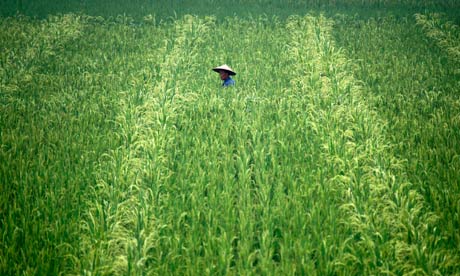
    A Chinese farmer walks through his crop on the outskirts of Leshan, Sichuan

    A farmer in Sichuan, China – one of the regions suffering most from soil contamination. Photograph: David Gray/Reuters

    Nowhere is the global push to restore degraded land likely to be more important, complex and expensive than in China, where vast swaths of the soil are contaminated by arsenic and heavy metals from mines and factories.

    Scientists told the Guardian that this is likely to prove a bigger long-term problem than air and water pollution, with potentially dire consequences for food production and human health.

    Zhou Jianmin, director of the China Soil Association, estimated that one-tenth of China’s farmland was affected. “The country, the government and the public should realise how serious the soil pollution is,” he said. “More areas are being affected, the degree of contamination is intensifying and the range of toxins is increasing.”

    Other estimates of soil pollution range as high as 40%, but an official risk assessment is unlikely to be made public for several years.

    The government has spent six years on a soil survey involving 30,000 people, but the academics leading the project said they have been forbidden from releasing preliminary findings.

    Chen Tongbin of the Chinese Academy of Sciences said the worst contamination was in Yunnan, Sichuan, Hunan, Anhui and Guizhou, but there were also parts of Beijing where the soil is tainted.

    Unlike in Europe where persistent organic pollutants are the main concern, Chen said China’s worst soil contamination is from arsenic, which is released during the mining of copper, gold and other minerals. Roughly 70% of the world’s arsenic is found in China – and it is increasingly coming to the surface with horrendous consequences.

    “When pollution spills cause massive die-offs of fish, the media usually blames cadmium, but that’s wrong. Arsenic is responsible. This is the most dangerous chemical,” he said. The country’s 280,000 mines are most responsible, according to Chen.

    But the land – and food chain – are also threatened by lead and heavy metals from factories and overuse of pesticides and fertilisers by farmers. The risks are only slowly becoming well known. The Economic Information Daily reported this week that pollution ruins almost 12bn kilograms of food production each year, causing economic losses of 20 billion yuan.

    Chen estimated that “no more than 20% of China’s soil is seriously polluted”, but he warned that the problem was likely to grow because 80% of the pollutants in the air and water ended up in the earth.

    “The biggest environmental challenge that China faces today is water pollution, but there are efforts underway to control that. In the future, the focus must be on soil pollution because that is much harder to deal with. Soil remediation is an immense and growing challenge.”

    Calls for a clean-up of the land are slowly gaining prominence. Huang Hongxiang, a researcher from the Institute of Agricultural Resources and Regional Planning, warned earlier this year that China needed to widen its focus from production volumes.

    “If we don’t improve the quality of farmland, but only depend on increasing investment and improving technology, then – regardless of whatever super rice, super wheat and other super quality crops we come up with – it will be difficult to guarantee the sustainable development of our nation’s agriculture.”

  • Laying down the law on nanotechnology

    Laying down the law on nanotechnology

    Regulating nanotechnology is fraught with difficulties. Current environmental law simply doesn’t apply on the nano-scale

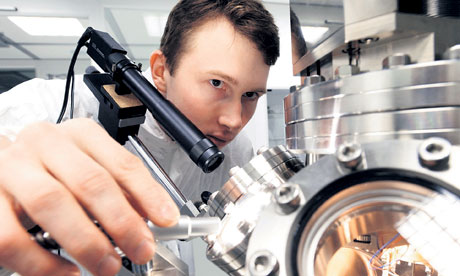
    Scientist at work in a nanotechnology laboratory

    A huge number of labs are now working with the nanotechnology ‘toolbox’ to develop new products and applications. Photograph: Science photo library

    The first asbestos mine opened in Quebec in 1874. By the 1950s, asbestos was being widely used as an insulator, a flame retardant and as ‘flocking’ (fake snow). Today, we know that asbestos fibres can burrow into the lungs and cause asbestosis, lung cancer and mesothelioma.

    While concerns about the safety of asbestos were raised as early as 1900, it was not until 1999 that the use of asbestos was fully banned in the UK. Every year, 4,000 people die in the UK from asbestos related diseases. This trend is likely to continue till at least the 2050s. As a society, we have learned a late lesson in the control of asbestos, despite early warnings as to possible side effects.

    New and emerging technologies (GM, synthetic biology and nanotechnology, for instance) offer the potential for a cleaner, healthier and better future. However, the risks from these technologies are not fully known. Will a future generation look back on our current wave of scientific innovation much as we regard the introduction of asbestos to the market?

    One nanometre is one billionth of a metre. To put this into perspective, a single strand of human hair is around 80,000 nanometres in width. In the time it takes you to say the word ‘nanotechnology’, your hair will have grown by 10 nanometres. That mankind can engineer and create on this scale seems somewhat unbelievable, but the promises of nanotechnology are legion. In the medical arena, nano-robots could be programmed to repair damaged cells and mimic our own natural healing processes (just like ‘Innerspace’, only minus Meg Ryan). In the context of climate change, the effects of man on the environment could be halted and reversed through nano filters designed to remove carbon dioxide from the atmosphere. It is estimated that there are over 1,000 nanotechnology enhanced products already on the market: everything from tennis balls to sunscreen and odour-free socks.

    As chemical substances get smaller, their behaviours and characteristics may change, with certain nanomaterials possessing properties not found in their bulk counterparts. The nano form of gold may be red or blue in colour; platinum is inert in its bulk form, but a catalyst at the nano-scale. While nanotechnology may hold the key to a cleaner, healthier, odour-free future, the novel properties that nanomaterials can possess give rise to new forms of risk. Potential risks from nano are both unknown and unknowable. Unknown because little risk assessment has take place to date (less than 2% of the money being poured into nano research is devoted to risk analysis) and unknowable because scientific expertise in chemical assessment has not kept pace with scientific expertise in nanotechnology. Put simply, we are not currently capable of testing all of the inherent properties of all nanomaterials.

    Regulatory efforts to control the use of nanotechnology at UK and EU levels have been limited. The previous government had a UK Nanotechnologies Strategy which prioritised the commercial development and application of nanotechnology. In the context of risk and regulation, their view was that existing laws would be sufficient. However, as demonstrated by the Cardiff-based BRASS Centre in great detail in 2008, while existing laws can and do regulate nanotechnology, they do so imperfectly. Put simply, there are gaps in existing regulatory frameworks which mean that nanotechnology is not wholly covered.

    Some of these gaps exist because of a misplaced notion that nanomaterials are equivalent to their bulk counterparts. For example, the Environmental Permitting Regulations (England and Wales) 2010 make it an offence to release hazardous chemicals into groundwater without a permit. Hazardous substances are those which are toxic, persistent and liable to bio-accumulate, and other substances which give rise to an equivalent level of concern. This leaves us in a chicken and egg situation. For a substance to be characterised as hazardous, there must be evidence that that substance poses unacceptable risks. However, we still await testing methodologies sufficient to adequately evaluate the potential risks of nanosubstances (as well as internationally accepted standards by which testing may occur). On a practical level, this likely means that most nanosubstances will not be classified as hazardous and so can be discharged into groundwater or disposed of as non-hazardous waste.

    Other gaps in existing regulatory regimes in the UK exist because legislation is based on thresholds or concentrations. Health and safety regulation is partly premised on occupational exposure levels; environmental permits are granted on the basis of emission levels; chemicals fall within or without rigorous testing requirements based on tonnage production thresholds. Given that nanotechnology is the technology of the very, very tiny, using thresholds in regulation means that much nanotechnology will fall below the relevant tonnage or concentration criteria and so fail to be fully regulated.

    The approach of the EU has been little better. The 2008 EU Regulation on Food Additives contains the first targeted legislative provision on nanomaterials. The effect of this provision is that food additives which are produced using “nanotechnology” or which have undergone a “change in particle size” need to undergo a safety evaluation. As a regulatory technique, there is nothing novel about pre-market approvals. However, there is no definition of “nanotechnology” in this Regulation and no guidance on what a “change in particle size” might mean — is this only a change to a particle size under 100nm, or something else entirely?

    We also come back (once again) to our scientific inability to assess the full suite of inherent nanochemical properties. Given these issues, it questionable whether this provision will have any practical impact whatsoever.

    As from 2013, the EU Cosmetics Regulation requires that any cosmetic which contains nanomaterials (and here there is a definition) must be labelled. This obligation is limited: a requirement to put “(nano)” next to the relevant ingredient on the ingredients list. There is no need to label the product with “contains nano” or any requirement to put a notice on the relevant packaging. Regulatory theory says that labels allow consumers free choice to choose between alternate products on the market. But, as my colleague Elen Stokes has observed, nano labels have been rejected in other jurisdictions (including the US) for being ineffective.

    Simply ask yourself this question: when was the last time you ever picked up your body wash in the shower and scrutinised the ingredients list? And, even if you did notice “(nano)” next to an ingredient, what would that mean to you: a warning as to possible side effects? A selling point as to unique properties? Something else?

    Regulating nanotechnology is difficult because of the myriad ways in which nanomaterials can be used and due to their global impact – the fact that product X made in the US can travel via Europe and be sold in China. There is also a real issue in knowing when and how to regulate: with hindsight it may be too little, too late or too much, too soon. A balance needs to be struck between the benefits from nano (societal, environmental and economic) and the potential risks. How we as a society deal with uncertainty, how we respond to scientific innovation and how we frame the debate on risk and regulation – these are all so very important. As we saw with asbestos, it may be the difference between life and death. Sometimes, size really does matter.

    A fuller version of this paper was given at the Hay Festival on June 3 2012

  • El Nino tipped to form in spring

    El Nino tipped to form in spring

    By Will Ockenden, ABCJune 12, 2012, 5:41 pm

    Australia looks set to experience the same weather conditions this year that were responsible for the nation’s last devastating drought in the summer of 2009.

    The weather bureau say all of its models are pointing to an El Nino weather system forming in October.

    Typically, El Nino weather events mean drier conditions across Australia, and despite the plentiful rain along the east coast over the past week, there are still large areas of the country that still have below-average rainfall.

    Earlier this year, leading to wetter weather.

    El Nino occurs when the central and eastern Pacific warms up, causing major shifts in weather patterns.

    Karl Braganza, the manager of climate modelling at the Bureau of Meteorology, says it is too early to tell how severely the nation will be affected.

    He also says it would be difficult to predict whether El Nino will bring upon a drought.

    “That would be very difficult to say. Certainly if the El Nino gets locked in, you’d expect drier conditions over Australia this coming summer,” he said.

    “Most of those models are saying probably neutral to El Nino conditions over the next few months but then out into spring a lot of the models are going for an El Nino event.

    “The drying over the south-west and the south-east has been occurring for a lot longer and it’s not necessarily related to El Nino events.”

    Victoria Department of Primary Industries climate specialist Graeme Anderson says it is too early to predict what the effects will be for farmers.

    “It is a bit like footy tipping and at the moment I think if most of the models are tending towards an El Nino then that’s just like with a footy tipping side,” he said.

    “If most are barracking or tipping one particular side it’s going to win. But as we know, it doesn’t always guarantee that result. And certainly what we’ve seen with farmers when we deal within certain Victorian districts that El Nino can mean, historically has meant drier springs.

    “But there’s also been the seasons where, while we’ve had an El Nino, a couple of good individual rain bearing systems have come in and delivered a good spring.

    “So it doesn’t guarantee a dry spring but it does set up the odds for drier than average conditions.”

  • Humans are primary cause of global ocean warming over past 50 years

    ScienceDaily: Oceanography News


    Humans are primary cause of global ocean warming over past 50 years

    Posted: 11 Jun 2012 12:32 PM PDT

    Scientists have shown that the observed ocean warming over the last 50 years is consistent with climate models only if the models include the impacts of observed increases in greenhouse gas during the 20th century.
    You are subscribed to email updates from ScienceDaily: Oceanography News
    To stop receiving these emails, you may unsubscribe now.
    Email delivery powered by Google
    Google Inc., 20 West Kinzie, Chicago IL USA 60610
  • Global warming threat seen in fertile soil of northeastern U.S. forests

    ScienceDaily: Earth Science News


    Global warming threat seen in fertile soil of northeastern U.S. forests

    Posted: 11 Jun 2012 04:37 PM PDT

    Vast stores of carbon in U.S. forest soils could be released by rising global temperatures, according to a new study. Scientists found that heating soil in Wisconsin and North Carolina woodlands by 10 and 20 degrees increased the release of carbon dioxide by up to eight times. They showed for the first time that most carbon in topsoil is vulnerable to this warming effect.

    New evidence supports theory of extraterrestrial impact

    Posted: 11 Jun 2012 04:36 PM PDT

    Scientists have discovered melt-glass material in a thin layer of sedimentary rock in Pennsylvania, South Carolina, and Syria. According to the researchers, the material — which dates back nearly 13,000 years — was formed at temperatures of 1,700 to 2,200 degrees Celsius (3,100 to 3,600 degrees Fahrenheit), and is the result of a cosmic body impacting Earth.

    Humans are primary cause of global ocean warming over past 50 years

    Posted: 11 Jun 2012 12:32 PM PDT

    Scientists have shown that the observed ocean warming over the last 50 years is consistent with climate models only if the models include the impacts of observed increases in greenhouse gas during the 20th century.

    More people, more environmental stress

    Posted: 11 Jun 2012 09:25 AM PDT

    Scientists have taken a critical look at the various factors that have long been prime climate-change suspects. One in particular: the role of population growth.
    You are subscribed to email updates from ScienceDaily: Earth Science News
    To stop receiving these emails, you may unsubscribe now.
    Email delivery powered by Google
    Google Inc., 20 West Kinzie, Chicago IL USA 60610
  • Canberra Airport and VFT to Sydney

    Dont hold your breath with this one. O’Farrell’s glasses are faulty.

    Canberra Airport and VFT to Sydney

    Canberra airport pledges high-speed rail plan if the federal and NSW governments go ahead with the project

    1
    CANBERRA Airport has pledged to build a $140 million high speed rail facility adjacent to the new airport terminal if the federal and NSW governments go ahead with the multi-billion dollar project.

    The airport, which has long been an advocate of a high speed rail link between Sydney and Canberra, will today unveil plans for the facility amid the ongoing stalemate over where to build Sydney’s second airport.

    Canberra Airport Managing Director Stephen Byron said previous reports had shown that with high speed rail passengers could travel from Canberra to Sydney in 57 minutes.

    “Passengers will be able to transfer from arriving aircraft to their train in under five minutes without baggage and be in Sydney in less than an hour,” Mr Byron said.

    He said Canberra Airport was today presenting plans for “a superb, multi-modal, transport facility to underline the high speed rail’s integration into Canberra Airport, in accordance with (NSW) Premier O’Farrell’s vision”.