Category: News

Add your news
You can add news from your networks or groups through the website by becoming an author. Simply register as a member of the Generator, and then email Giovanni asking to become an author. He will then work with you to integrate your content into the site as effectively as possible.
Listen to the Generator News online

 
The Generator news service publishes articles on sustainable development, agriculture and energy as well as observations on current affairs. The news service is used on the weekly radio show, The Generator, as well as by a number of monthly and quarterly magazines. A podcast of the Generator news is also available.
As well as Giovanni’s articles it picks up the most pertinent articles from a range of other news services. You can publish the news feed on your website using RSS, free of charge.
 

  • ‘The problem for coal right now is entirely economic’ – EPA’s Lisa Jackson

    ‘The problem for coal right now is entirely economic’ – EPA’s Lisa Jackson

    Lisa Jackson, administrator for the US Environmental Protection Agency, on energy, climate change and ‘screaming’ headlines

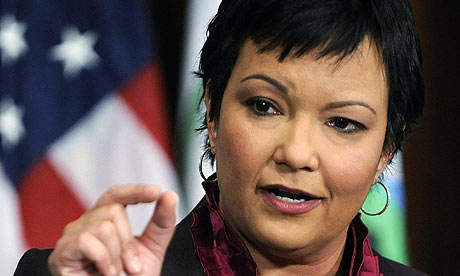
    Lisa Jackson announcing the new US government position on greenhouse gases

    Lisa Jackson announcing the new US government position that greenhouse gases are a threat to public health. Photograph: Jonathan Ernst/Reuters

    It’s been a bumpy road for Lisa Jackson through three and a half years as chief administrator of the Environmental Protection Agency. But the 50-year-old chemical engineer doesn’t look fazed or fed up. A scientist-turned-insider who has learned that the levers of power don’t always budge without a fight, she shows a little steel in her eyes as she ticks off achievements and notes setbacks. But she also lets mischief color her laugh as she acknowledges what she calls the “toxic attitude of absolute certainty” that paralyzes progress on climate and other issues.

    In 2009 President Obama appointed Jackson to lead the EPA, the agency she’d worked at for 16 years before serving in New Jersey’s environmental agency, where she became commissioner in 2006. Jackson took the EPA helm at a moment of high hopes for green advocates in the U.S. They’d spent eight years in George Bush’s wilderness; now they felt they were on the verge of passing climate legislation at home and a global carbon accord at the Copenhagen talks.

    What could go wrong? Only everything.

    Today progress on climate at the federal level seems less likely than ever. Certainly, Jackson can point to a passel of signal achievements: she has reinvigorated the agency, presided over a plan to double automobile fuel-efficiency standards over the next decade, established EPA’s right to regulate greenhouse gases like carbon dioxide as pollutants, and placed new controls on mercury and other toxic power-plant emissions.

    But Jackson has also watched as the faltering economy and a partisan civil war in Congress have placed environmental issues on a low-simmering back burner — and placed EPA itself in the crosshairs of an increasingly radical conservative movement that aims to defang, defund, and ultimately destroy it. Even if it dodges that bullet, her EPA must use the narrow statutory authority of a handful of increasingly outdated laws to tackle an endlessly multiplying set of problems. Meanwhile, new laws are out of reach, and old-fashioned regulations get held hostage to competing agendas: Her agency’s proposal to tighten ozone standards met sudden death at the hands of the White House that had appointed her.

    Jackson has stuck to her post, despite rumors that she might resign in the wake of that ozone reversal. At the end of last week, she visited Seattle to drop in on Boeing, speak at the annual Climate Solutions breakfast, and deliver a commencement address at the University of Washington. She also took time to talk informally at an event with Grist supporters, and sat down with us for an interview.

    We knew there was little chance that Jackson would go off message or make unscripted news, and we weren’t going to play gotcha with her. But we did get some intriguing glimpses of the mind of the woman who’s still trying to push the Obama Administration’s hope wagon over all those bumps.

    Q. Right now U.S. fossil fuel production is ramping up, and a lot of people are enthusiastic about energy independence and jobs in that industry. So national security and employment are set up to be at odds with the environment. Can we get beyond that?

    A. First of all there’s two sides of the energy discussion: there’s production, and there’s also use. America as a consumer-oriented country is seeing real choices for the first time in using less energy. That’s very good for the American pocketbook. There’s simply no reason why American cars can’t be efficient and still be cool and be a part of what drives our economy. And if you want proof of that, look at what’s happening right now in Detroit. I have conversations all the time with young people, and they’re not feeling like they’re losing anything by the fact that they’ll be able to have choices and much more fuel-efficient cars should they choose to buy them.

    The president talks about “all of the above” energy, and I think we don’t realize enough how important that is. There are those who would like us to drop everything and say, time for another, a second fossil fuel boom, and the president is saying, but the future for our country is around clean energy, renewables, and getting that technology perfected and ready at a commercial scale here so we can sell it abroad. That will make our country stronger and create jobs as well. We should not put all our eggs in any one basket. And we should not, just because we have it, assume that means we should use fuels as though we have it — because energy independence requires a certain reduced demand. We saw reduction in demand for gasoline, refined oil, this year, and part of the reason is that Americans have a choice to buy cars and trucks that use less of it. And that’s good for our economy. So the money can go somewhere else.

    Q. So when people who are passionate about the environment hear “all of the above,” they’ll think of the list of things in “all of the above,” and one of them’s going to be coal. Is that part of the definition of “all of the above?”

    A. What we’ve done at EPA, because we’ve had to from court order, and it’s long overdue in my opinion, is deal with pollution from coal-fired power plants. Pollution from coal-fired power plants comes from the extraction of the coal in some cases, the burning of the coal, which gives soot and smog-forming pollution, and mercury and lead and arsenic and cadmium and acid gases and then you’ve got to get rid of the ash! …One form of energy has to at least be subject to the same laws as the other forms are. That’s what we’ve been working on as far as coal. I always tell people, it’s not about coal, it’s about the pollution that for too long has been associated with coal.

    And then coal has another pollution problem, and that’s carbon pollution: it’s the most carbon-intense fossil fuel. And the president invested in carbon capture and sequestration technology as part of the Recovery Act. He said all along, I’m from a coal state, so I believe that if there’s going to be a future for coal it has to be one that deals with carbon pollution, with climate change. So in my opinion the problem for coal right now is entirely economic. The natural gas that this country has and is continuing to develop is cheaper right now on average. And so people who are making investment decisions are not unmindful of that — how could you expect them to be? It just happens that at the same time, these rules are coming in place that make it clear that you cannot continue to operate a 30-, 40-, or 50-year old plant and not control the pollution that comes with it.

    Q. You’re a career scientist, and public dialogue in this debate today sometimes seems to have moved completely away from science and facts. People are talking about how we live in a post-fact society. What can we do about that? Do you think that’s accurate? What do we do about it, and what can scientists do to speak more effectively and get facts back into the mix?

    A. All scientists should in my opinion take heed of the importance of the peer review process. Inside the Washington Beltway is very different than outside. Inside the Washington Beltway I’m not sure whether facts always matter, and that’s a sad thing for our country. But oftentimes EPA’s work is peer-reviewed and then peer-reviewed again — and yet it will be challenged by some report that hasn’t been peer-reviewed at all. There needs to be equivalence there — inside, for policy-makers. That would be one thing I’d ask. More and more when people pull up some, um, interesting report, my first question is, who reviewed it? Where is the peer review? Because you would never allow me to submit something that wasn’t peer-reviewed. And I think that’s fair, and I think on both sides it should be that way — on the EPA side, or the government side, the public sector side, and on those who might challenge it.

    The second thing I’d say is that the American people, when given an opportunity to sit down and understand what’s going on, are very, very reasonable. The battle today is about who can get the screaming headline out first. Because, unfortunately, the way the media works, the screaming headline lives forever, and then you spend forever trying to get a headline even half as big that says oh, that wasn’t true. So whether it’s climate change and the myriad reports about that, whether it’s people in rural America who’ve been told all manner of untruths about the work we’re doing — whether it’s that we’re going to regulate farm dust further, or that we’re going to regulate spilled milk, no matter how many times we say it, because their main sources of information are not really being truthful in how they’re giving them information, we spend an awful lot of time trying to explain to people what we’re really doing. And it’s not just on the environmental front, but that’s emblematic of how folks have learned to use this new media world.

    Q. This [at the Climate Solutions Breakfast] was a primarily white audience. You’ve brought a more inclusive air to the EPA. How do we get these issues out there so that all of America is on board and acting, and environmentalism is not just a province of the privileged?

    A. It’s a very good point. We cannot have clean energy or health issues be the province of the privileged, right? because what happens is that those who are lower on the economic rungs feel as though this is something else that is being done to them. Everywhere I go we try to meet with communities of color, we meet with young advocates, and they totally believe that this is an important moment for their health, and for the future of our planet, when it comes to climate change. We need more partnerships that bridge that gap. There are wonderful groups at the community grassroots level; we don’t need to invent any more. We need to find them and link them up with partnerships.

    I heard a wonderful story, it’s told by a guy from the Turkey Creek Watershed group in Mississippi. They are a small African American/Native American group of residents who live in this community, and they were concerned about a new highway that was going to come through yet again — wasn’t the first one — to another part of their community. And they have been dealing with the state of Mississippi on it. And he tells a funny story about how here they are working, and working, and trying to get traction about the injustice of them having to have all of this runoff. Basically, they love to fish, it’s a watershed where they do a lot of fishing. And they really didn’t start to get traction until they worked with one of the traditional groups who helped them see that not only is this a watershed, but it’s a really important flyway for migratory birds. It brought a lens to their issues at the national level, but it also brought national issues to them. It was a two-way street. So those partnerships are really important. We shouldn’t be afraid of them. We should be finding them….

    There are groups out there who care. They may speak literally a different language, or they may see their issues in a different way. But there’s a willingness to sit down at the table and say, okay, how can we make this all work? And it’s happening in communities out here, around the country. California’s doing it; New York; Chicago. We’re finding ways.

    In Chicago, here’s Mayor Emanuel saying, how about we put some boathouses on the Chicago River? And all of a sudden communities that have lived on that river their whole life and turned their back to it, go, wait a second, we can have the kind of amenity that people on the Magnificent Mile have downtown. It changes the conversation. It’s all about finding a way to combine the issues. Nothing wrong with that. You’re not cheating if the issues, just like climate, happen to have many problems with one really cool solution.

    Q. If you were writing a headline for your work on the climate issue at EPA, up to now, or for whenever your work is done at EPA, what would you want it to be?

    A. “In accordance with the law, we moved forward with sensible, cost effective steps at the federal level on climate, using the Clean Air Act.” And I would have a second sentence — see, I can’t write headlines! But it would be something like, “The progress at state and local levels, combined with the federal level, does not obviate the need” — you can’t use obviate, it’s above fifth-grade level! — “does not obviate the need for federal legislation to address this incredibly important challenge for this and future generations.”

  • Heavy fog on information superhighway as action plan scorned as ‘fluff’

    Heavy fog on information superhighway as action plan scorned as ‘fluff’

    June 12, 2012

    Australia’s digital blueprint

    More emphasis needs to be put on IT in Australian schools says Matt Barrie, Freelancer.com chief and task force member for the “NSW Digital Economy


    EXCLUSIVE

    A draft 10-year NSW government blueprint for the digital economy “doesn’t say much at all and will deliver little benefit to the economy as far as technology is concerned”.

    'Embarrassing initiative' ... The Australian Technology Park, Redfern.

    The Australian Technology Park, Redfern. Photo: Ben Rushton

    That’s the view of Freelancer.com chief Matt Barrie, who sat on the taskforce that worked on the NSW Digital Economy Industry Action Plan – due for release for public consultation in the next month or so but obtained by this website.

    Hailed by the state government and taskforce as setting “the direction and vision for our state over the coming decade and beyond”, Mr Barrie describes it in part as ”fluff”, ”window dressing” and a “white elephant”.

    The taskforce includes a representative each from IBM, Telstra, Optus, Foxtel, CSIRO, integrated media company Omnilab, electricity network Ausgrid, digital production company The Project Factory and venture capital firm OneVentures.

    But in an email sent to taskforce members last week, Mr Barrie says:

    “After attending the first meeting and seeing how the committee was poorly defined (read: “digital”) and stacked (read: no technology companies), with the exception of Ms Deaker, who runs a technology venture capital firm … and of course the CSIRO, it became clear that this would be yet another embarrassing initiative to try to build up the tech industry.

    “I mean, in the first meeting there was discussion of a ‘smart traffic light’ project in Parramatta that was being proposed to roll out across the country.

    “I mean seriously guys, WTF? What are we talking about here when we say digital? Technology? Or a mish mash of interests from the film, media, telco, services and infrastructure industries? If so, what could it possible achieve for our ‘digital future’?”

    The 53-page draft report, which touches on funding and support issues raised by start-ups in this website’s Digital Dreamers series, contains eight recommendations.

    But Mr Barrie, who heads the three-year-old online outsourcing business that turned over $35 million last year, has poured scorn on some and ridicule on others (read his comments on each at the end).

    He proposes an alternative plan.

    The problem in Australia, he says, is declining enrolments in engineering and science, and the fact that schools are not placing enough emphasis on IT.

    High school students “are exposed to a whole bunch of subjects that frankly haven’t changed much in the last 20, 30 or 50 years”, he said.

    “They are told through well established patterns of behaviour that ‘law’ and ‘medicine’ are the pinnacle career paths to aspire towards.

    “Students graduate and don’t even know what the word ‘engineer’ means.

    “The two subjects in IT that we teach today in a few schools are so ridiculously appalling; you’d think that they were written by The Onion circa 1950.”

    Mr Barrie lays out a detailed plan for how the IT syllabus can be rewritten for a modest cost, with involvement from the National Computer Science School.

    And he suggests new programs instead of those suggested in the report.

    Mr Barrie says there is no other industry that can create so much wealth for the country with such low capital expense, and there’s no other industry where “a 28 year old can build a $50 billion company in eight years”.

    “That’s a lot of employment in a high skills area, and a lot of corporate tax,” he writes.

    “However fluffy marketing, building buildings, hand waving and word smithing reports for political correctness isn’t really part of it, in my opinion.”

    THE RECOMMENDATIONS

    In an interview before the leaking of the report, NSW Deputy Premier Andrew Stoner told this website the report’s findings would be “taken up by government in a policy sense”.

    1. International Digital Leadership – Attracting business opportunities to NSW by positioning the state as a “digital global leader” and promoting the state’s “digital product and services capabilities”.

    Strategies include increasing global exports; hosting high-calibre conferences to showcase NSW digital businesses and market Sydney as “Silicon Boomerang”; an online portal for “digital business owners”; target specific hot spots such as mobile and apps; government leadership through early adoption of digital solutions like e-learning and e-health; and appointing a “digital ambassador”.

    Mr Barrie’s take: “Spend money on window dressing.”

    2. Digital Precinct – Establish a “digital innovation precinct” with a new hub at Carriage Works. Longer term the precinct will include an “open and vibrant digital community space” covering the “entire railway yards from ATP [Australian Technology Park in Redfern] through to Central Station”.

    Mr Barrie’s take: “Build a building in a terrible area of town that has always been earmarked for technology, but always been a white elephant because it’s a disused railyard out the back of Redfern.”

    3. Connected Regional Communities – Stimulate the “digital culture” of regional NSW communities and improve technology literacy.

    Mr Barrie’s take: “Fluff, but we needed the word ‘regional’ in the report so we could pass the keyword check.”

    4. Digital Skills – Support programs like the National Computer Science School (NCSS), FIRST Robotics, CSIRO’s Scientists in Schools and STELR (Science and Technology Education Leveraging Relevance); teach teachers digital skills; “modify” the high school technology curriculum; use technology more in the classroom (a whole section is devoted to the $25 Raspberry Pi single-board computer); and establish links with industry.

    Mr Barrie’s take: “NCSS is a fantastic program and frankly my company funds for some bizarre reason more than the Australian government in total each year.”

    5. Finance and Investment Channels – Increase funding available to NSW high growth companies. Last year only $120 million of $1.8 trillion available funds in Australia was invested by venture capital firms.

    Strategies including creating an “office for government funding” to advise businesses on ways to capitalise on existing federal funding schemes like Commercialisation Australia and the R&D tax incentive; creating a minimum $20 million “future fund for digital investment”; encouraging corporate ICT investment; encouraging superannuation funds to invest in innovation; assessing the implementation of “crowd-funding” (businesses funded by the community i.e. Kickstarter); setting up mentoring programs; reducing red tape; and offering tax and other incentives to organisations prepared to invest in innovation.

    Mr Barrie’s take: “Instead of proposing we lobby the federal government on tax reform, unpicking what they’ve done with option plans, passing crowd funding legislation, and basically create a legislative environment to allow start-ups to flourish and attract investors, let’s put $20 million into a fund to try to bribe start-ups to use the building we build in Redfern.”

    6. SME-Corporation-Government Networks – Create collaborative networks that link tech businesses with corporate and public partners for investment, trade and business development.

    Mr Barrie’s take: “Not sure what to say here but again we need to include “SME” for keyword density in the report.”

    7. Open Data Innovation – Facilitate access to open government and public sector information, empowering citizens and organisations to use the information to drive innovation. Strategies include educating public bodies on how to make the data they collect useful to others; implementing an “open data initiative; and building a public forum.

    Mr Barrie’s take: “Could be better worded like Obama has just said: ‘Every government department is now required to have an API.’

    8. Integrated Port Logistics Systems – Help industry develop an integrated port logistics system to ensure safe and efficient passage of freight from producer to consumer.

    Mr Barrie’s take: “Not sure what on earth this is doing here … should be in the infrastructure committee, not this taskforce which is supposed to be working on how we can build up the technology industry in this country. Because representatives from Telstra, Optus, the film industry and Freelancer.com are totally qualified to talk about container terminals. Not.”

    The 53-page report was circulated to taskforce members last Tuesday and they were given just a day and a half to sign-off. The “final version” was then expected to be handed to the NSW government by the end of last week.

    “If no response is received, we’ll keep the process moving and will take ‘nil’ response as your approval to release,” wrote Michael Harrington of the NSW Trade and Investment department in an email to taskforce members, seen by this website.

    Mr Barrie suggests inviting technology entrepreneurs such as Mike Cannon-Brookes, co-founder of Australian-based global technology powerhouse Atlassian, on to the taskforce (“soon to be, if not already, Australia’s next big billion-dollar technology company”).

    However, he said Mr Cannon-Brookes told him: “Mate, I did that last year, and it was the first, and last government committee I will ever do.”

    The chairman of the taskforce, IBM research and development director Glenn Wightwick, said in a statement through the NSW Department of Trade & Investment that the taskforce had engaged in a “rigorous process of consultation” for views from across the industry.

    He said the final draft report would take into account more than 30 written submissions together with views expressed across seven regional industry consultations.

    “The taskforce itself comprises expertise, knowledge and insight from highly regarded individuals from right across the industry, and the final draft report will represent the efforts and views of the entire team,” Mr Wightwick said.

    Foxtel chief information officer Robyn Elliott, who also sits on the taskforce, said the draft report seen by the Herald, which was labelled version 32, was “by no means final yet”.

    After the state government has read the report it will go out to another round of public consultations before the plan is finalised.

    “Matt’s a member of the taskforce like the rest of us so we’ve all got our comments on it,” she said.

    But Ms Elliott rejected Barrie’s suggestions that companies such as Foxtel were not the right companies to include on a taskforce looking at building the digital economy.

    “It’s not just about start-ups it’s about how all businesses can get access to digital skills,” she told the Herald.

    Another taskforce member, Jennifer Wilson, director of The Project Factory, said Mr Barrie “does raise an awful lot of really good points” but many would need federal government support.

    Responding to Mr Barrie’s comments about the digital precinct near Redfern, Ms Wilson said there was a much richer discussion in taskforce meetings about what the digital precinct was than what made it into the draft report.

    “The committee is not suggesting that we take those disused rail yards and turn it into start-up central,” she said, adding the taskforce recognised there was already significant start-up activity in Ultimo, Surry Hills and Pyrmont.

    Read more: http://www.smh.com.au/technology/technology-news/heavy-fog-on-information-superhighway-as-action-plan-scorned-as-fluff-20120611-20661.html#ixzz1xXpFoYXE

  • Home buyers hit as GST drop forces budget into the red

    Home buyers hit as GST drop forces budget into the red

    June 12, 2012 – 12:52PM


    State budget at a glance

    What’s the word from the 2012 NSW Budget? Herald analysts offer their views on fiscal policy, property, health, and transport.

    Video will begin in 1 seconds.

    Port Kembla will be privatised, speeding fines will be increased and the equivalent of 10,000 public sector jobs will be cut by the NSW government to help bring the state budget back to surplus from a forecast deficit of more than $800 million next financial year.

    The Treasurer, Mike Baird, has also today announced major changes to stamp duty and other property concessions designed to boost the purchase of newly constructed homes in NSW alongside measures to fast-track the approval of major housing developments.

    Baird.

    Treasurer Michael Baird. Photo: Michel O’Sullivan

    However, as part of the package the $7000 First Home Owners Grant for existing properties will be cut from October 1.

    As well, more than $3 billion has been earmarked towards construction of the North West Rail Link and $30 million will be set aside for planning a new Sydney motorway to be recommended by Infrastructure NSW as part of its 20-year strategy due for release in September.

    In a further revenue-raising measure, the government has flagged the sale of the rights to the future revenue stream from NSW lotteries.

    Delivering his second budget today, Mr Baird said it was set against the backdrop of a highly volatile global economy, but that it “builds for the future of NSW”.

    “We have taken many difficult decisions,” he said. “Some will not be popular, but they are the right decisions for challenging economic times”.

    The budget papers show NSW will record a deficit of $337 million this financial year, rising to an $824 millon deficit in 2012-13. This is largely due to a collapse in expected GST payments from the Commonwealth of more than $5 billion since last September’s budget.

    The budget is forecast to return to a $289 million surplus in 2013-14, raising to $562 million in 2014-15 and $1.17 billion in 2015-16.

    The government has already announced the planned long-term lease of Port Botany but today announced that Port Kembla will be included in the transaction. This was “to fund priority infrastructure projects”.

    While Port Botany is expected to raise more than $2 billion, it is understood proceeds of around $500 million are anticipated from Port Kembla.

    The budget contains significant changes to boost the purchase of newly-built homes in NSW.

    The existing First Home Owners Grant will increase from $7000 to $15,000 from October before dropping back to $10,000 from January 1, 2014, for buyers of newly-constructed homes worth up to $650,000.

    The stamp duty exemption for purchasers of newly-built homes who are not first home buyers – previously worth around $22,000 for an average Sydney home – will be axed and replaced with a $5000 New Home Grant for properties up to $650,000, phased out from $550,000.

    Up to $500 million will be used to “target critical infrastructure” and accelerate 76,000 new housing lots and the budget includes a $50 million incentive for councils to clear their backlog of development applications.

    Mr Baird said the government’s Building the State package would also “fast-track large-scale housing proposals which demonstrate private sector readiness and local government endorsement”.

    As previously announced, speeding fines will rise by 12.5 per cent. This is forecast to raise an extra $180 million over four years.

    A labour expense cap will be imposed on all government departments to cut the equivalent of 10,000 public sector jobs.

    This is on top of the 5000 public service redundancies announced in last year’s budget.

    However, directors general of government departments will be given the flexibility to find the cuts by reducing contractor levels or other labour-related savings.

    The measure is anticipated to save $2.2 billion over four years.

    Mr Baird told Parliament the budget featured “the right decisions for difficult times”.

    Read more: http://www.smh.com.au/nsw/home-buyers-hit-as-gst-drop-forces-budget-into-the-red-20120612-2074o.html#ixzz1xXntOv1s

  • Utility scrambles as WA storm approaches

    How much more proof do the Deniers need that these severe weather events are due to Global Warming? Scientific reports from Drs James Hansen and Andrew Glikson outlining what is happening. What price ignorance.

    Utility scrambles as WA storm approaches

    AAPJune 12, 2012, 10:22 am

    About 18,000 homes remain without power in Perth and Western Australia’s southwest as the third major storm since Thursday approaches the region.

    About 30 schools are currently closed as a result of the wild weather.

    Electricity utility Western Power on Tuesday said crews would focus on restoring power to the worst-affected areas following a storm on Sunday, when the fourth strongest wind gust on record hit the state, clocking 146km/h.

    Winds of about 125km/h, equivalent to a category two cyclone, are expected to hit the large region south of Geraldton later on Tuesday.

    Western Power said about 7500 customers in the metropolitan area were still without power.

    A further 10,700 customers in country areas were yet to be reconnected, mainly in Donnybrook, Pinjarra, Kewdale and Boddington.

    Only 300 customers in the Mandurah, Dawesville and Meadow Springs region were still waiting for power.

    “Some houses may remain without power for several days as the mop-up continues and Western Power asks for people to be patient and to consider relocating to homes of family and friends that have power,” the utility said in a statement.

    Western Power, which reconnected more than 150,000 customers in the past 36 hours, urged people to clear or secure any debris from around their homes in preparation for the fresh storm front later on Tuesday.

    Sunday’s storm caused unprecedented damage to the state’s electricity network and came three days after a tornado swept through the northern suburbs of Dianella and Morley, damaging homes and businesses, and uprooting trees.

    The latest storm is expected to peak at midnight (WST).

  • Tropical Depression 05W (Western North Pacific Ocean)

    Tropical Depression 05W (Western North Pacific Ocean)

    Inbox
    x

    NASA News Services nasa_subscriptions@service.govdelivery.com
    6:22 AM (3 hours ago)

    to me

    You are subscribed to Hurricane News for NASA. This information has recently been updated, and is now available.

    06/11/2012 12:00 AM EDT

    Tropical Depression 05W has been born in the western North Pacific, a couple of hundred miles south of Guam, and NASA’s Terra satellite captured its “baby picture.”

    Bookmark and Share

    This e-mail update was generated automatically based on your subscriptions. Some updates may belong to more than one category, resulting in duplicate notices.

  • Greenhouse gases largely to blame for warming oceans: scientists

    Greenhouse gases largely to blame for warming oceans: scientists

    Updated June 11, 2012 11:28:50

    A new US-led study, featuring research by Tasmanian scientists, has concluded that warming ocean temperatures over the past 50 years are largely a man-made phenomenon.

    Researchers from America, India, Japan and Australia say the study is the most comprehensive look at how the oceans have warmed.

    The study, published today in the journal Nature Climate Change, examined a dozen different models used to project climate change, and compared them with observations of ocean warming over the past 50 years.

    It found natural variations accounted for about 10 per cent of rising temperatures, but man-made greenhouse gases were the major cause.


    One of the report’s co-authors, Hobart-based Dr John Church, is the CSIRO Fellow with the Centre for Australian Weather and Climate Research.

    He told AM the study was one of the most comprehensive looks into the changes in ocean heat to date, “by quite some margin”.

    Dr Church said the breadth of the study had “allowed the group to rule out that the changes are related to natural variability in the climate system”.

    He said there was simply no way the upper layers of every ocean in the world could have warmed by more than 0.1 degrees Celsius through natural causes alone.

    “Natural variability could only explain 10 per cent, or thereabouts, of the observed change,” he said.

    Professor Nathan Bindoff is one of the world’s foremost oceanography experts, and has been a lead author on past Intergovernmental Panel on Climate Change assessment reports.

    “Ninety per cent of the temperature change stored in the whole of the Earth’s system is stored in the ocean, so global warming is really an ocean warming problem,” he said.

    Professor Bindoff said the new research balanced the man-made impacts of warming greenhouse gases and cooling pollution in the troposphere against natural changes in the ocean’s temperature and volcanic eruptions.

    “This paper’s important because, for the first time, we can actually say that we’re virtually certain that the oceans have warmed, and that warming is caused not by natural processes, but by rising greenhouse gases primarily.”

    And he described the evidence of global warming as unequivocal.

    “We did it. No matter how you look at it, we did it. That’s it,” he said.

    Topics:climate-change, earth-sciences, science-and-technology, oceans-and-reefs, environment, tas, united-states, australia