Category: News

Add your news
You can add news from your networks or groups through the website by becoming an author. Simply register as a member of the Generator, and then email Giovanni asking to become an author. He will then work with you to integrate your content into the site as effectively as possible.
Listen to the Generator News online

 
The Generator news service publishes articles on sustainable development, agriculture and energy as well as observations on current affairs. The news service is used on the weekly radio show, The Generator, as well as by a number of monthly and quarterly magazines. A podcast of the Generator news is also available.
As well as Giovanni’s articles it picks up the most pertinent articles from a range of other news services. You can publish the news feed on your website using RSS, free of charge.
 

  • Why the energy industry is so invested in climate change denial

    Why the energy industry is so invested in climate change denial

    The world most’s profitable companies are valued by their carbon reserves – never mind the resulting ruin to the planet

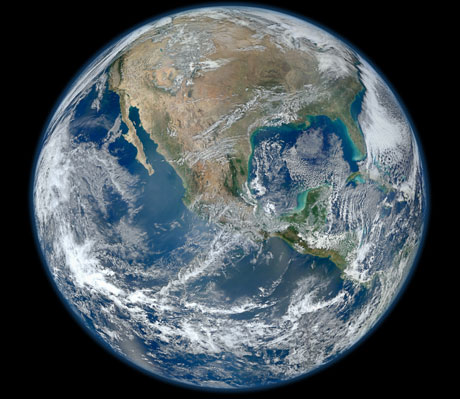
    • The earth seen from space, 4 January 2012, by Nasa

      The Americas, seen from space on 4 January 2012. Photograph: Nasa Goddard Photo

      If we could see the world with a particularly illuminating set of spectacles, one of its most prominent features at the moment would be a giant carbon bubble, whose bursting someday will make the housing bubble of 2007 look like a lark. As yet – as we shall see – it’s unfortunately largely invisible to us.

      In compensation, though, we have some truly beautiful images made possible by new technology. Last month, for instance, Nasa updated the most iconic photograph in our civilization’s gallery: “Blue Marble”, originally taken from Apollo 17 in 1972. The spectacular new high-def image shows a picture of the Americas on 4 January, a good day for snapping photos because there weren’t many clouds.

      It was also a good day because of the striking way it could demonstrate to us just how much the planet has changed in 40 years. As Jeff Masters, the web’s most widely read meteorologist, explains:

      “The US and Canada are virtually snow-free and cloud-free, which is extremely rare for a January day. The lack of snow in the mountains of the western US is particularly unusual. I doubt one could find a January day this cloud-free with so little snow on the ground throughout the entire satellite record, going back to the early 1960s.”

      In fact, it’s likely that the week that photo was taken will prove “the driest first week in recorded US history”. Indeed, it followed on 2011, which showed the greatest weather extremes in our history – 56% of the country was either in drought or flood, which was no surprise since “climate change science predicts wet areas will tend to get wetter and dry areas will tend to get drier.” Indeed, the nation suffered 14 weather disasters, each causing $1bn or more in damage last year. (The old record was nine.) Masters again: “Watching the weather over the past two years has been like watching a famous baseball hitter on steroids.”

      In the face of such data – statistics that you can duplicate for almost every region of the planet – you’d think we’d already be in an all-out effort to do something about climate change. Instead, we’re witnessing an all-out effort to … deny there’s a problem.

      Our GOP presidential candidates are working hard to make sure no one thinks they’d appease chemistry and physics. At the last Republican debate in Florida, Rick Santorum insisted that he should be the nominee because he’d caught on earlier than Newt or Mitt to the global warming “hoax”.

      Most of the media pays remarkably little attention to what’s happening. Coverage of global warming has dipped 40% over the last two years. When, say, there’s a rare outbreak of January tornadoes, TV anchors politely discuss “extreme weather,” but climate change is the disaster that dare not speak its name.

      And when they do break their silence, some of our elite organs are happy to indulge in outright denial. Last month, for instance, the Wall Street Journal published an op-ed by “16 scientists and engineers” headlined “No Need to Panic About Global Warming”. The article was easily debunked. It was nothing but a mash-up of long-since-disproved arguments by people who turned out mostly not to be climate scientists at all, quoting other scientists who immediately said their actual work showed just the opposite.

      It’s no secret where this denialism comes from: the fossil fuel industry pays for it. (Of the 16 authors of the Journal article, for instance, five had had ties to Exxon.) Writers from Ross Gelbspan to Naomi Oreskes have made this case with such overwhelming power that no one even really tries denying it any more. The open question is why the industry persists in denial in the face of an endless body of fact showing climate change is the greatest danger we’ve ever faced.

      Why doesn’t it fold, the way the tobacco industry eventually did? Why doesn’t it invest its riches in things like solar panels and so profit handsomely from the next generation of energy?

      The answer is more interesting than you might think.

      Part of it’s simple enough: the giant energy companies are making so much money right now that they can’t stop gorging themselves. ExxonMobil, year after year, pulls in more money than any company in history. Chevron’s not far behind. Everyone in the business is swimming in money.

      Still, they could theoretically invest all that cash in new clean technology or research and development for the same. As it happens, though, they’ve got a deeper problem, one that’s become clear only in the last few years. Put briefly: their value is largely based on fossil-fuel reserves that won’t be burned if we ever take global warming seriously.

      When I talked about a carbon bubble at the beginning of this essay, this is what I meant. Here are some of the relevant numbers, courtesy of the Capital Institute: we’re already seeing widespread climate disruption, but if we want to avoid utter, civilization-shaking disaster, many scientists have pointed to a two-degree rise in global temperatures as the most we could possibly deal with.

      If we spew 565 gigatons more carbon into the atmosphere, we’ll quite possibly go right past that reddest of red lines. But the oil companies, private and state-owned, have current reserves on the books equivalent to 2,795 gigatons – five times more than we can ever safely burn. It has to stay in the ground.

      Put another way, in ecological terms, it would be extremely prudent to write off $20tn-worth of those reserves. In economic terms, of course, it would be a disaster, first and foremost for shareholders and executives of companies like ExxonMobil (and people in places like Venezuela).

      If you run an oil company, this sort of write-off is the disastrous future staring you in the face as soon as climate change is taken as seriously as it should be, and that’s far scarier than drought and flood. It’s why you’ll do anything – including fund an endless campaigns of lies – to avoid coming to terms with its reality. So, instead, we simply charge ahead. To take just one example, last month, the boss of the US Chamber of Commerce, Thomas Donohue, called for burning all the country’s newly discovered coal, gas, and oil – believed to be 1,800 gigatons-worth of carbon from our nation alone.

      What he and the rest of the energy-industrial elite are denying, in other words, is that the business models at the center of our economy are in the deepest possible conflict with physics and chemistry. The carbon bubble that looms over our world needs to be deflated soon. As with our fiscal crisis, failure to do so will cause enormous pain – pain, in fact, almost beyond imagining. After all, if you think banks are too big to fail, consider the climate as a whole and imagine the nature of the bailout that would face us when that bubble finally bursts.

      Unfortunately, it won’t burst by itself – not in time, anyway. The fossil-fuel companies, with their heavily-funded denialism and their record campaign contributions, have been able to keep at bay even the tamest efforts at reining in carbon emissions. With each passing day, they’re leveraging us deeper into an unpayable carbon debt – and with each passing day, they’re raking in unimaginable returns. ExxonMobil last week reported its 2011 profits at $41bn, the second highest of all time. Do you wonder who owns the record? That would be ExxonMobil, in 2008, at $45bn.

      Telling the truth about climate change would require pulling away the biggest punchbowl in history, right when the party is in full swing. That’s why the fight is so pitched. That’s why those of us battling for the future need to raise our game.

      And it’s why that view from the satellites, however beautiful from a distance, is likely to become ever harder to recognize as our home planet.

  • Volcano Alerts

    News 9 new results for volcanoes
    Russia Volcano Bezymianny put on Code Red for imminent eruption
    The Weather Space
    (TheWeatherSpace.com) – One of the most active volcanoes in the world has been put on aviation color code red, the highest alert given by the Kamchatka Volcanic Eruption Response Team. KVERT assigned the code on Tuesday and warns of an imminent
    See all stories on this topic »

    The Weather Space
    Mabuhay to Manila
    Malaysia Star
    By MELINDA LOOI From visiting a shoe museum to a volcano, our columnist had an eventful time in the Philippines. THE minute you land in Manila, you are enveloped in its warm embrace. No visitor can leave this city, no matter how short the stay,
    See all stories on this topic »

    Malaysia Star
    Last Resident of Hawaii Subdivision Evicted by Lava
    Our Amazing Planet
    by Brett Israel, OurAmazingPlanet Staff Writer – Mar 07, 2012 04:42 PM ET Hawaii’s Kilauea volcano produces breathtaking images of oozing lava, but for one subdivision, the beauty has been devastating. Lava has burned down the last home at one unlucky
    See all stories on this topic »

    Our Amazing Planet
    Fruit volcanoes: a science project you can bake
    HeraldNet (blog)
    By Reshma Seetharam Gently melt the butter on low heat. When it’s all liquid, set aside. Sift the flour, baking powder and salt together, set aside. In a medium bowl, add the eggs, sugar and vanilla. Beat until light and fluffy, adding in melted butter
    See all stories on this topic »
    CANARY ISLANDS: NATIONAL PARKS OFFER REMARKABLE EXPERIENCE
    Tourism Review
    Although today Timanfaya is the only active volcano the surface temperature is still very high at places ranging between 100 °C and 600 °C. Tourists thus can enjoy views of geysers of steam. Parque Nacional de la Teide is located on the island of
    See all stories on this topic »

    Tourism Review
    House Hunting in … Costa Rica
    New York Times
    A FIVE-BEDROOM MOUNTAINSIDE ESTATE OVERLOOKING SAN JOSÉ $1.69 MILLION This mountainside estate overlooks the city of San José and the volcanoes beyond. The house covers 8100 square feet over two stories; it was built of local volcanic stone in 1995 and
    See all stories on this topic »

    New York Times
    House Hunting in … Costa Rica
    Pittsburgh Post Gazette
    By VIRGINIA C. McGUIRE, The New York Times This mountainside estate overlooks the city of San José and the volcanoes beyond. The house covers 8100 square feet over two stories; it was built of local volcanic stone in 1995 and refurbished in 2009.
    See all stories on this topic »
    Sakurajima volcano (Kyushu, Japan) activity update: increased numer and size
    VolcanoDiscovery (press release) (blog)
    Sakurajima volcano appears to be at higher levels of activity, as the last week has seen an increased average number and size of eruptions. According to the latest USGS / Smithsonian report “explosions during the past week “often” produced plumes that
    See all stories on this topic »
    Mélange et Trois: A Trip Across Subduction Zone Madness
    Scientific American (blog)
    Where I grew up on the Colorado Plateau, the geology’s like a lovely layer cake: nice horizontal slabs of schist and sandstone and sediments from ancient seas stacked neatly one after the other, with a volcano on top. Washington state is also like a
    See all stories on this topic »

    Scientific American (blog)


    Tip: Use site restrict in your query to search within a site (site:nytimes.com or site:.edu). Learn more.

    Delete this alert.

  • Ocean Warming, salinity and frequency of cyclones

    Neville,

    I recommend you read the enclosed reports.

    Regarding your specific comments:

    1. The oceans continue to warm, as in figure 3 in Steffen’s report but warming is not homogeneous, i.e. Greenland and Antarctic ice melt results in regions of cold ice melt water. Salinity increases not only due to ocean warming but also consequent on ocean currents from warm regions reaching colder high latitudes. I am not clear therefore on what basis you write “Cyclones could feasibly reduce in frequency since the oceans may be less warm?”

    2. Warming of ocean water decreases their capacity to sequester CO2.

    Among other Steffen’s report states:

    Ocean temperature

    Although there is a very strong focus on air and sea

    surface temperature in both the climate research

    community and the general public, ocean temperature

    is a better measure of changes in the climate system.

    More tha n 85% of the

    additi onal heat due to the

    ener gy imbala nce at the

    Earth ’s surface is absorbed

    by the ocea n (IPCC 2007a).

    Since the 1960s measurements of the heat content of the

    upper 700 m of the ocean have been available, and since

    2004, measurements to lower depths (up to 2 km) have

    become widely available with the deployment of Argo

    floats (Gould and the Argo Science Team 2004).

    Figure 3 shows the record of ocean thermal expansion

    from 1950 through 2008, showing the clear long-term

    trend of warming (Domingues et al. 2008, and updates).

    The Domingues et al. updated curve in this figure, which

    uses the carefully checked and corrected Argo data of

    Barker et al. (2011), indicates that multi-decadal warming

    has continued to the end of the record in December 2008

    (Church et al. 2011). This record is quantitatively

    consistent with the observed rate of sea-level rise over

    the past half-century. Although most of the additional

    heat stored in the ocean is found in the upper 700 m,

    recent observations show that warming of the deeper

    ocean waters in both the Southern and Atlantic Oceans

    is now occurring (Purkey and Johnson 2010)

    From: Neville Gillmore [mailto:nevilleg729@gmail.com]
    Sent: Thursday, March 08, 2012 1:18 PM
    To: Andrew Glikson

    Subject: Ocean warming, salinity and frequency of cyclones.


    Andrew.

    Since our oceans need be warm for cyclones to form, and we are seeing
    scientific reports on Ocean Salinity increase. Cyclones could feasibly
    reduce in frequency since the oceans may be less warm?

    Will the carbon dioxide currently absorbed by our oceans decrease,
    leaving more carbon pollution in the atmosphere?

    Regards
    Neville Gillmore

    EXTRACT
    In order for a cyclone to form, the ocean waters need to be warm, at least 26°C. Above the warm ocean, water evaporates and form clouds. If there is low air pressure where the clouds are formed, it pulls them in and they begin to rotate. It is the Earth’s rotation and spinning on its axis that causes the cyclone’s clouds to rotate. Clouds will continue to form and begin spinning more.

    2 attachments — Download all attachments
    STEFFEN_THE CRITICAL DECADE 2011.pdf STEFFEN_THE CRITICAL DECADE 2011.pdf
    7935K   View Download
    THE SCIENCE OF CLIMATE CHANGE_2009.pdf THE SCIENCE OF CLIMATE CHANGE_2009.pdf
    2573K   View Download
  • Speaker blasts rowdy MPs

    How not to run a parliament

    Speaker blasts rowdy MPS

    ABCMarch 8, 2012, 8:56 am

    Parliamentary Speaker Michael Polley has put politicians on notice after almost ejecting three MPs and threatening to walk out himself during a rowdy session of Parliament.

    Michael Polley was already rattled when the Deputy Premier, Bryan Green, produced a poster-sized copy of a newspaper photograph of the Liberal MP Michael Ferguson.

    The photograph showed Mr Ferguson being helped over the finish line at a recent fun run in Launceston.

    When the Deputy Premier began making references to a Liberal pledge to be self reliant, the House erupted and Mr Polley threatened to leave.

    “Now I warn the House if this continues, I’ll leave the chair.”

    “Order, quite clearly that’s a personal attack on the member for Bass. Order, order. I ask the House come to order or I’ll leave the Chamber.”

    The Speaker says he has only ever used the tactic once before and it is a resort.

    “You can’t have people attacking each other on a personal basis. They ought to be concentrating on what the issues are.”

    Mr Polley says he will not hesitate to eject MPs who misbehave today.

    Deputy Opposition leader Jeremy Rockliff says he was appalled by Mr Green’s behaviour.

    “This was going just that one or two steps too far.”

    Greens MP Kim Booth says Tasmanians expect a better standard from their politicians.

  • Barry O Farrell’s coup on transport praised

    Barry O’Farrell’s coup on transport praised

    0

    Police crack down on cyclists

    A blitz against bike riders running red lights and not wearing helmets was enforced during peak hour in Pyrmont.

    Barry O'Farrell

    No Moore … Premier Barry O’Farrell / Pic: Kristi Miller Source: The Daily Telegraph

    BUSINESS groups have praised Premier Barry O’Farrell for taking the reins away from City of Sydney Lord Mayor Clover Moore.

    The Daily Telegraph revealed yesterday Mr O’Farrell had shifted planning control to Macquarie St by establishing a joint state government-City of Sydney committee to manage transport issues.

    The state government will have four seats at the seven-seat committee, giving it ultimate say over Sydney‘s transport future. The Premier said the CBD was too important to be “held hostage” to Ms Moore’s constituents.

    Patricia Forsythe of the Sydney Business Chamber called this a “sensible approach”.

    “Unless we get traffic flow right, there are many flow-on effects,” she said.

    Ms Forsythe said she would not lobby the government to get rid of bike lanes because many business owners were not opposed to them.

    Urban Taskforce Australia CEO Chris Johnson said people travelling to the CBD for work should not be disregarded by planners.

    “The prosperity of the state cannot be delegated to local governments who are focused mainly on their local voters,” Mr Johnson said. “There needs to be balance between all the transport networks.”

    Infrastructure Partnerships Australia also supported the decision with CEO Brendan Lyon saying it was positive that ideology was being taken out of the equation.

    “With congestion pressures costing Sydney and NSW billions of dollars each year, we need a joined up strategy that needs to be driven by better traffic and transport outcomes, not ideology,” Mr Lyon said.

    Ms Moore asked Mr O’Farrell to explain how it differed from current arrangements, and argued it was business as usual. But with the government commanding the casting vote on the committee, the balance of power has shifted.


    1 comment on this story

  • Reef threat, Satellite eye pictures and Michael Mann book extract

    Reef threat, Satellite eye pictures and Michael Mann book extract

    The week’s top environment news stories and green events

    If you’re not already receiving this roundup, sign up here to get the briefing delivered to your inbox

    Environment news

    Australia’s mining boom placing Great Barrier Reef at risk, UN warns
    Climate change could make Canada’s traditional ice hockey extinct
    BP settles Gulf of Mexico oil spill lawsuit
    Cheetah struggling to reproduce due to climate change, scientists warn
    Goldfinches wooed from farmland to British gardens
    Exxon in spotlight after Papua New Guinea landslide

    On the blogs

    Forests sell-off plans  : Forest of Dean

    Is the government planning a further U-turn on selling our forests?
    Julia Roberts: how clean cookstoves can transform lives
    Sun, sewage and algae: a recipe for success?
    Lord Lawson’s links to Europe’s colossal coal polluter

    Multimedia

    Satellite Eye on Earth : Ice covers the surface of northwestern Lake Sakakawea

    Satellite eye on Earth: January 2012 – in pictures
    Wadebridge, the UK’s first solar-powered town – video
    The week in wildlife – in pictures
    BP agrees $7.8bn payout over Gulf of Mexico oil spill – video

    Features

    Michael Mann

    Michael Mann on climate wars: ‘the hockey stick did not suddenly appear out of left field’
    Wrexham leads Europe’s solar charge
    Here comes trouble: the return of the wild boar to Britain
    Is Antarctica getting warmer and gaining ice?

    Best of the web

    ChinaDialogue: Panda breeding success ignores their disappearing habitat
    BusinessGreen: Controversial green energy report ‘very, very poor’, says government economist
    Carbon Commentary: Eden Project installs UK’s first employee-owned solar plant
    For more of the best environment comment and news from around the web, visit the Guardian Environment Network.

    … And finally

    Queen’s jubilee tree challenge reaches 1 million mark
    Woodland Trust’s target of planting 6 million trees in Queen’s diamond jubilee year is on track