Category: News

Add your news
You can add news from your networks or groups through the website by becoming an author. Simply register as a member of the Generator, and then email Giovanni asking to become an author. He will then work with you to integrate your content into the site as effectively as possible.
Listen to the Generator News online

 
The Generator news service publishes articles on sustainable development, agriculture and energy as well as observations on current affairs. The news service is used on the weekly radio show, The Generator, as well as by a number of monthly and quarterly magazines. A podcast of the Generator news is also available.
As well as Giovanni’s articles it picks up the most pertinent articles from a range of other news services. You can publish the news feed on your website using RSS, free of charge.
 

  • The abuse of political power is as dangerous as nuclear power itself

    The abuse of political power is as dangerous as nuclear power itself

    The newly evicted protesters against proposed nuclear power stations at Hinkley Point reject both the technology and the flaunting of democracy

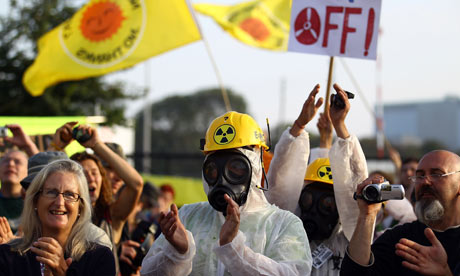
    Protestors Blockade Hinkley Point Nuclear Power Station

    Anti-nuclear protestors gather at the gates of Hinkley Point nuclear power station on October 3, 2011. Photograph: Matt Cardy/Getty Images

    It’s been a busy week for the bailiffs. Even as one group was carting people off from the steps of St Paul’s in London on Monday night to remove Occupy protesters, so another was storming a Somerset farmhouse early on Wednesday to snuff out a small protest against the proposed two new Hinkley C nuclear power stations.

    End of story? Not at all. Occupy will be back and anger in Someset is growing at the way that the nuclear steamroller is gearing up to build its stations. EDF, who went to the high court in London rather than Bristol, tried to get a blanket injunction on anyone going near the site but was thwarted by the court which could see no justification in granting anything so wideranging.

    The Somerset protests are against nuclear power itself but also at the way the company appears to be flaunting democracy and the new planning laws even before it starts building. EDF has permission to spend £100m preparing the site for the two power stations on the basis that they will return many millions tonnes of earth and restore the land to exactly how it was, should a public inspector decline to give them planning permsssion in 2013.

    This is clearly impossible, so the EDF must be 100% certain that it will get permission to build. In which case, say the protesters, the whole consultation exercise and planning process is a sham – a situation that looks likely to be subject to further court cases.

    Half of all local residents are against the power station but everyone in the area is united in believing that the planning system has been corrupted by cash handouts and pressure from central government. It suggests that from now on that any company will be allowed to start work on any giant project and be allowed to trash any piece of land without any demcoratic accountability in the name of national interest, climate change or anything else that the government decrees. Yet again, nuclear power is cast as a corporate bully working as an accomplice of government.

    What makes it worse, is that I am informed that some pro-nuclear greens have written to the protesters in Somerset urging them not to protest against EDF. If this is the case, then those pro-nuclear greens should be invited to write to the 3,000 “misguided” Indian protesters of the People’s Movement against Nuclear Energy who have been on hunger strike in Tamil Nadu in protest against two nuclear power stations being built there, as well as the many thousands of Chinese who are protesting nuclear plants in Anhui province. Both these nascent anti-nuclear protests are in the forefront of much wider democracy movements, demanding corporate and government accountability.

    The point is that right across the world it is not just the nuclear technology which is so offensive to people, but the arrogance, callousness and ruthless steamrollering of any opposition that invariably accompanies nuclear projects. What the pro-nuclear folk here do not seem to understand is that the abuse of political power is as dangerous as the power source itself.
  • Death threats, intimidation and abuse: climate change scientist_Michael E. Mann counts the cost of honesty

    Death threats, intimidation and abuse: climate change scientist Michael E. Mann counts the cost of honesty

    Research by Michael E. Mann confirmed the reality of global warming. Little did he know that it would also expose him to a vicious hate campaign

    • guardian.co.uk, Saturday 3 March 2012 11.32 GMT
    • Article history
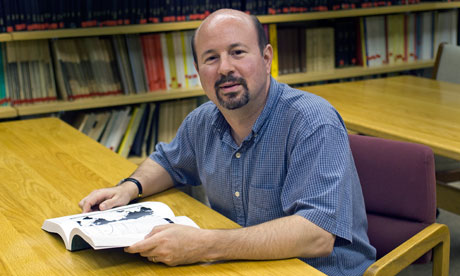
    • US physicist and climatologist Michael E. Mann

      Research by US physicist and climatologist Michael E. Mann demonstrating an increase in global temperatures infuriated climate change deniers. Photograph: Greg Rico

      The scientist who has borne the full brunt of attacks by climate change deniers, including death threats and accusations of misappropriating funds, is set to hit back.

      Michael E. Mann, creator of the “hockey stick” graph that illustrates recent rapid rises in global temperatures, is to publish a book next month detailing the “disingenuous and cynical” methods used by those who have tried to disprove his findings. The Hockey Stick and the Climate Wars is a startling depiction of a scientist persecuted for trying to tell the truth.

      Among the tactics used against Mann were the theft and publication, in 2009, of emails he had exchanged with climate scientist Professor Phil Jones of East Anglia University. Selected, distorted versions of these emails were then published on the internet in order to undermine UN climate talks due to begin in Copenhagen a few weeks later. These negotiations ended in failure. The use of those emails to kill off the climate talks was “a crime against humanity, a crime against the planet,” says Mann, a scientist at Penn State University.

      In his book, Mann warns that “public discourse has been polluted now for decades by corporate-funded disinformation – not just with climate change but with a host of health, environmental and societal threats.” The implications for the planet are grim, he adds.

      Mann became a target of climate deniers’ hate because his research revealed there has been a recent increase of almost 1°C across the globe, a rise that was unprecedented “during at least the last 1,000 years” and which has been linked to rising emissions of carbon dioxide from cars, factories and power plants. Many other studies have since supported this finding although climate change deniers still reject his conclusions.

      Mann’s research particularly infuriated deniers after it was used prominently by the UN’s Intergovernmental Panel on Climate Change (IPCC) in one of its assessment reports, making him a target of right-wing denial campaigners. But as the 46-year-old scientist told the Observer, he only entered this research field by accident. “I was interested in variations in temperatures of the oceans over the past millennium. But there are no records of these changes so I had to find proxy measures: coral growth, ice cores and tree rings.”

      By studying these he could trace temperature fluctuations over the past 1,000 years, he realised. The result was a graph that showed small oscillations in temperature over that period until, about 150 years ago, there was a sudden jump, a clear indication that human activities were likely to be involved. A colleague suggested the graph looked like a hockey stick and the name stuck. The results of the study were published in Nature in 1998. Mann’s life changed for ever.

      “The trouble is that the hockey stick graph become an icon and deniers reckoned if they could smash the icon, the whole concept of global warming would be destroyed with it. Bring down Mike Mann and we can bring down the IPCC, they reckoned. It is a classic technique for the deniers’ movement, I have discovered, and I don’t mean only those who reject the idea of global warming but those who insist that smoking doesn’t cause cancer or that industrial pollution isn’t linked to acid rain.”

      A barrage of intimidation was generated by “a Potemkin village” of policy foundations, as Mann puts it. These groups were set up by privately-funded groups that included Koch Industries and Scaife Foundations and bore names such as the Cato Institute, Americans for Prosperity and the Heartland Institute. These groups bombarded Mann with freedom of information requests while the scientist was served with a subpoena by Republican congressman Joe Barton to provide access to his correspondence. The purported aim was to clarify issues. The real aim was to intimidate Mann.

      In addition, Mann has been attacked by Ken Cuccinelli, the Republican attorney general of Virginia who has campaigned to have the scientist stripped of academic credentials. Several committees of inquiry have investigated Mann’s work. All have exonerated him.

      Thousands of emails have been sent to Mann, many deeply unpleasant. “You and your colleagues… ought to be shot, quartered and fed to the pigs along with your whole damn families,” said one. “I was hopin [sic] I would see the news and you commited [sic] suicide,” ran another.

      Yet all that Mann had done was publish to a study suggesting, in cautious terms, that Earth had started to heat up unexpectedly in the past few decades.

      “On one occasion, I had to call the FBI after I was sent an envelope with a powder in it,” Mann adds. “It turned out to be cornmeal but again the aim was intimidation. I ended up with police security tape all over my office doors and windows. That is the life of a climate scientist today in the US.”

      Mann insists he will not give up. “I have a six-year-old daughter and she reminds me what we are fighting for.” Indeed, Mann is generally optimistic that climate change deniers and their oil and coal industry backers have overstepped the mark and goaded scientists to take action. He points to a recent letter, signed by 250 members of the US National Academy of Science, including 11 Nobel laureates, and published in Science. The letter warns about the dangers of the current attacks on climate scientists and calls “for an end to McCarthy-like threats of criminal prosecution against our colleagues based on innuendo and guilt by association, the harassment of scientists by politicians seeking distractions to avoid taking action, and the outright lies being spread about them.”

      “Words like those give me hope,” says Mann.

      The Hockey Stick and the Climate Wars will be published by Columbia University Press in April

  • Bungling stopped building of Welcome Reef dam near Braidwood NSW

    We reconsider building the Welcome Reef dam on the Shoalhaven River near Braidwood for Sydney’s water needs

    0
    Warragamba Dam

    Warragamba Dam was spilling water yesterday, when some said it would never be full again Source: The Sunday Telegraph

    If you ever wanted proof of the collective insanity caused by climate alarmism, just look out the window.

    We were told to expect endless drought. Instead, it’s been raining buckets all summer, and the dams are now full to overflowing.

    Good thing we built that desalination plant.

    If we’d built a new dam during the last drought instead, we wouldn’t be wasting millions of dollars worth of fresh water draining out to sea.

    The electricity-guzzling desalination plant at Kurnell cost taxpayers $1.8 billion to build and has been pumping out 90 million litres of water every day, at a daily cost of $50,000. That’s the price of 45 hospital beds.

    Sydney was meant to have a new dam already. Our far-sighted forebears bought up land for 40 years for the Welcome Reef dam on the Shoalhaven River near Braidwood.

    But in 2002 the dam was killed off by none other than Bob Carr, the deep green former NSW premier identified last week as our next foreign minister.

    It was a rich irony that – a few hours after Carr’s appointment was announced – the gates of Warragamba Dam were opened and the dam overflowed for the first time in 14 years.

    When Carr declared Welcome Reef would not be built, it seems he tried to make sure no future government could reverse his decision. He locked up 6000ha of the land that had been set aside for the dam and declared it a national park.

    One of the arguments used against Welcome Reef was that it was in a rain shadow and would take too long to fill. Well, so is Warragamba, and it overflowed on Friday night.

    “It’s safe to say Welcome Reef would be filling up very nicely now,” says civil engineer and hydrology specialist John Brown, who carried out the original environmental impact study on Welcome Reef dam in 1980 for the Metropolitan Water Sewerage and Drainage Board.

    “I think the government should look at it again. There is insufficient storage on the Shoalhaven to carry us through severe droughts.

    “Even though water consumption per capita has decreased, the population has increased.”

    Brown found no fauna, flora or Aboriginal sites would be endangered by Welcome Reef and there was only a 10 per cent chance it would not fill to its minimum operating level in four months.

    At Braidwood last week, near where the dam would have been built, rainfall recorded was 142mm, and at nearby Hillview it was 111mm. It’s been flooding in Goulburn, Cooma, Queanbeyan and other districts around the dam site. Welcome Reef would have been overflowing now if dams hadn’t been demonised by deluded greenies.

    Plenty of people would like to hear our highly paid Climate Commissioner Tim Flannery explain how he got it so wrong.

    He reportedly has skipped the rain and gone to Europe. But in 2007 he warned that rain would become increasingly rare, and “isn’t actually going to fill our dams and river systems”, so we would need desalination plants instead.

    Those kinds of airy predictions, issued with the stamp of authority, sucked in a lot of gullible people.

    The last time I wrote about the need to build more dams, for instance, I was bombarded with angry emails like this:

    “Hey Einstein, “And what exactly do you think the new dam is going to store? “Dirt? Air?”

    No, mate. Water. Fresh H20 dropping free from the heavens into our dams, where it would stay until the next drought.

    This is what humans have been doing since the dawn of civilisation. But under the yoke of those who want to turn the clock back on civilisation, we now view dams as Satan’s work, and no politician dares risk the wrath of the Greens.

    Opposition Leader Tony Abbott’s critics like to accuse him of being rooted in the 1950s, but Greens leader Bob Brown and his acolytes are stuck in pre-history.

    We were so busy bowing to the voodoo of mathematical models purporting to predict drastic climate change that our craven political leaders didn’t even contemplate the thought that droughts always break.

    One of the last jobs John Brown did before retiring was a water master plan for Botswana, including dams and a 400km pipeline from north to south. All have been or are being built. Botswana managed it. Why can’t we?

    That’s a question for Premier Barry O’Farrell. What use is his massive mandate if he isn’t bold about something?

    It’s no good complaining about the “stupid” contract his Labor predecessors locked the state into, requiring the plant run continuously for two years. Pressuring the desal plant to halve its output of fresh water, as it announced last week, or leasing it out to private owners is not enough, either.

    We need a new dam for a growing population. The government could easily pass an act of parliament reclaiming the national park and start work on the Welcome Reef dam immediately.

    But don’t hold your breath.

    Finally, it’s worth noting another of Bob Carr’s achievements as premier.

    It was Carr, aka “Dubai Bob”, who saddled Sydney with the desalination plant. He made the announcement in 2005, after a $120,000 trip to Dubai, via London.

    Let’s hope when he becomes foreign minister he doesn’t bring home any more bright ideas.


  • Rainy days do not long-term climate make.

    We must not be lulled a false sense of security. Think long term.

    Rainy days do not long-term climate make

    1

    AFTER a decade of record-breaking drought in southeastern Australia where our water supplies for our capital cities were perilously low, it’s raining.

    Over the past couple of years our dams have been filling up and some are now overflowing.

    So it seems counter-intuitive to talk about water security.

    Despite our wet summer, the long-term trend shows that southeastern Australia is getting drier. This is the difference between weather and climate. Weather is about what’s happening day-to-day and year-to-year. But climate refers to weather trends over the long term.

    Sorry, Tim, but weather’s just not your forte

    Think about that diet started as a New Year’s resolution. You might eat too much chocolate cake one weekend, and find you’re slightly heavier. But if you stick to the diet, over time, the trend will be clear as you shed the kilos.

    Records over the past 40 years indicate that rainfall has been steadily declining in southern and eastern Australia and studies by the CSIRO show that it’s likely to continue.

    Southeastern Australia is likely to get drier and droughts more frequent and intense. Also, as the Earth heats, the frequency and intensity of heavy rainfall events is likely to increase.

    Of course there are wet years like this one and there is likely to be wet years in the future. Wet years may come and go, but overall, scientists are concerned we are facing a drier future.

    Why? There are likely to be more dry years than wet years. Looking at the long-term trend, average rainfall is still expected to decline.

    Reductions in water supply in southern and eastern Australia are of particular concern. This is where our major population centres are located. If the long-term trend continues as expected, our cities may again face water challenges.

    That is why, even in a wet year it is responsible to think about our long-term water security. After the last decade Australians well remember the harrowing consequences of long, severe droughts. The National Water Commission, the CSIRO and many other public bodies and scientists were warning of the future challenges to water security.

    Today those warnings remain relevant. We can ill afford complacency. It is worth remembering that the situation in Perth remains severe.

    Some commentators jump on any cold spell or rainy period to claim climate change is not happening.

    This cherry picking is irresponsible and misleading.

    All of the major scientific bodies around the world paint an unequivocal picture that the climate is changing rapidly. It is now beyond reasonable doubt that humans are the primary cause.

    Professor Tim Flannery is Chief Climate Commissioner

  • Transition towns / groups in Australia

    Transition towns groups in Australia

    Transition Towns are popping up all over Australia. This exciting community movement is inspiring people to stand up, get together and create the future they want.

    It works because it provides the tools and skills to make that happen.

    It works because it’s about cooperation and collaboration.

    It works because it enables and supports people to do what they are passionate about and what they feel called to do. It’s about community action in our quest to move from fossil fuel dependency to local resilience.

    A list of regional groups within the Sunshine Coast, SE Queensland, is presented here. A list of national groups is presented below.

    Here is the Australian list of initiatives in order of when they became official…

    As new initiatives become official, we’ll add them to this page. We strongly urge you to become an official initiative and join the thousands of others around the world moving into transition. It makes a lot more sense than working in isolation and outside of the official network. If you need help with becoming official, let us know.

    Transition Sunshine Coast – Queensland

    You’re already here!

    Sustainable Living Armidale New South Wales

    Email from here

    Transition Neighbourhood Bell Victoria

    Email from here

    Eco Bello – Bellingen New South Wales

    Email from here

    Transition Town Newcastle New South Wales

    Email from here

    Transition Town Hervey Bay Queensland

    Email from here

    Transition Town Eudlo (within the Sunshine Coast, Queensland)

    Email from here

    Transition Sydney – New South Wales

    Visit their website here

    Transition Katoomba – New South Wales

    Visit their website here

    Transition Wingecarribee – New South Wales

    Visit their website here

    Transition Town Kenmore – Brisbane, Queensland

    Email from here

    For a list of regional groups within the Sunshine Coast, SE Queensland click here.

  • Gasoline worse than diesel when it comes to some types of air pollution

    Gasoline worse than diesel when it comes to some types of air pollution

    Posted: 02 Mar 2012 04:39 PM PST

    The exhaust fumes from gasoline vehicles contribute more to the production of a specific type of air pollution-secondary organic aerosols -than those from diesel vehicles, according to a new study.
    You are subscribed to email updates from ScienceDaily: Earth Science News
    To stop receiving these emails, you may unsubscribe now.
    Email delivery powered by Google
    Google Inc., 20 West Kinzie, Chicago IL USA 60610