Category: News

Add your news
You can add news from your networks or groups through the website by becoming an author. Simply register as a member of the Generator, and then email Giovanni asking to become an author. He will then work with you to integrate your content into the site as effectively as possible.
Listen to the Generator News online

 
The Generator news service publishes articles on sustainable development, agriculture and energy as well as observations on current affairs. The news service is used on the weekly radio show, The Generator, as well as by a number of monthly and quarterly magazines. A podcast of the Generator news is also available.
As well as Giovanni’s articles it picks up the most pertinent articles from a range of other news services. You can publish the news feed on your website using RSS, free of charge.
 

  • Recession ‘ threatens UK effort to tackle global warming’

    Recession ‘threatens UK effort to tackle global warming’

    • Investment in green housing, power and transport at risk, says government committee
    • Millions of new electric cars plus rescue of carbon trading schemes among proposed measures

    Carbon trading

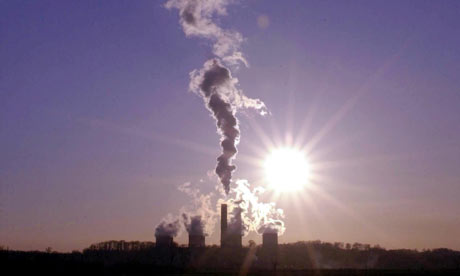
    Europe is relying on carbon trading between polluters to make it cheaper to build wind turbines and develop technology to trap and store gases from power stations. Photograph: HAYDN WEST/PA


    The recession is threatening the vast investment needed in green housing, power and transport and could seriously undermine Britain’s efforts to meet its targets for tackling global warming, the government’s climate change advisers warn today.

    The UK already has the toughest climate change laws in the world but the Committee on Climate Change says that “radical” action is still needed. It highlights the need to rescue carbon trading schemes – a key weapon in the battle to reduce greenhouse gas emissions – from problems caused by the slump.

    The committee demands “dramatic improvements” in the carbon efficiency of cars and measures to cut the growth in traffic, potentially including road pricing. It recommends that there should be 1.7m electric cars, with 3.9m drivers trained in fuel-efficient techniques, by 2020.

    Europe is relying on carbon trading between polluters to make it cheaper to build wind turbines and develop technology to trap and store gases from power stations as part of a promised switch to a low-carbon economy.

    The committee also warns that a “step change” is needed in the pace of UK emissions reductions if the government is to stick to tough new carbon budgets. Annual cuts must increase by at least four times, from the recent rate of 0.5% to 2-3%.The report also demands “more forceful” policy approaches.

    Lord Turner, chair of the committee, said: “The government needs to build on its low-carbon transition plan and put in place a comprehensive delivery framework. What we have proposed is achievable and affordable, but action needs to be taken now if we are to make our contribution to combating climate change.”

    Andy Atkins, head of Friends of the Earth, said: “The Climate Change Act is a world-class piece of legislation, but the true test is the policies put in place to deliver its goals. Crucial strategies on fossil fuels, aviation and energy infrastructure, due out shortly, will demonstrate whether or not the government has heeded the committee’s warnings.”

    With greater effort, the committee says, Britain could be transformed. It calls for a nationwide programme to boost energy efficiency in homes and offices, similar in scale to the installation of natural gas in every house from the late 1960s.It wants to see 10m lofts insulated by 2015 and 12m old boilers replaced by energy-efficient versions by 2022, as well as “significantly” increased numbers of energy-efficient washing machines and refrigerators. New laws may be needed to force private landlords to insulate and upgrade rented homes, the report says.

    The CCC says Britain should slash emissions from the power sector by 50% before 2020 by building 8,000 new wind turbines, alongside four new coal power stations fitted with carbon capture technology and three new nuclear power plants. It also calls for an urgent overhaul of the national grid, to accommodate new windfarms. The report says: “In a world where carbon budgets are achieved, we will meet more of our energy needs from low carbon power, live in well insulated homes with energy efficient boilers and appliances. We will also work in energy efficient offices and drive more carbon efficient cars including hybrids and electric vehicles.”

    David Kennedy, chief executive of the committee, said the recession could demolish such plans. “It’s a very big problem,” he said.

    The fall in economic activity has lowered CO2 emissions in Europe and left companies in the EU’s emissions trading scheme with a surplus of carbon credits. The committee estimates this could result in a carbon price of just €20 a tonne in 2020, rather than the €50 a tonne used for its previous analysis.

    Options to strengthen the carbon price, including the government underwriting a minimum price or intervening in the electricity market, should be “seriously considered”, the committee says. On Friday, a report from Ofgem suggesting domestic energy bills could rise 14-60% by 2020 was seen by energy industry experts as an acceptance that the market-driven system has failed and the government needs to be more interventionist.

    The analysis comes as a separate report from the Aldersgate group of companies says that a more radical approach to financing low carbon projects is needed to ensure carbon targets are met. It argues that a new strategic approach to reduce investor risks, mobilise capital and streamline institutional structures would accelerate the transition to a low carbon economy and reduce costs.

    Emma Howard Boyd, head of socially responsible investment and governance at Jupiter Asset Management, said: “There remains a credibility gap between policy and delivery which has resulted in too much uncertainty and risk for investors to finance at the scale that is required.”

  • Millions will starve as rich nations cut food aid funding, warns UN


    Food riots in more than 20 countries last year persuaded rich countries to give a record $5bn to the WFP to help avert a global food crisis brought on by record oil prices and the growth of biofuel crops. But new data seen by the Observer show that food aid is now at its lowest in 20 years. Countries have offered only $2.7bn in the first 10 months of 2009.

    The US, by far the world’s biggest contributor to food aid, has so far pledged $800m less than in 2008; Saudi Arabia has paid only $10m in 2009 compared with $500m in 2008; and the EU has given $130m less. Britain’s promise of $69m (£43.5m) this year is nearly $100m (£63m) less than 2008, and, if nothing more is given, will be its lowest contribution since 2001.

    “Even under our best scenarios, we will end the year $2bn short,” said Sheeran. “Many of our funders do not feel that they need to give on the level of last year. They think the world food crisis is over, but in 80% of countries food prices are actually higher than one year ago.”

    World food supplies are under increased strain this year following a succession of droughts, typhoons, floods and earthquakes that have destroyed crops in Africa and south-east Asia. But human needs are also greater because the financial crisis has led to widespread unemployment. In addition, the remittances from foreign nationals living in rich countries to their families at home are 20% lower than last year.

    Last month the UN said that the number of hungry people in the world had increased by more than 150 million in a single year to more than one billion. Aid agencies last week warned of severe food shortages in southern India after heavy floods damaged hundreds of millions of dollars’ worth of crops.

    “There is a silent tsunami [of hunger] gathering. You cannot see or hear it, but it’s in all these villages, killing people just as hard. This is the worst food crisis since the 1970s. We will lose a generation. Children will never recover,” said Sheeran.

    More than 40 million people could be affected by the WFP’s enforced scaling back of its food rations. Countries most likely to be hit include Bangladesh, where the budget is likely to be cut by as much as 50%, and Kenya, where similar cuts will worsen the plight of millions of extra people made destitute by a long drought.

    The new rations, which are reserved for people who have no access to food, will fall below what aid agencies consider a survival ration and will provide, at most, one meagre meal a day. “We are making hard choices over who to feed. We are very aware that as we dismantle [feeding programmes] it may take out the underpinning of society and leads to political destabilisation,” said Sheeran.

    Aid agencies last night urged rich countries to pledge more. “We are very concerned about the large budget shortfall faced by WFP, which means the programme has to cut the food rations to millions of people who rely on this assistance for their very survival,” said Fred Mousseau, Oxfam’s humanitarian policy adviser. “This will translate into more child deaths, with more than 16,000 children already dying from hunger-related causes every day.”

  • Why global warming isn’t taking a break


    (2) It is highly questionable whether this “pause” is even real. It does show up to some extent (no cooling, but reduced 10-year warming trend) in the Hadley Center data, but it does not show in the GISS data, see Figure 1. There, the past ten 10-year trends (i.e. 1990-1999, 1991-2000 and so on) have all been between 0.17 and 0.34 ºC per decade, close to or above the expected anthropogenic trend, with the most recent one (1999-2008) equal to 0.19 ºC per decade – just as predicted by IPCC as response to anthropogenic forcing.

    Why do these two surface temperature data sets differ over recent years? We analysed this a while ago here, and the reason is the “hole in the Arctic” in the Hadley data, just where recent warming has been greatest.

    If we want to relate global temperature to global forcings like greenhouse gases, we’d better not have a “hole” in our data set. That’s because global temperature follows a simple planetary heat budget, determined by the balance of what comes in and what goes out. But if data coverage is not really global, the heat budget is not closed. One would have to account for the heat flow across the boundary of the “hole”, i.e. in and out of the Arctic, and the whole thing becomes ill-determined (because we don’t know how much that is). Hence the GISS data are clearly more useful in this respect, and the supposed pause in warming turns out to be just an artifact of the “Arctic hole” in the Hadley data – we don’t even need to refer to natural variability to explain it.

    Imagine you want to check whether the balance in your accounts is consistent with your income and spendings – and you find your bank accounts contain less money than you expected, so there is a puzzling shortfall. But then you realise you forgot one of your bank accounts when doing the sums – and voila, that is where the missing money is, so there is no shortfall after all. That missing bank account in the Hadley data is the Arctic – and we’ve shown that this is where the “missing warming” actually is, which is why there is no shortfall in the GISS data, and it is pointless to look for explanations for a warming pause.

    It is noteworthy in this context that despite the record low in the brightness of the sun over the past three years (it’s been at its faintest since beginning of satellite measurements in the 1970s), a number of warming records have been broken during this time. March 2008 saw the warmest global land temperature of any March ever recorded in the past 130 years. June and August 2009 saw the warmest land and ocean temperatures in the Southern Hemisphere ever recorded for those months. The global ocean surface temperatures in 2009 broke all previous records for three consecutive months: June, July and August. The years 2007, 2008 and 2009 had the lowest summer Arctic sea ice cover ever recorded, and in 2008 for the first time in living memory the Northwest Passage and the Northeast Passage were simultaneously ice-free. This feat was repeated in 2009. Every single year of this century (2001-2008) has been warmer than all years of the 20th Century except 1998 (which sticks out well above the trend line due to a strong El Niño event).

    The bottom line is: the observed warming over the last decade is 100% consistent with the expected anthropogenic warming trend of 0.2 ºC per decade, superimposed with short-term natural variability. It is no different in this respect from the two decades before. And with an El Niño developing in the Pacific right now, we wouldn’t be surprised if more temperature records were to be broken over the coming year or so.

    • This article was shared by our content partner RealClimate, part of the Guardian Environment Network

  • Peak oil could hit soon, report says


    A report by the UK Energy Research Council (UKERC) said worldwide production of conventionally extracted oil could “peak” and go into terminal decline before 2020 – but that the government was not facing up to the risk.

    Falls in production will lead to higher and more volatile prices, and could encourage investment in even more polluting fossil fuels, such as tar sands, which “need to stay in the ground” to avoid dangerous climate change as a result of carbon emissions, the researchers said.

    The new report said there was too much geological, political and economic uncertainty to predict an exact date for peak oil, which would not lead to a sudden decline but a “bumpy plateau” with a downward trend in extraction.

    But Steve Sorrell, chief author of the report, said while those who forecasted an imminent decline had underestimated oil reserves, more positive forecasts suggesting oil production will not peak before 2030 were “at best optimistic and at worst implausible”.

    The world has used less than half of the planet’s conventionally extracted oil, but the remaining resources will be more difficult and expensive to get out of the ground, slowing production and increasing prices of crude.

    With exploitation of the world’s reserves running at more than 80m barrels a day, even major new discoveries such as the oil fields recently found in the Gulf of Mexico by BP would only delay a peak by a few days or weeks, the report said.

    Robert Gross of UKERC said: “The age of easy and cheap oil is coming to an end. It doesn’t suddenly come to an end; obviously it’s a gradual change. But we’re moving away from easy and cheap oil to increasingly difficult and expensive oil.”

    The public should expect to see more higher and more volatile petrol costs in the future, with long-distance travel becoming pricier.

    Britons should invest in the most energy-efficient vehicles and put pressure on the government to take the issue seriously, the researchers urged. With long time-scales and large investment needed to move away from a reliance on crude oil – particularly in the transport sector, which uses the lion’s share of fossil fuel – the report said governments needed to take action now.

    Sorrell said the UK government had no contingency plans for oil peaking before 2020, but officials needed to increase and speed up measures already being taken to cut climate emissions, such as improving vehicle fuel efficiency, shifting to electric cars and investing more in public transport.

    Though high oil prices could encourage investment in renewables and technological changes, they could also do the same for more polluting and energy-intensive forms of oil. These include tar sands, where extraction of fuel becomes viable when the oil price hits around $70/barrel – its current level – and converting coal to a liquid, which requires a great deal of energy.

    “Most of these unconventional resources need to stay in the ground, but [there are] such strong incentives to exploit them,” he said.

    The consequences in terms of carbon emissions of unconventional sources of oil could be “catastrophic”, Gross said.

    “The danger is, high oil prices push us into high carbon resources just as much as they might help push us towards renewables. The challenge for policymakers is to make sure, on a global scale, that that isn’t the response to more difficult and expensive oil.”

    A spokesman for the Energy and Climate Change Department said: “Already, our climate change, energy efficiency and energy security policies outlined in the UK low carbon transition plan are not only reducing the UK’s carbon emissions, but are consistent with the need to reduce our use of fossil fuels.

    “This will help to ease demand for oil in the UK and internationally. In addition, the UK government is investing and supporting research on renewable and clean transport technologies – which is the UK sector that consumes most fossil fuels.”

  • US threatens to derail climate talks by refusing to include Kyoto targets


    In a further development, the EU sided strongly with the US in seeking a new agreement, but said that it hoped the best elements of Kyoto could be kept. China and many developing countries immediately hit back stating that the protocol, the world’s only legally binding commitment to get countries to reduce emissions, was “not negotiable”.


    With only a few days of formal UN negotiations remaining before the crunch Copenhagen meeting in December, and the world’s two largest emitters refusing to give ground, a third way may now have to be found to secure a climate change agreement. Last night it emerged that lawyers for the EU are in talks with the US delegation urgently seeking a way out of the impasse that now threatens a strong climate deal.


    In a day of high international rhetoric, chief US negotiator Jonathan Pershing said the US had moved significantly in the last year. “There has been a startling change in the US position. There is now engagement. We have had a 10-fold increase finance from the US. We have put $80bn into a green economic stimulus package. One year ago there was no commitment to a global agreement.”


    But he forcefully outlined America’s opposition to the Kyoto protocol. “We are not going to be in the Kyoto protocol. We are not going to be part of an agreement that we cannot meet. We say a new agreement has to [be signed] by all countries. Things have changed since Kyoto. Where countries were in 1990 and today is very different. We cannot be stuck with an agreement 20 years old. We want action from all countries.”


    Yu Qingtai, China’s special representative on climate talks, said rich countries should not desert the Kyoto agreement, which all industrialised countries except the US signed up to and was ratified in 2002 after many years of negotiations. It contains no requirement for developing countries to cut greenhouse gas emissions, as both their current and historical emissions are low in most cases. However, China, with its surging economy and rapidly expanding population is now the world’s biggest polluter.


    “The Kyoto protocol is not negotiable. We want [it] to be strengthened. We don’t want to kill Kyoto. We really want a revival, a strengthening of the treaty. That can only be done by Annex I [industrialised] countries having a target of 40% cuts by 2020,” said Yu.


    “We have an agreement. If you take that away [you remove] the basis of negotiations. There are specific provisions for parties [like the US] who are not signed up to the Kyoto protocol.”


    China was backed strongly by the G77 group of 130 countries and the Alliance of Small Island States (Aosis), made up of Caribbean and Pacific countries which expect to be made uninhabitable in the next few generations if a strong climate agreement is not secured.


    “We face an emergency. We want commitments. We did not create the problem. Any mechanism currently in use is one we want to maintain. National actions are important but they are no substitutes for an international framework,” said Dessima Williams, a Grenadian spokeswoman for Aosis.


    The EU, today sided openly with the US for the first time. “We look at the Kyoto protocol, but since it came into force we have seen emissions increase. It has not decreased emissions. It’s not enough and we need more,” said spokesman Karl Falkenberg.


    “We are very unlikely to see the US join Kyoto, but we are working with the US to find a legal framework to allow the US to participate and which will allow large emitters [such as China] to participate.”


    The difference between the sides is now considered to threaten the success of the talks. In essence, the US is insisting on a completely new agreement, with all countries signed up and all countries free to choose and set their own targets and timetable. Most other countries want to keep the existing agreement as a basis for negotiations, to ensure that rich countries are held by international law to agreed cuts. China in particular wants cuts calculated on a per capita basis.


    Diplomats last night suggested that the only way out could be for the US to be asked to sign a separate agreement acceptable to developing countries, which would see it cutting emissions at a comparable speed to other countries.


    The G77 countries are meeting to consider their oppositions. One diplomat said: “They are very angry. People have talked of walking out.”


    However, lawyers said it would be difficult to terminate the Kyoto protocol because all parties have to formally agree by consensus to end it. In addition, if no further commitment periods after 2012 are established for rich countries, it would be a breach of their own legal agreements.

  • The other inconvenient truth: the crisis in global land use


    Unfortunately, this positive shift in the national zeitgeist has had an unintended downside. In the rush to portray the perils of climate change, many other serious issues have been largely ignored. Climate change has become the poster child of environmental crises, complete with its own celebrities and campaigners. But is it so serious that we can afford to overlook the rise of infectious disease, the collapse of fisheries, the ongoing loss of forests and biodiversity, and the depletion of global water supplies?

    Although I’m a climate scientist by training, I worry about this collective fixation on global warming as the mother of all environmental problems. Learning from the research my colleagues and I have done over the past decade, I fear we are neglecting another, equally inconvenient truth: that we now face a global crisis in land use and agriculture that could undermine the health, security, and sustainability of our civilization.

    Our use of land, particularly for agriculture, is absolutely essential to the success of the human race. We depend on agriculture to supply us with food, feed, fiber, and, increasingly, biofuels. Without a highly efficient, productive, and resilient agricultural system, our society would collapse almost overnight.

    But we are demanding more and more from our global agricultural systems, pushing them to their very limits. Continued population growth (adding more than 70 million people to the world every year), changing dietary preferences (including more meat and dairy consumption), rising energy prices, and increasing needs for bioenergy sources are putting tremendous pressure on the world’s resources. And, if we want any hope of keeping up with these demands, we’ll need to double, perhaps triple, the agricultural production of the planet in the next 30 to 40 years.

    Meeting these huge new agricultural demands will be one of the greatest challenges of the 21st century. At present, it is completely unclear how (and if) we can do it.

    If this wasn’t enough, we must also address the massive environmental impacts of our current agricultural practices, which new evidence indicates rival the impacts of climate change. Consider the following.

    Already, we have cleared or converted more than 35 percent of the earth’s ice-free land surface for agriculture, whether for croplands, pastures or rangelands. In fact, the area used for agriculture is nearly 60 times larger than the area of all of the world’s cities and suburbs. Since the last ice age, nothing has been more disruptive to the planet’s ecosystems than agriculture. What will happen to our remaining ecosystems, including tropical rainforests, if we need to double or triple world agricultural production, while simultaneously coping with climate change?

    Freshwater decline. Across the globe, we already use a staggering 4,000 cubic kilometers of water per year, withdrawn from our streams, rivers, lakes and aquifers. Of this, 70 percent is used for irrigation, the single biggest use of water, by far, on the globe. As a result, many large rivers have greatly reduced flows and some routinely dry up. Just look at the Aral Sea, now turned to desert, or the mighty Colorado River, which no longer sends any water to the ocean, for living proof. And the extraction of water from deep groundwater reserves is almost universally unsustainable, and has resulted in rapidly declining water tables in many regions of the world. Future water demands from increasing population and agricultural consumption will likely climb between 4,500 and 6,200 cubic kilometers per year, hugely compounding the impacts of climate change, especially in arid regions.

    Widespread pollution. Agriculture, particularly the use of industrial fertilizers and other chemicals, has fundamentally upset the chemistry of the entire planet. Already, the use of fertilizers has more than doubled the flows of nitrogen and phosphorus compounds in the environment, resulting in widespread water pollution and the massive degradation of lakes and rivers. Excess nutrient pollution is now so widespread, it is even contributing to the disruption of coastal oceans and fishing grounds by creating hypoxic “dead zones,” including one in the Gulf of Mexico. Given our current practices, future increases in food demand will dramatically increase water pollution and ecosystem destruction through agricultural effluent. Ironically, the fertilizer runoff from farmlands compromises another crucial source of food: coastal fishing grounds.

    Greenhouse gas emissions. Last, but certainly not least, land use is also one of the biggest contributors to global warming. Of the three most important man-made greenhouse gasses — carbon dioxide, methane and nitrous oxide — land use and agricultural practices, including tropical deforestation, emit 30 percent of the total. That’s more than the emissions from all the world’s passenger cars, trucks, trains and planes, or the emissions from all electricity generation or manufacturing. Compared to any other human activity, land use and agriculture are the greatest emitters of greenhouse gasses. The vast majority comes from deforestation, methane emissions from animals and rice fields, and nitrous oxide emissions from heavily fertilized fields. Yet, for some reason, agriculture has been largely able to avoid the attention of emissions reductions policies.

    The list of environmental impacts from agricultural land use goes on and on — and clearly threatens human well-being and the health of the biosphere as much as global warming. In fact, in a recent paper in Nature, a number of us documented “planetary boundaries” where large-scale environmental changes could result in catastrophic tipping points. Of those changes, an equal number were tied to climate change and CO2 emissions as were connected to land-use and agriculture.

    From these newly revealed facts, it’s clear that we must consider multiple inconvenient truths. The future of our civilization and our planet requires that we simultaneously address the grand challenges of climate change and land use, ultimately finding new ways to meet the needs of our economy, our security and the environment. Anything less will be a complete catastrophe.

    So, what are the solutions to the global land crisis? Here are just a few to start with.

    First, acknowledge the problem. Even in circles of well-informed scientists and agricultural experts, the notion that our land use and agricultural practices rival climate change as a global environmental threat comes as a big surprise. Clearly we need to have a larger international conversation about this issue, on par with the recent efforts of the climate change community and Al Gore, to give it the attention it deserves.

    Invest in revolutionary agricultural solutions. The Obama administration has invested billions of dollars into new energy technology, research and infrastructure, and aggressive plans for new climate mitigation policies are being developed. These strategies are important, but I wonder where the stimulus funding for new “out of the box” agricultural research is? Where are we investing public dollars in revolutionary approaches to feeding the world, while reducing the environmental impacts of agriculture? These might include the development of new hybrid crops, designed to use water and nitrogen more efficiently, or the invention of perennial crops that don’t need to be planted every year. Don’t such ideas count as national priorities, too? Can’t we afford to launch a “Greener” Revolution?

    Bridge the artificial divide between production agriculture and environmental conservation. We cannot solve these problems by boosting agricultural production at the expense of the environment, nor can we ignore the growing need for food in the name of preserving natural ecosystems. Instead, we must find ways to simultaneously increase production of our agricultural systems while greatly reducing their environmental impacts. This is not going to be easy. Yet, drawing on the lessons from recent research, including the successes and failures of local organic practice, combined with the efficiency and scalability of commercial agriculture, will be crucial. In recent years, for example, U.S. farmers — working with agricultural experts — have dramatically improved practices in the corn and soybean belt, cutting down on erosion, nutrient loss, and groundwater pollution, even as yields have continued to increase. As a first step, advocates of environmental conservation, organic farming and commercial agriculture all need to put down their guns and work toward solving the problems of food security and the environment — with everyone at the table.

    Providing for the basic needs of 9 billion-plus people, without ruining the biosphere in the process, will be one of the greatest challenges our species has ever faced. It will require the imagination, determination and hard work of countless people from all over the world, embarked on one of the noblest causes in history.

    But the first step is admitting we have more than one problem.