Category: News

Add your news
You can add news from your networks or groups through the website by becoming an author. Simply register as a member of the Generator, and then email Giovanni asking to become an author. He will then work with you to integrate your content into the site as effectively as possible.
Listen to the Generator News online

 
The Generator news service publishes articles on sustainable development, agriculture and energy as well as observations on current affairs. The news service is used on the weekly radio show, The Generator, as well as by a number of monthly and quarterly magazines. A podcast of the Generator news is also available.
As well as Giovanni’s articles it picks up the most pertinent articles from a range of other news services. You can publish the news feed on your website using RSS, free of charge.
 

  • Nissan unveils it’s electric car, the Leaf

    Nissan unveils its electric car, the Leaf


    • Sunderland in running to make five-door hatchback
    • Nissan claims Leaf is first electric-only mass-market car 


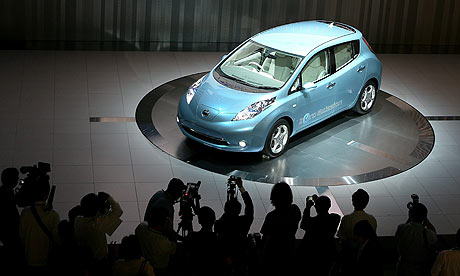
    Nissan's Leaf eletric car

    The new zero-emission electric vehicle, Leaf, during the opening ceremony of the new Nissan headquaters in Yokohama on Sunday. Photograph: Kiyoshi Ota/Getty Images


    Nissan has unveiled what it claims to be the world’s first mass-market electric car — a five-door hatchback called Leaf which its Sunderland plant is vying to build for the European market.


    The family-sized car, which has a maximum range of 100 miles and a top speed of about 90mph, will be in showrooms in Britain, Europe, the US and Japan by the end of next year.


    The Leaf is the first of Nissan’s new range of fully electric powered cars, which produce no carbon emissions, unlike hybrid vehicles such as the Toyota Prius, which uses a petrol-powered engine as well as an electric battery. Nissan’s range of electric cars will include small, medium-sized and large saloon cars.


    A Nissan spokeswoman would not disclose how much the Leaf would cost consumers, other than to say it would be similarly priced to other family-sized cars in the £10,000-£15,000 bracket. This excludes the cost of the electric battery, which drivers would have to buy at a cost of several thousands pounds, or lease for a monthly fee.


    The Japanese carmaker announced last month that it had selected its Sunderland plant to make lithium-ion batteries for the European market at a new £200m factory. But the north-east plant is also bidding to make the cars. The factory is up against plants in France, Spain and Portugal also owned by Nissan and its French partner Renault.


    Nissan is in discussions with the British government about what financial support could be offered because the economics of making electric cars on a large scale are unproved. The European Investment Bank has already offered the company a €400m (£340m) loan to build environmentally friendly cars in Europe but this needs to be guaranteed by the government for the UK to get a slice of production.


    Business secretary Lord Mandelson has assembled a £2.3bn package of loan guarantees for the car industry but none have been extended yet, despite growing frustration from companies.


    Nissan hopes that the Leaf will become the world’s first truly mass-market electric car. Unlike its Japanese rival Toyota, which makes the hugely popular Prius, Nissan is focusing its energies and investment on “pure electric” cars.


    Electric cars currently on the market have a niche appeal with motorists put off by their limited range, size and speed. The tiny G-Wiz in Britain, for example, has been popular among commuters in large cities such as London, where it is exempt from the congestion charge. But even the latest model has a speed limit of only 51mph and a maximum range of 70 miles before it needs recharging, limiting its use.


    High performance electric cars are prohibitively expensive. Tesla Motors, maker of the Tesla Roadster, has spent years trying to get costs down to about $100,000 (£60,000) for each sports car.


    The Leaf car battery can be charged to 80% capacity in about 20 minutes, compared with almost three and a half hours needed for the G-Wiz. The first batch of cars, primarily for the Asian and North American markets, will be made in Japan and the US.

  • The claim: Refrigeration Preserves Nutrients

    The Claim: Refrigeration Preserves Nutrients


    Published: July 27, 2009


    THE FACTS


    Leif Parsons


    Summer is the time for fresh produce, from farmer’s markets to garden harvests. But consumers may not realize that many fruits and vegetables experience rapid losses in their nutritional value when stored for more than a few days.


    In part, that is because the produce has usually already spent days in transport and on shelves before you buy it, said Barbara P. Klein, a professor of food science and human nutrition at the University of Illinois at Urbana-Champaign. Once they hit the refrigerator, she added, some fruits and vegetables can lose as much as 50 percent of their vitamin C and other nutrients in the ensuing week, depending on the temperature.


    But there are several ways around this. One, look for fresh produce that was locally grown — it has usually traveled shorter distances and is still near its nutritional peak — and try not to stock up on more than a week’s supply.


    Another option is frozen produce. While frozen fruits and vegetables may lack the flavor and aesthetic appeal of fresh, they are subjected to flash freezing immediately after being picked. That can slow or halt the loss of vitamins and nutrients.


    THE BOTTOM LINE


    Refrigerating produce does not prevent the loss of its nutrients.


    ANAHAD O’CONNOR


    scitimes@nytimes.com

  • Chinese to launch first ever green lawsuit against government

    Chinese to launch first ever green lawsuit against government


    ‘Breakthrough’ hailed as Chinese judge says residents may prosecute government over pollution claims


    China - Environment - Pollution

    Benxi steel mills blowing smoke over residential buildings.


    China should see its first lawsuit by an environmental group against authorities within weeks, state media reported today.


    A member of the All-China Environmental Federation – which is backed by the central government – said a judge in Guizhou province had accepted its claim on behalf of residents who complain they have suffered from pollution.


    Residents allege that the Qingzhen land resources bureau leased land to a drinks factory in 1994, but construction of the factory has not been completed and they believe the site is damaging two adjacent lakes from which they draw drinking water. They want the government to take back the land and remove construction materials. 


    Ma Yong, director of the legal service centre at the federation, told the Associated Press the case would open in early September. 


    “The case will serve as a warning for government departments and companies that damage the environment, as we’re stepping up efforts to play a supervisory role,” Ma Yong said. He added that he hoped it would pave the way for other organisations to file public-interest lawsuits.


    Liu Haiying, deputy head of the environmental protection tribunal at Qingzhen municipal people’s court, told China Daily: “We are established to safeguard public interest and hope to encourage other courts to step forward to handle similar cases.”


    She added: “No matter what the conclusion is, we hope it will serve as a warning to government departments such as environment, forestry and other agencies, that they should always fulfill their duty to protect the environment.


    “They need to gradually realise that they are not only under the supervision of the party and other administrative departments, but also under the watch of all citizens.”


    Environmental activists complain that courts usually turn away such cases.


     “If this leads to more non-governmental organisations bringing public interest litigation I think this is a very important breakthrough. It means China is going to open the door to more public involvement in environmental enforcement,” said Alex Wang, a senior lawyer with the Natural Resources Defense Council, a US environmental group.


    In a separate development, China is to shift a planned £3bn oil refinery and petrochemical plant in the south after years of public outcry.


    Wang Yang, the Communist Party chief of Guangdong, said the province would move the plant – a joint venture between China’s Sinopec and the Kuwait Petroleum Corporation – because of opposition from the community and officials. 


    “We only have one planet to live on, so whatever we do on this end will affect others on the other end,” Wang told reporters at a news conference on Thursday. 


    “The decision by the government shows that they do consider the opinions from different stakeholders across the region, which is a positive sign,” said Edward Chan, a Greenpeace campaign manager based in Hong Kong. 


    “Our worries now are that the residents [in the new area] are not as well-educated or informed, or may be more eager to look for economic development. 


    “The story has not ended. It’s really important for green groups to pay attention to where the project is moving to.” 


    It is thought the factory will be relocated away from Nansha to Zhanjiang in western Guangdong, a less ecologically sensitive area. 

  • Climate change poised to feed on itself

    Climate change poised to feed on itself


    • August 1, 2009   SMH

    Fifteen of Australia’s top climate experts explain how we know humans are altering the atmosphere and why we must act now.


    Around the world, thousands of scientists have devoted their professional lives to studying the climate. Not centrally organised, they sometimes build temporary affiliations but they remain scientists throughout – that is, they are independent, constantly challenge each other and are committed to searching for truth through objective, independently verifiable evidence.


    Overwhelmingly, this evidence has led to four conclusions. The first is that the world is warming. The global average temperature has increased by about 0.8 degrees since 1850, with most of the increase occurring since 1950. The warming varies among decades because of natural fluctuations but the overall trend has been inexorably upward.


    Warming is evident in other indicators, such as rising sea levels and reduced sea-ice and snow cover. Of these, the most important measure is the extra heat in the oceans, which is steadily rising. Claims that climate change has reversed since 1998 are misrepresentations of the full data.


    The second conclusion is that the dominant cause of the warming since about 1950 is the increase in the atmospheric concentrations of greenhouse gases released by human activities, of which carbon dioxide (CO2) is the most important.


    This critical conclusion is based on several independent lines of evidence, including basic physics, studies of climate changes in both in the geological past and in the industrial era, and finally – but far from solely – from the predictions of climate models. Together, these provide an overwhelming case that increasing greenhouse gas concentrations cause warming, and that CO2 is the largest contributor to the current warming trend.


    Other contributors include changes in the sun’s output associated with sunspots and solar flares, and volcanic dust. However, if these were solely responsible for temperature changes since 1850, the world should have cooled over the past half-century rather than warming at an increasing rate.


    The third conclusion is that warming will increase in future, if emissions of CO2 and other greenhouse gases maintain their present paths. “Business as usual” scenarios for future emissions lead to likely global temperature increases of up to six degrees above present temperatures by 2100.


    These are dramatic temperature increases, which would be accompanied by major disruptions to food supplies, river flows and water availability, significant and ongoing rises in sea level (of up to about a metre by 2100 and potentially metres over longer times), disease threats, disruptions to ecosystems including the extinction of many species, and social and geopolitical destabilisation.


    The fourth conclusion is that climate change cannot be reversed for many centuries, because of the massive heat stores in the world’s oceans. Even if CO2 and other greenhouse gas concentrations were stabilised today at their present levels, a further warming of at least 0.6 degrees would inevitably follow (on top of the 0.8 degrees observed since 1850) and sea-level rise would continue for centuries to millenniums.


    These four conclusions have been known and agreed among thousands of independent climate scientists for more than a decade. However, new findings suggest that the situation is, if anything, more serious than the assessment of just a few years ago.


    The heightened concern among climate scientists arises from a growing realisation that climate change can be accelerated beyond current predictions by reinforcing “climate feedbacks”, which contribute to climate change and are accelerated as it occurs, thus causing climate change to feed on itself. When these feedbacks are sufficiently strong they become “climate tipping points” which can flip the climate into a new state with essentially no way to recover.


    Several feedbacks are of immediate concern. Interactions between climate and the earth’s carbon cycle (the exchange of carbon between the atmosphere, the land and the oceans) will act to accelerate climate change if sinks do not keep pace with emissions (as is already happening) and/or if previously stable carbon stores are released to the atmosphere under climate change, for example by the thawing of carbon-rich frozen soils.


    Accelerated polar warming will cause loss of ice and a consequent darkening of the surface, leading to more heat absorption and faster warming. Atmospheric concentrations of aerosols (tiny particulates) are likely to decrease in future as nations improve air quality, leading to accelerated warming as the cooling effect of aerosols is reduced.


    Oceans are becoming more acidic as a consequence of increased CO2 in the atmosphere. When CO2 concentrations exceed levels to be reached by 2035 under business-as-usual emissions scenarios, there will be severe disruptions to marine ecosystems (including the Great Barrier Reef and ocean food chains), which will endanger fisheries and weaken the uptake of CO2 by oceans.


    Temperature rises of two to three degrees (or higher) carry a high risk of irreversible decay of the Greenland ice sheet from surface warming alone, leading to a sea level rise of up to about seven metres. Destabilisation of the West Antarctic Ice Sheet would cause a further few metres of sea-level rise.


    A climate conference in Copenhagen in March concluded that societies were highly vulnerable to even modest levels of climate change, with poor nations and communities particularly at risk. Temperature rises above two degrees will be very difficult for contemporary societies to cope with and will increase the level of climate disruption through the rest of the century.


    All of these concerns are firmly grounded in science. They have led the great majority of climate scientists to conclude (paraphrasing the summary of the Copenhagen conference) that rapid, sustained and effective emissions reductions are required to avoid ‘‘dangerous climate change’’, regardless of how it is defined.


    Higher future emissions increase the risk of crossing climate tipping points and they increase the likelihood that the long-term social and economic costs of both adaptation and mitigation will be higher.


    This article was written by Michael Raupach and John Church, CSIRO; David Griggs, Amanda Lynch and Neville Nicholls, Monash University; Nathan Bindoff, Antarctic Climate and Ecosystems Co-operative Research Centre; Matthew England and Andy Pitman, University of NSW; Ann Henderson-Sellers and Lesley Hughes, Macquarie University; Ove Hoegh-Guldberg, University of Queensland; Roger Jones, Victoria University; David Karoly, University of Melbourne; and Tony McMichael and Will Steffen, Australian National University

  • UN boss says ETS delays ‘don’t matter’

    UN boss says ETS delays ‘don’t matter’


    July 31, 2009


    Article from:  Australian Associated Press


    THE INTERNATIONAL community will care little if Australia skips its target date for finalising an emissions trading scheme (ETS), the head of the UN’s climate change office Yvo de Boer says.


    Asked whether it mattered if Australia arrived in Copenhagen for climate change talks in December with an ETS in place – a key hope of the federal government – Mr de Boer replied: “Quite honestly, no”.


    “What people care about in the international negotiations is the commitment that a government makes to take on a certain target,” he told ABC radio.


    The Rudd government wants to go to the Danish capital with the details of its ETS locked in.


    Climate Change Minister Penny Wong said Australia’s negotiating position would be weakened if the ETS was not passed before Copenhagen.


    But Mr de Boer said what mattered to the international community was the targets set, not the domestic policies implemented to meet them. Domestic policies remained domestic issues, he said.


    Mr de Boer said he would be “very happy” after the Copenhagen meeting if industrialised nations committed to ambitious targets and that countries like China, India, Brazil and South Africa were to agree to cutting emissions.


    He also noted that financial support was one of three key issues for a successful global offensive against climate change.


    A vote on Australia’s ETS will take place in the Senate on August 13, but it’s not yet clear whether the opposition, which has the numbers in the upper house, will support the legislation.


    The opposition was quick to jump on Mr de Boer’s statements, as was Family First’s Steve Fielding.


    “There is no question that the emissions trading scheme should have its design finalised after Copenhagen, and we’ve been saying that all year,” Opposition Leader Malcolm Turnbull said.


    Senator Fielding said it would be economic suicide to act before December.


    “I cannot believe the Prime Minister wants to put at risk thousands of jobs and our economy just so he can stand on his soap box at Copenhagen and say: ‘Look at me, look what I’ve done’.”


    Climate Institute spokesman John Connor says he fears Mr de Boer’s comments will be hijacked by ETS opponents as further evidence the scheme can be delayed.


    “If de Boer was asked: would it help to have it passed? I’m sure he would have said: yes,” he said.


    The government has pledged to reduce carbon emissions by 25 per cent from 2000 levels by the year 2020, while also committing to a global deal to hold atmospheric warming to within two degrees Celsius by 2050.


    However, Australian National University scientist Andrew Macintosh, who spent months modelling 45 different climate change scenarios, said the two targets were not compatible.


    Even if a 20 per cent cut was achieved by 2020, emissions would have to fall by an additional five per cent per year in order to reach the next target, he said.


    “That’s just extremely unrealistic (unless) we find some magic technology,” he said.

  • Britain To Lauch innovative Feed-in Tariff Program in 2010

    July 30, 2009

    Britain To Launch Innovative Feed-in Tariff Program in 2010


    They said it couldn’t be done, but Britain has risen to the challenge. Britain’s Secretary of State for Energy and Climate Change Ed Miliband has released long-awaited details on the Labour Government’s feed-in tariff policy.


    Miliband, an up-and-coming politician in the cabinet of besieged Prime Minister Gordon Brown, has done what was once unthinkable, put a British stamp of approval on feed-in tariffs as a policy mechanism for developing renewable energy.


    The move has potentially far reaching ramifications in the English speaking world where there has been reluctance to use full-fledged systems of feed-in tariffs, sometimes on ideological grounds. Now that Britain, Ontario, and South Africa, two of Britain’s former colonies, have definitively moved toward implementing sophisticated feed-in tariff programs, there may be less reticence to do so elsewhere in the Anglophone world.


    Of course, like politicians everywhere, Miliband had to rebrand feed-in tariffs to something more to his liking. His “clean energy cash back” creates yet another term for what everyone else calls, sometimes grudgingly, feed-in tariffs.


    Nevertheless, the program’s designers took their task seriously and didn’t opt for a system of faux or false feed-in tariffs, what North American campaigners have begun derisively calling FITINOs, feed-in tariffs in name only.


    The British proposal has also contributed several innovative new twists on feed-in tariff design that will mark the program as “made in the United Kingdom”.


    One new feature is the inclusion of tariffs for Combined Heat & Power (CHP). While not a first, it is one of the few programs to do so. Another feature of the proposed program is a distinct tariff for small solar PV systems on new homes, and a separate tariff for existing homes.


    Most significantly, program designers have included a mechanism to encourage homeowners and small businesses to reduce their electricity consumption. For example, a solar PV generator will be paid for all their generation. However, they will receive a bonus, currently at £0.05/kWh ($0.08 USD/kWh, $0.09 CAD/kWh), for electricity delivered to the grid over and above their domestic consumption. Thus, if a homeowner is able to cut their domestic consumption, and sell more electricity to the grid as a result, they are paid the bonus on top of the posted feed-in tariff.


    The proposed program, like the successful programs it was modeled after, was designed to “set tariffs at a level to encourage investment in small scale low carbon generation.” This is in contrast to faux feed-in tariffs that set the tariffs on the “value” of renewable energy to the system as in the California Public Utility Commission’s largely ineffective program.


    British designers were instructed to calculate tariffs not on ideology or economic theory but on the tariffs needed so “that a reasonable return can be expected for appropriately sited technologies” to meet the country’s renewable energy and carbon mitigation targets.


    Unfortunately, the program’s targets are timid at best, two percent of Britain’s electricity consumption by 2020, and the tariffs are limited by law to projects less than 5 MW to protect the country’s stumbling Renewable Obligation, the preferred mechanism for developing larger projects.


    The two percent target requires the generation of only 8 billion kWh (TWh) per year. For comparison, Germany generated 40 TWh in 2008 from wind energy and more than 4 TWh from solar PV. France, Britain’s longtime cross-channel rival, generated nearly 6 TWh from wind energy in 2008 from its system of feed-in tariffs.


    Some of the proposed tariffs are not competitive with those on the continent, or those in Ontario. “For community-scale or larger on-site projects,” says David Timms, a senior campaigner with Friends of the Earth (UK), “the rates [tariffs] are inadequate.”


    The tariff proposed for large wind turbines is low by international standards. Britain has some of the best winds in Europe. Nevertheless, many of the smaller projects that may be built under the feed-in tariff program may not be as advantageously sited as commercial projects under the Renewable Obligation. Consequently, the proposed tariff for wind projects from 500 kW to 5 MW may be insufficient to drive development.


    Timms also adds that the “degression for solar PV is quite aggressive” at 7 percent per year and that the bonus payment of £0.05/kWh for export to the grid may not be bankable. Because the bonus payment will fluctuate with the “market price” it won’t necessarily have a fixed value and, consequently, it will be discounted by banks providing debt for projects financed under the feed-in tariff.


    If implemented as proposed, though, the British program will offer some of the highest tariffs for small wind energy in the world. The tariffs will rival those in Italy, Israel, Switzerland, and Vermont, possibly reflecting the British government’s belief that it can encourage development of a domestic small wind turbine industry. For example, the tariff proposed for small wind turbines from 1.5 kW to 15 kW is £0.23/kWh ($0.38 USD/kWh, $0.42 CAD/kWh) about that paid in Italy and Israel.


    The proposed program also includes a number of anti-gaming provisions to avoid breaking up bigger projects into several small ones to fit within the 5 MW project size cap. These will prevent companies from moving big wind projects from the Renewable Obligation to the feed-in tariff program.


    Britain’s feed-in tariff program is expected to begin in early April, 2010 after an extensive consultation. Below is a summary of the program’s key elements.


    • Program Cap: 2% of Supply, 8 TWh in 2020
    • Project Cap: 5 MW
    • Generator can be green field (doesn’t have to be a metered customer)
    • Contract Term: 20 years, solar PV 25 years
    • Program Review: 2013
    • Costs for the program will be borne by all British ratepayers proportionally

    While limited in scope, Britain’s proposed feed-in tariff program is as sophisticated, if not more so, as any proposed in the United States, and will put the country on the world map of innovative renewable energy policy.


    Consultation on Renewable Electricity Financial Incentives 2009: Program Details


    Consultation on Renewable Electricity Financial Incentives: Background Documents & Reports