Category: News

Add your news
You can add news from your networks or groups through the website by becoming an author. Simply register as a member of the Generator, and then email Giovanni asking to become an author. He will then work with you to integrate your content into the site as effectively as possible.
Listen to the Generator News online

 
The Generator news service publishes articles on sustainable development, agriculture and energy as well as observations on current affairs. The news service is used on the weekly radio show, The Generator, as well as by a number of monthly and quarterly magazines. A podcast of the Generator news is also available.
As well as Giovanni’s articles it picks up the most pertinent articles from a range of other news services. You can publish the news feed on your website using RSS, free of charge.
 

  • Every European carbon trading permit

    Every European carbon trading permit


    Whether you think carbon trading is a con or a blessing, this new data gives us a unique insight into Europe’s emissions


    Carbon trading

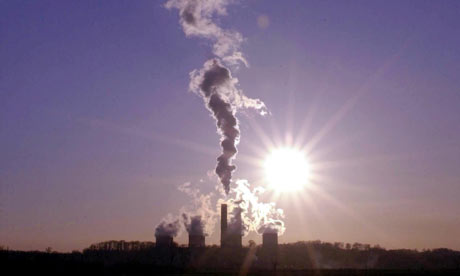
    Photograph: HAYDN WEST/PA


    Carbon trading is often either seen as the clever, market-based tool by which we can save the world from global warming at the lowest cost, or as a gigantic con through which wheelers and dealers in the City can fleece us all once again.


    The truth – as ever – is somewhere in the middle: it is a useful tool for cutting some types of emission, but has not been implemented well, especially in the EU Emissions trading scheme. Sandbag, a climate campaign organisation, reveals today that so-called “hot air” carbon credits – those which do not result in any actual emissions cuts – could be so numerous that companies covered by the EU Emissions Trading Scheme would not have to make any cuts to their own emissions until 2015.


    The hot air permits result from the over-allocation of emissions allowances and from those going unused as the recession cuts economic activity. The key point underlying it all, and which I heard again this morning from the Prime Minister’s special representative for carbon markets, Mark Lazarowicz, is that caps are the key – and the current caps are far too loose.


    The potential hot air credits identified by Sandbag include 400m tonnes which industry will not need in the current 2008-12 ETS trading period. A further 300m ETS permits exist in a reserve, which supplies them to newly formed businesses. Lastly, companies have the option to offset their emissions by buying credits from outside the EU, usually from hydroelectric or other schemes in China and India. On current trends 900m of these could be available up to 2012, and bankable for use up to 2020.


    Sandbag has very handily put the vast treasure trove of EU ETS data online now. It covers all 12,000 commercial installations across all the EU nations, and they have also created an emissions Google map which will launch fully on wednesday.


    In the meantime, we have extracted some of the most useful as a Google spreadsheet. This data covers 50% of the continent’s emissions – go and have a look – they are your emissions too.


    DATA: download the full data as a spreadsheet


    • Can you do something with this data?
    Flickr Please post your visualisations and mash-ups on our Flickr group or mail us at datastore@guardian.co.uk


    Get the A-Z of data
    More at the Datastore directory
    Follow us on Twitter

  • UN panel to study impact of climate change on poor countries

    UN panel to study impact of climate change on poor countries


    Intergovernmental Panel on Climate Change determined to increase understanding of regional effects of warming


    The Intergovernmental Panel on Climate Change (IPCC), the UN body of scientists drawn from around the world, will use its next assessment due in 2014 to look at how the impact of global warming is falling unequally on the poorest developing countries.


    Two hundred key members of the IPCC met in Venice last week to begin scoping out its fifth assessment. Rajendra Pachauri, the body’s chairman, told reporters at the UN building in New York today that the panel was determined to increase its understanding of local and regional impacts of rising temperatures.


    There was an awareness, he said, that in Africa in particular there was insufficient scientific and modelling fire-power to be able to predict in any detail what was likely to happen under global warming. “It’s critically important that we create the capacity in Africa to be able to assess the impact of climate change.”


    A portion of the money the panel was awarded for the 2007 Nobel peace prize that it shared with Al Gore has been put into a trust specifically to help the least developed countries predict, and thus prepare for, the likely consequences.


    Pachauri said the fifth assessment, the first draft of which is scheduled for 2013, would concentrate both on adaptations and mitigations that countries could make as rising temperatures take hold. “Every nation and community in the world will have to adapt [to] whatever happens in Copenhagen.”


    Pachauri said he had been heartened by the recent G8 meeting in which the world’s industrialised powers agreed on an aspirational ceiling of 2C temperature rise. But he said that in that case they should also have signed up to the IPCC’s conclusion that to contain global temperatures within that limit, emissions of greenhouse gases had to peak in 2015 and decline rapidly thereafter.


    “They should have categorically stated that by 2020 they will implement deep cuts in emissions. So there are several gaps that are rather glaring.” He went on to say that “the time has come for the global community to take action. There is frustration about the gap between our knowledge [of climate change] and acting on that knowledge.”


    Another area that the IPCC will home in on in its fifth assessment is extreme weather caused by climate change, a topic that has garnered mounting public attention in recent years.

  • India says no to emission reduction

    India says no to emission reduction


    Ramesh suggests a three-pronged approach for India–US collaboration on climate change as a way forward. From SciDev.net, part of the Guardian Environment Network


    India‘s minister for environment and forests Jairam Ramesh has ruled out the country’s agreeing to specific targets for reducing carbon emissions.


    “There is simply no case for the pressure that we [India] — who have among the lowest emissions per capita — face to reduce emissions,” Ramesh told visiting US Secretary of State Hillary Clinton yesterday (19 July).


    “And as if this pressure was not enough, we also face the threat of carbon tariffs on our exports to countries such as yours,” Ramesh said. These tariffs are charges levied on companies for the carbon dioxide they produce while manufacturing goods.


    Ramesh says that detailed modelling studies carried out in India show that even if gross domestic product grows by 8–9 per cent over the next two decades, India’s emissions will be below that of developed countries.


    He also said India sees “a critical role for international technology cooperation in enabling countries like India to adapt to climate change“. India, in collaboration with the UN, will host an international meeting on climate change technology issues on 22–23 October, in New Delhi, which is expected to culminate in a statement for inclusion in any agreement to be reached in Copenhagen in December.


    Although developing countries expect a concrete adaptation fund to be put in place in Copenhagen, developed countries have not yet committed themselves to any specific contributions, Tove Maria Ryding — a climate and energy campaigner for Greenpeace Denmark and chair of a coalition of 92 nongovernmental organisations — told journalists from developing countries last month (June).


    Technology transfer is being linked to how willing developing countries — especially Brazil China, India and South Africa — are to commit themselves to reducing emissions, she says.


    A press release from India’s environment ministry on 19 July says Ramesh suggests a three-pronged approach for India–US collaboration on climate change as a way forward. The first is to set up an India–US forum on climate change technology, with initial funds from the two governments to kickstart it. The two countries could engage in joint research in solar energy, biomass, clean coal, high-voltage power transmission, smart grids and wastewater utilisation, he suggests.


    The second is building institutional capacity for climate change research and its impacts, and the third is collaboration between the two countries on environmental planning, regulation and management.


    India’s future plans in this area include establishing a science-based national environmental protection authority and a national ‘green tribunal’ to serve as an environment court — a specialist court for environmental issues.


    • This article was shared by our content partner SciDev.net, part of the Guardian Environment Network

  • Prius takes a ride to the US aboard solar-powered container ship

    Prius takes a ride to the US aboard solar-powered container ship


    Green freighter makes maiden Japan-US voyage to deliver Toyota hybrids. From BusinessGreen.com, part of the Guardian Environment Network


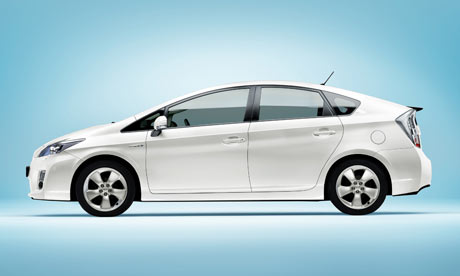
    The 2009 Toyota Prius

    The new Toyota Prius, due to launch in the UK for summer 2009. Photograph: PR


    As the manufacturer of the world’s most famous hybrid car, it seems only fitting that Toyota has now begun shipping its Prius cars to the US using a container ship that could also qualify as a hybrid.


    The Auriga Leader, the world’s first freighter to be partly powered using solar energy, has made its maiden voyage to the US from Japan, arriving at California’s Port of Long Beach earlier this month with a consignment of Prius cars and other Toyota vehicles.


    Launched in December, the ship is equipped with 328 solar panels on its car carrier which can generate up to 40kW of energy.


    The Auriga Leader’s solar array provides a supplementary source of clean energy to the ship, helping to reduce the load on its auxiliary engines. They also serve a double duty by helping to protect the vehicles from salt water, wind pressure and vibrations while at sea.


    The freighter is a joint project from Japanese companies Nippon Yusen Kaisha and Nippon Oil Corp – which invested $1.68m (£1m) in the solar panel system – and is contracted exclusively to Toyota.


    The Japanese automaker will use the Auriga Leader, which can carry up to 6,400 vehicles, to make bi-weekly trips between Japan and California.


    In addition to having a green mode of overseas delivery, most Prius cars are produced in a solar-powered factory in Tsutsumi, located in central Japan. Its rooftop array produces 2MW of electricity per hour, meeting about half the plant’s energy requirements.


    The latest version of the iconic car, which was launched in Japan in May and is expected in the UK this summer, also features a rooftop solar panel designed to provide power for the car’s cooling systems.


    • This article was shared by our content partner BusinessGreen.com, part of the Guardian Environment Network

  • Nissan’s plug-free electric car

    Nissan’s plug-free electric car


    The Japanese carmaker’s wireless system employs the same electromagnetic field technology used to charge an electric toothbrush


    Nissan has developed a revolutionary plug-free technology that it claims will make charging electric cars easier and faster. The wireless charging system is based on the concept of inductive charging, the same electromagnetic field technology used to charge an electric toothbrush. Nissan has scaled it up for use in their Zero Emission Vehicle (ZEV) electric car, which can charge in a compatible parking bay without the need for wires. Today’s electric car owners, by contrast, have to carry a mains plug aboard to recharge.


    David Bott, director of innovation programmes at the Technology Strategy Board, said: “If you look at handheld gadgets, inductive charging is a proven technology – the fundamental science says that it will work. I suspect you’ll end up plugging electric cars in at night for efficiency, and by day using inductive for on-the-go recharging.”


    Nissan has ambitions beyond mere wireless charging bays. It hopes to scale the technology up even further as a series of plates laid into the surface of designated electric vehicle lanes on our roads and motorways, theoretically enabling motorists to charge as they drive. However, Nissan admits that it still has no idea on how much it would cost, how long the designated lane would have to be, or how fast the battery could be recharged.


    Bott said he was sceptical that such charging lanes would be practical: “It’s scientifically feasible, but it’s whether it’s scalable and feasible is another matter.”


    Nissan is grappling with its recent consumer research, which revealed that 61% of potential electric car customers were most worried about the inconvenience of recharging. As well as inductive charging, its technological solutions include developing fast-charging facilities, which they hope to see in place in shopping car parks and motorway service stations. “So while you’re shopping, or having a cup of tea, the battery will refill to 80% of its capacity, in about 25 minutes,” explained Larry Haddad, general manager of product strategy and planning at Nissan Europe.


    In addition to these charging innovations, Nissan believes the ZEV has what it takes to compete against established electric models such as the TH!NK City and G-Wiz. Nissan claims it will be the first “dedicated” electric car on the market, arguing that most rival cars have been rehashes of existing models.


    The ZEV is a five-seater family-sized car with a top speed of 90mph, a battery range of around 100 miles and surprisingly impressive acceleration. Redmer van der Meer, Nissan’s European electric vehicle product manager, said that he is confident the range will be significantly extended in the next few years, and that cars will be built so new, improved batteries can be retro-fitted. Van der Meer said the car is deliberately conventional in style: “We don’t want to make a shock in the market, an egg-shaped car or something. We want to make a transition. You could do mad things but we really don’t want to.”


    Nissan’s electric car is set to go on sale in the US and Japan next year, before arriving in the UK and rest of Europe by 2012. Pricing is yet to be announced.

  • Carbon emissions trading system ‘seriously flawed’

    Carbon emissions trading system ‘seriously flawed’


    • Report by campaign group Sandbag critical of scheme
    • Hot air carbon credits preventing actual emissions cuts


    The system of trading carbon emissions at the heart of the ambitious low-carbon plan announced by the government last week is seriously flawed and close to becoming irrelevant, according to researchers behind a new analysis.


    So-called “hot air” carbon credits – those which do not result in any actual emissions cuts – could be so numerous that companies covered by the EU Emissions Trading Scheme would not have to make any cuts to their own emissions until 2015, says the report from climate campaign group, Sandbag. The hot air permits result from the over-allocation of emissions allowances and from those going unused as the recession cuts economic activity.


    The ETS covers 50% of the UK and EU’s carbon emissions, mainly in the energy, cement, steel, glass and manufacturing sectors. Companies in these sectors are allocated allowances for the carbon they emit, with the total number shrinking over time, theoretically forcing companies to buy additional permits to pollute if they do not cut their emissions.


    A large proportion of the UK’s promised cut of 34% by 2020 will come via British companies in the ETS. Globally, the carbon trading market was worth €92bn (£79bn) in 2008, trading 5bn tonnes.


    However, the large number of carbon permits that have been allocated and a fall in emissions due to the recession, have made the trading system less effective.


    “With too many rights to pollute in circulation, the scheme is in danger of being rendered irrelevant,” said Sandbag founder, Bryony Worthington. “At a time when other countries are looking to set up their own trading schemes and the world is set to debate a global deal on how to tackle climate change, [this] flagship policy urgently needs rescuing – starting with much tougher caps.”


    She called for an immediate tightening of the cap on permits to 30% of industry’s emissions by 2020, compared to the existing 21%, and a commitment to 40% if a strong global deal results from a UN climate change summit in Copenhagen in December. Making the 30% cut would cost virtually the same as was originally envisaged for the 21% cut, she said, and be much closer to the cuts scientists say must be made to avoid dangerous climate change.


    Ed Miliband, energy and climate secretary said: “The UK has been successful in arguing for big improvements to the EU ETS and making sure it’s far more effective in tackling climate change. As part of a global climate deal we want Europe to up its targets and that will mean a greater contribution from the EU ETS.”


    But MP Tim Yeo, chair of the environment audit committee, said: “These findings confirm what many have begun to suspect. Although emissions trading remains conceptually valid, in practice the EU ETS has not succeeded in driving investment in low-carbon technology.”


    The ETS price for a tonne of CO2 at the close of the market on Friday was €14. To make it economical for generators to switch from coal to less-polluting gas for electricity production requires a price of around €25, while carbon capture and storage technology needs a price of €40-€50 a tonne to be worth investing in.


    But Guy Turner, director of analysts New Carbon Finance, said the current relatively low carbon price simply meant the emissions cuts required by the existing ETS cap were being made less expensively than expected. “There is some surplus in the system. But the set targets are being achieved – albeit by a mechanism not predicted: the recession.”


    He believes emissions will begin to rise once again from 2010 as economic growth returns, and that a year or two after that demand for permits will outstrip supply. “The 21% target will look tight by 2020.”


    Sandbag’s calculation of the potential hot air permits are undisputed and highlight the gap between what is politically possible – loose caps – and what science demands – tight caps – say experts.


    The Sandbag analysis comes on the same day as a report by the prime minister’s special representative on carbon trading, Mark Lazarowicz MP, published at a government conference on the subject. Lazarowicz’s report is expected to argue that carbon trading is a crucial part of the world’s response to climate change, and that schemes around the world should be integrated in future.


    The potential hot air credits identified by Sandbag include 400m tonnes which industry will not need in the current 2008-12 ETS trading period. These could be sold as windfall profits, raising £5bn at current prices, or banked for the next period, depressing the future price. A further 300m ETS permits exist in a reserve, which supplies them to newly formed businesses. Lastly, companies have the option to offset their emissions by buying credits from outside the EU, usually from hydroelectric or other schemes in China and India. On current trends 900m of these could be available up to 2012, and bankable for use up to 2020.


    The non-EU credits come mainly from the UN’s clean development mechanism, which is widely acknowledged to be flawed. It includes many projects that would have happened without CDM funding, meaning the carbon reductions are not true cuts. Campaigners also argue it allows rich nations a “get out of jail free card”, when they should be making cuts in their own countries.


    “Concern remains about the extent to which British companies can purchase credits overseas instead of cutting emissions at home,” said Yeo. Sandbag estimates the British companies could spend up to £1.7bn overseas on credits by 2012.


    Carbon trading will also be at the heart of the global climate change treaty negotiated in Copenhagen to succeed the Kyoto protocol.


    The world’s top climate change expert, Rajendra Pachauri, told the Guardian that he shared concerns that the ETS was not being effective in tackling global warming. As the most mature trading system, it is seen as a model for newer markets around the world, which will need to be integrated for a truly effective global system of cutting emissions.


    But Pachauri, head of the Intergovernmental Panel on Climate Change, said a strong Copenhagen agreement could lead to a substantial shift in the carbon market, lifting the price: “It may change the whole dynamic. That is my feeling, though I may be wrong.”