Category: News

Add your news
You can add news from your networks or groups through the website by becoming an author. Simply register as a member of the Generator, and then email Giovanni asking to become an author. He will then work with you to integrate your content into the site as effectively as possible.
Listen to the Generator News online

 
The Generator news service publishes articles on sustainable development, agriculture and energy as well as observations on current affairs. The news service is used on the weekly radio show, The Generator, as well as by a number of monthly and quarterly magazines. A podcast of the Generator news is also available.
As well as Giovanni’s articles it picks up the most pertinent articles from a range of other news services. You can publish the news feed on your website using RSS, free of charge.
 

  • Wild weather whips up a storm for Byron Council


    Andrew Fraser | July 04, 2009


    Article from:  The Australian


    FOR five days in late May, John Vaughan watched his Byron Bay beachfront property get smashed by a storm so severe that its type only occurs once every 100 years.


    After watching his front yard disappear into the sea as the huge swell came closer, he decided to take action.


    He had been emailing Byron Shire Council for the previous two days, asking for help to restore the sandbags in front of his house on land owned by both him and council. The bags would have kept his property safe from the snarling sea.


    On the afternoon of the fifth day he had assembled a small army of contractors ready with sandbags and rocks to build a wall to keep the sea at bay, but the response he got from the council was not the go-ahead to swing into action to save his property, but a legal writ preventing him from doing any work in accordance with the council’s “planned retreat” policy.


    The policy has existed for 20 years but the president of business group Byron United, Ed Ahern, said the way it was being interpreted by the Greens-dominated council meant that houses close to the sea were simply being abandoned to the elements as a way of ending what the council saw as undesirable coastal development.


    “If residents can’t protect themselves from high seas, there are possible dire consequences for the whole town,” he said.


    The fierce storm in late May stopped soon after the council writ arrived, but its legacy is still apparent at Belongil Beach, which has almost disappeared.


    Byron is not the only area affected. On the Sunshine Coast, some 250km north, Mooloolaba beach has also almost disappeared since the same storm.


    But Byron is still experiencing a political, and soon to be legal, storm as a result of what happened to Mr Vaughan in late May.


    After the council sought an injunction in the Land and Environment Court to stop him sandbagging, he took out another writ to allow it to go ahead. Three weeks after the storm, some limited sandbagging took place.


    The council is drawing up a coastal management plan, with a draft due next month, but signs are that residents on the beachfront will not be able to sandbag their homes or build rock walls for protection from wild seas that are becoming more regular.


    Byron Shire mayor Jan Barham, the only elected Green mayor in Australia, said yesterday many of the beachside houses in Byron Bay had been built without full consent. Like many coastal towns, Byron Bay had developed ad hoc, and she wanted a more formal approach to coastal development.


    “Planned retreat” from the coastline had been council policy since 1988, and anyone who had built a house on Belongil Beach since then had done so “in the full knowledge that they were taking a risk”, she said.


    “It’s like building in a flood-affected area; you can build there if you like, but you’ve got to take the risk,” she said.


    Ms Barham said the council had taken action against Mr Vaughan because “he did not approach us, he chose not to co-operate with council”.


    “There is a lot of misinformation about this,” she said.


    The planned retreat policy might be fine for future development, but it fails to address the problem of existing houses, especially those, like Mr Vaughan’s, built before 1988.


    Belongil Beach is the sort of place that was only known to locals for years, but now it is among the most sought-after beachfronts in Australia.

  • Rees gives up climate plans

    Rees gives up climate plans


    Marian Wilkinson and Ben Cubby
    July 3, 2009


    THE Rees Government has dumped key elements of its plan to reduce greenhouse gas emissions, including promises to force big businesses to use less energy and to set a statewide energy efficiency target.


    But the Minister for Climate Change, Carmel Tebbutt, said yesterday that the state was still “a leader in climate change action” after releasing the Government’s response to a review of its climate change measures by the Independent Pricing and Regulatory Tribunal.


    The promise to force big companies to make and implement energy-saving plans was announced by the former premier, Morris Iemma. Yesterday the Government agreed to make this voluntary, after the tribunal recommended the mandatory program be terminated.


    The Australian Industry Greenhouse Network, a lobby group for heavy greenhouse gas polluters, told the tribunal it opposed mandatory energy efficiency standards for businesses because they “impose an unnecessary compliance burden on industry” and were not economically efficient.


    As it revealed the policy changes, the Government said it was preparing to reduce dependence on coal, announcing that new power stations planned for Lithgow and the Hunter Valley might use gas.


    Coal has been the primary energy source for all state-owned power stations but the Federal Government’s proposed emissions scheme has boosted the prospects of using gas.


    The Government also confirmed its approval of a giant wind farm near Goulburn, which it said could generate enough electricity for 63,000 homes.


    It will maintain programs to cut energy use in homes and schools, including BASIX, or the Building Sustainability Index, which sets energy efficiency standards for new homes and which the review supported.


    But the Government decided not to take the tribunal’s advice to change its Biofuel Act, which requires that ethanol be mixed with standard unleaded fuel sold across the state.


    The review said there should be an independent appraisal of this practice because there was little evidence it was reducing emissions. But the Government said there was no point in reviewing it because it had been in force less than two years.


    Funding for switching schools to low-energy lighting will also continue despite the review finding that was “not a cost-effective way of saving energy and reducing greenhouse gas emissions”.


    The changes came as the Premier, Nathan Rees, joined the Prime Minister, Kevin Rudd, and other state leaders in Darwin in signing a national energy efficiency strategy that includes introducing new air-conditioner standards next year, phasing out electric hot water systems, and banning the sale of incandescent light globes in November.


    The policy changes drew fire from the State Opposition and the Greens. “We were always sceptical about the mandatory efficiency provisions … because we knew they would be greeted with a barrage of lobbying,” the Greens MP John Kaye said.


    with Brian Robins

  • 250.000 jobs and 70 Bn revenue- the forecast for a thriving renewables sector.

    250,000 jobs and £70bn revenue – the forecast for a thriving UK renewables sector


    Study from the Carbon Trust warns that potential of renewables sector will only be realised if government invests in research and removes regulatory barriers


    Rain And High Winds Battering The UK

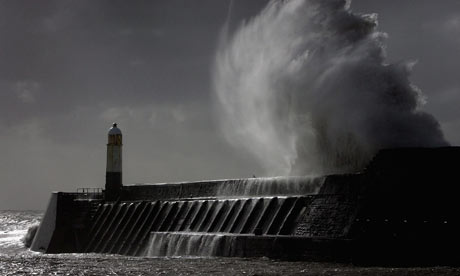
    Waves crash over the harbour wall on the seafront at Porthcawl in Wales. Photograph: Matt Cardy/Getty Images


    The UK could benefit from 250,000 jobs and up to £70bn in revenue from offshore wind and wave technologies by 2050, according to a study by the Carbon Trust. This potential will only be realised, however, if the government gives clear signals to industry, so that investors know where to put their money, rather than leaving new technologies to face the market alone.


    The Carbon Trust, a government-backed agency that studies ways to promote low-carbon technologies, carried out economic analyses in six areas of low-carbon industry including offshore wind, wave, solid-state lighting and micro combined heat and power.


    The studies, published today, looked at the current status and costs of the technology, how these would develop and what research and development costs there might be in the coming decades.


    The studies for offshore wind and wave power showed these technologies could provide at least 15% of the total carbon savings required to meet the UK’s 2050 CO2 reduction targets. “The UK’s greenhouse gas targets mean that by 2050 We must reduce our emissions to just one-10th of today’s levels, per unit of output,” said John Beddington, the government’s chief scientific adviser.


    “This is a formidable challenge, requiring step changes in the rate at which we improve our energy efficiency and in low-carbon innovation.The Carbon Trust’s proposals recognise the need for us to be smarter in focusing our investments, including to help businesses seize the economic opportunities of the transition.”


    According to the new analysis, published just a few weeks ahead of the forthcoming government white paper on energy, the UK could attract 45% of the global offshore wind market by 2020, delivering £65bn of net economic value and 225,000 total jobs by 2050.


    This would only happen with an investment of up to £600m into research, the removal of regulatory barriers and incentives to increase the deployment of the turbines. In the UK this means installing around 29GW of wind by 2020 and upwards of 40GW by 2050. A large part of the economic benefit would come from exporting technology developed here.


    For wave, the outlook is more modest. Around a quarter of the world’s wave technologies are being developed in the UK and the Carbon Trust said Britain should be the “natural owner” of the global market in this area. It could generate revenues worth £2bn per year by 2050 and up to 16,000 direct jobs.


    “These technologies are not green ‘nice to haves’ but are critical to the economic recovery of the UK,” said Tom Delay, the chief executive of the Carbon Trust. “To reap the significant rewards from their successful development we must prioritise and comprehensively back the technologies that offer the best chance of securing long-term carbon savings, jobs and revenue for Britain. Rather than following in the footsteps of others, this new analysis shows it is an economic no-brainer to be leading from the front.”


    In addition to the direct jobs in these in industries, there would be further benefits to the economy. “The UK’s also very good at the secondary service industries – things like the financing of wind farms, the legal documents, environmental assessments,” said Paul Arwas, a consultant who wrote the new Carbon Trust report. “Those jobs would be in addition – for offshore wind, it would be another 70,000 by 2050.”


    None of this will happen, though, without government support. Arwas said that when encouraging new industries, authorities tended to swing between two poles – either direct state funding or allowing markets to decide. “Either the governments didn’t intervene at all or, if they did they did it by market mechanisms which are totally undifferentiated by technology. There you end up with a situation where, to take a footballing analogy, you’ve got the under 21s playing the under 12s.”


    Instead the Carbon Trust has proposed a new, semi-interventionist, model where the government chooses a family of technologies to invest in, for example wave power, and tells developers there will be subsidies or long-term help available to develop the sector as a whole but without backing individual technologies.


    John Sauven, Greenpeace’s executive director, welcomed the Carbon Trust’s proposed approach. “Every country now needs a decarbonisation plan to help solve three of our greatest challenges – climate stability, energy security and economic prosperity. The UK has an enormous untapped supply of clean, green renewable energy and a world class engineering industry well placed to develop it.”


    Martin Rees, the president of the Royal Society, said the UK had little choice but to develop these new technologies, given the dwindling supplies of fossil fuels: “In the past we have let opportunities to capitalise on our scientific leadership slip through our fingers. The US and others are investing heavily in low carbon technologies; we must not fall behind and waste the scientific expertise that we have in the UK.”

  • ExxonMobil continuing to fund climate sceptic groups, records show

    ExxonMobil continuing to fund climate sceptic groups, records show


    Records show ExxonMobil gave hundreds of thousands of pounds to lobby groups that have published ‘misleading and inaccurate information’ about climate change


    Exxon

    Exxon. Photograph: Donna Williams/AP


    The world’s largest oil company is continuing to fund lobby groups that question the reality of global warming, despite a public pledge to cut support for such climate change denial, a new analysis shows.


    Company records show that ExxonMobil handed over hundreds of thousands of pounds to such lobby groups in 2008. These include the National Center for Policy Analysis (NCPA) in Dallas, Texas, which received $75,000 (£45,500), and the Heritage Foundation in Washington DC, which received $50,000.


    According to Bob Ward, policy and communications director at the Grantham Research Institute on Climate Change and the Environment, at the London School of Economics, both the NCPA and the Heritage Foundation have published “misleading and inaccurate information about climate change.”


    On its website, the NCPA says: “NCPA scholars believe that while the causes and consequences of the earth’s current warming trend is [sic] still unknown, the cost of actions to substantially reduce CO2 emissions would be quite high and result in economic decline, accelerated environmental destruction, and do little or nothing to prevent global warming regardless of its cause.”


    The Heritage Foundation published a “web memo” in December that said: “Growing scientific evidence casts doubt on whether global warming constitutes a threat, including the fact that 2008 is about to go into the books as a cooler year than 2007”. Scientists, including those at the UK Met Office say that the apparent cooling is down to natural changes and does not alter the long-term warming trend.


    In its 2008 corporate citizenship report, published last year, ExxonMobil said it would cut funds to several groups that “divert attention” from the need to find new sources of clean energy.


    The NCPA and Heritage Foundation are included among groups funded by ExxonMobil, according to details of its “2008 Worldwide Contributions and Community Investments” published recently.


    Ward said: “ExxonMobil has been briefing journalists for three years that they were going to stop funding these groups. The reality is that they are still doing it. If the world’s largest oil company wants to fund climate change denial then it should be upfront about it, and not tell people it has stopped.”


    In 2006, Ward, then at the Royal Society, wrote to ExxonMobil to challenge the company’s funding of such lobby groups. The move, revealed in the Guardian, prompted accusations of censorship and debate about whether experts should “police” the distribution of scientific information.


    In an article on the Guardian website, Ward writes: “I have now written again to ExxonMobil to point out that these organisations publish misleading information about climate change on their websites, and to seek guidance on how to reconcile this fact with the pledge made by the company. I believe that the company should keep its promise by ending its financial support for lobby groups that mislead the public about climate change.”


    ExxonMobil said it annually reviews and adjusts its contributions to policy research groups. A spokesman said: “Only ExxonMobil speaks for ExxonMobil and our position on climate change is clear. We have the same concerns as people everywhere, and that is how to provide the world with the energy it needs while reducing greenhouse gas emissions. We take the issue of climate change seriously and the risks warrant action.”

  • Dam was not costed, memo reveals

    Dam was not costed, memo reveals


    Matthew Moore Urban Affairs Editor
    July 2, 2009


    THE NSW Government announced construction of a half-billion dollar dam just six weeks after receiving advice from a top Hunter Valley water official that the cost of the project had not been properly studied.


    A memo from the managing director of Hunter Water, Kevin Young, released yesterday reveals that the Tillegra Dam on the Williams River near Dungog was not even under active consideration when, four months before the 2007 state election, the Iemma government announced the project.


    Mr Young’s memo, dated September 28, 2006, advised senior staff in the office of the minister for water, David Campbell, that “the cost of Tillegra Dam has not been robustly quantified” and was one of a number of projects due to be considered as part of a long-term plan for water supply.


    Mr Young wrote his memo after a request from Mr Campbell’s staff for briefing notes of any projects under consideration in the Hunter. The premier then promised the dam was a priority project.


    The project is opposed by many locals and by the NSW Greens MP John Kaye. They say there was never any serious planning done for the dam, which Hunter Water has rated in the past as the second least desirable option after desalination.


    Last year Dr Kaye won the support of the Legislative Council to force the Government to produce all documents containing plans and costings. While many were tabled, some were withheld on the grounds that release was not in the public interest, including Mr Young’s memo.


    The former NSW chief justice, Sir Laurence Street, reviewed it in January and recommended it be released on public interest grounds. The Government made it available yesterday.


    Sally Corbett, chairwoman of the No Tillegra Dam Group, said the memo “confirms the community’s suspicion that the decision was ad hoc, uncosted and unplanned and was made with absolutely no proven justification. It’s a disgrace.”


    The project, estimated in the budget to cost $477 million, is due to proceed once an environment assessment is finished, even though existing dams are 85 per cent full and water restrictions have not been in place in the Hunter for nearly 30 years.


    A spokesman for the Water Minister, Phil Costa, said the project was an opportunity to address underlying supply shortage in the Hunter and provide water for 160,000 extra people expected to move to the region in the next 20 years.

  • Sweden takes EU helm and vows action on climate change

    Sweden takes EU helm and vows action on climate change


    July 01, 2009


    Article from:  Agence France-Presse


    SWEDEN has taken over the six-month rotating presidency of the European Union, vowing to tackle climate change and combat soaring unemployment in Europe following the global economic crisis.

    “The financial crisis and climate change, with the preparation of the Copenhagen conference, will be our main priorities,” Prime Minister Fredrik Reinfeldt told reporters on the eve of the Swedish presidency.

    Stockholm wants to get the EU to sign up to a new UN global warming treaty to be negotiated in Copenhagen in December and which would replace the Kyoto Protocol on cutting carbon emissions that expires in 2012.


    “We need a global answer to this global problem,” Reinfeldt said.

    But Reinfeldt and his centre-right government, which took over the reins on Wednesday after a turbulent Czech presidency, have their work cut out for them for the next six months as the 27-member bloc finds itself in a period of limbo.

    A new European parliament has just been elected and is in the process of settling in, a new Commission will be installed – and it is not yet certain who the next president will be – and the bloc’s institutional framework may be altered depending on the outcome of a referendum in Ireland on the Lisbon Treaty in October.

    The Scandinavian country, which like the Czech Republic is not a member of the eurozone, nonetheless aims to restore confidence in the financial markets by establishing “a European body to supervise stability”.

    “We need to work in a more coordinated and cross-border way for supervision,” Reinfeldt said.

    Sweden also plans to “lay the foundations for a new growth and employment strategy” to help the millions of unemployed Europeans, according to its work program.

    Other priorities include EU enlargement, of which Sweden is a fierce advocate, improving European judicial co-operation, and developing a strategy to improve the Baltic Sea’s marine environment and the region’s growth potential.

    Reinfeldt’s government will host the European Commission for a meeting in Stockholm on Wednesday that will formally open the Swedish presidency.