Category: Uncategorized

  • Shorten doing the spade work in seat he needs to hold

    20 January 2014, 10.53pm AEST

    The battle for this seat is a litmus test for the next general election. Voters will judge both parties on their performance, both present and past.

    Shorten doing the spade work in seat he needs to hold

    Griffith voters are all too familiar with the shopping centre visit, a favourite of previous member Kevin Rudd. Bill Shorten joins ALP candidate Terri Butler in campaigning. AAP/Dan Peled

    Voters in Kevin Rudd’s former seat might be groaning at another bombardment, but the February 8 Griffith byelection has enough tactical importance for both sides to ensure this campaign won’t be a low-key affair.

    The Liberals would dearly love to bloody the nose of the as-yet- untested opposition leader by seizing the electorate, held by Labor since 1998. Bill Shorten needs the ALP to keep Griffith and indeed improve its vote, if he is to take advantage of Tony Abbott’s early problems and vindicate blocking the carbon tax’s repeal.

    History is on Shorten’s side. ABC electoral analyst Antony Green points out that a government has won only one seat from an opposition in a federal byelection – Kalgoorlie, 1920. (Twice oppositions have lost byelections to crossbenchers, but that’s not a chance here.)

    The Liberals need a 3% swing to take the seat – very difficult after the 5.5% they secured in September.

    Rudd had a personal vote but Labor says its size varied in different parts of the electorate and it obviously took a knock as some people sent a message about the leadership in-fighting.

    For those missing the Rudd face and gestures, the 11-candidate field includes Rudd impersonator Anthony Ackroyd, running for the Bullet Train for Australia Party. Among the odds and sods, there is a candidate from the Katter’s Australian Party, but Clive Palmer’s PUP is staying out.

    Shorten was in Griffith today and will be campaigning there until Thursday. Abbott, attending the World Economic Forum in Davos this week, will hit the ground for his good mate Bill Glasson.

    Both sides say that, at this stage, the contest is tight. Labor has polled extensively and declares it is just ahead. Glasson says: “I think we are line ball”.

    LNP candidate Bill Glasson is a personally popular candidate. AAP/Aman Sharma
    Click to enlarge

    The 61-year-old popular eye doctor is the best thing going for the Liberals. He wasn’t too keen to saddle up again after his marathon election run, but not to do so would have given the ALP an easy run. Labor’s Terri Butler, 36, also a local, is head of the employment and industrial law section of legal firm Maurice Blackburn in Queensland, but she has nothing like the profile of her opponent.

    Glasson’s pitch is that Griffith’s interest will be best served by a strong local member who, as part of the government, is a relevant voice. He’s also highlighting the carbon tax.

    With significant hospitals in the area, Labor is exploiting the state government’s health cuts, which Glasson describes as a reshuffling with very few lost jobs, and his support for a Medicare price signal for those who can afford it. It is raising the spectre of what the Feds might do after the Commission of Audit.

    Butler says: “People are not happy with the Abbott government and they are pretty unhappy with the state government”.

    Shorten, appearing today with a local disabled child, Freddie, and his mother Louise Kelly, said: “Mrs Kelly [is] worried that under Tony Abbott the National Disability Insurance Scheme is at risk to the slashing cuts, the same that we’ve seen under the LNP in Queensland.”

    Although the byelection comes at the term’s start and so its implications shouldn’t be exaggerated, the outcome could be significant for the mood in Canberra. A bad Liberal vote could make the government backbench jittery about tough measures. A big rebuff for Labor would hit that party’s morale.

    Griffith will be the first of several elections this year, all with direct or indirect federal implications.

    One is still a “maybe” election. The High Court will soon rule on whether there will be another West Australian Senate poll because of the lost ballot papers.

    Candidates for the Griffith byelection Wikipedia
    Click to enlarge

    The result wouldn’t change the basic fact of crossbench control of the Senate – which passes from the Greens to a gaggle of micro-players on July 1 – but the precise numbers would be up for grabs. If Labor and Greens between them got an extra seat out of a fresh WA poll, their potential to muster enough support to block legislation after July 1 would be marginally improved.

    The Liberals won three WA Senate seats at the election, while Labor scored two in the first count but only one in the second. Palmer’s party got a spot only in the first count; in the recount, the Australian Sports Party was successful, as were the Greens.

    Clive Palmer says that in WA his Palmer United Party is polling between a quota and a half and two quotas.

    Before a WA poll (if it happens), there will be state elections in Tasmania and South Australia, both on March 15.

    In Tasmania, Labor is set for defeat. Much interest will be in what happens to the Greens and how PUP does.

    The Greens are in transition from having great power (federally and in Tasmania) to being the kids no one wants to know. Their federal vote fell; they’ll soon lose their Senate clout. A desperate Tasmanian premier has thrown them out of the state cabinet. A slump in what has been their heartland state would put tremendous pressure on the party, internally as well as externally.

    Palmer is making a big push in Tasmania; he believes PUP could get the balance of power – which would give it a fillip federally. But a challenge to its registration has raised doubt about whether its name can be got on the ballot paper in time (meaning its candidates would lose their distinctive labelling). Palmer dismisses the challenge and the problem.

    In South Australia, the debate about Holden has complicated the situation but the Liberal opposition remains in a strong position.

    Assuming Labor lost both states, there would be conservative governments everywhere except the ACT, although the ALP would have the opportunity of a comeback in Victoria later in the year.

    Blanket “blue” across the nation would in theory give the Abbott government no excuses in its push to reform federalism. But experience has shown that in this area, when it suits them friends can play hardball as readily as political opponents.

  • First Infrared Satellite Monitoring of Peak Pollution Episodes in China

    Science News

    … from universities, journals, and other research organizations

    First Infrared Satellite Monitoring of Peak Pollution Episodes in China

    Jan. 20, 2014 — Plumes of several anthropogenic pollutants (especially particulate matter and carbon monoxide) located near ground level over China have for the first time been detected from space. The work was carried out by a team at the Laboratoire Atmosphères, Milieux, Observations Spatiales (CNRS / UPMC / UVSQ) in collaboration with Belgian researchers and with support from CNES, using measurements by the IASI infrared sounder launched on board the MetOp satellite. Their groundbreaking results are published online on the website of the journal Geophysical Research Letters dated 17 January 2014. They represent a crucial step towards improved monitoring of regional pollution and forecasting of local pollution episodes, especially in China.


    Share This:

    Despite efforts by the Chinese government to reduce surface emissions, China is repeatedly affected by major air pollution episodes. This has become an important public health issue, since air pollution causes more than 300,000 premature deaths in China each year. In January 2013, Beijing suffered an unprecedented pollution episode, mainly due to seasonal coal consumption and unfavorable weather conditions (lack of wind plus temperature inversion) that trapped the pollutants at ground level. In many regions, atmospheric concentrations of particulate matter (PM) reached values considered harmful to human health, sometimes exceeding the daily threshold recommended by the World Health Organization (25 µg/m3) by a factor of nearly 40.

    To monitor local and regional pollution, China has an air quality monitoring network that continuously provides measurements of key pollutants including PM, carbon monoxide (CO) and sulfur dioxide (SO2). However, the geographical distribution of measuring stations is patchy, which makes it difficult to predict the development of pollution episodes. In this context, satellite observations prove to be extremely valuable due to their excellent geographical coverage and horizontal resolution. Unfortunately, such measurements have the disadvantage of being sensitive principally at altitudes of 3 to 10 km. Using satellites to determine atmospheric composition near ground level was complicated until now.

    The researchers have shown that, contrary to expectations, the IASI sounder is able to detect plumes of pollutants even near ground level as long as two conditions are met: weather conditions must be stable, which leads to a build-up of pollutants at ground level, and there must be a significant temperature difference between the ground and the air just above Earth’s surface. In January 2013, IASI measured very high concentrations of anthropogenic pollutants such as CO, SO2, ammonia (NH3) and ammonium sulfate aerosols over Beijing and neighboring cities. The IASI infrared sounder thus proves to be well suited to monitoring these pollutants in such conditions.

    This work represents a breakthrough in pollution monitoring from space. With the launch of IASI-B, two IASI sounders are now able to collect infrared data from space and twice as much information has therefore been available since the end of January 2013. It will henceforth be possible to monitor pollution episodes associated with stable weather conditions more accurately and regularly. The work opens up new prospects for improved assessment and management of air quality.


  • Addicted to Comfort MONBIOT

    Why this ad?
    OzForexAttention, Expats! – International Money Transfers – Great Rates, Low Fees, 24hr Service, 1st Transfer Free.

    Monbiot.com

    Inbox
    x
    George Monbiot news@monbiot.com via google.com
    6:17 PM (45 minutes ago)

    to me

    Monbiot.com


    Addicted to Comfort

    Posted: 20 Jan 2014 12:16 PM PST

    Man was born free, and he is everywhere in chainstores.


    By George Monbiot, published in the Guardian 20th January 2014

    The question has changed a little since Rousseau’s day, but the mystery remains(1). Why, when most of us now possess greater freedom than almost any preceding generation has enjoyed – freedom from tyranny, freedom from slavery, freedom from hunger – do we act as if we don’t?

    I’m prompted to ask by the discovery that the most illiberal and oppressive instrument proposed by any recent government – injunctions to prevent nuisance and annoyance in the Anti-Social Behaviour Bill – has been attacked by Labour not because it is draconian but because it is not draconian enough(2,3). The measure was decisively rejected by the Lords last week(4). But if the government tries to restore this monstrous proposal in the Commons next month, Labour is likely to insist only that it is too timid.

    Why do we tolerate a politics that offers no effective choice? That operates largely at the behest of millionaire funders, corporate power and a bullying media? Why, in an age in which people are no longer tortured and executed for criticising those in power, have we failed to create viable alternatives?

    In the US Congress this year, for the first time a majority of members are millionaires(5). As the representatives become richer, the laws they pass ensure that they exercise ever less power over the rich and ever more power over the poor. Yet, as the Center for Responsive Politics notes, “there’s been no change in our appetite to elect affluent politicians to represent our concerns in Washington.”(6)

    We appear to possess an almost limitless ability to sit back and watch as political life is seized by plutocrats, as the biosphere is trashed, as public services are killed or given to corporations; as workers are dragooned into zero-hour contracts. Though there are a few wonderful exceptions, on the whole protest is muted and alternatives are shrugged away without examination. How did we acquire this superhuman passivity?

    The question is not confined to politics. Almost universally we now seem content to lead a proxy life, a counter life, of vicarious, illusory relationships, of secondhand pleasures, of atomisation without individuation. Those who possess some disposable income are extraordinarily free, by comparison to almost all our great-grandparents, but we tend to act as if we have been placed under house arrest. With the amount most of us spend on home entertainment, we could probably buy a horse and play buzkashi every weekend. But we would rather stare at an illuminated box, watching other people jumping up and down and screaming. Our political constraint is one aspect of a wider inhibition, a wider failure to be free.

    I’m not talking about thinktank freedoms here: the freedom of billionaires not to pay their taxes, of corporations to pollute the atmosphere or induce children to smoke, of landlords to exploit their tenants. We should respect the prohibitive decencies we owe to others. But there are plenty of freedoms we can exercise without diminishing other people’s.

    Had our ancestors been asked to predict what would happen in an age of widespread prosperity in which most religious and cultural proscriptions had lost their power, how many would have guessed that our favourite activities would not be fiery political meetings, masked orgies, philosophical debates, hunting wild boar or surfing monstrous waves but shopping and watching other people pretending to enjoy themselves? How many would have foreseen a national conversation – in public and in private – that revolves around the three Rs: renovation, recipes and resorts? How many would have guessed that people possessed of unimaginable wealth and leisure and liberty would spend their time shopping for onion goggles and wheatgrass juicers? Man was born free, and he is everywhere in chainstores.

    A few years ago, a friend explained how depressed he had become while trying to find a stimulating partner through online dating sites. He kept stumbling across the same phrase, used verbatim by dozens of the women he looked up. “I like nothing better than a night in on the sofa with a glass of red and a good DVD”. The horror he felt arose not so much from the preference as from its repetition: “the failure to grasp the possibilities of self-differentiation.”

    I wrote to him last week to see if anything had changed. Yes: he has now tumbled into the vortex that dismayed him. He dated 18 women in 2013, seeking “the short sharp hit which keeps you coming back despite the fact that the experience taken as a whole does not add up to anything worth having. My life … is beginning to dance to the Internet rhythm of desire satiated immediately and thinly”. In seeking someone who was not trapped on the hedonic treadmill, he became trapped on the hedonic treadmill.

    Could it be this – the immediate satisfaction of desire, the readiness with which we can find comfort – that deprives us of greater freedoms? Does extreme comfort deaden the will to be free?

    If so, it is a habit learnt early and learnt hard. When children are housebound, we cannot expect them to develop an instinct for freedom that is intimately associated with being outdoors(7). We cannot expect them to reach for more challenging freedoms if they have no experience of fear and cold and hunger and exhaustion. Perhaps freedom from want has paradoxically deprived us of other freedoms. The freedom which makes so many new pleasures available vitiates the desire to enjoy them.

    Tocqueville made a similar point about democracy: it threatens to enclose each of us “entirely in the solitude of his own heart.”(8) The freedoms it grants us destroy the desire to combine and to organise. To judge by our reluctance to create sustained alternatives, we wish neither to belong nor to deviate.

    It is not hard to see how our elective impotence leads before long to tyranny. Without coherent popular movements, which are required to prevent opposition parties from falling into the clutches of millionaires and corporate lobbyists, almost any government would be tempted to engineer a nominally democratic police state. Freedom of all kinds is something we must use or lose. But we seem to have forgotten what it means.

    www.monbiot.com

    References:

    1.  Rousseau’s unanswered question, at the start of The Social Contract, concerns the mystery of our submission to captivity.

    2. http://www.labour.org.uk/asb-the-government-is-proposing-to-weaken-powers

    3. Yvette Cooper, Column 176. http://www.publications.parliament.uk/pa/cm201314/cmhansrd/cm130509/debtext/130509-0002.htm

    4. http://www.theguardian.com/politics/2014/jan/09/lords-reject-antisocial-asbo-ipna-bill

    5. http://www.opensecrets.org/news/2014/01/millionaires-club-for-first-time-most-lawmakers-are-worth-1-million-plus.html

    6. http://www.opensecrets.org/news/2014/01/millionaires-club-for-first-time-most-lawmakers-are-worth-1-million-plus.html

    7. http://www.theguardian.com/commentisfree/2013/oct/07/education-children-not-feral-enough


  • The why and how of radical emissions reductions: (1) Kevin Anderson

    21 January 2014

    The why and how of radical emissions reductions: (1) Kevin Anderson

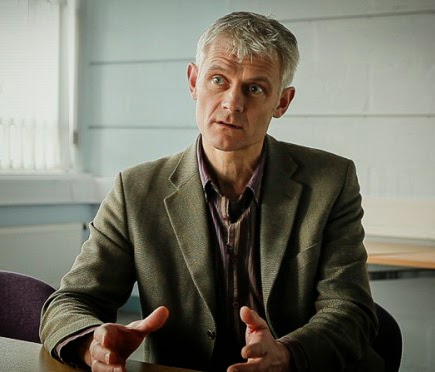
    Prof. Kevin Anderson

    First in a series

    On 10-11 December 2014, a Radical Emissions Reduction Conference was held at the Royal Society, London under the auspices of the Tyndall Centre for Climate Change Research at the University of East Anglia. The conference’s purpose was described as:

    Today, in 2013, we face an unavoidably radical future. We either continue with rising emissions and reap the radical repercussions of severe climate change, or we acknowledge that we have a choice and pursue radical emission reductions: No longer is there a non-radical option. Moreover, low-carbon supply technologies cannot deliver the necessary rate of emission reductions – they need to be complemented with rapid, deep and early reductions in energy consumption – the rationale for this conference.

    Prof. Kevin Anderson and Dr. Alice Bows-Larkin, both from the Tyndall Centre, were instrumental in in framing the challenge for the conference. In 2010, they noted in a research paper that:

    …while the rhetoric of policy is to reduce emissions in line with avoiding dangerous climate change, most policy advice is to accept a high probability of extremely dangerous climate change rather than propose radical and immediate emission reductions.

    And in 2012 in “A new paradigm for climate change”, Anderson and Bows call for academic rigour in elaborating the scientific and economic choices:

        … academics may again have contributed to a misguided belief that commitments to avoid warming of 2°C can still be realized with incremental adjustments to economic incentives… as the remaining cumulative budget is consumed, so any contextual interpretation of the science demonstrates that the threshold of 2°C is no longer viable, at least within orthodox political and economic constraints…
    At the same time as climate change analyses are being subverted to reconcile them with the orthodoxy of economic growth, neoclassical economics has evidently failed to keep even its own house in order. This failure is not peripheral. It is prolonged, deep-rooted and disregards national boundaries, raising profound issues about the structures, values and framing of contemporary society… This catastrophic and ongoing failure of market economics and the laissez-faire rhetoric accompanying it (unfettered choice, deregulation and so on) could provide an opportunity to think differently about climate change…
    It is in this rapidly evolving context that the science underpinning climate change is being conducted and its findings communicated. This is an opportunity that should and must be grasped. Liberate the science from the economics, finance and astrology, stand by the conclusions however uncomfortable. But this is still not enough. In an increasingly interconnected world where the whole — the system — is often far removed from the sum of its parts, we need to be less afraid of making academic judgements. Not unsubstantiated opinions and prejudice, but applying a mix of academic rigour, courage and humility to bring new and interdisciplinary insights into the emerging era. Leave the market economists to fight among themselves over the right price of carbon — let them relive their groundhog day if they wish. The world is moving on and we need to have the audacity to think differently and conceive of alternative futures.

    Their writings which underpin the conference’s rationale, include: A new paradigm for climate change, Beyond ‘dangerous’ climate change: emission scenarios for a new world, and Reframing the climate change challenge in light of post-2000 emission trends. More recently, Anderson’s Avoiding dangerous climate change demands de-growth strategies from wealthier nations more explicitly lays out some of the key assumptions.

    So to the conference itself, and many thanks to Shane White for wading through the conference videos and taking extensive notes which form the basis of these blogs.

    Anderson’s presentation was entitled “‘Avoiding dangerous climate change’: Why we need radical reductions in emissions”, and it kicked off the conference. The video is here plus slides.

    Anderson starts with the proposition that stabilisation at 2°C remains a feasible goal of the international community, just. [Readers of this blog will know well that at less than 1 degree of warming, there is a good deal of evidence that climate change is already dangerous and of the view of leading scientists that 2°C hotter is not an acceptable climate target but a disaster.]

    Anderson makes the point that radical mitigation has economic benefits, not financial. He says it is time to wrestle economics away form the financiers. The word economics originates from the Greek oikonimia, meaning stewardship of the household; no mention of money. The word financial comes from the Greek chrematistic meaning the making of money. If making money is our priority then 2°C is not viable. If we’re interested in the wellbeing of our lives and the planet, then 2°C is viable with a successful economy.

    The science message contained within latest IPCC report hasn’t changed in the last 20 years. This science is mature. But what has changed, says Anderson, is that:

    • Since IPCC AR4 in 2007, an additional 200 billion tonnes of carbon dioxide (GtCO2) has been released;
    • Annual emissions are ~70% higher than at the time of the first report in 1990;
    • Atmospheric carbon dioxide  levels are higher than during past 800 thousand years.

    The world says it is still committed to make a fair contribution “To hold the increase in global temperature below 2°C, and take action to meet this objective consistent with science and on the basis of equity”. (Copenhagen Accord 2009).


    So why do we need to concentrate on energy demand rather than supply? Because, says Anderson,  in 2013 it’s too late to only rely solely on the supply side. We need to focus on the demand side now too.

    So what of future emissions? Everything built today based on fossil fuels is locking ourselves into a high carbon future: power stations, large scale infrastructures, built environment, aircraft and ships. All this infrastructure will be in place for 30 to 100 years.

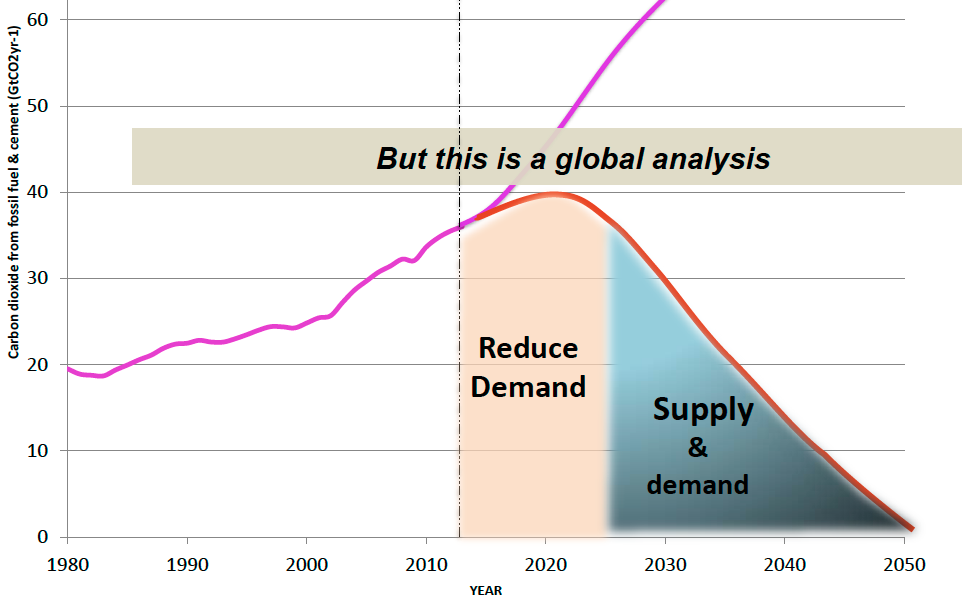
    Emissions in the above chart are higher than emissions in IPCC’s highest emission pathway (RCP8.5), with 2% a year growth from 2020.  Are such rising emissions scenarios realistic? They are certainly viable, says Anderson,  since UK is considered a leading country on climate change and the UK has made extensive fossil fuel investments.

    Current pathway leads to emissions of greater than 2500 GtCO2 for the period 2000–2050, and 5000 GtCO2 for 2000–2100. Yet for a 66% chance of less than 2°C, we can emit only 1000 GtCO2. Along our current pathway all of that will be emitted by 2032. There is nothing left for emissions by 2032.

    The carbon dioxide trend, says Anderson,  is “perfectly in line with a temperature increase of 6°C, which would have devastating consequences for the planet” as IEA chief economist Faith Birol has noted. Whether it is 4, 5 or 6°C doesn’t mean too much; they’re all devastating.

    There is nothing we can do significantly in the wealthy parts of the world to get emissions down with just low carbon supply in the short term. The only thing we can do now is reduce our demand. The supply side is a pre-requisite in the long term to holding temperature below 2°C.

    This analysis is global. But premised on the basis of equity, poor countries shouldn’t be forced to suffer by reducing their emissions demand by the same rate as us in the short term.

    So let’s assume non-Annex 1 nations (developing nations) collectively peak their emissions by 2025 (which a a big ask) and reduce emissions thereafter by 6 to 8% per year. Then what emissions budget is left for the rich, developed Annex 1 nations? The answer is that Annex 1 nations require at least a 10% reduction in emissions year on year (this is based on analysis a few years old so 10% is a bit low now). That means a 40% reduction by 2018 (c.f 1990), 70% reduction by 2024, and 90% by 2030 (remembering that these these are radical emission reductions but provide a 66% chance of less than 2°C.

    Asks Anderson: Is above viable? Is 4, 5 or 6°C a better option? No.

    Radical emission reductions on the basis of equity are viable by:

    • Equity: Small group of people make radical and early reductions (40-60% of emissions are from 1-5% of the population) i.e. those in Annex 1 countries.
    • Technology: demand side can deliver early and large reductions (why are low efficiency products on the market when high efficiency products are available?)
    • Growth: There are alternative measures of a good life. Above a certain threshold GDP is a poor proxy for welfare.

    So in summary, a radical plan looks something like this:

    • Low carbon energy supply is pivotal in the long term but can’t be built fast enough in order to solely be relied upon for 2°C, so;
    • Radical reductions in energy demand from now to ~2030. Radical reductions in energy demand over one decade are possible if carefully planned. This extends the window to get the low carbon energy supply in place.
    • A Marshall plan to build 100% low carbon energy supply by 2030–2040.

    Anderson concluded by quoting Robert Unger that“at every level the greatest obstacle to transforming the world is that we lack the clarity and imagination to conceive that it could be different.” He said the paradigm he had outlined will be dismissed as not being practical, but 4, 5 or 6°C is impractical and certainly not equitable.

  • [New post] Seat #2: Ashford THE TALLY ROOM

    Why this ad?
    Master of Ed Scholarshiptua.edu.au/Scholarships – Up to 30% Scholarships Available For 2014 Enrolment. Enquire Today!

    [New post] Seat #2: Ashford

    Inbox
    x
    The Tally Room donotreply@wordpress.com
    9:32 AM (1 minute ago)

    to me

    New post on The Tally Room

    Seat #2: Ashford

    by Ben Raue

    Ashford1-2PPAshford is a marginal Labor electorate in the southwest of Adelaide, covering the suburbs of Ashford, Glandore, Clarence Park, Plympton, Camden Park and a number of other suburbs.

    Ashford is held by the ALP’s Steph Key since 1997.

    The redistribution shifted Ashford’s boundaries substantially, and cut Key’s margin from 4.8% to 1.5%.

    Read more

     
  • Get Used to Heat Waves: Extreme El Nino Events to Double

    Science News

    … from universities, journals, and other research organizations

    Get Used to Heat Waves: Extreme El Nino Events to Double

    Jan. 19, 2014 — Extreme weather events fueled by unusually strong El Ninos, such as the 1983 heatwave that led to the Ash Wednesday bushfires in Australia, are likely to double in number as our planet warms.


    Share This:

    An international team of scientists from organizations including the ARC Centre of Excellence for Climate System Science (CoECSS), the US National Oceanic and Atmospheric Administration and CSIRO, published their findings in the journal Nature Climate Change.

    “We currently experience an unusually strong El Niño event every 20 years. Our research shows this will double to one event every 10 years,” said co-author, Dr Agus Santoso of CoECSS.

    “El Nino events are a multi-dimensional problem, and only now are we starting to understand better how they respond to global warming,” said Dr Santoso. Extreme El Niño events develop differently from standard El Ninos, which first appear in the western Pacific. Extreme El Nino’s occur when sea surface temperatures exceeding 28°C develop in the normally cold and dry eastern equatorial Pacific Ocean. This different location for the origin of the temperature

    increase causes massive changes in global rainfall patterns.

    “The question of how global warming will change the frequency of extreme El Niño events has challenged scientists for more than 20 years,” said co-author Dr Mike McPhaden of US National Oceanic and Atmospheric Administration.

    “This research is the first comprehensive examination of the issue to produce robust and convincing results,” said Dr McPhaden.

    The impacts of extreme El Niño events extend to every continent across the globe.

    The 1997-98 event alone caused $35-45 US billion in damage and claimed an estimated 23,000 human lives worldwide.

    “During an extreme El Niño event countries in the western Pacific, such as Australia and Indonesia, experienced devastating droughts and wild fires, while catastrophic floods occurred in the eastern equatorial region of Ecuador and northern Peru,” said lead author, CSIRO’s Dr Wenju Cai

    In Australia, the drought and dry conditions induced by the 1982-83 extreme El Niño preconditioned the Ash Wednesday Bushfire in southeast Australia, leading to 75 fatalities.

    To achieve their results, the team examined 20 climate models that consistently simulate major rainfall reorganization during extreme El Niño events. They found a substantial increase in events from the present-day through the next 100 years as the eastern Pacific Ocean warmed in response to global warming.

    “This latest research based on rainfall patterns, suggests that extreme El Niño events are likely to double in frequency as the world warms leading to direct impacts on extreme weather events worldwide.”

    “For Australia, this could mean summer heat waves, like that recently experienced in the south-east of the country, could get an additional boost if they coincide with extreme El Ninos,” said co-author, Professor Matthew England from CoECSS.

    S