Category: Uncategorized

  • Voter Id Laws Pass Their First Hurdle in Stafford

    « Stafford By-election Results | Main

    July 23, 2014

    Voter Id Laws Pass Their First Hurdle in Stafford

    Last Saturday’s by-election in Stafford was the first test of the Newman government’s recently introduced voter Id laws. To my knowledge, it was the first time in Australia that voters have been required to present personal identification when turning up to vote.

    As I wrote in a previous post, and as Chris Berg from the IPA also suggested, voter Id is an answer trying to find a problem.

    There is nothing apart from apocryphal evidence to suggest ‘personation’ is a problem at Australian elections. There is a tiny but measurable incidence of multiple voting, but the incidence is not enough to change election results. Even then, voter Id laws cannot stop voters voting at multiple polling places.

    Voter Id as implemented at the Stafford will not make Australian elections more secure.

    But if it makes voters think elections are more secure, then it may play a part in fixing the real problem with Australian elections.

    That problem is trust in the electoral process.

    The last year has seen a growth in public doubts about the electoral process. In my view it has three causes.

    The most public cause was the bungling of the administration of last year’s federal elections by the Australian Electoral Commission (AEC). The loss of ballot papers last September and consequent re-run of the WA senate election cost the AEC dearly in trust, from both the public and more importantly from federal politicians.

    The second cause has been the failure of successive federal governments and parliaments to be pro-active in dealing with evident problems developing with party registration and Senate preferences. Problems with electoral law are too often blamed on the AEC when it is the AEC’s job to comply with the parliament’s law, not write the law itself.

    The third cause, compounded by the first two, has been the swingeing attacks on the AEC by Clive Palmer, who has strung together every available conspiracy theory about the conduct of Australian elections and constructed a parallel universe where the entire electoral process in Australia is corrupt. So wild have some of Palmer’s claims been that the new government has been forced to defend the AEC when its more natural instinct would have been to apply its own rough wooing to the AEC.

    If voter Id laws help to restore faith in the electoral process, then the potential inconvenience and extra cost may be worthwhile bearing.

    The regulations implementing the new Queensland laws make it very easy for voters to comply. I provide a fuller lists here, but in brief a drivers licence, proof of age photo id, pension card, credit card, letter from the ECQ or range of other documents are valid.

    The voter Id laws only apply to forms of voting that do not already require a written declaration by the voter. It is not required for postal votes, hospital votes and absent votes. It is required by in-person voters, that is pre-poll and on the day voting within an electorate.

    The Stafford results reveal that 21,402 voters cast normal ballots either on the day or by pre-poll voting. All of these voters must have presented one of the acceptable forms of Id.

    A total of 199 votes were counted as ‘Uncertain Identity’ votes, that is they were declaration votes filled in by voters who were unable to present an acceptable form of Id.

    Assuming none of these declaration votes were rejected, that corresponds to just 0.9% of voters turning up to vote without acceptable identity.

    Before the above is viewed as my saying Stafford proves that voter Id works, let me put a few reservations on the process.

    First, we need the Electoral Commission Queensland to issue a report card on how the voter Id laws worked. The Uncertain Identity votes were included in the count on Sunday, which means that the only check made was that the name and address on the envelope matched the electoral roll. Were any of these declaration votes rejected and why? (A rejected declaration vote is not opened so the ballot paper never appears in the results.)

    Were there any voters who just turned away on Saturday after having their Id questioned, rather than moving to cast a declaration vote? If there is too much publicity about the need for voters to present Id, will it discourage voters from bothering to turn-up? If everyone wihtout Id is going to be granted a declaration vote, why make it sound like the voter Id process is onerous?

    Was there any evidence of increased queuing in polling places? Come the state election all polling places will be conducting absent voting as well, which will increase the number of people filling in declaration votes.

    In Estimates Committees last week, Labor MP for Rockhampton Bill Byrne raised the following – “I have heard something indirectly from people working in the pre-poll. There is some evidence that has been presented to me—admittedly I was not present, but people whom I trust were—suggesting that people, once they had these matters made aware to them, displayed an emotional reaction and left. Obviously that did not happen in front of your officers.”

    The challenging of voters by party workers is common place in other countries. In America it has often been used as a method of disenfranchising classes of voters, more specifically the challenging of Afro-Americans in a queue over their right to vote.

    The documents that the ECQ lists as forms of Id are broad, but I would imagine that it might present problems in remote polling, where voters are less likely to have Id and less likely to be connected to public utilities.

    Another point to make about Queensland elections is that voters are able to vote more quickly and easily than anywhere else in Australia. Preferences are optional and there is no upper house.

    Quick voter turnaround through the voting partitions may help limit queuing. If voter Id laws were to apply at a Federal election, would the longer time needed to number all boxes and deal with the Senate ballot paper make queuing worse?

    Hopefully the ECQ will provide a proper report on how the new laws worked. The Stafford by-election provided a useful test of the new laws ahead of next year’s election, so a well managed electoral commission would have measured the impact of the new laws.

    Certainly if the laws work well in Queensland, other jurisdictions may be interested in going down the same path.

    What needs to be watched is the regulations implementing these laws. As used on Saturday, the laws are a soft-touch implementation of voter Id. With the exception of the homeless, few voters would have been denied the chance to vote.

    But a toughening of the regulations requiring greater proof of identity would change the profile of voters. If voter Id laws do become more common, then it is important to make sure they are not being implemented as a partisan fiddle by the government of the day.

    Posted by on July 23, 2014 at 04:43 PM in By-election, Electoral Law, Queensland Elections and Politics | Permalink

  • Bone China Tea Party MONBIOT

    1 of 47
    Why this ad?
    Medical Gaswww.megamedical.com.au – Medical Oxygen & Air Free Delivery Equipment Supply, Service & Support

    Monbiot.com

    Inbox
    x

    George Monbiot news@monbiot.com via google.com

    5:03 PM (2 minutes ago)

    to me

    Monbiot.com


    Bone China Tea Party

    Posted: 22 Jul 2014 12:51 PM PDT

    Get ready for a radical rightwing insurgency that could be stirring within the Conservative Party.
    By George Monbiot, published in the Guardian 23rd July 2014

    Beware the self-pity of the governing classes. Ministers of the Crown might look powerful and oppressive to us; often they see themselves as lonely heroes confronting a sea of troubles. That has been Tony Blair’s schtick from the month he took office. We now see him dripping with other people’s blood; he appears to perceive only the scars on his own back.

    The whinging begins as soon as they are free to speak. Michael Gove, demoted but still in government, has said little, but his emissaries are wailing loudly on his behalf(1). Owen Paterson, the former environment secretary, can speak directly, and he now lambasts the “green blob” against which he nobly fought and lost(2).

    As one of those he blamed for bringing him down in his wild, minatory article on Sunday I’m happy to join Blob Pride. But I also see something new emerging in his position and that of other disaffected rightwingers. It looks like the development of a Tea Party faction within the Conservatives.

    Tea Party politics can be defined as the interests of the ultra-elite cleverly repackaged as the interests of the common people(3). Here are its essential elements.

    The first is a sense of victimhood. Never mind that those who make such claims are the least likely victims. They must find common cause with people who feel passed over or pushed out or ignored: the motivating themes of the radical right. In Paterson’s case he made it up, stating “I was burnt in effigy by Greenpeace as I was recovering from an operation to save my eyesight.” Greenpeace did no such thing(4).

    The second requirement is an out-group: an enemy responsible for this victimhood. As the writer and campaigner George Marshall points out, it’s not enough that the out-group causes harm; the harm must be intentional(5). In this case, green movements oppressed Owen Paterson and the hard-working, country-loving people of this nation in order to “keep each other well supplied with lavish funds”(6). They know nothing about the natural world, he says: their leaders “could not tell a snakeshead fritillary from a silver-washed fritillary”. All they want is “to enhance their own income streams”.

    This comes from a man who insisted on a mass cull of badgers against scientific advice(7), who stripped away the last regulations protecting the soil from erosion(8); who believed that “the purpose of waterways is to get rid of water” and sought to turn our rivers into featureless gutters(9); who championed the pesticides that appear to be destroying bees and many other animals(10).

    Anyway, enough opinion: let’s test his proposition. I challenge Mr Paterson to a kind of duel: to walk through the countryside together, with independent experts, and see who can correctly identify the greatest number of species across all classes: birds, insects, spiders, plants, fungi and the rest. Will he take up my challenge?

    The third element is a reframing of where power lies. People working on behalf of billionaires and corporations project themselves as horny-handed sons of toil, while casting their enemies as an aloof intellectual elite(11). Paterson lists his opponents as “rich pop stars”, “rich landowners”, “a dress designer” and “a public school journalist” (me), who “don’t represent the real countryside of farmers and workers”.

    So who is this voice of the workers? He’s a millionaire, educated at Radley College and Cambridge, who owns “a large country estate on which he lets buildings and agricultural land”(12). While in office, he doubled the public subsidy for grouse moors(13). He also defeated an attempt to limit the amount of public money rich landowners can receive(14). As a result, the dukes and sheikhs and oligarchs who own England’s biggest estates each receive millions of pounds in subsidies. He appointed as chair of Natural England – which is supposed to defend wildlife – a multi-millionaire house-builder(15). And he ignored his civil servants to take advice instead from his brother-in-law, Viscount Ridley, described by ConservativeHome as “Paterson’s personal think tank”(16).

    That’s another thing this putative movement has in common with the US radical right: discredited figures (think of Oliver North and G Gordon Liddy(17,18)) are feted by powerful industrial interests and able to develop a new career as commentators. Matt Ridley inherited (along with his estate, his opencast coal mines and his vast wealth) the chairmanship of Northern Rock, whose collapse under his reckless and incompetent oversight was the catalyst for the British financial crisis which impoverished so many(19). Yet, while the misdemeanours of Fred Goodwin – the son of an electrician who became head of RBS – were rightly condemned, Viscount Ridley’s have been comprehensively airbrushed. Rupert Murdoch’s used his first tweet to praise him(20), and he has worked as a columnist for the Times ever since. Unlike Fred Goodwin, he’s of use to the elite, as he has helped to formulate its talking points, arguing for deregulation and denying environmental problems.

    The fourth element consists of shifting the spectrum of political thought by planting your flag on the outer fringes of lunacy. It’s a tactic often used in the US by people like Sarah Palin, Ted Cruz and Michele Bachmann. Paterson’s contribution is to identify the Australian prime minister Tony Abbott and the Canadian premier Stephen Harper, who have arguably done more harm to the living planet than anyone else alive, as champions of environmental protection(21).

    In other words, he has positioned himself as a spokesman for a new strand of conservatism, that’s likely to cluster and consolidate as David Cameron seeks to freeze out his party’s whackier fringes before the election. In a furious row with Cameron, after he was told he had been sacked, Paterson is reported to have shouted, “I can out-Ukip Ukip … You are making a big mistake.”(22)

    Now, choked with resentment and self-pity, apparently convinced that, despite a life of wealth and power, he represents the whipped and wounded, he has spelt out the essential components of something that might soon become familiar to us. Tea Party politics were bound to reach these shores eventually, and they will be lavishly financed by the very rich. It won’t be pretty, but we should be ready for it.

    www.monbiot.com

    References:

    1. http://www.independent.co.uk/news/uk/politics/cabinet-reshuffle-wife-of-former-education-secretary-michael-gove-slams-david-cameron-over-party-shakeup-9610706.html

    2. http://www.telegraph.co.uk/news/politics/10978678/Owen-Paterson-Im-proud-of-standing-up-to-the-green-lobby.html

    3. http://www.theguardian.com/commentisfree/cifamerica/2010/oct/25/tea-party-koch-brothers

    4. http://www.greenpeace.org.uk/blog/climate/no-ex-minister-20140721

    5. http://climatedenial.org/2014/07/21/creative-writing-101-or-room-101-paterson-teaches-conservative-climate-comms-strategies/

    6. http://www.telegraph.co.uk/news/politics/10978678/Owen-Paterson-Im-proud-of-standing-up-to-the-green-lobby.html

    7. http://www.theguardian.com/environment/2012/oct/13/badger-cull-mindless

    8. http://www.theguardian.com/environment/georgemonbiot/2014/jun/05/the-farming-lobby-has-wrecked-efforts-to-defend-our-soil

    9. http://www.theguardian.com/commentisfree/2014/jan/13/flooding-public-spending-britain-europe-policies-homes

    10. http://www.theguardian.com/commentisfree/2014/jul/15/ban-neonicotinoids-another-silent-spring-pesticide-moratorium

    11. http://www.theguardian.com/commentisfree/2011/aug/01/us-debt-deal-tea-party

    12. http://www.dailymail.co.uk/news/election/article-1280554/The-coalition-millionaires-23-29-member-new-cabinet-worth-1m–Lib-Dems-just-wealthy-Tories.html

    13. http://www.theguardian.com/commentisfree/2014/apr/28/britain-plutocrats-landed-gentry-shotgun-owners

    14. http://www.theguardian.com/commentisfree/2014/mar/03/rich-landowners-farmers-welfare-nfu-defra

    15. http://www.theguardian.com/environment/georgemonbiot/2013/dec/06/andrew-sells-natural-england

    16. http://www.conservativehome.com/thetorydiary/2013/06/owen-paterson-more-than-meets-the-two-criteria-for-a-good-cabinet-minister.html

    17. http://www.foxnews.com/on-air/war-stories/

    18. http://tunein.com/radio/The-G-Gordon-Liddy-Show-p20256/

    19. http://www.theguardian.com/commentisfree/2010/may/31/state-market-nothern-rock-ridley

    20. http://www.myfoxtampabay.com/story/18011981/rupert-murdoch-joins-twitter

    21. http://www.telegraph.co.uk/news/politics/10978678/Owen-Paterson-Im-proud-of-standing-up-to-the-green-lobby.html

    22. http://www.dailymail.co.uk/news/article-2698688/You-t-sack-It-s-smash-teeth-12million-voters-I-fought-bees-Former-Environment-Secretary-Owen-Paterson-number-sacked-ministers-react-male-pale-reshuffle-fury.html

  • IKEA to install record 990kW rooftop solar system at NSW store By Sophie Vorrath on 23

    IKEA to install record 990kW rooftop solar system at NSW store

    By on 23 July 2014
    Print Friendly

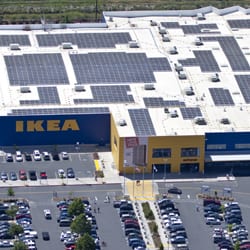
    Construction has commenced on what will be the largest single rooftop solar photovoltaic PV project in Australia, with the installation of a 990kWp system at the IKEA Tempe store in New South Wales.

    The system, which is being installed by Kingspan Energy, will be the largest of IKEA’s Australian PV projects – comprising nearly 4,000 Yingli polycrystalline modules and 43 inverters from SMA Australia.

    It will also be up there with the biggest rooftop solar systems in Australia, including the 1.2MW system at the University of Queensland, which spans four buildings and 11 rooftops, and the Goyder Pavillion in Adelaide, a 1MW system spread over several buildings.

    062711_West_Sac_Solar_250x250

    The rooftop solar system at IKEA West Sacramento in the US

    The Swedish furniture giant announced in May its plans to install a combined total of 3.9MW of rooftop solar systems across all of its Australian east coast stores and warehouses, a project that will result in the nation’s largest commercial solar development so far.

    As part of IKEA’s company-wide sustainability plan, it has also pledged that all future stores built in Australia would have solar PV systems already installed. The largest installation will be a 990kW array at the Tempe store in Sydney.

    Kingspan Energy – which, along with Canadian Solar, will be developing all of the IKEA solar projects in Australia –  says the Tempe project is scheduled to be complete in mid-September and will supply over 1,300,000 kWhrs of electricity to the building.

    When commissioning is complete, the 8415 square metre project will displace over 1,500 metric tonnes of carbon dioxide emissions a year.

  • Daily update: Solar leasing market in Australia could reach $100bn

    1 of 3
    Why this ad?
    Elderly Care Serviceswww.myagedcare.gov.au/AgedCare – Online Access To Help You Navigate The Australian Aged Care System.

    Daily update: Solar leasing market in Australia could reach $100bn

    Inbox
    x

    Renew Economy editor@reneweconomy.com.au via mail78.atl71.mcdlv.net

    1:56 PM (42 minutes ago)

    to me
    New player in solar leasing says Australian market could hit $100bn. Plus: Could Tasmania become Victoria’s green baseload generator?; Standard & Poor’s coal risk warning; Abengoa courts iron ore miner for solar tower plant project; Victoria’s small wind energy win; Carnegie Wave joins CSIRO wave energy study; why rooftop solar is no free rider; and affordable batteries – closer than we think.
    Is this email not displaying correctly?
    View it in your browser.
    RenewEconomy Daily News
    The Parkinson Report
    New player in solar leasing says Australian market could reach $100 billion. It sees huge demand from businesses, as well as homes when battery storage becomes cost competitive in a few years, and it sees huge appetite from banks and super funds for an annuity style infrastructure investment.
    Hydro Tasmania boss says the Apple Isle could provide 1,000MW of zero emission “baseload” power through wind and hydro, replacing one of big brown coal generators in Latrobe Valley.
    Standard & Poor’s Ratings Services becomes latest market heavyweight to warn that coal assets will end up stranded in a carbon constrained world.
    Abengoa looks to sign giant iron ore miner to support Australia’s first large scale solar tower power plant with molten salt storage.
    Victorian planning law amendment marks small win for Australia’s wind energy industry. And in NSW, Maurice Newman has the wind put up him.
    Carnegie Wave lends its technology and experience to ARENA-funded CSIRO wave power resource mapping and development project.
    Research shows rooftop solar exports are higher than most estimates, which means most systems are paying network fees for well over half their generation.
    The high storage costs are now rapidly falling, suggesting that the financial appeal of electric cars and stationary storage is set to keep increasing.
  • Global investment in climate change solutions at record high, bond market now worth US$502.6 billion

    We use cookies to ensure that we give you the best experience on our website. If you continue without changing your settings, we’ll assume that you are happy to receive all cookies from this website. Find out more here.

    Skip to main Content

    Global investment in climate change solutions at record high, bond market now worth US$502.6 billion

    Date
    21 July 2014
    Global investment in climate change solutions at record high, bond market now worth US$502.6 billion

    LONDON: Climate bonds worth US$502.6 billion were issued in 2013, according to a new report released by the Climate Bonds Initiative in partnership with HSBC.

    Drawing on data dating back to January 2005, Bonds and Climate Change: The state of the market in 2014 highlights that the total universe of bonds relating to climate change solutions has grown from US$346 billion in March 2013 to an estimated US$502.6 billion today.

    Approximately three quarters of these bonds have implicit or explicit backing from a government body.

    “Investors are concerned about climate change. This report shows how they can invest in climate bonds without risk. The investment opportunities we find are safe and secure investment grade bonds, Sean Kidney, CEO of the Climate Bonds Initiative noted.

    “This is a Dull Green Market – just how pension funds and insurance funds like it.”

    Bonds which are specifically labelled ‘green’ (see figure below) now amount to US$35.8 billion, an increase of over US $25 billion in just 12 months. Corporate issuance was primarily responsible for green growth in the latter half of 2013, but the trend continued into 2014 with around US$20 billion in bonds issued in the first six months.

    CBI graphic

    The authors define the broader “climate-themed-bonds-universe” market in relation to seven themes: Transport, Energy, Climate Finance, Buildings & Industry, Agriculture & Forestry, Waste & Pollution Control and Water, and note that although some of these bonds are unlabelled their present categorization could lead to future labelling.

    Valued at US$358.4 billion, transport is the dominant sector in the universe which is made up of 1,900 bonds from roughly 280 issuers. Unprecedented growth across all sector occured in 2013, with US$95 billion worth of climate bonds issued – a 12% increase on 2012.

    Mark Kenber, CEO of The Climate Group observed: “One of the biggest barriers to making the rapid transition to as low carbon economy is securing large scale investment in tried and tested clean technologies, such as building energy efficiency and LED street lighting. The emergence of a global green bond market can play a central role to overcoming this challenge and the CBI’s new report demonstrates its potential.

    “Given that green bonds offer a reliable and steady return, low carbon projects are now extremely attractive for prospective investors. This is a trend which is certain to continue.”

    Graphic courtesy of Climate Bonds Initiative and HSBC

    Related news:

    By Alana Ryan

  • 667 – Pop! Goes the World: 7.2 Billion and Counting

    667 – Pop! Goes the World: 7.2 Billion and Counting

    July 13, 2014, 2:32 PM
    Croppedpop

    The world has added over 800 million people over the last decade – a number so vast it is almost meaningless. Unless you convert it to more familiar units of measurement: Four Brazils. Two and a half times the U.S. More than half of China. But nothing brings the size and shifts of the world’s population into focus like a world map. Except perhaps two world maps.

    Both maps compared here were published on July 11, World Population Day – the first one in 2004, the second one last Friday. They show the projected populations for 2005 and 2015 respectively. Both are cartograms, using the same method to present each country’s population size: one square represents one million people. The resulting distortions show us a world map of relative population sizes, with China and India dwarfing the rest of the world.

    World Pop 2005

    Advertising

    World Population Map for 2005 (6.4 billion)

    The U.N. designated July 11 as a day to ‘reflect’ on population issues, in commemoration of the fact that humanity passed the 5-billion mark on that date in 1987. Reflecting has done little to slow the rate of increase. Humanity reached 1 billion in 1804. It took us 123 years to add the second billion, 32 years for the third one. Since then, we’ve added another billion every 14 years or so, a breakneck speed that looks set to continue for a while. In 2005, we were at 6.4 billion. Right now, we’re more than 7.2 billion. By 2042, we’ll be 9 billion.

    WorldPop2015 2.0

    World Population Map for 2015 (7.2 billion)

    Projected population growth between 2005 and 2015 represents an increase of about 12%. Comparing both cartograms shows how unevenly that growth is spread across the world. While a number of countries, notably in Africa and Asia, continue to add people at a very high rate, others have reached an equilibrium – most but not all in the so-called developed world. A few countries are even experiencing a decline in population.

    Let’s zoom in…


    North America

    North America 2005

    N. America Pop. 2005 

    This population-based cartogram for 2005 amplifies the dominance of the U.S. (296 million) of the North American continent, and reduces Canada (30 million), geographically larger but demographically much, much smaller, to the status of ‘America’s Hat (see also #339). Together with Mexico (106 million), they represent the bulk of North America’s 512 million inhabitants. Of the other nations in the Carribean and Central America, only Cuba (11 million) and Guatemala (15 million) have over 10 million inhabitants. The purple square next to the Dominican Republic is Puerto Rico (4 million), the single square south of there is Trinidad and Tobago (1 million). Nations with less than 1 million are not shown on the map.

    North America 2015

    N. America Pop. 2015

    By 2015, North America will have added about 50 million inhabitants, most of which in the U.S. (+26 million) and Mexico (+13 million). Some of the smaller nations add a million (e.g. Honduras, Nicaragua, Costa Rica), but others are stagnant (Cuba, Guatemala) or even shrinking (El Salvador – 7 to 6 million). Both Haiti and the Dominican Republic join the 10-million club, adding 3 million people to the already rather crowded island of Hispaniola, shared by the two nations.

    South America

    South America 2005

    S. America Pop. 2005

    In 2005, the population in South America is seemingly distributed in line with its geography – there don’t seem to be any major distortions of the map. Although Ecuador (13 million) looks bigger than normal and the three Guyanas – all less than a million inhabitants – have disappeared. Brazil is the undisputed heavyweight of the continent, with Colombia (43 million) a distant second, and Argentina (40 million) only third.

    South America 2015

    S. America Pop. 2015

    By 2015, Brazil has added 26 million inhabitants – as many as the U.S. – and breaks the 200-million limit. Only Uruguay (3 million) is stagnant, everybody else progresses. Colombia adds 4 million, as does Venezuela (to reach 29 million). Argentina and Ecuador add 3 million, Peru and Bolivia 2 million each (and reach 30 and 11 million, respectively). As a whole, South America grows from approximately 370 million to over 415 million – as in 2005, only 43% of the total for the Americas, which as a whole grow from 881 million to 975 million. Not long now til the billionth American.

    Europe

    Europe 2005

    Europe Pop. 2005

    The E.U. also has its ‘Big Five’ – shorthand for the largest economies that many multinationals concentrate their efforts on. This 2005 population cartogram clearly shows which they are: Germany (82 million), France (61 million), the U.K. (60 million), Italy (58 million) and Spain (40 million). Taken together, these five alone outnumber the U.S. Most other European countries are tiny by comparison – remarkably often around the 10-million mark. Only Poland (39 million) and Ukraine (47 million) have similar demographic heft. Russia is a different matter: with its 143 million inhabitants, it plays in a different league as the other European states.

    Europe 2015

    Europe Pop. 2015

    The 2015 cartogram shows a stark dichotomy in Europe: remarkable shrinkage in some states, robust growth in others. The biggest loser is Russia, dropping 7 million, the biggest winner is France, gaining 5 million – Russia is only barely double the size of France now. The U.K. adds 4 million, looming ever larger over the Continent, where Germany has shed 1 million, as well as – more dramatically – Lithuania: from 4 to 3 million. Ukraine loses an entire Lithuania, dropping from 47 to 44 million. On paper, Serbia seems to have lost the biggest share of inhabitants: from 11 to 7 million. But that of course is due to less to dropping fertility rates than to the secession of both Kosovo and Montenegro. Remarkable: Spain and Italy, both severely hit by the economic crisis, both add substantial numbers – Spain grows 3 million to 46 million, Italy adds 4 million and totals 62 million. In all, the European continent manages to add 5 million, from 726 to 731 million – a virtual status quo.

    Africa

    Africa 2005

    Africa Pop. 2005

    Even back in 2005, it was clear which country was Africa’s demographic superpower. Not Egypt, a respectable second with 78 million, but Nigeria, almost double that size at 141 million. Other big hitters: Ethiopia with 70 million and DR Congo with 60 million. South Africa came in only 5th, with 43 million. The continent’s biggest countries in area, Sudan (40 million) and Algeria (33 million), are only second-tier when it comes to population.

    Africa 2015

    Africa Pop. 2015

    From about 889 million in 2005, Africa reaches 1.1 billion in 2015. In just a decade, six countries manage double-digit gains in millions of inhabitants: Nigeria adds 43 million (total: 184 million), Ethiopia adds 33 million (and joins the Triple-Digit League: 103 million), DR Congo adds 19 million (and reaches 79 million), Kenya adds 14 million (and goes from 32 to 46 million), Uganda adds 13 million (adding 50% to its 27 million, reaching 40 million), and Egypt adds 10 million (78 to 88 million). Sudan seems to lose a million (40 to 39 million), but this is due to the secession of South Sudan (11 million), so in truth here too we have double-digit growth. Remarkably, the tiny Central African countries of Rwanda and Burundi have both grown beyond 10 million (13 and 12 million respectively). But according to these maps, Angola takes the crown: growing from 11 million to 20 million, it has almost doubled in size over the course of a single decade.

    Middle East

    Middle East 2005

    Middle East Pop. 2005

    This 2005 map explains some of Saudi Arabia’s geopolitical unease. It (26 million) is squeeze between Iran, a powerful and much larger (68 million) archenemy to the north, and Yemen, its poor, unstable and crowded (21 million) neighbour to the south. Israel (6 million) is shown as a vice, gripping the West Bank (2 million) and isolating Gaza (1 million). Turkey’s 70 million give it strategic weight in the region. As would Pakistan’s 162 million – if it weren’t occupied with the insurgencies at home and in Afghanistan (30 million).

    Middle East 2015

    Middle East Pop. 2015

    By 2015, Yemen (27 million) has almost caught up with Saudi Arabia (28 million), while Qatar and Bahrain make it on the map for the first time (both 1 million). Kuwait adds a million (3 million), while the United Arab Emirates grows Angola-style, doubling in size (3 to 6 million). But nobody comes close to the region’s biggest growers, Iran (plus 14 million, to 82 million) and Turkey, (plus 12 million, to 82 million). Even war-torn countries like Syria (18 to 23 million) and Iraq (26 to 33 million) manage robust growth – although it’s unclear whether everybody included in those numbers is in-country or living abroad as refugees.

    East Asia

    East Asia 2005

    E. Asia Pop. 2005

    China and India are too huge to see on any other than the main maps above. The biggest absolute growth in population is found in these two countries: plus 56 million in China, to 1.36 billion inhabitants. China is still the biggest country in the world, population-wise, but its one-child policy has slowed down growth, especially compared to India, where such restrictions do not exist. India grew more than any other country in the last decade, adding 172 million. It now has 1.25 billion inhabitants, and will soon overtake China as the world’s most populous country. Interesting to see how Mongolia (3 million) is completely dwarfed by its neighbour to the south (and even by Russia to the north). Bangladesh is small, but very crowded (144 million) and Vietnam (84 million) is much more populous than you’d think.

    East Asia 2015

    E. Asia Pop. 2015

    Even though China and India will take the biggest chunk of Asia’s population growth, other countries also will have grown significantly. The Philippines (88 million) adds another 22 million people to round the 100-million mark. Bangladesh grows by 25 million, and reaches 169 million. What a contrast to Japan, South Korea and Taiwan: these highly developed nations break even, staying put at 127, 49 and 23 million inhabitants. North Korea, on the other hand, adds 2 million, to reach 27 million. One of Asia’s biggest relative growers is Malaysia, adding around 30% to its population: from 24 to 31 million.

    South Asia and Oceania

    Oceania 2005

    S. Asia/Oceania Pop. 2005

    Most Pacific island nations have less than 1 million inhabitants, so they don’t appear on the map. And those that do make it, are dwarfed by Indonesia (242 million). East Timor (1 million), Papua New Guinea (4 million) and Singapore (4 million) are but drops in the Indonesian ocean. Even Australia (20 million) and New Zealand (4 million) look like wayward appendices to the archipelago in the north.

    Oceania 2015

    S. Asia/Oceania Pop. 2015

    In 2015, those demographic relations are essentially maintained, and even exacerbated by Indonesia’s growth by 14 million – adding more than half an Australia (although it too grew by more than 10%, to 23 million). Remarkable how tiny Singapore added 50% to its population, and now boasts 6 million inhabitants.

    _________

    Many thanks to Bob Abramms at ODT Maps for sending in these maps. Figures used are U.S. State Department projections. Zoomable images from the 2005 map found here at the Norman B. Leventhal Map Center at the Boston Public Library. Buy a copy of the 2005 map here. Have a look at the different options for the 2015 map here.