Category: Uncategorized

  • Daily update: Coal price crashes as Abbott bets on fossils. And Plan B is?

    esktop notifications for Gmail.   Learn more  Hide

    1 of 1
    Why this ad?
    New Apartments For Salewww.lkproperty.com.au/apartments – 1 & 2 Bedroom Melbourne apartments for sale. From $285K. Discover Now

    Daily update: Coal price crashes as Abbott bets on fossils. And Plan B is?

    Inbox
    x

    Renew Economy editor@reneweconomy.com.au via mail96.atl11.rsgsv.net

    3:03 PM (11 minutes ago)

    to me
    Abbott bets the house on coal as coal price crashes; the astoundingly stupid things the Coalition said on climate change; how social media responded to carbon repeal; and a backflip on ARENA. Plus: Why utilities should own distributed solar, rather than fighting it, and much much more.
    Is this email not displaying correctly?
    View it in your browser.
    RenewEconomy Daily News
    The Parkinson Report
    As Tony Abbott commits Australia’s economy to a fossil fuel future, the market price of coal is crashing, and global capital is turning quickly to clean energy and climate solutions. Has the Abbott government got a Plan B?
    Tony Abbott’s success at “axing the carbon tax” was a signal for the climate deniers in the Coalition to say some astoundingly stupid things.
    Government changes mind and re-appoints two directors, but still aims to dump ARENA – despite overwhelming support in submissions.
    A look at social media’s reaction to the carbon price repeal – and a word from God (and Rupert).
    Changing the utility business model from totally grid-based to a grid and distributed solar-based model is the only long-term solution.
    Green Mountain Power has been transforming itself after deciding it should give customers what they want: Clean energy, generated locally.
    The carbon price – otherwise known to its critics as the carbon tax, passed away in Canberra, aged two, after a long battle with slogans.
    How would a historian in 2393 write about this century if we continue self-destructively ignoring climate science –  and modern civilization as we know it had collapsed 300 years earlier?
    From the top of the globe to the depths of the oceans and everywhere in between, the climate is warming and changing in ways humans have never experienced.
  • Monarchs Return? HANSEN

    Monarchs Return?

    Our first sighting of 2014.  Uncertain prospects for recovery. Available here, on my web page, or on our new program web page.

    ~Jim
    17 July 2014

    Like my Facebook page
    Like https://www.facebook.com/jimehansen on Facebook
    Share on social media
    Facebook Twitter
    Visit my program web page
    csas.ei.columbia.edu

  • Rainwater discovered at new depths, with high pressure and temperatures over 300 degrees Celsius

    Featured Research

    from universities, journals, and other organizations

    Rainwater discovered at new depths, with high pressure and temperatures over 300 degrees Celsius

    Date:
    July 15, 2014
    Source:
    University of Southampton
    Summary:
    Researchers have found that rainwater can penetrate below the Earth’s fractured upper crust, which could have major implications for our understanding of earthquakes and the generation of valuable mineral deposits. It had been thought that surface water could not penetrate the ductile crust – where temperatures of more than 300°C and high pressures cause rocks to flex and flow rather than fracture – but researchers have now found fluids derived from rainwater at these levels. Fluids in the Earth’s crust can weaken rocks and may help to initiate earthquakes along locked fault lines.

    The Southern Alps Mountain Range, New Zealand. Rain and snow falling on the mountains percolate to great depths.
    Credit: Simon Cox

    University of Southampton researchers have found that rainwater can penetrate below the Earth’s fractured upper crust, which could have major implications for our understanding of earthquakes and the generation of valuable mineral deposits.

    It had been thought that surface water could not penetrate the ductile crust — where temperatures of more than 300°C and high pressures cause rocks to flex and flow rather than fracture — but researchers, led by Southampton’s Dr Catriona Menzies, have now found fluids derived from rainwater at these levels.

    Fluids in the Earth’s crust can weaken rocks and may help to initiate earthquakes along locked fault lines. They also concentrate valuable metals such as gold. The new findings suggest that rainwater may be responsible for controlling these important processes, even deep in the Earth.

    Researchers from the University of Southampton, GNS Science (New Zealand), the University of Otago, and the Scottish Universities Environmental Research Centre studied geothermal fluids and mineral veins from the Southern Alps of New Zealand, where the collision of two tectonic plates forces deeper layers of the Earth closer to the surface.

    The team looked into the origin of the fluids, how hot they were and to what extent they had reacted with rocks deep within the mountain belt.

    “When fluids flow through the crust they leave behind deposits of minerals that contain a small amount of water trapped within them,” says Postdoctoral Researcher Catriona, who is based at the National Oceanography Centre. “We have analysed these waters and minerals to identify where the fluids deep in the crust came from.

    “Fluids may come from a variety of sources in the crust. In the Southern Alps fluids may flow upwards from deep in the crust, where they are released from hot rocks by metamorphic reactions, or rainwater may flow down from the surface, forced by the high mountains above. We wanted to test the limits of where rainwater may flow in the crust. Although it has been suggested before, our data shows for the first time that rainwater does penetrate into rocks that are too deep and hot to fracture.”

    Surface-derived waters reaching such depths are heated to over 400°C and significantly react with crustal rocks. However, through testing the researchers were able to establish the water’s meteoric origin.

    Funding for this research, which has been published in Earth and Planetary Science Letters, was provided by the Natural Environmental Research Council (NERC). Catriona and her team are now looking further at the implications of their findings in relation to earthquake cycles as part of the international Deep Fault Drilling Project, which aims to drill a hole through the Alpine Fault at a depth of about 1km later this year.


    Story Source:

    The above story is based on materials provided by University of Southampton. Note: Materials may be edited for content and length.


    Journal Reference:

    1. Catriona D. Menzies, Damon A.H. Teagle, Dave Craw, Simon C. Cox, Adrian J. Boyce, Craig D. Barrie, Stephen Roberts. Incursion of meteoric waters into the ductile regime in an active orogen. Earth and Planetary Science Letters, 2014; 399: 1 DOI: 10.1016/j.epsl.2014.04.046
  • An electric bus that recharges whent you board it.

    Ad placeholder

    Electric buses aren’t new. But older systems usually involve tangles of crisscrossing wires that limit the buses to specific routes and can cause danger to people.

    Batteries can’t solve the problem by themselves, because they don’t last long enough to make it through an entire day of circling city routes.

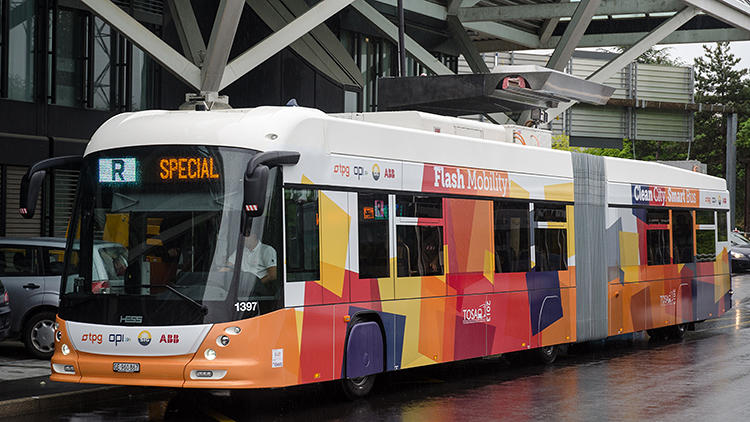
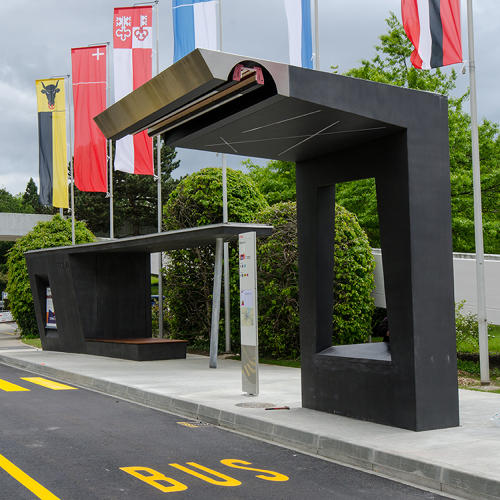
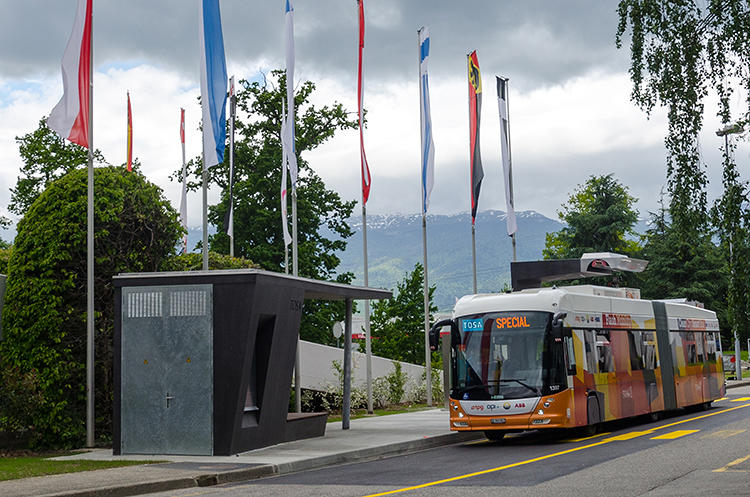
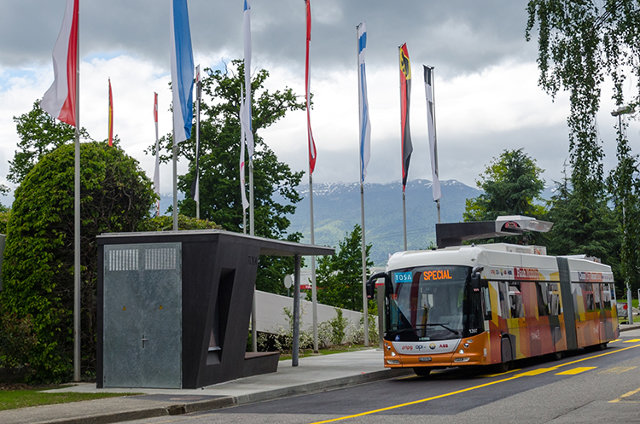
    But a new system from researchers at the Swiss Federal Institute of Technology makes it possible to charge up a battery in 15 seconds–quickly enough that if the chargers are set up at bus stops, the battery can refill while passengers are getting on.

    Ad placeholder

    On a flat route, there might be a charger every three or four stops. Headed uphill, there would be extra chargers, and fewer on the way back down.

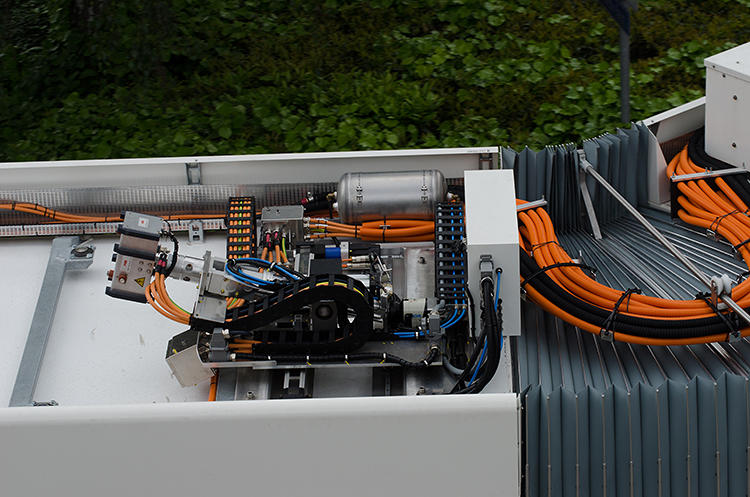
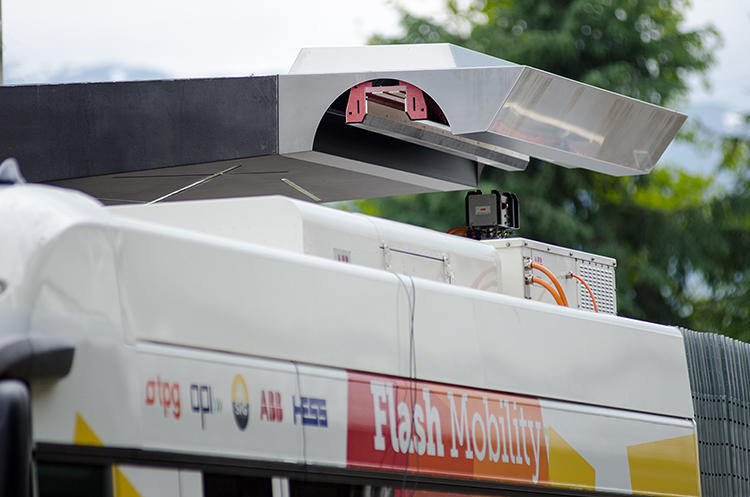
    When the bus pulls up to a stop, a battery on the rooftop automatically jumps up to the overhead charger, hooks in, and fills with juice.

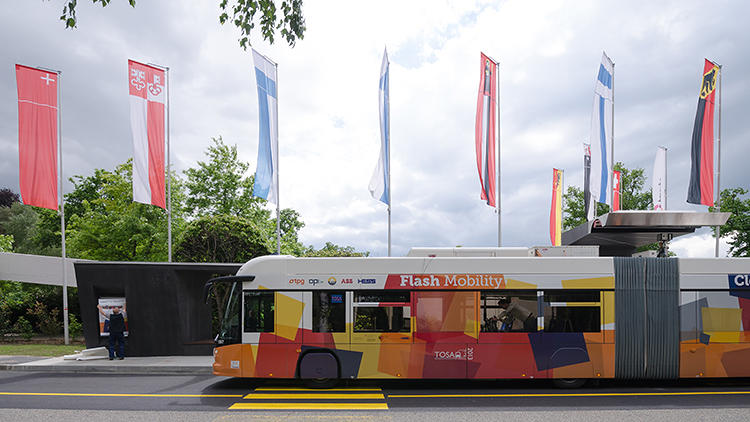
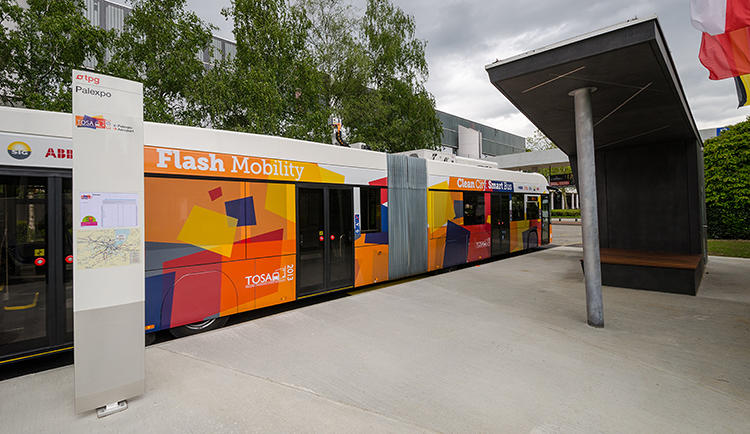
    The first bus was tested in Geneva, and the city liked it so much that they’ve committed to replace an entire line with the technology.

    Ad placeholder

    Eventually, all of their older, polluting diesel buses will also be replaced.

    For cities, the biggest advantage is cutting pollution–the average old diesel bus might pump out 188 megatons of CO2-equivalent each year, along with clouds of other pollutants that are linked to diseases like lung cancer.

    But there are also other benefits, such as no noise at night.

    Ad placeholder

    Electric buses aren’t new. But older systems usually involve tangles of crisscrossing wires that limit the buses to specific routes and can cause danger to people.

    An Electric Bus That Recharges While You Step Inside

    A new system can charge batteries in 15 seconds, or just enough time to fill up between bus stops.

    • 1 Notes
    • /
    • 1 Pin
    • /
    • 5 Plus
    • /
    • 372 Tweet
    • /
    • 188 Like
    • /
    • 144 Share

    Electric buses aren’t new. The “trolley bus” system in San Francisco, for example, has been around for almost 80 years. But even though the older buses keep pollution down, they aren’t quite ideal: In order to work, bus routes have to be strung with dozens of ugly crisscrossing wires that occasionally fall down and zap people, and the buses are stuck driving only where the wires lead.

    Batteries can’t solve the problem by themselves, because they don’t last long enough to make it through an entire day of circling city routes. But a new system from researchers at the Swiss Federal Institute of Technology makes it possible to charge up a battery in 15 seconds–quickly enough that if the chargers are set up at bus stops, the battery can refill while passengers are getting on.

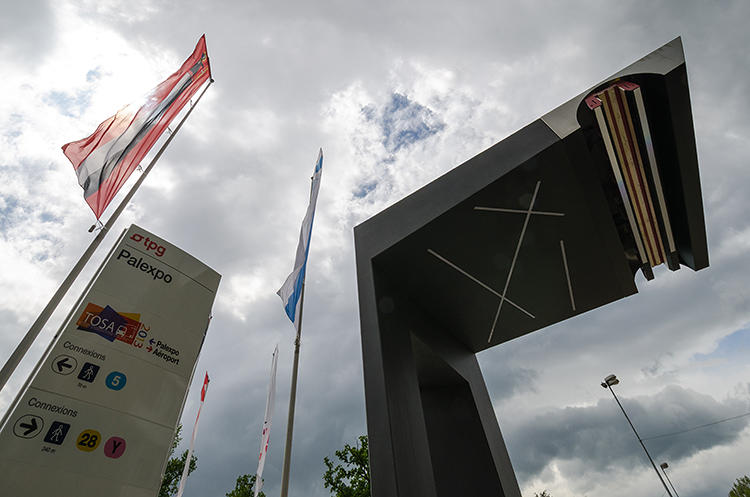
    On a flat route, there might be a charger every three or four stops. Headed uphill, there would be extra chargers, and fewer on the way back down. When the bus pulls up to a stop, a battery on the rooftop automatically jumps up to the overhead charger, hooks in, and fills with juice.

    The first bus was tested in Geneva, and the city liked it so much that they’ve committed to replace an entire line with the technology. Eventually, all of their older, polluting diesel buses will also be replaced.

    For cities, the biggest advantage is cutting pollution–the average old diesel bus might pump out 188 megatons of CO2-equivalent each year, along with clouds of other pollutants that are linked to diseases like lung cancer. But it also has other benefits.

    “TOSA allows us to operate from early in the morning until late at night without noise,” says Michèle Zollinger, one of the researchers. Unlike a traditional bus, which roars every time it takes off from a stop and squeaks when it comes to a halt, the TOSA bus is relatively silent.

    “The small and long lasting battery allows a dramatic reduction of the battery waste,” Zollinger adds. “TOSA is also compatible with renewable energy sources such as solar energy because of the charging during the day.”

    The cost is similar to the older electric trolley-bus systems, but the researchers say that as battery costs decrease, it will soon be about the same as buying diesel buses. The researchers are already talking with other cities about new installations.

  • Daily update: Australia dumps carbon price, as repeal bill passes Senate

    enable desktop notifications for Gmail.   Learn more  Hide

    Why this ad?
    Solar Panels For Homessolarquotes.com.au/You_Can_Go_Solar – 1 Form – 2 Minutes – 3 Free Quotes. Join More Than A Million Aussies!

    Daily update: Australia dumps carbon price, as repeal bill passes Senate

    Inbox
    x

    Renew Economy editor@reneweconomy.com.au via mail5.atl111.rsgsv.net

    2:59 PM (15 minutes ago)

    to me
    Australia becomes first country in world to dump carbon price; Solar households to be penalised by carbon price repeal?; Abbott government thumbs its nose at ARENA board; Raygen says Australia solar exports could top $1bn; AGL sees short term pain, long term gain in carbon repeal; Despite its demise, the carbon price cut emissions; Delhi considers ‘rent-a-roof’ solar program; Weather disasters have cost the globe $2.4 trillion; and the price of carbon – A view from mendicant state.
    Is this email not displaying correctly?
    View it in your browser.
    RenewEconomy Daily News
    The Parkinson Report
    Australia becomes the first country in the world to remove a carbon pricing scheme established to combat climate change. The win for the Coalition is hailed by Abbott and his inner circle of climate deniers, claimed by the PUP, and condemned by almost everyone else.
    Concern mounts that Australia’s one million-plus solar households could face a financial hit from rushed through PUP amendment to the Carbon Repeal Bill.
    Abbott government defies Senate motion and appoints another bureaucrat to board of ARENA, which now has no directors with relevant commercial expertise.
    Raygen says CSPV technology can be “world’s cheapest”, but that will depend on cost of capital, and level of policy certainty.
    AGL – once the greenest of utilities – says repeal of carbon price and dilution of renewables target is good for long term value of business.
    Carbon emissions in Australia’s national electricity market would have been 11 to 17 million tonnes higher if Australia had not introduced a carbon price.
    The government’s monstrously stupid decision will be incredibly hard to rectify, and will be a huge burden for decades.
    A solar rooftop policy mastered by Indian Prime Minister Modi in his home state of Gujarat is set to be replicated across the country.
    Weather and climate-related disasters have caused $2.4 trillion in economic losses and nearly 2 million deaths globally since 1971.
    Tasmania will suffer from the axing of the carbon price, with hundreds of jobs to perish.
  • VICTORIAN ELECTION 2014 ANTONY GREEN

    • Electorates

      Electorates Antony Green’s A to Z electorate guide, with background on each of Victoria’s electorate, their boundaries, history, candidates and prospects.

    • Calculators

      Calculator Enter a swing or select one of the stored swings and make a prediction on who will win the election.

    • Candidates

      Candidates An A-Z index of candidates with links to the electorate each is contesting.

    • Key Seats

      Key Seats A summary of the key contests that will decide the election with links to the full profile for each seat.

    • Pendulum

      An index to the electorates ordered by party and margin with links to electorate profiles.

    • Departing MPs

      A profile of each of the members retiring at the 2014 election.

    • Legislative Council

      A summary of the 2010 Legislative Council result and links to a profile of the state’s eight regions.