Category: Uncategorized

  • Plague of deforestation sweeps across south-east Asia

    Plague of deforestation sweeps across south-east Asia

    Illegal logging and unchecked economic development are taking a devastating toll on forests

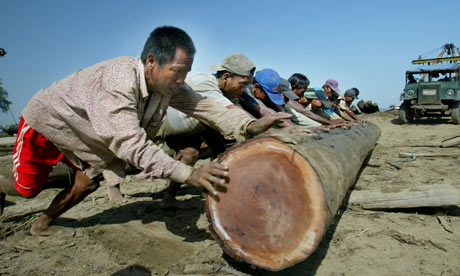
    Myanmar deforestation : Burmese workers at logging camp Mandalay, Myanmar.

    Along the Ayeyarwady river Burmese workers push huge teak logs onto trucks in Mandalay, Myanmar. Photograph: Paula Bronstein/Getty Images

    In 1968, during the six-month siege of Khe Sanh — one of the most bitterly fought battles of the Vietnam War — a special U.S. Air Force outfit flew defoliation missions. Called the Ranch Handers, their motto was: “Only you can prevent a forest.”

    They may not have succeeded in their goal, but rapid development in Vietnam and the surrounding nations of the greater Mekong region is on the way to accomplishing what American defoliation missions could not: The widespread destruction of Indochina’s forests and the biodiversity they harbor.

    Stand on Khe Sanh today, and it’s remarkably tranquil. Nearly all the metal from the old Marine base has been scavenged and sold to scrap merchants. The battlefield is now part of a vast green coffee plantation; all that remains of the airstrip that was the lifeline for U.S. Marines and Army soldiers is a length of reddish dirt.

    The fate of the forests around Khe Sanh exemplifies what is happening today in Vietnam and the greater Mekong region, which also includes Thailand, Laos, Cambodia, and Myanmar. Although some large blocks of forest remain intact, the pace of deforestation is dizzying, threatening the region’s remarkable biodiversity, which includes more than 1,700 species discovered in the last 15 years alone. Many of the forests in Vietnam have been cut down for the furniture export market and the trees replaced by coffee bushes; in less than 10 years, Vietnam has gone from zero to number two in global coffee production. So much forest has been cleared to feed the growing number of sawmills that loggers have moved across the borders into neighboring Laos and Cambodia, where they are illegally razing forests there.

    In addition to widespread, illegal logging, other factors driving this precipitous forest loss include the spread of agriculture in a region with soaring population growth and the construction of dams and other large-scale infrastructure projects.

    The scope of the forest loss was highlighted earlier this month by the conservation group WWF, which noted that from 1973, near the end of the Vietnam War, to 2009, the greater Mekong region lost nearly one-third of its remaining forest cover. Vietnam and Thailand suffered the most forest destruction, each losing 43 percent of their forest cover, according to an analysis of satellite imagery by WWF.

    WWF concluded that areas of core, undisturbed forest — defined as at least 3.2 square kilometers of pristine woodlands — plunged over the past four decades in Indochina from more than 70 percent to 20 percent. I witnessed this destruction first-hand as I traveled around Vietnam for several months, researching a book on its biodiversity. While hiking near the mountain village of Sa Pa, near the Chinese border, I saw mile-long red clay scars on the sides of the green, tree-covered mountains – the highest in Vietnam. The land was being clear-cut for a controversial new dam, displacing many of the local Dao tribespeople in the process.

    In another part of the country, a few hours from Hanoi in the Red River delta, a wildlife biologist and I could see the remnants of famous limestone-rich hills that had been pulverized to feed a nearby cement factory. The factory was located close to the Van Long nature reserve, home to one of the last bands of wild, leaf-eating monkeys known as “Delacour’s langurs.”

    Scientists and conservationists working in Vietnam and surrounding nations say the region now stands at a crossroads. It can allow present rates of deforestation to continue, in which case, WWF says, by 2030 “only 14 percent of the greater Mekong’s remaining forests will consist of contiguous habitat capable of sustaining viable populations of many wildlife species.” Or Vietnam and its neighbors can take advantage of the natural bounty that remains — forests still cover roughly 50 percent of the region’s land area — and choose a more sustainable path that will support reasonable economic development and preserve biodiversity.

    The remaining forests in Vietnam are home to what was virtually a “lost world” containing wildlife unknown to the outside — so much biodiversity that for the past 15 years an average of two new species per week have been discovered by scientists. Some of these creatures are spectacular, including the Javan rhino, barking deer, fishing cat, ferret-badger, finless porpoise, Irrawaddy dolphin, giant Mekong catfish, and a creature called the saola, which looks like a goat but is genetically closer to an ox.

    One University of Hanoi biologist, Vo Quy, eminence grise of Indochina conservation, is convinced that many other creatures are still waiting to be found. “Local people are always finding things that we scientists don’t know about,” he said to me.

    But things are changing swiftly in Vietnam, which — at 127,240 square miles — is only a little smaller than Germany. In Vo Quy’s words, when it comes to protecting the region’s wildlife, “the peace is more dangerous than war.”

    With the country opening up to the outside world under an economic restructuring in the mid-1990s, Vietnam’s economy has been growing by an average of 7 percent a year for the past decade. Like many countries in the region, Vietnam has a young and rapidly growing population, which has expanded by nearly one-third since 1979, reaching nearly 90 million today. (In the region around Cuc Phuong National Park, Vietnam’s first national park and home to many conservation efforts, the average family has 6.7 children.)

    As wildlife biologist Alan Rabinowitz, chief executive officer of the conservation organization, Panthera, described the country’s rapid development: “Vietnam is a miniature China on amphetamines.”

    The inner workings of this rapid growth are not pretty, especially if one looks into the furniture export trade, one of the country’s top five export earners and a major cause of the deforestation. (The United States is by far Vietnam’s biggest furniture market, almost three times larger than the next largest, Japan. Imports from Asia now make up 70 percent of the American furniture market, a 4,000-percent increase in less than ten years.)

    Vietnam has even weaker unions and lower wages than China, along with fewer labor laws, heavier subsidies to state-sponsored industries, and bigger tax breaks to favored companies. Consequently, furniture manufacturers in China are already moving their operations from industrial cities near Hong Kong to Vietnam.

    While the mills are in Vietnam, about 80 percent of the wood itself comes from neighboring Laos and Cambodia. Much of the timber is cut in protected reserves in those countries — where laws are weak and enforcement is minimal — and illegally smuggled across the border to Vietnam in spite of export restrictions, according to an undercover investigation by the London-based Environmental Investigation Agency (EIA).

    In a 2008 exposé, the EIA documented the timber industry’s severe deforestation of the greater Mekong region.

    The organization’s field investigators made secret films during undercover visits to furniture factories and found that “criminal networks have now shifted their attention to looting the vanishing forests of Laos.”

    But because the furniture export trade is worth more $2.4 billion annually to Vietnam alone, authorities turn a blind eye, according to the EIA. Corruption, large and small, has accompanied boom times.

    One wildlife biologist, Tilo Nadler, director of the Endangered Primate Rescue Center in Cuc Phuong, witnessed long lines of trucks loaded with tropical hardwood at the Cambodian border, on their way to factories near Da Nang and Ho Chi Minh City. Nadler said that even in his area, far from the border, local attitudes toward protection were so bad that a mob had attacked a ranger station three years ago after the rangers had arrested some illegal loggers. Rangers earn little money and have low status, he said.

    The impacts of this wholesale devastation are substantial in one of the world’s biodiversity hotspots. As the WWF report rightly notes, there have been enormous declines in the range and numbers of several of the region’s iconic species, including the tiger, Asian elephant, Irrawaddy dolphin, and saola. Where once there were thousands of saola, now there are hundreds. The population of Asian elephants has dropped from hundreds to dozens. Rangers used to sight tigers roaming Cuc Phuong — which has been cut in two by a highway — but no more. And in 2011, the Javan rhinoceros was confirmed as extinct in Vietnam.

    According to Nadler, biologist Vo Quy, WWF, and other experts, time still remains to reverse the runaway deforestation and habitat loss of recent decades and begin better preserving the greater Mekong region’s forests and biodiversity. “I’m an optimist, but only if we have real government support to protect our special places,” Nadler said. He cited the need to make difficult decisions, which may mean that biologists have to give up resisting a dam such as the one at Sa Pa, in order to save threatened wild lands elsewhere.

    WWF said governments in the region need to do a far better job of safeguarding the parks and reserves that already exist since “many protected areas exist in name only.” The group also stressed that unless regional government begin to rein in illegal logging and uncontrolled development, “natural forest habitats, along with their resident wildlife, face virtual elimination outside of protected areas.”

    Although the Vietnamese government has heralded its reforestation efforts, the fact is that they largely consist of monoculture tree plantations that harbor limited biodiversity, scientists say.

    A key factor is local community involvement. The Van Long park, for example, was created as a result of local initiatives. Villagers living next to Van Long take a sense of pride in the reserve and have an economic stake in an ecotourism resort being built there.

    In Southeast Asia, any long-term, sustainable, conservation projects require popular support; without that, formal edicts or restrictions on timber cutting from the central government mean nothing.

    As a popular saying goes in Vietnam: “The decrees of the emperor end at the village gate.”

  • Grassroots campaigns can stop fracking one town at a time

    Grassroots campaigns can stop fracking one town at a time

    City councils and local activists have stymied shale gas mining in New York, and could prove an example for others to follow

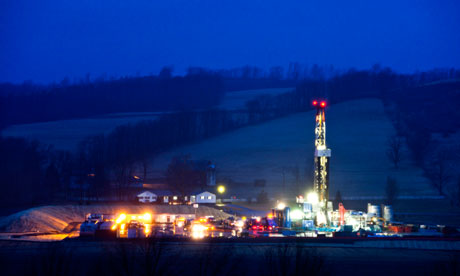
    A fracking site in rural Pennsylvania

    Accounts of flammable tap water and sudden sickness in rural Pennsylvania have spurred questions as to the safety of shale gas mining. Photograph: Jim Lo Scalzo/EPA/Corbis

    Readers of the New York Daily News were treated to a little unsolicited advice from Ed Rendell recently. The former Pennsylvania governor, a Democrat, who presided over much of the fracking boom in his state from 2003 to 2011, invited his neighboring governor – who’s been sitting on the fence over shale gas mining – to join the party.

    In Pennsylvania, Rendell effused, “thousands of solid jobs with good salaries were created, communities came back to life and investment in the state soared”.

    What the Daily News failed to mention is that Rendell has lobbied the Environmental Protection Agency in favor of a driller company, Range Resources, and is currently a paid consultant of Elements Partners, a private equity firm with big stakes in several energy companies that are engaged in fracking.

    And what Rendell failed to mention is that the drilling of over 150,000 wells for natural gas has transformed large swaths of rural Pennsylvania into what basically are industrial zones, bristling with monster trucks, wastewater ponds, and traffic jams. Air pollution is higher in counties with drilling than those without and residents complain about round-the-clock noise.

    Ed Rendell also didn’t mention the McIntyre family, who live in Butler County – western Pennsylvania’s frack zone – and whose members suffer from projectile vomiting, headaches, breathing problems, mysterious skin rashes … the list goes on. The family dog died suddenly, after lapping up some water the family believes was problematic. The McIntyres no longer drink, brush their teeth, or do their laundry with the water piped into their home.

    New Yorkers worried about fracking have been looking at the impact it’s had on their neighbors in Pennsylvania. Increasingly, they don’t like what they see there. After a fact-finding tour to the town of Troy, in northern Pennsylvania, Terry Gipson, a New York state senator, reported that, despite signs of renewed economic activity in the region, he couldn’t help wonder what will happen when the gas boom goes bust, as all booms inevitably do. Gipson asks:

    “Envision a time when the trucks are gone, the lease money is spent, the trailers and the diners are empty, and all that is left is unusable farm land with a contaminated water supply. What will these people do then?”

    Many New Yorkers have been asking similar questions. Surveys show that support for hydraulic fracturing in the state is at an all-time low. In a poll released by Siena College in April, 45% of voters opposed fracking and 40% supported it (15% said they didn’t yet know enough to decide). New Yorkers used to be evenly split on the issue. Interestingly, upstate New York, which tends to be conservative, politically, and which would presumably have the most to gain from allowing gas drilling, reported the highest levels of opposition to fracking: 50% want to see it stay out of the state.

    These sentiments have led to a groundswell of local rebellions against the gas companies. The Albany Times Union reports that there are already 55 separate municipal bans against fracking, and 105 moratoriums in the state. These local bans were challenged in court by the energy companies, who argued that the state alone has the regulatory authority to prohibit drilling. But earlier this month the state supreme court disagreed, ruling that the town of Dryden has the right to prohibit fracking within its borders.

    This decision may turn out to be the nail in the coffin for fracking in New York state. If their investment can be rendered worthless by a local town council’s vote, gas companies may now be reluctant to spend millions of dollars leasing drill sites.

    But anti-fracking activists are not resting on their laurels quite yet, because Governor Andrew Cuomo, a Democrat, has yet to decide whether to permit gas drilling. Cuomo has promised to announce his decision on a number of deadlines, but they’ve all come and gone without a definitive word. Touted as a potential presidential contender in 2016, the governor is understandably reluctant to step into this political minefield.

    Earlier reports indicated that the governor make a decision after New York’s health commissioner gives his assessment on drilling, which is expected to be released in a matter of weeks. But the latest word from Cuomo’s aides is that “there is no timetable for a decision”.

    The state put in place a provisional moratorium on drilling in 2008. John Armstrong, of the coalition New Yorkers Against Fracking (NYAF), told me that ever since then, there has been a spontaneous groundswell of “hundreds of kitchen table organizations petitioning and holding public meetings to educate the public on the dangers of fracking”.

    One such group formed in Vestal, New York, a town just across the state line from Dimock, Pennsylvania, whose flaming taps in the movie Gasland made it a poster child for fracking gone bad. Sue Rapp, the co-founder of Vestal Residents for Safe Energy (VeRSE) has been tramping from door to door with a petition that calls for the town council to ban drilling. She said that many residents need little convincing, since they have seen homes in Pennsylvania with 500-gallon “water buffaloes” – plastic tankards full of drinking water sitting on their front lawns. She says that they’ve seen how property values plummet, banks revoke mortgages and natural landscapes are altered. Already, endless caravans of trucks barrel through their own town, kicking up dust as they head to Pennsylvania to service the gas industry.

    Rapp told me that the recent court ruling has encouraged her, and she says it will free town boards from the fear that the gas companies will sue against any fracking bans. Now that this legal hurdle has been overcome, she expects that a lot more towns will soon vote to keep drillers at bay. Her organization is one of over 200 groups that make up NYAF, an eclectic alliance that includes health professionals, unions, faith institutions, farmers and even breweries.

    Rapp is proud, she says, that the movement against drilling in New York grew from the bottom up rather than the top down. Mainline environmental groups were initially ambivalent, believing that natural gas is cleaner than coal, and that its use in America’s power plants would lead to significant reductions in carbon dioxide emissions. Those reductions have occurred, but evidence has mounted that mining shale gas carries risks.

    But Sue Rapp doesn’t see this as an environmental movement so much as an existential quest to preserve a peaceful way of life in the rolling hills of New York’s bucolic Southern Tier. Maybe that is why their grassroots campaign appears – for the moment at least – to be succeeding where so many other environmental crusades have failed to ignite the public’s imagination.

  • Heartland Institute wastes real scientists’ time – yet again

    Heartland Institute wastes real scientists’ time – yet again

    Wouldn’t it be nice to live in a world where armchair experts gave up fighting over whether climate change is occurring?

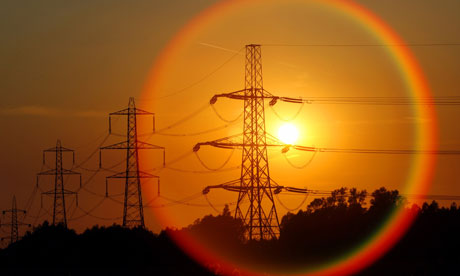
    The sun sets behind pylons in central England

    Scientists have the thankless job of fact-checking books like the ones sent out by the Heartland Institute. Photograph: Darren Staples/Reuters

    This spring, I began receiving calls and emails from colleagues about a strange little book that was mailed to environmental science professors around the country. This was a big mailing, in total, a reported 100,000 copies were sent out. What was it about this little book that got us talking? Many things. First, a coordinated mailing of a book is unusual. But what is more unusual is a book that purports to be the “real story” about climate change, with graphs, figures, and tables. It came with a foreward by Senator Harrison Schmitt who is well known for misrepresenting the science. There was also an accompanying letter by Fred Singer. Many of us already know of Fred Singer; he was focused on in an excellent book by Dr Naomi Oreskes who catalogued his history of undermining the science and concerns related to second-hand smoke, ozone depletion, and acid rain. The letter from Fred Singer was on letterhead from the Heartland Institute which is a radical organisation that had compared belief in global warming to murder.

    While author of the book, Mr Goreham, is described as a “researcher on environmental issues”, a literature search for scientific publications revealed nothing.

    But all this, by itself, doesn’t mean much. I mean we are all entitled to our opinions on any subject, even if we don’t know much about it, aren’t we? Sure… but your opinions should be based in fact. With this in mind, let’s examine some of the claims made in the book.

    The best way to evaluate a claim is to go to its source. It appears that the author had ample references to support his claims. The only problem… the reference list isn’t included in the book, nor is an index. Now why would an author reference papers but not list them in the book? I had to dig around to find the missing references so I could fact-check the text.

    In his discussion of past climate variations, Mr Goreham used graphics from a contrarian website (CO2Science); I have previously debunked this site. He had other sources as well. In the book, Goreman references a graph which he claims he obtained from the 1995 IPCC report on climate change. The problem is the figure isn’t there. He must have lifted the figure from a different report. Perhaps that was just a typo, let’s give him the benefit of the doubt. On the same page, however, he cites a graph as originating from a 1998 paper by Mike Mann. That, too, is incorrect, the figure wasn’t in the Mann paper. I wrote to Steve, asking him to clarify where these images had originated. He responded that I was right, he had made mistakes. He promised to correct these errors in future editions of his book.

    I then reviewed the other papers he cited, did they really show a medieval period that was global and warmer than today? One of the authors that Mr. Goreham cited regarding the presence of a medieval warm period (MWP) was Dr Delia Oppo. I wrote to Oppo who works at Woods Hole Oceanographic Institution. She responded:

    I do not think that data from one location should be used to assess whether globally, the MWP was warmer or colder than today. As you say, there is considerable evidence to the contrary (mostly from tree rings). Further, as you also noted, even if it WAS as warm during the MWP as it is today it does not follow logically that the recent warming is natural.

    Goreham went on to make statements linking changes in the Pacific Ocean to temperature trends however comparing his own graphs on pages 67 and 68 shows that they do not match very well. Surely he should have caught this inconvenient inconsistency during the editing process?

    What about his claim that scientists ignore the sun? That too is pure fantasy.

    His statements that temperatures have been flat or declining in the past few years? Also not true. But if Mr Goreham won’t take my word for it, maybe he will take the word of the Koch-brothers funded study which agrees with me.

    What about his claim that humans are responsible for only a very small fraction of carbon dioxide in the atmosphere? Wrong again. Humans are responsible for approximately 40% of the carbon dioxide in the atmosphere today. In fact, Goreham makes an elementary-school error by confusing gross emissions with net emissions. This is a mistake that anyone with a bank account can see. It is like the difference between the paycheck deposited in your bank account and the amount of money that remains after paying all of your bills. He also gets confused about how long elevated carbon dioxide will persist in the atmosphere. The high levels of carbon dioxide which results from human emissions will persist for decades and centuries, far longer than the 5-6 year molecule-specific residence time he claims.

    What about his comments that the ocean will just absorb the carbon we emit? Wrong again. But then again, Goreham never claimed to be good a chemistry.

    What about his claims that “all major climate models assume positive feedback”? Wrong again.

    But it gets even worse. On one page (83), Gorehman admits that water vapor is an important greenhouse gas. But then just a few pages later (88) he states that the effect of water vapor may act to reduce warming. Not only does Goreham disagree with real scientists, he disagrees with himself. Now, in his defence, Goreham may be confusing water vapor with clouds. But real scientists know they are not the same thing. In fact, Goreham cites two studies by Richard Lindzen and Roy Spencer that don’t even deal with water vapor feedback. I’m going to go out on a limb here but I challenge Mr Goreham to get the very scientists he cites (Lindzen or Spencer) to agree with him that increased water vapor may not cause warming.

    Just a few more errors, stick with me. On page 91 Goreham claims the IPCC “discounts” the sun. This is absurd and the quote he supplies is obviously misunderstood. What about his claims that the Antarctic is “growing”. Real science disagrees here and here. His statement that the Greenland Ice Sheet is “healthy”? Not according to these real scientists or these.

    At this point, I just had to skip to the end of the book and hope it was the end of the errors. Not so. At the close of the book (page 238), Goreham discusses ocean temperature measurements down to depths of 2,000 meters to determine how much heat is entering ocean waters. But then, he shows a “surprising result” that there has been no change in ocean heat content. What is “surprising” is that the data he shows isn’t for ocean depths of 2,000 meters at all. In fact, he only shows data for a small fraction of the ocean waters. Had he shown the correct data, he would have come to the correct conclusion – oceans are warming.

    So let’s put all these errors, misinterpretations, and misguided comments aside. We know Mr Goreham isn’t a climate scientist, in fact, isn’t a publishing scientist at all. He admitted that in an email to me. What we should reflect upon is the absurdity of this mailing. Who really thinks that this glossy-covered book will sway real climate experts? Not a chance. It is much more likely that this was a major waste of time and effort. Why would such effort be spent? Why would the author now be promoted as a speaker who charges up to $5,000 per event as someone who can “deliver the real story” when he fails miserably in print?

    Wouldn’t it be nice to live in a world where armchair experts gave up fighting over whether climate change is occurring and instead spend their time working on solutions? Solutions that we could implement today that would not only clean up the environment but would also create jobs, improve international security, and diversify energy supplies? Until we move on to that discussion, we scientists have the thankless job of fact-checking persons like Mr Goreham. It’s a boring job but someone has to do it.

    Dr. John Abraham
    University of St. Thomas
    Climate Science Rapid Response Team
    Climate Science Legal Defense Fund

  • Climate change: human disaster looms, claims new research

    Climate change: human disaster looms, claims new research

    Forecast global temperature rise of 4C a calamity for large swaths of planet even if predicted extremes are not reached

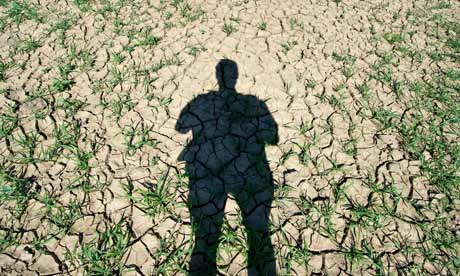
    Climate change : Drought in agriculture

    A human shadow is seen on a dried out field after drought in Germany. Photograph: Patrick Pleul/EPA

    Some of the most extreme predictions of global warming are unlikely to materialise, new scientific research has suggested, but the world is still likely to be in for a temperature rise of double that regarded as safe.

    The researchers said warming was most likely to reach about 4C above pre-industrial levels if the past decade’s readings were taken into account.

    That would still lead to catastrophe across large swaths of the Earth, causing droughts, storms, floods and heatwaves, and drastic effects on agricultural productivity leading to secondary effects such as mass migration.

    Some climate change sceptics have suggested that because the highest global average temperature yet recorded was in 1998 climate change has stalled. The new study, which is published in the journal Nature Geoscience, shows a much longer “pause” would be needed to suggest that the world was not warming rapidly.

    Alexander Otto, at the University of Oxford, lead author of the research, told the Guardian that there was much that climate scientists could still not fully factor into their models. He said most of the recent warming had been absorbed by the oceans but this would change as the seas heat up. The thermal expansion of the oceans is one of the main factors behind current and projected sea level rises.

    The highest global average temperature ever recorded was in 1998, under the effects of a strong El Niño, a southern Pacific weather system associated with warmer and stormy weather, which oscillates with a milder system called La Niña. Since then the trend of average global surface temperatures has shown a clear rise above the long-term averages – the 10 warmest years on record have been since 1998 – but climate sceptics have claimed that this represents a pause in warming.

    Otto said that this most recent pattern could not be taken as evidence that climate change has stopped. “Given the noise in the climate and temperature system, you would need to see a much longer period of any pause in order to draw the conclusion that global warming was not occurring,” he said. Such a period could be as long as 40 years of the climate record, he said.

    Otto said the study found that most of the climate change models used by scientists were “pretty accurate”. A comprehensive global study of climate change science is expected to be published in September by the Intergovernmental Panel on Climate Change, its first major report since 2007.

    Jochem Marotzke, professor at the Max Planck Institute for Meteorology in Hamburg and a co-author of the paper, said: “It is important not to over-interpret a single decade, given what we know, and don’t know, about natural climate variability. Over the past decade the world as a whole has continued to warm but the warming is mostly in the subsurface oceans rather than at the surface.”

    Other researchers also warned that there was little comfort to be taken from the new estimates – greenhouse gas emissions are rising at a far higher rate than had been predicted by this stage of the 21st century and set to rise even further, so estimates for how much warming is likely will also have to be upped.

    Richard Allan, reader in climate at the University of Reading, said: “This work has used observations to estimate Earth’s current heating rate and demonstrate that simulations of climate change far in the future seem to be pretty accurate. However, the research also indicates that a minority of simulations may be responding more rapidly towards this overall warming than the observations indicate.”

    He said the effect of pollutants in the atmosphere, which reflect the sun’s heat back into space, was particularly hard to measure.

    He noted the inferred sensitivity of climate to a doubling of carbon dioxide concentrations based on this new study, suggesting a rise of 1.2C to 3.9C, was consistent with the range from climate simulations of 2.2C to 4.7C. He said: “With work like this our predictions become ever better.”

  • Tar sands exploitation would mean game over for climate, warns leading scientist

    Tar sands exploitation would mean game over for climate, warns leading scientist

    Prof James Hansen rebukes oil firms and Canadian government over stance on exploiting fossil fuel, which he says would make climate problem unsolvable

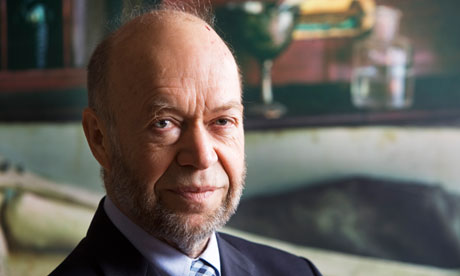
    James Hansen

    Prof James Hansen accused the Canadian government of acting as salesmen for major oil companies. Photograph: Murdo Macleod

    Major international oil companies are buying off governments, according to the world’s most prominent climate scientist, Prof James Hansen. During a visit to London, he accused the Canadian government of acting as the industry’s tar sands salesman and “holding a club” over the UK and European nations to accept its “dirty” oil.

    “Oil from tar sands makes sense only for a small number of people who are making a lot of money from that product,” he said in an interview with the Guardian. “It doesn’t make sense for the rest of the people on the planet. We are getting close to the dangerous level of carbon in the atmosphere and if we add on to that unconventional fossil fuels, which have a tremendous amount of carbon, then the climate problem becomes unsolvable.”

    Hansen met ministers in the UK government, which the Guardian previously revealed has secretly supported Canada’s position at the highest level.

    Canada‘s natural resources minister, Joe Oliver, has also visited London to campaign against EU proposals to penalise oil from Alberta’s tar sands as highly polluting. “Canada can offer energy security and economic stability to the world,” he said. Oliver also publicly threatened a trade war via the World Trade Organisation if the EU action went ahead: “Canada will not hesitate to defend its interests.”

    The lobbying for and against tar sands has intensified on both sides of the Atlantic as the EU moves forward on its proposals, which Canada fears could set a global precedent, and Barack Barack Obama considers approving the Keystone XL pipeline to transport tar sands oil from Canada to the US gulf coast refineries and ports. Canada’s prime minister, Stephen Harper, was met by protesters when he visited New York last week to tell audiences that KXL “absolutely needs to go ahead”.

    Canada’s tar sands are the third biggest oil reserve in the world, but separating the oil from the rock is energy intensive and causes three to four times more carbon emissions per barrel than conventional oil. Hansen argues that it would be “game over” for the climate if tar sands were fully exploited, given that existing conventional oil and gas is certain to be burned.

    “To leave our children with a manageable situation, we need to leave the unconventional fuel in the ground,” he said. Canada’s ministers were “acting as salesmen for those people who will gain from the profits of that industry,” he said. “But I don’t think they are looking after the rights and wellbeing of the population as a whole.

    “The thing we are facing overall is that the fossil fuel industry has so much money that they are buying off governments,” Hansen said. “Our democracies are seriously handicapped by the money that is driving decisions in Washington and other capitals.”

    The EU aims to penalise oil sources with higher carbon footprints, as part of a drive to reduce the carbon emissions from transport called the fuel quality directive (FDQ). But Canada, supported by the UK, is fiercely opposed: “We are not saying they should not move to reduce emissions,” said Oliver. “But the proposed implementation of the FQD is discriminatory to oil sands and not based on scientific facts.” However, Europe‘s commissioner for climate action, Connie Hedegaard, said the FQD was “nothing more, nothing less” than accurate labelling and putting a fair price on pollution.

    Hansen, who informed the US Congress of the danger of global warming in 1988, has caused controversy before by saying the “CEOs of fossil fuel companies should be tried for high crimes against humanity” and calling coal-fired power plants “factories of death“. In April, he stepped down from his Nasa position after 46 years, in order to spend more time communicating the risks of climate change and to work on legal challenges to governments.

    Hansen has started a science programme at Columbia University, the first task of which is to produce a report to support suits filed again the US federal government and several state governments. It is being pursued by the Our Children’s Trust charity and is based on a trust principle recognised in US law.

    “We maintain that the atmosphere and climate are held in trust by the present generations for the future generations and we do not have the right to destroy that asset,” Hansen said. “Therefore the courts should require the government to give a plan as to how they are going to ensure that we still have that asset to pass on to the next generation.”

  • Ex-MP ‘can’t believe’ Obeid meant it

    Ex-MP ‘can’t believe’ Obeid meant it

    • By Sophie Tarr
    • AAP
    • May 20, 2013 1:10PM

    FORMER Labor kingmaker Eddie Obeid gave incorrect evidence to the NSW corruption watchdog, his lawyer has admitted.

    Mr Obeid last week told the Independent Commission Against Corruption (ICAC) that in his 20 years in politics, former mining minister Ian Macdonald had never been inside his parliamentary office.

    But on Monday, barrister Stuart Littlemore was forced to backtrack on Mr Obeid’s behalf, as former parliamentary colleagues testified the pair did indeed meet in Mr Obeid’s office dozens of times.

    The ICAC is in the final stages of Operation Jasper, its investigation into whether Mr Macdonald rigged a 2008 tender process for coal exploration licences in the Bylong Valley, and whether Mr Obeid and his family gained tens of millions of dollars from the decisions Mr Macdonald made.

    Former NSW upper house member Paul O’Grady told the corruption watchdog on Monday that during the years he occupied the parliamentary office next to Mr Obeid’s he saw Mr Macdonald “coming and going, back and forth all the time”.

    He said he was “incredulous” when he read about Mr Obeid’s evidence in the paper.

    “If this bloke said that, he’s got more front than Mark Foys,” Mr O’Grady told the inquiry, referring to a prominent former Sydney department store.

    Outside the commission Mr O’Grady said the two former ministers “lived with each other, there was a goat track between (their offices)”.

    Lynda Voltz, MLC, said she distinctly remembered seeing then-Labor minister Mr Macdonald enter the office in late 2009.

    “I went in on one occasion – it must’ve been after the caucus meeting when Nathan Rees was rolled as premier,” Ms Voltz told the inquiry.

    “When I went into the office to talk to Eddie, Ian Macdonald was in there as well.”

    Former Labor MP Ian West said the former factional boss might have erred on the stand in the heat of the moment.

    “He may’ve said that in some stress in the witness box,” Mr West said.

    “I can’t believe that he meant it … It would be like Sir Donald Bradman saying that he’d never been in the Australian cricket team’s dressing room,” he said.

    Mr Littlemore said Mr Obeid did not contest the testimony from his former Labor colleagues on Monday that Mr Macdonald visited his office during the years from 1991 to 1995 and in late 2009.

    “Mr Obeid’s instructions are, yes, he was wrong … he was wrong in his recollection of that period,” Mr Littlemore told the inquiry.

    But the barrister suggested in-office meetings did not take place during 2008.

    The inquiry has heard it was about that time that Chinese businessman Alan Fang approached the Obeids about buying their farm at Bylong, and that he offered to pay several times the property’s worth.

    It’s been alleged Mr Macdonald personally escorted Mr Fang into Mr Obeid’s Macquarie Street office. Mr Obeid has denied the allegation.

    The ICAC report is due by late July.

    Anyone found to have knowingly given false or misleading evidence to the commission can be jailed for up to five years.