Category: Uncategorized

  • Plan Melbourne document reveals Hastings and Frankston as future employment hubs Natalie Kealey

    Last Updated: May 21, 2014

    Weather: Melbourne 12°C – 21°C . Partly cloudy.

    Plan Melbourne document reveals Hastings and Frankston as future employment hubs

    • Natalie Kealey
    • Frankston Standard Leader
    • May 21, 2014 4:55PM
    Hastings (pictured) has been earmarked as a major hub for employment growth for Frankston

    Hastings (pictured) has been earmarked as a major hub for employment growth for Frankston and the Mornington Peninsula in the Plan Melbourne document released this week. Picture: Andrew Batsch Source: News Limited

    HASTINGS has been earmarked as a major hub for employment growth for Frankston and the Mornington Peninsula in the Plan Melbourne document released this week.

    The State Government blueprint for the city’s growth for the next 35 years focused on population growth and where and how those people would live, work and travel.

    Knowledge-based employment centres were identified as well as industrial-based centres and the desire to create 20-minute neighbourhoods where people could work within 20 minutes of where they live.

    In the southern region, a knowledge-based hub will be developed within Dandenong and industrial centres in Dandenong South, parts of Casey and Hastings.

    Despite the employment centres not being within the desired 20 minutes of large sections of Frankston and the Mornington Peninsula, Planning Minister Matthew Guy said Plan Melbourne provided a number of jobs hubs across the southern sub region.

    “Frankston is defined in Plan Melbourne as an existing Metropolitan Activity Centre,” the Minister said.

    “These centres will play a major service delivery role including in government, health, justice and education services. They are described as servicing a sub regional catchment which would in the case of Frankston include the Mornington Peninsula.

    “Plan Melbourne also identifies the Dandenong South industrial precinct as a national employment cluster and the Port of Hastings as a state significant industrial precinct. In addition, activity centres including Casey central, Clyde, Cranbourne, Karingal and Mornington will all provide future employment growth.”

    Mornington Peninsula Shire strategic planning manager Allan Cowley said although Dandenong was the nearest national employment cluster, there were opportunities for employment growth both on the peninsula and in nearby metropolitan activity centres of Frankston and Dandenong as well as through the development of the Port of Hastings.

    “The shire’s economy and employment base is very diverse and it is anticipated that employment growth will occur in many sectors, retail and services (including aged care), tourism and hospitality, agriculture, marine manufacturing, freight and logistics associated with the Port of Hastings,” he said.

    “Council will continue to work with the State Government to facilitate appropriate development.”

    Mr Cowley said it was important to recognise that an aim of Plan Melbourne is to ensure balanced growth.

    “For example, population growth in areas with best access to current and future employment, and recognising the limits to employment growth on the peninsula is an important consideration in limiting the scale of population growth.”

    Also indicated in the Plan Melbourne document was that Western Port Highway would be upgraded to a freeway and a train line to carry freight from the Port of Hastings would run alongside it.

    The diagram indicated it will run along the Frankston side of the current highway.

    Leader is waiting for a response from the State Government on what is the preferred route.

    Frankston Council has not responded to request for comment on Plan Melbourne.

    Comments

  • ASI 2014 update 1: melt pond May

    « Dark Snow Project 2014 | Main

    ASI 2014 update 1: melt pond May

    ASI 2014 update 1During the melting season I’m writing (bi-)weekly updates on the current situation with regards to Arctic sea ice (ASI). Central to these updates are the daily Cryosphere Today sea ice area (SIA) and IJIS sea ice extent (SIE) numbers, which I compare to data from the 2005-2012 period (NSIDC has a good explanation of sea ice extent and area in their FAQ). I also look at other things like regional sea ice area, compactness, temperature and weather forecasts, anything of particular interest.

    The animation on the right consists of NSIDC
    sea ice concentration maps, one for each ASI update.

    Check out the Arctic Sea Ice Graphs website (ASIG)
    for daily updated graphs, maps, live webcam images and
    the Arctic Sea Ice Forum (ASIF) for detailed discussions.

    May 19th 2014

    Welcome to the first update of the 2014 melting season.

    There are two things that determine the outcome of a melting season: initial ice state and subsequent weather conditions. The last two melting seasons were so diametrically opposed that we actually learned a lot in this respect. Or, at least I did.

    In 2012 the initial ice condition and first half of the melting season was so conducive to massive sea ice melt, that it didn’t matter all that much what the weather did during the second half of the season. Even during cloudy, colder periods sea ice extent and area kept dropping. In 2013 it was the opposite: initial ice state (probably influenced by the cracking event of March that year) and a cold, cloudy first half of the melting season were slowing the sea ice melt so much that even spells of clear, warm weather couldn’t change the melting season’s outcome.

    Of course, we don’t know what the weather will be like weeks and months from now, but we can somewhat estimate the initial ice state (see my 2013/2014 Winter Analysis) and check the sea ice pack’s pulse in these crucial first weeks of the melting season. One very important influence I’ve been obsessing over every now and then, is the amount of melt ponds on the sea ice. These small lakes on ice floes can greatly accelerate melting as they decrease albedo, meaning that more sunlight gets absorbed by the ice.

    I’ve always known this was important, but have now become convinced that it could be of paramount importance, in the sense that it can perhaps not make, but definitely break a potential record melting season. And all of it happens in May. Melt pond May. And probably the first half of June too.

    I’ll be focusing on this a lot in weeks to come.

    Sea ice area (SIA)

    This is the time of year when the trend lines on various sea ice area and extent charts start to converge with differences becoming more prominent again in June. It can still convey some information, as we saw last year on the Cryosphere Today SIA graph. The 2013 trend line started the month out low, but was highest at the end of it. This was a sign (in hindsight, I didn’t see it as such at the time) that cold and cloudy conditions were already having a big influence on the final outcome of the melting season. The slow SIA decline meant that there were less melt ponds than in years before.

    Mind you, I’m not saying that SIA or SIE numbers in May are a proxy for melt pond cover fraction, but last year really jumps out in this respect. This year the trend line is more or less in the middle of the pack, as you can see on this graph based on the latest data:

    CTSIA20140516Here’s the link to my CT SIA spreadsheet.Sea ice extent (SIE)

    Things look different on the IJIS sea ice extent graph, with 2014 going second lowest after 2006 (and 2004 according to Espen on the Arctic Sea Ice Forum). Here’s the graph based on the data:
    IJISSIE20140518Here’s the link to my IJIS SIE spreadsheet.

    Regional SIE and SIA

    Regional graph of the week, taken from the Regional Graphs page:

    R12_Bering_Sea_ts

    Sea ice has disappeared quickly from the Bering Sea (and the Okhotsk Sea) this year, with sea ice in the Chukchi Sea also declining faster than usual.

    The map below, custom-made by Wipneus for this update, shows the changes over the past two weeks. The map is made using University of Hamburg AMSR2 data. Red = ice two weeks ago, open water now; blue the other way around:

    Tmp3

    You can quickly compare this year’s sea ice cover and concentration with previous years, using the Concentration maps page on the Arctic Sea Ice Graphs website.

    Sea Level Pressure (SLP)

    Of course, sea level pressure plays a crucial role in determining the position and percentage of melt ponds on the Arctic sea ice pack, as it gives an idea of where the open skies are and if there is a transport of warmer air from lower latitudes into the Arctic. Open skies mean lots of insolation and are there where the SLP is high.

    This two-week animation of Danish Meteorological Institute SLP images shows what has been going on with regards to SLP:

    DMISLP2014-1A short-lived cyclone was pushed away by a high pressure system coming in from the American side of the Arctic, causing a short-lived Dipole set-up, ending with another cyclone going towards the centre of the Arctic Ocean. In short, nothing conclusive. May 2014 isn’t jumping out so far, compared to previous years on the SLP Patterns page on the Arctic Sea Ice Graphs website.

    Let’s see what the weather will be like for the coming 6 days according to the ECMWF model (click for a larger version):

    ECMWF2014-1

    That cyclone towards the end of the DMI 2-week animation, moves over to the centre of the Arctic and stays there for a couple of days, pulling in air from Siberia that is above freezing over the Siberian Seas, and pulling the sea ice away from the Siberian coast (which has already started and is showing up on the sea ice concentration maps). After that high pressure more or less takes over again.

    The forecast, of course, becomes less trustworthy as it goes further out, and in the past couple of days there have been quite some oscillations from one ECMWF forecast to the next. So we’ll have to wait and see.

    Temperatures

    Temps have been low lately over much of the Arctic, which of course reduces the amount of melt ponds. This NOAA/ESRL 1-day anomaly map shows the current situation (the 7-day and 30-day maps can be found on the ASIG):

    Sfctmpmer_01a.fnl

    The trend line on the DMI 80N temp graph started dipping at almost exactly the same time as last year, now going up a bit again:

    MeanT_2014

    As far as sea surface temperatures are concerned, things have been warming up in the Atlantic sector over the past weeks and are perhaps slightly warmer than a week later last year, but the colours on these maps can fluctuate:

    Satanom.arc.d-00Conclusion

    The start of this melting season has been a mixed bag so far, with some similarities with regards to last year, like cyclones dominating and relatively low temps, but perhaps not that strong either. It was around this time, in the last 10 days of May that 2013 really began to deviate with a very persistent cyclone dominating the Arctic for weeks. There is no sign of that on the weather forecast maps so far.

    On the other hand, SIE and SIA are relatively low for the time of year, and those cold temps seem to be confined to the Arctic Basin so far, with lots of interesting things already happening on the fringes, like the relatively early opening up of the Eastern Siberian Sea.

    It will take a couple more weeks for more info to roll in. We will then have a somewhat vague idea of those initial ice state conditions and what happened during this crucial first half of the first half of the melting season. If we can guess what is happening with regards to melt pond formation, we might at least be able to tell if a new record is a possibility.

    I’m not ruling it out, of course (one mustn’t rule things out when it comes to the Arctic), sea ice volume is as low as the last couple of years, but there is more multi-year ice this year and the heart of the Arctic seems to have gained some strength due to last year’s rebound (see, again, the 2013/2014 Winter Analysis). It now all depends on the weather.

    Which we’ll be watching here and on the ASIF. Enjoy the Arctic sea ice, it’s the only Arctic sea ice you’ve got.

  • Highland Spring Monbiot

    Why this ad?
    Fast Cash Loans $5000www.moneystart.com.au/Fast-Loans – Need Some Cash Fast? Apply Online! Loans up to $5000 in 24 hours.

    Monbiot.com

    Inbox
    x

    George Monbiot news@monbiot.com via google.com

    7:22 PM (25 minutes ago)

    to me

    Monbiot.com


    Highland Spring?

    Posted: 19 May 2014 12:08 PM PDT

    Will Scotland please get off its knees and challenge the people who claim to own it.
    By George Monbiot, published in the Guardian 20th May 2014

    Power’s ability to resist change: this is the story of our times. Morally bankrupt, discredited, widely loathed? No problem: whether it’s neoliberal economics, tax avoidance, coal burning, farm subsidies or the House of Lords, somehow the crooked system creeps along.

    Legally, feudalism in Scotland ended in 2004(1). In itself, this is an arresting fact. But almost nothing has changed. After 15 years of devolution, the nation with the rich world’s greatest concentration of land ownership remains as inequitable as ever.

    The culture of deference which afflicts the British countryside is nowhere stronger than in the Highlands. Hardly anyone dares challenge the aristocrats, oligarchs, bankers and sheikhs who own so much of this nation, for fear of consequences real or imagined. The Scottish government makes grand statements about land reform, then kisses the baronial boot. The huge estates remain untaxed and scarcely regulated.

    You begin to grasp the problem when you try to discover who owns them. Fifty per cent of the private land in Scotland is in the hands of 432 people(2) – but who are they? Many of the large estates are registered in the names of made-up companies in the Caribbean. When the Scottish minister Fergus Ewing was challenged on this issue, he claimed that obliging landowners to register their estates in countries that aren’t tax havens would risk “a negative effect on investment”(3). William Wallace rides again.

    Scotland’s deer stalking estates and grouse moors, though they are not agricultural land, benefit from the outrageous boondoggles that farmers enjoy. They are exempt from capital gains tax, inheritance tax and business rates(4). Landowners seek to justify their grip on the United Kingdom by rebranding themselves as business owners. The Country Landowners’ Association has renamed itself the Country Land and Business Association. So why do they not pay business rates on their land? As Andy Wightman, author of The Poor Had No Lawyers(5), argues, these tax exemptions inflate the cost of land, making it impossible for communities to buy.

    Though the estates pay next to nothing to the exchequer, and though they practice little that resembles farming, they receive millions in farm subsidies. The new basic payments system the Scottish government is introducing could worsen this injustice. Wightman calculates that the King of Dubai could receive £439,000 for the estate in Wester Ross he owns(6). The Duke of Westminster could find himself enriched by £764,000 a year, the Duke of Roxburgh by £950,000.

    With the help of legislators and taxpayers, the owners of the big estates are ripping apart the fabric of the nation. The hills in many parts look as if they have been camouflaged against military attack, as they have been burnt in patches for grouse shooting. It is astonishing, in the 21st Century, that people are still allowed to burn mountainsides – destroying their vegetation, roasting their wildlife, vapourising their carbon, creating a telluric eczema of sepia and grey blotches – for any purpose, let alone blasting highland chickens out of the air. Where the hills aren’t burnt for grouse, they are grazed to the roots by overstocked deer, maintained at vast densities to give the bankers waddling over the moors in tweed pantaloons a chance of shooting one.

    Hanging over the nation is the shadow of Balmoral, whose extreme and destructive management – clearing, burning, trashing, overgrazing – overseen by Prince Philip, president emeritus of the World Wide Fund for Nature, is mimicked by the other landowners. Little has changed there since Victoria and Albert adopted an ersatz version of the clothes and customs of the people who had just been cleared from the land. This balmorality is equivalent to Marie Antoinette dressing up as a milkmaid while the people of France starved, but such is Britain’s culture of deference that we fail to see it(7). Today they mix the tartans with the fancy dress of Edwardian squires, harking back to the last time Britain was this unequal.

    But despite this lockdown, there is, if not quite a Highland Spring, the beginnings of something different. On one side of me, here in Boat of Garten, is the bare, black misery of the Monadhliath Mountains. On the other, the great rewilding that is quickly but quietly spreading through the north-west of the Cairngorms national park. Across 100,000 hectares, the RSPB, the Forestry Commission, the National Trust and Wildland Ltd (owned by the Danish textiles billionaire Anders Holch Povlsen) – are seeking to reverse the destruction, reduce the deer to reasonable numbers and get trees back onto the braes. On Povlson’s estates, the area of woodland has doubled (to 1400ha) since 2006, solely through the control of deer. It’s not land reform, but it’s the best that can be done with the current, dire model of Scottish ownership.

    The forests at the moment are bright with birdsong. In some places, looking down on lochans surrounded by marshes and regenerating pines, you almost expect to see a moose emerging from the trees. Trees are racing up the denuded hillsides: in Glenmore I’ve come across young pines, birch and rowan growing at 800 metres. Already people are talking about reintroducing lynx here within 20 years. As the return of the ospreys to the lakes and forests in this part of the park shows, the potential for eco-tourism, which spreads income and employment through the economy, is vast. The contrast with the scorched and scoured grouse moors of the east side of the national park, which employ hardly anyone, concentrate wealth in tax havens and are unmysteriously devoid of most birds of prey, could not be greater.

    It doesn’t reverse the other injustices, but it begins to undo the centuries of physical destruction. I would vote yes in September if I lived here, on the grounds that it presents an opportunity to do something new, and I furiously hope, despite the evidence, that an independent Scottish government will take it.

    It should list all the beneficial owners of the land; impose the taxes Westminster refuses to levy; ensure that only farmers get subsidies and cap them at £30,000 a head; ban burning, control deer numbers, turn Scotland into a land where you can actually see the green shoots of recovery. On Friday the Land Reform Review Group, set up by the government at Holyrood, will publish its report(8), and it’s likely to be devastating. Will Scotland get off its knees at last?

    George Monbiot’s book Feral: rewilding the land, sea and human life is published in paperback next month.

    www.monbiot.com

    References:

    1. http://news.bbc.co.uk/1/hi/scotland/4048529.stm

    2. http://www.parliament.uk/documents/commons-committees/scottish-affairs/432-Land%20Reform%20Paper.pdf

    3. http://www.andywightman.com/docs/OR_20120208.pdf

    4. http://www.publications.parliament.uk/pa/cm201314/cmselect/cmscotaf/877/87702.htm

    5. http://www.andywightman.com/?page_id=1082

    6. www.andywightman.com/?p=3571

    7. http://www.theguardian.com/environment/georgemonbiot/2012/mar/02/deer-study-highlands-scottish

    8. http://www.scotland.gov.uk/About/Review/land-reform

  • Climate change could increase volcanic eruptions

    Climate change could increase volcanic eruptions


    volcano-650May 19, 2014

    Iceland’s history suggests we’re heading for a more explosive planet.

    By Kieran Cooke
    Climate News Network

    LONDON – Iceland names its commercial aircraft after its volcanoes – ironic, given that ash blown into the atmosphere by the 2010 eruption of the country’s Eyjafjallajökull volcano resulted in much of Europe’s airspace being closed for days, with 100,000 flights cancelled and ten million passengers stranded.

    Volcanoes are deeply embedded in the Icelandic psyche. They are everywhere in the landscape. In many ways, the whole country is a volcano.

    Eruptions of one sort or another are going on all the time. The locals tend to ignore the odd rumble and giant cloud of fire and ash, which would have those of us living in less explosive regions disappearing under our beds. Reykjavik tour operators refer to these minor blasts as “tourist eruptions.”

    The Laki volcanic eruption in 1783 was a very different matter, one of the most devastating in recent history, an event that has even the phlegmatic Icelanders quaking at the Earth’s explosive power.

    Hot ash and cinders

    “Island on Fire,” a new book by Alexandra Witze and Jeff Kanipe, details the local and global impact of Laki’s eruption. Hot ash and cinders burned skin and poisoned pastures. At least one-fifth of Iceland’s population was killed, and half the country’s livestock wiped out.

    “What made Laki particularly deadly – an insidious killer – was how long its eruption went on and what poisons it spat into the atmosphere,” they write. “Over the course of eight months, Laki produced one of the largest lava flows in historic times − enough to bury Manhattan 250 metres deep.

    “Over the first 12 days, it disgorged the equivalent of two Olympic swimming pools full of lava every second. Along with the lava came the gas: Laki belched out an estimated 122 million tonnes of sulphur dioxide, 15 million tonnes of fluorine, and 7 million tonnes of chlorine. It was one of the biggest atmospheric pollution events in the past 250 years.”

    No borders

    As with climate change-related greenhouse gases, volcanic gases and ash clouds obey no borders. Laki first started erupting in June 1783. Throughout the summer of that year, it heaved and spewed particles that spread across Europe.

    “All summer, people all over the continent choked on this caustic smog … people could neither avoid nor escape the malignant haze, which manifested itself as a bluish or reddish ‘dry fog’ that smelled strongly of sulphur. It dimmed the sun and instilled panic across the continent.”

    Today, we know far more about volcanic eruptions, but, as Witze and Kanipe point out, we are none the less vulnerable. The 2010 eruption of Eyjafjallajökull was relatively small in volcanic terms, yet it showed that in our “just-in-time” world, with its highly-integrated transport and trading systems, one major kink in the network can lead to chaos on a global scale.

    Smog, crop failure, famine

    The smog of the European summer of 1783 gave way to the worst winter in decades as Laki’s aerosols chilled the continent. Studies show a large spike in death rates in England over the period.

    Often, not enough attention is paid to climatic issues in analysing the course of historic events. Witze and Kanipe say that as crops failed and famine spread in France, Laki could well have been an unseen player behind the French revolution of 1789 – in the same way that a prolonged drought in the eastern Mediterranean has, in part, driven events behind the uprising in Syria.

    There is little that can be done about volcanic eruptions, but they are a lesson in what can happen when pollutants and greenhouse gases build up in the atmosphere. Witze and Kanipe estimate that, overall, millions of people around the world could have died as a result of Laki’s belching and heaving.

    Quiet for the moment

    At the moment, although Laki is relatively quiet, Iceland’s volcanoes are becoming more active. This, say the authors, is due in part to climate change. As the country’s ice has melted, the overlying weight of ice on its volcanoes has been reduced, and the loss of ice is creating geological stresses in the crust beneath.

    “It’s simple cork-and-champagne physics,” say Witze and Kanipe.

    It’s not a question of if but when the next big blast will come.

    Kieran Cooke is an editor of Climate News Network, a journalism news service delive

  • Climate change could increase volcanic eruptio

    The Daily Climate

    Climate change could increase volcanic eruptions


    volcano-650May 19, 2014

    Iceland’s history suggests we’re heading for a more explosive planet.

    By Kieran Cooke
    Climate News Network

    LONDON – Iceland names its commercial aircraft after its volcanoes – ironic, given that ash blown into the atmosphere by the 2010 eruption of the country’s Eyjafjallajökull volcano resulted in much of Europe’s airspace being closed for days, with 100,000 flights cancelled and ten million passengers stranded.

    Volcanoes are deeply embedded in the Icelandic psyche. They are everywhere in the landscape. In many ways, the whole country is a volcano.

    Eruptions of one sort or another are going on all the time. The locals tend to ignore the odd rumble and giant cloud of fire and ash, which would have those of us living in less explosive regions disappearing under our beds. Reykjavik tour operators refer to these minor blasts as “tourist eruptions.”

    The Laki volcanic eruption in 1783 was a very different matter, one of the most devastating in recent history, an event that has even the phlegmatic Icelanders quaking at the Earth’s explosive power.

    Hot ash and cinders

    “Island on Fire,” a new book by Alexandra Witze and Jeff Kanipe, details the local and global impact of Laki’s eruption. Hot ash and cinders burned skin and poisoned pastures. At least one-fifth of Iceland’s population was killed, and half the country’s livestock wiped out.

    “What made Laki particularly deadly – an insidious killer – was how long its eruption went on and what poisons it spat into the atmosphere,” they write. “Over the course of eight months, Laki produced one of the largest lava flows in historic times − enough to bury Manhattan 250 metres deep.

    “Over the first 12 days, it disgorged the equivalent of two Olympic swimming pools full of lava every second. Along with the lava came the gas: Laki belched out an estimated 122 million tonnes of sulphur dioxide, 15 million tonnes of fluorine, and 7 million tonnes of chlorine. It was one of the biggest atmospheric pollution events in the past 250 years.”

    No borders

    As with climate change-related greenhouse gases, volcanic gases and ash clouds obey no borders. Laki first started erupting in June 1783. Throughout the summer of that year, it heaved and spewed particles that spread across Europe.

    “All summer, people all over the continent choked on this caustic smog … people could neither avoid nor escape the malignant haze, which manifested itself as a bluish or reddish ‘dry fog’ that smelled strongly of sulphur. It dimmed the sun and instilled panic across the continent.”

    Today, we know far more about volcanic eruptions, but, as Witze and Kanipe point out, we are none the less vulnerable. The 2010 eruption of Eyjafjallajökull was relatively small in volcanic terms, yet it showed that in our “just-in-time” world, with its highly-integrated transport and trading systems, one major kink in the network can lead to chaos on a global scale.

    Smog, crop failure, famine

    The smog of the European summer of 1783 gave way to the worst winter in decades as Laki’s aerosols chilled the continent. Studies show a large spike in death rates in England over the period.

    Often, not enough attention is paid to climatic issues in analysing the course of historic events. Witze and Kanipe say that as crops failed and famine spread in France, Laki could well have been an unseen player behind the French revolution of 1789 – in the same way that a prolonged drought in the eastern Mediterranean has, in part, driven events behind the uprising in Syria.

    There is little that can be done about volcanic eruptions, but they are a lesson in what can happen when pollutants and greenhouse gases build up in the atmosphere. Witze and Kanipe estimate that, overall, millions of people around the world could have died as a result of Laki’s belching and heaving.

    Quiet for the moment

    At the moment, although Laki is relatively quiet, Iceland’s volcanoes are becoming more active. This, say the authors, is due in part to climate change. As the country’s ice has melted, the overlying weight of ice on its volcanoes has been reduced, and the loss of ice is creating geological stresses in the crust beneath.

    “It’s simple cork-and-champagne physics,” say Witze and Kanipe.

    It’s not a question of if but when the next big blast will come.

  • Convoy against Coalruption

    Why this ad?
    Cheap Electricitywww.dodo.com – Get 15% OFF our usage rates when you pay on time. Enquire now!

    Convoy against Coalruption

    Inbox
    x

    Josh Creaser – 350.org Australia josh.creaser@350.org.au via list.350.org

    4:19 PM (15 minutes ago)

    to me

    Dear friend,

    There comes a time when you have to say, enough is enough.

    While the science tells us that we urgently need to move beyond fossil fuels to avoid catastrophic climate change, mining licences and applications now cover a staggering 80% of NSW.* Increasingly, a number of NSW politicians are being implicated in corruption scandals involving developers and mining companies.

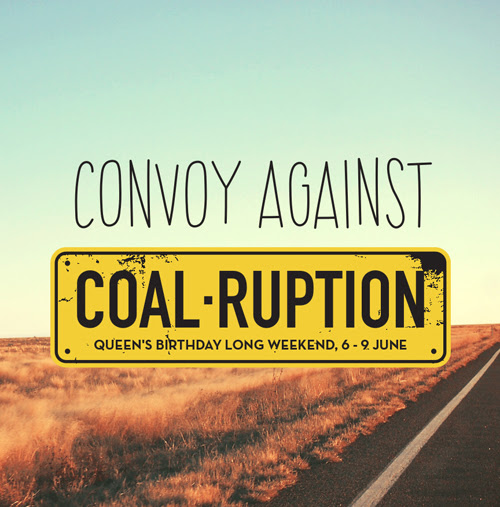
    That’s why, this Queen’s Birthday long weekend (6-9 June), 350.org is supporting a Convoy Against Coalruption – to help join the dots between corruption and dangerous fossil fuel expansion. Click here to find out more then LIKE and SHARE this graphic to spread the word.

    The Convoy against Coalruption is a fantastic chance to join with your family and friends to help connect the dots between the ICAC corruption investigations and the massive coal and gas projects being unveiled across regional NSW. Along the way, you’ll meet local communities, landowners and indigenous elders and learn more about the climate impacts of unbridled coal and gas expansion.

    Click here for all the details and share on facebook here.

    We’ll be leaving from Sydney in the afternoon of Friday, 6th of June (we are also considering an option for those who cannot leave until after work, depending on demand), and returning by Monday evening (9th). We are looking for 100 people to join the convoy so would love for you to join us.

    We hope you can join us this Queen’s Birthday long weekend to fight coalruption!

    Warmest wishes,

    Josh on behalf of the whole 350.org team

    The Convoy against Coalruption is supported by 350.org and Front Line Action on Coal.

    *Click here to read more.