Category: Uncategorized

  • Daily update: Australian renewables target set for massive haircut

    1 of 1
    Why this ad?
    Solar – Sales & Serviceswww.rmsservice.com.au – Solar Systems for Home and Business Solar Hot Water & Electricity

    Daily update: Australian renewables target set for massive haircut

    Inbox
    x

    Renew Economy editor@reneweconomy.com.au via mail192.wdc02.mcdlv.net

    2:27 PM (11 minutes ago)

    to me
    RET set for massive haircut, Oz solar seen at 23GW by 2030, Solar will do to utilities what Twitter did to media, Rooftop solar industry backs new standard for Australia, The evolution of an Australian manufacturer, Vestas “perplexed” by renewable policy debate in Australia, Wind energy delivers cost effective abatement in SA, Australia’s environment in peril, NYT gets it badly wrong on Germany’s energy transition, RET Road Trip #4.
    Is this email not displaying correctly?
    View it in your browser.
    RenewEconomy Daily News
    The Parkinson Report
    Consultant advising Abbott government review says amount of installed renewables could be slashed by nearly half and still be sold as a “20 per cent” target. But it would mean virtually no new wind or solar farms for at least the next 5 years.
    BNEF says the “unstoppable” rooftop solar PV market will lift total solar capacity in Australia to 23GW by 2030, with the number of homes and businesses jumping five-fold to 5 million. In the large scale market, solar will quickly displace wind as most attractive renewable energy source.
    It took 24 years from internet’s start for Twitter to arrive and kill media industry’s business model. Solar will do same to energy.
    Australian Solar Council launches Positive Quality program, an industry-led effort to regulate the quality of PV panels installed on Australian rooftops.
    Australian car parts manufacturer IXL opens new plant to build mounts and frames for solar farms, but unsure about policy future.
    World’s biggest wind turbine manufacturer says Australia unique in region in discussion a potential roll back of renewable targets.
    New study shows that wind energy in South Australia has cut emissions significantly, and has not caused a rise in prices.
    The state of Australia’s environment is a real worry – and we have the report cards to prove it.
    The New York Times’ article arguing Germany’s energy transition proves that the world needs nuclear required an astonishing level of ignorance to write.
    Yes 2 Renewables’ 3rd instalment of their RET
  • National Climate Assessment

    Full Report

    The full report of the National Climate Assessment provides an in-depth look at climate change impacts on the U.S. It details the multitude of ways climate change is already affecting and will increasingly affect the lives of Americans.

    Explore how climate change affects you and your family.

    Next

    Our Changing Climate

    Global climate is changing. Most of the warming of the past half-century is due to human activities. Some types of extreme weather are increasing, ice is melting on land and sea, and sea level is rising.

    Sectors

    Explore how climate change affects important sectors such as health, water, and agriculture. Cross cutting sections explore climate change impacts at the intersection of various sectors (such energy, water, and land use), as well as impacts on urban areas, rural communities, Indigenous Peoples, and more.

    Regions

    Evidence of climate change appears in every region and impacts are visible in every state. Explore how climate is already affecting and will continue to affect your region.

    Response strategies

    Explore actions to reduce emissions (“mitigation”) and adapt to a changing climate. Many of these actions can also improve public health, the economy, and quality of life.

    National Climate Assessment

    The National Climate Assessment summarizes the impacts of climate change on the United States, now and in the future.

    A team of more than 300 experts guided by a 60-member Federal Advisory Committee produced the report, which was extensively reviewed by the public and experts, including federal agencies and a panel of the National Academy of Sciences.

  • Daily update: Australia’s conservative politicians railing against renewables

    1 of 1

    Daily update: Australia’s conservative politicians railing against renewables

    Inbox
    x

    Renew Economy editor@reneweconomy.com.au via mail18.atl111.rsgsv.net

    2:27 PM (8 minutes ago)

    to me
    Bipartisan support for renewables? Not quite… Plus: New Caledonia marine park becomes world’s largest protected area, First Solar plans 5MW solar plant, Abbott could derail most basic climate goals says Fraser, report warns business will bypass ERF in first year, Solar’s anticipated surge in US, 10 eco issues you need to know about, US climate report warns of severed regional impacts, RET can go all the way to 100% if we let it.
    Is this email not displaying correctly?
    View it in your browser.
    RenewEconomy Daily News
    The Parkinson Report
    Support for renewable energy is supposed to be bipartisan. A look at the major policy makers in the conservative governments at federal and state level show this to be a myth.
    New Caledonia legislates to protect marine area bigger than Alaska, top threats to which include ship traffic from expanded Queensland coal port.
    First Solar says its first off-grid solar plant in Australia will be a 5MW array at an Australian mine to reduce diesel costs.
    Bernie Fraser says Abbott government likely to stick with 5% emissions reduction target, but even this could be tough given ‘barren’ climate policy toolkit.
    Report says Direct Action ERF will be implemented in July one way or another, but will be costly and ineffective at signing up business.
    EIA analysis suggests solar will be fastest growing energy technology in US, although mix in 2040 depends on carbon, policies and costs.
    There is reason to be alarmed at what has been happening to Australia’s natural environment since the Abbott government was elected. Here are 10 big issues.
    The National Climate Assessment – a new report from the U.S. federal government makes clear that climate change is a present-day issue and a growing threat.
    Getting to 100% renewable power sector by 2050 will require not just a practical plan, but
  • The radical right-wing getting their way on the budget

    1 of 47
    Why this ad?
    Windows 7 Driver Downloadwww.windows-7.driverupdate.net – Windows 7 Driver – Latest Download. Microsoft Certified. – Recommended!

    The radical right-wing getting their way on the budget

    Inbox
    x

    GetUp!

    12:06 PM (1 hour ago)

    to me
    Dear NEVILLE,

    Prime Minister Abbott’s Commission of Audit report is a bloody disaster for ordinary Australians. And no wonder given that, according to SMH Economics Editor Ross Gittins, that it was “effectively handed over to one business lobby group … composed of the most highly paid chief executives in the country.”1

    The result is nothing less than the end of the fair go for all Australians:

      • A new $15 “Sick Tax” to see our GP and fees to visit public hospitals
      • Slashing the minimum wage by $130 per week for low-income earners
      • Increasing the pension age to 70 and including the family home in means testing
      • Killing off or clawing back family tax benefits relied on by the vast majority of Australian families
    • Increasing students’ share of university fees by 34%

    When billionaire-backed lobbyists disguised as independent experts get the ear of the media and those in power, we need to speak out even more strongly for ordinary Australians. So to fight back, we’re partnering with the Australia Institute — a leading progressive policy voice — to put everyday Australians back at the heart of this year’s budget.

    The Australia Institute knows how to get progressive values and policies front and centre in the public debate, and we know how to fight for them online and in the streets. But this important partnership can’t go forward without your help.

    Click here to chip in to advance our people-centred vision of Australia against a radically conservative agenda: www.getup.org.au/fight-the-radical-conservative-agenda

    The Australia Institute has been the policy muscle behind some of GetUp’s most powerful campaigns. For just one of their reports on Tasmanian forestry, they generated over 820 media stories, seen by more than 1 million people.

    Our fight back against the conservative agenda starts right away, with the release of the Australian Institute report “Auditing the Auditors: The People’s Commission of Audit.” It will expose the horribly one-sided Commission of Audit report for what it is: the dismantling of “the lucky country” that Australians know, love, and have built together for the past 50 years.

    And with your help, the fight will continue in the months ahead with cut-through ads, polling, and election-changing grassroots networking – the very tactics that have made the GetUp movement such an effective force for change. We’ll even carry the fight right through to the next election, with our biggest campaign effort ever, holding our politicians’ feet to the fire on Medicare, family benefits, school fees and all the things that our movement stands for.

    Chip in to join the thousands of other Australians who refuse to let vested interests decide the future of Australian families.

    www.getup.org.au/fight-the-radical-conservative-agenda

    Mr Abbott promised the budget pain would be “fair” and “equitable.” But glancing at the 15 key areas identified by the Commission for cuts, see if you can spot many that hit the big end of town:

    “The aged pension, Medicare benefits, hospitals, the Pharmaceutical Benefits Scheme, the National Disability Insurance Scheme, carers’ payments, aged care, the Disability Support Pension, childcare and paid parental leave, family tax benefits, job seeker payments, school funding, higher education, defence and foreign aid.”2

    Mining magnates, media moguls, and carbon polluters don’t make it anywhere in the top 15. So when we put it to Australians that we now have a choice — between a tax on multinational mining companies or ending Medicare as we know it — we’ll drive a narrative based on a fair go for ordinary Australians instead of a free pass for polluters and big business.

    But bringing that vision to Australians, while battling well-funded right-wing propaganda, will take both great policy work and powerful campaigning. And this may comes as a shock, but the last time Rupert Murdoch or Gina Rinehart turned up at a GetUp fundraiser was never. Thankfully, we’ve got something better: a community of hundreds of thousands of fellow Australians standing up for themselves and each other.

    Chip in and join the thousands of other Australians who refuse to hand our country over to big business: www.getup.org.au/fight-the-radical-conservative-agenda

    Thank you, always, for all that you do,
    Mark, for the GetUp team

    PS – Through grassroots campaigning, cutting edge political advertising and High Court advocacy, GetUp has literally been able to change the course of elections. Adding more policy muscle to our campaigning will only increase the influence of GetUp members in the media and the halls of Parliament. But if we can’t raise new funds, the Australia Institute may have to pull back on some of this important work, which would leave us unarmed against the business-backed think tanks and lobbyists. You can make all the difference by chipping in: www.getup.org.au/fight-the-radical-conservative-agenda

    PPS – Below is a long sample list of some of the media coverage the Australia Institute has been able to generate for progressive policies:

      • ABC 24 News (Richard Denniss), Commission of Audit
      • ABC 24 News (Matt Grudnoff), Commission of Audit
      • ABC The Drum (Ben Oquist), Commission of Audit
      • Radio National Breakfast (Richard Denniss), Commission of Audit: bracket creep
      • Radio Adelaide (Matt Grudnoff), How might the budget affect you?
      • The Sydney Morning Herald, Super and tax: striking a balance
      • The Guardian, Tony Abbott’s duplicity in proposing a ‘temporary debt levy’ is astounding
      • Australian Financial Review (AFR), Target super tax concessions, not pensioners
      • Wealth Professional, Slash superannuation tax concessions
      • WA today, Happy to pay the price to protect age pension
      • The Sydney Morning Herald, It’s super tax concessions, not pensions that are killing the budget
      • The Drum, Pension plans won’t win many fans
      • ABC ‘AM’, Superannuation tax breaks described by Australia Institute as the Hindenburg of the federal budget
      • Crikey, A fairer way to provide pensions (and save the government money)
      • Michael Pascoe Yahoo!7, Boost pensions to save on aged costs – no, seriously
      • ABC News, Super tax breaks for the rich while average Australian forced to work longer
      • The Canberra Times, Coalition’s cacophony of sound leads to discordant mess
      • Background Briefing (Richard Denniss), The price of power
      • The Project (Richard Denniss), Free trade deal with Japan
      • Wake Up (Richard Denniss), Expensive Energy
      • The Canberra Times, Nothing free about Tony Abbott’s free trade agreements
      • The Drum, Want a case for regulation? Look at CSG
      • The Canberra Times, Goodies and baddies lost in Tasmanian logjam, PM Tony Abbott will find
      • The Conversation, Three myths the coal seam gas industry wants you to believe

    [1] Commission of Audit: Be afraid, but only mildly so, Sydney Morning Herald, 1 May 2014
    [2] Pensioners, health, family payments face cuts under Abbott Government’s Commission of Audit report, Sydney Morning Herald, 1 May 2014


  • Climate Change Is Already Here, Says Massive Government Report

    Climate Change Is Already Here, Says Massive Government Report

    Posted: 05/06/2014 8:30 am EDT Updated: 05/06/2014 8:31 am EDT

    Print Article

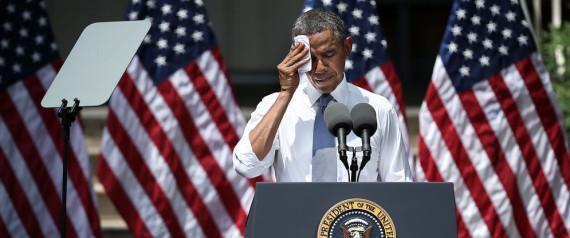
    OBAMA CLIMATE SPEECH

    WASHINGTON -– Climate change is no longer a distant threat, but a real and present danger in the United States, according to a government report issued Tuesday.

    The report is the latest update from the U.S. Global Change Research Program, and details ways that climate change — caused predominantly by the emission of heat-trapping greenhouse gases — is already being felt across the country.

    “Climate change, once considered an issue for a distant future, has moved firmly into the present,” the report says in its introduction. The full report, at more than 800 pages, is the most comprehensive look at the effects of climate change in the U.S. to date, according to its authors. (Even the “highlights” document provided to reporters the day before the release weighed in at 137 pages). The report includes regional and sectoral breakdowns of current and anticipated impacts, which have implications for infrastructure, agriculture, human health, and access to water.

    Those impacts include increased severity of heat waves and heavier downpours. On the coasts, sea level rise is already contributing to increased flooding during high tides and storms, the report notes. And in the West, conditions are getting hotter and drier, and the snowpack is melting earlier in the year, extending wildfire season.

    Average U.S. temperatures have increased 1.3 degrees to 1.9 degrees Fahrenheit (depending on the part of the country) since people began keeping records in 1895, and much of that warming has come in recent decades. The report notes that the period from 2001 to 2012 was warmer than any previous decade on record, across all regions of the country.

    The length of time between the last spring frost and the first fall frost also has increased across the U.S. The average time between frosts in the Southwest increased by 19 days in the years 1991 to 2012, compared with the average from 1901 to 1960.

    Heat waves are already the top cause of weather-related deaths in the U.S., and that will only get worse. Extreme heat can cause more heart, lung and kidney problems, especially among the poor, sick and elderly. The number of days where temperatures top 100 degrees is predicted to increase in the future. If emissions continue to rise, temperatures on the very hottest days during the last 20 years of this century may be 10 degrees to 15 degrees hotter across most of the country, the report finds. Under a lower-emission scenario, those hottest days of the years 2081 to 2100 would still be 3 degrees to 4 degrees warmer than now.

    Another impact that scientists are already seeing that they have linked to climate change is an increase in major precipitation events. In the Northeast, for example, there has been a 71 percent increase in storms that would classify as “very heavy” -– in the top 1 percent — from 1958 to 2012.

    While the outlook could be considered bleak, Radley Horton, a scientist at Columbia University Earth Institute’s Center for Climate Systems Research and the lead author for the assessment’s chapter on the Northeast, said the report “delves into much more detail about opportunities to address climate change.”

    “The climate hazards are looking as severe as ever, but I think there is a message contained in the report that our ability to respond is about getting going,” Horton told The Huffington Post. “The question is, are we able to meet the challenges, given the growing understanding of how much the climate could change this century?”

    The amount of climate change in the future, the report says, “will still largely be determined by choices society makes about emissions.”

    The report notes that American society and its infrastructure were built for the past climate — not the future. It highlights examples of the kinds of changes that state and local governments can make to become more resilient. One of the main takeaways, said David Wolfe, a professor of plant and soil ecology at Cornell University and a coauthor of the chapter on the Northeast, is that “you don’t want to look at the weather records of yesteryear to determine how to set up your infrastructure.”

    This report, said Wolfe, signals that the country is “beginning to move beyond the debate about whether climate change is real or not, and really getting down to rolling up our sleeves” and addressing it.

    A 60-person advisory committee comprised of government, private and academic representatives oversaw the assessment, which took four years and involved more than 300 scientists, engineers, and technical experts.

    In an appearance at the White House press briefing on Monday, White House senior counselor John Podesta said the updated assessment provides “practical, usable knowledge” for state and local decision-makers as they prepare for climate impacts and is the “most authoritative and comprehensive” to date.

    The reports are supposed to be issued at least every four years under the Global Change Research Act of 1990, and are meant to analyze “the effects of global change on the natural environment, agriculture, energy production and use, land and water resources, transportation, human health and welfare, human social systems, and biological diversity.” The reports are to be presented to the president and Congress.

    This is the third report of its kind. The first came in 2000, during the Clinton administration. The Bush administration was accused of push for climate legislation in Congress early in its first term.

    President Barack Obama plans to meet with meteorologists to discuss the report’s findings, and the White House has several related events planned later this week.

    Also on HuffPost:

  • Land of Impunity MONBIOT

    nable desktop notifications for Gmail.   Learn more  Hide

    More

    2 of 46
    Why this ad?
    Retire Overseas in Luxurywww.pursuitofhappiness.com.au – Find out how you can live a life of luxury overseas on the cheap

    Monbiot.com

    Inbox
    x

    George Monbiot news@monbiot.com via google.com

    5:03 PM (54 minutes ago)

    to me

    Monbiot.com


    Land of Impunity

    Posted: 05 May 2014 02:45 PM PDT

    Politicians and government contractors now seem to be able to get away with almost anything.


    By George Monbiot, published in the Guardian 6th May 2014.

    What do you have to do to fall out of favour with this government? Last month, the security company G4S was quietly rehabilitated(1). It had been banned in August 2013 from bidding for government contracts(2), after charging the state for tagging 3,000 phantom criminals(3). Those who had died before it started monitoring them presented a particularly low escape risk. G4S was obliged to pay £109m back to the government.

    Eight months later, and before an investigation by the Serious Fraud Office has concluded, back it bounces, seeking more government business. Never mind that it almost scuppered the Olympics(4). Never mind Jimmy Mubenga, an asylum seeker(5), and Gareth Myatt, a 15 year-old(6), who died after being “restrained” by G4S guards. Never mind the scandals and crises at Oakwood, the giant prison it runs(7). G4S, recently described by MPs as one of a handful of “privately-owned public monopolies”(8), is crucial to the government’s attempts to outsource almost everything. So it cannot be allowed to fail.

    Was it ever banned at all? Six days after the moratorium was lifted, G4S won a new contract to run services for Her Majesty’s Revenue and Customs(9). A fortnight later, it was chosen as one of the companies that will run the government’s Help to Work scheme(10). How did it win these contracts if, in the preceding months, it wasn’t allowed to bid?

    When I first worked in Brazil, in the late 1980s, the country was widely described as o pais de impunidade: the land of impunity. What this meant was that there were no political consequences. Politicians, officials and contractors could be exposed for the most flagrant corruption, but they remained in post. The worst that happened was early retirement with a fat pension and the proceeds of their villainy safely stashed offshore. It’s beginning to look a bit like that here.

    This is not to suggest that the people or companies I name in this article are crooked or corrupt. It’s to suggest that the political class no longer seems to care about failure.

    The failure works both ways of course. As Polly Toynbee has shown, the pilot projects for the Help to Work scheme which G4S will run reveal that it’s a complete waste of time and money(11). Yet the government has decided to go ahead anyway, subjecting the jobless to yet more humiliation and pointlessness. Contrast the boundless forgiveness of G4S to the endless castigation for being unemployed.

    A record of failure reflects the environment in which such companies are hired: one in which ministers launch improbable schemes then look the other way when they go wrong. G4S had to pay back so much money for the phantom criminals it wasn’t monitoring because it had been doing it for eight years, and no one in government had bothered to check(12). There is no such thing as failure any more, just lessons to be learnt.

    Accountability has always been weak in this country, but under this government you must make spectacular efforts to lose your post. At the Leveson inquiry in April 2012, the relationship between the then culture secretary Jeremy Hunt and the Murdoch empire that he was supposed to be regulating was exposed in gory detail(13,14). Though he was meant to be deciding impartially whether or not to allow the empire to take over the broadcaster BSkyB, he was secretly exchanging gleeful messages with James Murdoch and his staff(15).

    We all knew what it meant. The emails, the Guardian observed, were likely to “sever the slim thread connecting Hunt to his cabinet job.”(16) “After this he’s toast … it’s over for Hunt,” wrote Tom Watson MP(17). “He cannot stay in his post,” said Ed Miliband. “And if he refuses to resign, the prime minister must show some leadership and fire him.”(18) We waited. Hunt remained culture secretary for another four months, then he was promoted to secretary of state for health.

    On 2 September 2012, the Guardian revealed that the housing minister, Grant Shapps, had founded a business which “creates web pages by spinning and scraping content from other sites to attract advertising”: a process that looks to me like automated plagiarism(19). He had been promoting the business under the name of Michael Green, who claimed to be an internet marketing guru. Again it looked fatal. Two days later, in the same reshuffle that elevated Hunt, he was promoted to Conservative party chairman.

    A real Mr Green – Stephen this time – was ennobled by David Cameron and appointed, democratically of course, as minister for trade and investment. In July 2012, a US Senate committee reported that while Lord Green was chief executive and chairman of HSBC, the bank’s compliance culture was “pervasively polluted”(20). Its branches had “actively circumvented US safeguards … designed to block transactions involving terrorists, drug lords, and rogue regimes.” Billions of dollars from Mexican drug barons, from Iran and from “obviously suspicious” travellers’ cheques “benefiting Russians who claimed to be in the used car business” sluiced through its tills(21). Out went dollars and financial services to banks in Saudi Arabia and Bangladesh linked to the financing of terrorists. The Guardian reported that HSBC “continued to operate hundreds of accounts with suspected links to Mexican drug cartels, even after Green and fellow executives were told by regulators that HSBC was one of the worst banks for money laundering.”(22)

    Green refused to answer questions and sat tight(23). He remained in post for another 17 months, until he gracefully retired in December 2013.

    After it had become obvious to almost everyone that it was impossible for them to remain in the Cabinet, David Cameron refused to sack either Liam Fox or Maria Miller. Forgiveness and redemption, by all means. But they are not unconditional: without contrition or even acknowledgement that wrong has been done, there’s no difference between giving people a second chance and engaging in an almighty cover-up.

    There has seldom, in the democratic era, been a better time to thrive by appeasing wealth and power, or to fail by sticking to your principles. Politicians who twist and turn on behalf of business are immune to attack. Those who resist are excoriated.

    Here’s where a culture of impossible schemes and feeble accountability leads: to cases like that of Mark Wood, a highly vulnerable man who had his benefits cut after being wrongly assessed by the outsourcing company Atos Healthcare as fit for work, and starved to death(24) – while those who run such companies retire with millions. Impunity for the rich; misery for the poor.

    www.monbiot.com

    References:

    1. http://www.bbc.co.uk/news/uk-politics-26958650

    2. http://www.bbc.co.uk/news/uk-23596541

    3. http://www.theguardian.com/business/2014/mar/12/g4s-repay-overcharging-tagging-contracts

    4. http://www.theguardian.com/business/2012/sep/11/g4s-failed-olympic-security-lord-coe

    5. http://www.theguardian.com/uk-news/2013/jul/09/jimmy-mubenga-unlawfully-killed-inquest-jury

    6. http://www.theguardian.com/society/2007/jun/29/youthjustice.law

    7. http://www.theguardian.com/society/2014/apr/29/tales-from-inside-oakwood-prison

    8. http://www.publications.parliament.uk/pa/cm201314/cmselect/cmpubacc/777/777.pdf?utm_source=rss&utm_medium=rss&utm_campaign=contracting-out-public-services-to-the-private-sector-forty-seventh-report-of-session-2013-14-report-together-with-formal-minutes-oral-and-written-evidence

    9. http://www.telegraph.co.uk/finance/newsbysector/supportservices/10768641/G4S-wins-first-central-Government-contract-since-tagging-scandal.html

    10. http://www.ft.com/cms/s/0/4f9118a6-ceed-11e3-9165-00144feabdc0.html#ixzz30pVTWOXh
    11. http://www.theguardian.com/commentisfree/2014/apr/15/help-to-work-punishing-jobless

    12. http://www.publications.parliament.uk/pa/cm201314/cmselect/cmpubacc/777/777.pdf?utm_source=rss&utm_medium=rss&utm_campaign=contracting-out-public-services-to-the-private-sector-forty-seventh-report-of-session-2013-14-report-together-with-formal-minutes-oral-and-written-evidence

    13. http://www.theguardian.com/media/2012/apr/24/leveson-inquiry-jeremy-hunt

    14. http://www.theguardian.com/politics/2012/apr/24/jeremy-hunt-murdochs-bskyb-bid

    15. http://www.theguardian.com/politics/2012/may/31/jeremy-hunt-james-murdoch-bskyb

    16. http://www.theguardian.com/politics/2012/may/24/leveson-inquiry-memo-hunt-murdoch

    17. http://www.theguardian.com/commentisfree/2012/apr/24/jeremy-hunt-must-resign

    18. http://www.theguardian.com/politics/2012/apr/24/jeremy-hunt-calls-resign-bskyb

    19. http://www.theguardian.com/politics/2012/sep/02/grant-shapps-google-howtocorp-adsense

    20. http://www.hsgac.senate.gov/subcommittees/investigations/media/hsbc-exposed-us-finacial-system-to-money-laundering-drug-terrorist-financing-risks

    21. http://www.hsgac.senate.gov/subcommittees/investigations/hearings/us-vulnerabilities-to-money-laundering-drugs-and-terrorist-financing-hsbc-case-history

    22. http://www.theguardian.com/business/2012/jul/22/hsbc-lord-green-mexico-drugs-cash

    23. http://www.theguardian.com/business/2012/jul/24/lord-green-hsbc-scandal

    24. http://www.oxfordmail.co.uk/news/11112129.Government_admits_Mark_Wood_s_benefits_cut_before_he_starved_to_death__was_wrong_/