Author: admin

  • Putting a price on the rivers and rain diminishes us all

    Putting a price on the rivers and rain diminishes us all

    Payments for ‘ecosystem services’ look like the prelude to the greatest privatisation since enclosure

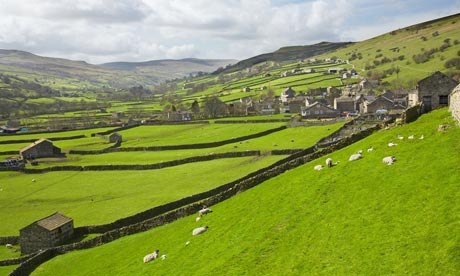
    Gunnerside village Swaledale Yorkshire Dales

    Our rivers and natural resources are to be valued and commodified, a move that will benefit only the rich, argues George Monbiot. Photograph: Alamy

    ‘The first man who, having enclosed a piece of ground, bethought himself of saying ‘This is mine’, and found people simple enough to believe him, was the real founder of civil society. From how many crimes, wars and murders, from how many horrors and misfortunes might not anyone have saved mankind, by pulling up the stakes, or filling up the ditch, and crying to his fellows, ‘Beware of listening to this impostor; you are undone if you once forget that the fruits of the earth belong to us all, and the earth itself to nobody’.”

    Jean Jacques Rousseau would recognise this moment. Now it is not the land his impostors are enclosing, but the rest of the natural world. In many countries, especially the United Kingdom, nature is being valued and commodified so that it can be exchanged for cash.

    The effort began in earnest under the last government. At a cost of £100,000, it commissioned a research company to produce a total annual price for England’s ecosystems. After taking the money, the company reported – with a certain understatement – that this exercise was “theoretically challenging to complete, and considered by some not to be a theoretically sound endeavour”. Some of the services provided by England’s ecosystems, it pointed out, “may in fact be infinite in value”.

    This rare flash of common sense did nothing to discourage the current government from seeking first to put a price on nature, then to create a market in its disposal. The UK now has a natural capital committee, an Ecosystem Markets Task Force and an inspiring new lexicon. We don’t call it nature any more: now the proper term is “natural capital”. Natural processes have become “ecosystem services”, as they exist only to serve us. Hills, forests and river catchments are now “green infrastructure”, while biodiversity and habitats are “asset classes” within an “ecosystem market”. All of them will be assigned a price, all of them will become exchangeable.

    The argument in favour of this approach is coherent and plausible. Business currently treats the natural world as if it is worth nothing. Pricing nature and incorporating that price into the cost of goods and services creates an economic incentive for its protection. It certainly appeals to both business and the self-hating state. The Ecosystem Markets Task Force speaks of “substantial potential growth in nature-related markets – in the order of billions of pounds globally”.

    Commodification, economic growth, financial abstractions, corporate power: aren’t these the processes driving the world’s environmental crisis? Now we are told that to save the biosphere we need more of them.

    Payments for ecosystem services look to me like the prelude to the greatest privatisation since Rousseau’s encloser first made an exclusive claim to the land. The government has already begun describing land owners as the “providers” of ecosystem services, as if they had created the rain and the hills and the rivers and the wildlife that inhabits them. They are to be paid for these services, either by the government or by “users”. It sounds like the plan for the NHS.

    Land ownership since the time of the first impostor has involved the gradual accumulation of exclusive rights, which were seized from commoners. Payments for ecosystem services extend this encroachment by appointing the landlord as the owner and instigator of the wildlife, the water flow, the carbon cycle, the natural processes that were previously deemed to belong to everyone and no one.

    But it doesn’t end there. Once a resource has been commodified, speculators and traders step in. The Ecosystem Markets Task Force now talks of “harnessing City financial expertise to assess the ways that these blended revenue streams and securitisations enhance the ROI [return on investment] of an environmental bond”. This gives you an idea of how far this process has gone – and of the gobbledegook it has begun to generate.

    Already the government is developing the market for trading wildlife, by experimenting with what it calls biodiversity offsets. If a quarry company wants to destroy a rare meadow, for example, it can buy absolution by paying someone to create another somewhere else. The government warns that these offsets should be used only to compensate for “genuinely unavoidable damage” and “must not become a licence to destroy”. But once the principle is established and the market is functioning, for how long do you reckon that line will hold? Nature, under this system, will become as fungible as everything else.

    Like other aspects of neoliberalism, the commodification of nature forestalls democratic choice. No longer will we be able to argue that an ecosystem or a landscape should be protected because it affords us wonder and delight; we’ll be told that its intrinsic value has already been calculated and, doubtless, that it turns out to be worth less than the other uses to which the land could be put. The market has spoken: end of debate.


    All those messy, subjective matters, the motivating forces of democracy, will be resolved in a column of figures. Governments won’t need to regulate; the market will make the decisions that politicians have ducked. But trade is a fickle master, and unresponsive to anyone except those with the money. The costing and sale of nature represents another transfer of power to corporations and the very rich.

    It diminishes us, it diminishes nature. By turning the natural world into a subsidiary of the corporate economy, it reasserts the biblical doctrine of dominion. It slices the biosphere into component commodities: already the government’s task force is talking of “unbundling” ecosystem services, a term borrowed from previous privatisations. This might make financial sense; it makes no ecological sense. The more we learn about the natural world, the more we discover that its functions cannot be safely disaggregated.

    Rarely will the money to be made by protecting nature match the money to be made by destroying it. Nature offers low rates of return by comparison to other investments. If we allow the discussion to shift from values to value – from love to greed – we cede the natural world to the forces wrecking it. Pull up the stakes, fill in the ditch, we’re being conned again.

    Twitter: @GeorgeMonbiot

  • Scientists monitoring NZ volcano after eruption

    Scientists monitoring NZ volcano after eruption

    Updated August 07, 2012 15:41:25

    Scientists in New Zealand are monitoring Mount Tongariro carefully after the volcano erupted last night for the first time in 115 years.

    Police and conservation rangers have been checking huts on the mountain, and have confirmed that no hikers have been trapped by the eruption.

    Police say there are no reports of death or injury.

    People near the volcano in the central North Island have reported hearing loud explosions and seeing flames, bright flashes, and red-hot rocks flying from the mountain’s north side.

    Ash has fallen as far away as Napier, 100km to the south-east, with up to five centimetres of ash reported in some areas.

    Meteorologists said the ash cloud is being blown eastwards towards the Pacific Ocean.

    Truck driver Bryn Rodda was driving near the mountain when it erupted and has told Radio New Zealand it was a spectacular sight.

    “I could see this big cloud, it looked like a fist basically, at an angle a across the sky, and at about the wrist section of the fist, there was a sudden, orange ball of flash,” he said.

    “And there were a few startled comments over the CB from various odd truckies that I could hear, along the lines of, what the hell was that?”

    Flights to various regional centres have been cancelled and residents in the area are being urged to stay indoors with windows closed.

    GNS New Zealand volcanologist Michael Rosenberg has told Radio Australia’s Pacific Beat the eruptions have stopped for the moment.

    “The initial ash eruption probably lasted a couple of hours, at the moment things are fairly quiet,” he said.

    “What that means we’ll just have to wait and see.”

    Map: Mount Tongariro volcano erupts


    Scientists say the eruption – the mountain’s first since 1897 – may be the start of more volcanic activity.

    The spew of rocks, fine particles and steam from the snow-capped, 1,978m peak, was caused by a pressure buildup of volcanic gases, volcanologists said

    Mr Rosenberg says despite recent rumblings from Mt Tongariro, the eruption has come as a surprise.

    “Over the last three or four weeks we’ve been recording very small volcanic earthquakes underneath the mountain, but in the last week or so there’ve been far fewer of those earthquakes, and much much smaller,” he said.

    “And from that very low level, suddenly we’re into an eruption – so it’s certainly unexpected.”

    New Zealand’s Civil Defence has warned that volcanic activity could pose a threat to Waikato, Hawke’s Bay, Gisborne, Manawatu-Whanganui, Bay of Plenty and Taranaki.

    The ministry’s David Coetzee told Radio Australia they don’t know if or when it will erupt again.

    “You know we just don’t know,” he said.

    “We may have a similar occurrence without warning and if people are there they could be in harm’s way. So we advise that they reconsider over the next few days if they intended to go there.”

    The Desert Road section of State Highway 1, north-east of the mountain, and State Highway 46, to the north, have also been closed.

    Air New Zealand has cancelled flights to and from airports east of the volcano, including Gisborne, Rotorua and Taupu.

    “We will not fly through ash and are constantly taking guidance from the CAA (Civil Aviation Authority) and the MetService to ensure we can continue to carry passengers where safe routes and altitudes are available,” the airline said in a statement.

    Flights from Auckland to Wellington have not been affected, as they fly at a higher altitude than the ash.


    Topics:volcanic-eruption, new-zealand, pacific

    First posted August 07, 2012 06:20:45

  • Govt votes down Greens’ move to investigate risk posed by rising sea levels

    Govt votes down Greens’ move to investigate risk posed by rising sea levels

    29 Mar 2007Christine Milne

    COMMITTEESEnvironment, Communications, Information Technology and the Arts Committee
    Reference
    Speech
    Senator MILNE (Tasmania) (10.44 a.m.)-I move:

    (1) That the Senate notes that:
    (a) the 4th assessment report of the Working Group I of the Intergovernmental Panel on Climate Change (IPCC), published in February 2007, indicates that sea levels will rise by between 0.18 metres to 0.59 metres by the end of the century and that these projections do not include the full effects of changes in ice sheet flow because a basis in published literature is lacking;
    (b) the next IPCC report on impacts, adaptation and vulnerability, to be released in April 2007, is expected to conclude that there is a medium confidence, that is a 50 per cent chance, that the Greenland and Antarctic ice sheets would be committed to partial deglaciation for a global average temperature increase greater than 1 to 2 C, causing a sea level rise of 4 to 6 metres over centuries to millennia;
    (c) recent scientific research, published too late for inclusion in the IPCC reports, suggest that sea levels are rising more quickly than previously thought and many scientists, including Dr James Hansen, head of Atmospheric Research for the National Aeuronautics and Space Administration, warn that a warming of 2 to 3 C could melt the ice sheets of West Antarctica and parts of Greenland resulting in a sea level rise of 5 metres within a century;
    (d) the assessment of the impact of even a moderate sea level rise in Australia remains inadequate for adaptation planning;
    (e) assessing the vulnerability of low coastal and estuarine regions requires not only mapping height above sea level but must take into account factors such as coastal morphology, susceptibility to long-shore erosion, near shore bathymetry and storm surge frequency;
    (f) delaying analysis of the risk of sea level rise exacerbates the likelihood that such information may affect property values and investment through disclosure of increased hazards and possible reduced or more expensive insurance cover; and
    (g) an early response to the threat of a rise in sea level may include avoiding investment in long-lived infrastructure in high risk areas.
    (2) That the following matter be referred to the Environment, Communications, Information Technology and the Arts Committee for inquiry and report by 20 September 2007:

    An assessment of the risks associated with projected rises in sea levels around Australia, including an appraisal of:
    (a) ecological, social and economic impacts;
    (b) adaptation and mitigation strategies;
    (c) knowledge gaps and research needs; and
    (d) options to communicate risks and vulnerabilities to the Australian community.

    Yesterday in Australia we heard from Sir Nicholas Stern, one of the world’s most eminent speakers on the economic impacts of climate change, pointing out that whatever it costs to take action now will be nothing compared with what it will cost if we do not take action. I am asking the Senate to agree to a motion to look at the assessment of the risks associated with sea level rise in Australia, including an appraisal of recent science relating to sea level rise projections, the ecological, social and economic impacts of the full range of projections, adaptation and mitigation strategies, knowledge gaps and research needs, and options to communicate risks and vulnerabilities to the Australian community.

    This is an urgent matter; it is an urgent matter because the science is telling us that we can expect not only the current amount of global warming that is locked in because of the levels of CO concentrations in the atmosphere but that we will see accelerating global warming as the concentrations of CO rise. We have to make deep cuts. But, regardless of the deep cuts that we make in the next 10 or 15 years, the sea level rise is going to continue. We have had the Intergovernmental Panel on Climate Change fourth assessment report published in February telling us that the sea level will rise by between 0.18 metres and 0.59 metres by the end of the century. More concerning than that is recent evidence from scientists such as Dr Barrie Pittock, formerly of CSIRO. He says that we have an increase in the outflow of the glaciers from Greenland and parts of Antarctica-increasing to such an extent that the latest papers are suggesting a rise by 2100 of between 50 centimetres and 1½ metres. That is the range that the latest science is demonstrating by 2100. If you take into account the rule of thumb that for every metre in sea level rise the coast will retreat and go inland by 100 metres-so for every metre you can expect that impact of 100 metres-and you consider how many people live in the coastal zone around Australia, we have to be concerned.

    Only a couple of weeks ago in Cairns we had a meeting of the Planning Institute of Australia. They talked about the impacts of sea level rise, and we also had the insurance industry there. Both the Planning Institute of Australia and the Insurance Council of Australia are saying that we are reaching a situation where some people will no longer be able to get insurance because of where they are in relation to the coast. Furthermore, they are saying that, in the future, local government in particular will be sued because they have given planning approval for development in coastal zones where it was already known there would be sea level rise. So we have a situation where people are moving to the coast and local government is not taking adequate note of the likely impacts of sea level rise.

    Looking at their website today, I was alarmed to see that the Greenhouse Office has not published anything since 2004 on updated impact assessment of sea level rise around Australia. No doubt I am going to hear from the government that they have a Greenhouse Office and that that is the answer to climate change-that you set up the office. It is what the office actually does that is of concern to me.

    At that recent Planning Institute conference in Queensland they said that in the Northern Territory nearly 900 coastal buildings, mainly in Darwin, are at risk. Along the Tasmanian coastline more than 17,000 addresses are considered vulnerable-as are more than 60,000 in South Australia, mostly around Adelaide, and over 80,000 along the Victorian coast, mainly around Melbourne. In Western Australia 94,000 buildings have been identified as vulnerable around Perth. But the biggest concern is along the eastern seaboard where more than 200,000 buildings are considered vulnerable on the New South Wales coast, including Sydney. Queensland faces the largest risk with almost 250,000 buildings under threat stretching from the Gold Coast to the Sunshine Coast. So this is not something 50 or 100 years hence-although, as I am saying, we are likely to see increasing rates of sea level rise; these are buildings that have been identified as vulnerable right now because of sea level rise. Add to that the issue of storm surge and you will see that we are facing major disaster around Australia, and we need to spend money right now dealing with it.

    In the UK the Thames Barrier in the mouth of the Thames River has been there for a long time to try and stop storm surge influencing the city of London to the extent that it did previously as a result of that coastal flooding and storm surge. At a recent meeting of the conference of the parties to the United Nations Framework Convention on Climate Change, there was a discussion about what we know as the Low Countries-and that includes, of course, the Netherlands-considering putting out a tender for a new coastline. It is a concept that is very difficult to even imagine in terms of the costs of actually considering that you might have to build a new coastline. Already in the Netherlands they are actively moving people from areas that are clearly going to be vulnerable to flooding. They face not only the risk of sea level rise but also, with heavier rainfall events, they are going to have flooding coming down the rivers-the two will meet and there will be massive flooding. Certainly Europe is focused on this because of the density of population in what we know as those Low Countries.

    In Australia we also have issues with areas like Kakadu and our national parks, coastal wetlands, protected areas and so on. We are going to see sea level rise have a considerable impact as a result of saltwater incursion into our wetlands. I was appalled when I heard earlier this year the federal Minister for the Environment and Water Resources, the Hon. Malcolm Turnbull, saying:

    There’s a lot of very exaggerated claims and you have to bear in mind that most of our coastal population lives on the east coast of Australia and because of the geology or the typography-

    I presume he meant topography-

    of the east coast, you know, much of that is adequately elevated to deal with a one-metre sea rise.

    That demonstrates the complete ignorance of the government about what a one-metre sea level rise would mean for coastal Australia. It would be absolutely devastating to infrastructure and to millions of people. But consider for a moment what it would mean for our Pacific neighbours. We already recognise that a large number of people will be dislocated and will have to move from the islands where they live. Not only will their lives and their culture be disrupted but they will need somewhere to go-and Australia, of course, is resisting even the definition of an ‘environmental refugee’ in the refugee convention, let alone agreeing to have future arrangements and treaties whereby Australia would take some of those people, even though Tuvalu and the New Zealand government have had an understanding that New Zealand will absorb a number of people from Tuvalu because of sea level rise and saltwater incursion into fresh water supplies.

    Returning to Australia, a recent report by the Risk Frontiers Natural Hazards Research Centre at Macquarie University talked about the wider Sydney region, including the central and south coasts. It said that there are almost 13,000 dwellings below two metres above mean sea level and over 140,000 dwellings below six metres above mean sea level. It noted that, during spring tides, sea level is almost a metre above mean sea level in Sydney. Another study found that, for a given sea level rise of 20 centimetres by 2050, coastal erosion of up to 22 metres is projected for the Collaroy-Narrabeen beach, rising to 110 metres given a one-in-50-year storm surge, with associated economic losses of $230 million.

    Also, an interesting rumour has been handed down from generation to generation of public servants in New South Wales that, as long ago as under the Wran government, the planning department there did an assessment on sea level rise impacts on Sydney and coastal New South Wales. When those planning people delivered that to the Wran government, they were told to bury it-and it has been buried ever since-because of the devastating impact it would have had on coastal property prices at that particular time. No doubt that is why people do not want to have this kind of assessment into the future impacts of sea level rise and storms and storm surge on coastal Australia associated with global warming, because not only will it have a significant impact on future infrastructure planning-and it is absolutely appropriate that it should have-but also it will place a lot of councils and state governments in all sorts of quandaries about what they will do about protecting existing infrastructure.

    Of course, that has to be done in conjunction with the insurance industry, which will be moving rapidly to take away people’s insurance cover. I am glad that the Insurance Council of Australia has come out with a plan that says we have to deal with this matter as soon as possible. In Tasmania, I pointed out that Lauderdale, which is not far from Hobart, is probably one of Tasmania’s most vulnerable communities to sea level rise. That was identified in a coastal vulnerability analysis done for the state government. The population of Lauderdale are already suffering a rise in the watertable as the sea level rises and they are vulnerable to overwash. However, the insurance institute representative in Tasmania said that it was not a problem as far as the insurance industry was concerned. I think that was a serious misleading of the local population about the likely impacts on people in that area being able to continue to maintain insurance cover.

    However, all this goes to the point that, in Australia, we need a proper assessment, as has been done in the UK and in countries like the Netherlands. In the UK, they have gone along its southern coast and have identified communities that will be saved by infrastructure-new groynes, seawalls, new port facilities and so on. They have identified other coastal areas for what they call ‘managed retreat’. That has not even come onto the agenda in Australia. However, huge conflict is being caused on the southern coast of the UK, with the government there announcing that they will start identifying communities to be saved and others for managed retreat. Unfortunately, one of the main considerations for many of those communities is the extent to which they are well-known tourist locations. So a place like Lyme Regis, where TheFrench Lieutenant’s Woman was filmed and which is a major tourist attraction, has been identified as a town that has to be saved, with millions of pounds being spent on groynes and seawalls. However, other communities nearby, which local people would say are more reflective of the culture of southern England and so on, have been identified for managed retreat.

    That is how seriously the UK government is taking the figures on sea level rise. The Netherlands government is considering such measures and I have mentioned the Thames Barrier. It will require vast amounts of money in adapting to existing projections of sea level rise, not to mention that sea level rise will become unmanageable unless we act soon to mitigate further concentrations of CO that will make the matter worse. So we have to adapt to what we know is coming and reduce greenhouse gases to make sure that the situation does not get worse.

    That is why I am calling for the Senate to support an inquiry into this issue of sea level rise. It is not complicated. We know what the situation with global warming is. We know the projections for sea level rise. We need to look at Australia’s coastal vulnerability to sea level rise, because we need to consider infrastructure into the future. I hope that the Senate will support this reference. I referred a matter last year to the rural and regional affairs committee relating to Australia’s future oil supplies and that was an extremely successful Senate inquiry. I take these Senate inquiries seriously. If this reference gets up, I will be at all the hearings and I will work hard in this context so that we get a collaborative approach and, hopefully, a majority report-because I think it makes an important contribution and raises awareness of the issues in local communities.

    I urge the government, the opposition and the Democrats to support this reference. It has been circulated to members of the committee. As I said, it is not a complex idea that we would move to look at the science on sea level rise projections, the likely impacts for the full range of projections and scenarios, the adaptation of mitigation strategies, the knowledge gaps and the research that we need to undertake, and our options to communicate those risks and vulnerabilities to the Australian community.

    I recommend this reference to the Senate. I will be interested to hear the response of my colleagues and hope that we can get this up and make a serious contribution to stopping what will be major disasters if we just pretend it is not going to happen.

    Question negatived.

  • Revised Murray Basin plan released


    Revised Murray Basin plan released

    Updated: 23:47, Monday August 6, 2012

    Revised Murray Basin plan released

    A revised draft management plan for the Murray-Darling Basin proposes a lower minimum allocation for environmental flows.

    At the same time it also proposes a mechanism that could provide more water for the environment than initially recommended.

    The revised draft plan, released by the Murray-Darling Basin Authority on Monday, seeks to balance the competing demands of irrigators, state governments and the green groups.

    The plan includes a mechanism to adjust the amount of water to be returned to the environment, if environmental outcomes can be achieved with less water.

    Under the adjustment mechanism, the annual target could range between 2400 and 3200 gigalitres.

    The previous plan recommended a figure of 2750 gigalitres.

    Victoria and NSW believe the target should be 2100 gigalitres, while South Australia wants the target lifted to 4000 gigalitres.

    There also could be a small increase in the amount of groundwater extracted from the system.

    Nationals senator Barnaby Joyce described the latest plan as vague.

    ‘There is no limit to the amount of water buybacks that can occur,’ he said in a statement.

    The National Irrigators Counci (NIC)l wants more details.

    ‘We are disappointed that so many questions have been left unanswered,’ NIC chief executive officer Tom Chesson said.

    ‘Much more work still needs to be completed.’

    State governments have three weeks to respond to the latest version of the plan.

    Federal water minister Tony Burke will then approve the plan or request further changes before it is presented to federal parliament later in the year.

    Updated: 23:47, Monday August 6, 2012

    Revised Murray Basin plan released

    A revised draft management plan for the Murray-Darling Basin proposes a lower minimum allocation for environmental flows.

    At the same time it also proposes a mechanism that could provide more water for the environment than initially recommended.

    The revised draft plan, released by the Murray-Darling Basin Authority on Monday, seeks to balance the competing demands of irrigators, state governments and the green groups.

    The plan includes a mechanism to adjust the amount of water to be returned to the environment, if environmental outcomes can be achieved with less water.

    Under the adjustment mechanism, the annual target could range between 2400 and 3200 gigalitres.

    The previous plan recommended a figure of 2750 gigalitres.

    Victoria and NSW believe the target should be 2100 gigalitres, while South Australia wants the target lifted to 4000 gigalitres.

    There also could be a small increase in the amount of groundwater extracted from the system.

    Nationals senator Barnaby Joyce described the latest plan as vague.

    ‘There is no limit to the amount of water buybacks that can occur,’ he said in a statement.

    The National Irrigators Counci (NIC)l wants more details.

    ‘We are disappointed that so many questions have been left unanswered,’ NIC chief executive officer Tom Chesson said.

    ‘Much more work still needs to be completed.’

    State governments have three weeks to respond to the latest version of the plan.

    Federal water minister Tony Burke will then approve the plan or request further changes before it is presented to federal parliament later in the year.


  • Oil Companies Still Hiding the True Risks of Deepwater Drilling from Investors

    Oil Companies Still Hiding the True Risks of Deepwater Drilling from Investors

    Posted: 03 Aug 2012 04:38 PM PDT

    Oil and gas companies are doing a terrible job of disclosing climate and deepwater drilling risks, even in light of the tragic Gulf of Mexico oil spill, according to a new report.While companies are making extensive capital investments related to climate change and deepwater drilling, they are generally failing to adequately disclose the associated risks in a manner consistent with US Securities and Exchange Commission’s (SEC) rules and growing investor expectations, according to a report co-authored by Boston-based investor coalition Ceres…

    Read more…

    Iraq’s Kurdish Region Pulling Away from Baghdad Control

    Posted: 03 Aug 2012 04:34 PM PDT

    To paraphrase Apollo 13, “Baghdad, we have a problem.” Iraq’s Kurdistan Regional Government’s (KRG) is increasingly signing unilateral oil deals with international oil giants, bypassing Baghdad. Iraq’s central government is insisting that all such regional deals first be cleared by the Iraqi government, but the oil majors have apparently concluded that such diplomatic niceties are largely irrelevant in their search for profits, and are now cutting deals directly with the KRG in Iraqi Kurdistan’s capital Erbil. The…

    Read more…

    India’s Future in the Dark Following the Latest Blackouts

    Posted: 03 Aug 2012 04:28 PM PDT

    Electric power was restored across northern India on Wednesday after an electric grid failure on July 30 and 31 resulted in the world’s largest blackout. More than 600 million people, or nearly one tenth of the global population, were affected.As the country’s economy and population continues to rapidly expand, the energy crisis has sharpened fears about India’s ability to invest in the infrastructure needed to support it.“As one of the emerging economies of the world, which is home to almost a sixth of the world population, it is imperative…

    Read more…

    Tax Breaks – Big Oil Makes Massive Profits whilst the Federal Budget Struggles

    Posted: 03 Aug 2012 04:26 PM PDT

    Second-Quarter Earnings Race Ahead, Boosted by Tax BreaksMiddle-class families may have gotten some relief in the second quarter of 2012 due to slightly lower gasoline prices compared to the first quarter of the year, but billions of dollars in big profits continue to pile up at the Big Oil companies. In the first half of 2012, the five biggest oil companies—BP plc, Chevron Corp., ConocoPhillips, ExxonMobil Corp., and Royal Dutch Shell Group—earned a combined $62.2 billion, or $341 million per day. This compares to an average dip in…

    Read more…

    Panasonic’s New Process for Artificial Photosynthesis Looks Promising

    Posted: 03 Aug 2012 04:08 PM PDT

    Tuesday the web started noticing that Panasonic has developed an artificial photosynthesis system, which converts carbon dioxide (CO2) to organic materials.  A quick review of the web site commentary revealed how far the assumptions got before Panasonic got the press release open and out in English on the corporate site in Japan.What Panasonic has developed is three major improvements in one process.The first part is Panasonic has taken CO2 directly to formic acid, a valuable precursor to numerous petroleum like compounds including fuels. …

    Read more…

    Sanctions Cost Iran $133 Million a Day in Lost Revenue

    Posted: 03 Aug 2012 04:01 PM PDT

    According to a recent report by Bloomberg, the US and EU sanctions have already caused a 52% fall in shipments exporting oil from Iran, equating to 1.2 million barrels per day, about $133 million worth of crude.US Congress has now passed a new set of sanctions aimed at punishing banks, insurance companies, and shipping companies which deal with Tehran in oil trades.Republican Representative Ileana Ros-Lehtinen, chair of the House Foreign Affairs Committee, said that the new sanctions seek “to tighten the chokehold on the regime beyond anything…

    Read more…

  • We’ll all look like fuels if we don’t unite to save jobs at Kurnell refinery

    We’ll all look like fuels if we don’t unite to save jobs at Kurnell refinery

    0
    Paul Howes

    AWU National Secretary Paul Howes. Source: PerthNow

    WHEN you think of Woolworths, you don’t think of fuel. And yet, Woolworths – the Australian fresh food people – are helping to kill off Australian-refined fuel, writes Paul Howes

    Thanks in no small part to the supermarket chain, within two short years the biggest state in the Commonwealth will have no ability to refine fuel and oil products.

    The problem started a few months ago with the announcement by Shell that they would shut their refinery at Clyde in Sydney. Last week Caltex announced that their Sydney refinery at Kurnell would also be shut within two years.

    It’s a major blow to the workers employed in the facilities. It will result in a hit to motorists at the bowsers, and, worst of all, it’s a huge problem for the state and the nation – because very soon, if we’re not really careful, we’ll be completely reliant on overseas sources for our nation’s energy security.

    The AWU is proud to represent the workers employed by Caltex at Kurnell and we’re not going to sit idly by and watch these jobs and critical industries be moved offshore.

    We’re obviously extremely concerned for the livelihoods of our members employed at Kurnell but equally we are concerned about the future for the nation’s fuel and oil supplies.

    Being an island nation Australia needs to have certainty when it comes to energy security. Having secure and reliable fuel supplies is critically important for any nation, but even more so for Australia, which, thanks to the tyranny of distance, is dependent on a secure source of fuel.

    Australia already imports a significant proportion of our fuel supplies. Of course, this is likely to grow to keep pace with the growing population and economy. But we need to ask the question – by simply shutting down our own facilities and relying completely on imports, how reliable will the supply lines be? And what will happen to our country if supply chains from Asia are disrupted by natural disasters or other global events? Do we want to have no ability whatsoever to refine our own fuel?

    Caltex’s decision to walk away from their profitable – profitable being the operative word here – refinery at Kurnell and import fuels from Singapore also raises questions about the ethics in the marketing coming from the people that sell Caltex fuel.

    So what does all this have to do with Woolworths?

    A large proportion of the fuel currently refined at Kurnell is sold through service stations co-branded with Woolworths. The supermarket giant has taken great pride in recent months boasting about how ‘Aussie’ they are.

    They’ve changed their branding from being the “Fresh food people” to become “Australia’s fresh food people” and they boast about how much produce they source from Australian suppliers.

    However, as Caltex’s largest customer and the people who retail Caltex’s fuel, it is disappointing to say the least that Woolworths haven’t done more to stay true to their “Aussie” branding.

    I think that if Woolworths really want to be “Australian through and through” as their ads state, then they need to ensure that they source Australian refined fuel for bowsers.

    To try to save the Australian refined fuel, and Australian jobs, the AWU and the workers at Caltex have launched a campaign calling on Australians to tell Woolworths to do the right thing. Ads about the campaign started this week and appear in this paper today.

    Unfortunately, as soon as we launched the campaign Woolworths sent of a flurry of letters from their lawyers threatening legal action.

    One of their letters went as far as to threaten us with injunctions every time we questioned Woolworth’s procurement policies. We haven’t been intimidated by the legal threats from Woolworths and, despite their posturing, we’ve decided to continue running our campaign because we believe that it’s the right thing to do.

    We believe in saving Australian jobs wherever possible. And we believe it’s the right of Australian motorists to know what’s happening to the country’s fuel supplies and to know that corporate giants might be putting our fuel security at risk.

    There are some who say that closing down Kurnell is a good thing. That the refinery is an ugly blight on the landscape that would be better used for parks.

    Those people have failed to understand that being able to refine fuel is a big requirement for a functioning society in the 21st century. I believe that Australia needs to be a country that actually makes things, grows things, and develops things.

    AWU members make things. They grow things. They do real jobs. They do hard jobs. And yes, refineries may not be pretty but, if we want to guarantee our future, we need to be able to fuel it at the same time.

    Paul Howes is the national secretary of the AWU.