Author: admin

  • Expats swell population growth in Australian cities

    News 10 new results for POPULATION GROWTH
    Growth pains on the city’s fringe
    Stock and Land
    MELBOURNE’S outer suburban fringe is growing at its fastest pace in decades, adding almost 1000 people a week, as greater Melbourne is swelling with almost a quarter of Australia’s population growth. New estimates by the Bureau of Statistics report that, 
    See all stories on this topic »
    State cuts population projections
    St. George Daily Spectrum
    GEORGE — Preliminary figures predicting a slowdown in Washington County’s population growth are raising questions about long-term planning and the need for growth-based projects, such as the Lake Powell pipeline. Figures released this week by the 
    See all stories on this topic »
    Melbourne posts population gain
    NEWS.com.au
    It is expected to push Melbourne’s population to five million by 2025. The Australian Bureau of Statistics figures showed inner-city development was further fuelling the population increase. The Docklands recorded the state’s fastest growth, with the area’s 
    See all stories on this topic »
    Country move for city dwellers
    ABC Online
    The Bureau of Statistics’ latest population figures show Tasmania’s growth is still the nation’s slowest but there has been a migration to regional areas. In the decade to June last year, Tasmania’s populationgrew by nearly 40000 people to 511000. Tasmania’s 
    See all stories on this topic »
    Slowing growth may delay or kill Lake Powell Pipeline
    Salt Lake Tribune
    But new, preliminary projections — tweaked after the 2010 census and slowed growth from the “great recession” — now forecast the 2040 population at only 314000, or 56 percent of the original. The “data confirm what we already knew: the Lake Powell 
    See all stories on this topic »
    Jackson County Plans For Population Growth
    KDRV
    By Ron Brown. MEDFORD, Ore. — A proposal from a state legislative committee to standardize how populations are projected around the state is getting a close look from Jackson County Commissioners. Tuesday morning, the board considered whether 
    See all stories on this topic »

    KDRV
    Study shows increase in American eel population in Shenandoah National park 
    The Republic
    WAYNESBORO, Va. — The removal of a large dam in Virginia has meant good news for the American eel population, according to a new study by the U.S. Geological Survey, U.S. Fish and Wildlife Service and National Park Service. The research, published 
    See all stories on this topic »
    Expats swell population growth in Australian cities
    Australia Forum
    Overall Melbourne has seen a surge in its population of 647200 people. The largest increase was in South Morang, up 32200 people, while Point Cook, Caroline Springs and Tarneit in the west of the city each saw growth of more than 20000 people.
    See all stories on this topic »
    Gungahlin drives ACT population expansion
    The Canberra Times
    The Gungahlin district spearheaded population growth of nearly 50000 in the ACT over the past decade, while residents were abandoning the territory’s south, new data shows. Population figures from the Australian Bureau of Statistics, released yesterday, 
    See all stories on this topic »
    Hispanic growth may tilt AZ politics
    Arizona Daily Star
    Bill Hart, a senior policy analyst at the institute, acknowledged the exponential growth rate of the Hispanicpopulation does not automatically guarantee greater input at the polls. He said Hispanics traditionally register and vote in lower percentages than the 
    See all stories on this topic »


    This once a day Google Alert is brought to you by Google.

    Delete this alert.
    Create another alert.
    Manage your alerts.

  • TRAFFIC, NOISE CONCERNS OVER NW RAIL CONSTRUCTION

    ABC

    TRAFFIC, NOISE CONCERNS OVER NW RAIL CONSTRUCTION

    ABCAugust 1, 2012, 10:54 am


    The New South Wales Opposition has accused the State Government of ignoring warnings about potential traffic chaos during construction of Sydney’s North West Rail Link.

    An environmental impact statement and submissions report shows there will be about 6,500 extra trucks and cars making their way to and from construction sites while the link is built.

    Roads and Maritime Services has recommended banning or limiting major works and truck movements during peak periods.

    But Transport for NSW has rejected the suggestion, saying it would threaten the project’s viability.

    Opposition spokeswoman Penny Sharpe says the Government should be looking into the issue.

    “What it means for people trying to get to work for the north-west is they’re going to have many more hours in the car during the construction of the North West Rail Link,” she said.

    “As construction unfolds and traffic becomes very difficult for commuters, the Government is going to have to look at how it manages heavy vehicle movements during the peak hour.”

    She says Environment Protection Authority warnings about noise and vibrations from tunnel drilling have also been dismissed.

    “Tunnelling’s going to be occurring 24 hours, seven days a week. Some of the submissions really have concerns around schools and childcare centres and residential facilities for older people,” Ms Sharpe said.

    “The impact on sleep disturbance will be large. The EPA’s submission actually suggested that there’s not very much they can do around noise mitigation – it’s going to be noisy. Transport NSW and the Minister have to make sure that all those issues are carefully managed.”


  • Innovative Cities From UAE, Saudi And Australia Highlight Sustainability …

    Innovative Cities From UAE, Saudi And Australia Highlight Sustainability
    Middle East Events (press release)
    Innovative Cities From UAE, Saudi And Australia Highlight Sustainability Strategies As MENAPopulation Soars Mayor of Jeddah Municipality, Lord Mayor of Perth join Director General of the Dubai Municipality as headline speakers at Future Cities 

    See all stories on this topic ».
    Middle East Events (press release)
    Innovative Cities From UAE, Saudi And Australia Highlight Sustainability Strategies As MENAPopulation Soars Mayor of Jeddah Municipality, Lord Mayor of Perth join Director General of the Dubai Municipality as headline speakers at Future Cities 
    See all stories on this topic »

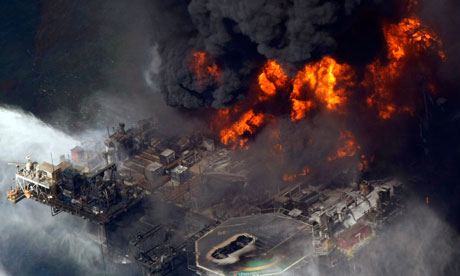
  • BP adds $847m to Deepwater Horizon costs

    BP adds $847m to Deepwater Horizon costs

    Gulf of Mexico oil spill continues to plague BP more than two years on as it reveals another $847m hit to cover legal costs

    Deepwater Horizon disaster/BP

    BP’s total bill for the Deepwater Horizon disaster is now $38bn. Photograph: Gerald Herbert/AP

    The Gulf of Mexico oil spill continues to plague BP more than two years after the disaster as the company has revealed another $847m (£538m) hit to cover rising legal costs.

    The additional charge for the second quarter brings the total bill for the fatal Deepwater Horizon incident to $38bn, BP said.

    BP is struggling to shake off the reputational blow of the April 2010 Macondo blow-out after recently coming under further fire in a report from a US government safety panel.

    And the underlying picture at BP is not much brighter, as the company revealed a 24% slide in underlying replacement cost profit to $8.5bn in the first half of the year as oil prices fell and maintenance work disrupted production.

    The BP group chief executive, Bob Dudley, said: “We recognise this was a weak earnings quarter, driven by a combination of factors affecting both the sector and BP specifically.”

    The group’s production also continues to suffer from the drilling ban imposed on it in the wake of the Gulf of Mexico spill, while it is also ramping up asset disposals under a programme to sell $38bn (£24.4bn) of assets by 2013.

    It has entered into agreements to sell assets with a value of $24bn (£15.3bn) since 2010.

    BP’s production of oil and gas, excluding results from its Russian joint venture TNK-BP, averaged 2.27m barrels of oil per day in the second quarter, compared with 2.46m for the same period last year, a slide of 7%.

    The oil giant warned that production was expected to slide lower in the third quarter, between July and September, before returning to growth in the final three months of 2012.

    The group also took a $4.8bn hit for writing down the value of a series of assets including US shale gas and its decision to suspend the Liberty project in Alaska – an offshore oil field with about 100m barrels of recoverable oil.

    BP set up a $20bn trust to cover the costs of claims for the Deepwater Horizon incident, which is included within the $38bn provision.

    BP had paid nearly $8.8bn by 30 June for individual, business and government claims, including payments made before the establishment of the trust.

    A total of $7bn had been paid to individual and business claimants, while federal, state and local government authorities had received $1.4bn for claims and advances.

    BP is facing a bid battle for its stake in TNK-BP, after Russia’s state oil company Rosneft entered the fray just a week after TNK partner AAR confirmed it was interested in extending its stake.

    Its plans to offload the TNK-BP stake follow a chequered history in Russia. An attempt by BP and Rosneft to buy out AAR last year for about £20bn – as part of an attempt to salvage their Arctic exploration tie-up – was blocked by AAR.

    Shares in BP were down 3% after Tuesday’s update was published.

  • It’s great to have a conscience, now tell us how we’ll pay for it

    It’s great to have a conscience, now tell us how we’ll pay for it

    Date
    August 1, 2012
    Category
    Opinion

    Gittins: Inability to talk disability

    If Tony Abbott wins the next election the newly agreed upon disability insurance scheme will cause him serious budgetary pains.

    Video will begin in 1 seconds.

    You may not have noticed, but last week was among the most significant of the Gillard government’s term. The commitments made may do great good, but they will also cause much pain and gnashing of teeth in the years ahead.

    Last week the nation made it crystal clear to its political leaders – federal and state – it wanted them to get on with implementing the national disability insurance scheme. After decades of turning a blind eye to the difficulties faced by the disabled and their carers, last week conscience struck.

    Fine. You’re a believer; so am I. But the scheme is very expensive: when fully implemented in 2018, an additional $8 billion a year. Or, as the politicians and the media usually prefer to put it, $32 billion over four years.

    Advertisement

    So how will the disability scheme be paid for? No one has any idea. The pollies were arguing about that very question when – urged on by the same radio shock jocks who on other days rail against ”debt and deficit” – the electorate put a rocket under them: Just do it!

    That’s why I have reservations. We behaved like a teenager with his first pay packet who goes out and buys a car on the never-never, without a moment’s thought about how he’ll fit the repayments into his budget.

    Perhaps this was the only way an increasingly self-centred nation was ever going to commit to something so caring but expensive. Had we dwelt on how much it would cost and how we’d be paying for it, we might have made an excuse and passed on.

    Even so, the accountant in me remains uneasy. Sometimes in politics, good deeds aren’t born of the purest motives. The Productivity Commission report that recommended the scheme called for the pilot programs to begin in 2014.

    I suspect Julia Gillard brought it forward a year because she wanted to be seen doing something worthwhile – and something that didn’t have Kevin Rudd’s fingerprints on it. She committed to spending just $1 billion over the four-year trial phase.

    If Gillard has a clear idea of how she would afford the scheme when fully implemented, she’s given no hint of it. All we know is that, contrary to the commission’s advice, she expects the states to bear some of the cost.

    I suspect she’s fingered the states as a red herring, intending to draw attention away from her own lack of forethought. That’s where we got to last week. She put the wood on the premiers to make a small contribution to the cost of their state’s pilot scheme, but many declined. This could have been the usual story – whenever the feds require the premiers’ co-operation, their hands go out: What’s it worth to you?

    If that was the premiers’ motivation, I’m sympathetic. Though the states are responsible for provision of many costly public services – law and order, roads and transport, schools and hospitals – their taxing powers have been greatly constrained by the High Court, leaving them heavily dependent on the feds.

    John Howard’s decision to grant them the full proceeds from the goods and services tax was intended to solve their problem, but it’s no longer the ”growth tax” it was. Our consumer spending no longer outstrips our income the way it did, and an ever-growing proportion of our spending goes on items excluded from the tax, particularly private education and health.

    So the premiers can’t reasonably be expected to stump up for anything much. And, indeed, it’s the feds who’ll have to come up with a solution to their chronic revenue problem. This week a poll shows 84 per cent of respondents oppose increasing the rate of the GST to 12.5 per cent.

    But only the Liberal premiers jacked up last week. The remaining Labor state and territory leaders played along. So maybe it wasn’t the standard premiers’ money-motivated bail-up.

    There isn’t a politician in the country with the courage to openly oppose the disability scheme. Gillard’s lack of courage comes in telling us how she proposes to pay for it. Maybe she’s decided she’ll worry about that only if she wins the next election.

    Tony Abbott’s more likely to win it, of course. I suspect the hard-heads on his side had been intending to relegate implementation of the full scheme to the status of an ”aspiration” to be afforded only when finances permit.

    That now would be a lot harder to do, following the surge of public pressure that forced the premiers of NSW and Victoria to back down after just a day or so. Such forceful expressions of the public’s will stay burnt on politicians’ brains long after you and I have forgotten them.

    Abbott’s shadow treasurer, Joe Hockey, is saying it would be cruel to offer hope to the disabled when there was no guarantee the money could be found. In contrast, his more slick-tongued finance spokesman, Andrew Robb, says the full scheme would be introduced in 2018, but this ”probably would require the removal or scaling back of other programs”.

    Don’t forget Abbott would first have to cover the cost of abolishing the carbon tax and the mining tax. This is a man who professes to believe taxes must go down and may never go up. Now he’s got to find a further $8 billion a year in spending cuts.

    I find it hard to believe this would happen. But whatever happens, I foresee much pain and gnashing of teeth.

    Ross Gittins is the economics editor.

    Follow the National Times on Twitter


    Read more: http://www.smh.com.au/opinion/politics/its-great-to-have-a-conscience-now-tell-us-how-well-pay-for-it-20120731-23cut.html#ixzz22FV9gBMG

  • 620 MILLION WITHOUT POWER: INDIA’S EMERGY CRISIS AS GRIDS COLLAPSE

    620 million without power: India’s energy crisis as grids coPassengers describe deadly train fire (Video Thumbnail)Click to play video

    Video settings

    Please Log in to update your video settings

    Commercial blackout hits India

    Grids supplying electricity to half of India’s 1.2 billion people collapse for the second day in succession.

    Video will begin in 1 seconds.

    India’s energy crisis cascaded over half the country on Tuesday when three of its regional grids collapsed, leaving 620 million people without government-supplied electricity for several hours in, by far, the world’s biggest blackout.

    Hundreds of trains stalled across the country and traffic lights went out, causing widespread traffic jams in New Delhi. Electric crematoria stopped operating, some with bodies half burnt, power officials said. Emergency workers rushed generators to coal mines to rescue miners trapped underground.

    The massive failure – a day after a similar, but smaller power failure – has raised serious concerns about India’s outdated infrastructure and the government’s inability to meet its huge appetite for energy as the country aspires to become a regional economic superpower.

    Kolkata is plunged into darkness.

    Kolkata is plunged into darkness. Photo: AP

    Power Minister Sushil Kumar Shinde blamed the new crisis on states taking more than their allotted share of electricity.

    “Everyone overdraws from the grid. Just this morning I held a meeting with power officials from the states and I gave directions that states that overdraw should be punished. We have given instructions that their power supply could be cut,” he told reporters.

    The new power failure affected 620 million people across 20 of India’s 28 states – about double the population of the United States. The blackout was unusual in its reach, stretching from the border with Myanmar in the northeast to the Pakistani border about 3000 kilometres away. Its impact, however, was softened by Indians’ familiarity with frequent blackouts and the widespread use of backup generators for major businesses and key facilities such as hospitals and airports.

    Passenger stranded inside a stalled train.

    Passenger stranded inside a stalled train. Photo: AP

    Shinde later said power was fully restored in the northeast grid four hours after it went down, and that the north grid had 45 per cent power and the east grid 35 per cent. R.N. Nayak, chairman of Power Grid, which runs the nation’s power system, said he expected to have full power later in the evening.

    Oddly, as the crisis dragged into the evening, Shinde was promoted, becoming India’s home minister, its top internal security official. The promotion had been planned previously as part of a greater Cabinet shuffle before he presided over the world’s two worst power outages.

    The outages came just a day after India’s northern power grid collapsed for several hours. Indian officials managed to restore power several hours later, but at 1:05 pm on Tuesday the northern grid collapsed again, said Shailendre Dubey, an official at the Uttar Pradesh Power in India’s largest state. About the same time, the eastern grid failed and then the northeastern grid followed, energy officials in those regions said. The grids serve more than half India’s population.

    In West Bengal, express trains and local electric trains were stopped at stations across the state of West Bengal on the eastern grid. Crowds of people thronged the stations, waiting for any transport to take them to their destinations.

    Chief Minister Mamata Banerjee said it would take at least 10 to 12 hours to restore power and asked office workers to go home.

    “The situation is very grave. We are doing everything to restore power,” West Bengal Power Minister Manish Gupta said.

    New Delhi’s Metro rail system, which serves about 1.8 million people a day, immediately shut down for the second day in a row. Police said they managed to evacuate Delhi’s busy Rajiv Chowk station in under half an hour before closing the shutters.

    S.K. Jain, 54, said he was on his way to file his income tax return when the Metro closed and now would almost certainly miss the deadline. Hours later, the government announced it was giving taxpayers an extra month to file because of the chaos.

    Tuesday’s blackout eclipsed Monday’s in India, which covered territory including 370 million people. The third largest blackout affected 100 million people in Indonesia in 2005, according to reports by The Associated Press.

    India’s demand for electricity has soared along with its economy in recent years, but utilities have been unable to meet the growing needs. India’s Central Electricity Authority reported power deficits of more than 8 per cent in recent months.

    In addition, vast amounts of power are pirated through unauthorized wiring that taps into the electrical system.

    The power deficit was worsened by a weak monsoon that lowered hydroelectric generation and kept temperatures higher, further increasing electricity usage as people seek to cool off.

    But any connection to the grid remains a luxury for many. One-third of India’s households do not even have electricity to power a light bulb, according to last year’s census.

    AP

    Read more: http://www.smh.com.au/world/620-million-without-power-indias-energy-crisis-as-grids-collapse-20120801-23dtk.html#ixzz22FSip9pa