Author: admin

  • Save the Arctic – Save the Planet AVAAZ

    An epic struggle for survival is unfolding in the pristine Arctic – but instead of finding a plan to save it, the US is allowing Shell to go in and drill for oil. Click below to urge US Environmental Protection Agency chief Lisa Jackson to stop Shell and save the Arctic!

    Send a message

    The biggest company in the world is days away from drilling for oil in the Arctic, a breeding ground for whales and polar bears. The US Environmental Protection Agency can stop them, but it’s up to us to demand they do and save the Arctic now. 

    Head of the Environmental Protection Agency Lisa Jackson, can right now withdraw Shell’s Arctic permit because the company is unable to meet air pollution controls for their ships, violating the terms of the permit. Environmental activists are raising the alarm, but unless we make it a huge global scandal, Shell will use its muscle and the Arctic will be open for the oil business.

    Lisa Jackson has stood up to the energy industry before, but Shell is a Goliath that won’t be easily knocked back. We are running out of time — let’s make this decision the line in the sand that protects this great wilderness from becoming an oil field. Click below to send Lisa Jackson a message and share this with everyone — let’s flood her with global encouragement to save the Arctic: 


    http://www.avaaz.org/en/save_the_arctic/?bBYMjdb&v=16632

    The Arctic is melting faster than even most scientists predicted. Climate change is driving dangerous temperature rises — just last week, a chunk of a glacier nearly 40 kilometres long broke off Greenland. Some estimates predict that in just 4 years, the arctic will be completely free of ice in the summer months, soaring temperatures even higher and leading to the melting the Greenland ice sheet which would raise sea levels by 6 metres. 
 

    Yet for some this planetary disaster is the 21st century gold rush. Companies and countries who hope to make billions are lining up to frantically grab their share of oil, gas, and minerals. To them the Arctic is not a home to whales and polar bears, it is a new frontier, and it’s one of the reasons why nations like the USA, Canada and Russia have spent years blocking global climate treaties.

    This is a simple decision: the people and planet’s future or increasing Big Oil’s profits with a 40% possibility of a catastrophic oil spill. If Lisa Jackson gives Shell the permit now then Exxon, Chevron and the rest of Big Oil will cover these beautiful icy landscapes with dirty rigs, pumps and pipes. Let’s now urge Lisa Jackson to stop Shell before it’s too late. Click now to send a message and share this with everyone:

    http://www.avaaz.org/en/save_the_arctic/?bBYMjdb&v=16632

    Arctic drilling has already been condemned by the British government, Insurance companies, the US Coast Guard, and in the last week, Greenpeace and others have been taking to the streets. But to stop this madness we all need to join together to target the one person that can stop it. Let’s ensure that the Arctic is saved from the danger of drilling and instead protected as a global treasure.
 

    With hope,
 

    Iain, Alice, Sam, David, Aldine, Diego, Ricken and the rest of the Avaaz team


    More information and sources: 

    Rolling Stone: “Global Warming’s Terrifying New Math”
    http://www.rollingstone.com/politics/news/global-warmings-terrifying-new-math-20120719

    The Guardian: “Arctic wilderness faces pollution threats as oil and gas giants target its riches”
    http://www.guardian.co.uk/world/2012/jul/22/arctic-ice-melting-oil-drilling

    Dutch News: “Shell is ‘world’s biggest company’”
    http://www.dutchnews.nl/news/archives/2012/07/shell_heads_global_500_list.php

    New York Times: “Shell Seeks to Weaken Air Rules for Arctic Drilling”
    http://green.blogs.nytimes.com/2012/07/13/shell-seeks-to-weaken-air-rules-for-arctic-drilling/

    LA Times — “What if an oil spill happened at an Arctic well?”
    http://articles.latimes.com/2010/may/06/nation/la-na-oil-arctic-20100506

    Support the Avaaz Community!
    We’re entirely funded by donations and receive no money from governments or corporations. Our dedicated team ensures even the smallest contributions go a long way.


    Avaaz.org is a 15-million-person global campaign network
    that works to ensure that the views and values of the world’s people shape global decision-making. (“Avaaz” means “voice” or “song” in many languages.) Avaaz members live in every nation of the world; our team is spread across 19 countries on 6 continents and operates in 14 languages. Learn about some of Avaaz’s biggest campaigns here, or follow us on Facebook or Twitter.

    You are getting this message because you signed “Join Avaaz!” on 2012-06-22 using the email address ngarthurslea@yahoo.com.au.
    To ensure that Avaaz messages reach your inbox, please add avaaz@avaaz.org to your address book. To change your email address, language settings, or other personal information, https://secure.avaaz.org/act/index.php?r=profile&user=8cf8652c11a852bcc536a7c1ddc00e27&lang=en, or simply go here to unsubscribe.

    To contact Avaaz, please do not reply to this email. Instead, write to us at www.avaaz.org/en/contact or call us at +1-888-922-8229 (US).

  • Caltex closure threat for Brisbane

    THIS IS HAVING A DOMINO EFFECT. WHERE ARE OUR RENEWABLES, ELECTRIC CARS , TRAINS, LIGHT RAIL ETC.

    Caltex closure threat for Brisbane

    Updated: 21:18, Thursday July 26, 2012

    Caltex closure threat for Brisbane

    Caltex Australia has refused to guarantee the long-term future of 660 workers at its Brisbane oil refinery after committing to shutting its Sydney plant.

    A combination of cheap labour costs and newer, larger and more efficient refineries in Asia have left Caltex’s refineries bleeding money.

    Caltex will close its Kurnell refinery in Sydney in the second half of 2014 and convert it into a fuel import terminal, following a year-long review.

    More than 330 employees’ jobs will go, along with an unknown number of its 300 contractors.

    Caltex Australia chief executive Julian Segal said there were no plans for short-term job cuts at Brisbane’s Lytton refinery.

    But nor did he guarantee it for the long term, saying tens of millions of dollars would be spent improving its competitiveness.

    “That goes for any part of the Caltex business, any part of any well-managed business,” he told reporters.

    Some analysts believe Caltex has already decided to close both refineries, with the value of those assets written down earlier this year to $340 million, from $1.8 billion.

    One analyst said Caltex seemed to be staggering the closures to see how the supply chain worked with one refinery.

    “If it is going very well and making more money they will probably have a close look at Lytton and see wether it’s still worthwhile to have that running,” the analyst told AAP.

    When Shell closes a NSW refinery next year, there will be six left in Australia – all with uncertain futures.

    The massive writedown and operating losses of more than $200 million led Caltex to post a full year net loss of $852 million in February.

    It insists the decision to close the Kurnell refinery was necessary to secure Caltex’s future.

    “The refinery has been generating major financial losses in recent years,” Mr Segal said.

    The high $680 million cost of shutting the refinery and converting it has raised eyebrows among analysts, who warned it might rise more.

    Shareholders will wear reduced dividend pay-outs until 2015 before the cost benefits start to flow through.

    Chief financial officer Simon Hepworth flagged issuing hybrid securities to deal with it, with Caltex saying it intended to maintain its BBB+ rating from Standard and Poor’s.

    The costs include redundancy payouts, equipment removal and cleaning up the environment.

    However Caltex sees the release of working capital and cashflow benefits as worth it.

    Mr Segal denied there was pressure to restructure from its 50 per cent shareholder, global energy giant Chevron.

    Spokesmen for the Australian Manufacturing Workers Union and Australian Workers Union accused Caltex of acting duplicitously and not meeting with them first before announcing job losses.

    Mr Segal said he was committed to doing all he could to help the workers and their families “cope with this transition”.

    The announcement has raised concerns about Australia’s energy security.

    Resources Minister Martin Ferguson said that security would not be jeopardised, although some analysts said that view might change when more refineries close.

    Caltex’s shares gained 20 cents to $14.26.

  • Caltex closure a threat to Australia

    Caltex closure a threat to Australia

    0

    Union hoped Caltex jobs could be saved

    A union says it had hoped to save the jobs of over 300 workers after the closure of a Caltex refinery.

    The Caltex refinery at Kurnell, Sydney

    The Caltex refinery at Kurnell, Sydney. Picture: Dan Himbrechts Source: The Daily Telegraph

    THE decision to close the Caltex refinery at Kurnell has been described as a move that is not in the country’s “national interest”, amid concerns about local fuel security.

    Yesterday the company said it would shut the 57-year-old refinery and transform the site into a fuel import terminal, leaving 700 jobs in doubt.

    Australian Workers Union national secretary Paul Howes said the situation was a “frightening scenario” for motorists who were already paying a high price for fuel.

    “Today is a black day for Australia’s manufacturing industry, and for the country’s energy security,” he said. “Our domestic petrol refining capacity will be diminished by this decision, which means we will be more reliant on imported fuel from Singapore.

    “Singapore, in turn, is highly dependent on supply from the highly unstable Middle East region.”

    Caltex CEO Julian Segal said the closure was expected to be completed by late 2014.

    He said less than 100 employees would remain at the site once it shut down.

    “Caltex’s refineries are relatively small and in their current configuration are disadvantaged when compared to the modern, larger scale, more efficient refineries in the Asian region against which we compete,” he said.

    Renewable Fuels Australia executive director Bob Gordon said the decision was a concern for all Australians.

    “Caltex Australia’s decision is worrying news for the future of Australia’s fuel security, as it will make Australian motorists even more reliant on foreign countries for our fuel needs than they currently are,” he said.

    “Unless big oil companies are prepared to promote and support alternatives such as ethanol blended fuels … (our) fuel security will be determined by foreign suppliers.”


  • EMMA RUBY SACHS (AVAAZ)

    Emma Ruby-Sachs – Avaaz.org avaaz@avaaz.org
    8:32 AM (59 minutes ago)

    to me
    Dear friends, 

    Last week, Ria, an Avaaz member in the UK, sent these words:

    “I am 65 years old and have terminal cancer and not long to live. I can do very little practically because of this. The state of the world and the amount of violence and injustice breaks my heart. Through your organisation even I can make a difference and try to help make this world a better place for others before I leave it. This is a positive and peaceful action which gives me great comfort. I am no longer helpless and powerless, I can vote, I have power to change things even now. 

    Thank you for giving me this priceless opportunity at such a time as this. Peace and democracy in Syria would be such a fantastic ‘going away present’. However, this was really just to say say thank you for giving so many people who care a voice which is now heard world wide. 15,000,000! What a voice to be reckoned with. Thanks to you all.”

    We read this note out loud on a call with the entire global staff. We were so moved, we started gathering photos of ourselves with messages of hope and love to send to Ria as a way of expressing our gratitude. And then we realised that Ria deserved a much bigger thank you than any one team of campaigners could give. 

    When Avaaz launched only five years ago we were told it would be impossible to build a global community based on shared values across borders because we are so different.But we’ve learned that the connections we share across age, nationality, race, and religion are immeasurably more powerful than anything that could divide us. And week after week we unite to change our world, and we win.

    That’s what Ria expressed so beautifully. Let’s take a moment now to thank her for her inspiration and share our own messages of hope — she’s watching the page in real time from her home in England as our words and pictures flow in: 

    http://www.avaaz.org/en/ria_hope/?bhPqncb&v=16620

    With huge appreciation for each and every person in this extraordinary community, 

    The Avaaz team 

    Support the Avaaz Community!
    We’re entirely funded by donations and receive no money from governments or corporations. Our dedicated team ensures even the smallest contributions go a long way.


    Avaaz.org is a 15-million-person global campaign network
    that works to ensure that the views and values of the world’s people shape global decision-making. (“Avaaz” means “voice” or “song” in many languages.) Avaaz members live in every nation of the world; our team is spread across 19 countries on 6 continents and operates in 14 languages. Learn about some of Avaaz’s biggest campaigns here, or follow us onFacebook or Twitter.

    You are getting this message because you signed “Save our dying planet!” on 2011-12-08 using the email address nevilleg729@gmail.com.
    To ensure that Avaaz messages reach your inbox, please addavaaz@avaaz.org to your address book. To change your email address, language settings, or other personal information,https://secure.avaaz.org/act/index.php?r=profile&user=6be3e9aa63582c9b1397464fcc49baa9&lang=en, or simply go here to unsubscribe.

    To contact Avaaz, please do not reply to this email. Instead, write to us at www.avaaz.org/en/contact or call us at +1-888-922-8229 (US).

  • Loss of Arctic sea ice ‘70% man-made’

    Loss of Arctic sea ice ‘70% man-made’

    Study finds only 30% of radical loss of summer sea ice is due to natural variability in Atlantic – and it will probably get worse

    Melting Arctic ice releasing banned toxins

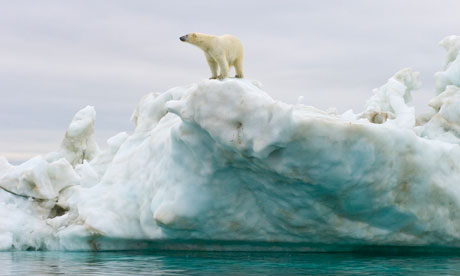
    Since the 1970s, there has been a 40% decrease in the extent of summer sea ice. Photograph: AlaskaStock/Corbis

    The radical decline in sea ice around the Arctic is at least 70% due to human-induced climate change, according to a new study, and may even be up to 95% down to humans – rather higher than scientists had previously thought.

    The loss of ice around the Arctic has adverse effects on wildlife and also opens up new northern sea routes and opportunities to drill for oil and gas under the newly accessible sea bed.

    The reduction has been accelerating since the 1990s and many scientists believe the Arctic may become ice-free in the summers later this century, possibly as early as the late 2020s.

    “Since the 1970s, there’s been a 40% decrease in the summer sea ice extent,” said Jonny Day, a climate scientist at the National Centre for Atmospheric Science at the University of Reading, who led the latest study.

    “We were trying to determine how much of this was due to natural variability and therefore imply what aspect is due to man-made climate change as well.”

    To test the ideas, Day carried out several computer-based simulations of how the climate around the Arctic might have fluctuated since 1979 without the input of greenhouse gases from human activity.

    He found that a climate system called the Atlantic multi-decadal oscillation (AMO) was a dominant source of variability in ice extent. The AMO is a cycle of warming and cooling in the North Atlantic that repeats every 65 to 80 years – it has been in a warming phase since the mid-1970s.

    Comparing the models with actual observations, Day was able to work out what contribution the natural systems had made to what researchers have observed from satellite data.

    “We could only attribute as much as 30% [of the Arctic ice loss] to the AMO,” he said. “Which implies that the rest is due to something else, and this is most likely going to be man-made global change.”

    Previous studies had indicated that around half of the loss was due to man-made climate change and that the other half was due to natural variability.

    Looking across all his simulations, Day found that the 30% figure was an upper limit – the AMO could have contributed as little as 5% to the overall loss of Arctic ice in recent decades.

    The research is published online in the journal Environmental Research Letters.

    Day said that there are a number of feedback effects that could see the Arctic ice loss continue in the coming years, as the Earth warms up.

    “[There is] something called the ice-albedo feedback, which means that when you have less ice, it means there’s more open water and therefore the ocean absorbs more radiation and will continue to warm,” he said.

    “It’s unclear what will happen – it definitely seems like it’s going in that direction.”

  • New evidence for regular magnitude 8 earthquakes, study of New Zealand fault shows

    ScienceDaily: Earthquakes News


    New evidence for regular magnitude 8 earthquakes, study of New Zealand fault shows

    Posted: 25 Jul 2012 01:24 PM PDT

    A new study finds that very large earthquakes have been occurring relatively regularly on the Alpine Fault along the southwest coastline of New Zealand for at least 8,000 years.
    You are subscribed to email updates fromScienceDaily: Earthquake News
    To stop receiving these emails, you may unsubscribe now.
    Email delivery powere