Author: admin

  • The dirty truth about China’s incinerators

    The dirty truth about China’s incinerators

    The boom in polluting waste-to-energy plants in China has led to a backlash from residents, including one man’s long-running legal crusade

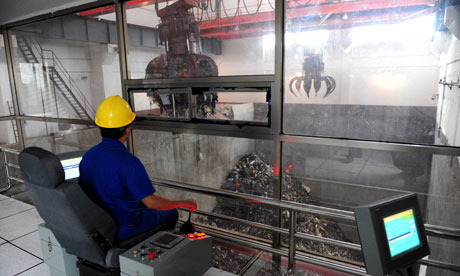
     incinerator at a plant in Qionghai, Southern Hainan province of China

    A Chinese worker controls robotic arms to throw rubbish into an incinerator at a plant in Qionghai, Southern Hainan province of China. Photograph: Corbis

    Xie Yong could be called a pioneer. He is one of very few to date to sue a Chinese government agency over its unlawful refusal of requested data. His crusade for change has little to do with civic altruism, however. Xie’s struggle is personal in nature, his actions forced by desperation. He has been battling his son’s paralysis-causing epileptic seizures and mounting health care costs since 2010. His son’s condition, Xie believes, is the result of toxic emissions from an incineration plant near his home.

    Xie and his wife, Ma Hongmei, lived in Nantong, Jiangsu province, when Ma gave birth to their son, Yongkang, in 2008. Even before they could celebrate his first 100 days of life, Yongkang’s parents noticed he was not developing normally. He did not laugh like other babies and had trouble seeing and hearing. Most disturbing, he twitched incessantly and could not be placated. Shortly after, he became paralysed. Doctors eventually diagnosed him with cerebral palsy.

    During Ma’s pregnancy and in her son’s first two months of life, the family lived a short distance from the local trash incineration plant. The facility’s odorous emissions were constant, but neither Ma nor Xie understood what risks they might be facing. Shanghai Xinhua Hospital determined that Yongkang’s disease was not genetic, but caused by environmental factors during Ma’s pregancy.

    Xie researched the science behind incineration emissions and health defects, spoke with experts, and learned that other couples in the village had experienced premature births and stillbirths. The couple concluded that their proximity to the plant, and the constant pollution it spewed, were to blame.

    In 2010, Xie sought the assistance of the Center for Legal Assistance to Pollution Victims (CLAPV), a China-based legal aid NGO that provides assistance to citizens and wages legal battles in the name of environmental justice. The centre felt that his story justified legal action and, with Xie’s help, began collecting the evidence needed to build a case against the company that owned the plant, Jiangsu Tianying Saite Environmental Protection Energy Group.

    In China’s first personal health-related legal case against a waste incinerator, the Hai’an local court heard the case in September 2010. Xie submitted analysis revealing dioxin concentrations in nearby air that grossly exceeded legal limits; reports documenting the physical condition of plant workers and other children living near the plant; and scientific papers demonstrating a link between dioxin and birth defects. The local judge rejected Xie’s claims, prompting him to appeal to the county court. A county-level trial took place May 2011, with similar results. The court deemed the evidence insufficient and issued a verdict against Xie.

    In response to these blows, Xie turned directly to the authorities. He filed a request for emissions data for the plant in question from the local environmental protection bureau, to which he had legal entitlement (read more about China’s open government information laws here and here). His request was denied, on the grounds that releasing data would compromise the company’s business secrets. Xie next asked the provincial level Ministry of Environmental Protection, one administrative level higher, to release emissions reports to him. They, too, turned him down. But he is determined to continue his fight.

    Activists like CLAPV’s Liu Jinmei believe that Xie’s efforts “indicate a growing awareness of safeguarding the rights of victims of pollutants”. However, it is hard to know how many individuals with situations similar to Xie’s, but completely unaware of the potentially serious health risks they face, are out there. This is because conditions at Chinese waste-to-energy facilities are by and large shrouded in mystery.

    The incineration boom

    China did not commission its first waste-to-energy plant until little more than a decade ago. Before 1990, public waste-treatment infrastructure handled less than 2% of the country’s household waste. At the same time, output of inorganic rubbish was marginal.

    Rapid change in waste production and management trends occurred in China over the last two decades. China now generates over a quarter of the world’s garbage, at least 250 million tonnes annually. With municipal solid waste (MSW) growing 8% to10% annually, cities are under great pressure to deliver advanced waste-management solutions.

    Landfills currently handle roughly half of China’s MSW, while only about 10% is incinerated. Official credo suggests that landfills will continue to play a dominant role. But Beijing’s push to increase the share of burned waste is unmistakable: a central target calls for 30% of MSW to be treated by waste-to-energy incineration by 2030.

    Presently, incineration is growing at a feverish pace. Industry insiders and state-run media routinely declare 300 plants will be operational by the time the 12th Five-Year Plan runs its course in 2015. A 2009 study by banking group Standard Chartered found that over one-half of global orders for new waste-incineration facilities came from China.

    Information on the number of waste-to-energy plants in China is scarce and, when available, difficult to unpack. Interviews with experts and policymakers rarely converge on a single number, but their guesses routinely fall somewhere between 100 and 200. In an independent, verified assessment I conducted in 2011, I detected at least 155 plants currently operating or under construction. I would not be surprised if plans for new plants have been announced in the three months during which my data has aged.

    China’s earliest incineration plants deployed imported grate burn technology common in developed economies. Plant operators quickly found that Chinese MSW generally makes poor feedstock. This is because China’s vast informal sector extracts the most easily burned trash, like paper, wood and plastic. The remaining composition is largely organic waste, too wet to burn without costly pre-treatment or fuel supplements. Technological barriers aside, the price of these technologies also puts them out of reach for China’s second and third-tier cities.

    Combined with these practical obstacles, Beijing’s drive to localise environmental technologies helped catalyse (state-funded) development of domestic incineration technologies suited to Chinese conditions. Newer plants prominently feature domestically developed equipment, including both grate and circular fluidised-bed (CFB) type incinerators. Though smaller in terms of capacity, CFB incinerators generate similar amounts of electricity to stoke grates. They are also more flexible in terms of feedstock, permitting coal to be added for easier ignition. For these reasons, CFB incinerators enjoy considerable popularity in the market and now account for about half of China’s MSW treatment capacity.

    Early central-level legislation on municipal waste management – passed almost a decade ago – sanctioned private-sector involvement. These measures, intended to encourage growth in waste-to-energy installations, relaxed state control in a way that has yet to take place in the energy sector. However, the primary catalyst for growth in the sector has been generous government incentives.

    Waste-to-energy incineration is classified as a renewable energy form in China, meaning that plants receive a feed-in tariff for every kilowatt hour of electricity they generate. Only two months ago, Beijing announced a fixed subsidised price for power purchased from waste-to-energy plants, which is about double that from coal-powered plants.

    The results of these subsidies are dramatic. Both foreign and local waste-to-energy players have rushed to stake their claims, in some cases submitting loss-making tender offers just to get a foothold. Many waste-management experts suspect that Chinese city officials are among the most eager investors; using public infrastructure and tax revenue to profit personally.

    Peeling back a green facade

    The ongoing justification for favourable waste-to-energy policies in China is simple: cities stem the problem of growing waste while getting much needed electricity in the process. That formula, however appealing, appears too good to be true.

    China’s incinerators, though canonised as a “clean energy,” have a dirty underside. Thermal waste treatment plants are subject to emissions regulations considerably looser than those for power plants. Legally, they can emit nitrous oxide and sulphur dioxide at, respectively, four and five times the levels of power plants in China.

    Newer facilities are installed with air-pollution control systems, but these are costly to use and maintain. Thus, many plants operate without the required flue gas filtering equipment. Likewise, treatment of other highly toxic byproducts – such as wastewater removed before incineration and fly ash created during burning – tends to be either poor or non-existent. This follows partly from the lack of regulations on how waste-to-energy plants should treat wastewater.

    The company which operates the facility near where Xie Yong’s family lived boasts on its website that it uses an advanced pollution control system which meets European emissions standards, but no details are given. This is a common claim among waste-to-energy developers. On the other hand, air and water pollution in waste-to-energy plants in China has been well-documented. According to some reports, some plants emit dioxins at levels 24 times higher than those from American waste-to-energy facilities.

    Making matters worse, plant operators regularly add coal to the burning waste. In private interviews, Waste-to-energy plant operators admitted to using a feedstock mix comprising equal parts coal and rubbish, which far exceeds the 20% coal limit mandated by the central government. It is not unheard of for the share of coal to be as high as 70%. Under these conditions, plants are operating essentially as small coal-fired power stations – exactly the kind of facility that Beijing is trying to eliminate on public health grounds.

    Finally, while incineration plants in Europe charge rubbish haulers “tipping fees” that may reach US$132 (840 yuan) per tonne of waste, these fees rarely exceed US$16 (100 yuan) per tonne in China, and usually hover around US$8 (50 yuan). When Xie’s son was born, the plant near his house was making US$10 (64 yuan) for each tonne of trash they accepted. Many experts say that environmentally sound performance, and the costs it requires, is not technologically feasible with such low tipping fees.

    Light beyond the haze

    Weak regulation and misaligned policies, combined with an absence of public emissions data, make for a truly toxic incineration sector. Xie Yong is not the only one who has noticed.

    Beginning a few years ago, communities near existing plants, offended by odorous emissions and worried about possible health risks, began protesting against new projects. In one incident, which took place in Xie’s Jiangsu province, as many as 10,000 residents gathered and clashed with police over a waste incinerator in their village. According to Chinese media reports, by mid-2010 construction of at least six new plants had been postponed due to public opposition.

    By some accounts, China’s leadership has heeded the warnings. In interviews, city officials have said that some Chinese mayors are blocking new projects, concerned they could trigger unrest, thereby marring their reputations and chances of promotion.

    Alongside these grassroots efforts, NGOs like Beijing-based Green Beagle are working to substantiate public opposition to incineration with actual emissions performance data. Having campaigned for, and been denied, credible figures for almost five years, the organisation is exploring the possibility of establishing independent waste-to-energy emissions monitoring stations.

    As for Xie Yong, it is too early to say whether he can navigate a way through China’s legal system and extract the data he is so desperate to get his hands on, in the belief it will demonstrate a more direct relationship between the plant’s operations and his son’s crippling illness. With every other option exhausted, Xie decided early this year to sue the provincial-level Ministry of Environmental Protection at the Jiangsu provincial court. The trial is expected to take place later this year.

    “Taking the ministry to court is my last choice,” Xie has said. “It’s the only way I can get justice.” Though his case is still unresolved, growing numbers of onlookers await the outcome.

    Xie’s legal fight – the first of its kind – highlights the pressing need for greater transparency and accountability in the incineration sector. At the same time, growing popular opposition suggests that persistent, and public, resistance may be China’s best bet for achieving meaningful regulatory reform in the waste-to-energy sector.

  • Japan declares Fukushima crisis ‘man-made’

    Japan declares Fukushima crisis ‘man-made’

    Updated July 05, 2012 19:30:20

    A Japanese parliamentary report into the Fukushima meltdowns has found the accident was a preventable man-made disaster.

    The parliamentary report says the meltdowns were foreseeable, slamming plant operator TEPCO and nuclear regulators for ignoring warnings of big earthquakes and tsunamis.

    It also blames collusion between the government, regulators and nuclear companies for betraying Japan’s right to be safe.


    “They effectively betrayed the nation’s right to be safe from nuclear accidents. Therefore, we conclude that the accident was clearly ‘man-made’,” the report by the Diet’s Fukushima Nuclear Accident Independent Investigation Commission said.

    “We believe that the root causes were the organisational and regulatory systems that supported faulty rationales for decisions and actions, rather than issues relating to the competency of any specific individual.”

    The report says TEPCO and nuclear regulators were aware of the risks of a power outage at Fukushima five years before the disaster but TEPCO did nothing to prepare for it.

    It says the company had organisational problems, lacked an accident response plan and its accident manual had diagrams missing.

    The report also says TEPCO manipulated its cosy relationship with the nuclear regulators to “take the teeth out of regulations”.

    [TEPCO] were told in 2006 that if a tsunami was to reach the level of the site that it could cause an outage of power. They were aware of the risk of reactor core damage from the loss of seawater pumps, in case of a tsunami larger than what was predicted.

    They basically knew, and so did the regulators, that this was possible but the regulators did not push them to make any changes to the plant and TEPCO did not voluntarily make the changes needed to deal with this scenario.

    North Asia correspondent Mark Willacy


    Then prime minister Naoto Kan comes under fire for interfering in the response to the disaster.

    The report also condemns TEPCO’s behaviour as inconsistently unclear, blasting the company for failing to disclose information it feared was inconvenient.

    The probe is the third of its kind in Japan since the world’s worst nuclear crisis in a generation.

    An earlier report by TEPCO had all but cleared the huge utility, saying the size of the earthquake and tsunami was beyond all expectations and could not reasonably have been foreseen.

    But an independent group of scholars and journalists, who reported their findings in February, said TEPCO could and should have done more.

    Although many scientists and activists have questioned the dominant narrative that cooling systems were knocked out by last year’s tsunami, the government and TEPCO have been unwilling to say the reactors could have been damaged by the initial earthquake.

    Tectonically volatile Japan has a network of nuclear reactors that, until Fukushima, had supplied around a third of the nation’s electricity.

    The nuclear industry has long boasted of its many safeguards against earthquakes, but much recent public opposition to atomic power has focused on plants’ vulnerability, especially those that sit near seismic faults.

    ABC/AFP

    Topics:nuclear-accident, world-politics, government-and-politics, disasters-and-accidents, japan

    First posted July 05, 2012 17:11:17

  • How a rape survivor could change Afghanistan (avaaz)

    How a rape survivor could change Afghanistan

    Inbox
    x

    Dalia Hashad – Avaaz.org avaaz@avaaz.org
    9:42 PM (31 minutes ago)

    to me

    Dear friends,

    After being kidnapped, raped and tortured by Afghan police, 18-year-old Lal Bibi is fighting police impunity and the cultural requirement that she commit suicide. Prosecutors are failing to try her rapists, but a massive global outcry can persuade the donor countries that are about to hand over billions to Afghanistan to use their leverage to force real change for Lal Bibi and all Afghan women. Sign the petition, and tell everyone: 

    18 year-old Lal Bibi was kidnapped, raped, tortured and chained to a wall for five days by a gang of powerful Afghan police officers. But she stood up to do what women in Afghanistan are told not to — she is fighting back, and together we can help her and all Afghan women win justice.

    According to deep cultural mandates, as a raped woman, Lal Bibi has been “dishonoured” and will kill herself — and she publicly says she must, unless her rapists are brought to justice to restore her honour and dignity. Afghanistan’s justice system routinely fails to pursue these cases and so far the chief suspects in Lal Bibi’s case have not been prosecuted, likely in the hopes that international attention will die down. Every day that passes without an arrest pushes Lal Bibi closer to suicide — but there is hope.

    This weekend, the US, UK, Japan and other major donors are expected to pledge 4 billion dollars to Afghanistan — money that will pay for the very police forces responsible for Lal Bibi’s rape. But an international outcry can shame donor countries into action, conditioning their aid on real action to fight rape and protect women. We don’t have much time left — click below for change that could save Lal Bibi’s life and our petition will be delivered right into the donor conference in Tokyo: 

    https://secure.avaaz.org/en/justice_for_lal_bibi_c/?bhPqncb&v=15774

    Local custom in some parts of Afghanistan dictates that women are shamed by rape and must kill themselves to restore their family’s honour for generations to come. Amazingly, Lal Bibi and her family courageously are seeking to save her life by insisting on the prosecution of her torturers and shifting the blame to the perpetrators, in society’s eyes.

    The Afghan police force responsible for the rape depends heavily on foreign funding that will be pledged this weekend, when all of Afghanistan’s major donors gather in Tokyo. Donor countries can and should require that funds are not spent to grow a police force that acts with appalling impunity and that police officers work to protect women, not attack them!

    There are hundreds of women and girls all across Afghanistan who are subject to the “tribal justice” meted out to Lal Bibi. Thousands more are watching carefully to see how the Afghan government and the world will respond to the girl who is fighting back and refuses to die quietly. Let’s stand with her — sign the petition below and tell everyone:

    https://secure.avaaz.org/en/justice_for_lal_bibi_c/?bhPqncb&v=15774

    The global war on women is relentless. But time and time again our community joins together to win. We helped stop the illegal stoning of Sakineh Ashtiani in Iran, and fought for justice for rape survivors in Libya, Morocco and Honduras. Let’s show the global power of our community to help win justice for Lal Bibi and millions of women in Afghanistan.

    With hope and determination,

    Dalia, Emma, Alaphia, Ricken, Laura, Antonia and the rest of the Avaaz team

    P.S. Avaaz has launched Community Petitions, an exciting new platform where it’s quick and easy to create a campaign on any issue you care strongly about. Start your own by clicking here: http://www.avaaz.org/en/petition/start_a_petition/?do.ps.lal_bibi

    More Information:

    Rape case tests Afghan justice (Radio Free Europe)
    http://www.rferl.org/content/rape-case-tests-afghan-justice/24604549.html

    Afghan rape case turns focus on local police (New York Times)
    http://www.nytimes.com/2012/06/28/world/asia/afghan-rape-case-turns-focus-on-local-police.html?pagewanted=all

    Afghanistan expects $4 billion in aid pledges at the July conference (CNBC)
    http://www.cnbc.com/id/47900279/Afghanistan_expects_4_billion_in_aid_pledges_at_July_conference

    Tokyo Declaration to push donors, Afghanistan to make better use of aid (Reuters)
    http://www.reuters.com/article/2012/07/02/us-afghanistan-aid-idUSBRE8610CL20120702

    Afghan government confident about endorsement of its strategic vision in Tokyo (UNAMA)
    http://unama.unmissions.org/Default.aspx?tabid=1741&ctl=Details&mid=1882&ItemID=17189


    Avaaz.org is a 14-million-person global campaign network
    that works to ensure that the views and values of the world’s people shape global decision-making. (“Avaaz” means “voice” or “song” in many languages.) Avaaz members live in every nation of the world; our team is spread across 19 countries on 6 continents and operates in 14 languages. Learn about some of Avaaz’s biggest campaigns here, or follow us on Facebook or Twitter.

  • Pre-industrial emissions still causing temperatures to rise

    No show stoppers for concentrating solar power

    Posted: 04 Jul 2012 09:40 AM PDT

    Solar thermal power is largely unrestricted by materials availability. There are, however, some issues that the industry needs to look into soon, like replacing silver in mirrors.

    Pre-industrial emissions still causing temperatures to rise

    Posted: 03 Jul 2012 11:17 PM PDT

    When evaluating the historic contributions made by different countries to the greenhouse gasses found in Earth’s atmosphere, calculations generally go back no further than the year 1840. New research shows that carbon dioxide contributions from the pre-industrial era still have an impact on our climate today.

    Shrinking leaves point to climate change

    Posted: 03 Jul 2012 11:15 PM PDT

    Rcent climate change is causing leaves of some Australian plants to narrow in size.
  • Extreme weather conditions cost EU’s transport system at least €15 billion annually

    ScienceDaily: Severe Weather News


    Extreme weather conditions cost EU’s transport system at least €15 billion annually

    Posted: 04 Jul 2012 09:40 AM PDT

    Extreme weather conditions cost EU’s transport system at least €15 billion annually. Currently, the greatest costs incurred are from road accidents, with the associated material damage and psychological suffering.
    You are subscribed to email updates from ScienceDaily: Severe Weather News
    To stop receiving these emails, you may unsubscribe now.
    Email delivery powered by Google
    Google Inc., 20 West Kinzie, Chicago IL USA 60610
  • The case for shutting Hazelwood, Australia’s dirtiest power station

    climate code red

    Inbox
    x

    climate code red noreply@blogger.com via google.com
    6:18 PM (1 hour ago)

    to me
    Images are not displayed. Display images below – Always display images from noreply@blogger.com

    climate code red


    The case for shutting Hazelwood, Australia’s dirtiest power station

    Posted: 04 Jul 2012 03:21 PM PDT

    by Roger Dargaville, Research Fellow, Energy Research Institute at University of Melbourne

    Under its Clean Energy Future, the Federal government will negotiate to close 2000 MW of the dirtiest fossil fuel power generating capacity in Australia by 2020.
    With the price on carbon now in operation, there will be pressure on some highly carbon intensive station to remain viable – this policy pre-empts the failure of the most vulnerable businesses and provides some certainty as to which stations will close, as well as compensating the companies affected, including the workers who will lose their jobs.
    The plants under consideration are Hazelwood, Yallourn and Energy Brix in Victoria, Playford B in South Australia and Collinsville in Queensland.

    The most likely combination of these stations is Hazelwood and the much smaller Energy Brix which both rely on the same open cut coal mine in the La Trobe Valley. So assuming these are the stations that close, what will be the impact on Victoria and Australia’s carbon emissions and electrical energy system?
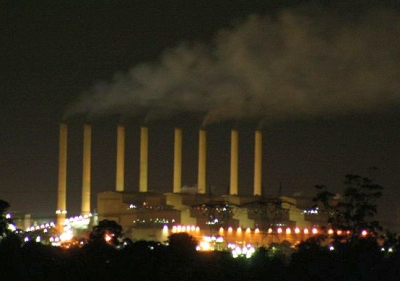
    Hazelwood power station is a 1600 MW brown coal generator made up of eight 200 MW units which were constructed between 1964 and 1971. It is the oldest coal-fired generator currently operating in Victoria, and not surprisingly has the highest carbon intensity of any power station in Australia at 1.52 tonnes of CO2 for each mega-watt hour* (MWh) of electricity produced (as reported by the Australian Energy Market Operator.
    It is just ahead of Playford B in South Australia, but Playford only has a capacity of 240 MW. Loy Yang B produces more carbon (20 mega tonnes versus 18 for Hazelwood), but also produces almost 40% more electricity. Hazelwood is a clearly a prime candidate for the Clean Energy Future program to purchase and shut down 2 GW of the most carbon intensive generating capacity.
    In 2011, homes, business and industry connected to the National Energy Market (the NEM, made up of Tas, SA, Vic, NSW and Qld) consumed 200 TWh of electricity. The power stations combined produced 186 Mt CO2. Hazelwood supplied 6% of the NEM’s power and 10% of the emissions.

    Station Capacity (MW) Power (TWh /year) Carbon Intensity (tCO2 /MWh) Carbon (Mt CO2)
    Loy Yang A 2210 16.7 1.21 20.2
    Hazelwood 1600 12.1 1.53 18.4
    Bayswater 2640 17.2 0.99 17.6
    Yallourn 1480 11.7 1.42 16.6
    Eraring 2680 13.6 0.99 13.7
    Loy Yang B 1000 8.6 1.24 10.6
    Mt Piper 1400 10.3 0.94 9.5
    Liddell 2000 8.3 1.08 9.0
    Wallerawang 1000 6.4 1.05 6.7
    Gladstone 1680 6.8 0.96 6.6

    Australia’s 10 biggest carbon emitters.AEMO (http://www.aemo.com.au/)
    So what happens if 6% of the generation is removed? Will we have rolling blackouts? Who will take up the slack?
    A few years ago when demand was continuing to increase, this might have been a serious question. But, since 2008 total demand in Australia has been decreasing at between 1% and 2% per year, a decrease of almost a gigawatt.
    The effect has been that generators are operating at lower capacity factors – with wholesale electricity prices not seen in a decade – and claims that no new fossil generating capacity will be required in Australia for a decade. That means no new state-of-the-art generators that would have much lower emissions than Hazelwood.
    Hazelwood runs at an average of around 85% capacity, or 1.4 GW. So the 1 GW decrease in demand is close to the total contribution of Hazelwood. Turning it off would more or less take us back to the supply and demand balance of 2008.
    This would have the effect of increasing wholesale electricity prices by around 2 c/kWh – returning prices to the levels seen before 2008, and restoring some investor confidence to build new and cleaner capacity.
    Even without new capacity, the effect of shutting down Hazelwood and the slack being taken up by existing generators that have on average 30% lower emissions, would reduce CO2 emissions by 5 Mt per year, or 3% of Australia’s electricity sector emissions.
    In the national energy market, there is around 50 GW of capacity listed. On average we use 22 GW – so there is plenty of capacity sitting idle much of the time, waiting for the extreme demand days when the temperature reaches into the 40s.
    With 2 GW removed from the system, there is a concern that the system may struggle to meet peak demand. But those hot days tend to be sunny, when rooftop photovoltaic (PV) will be producing at its maximum. In the last two years almost 2 GW of solar PV capacity has been installed nationally. Just as long as we use our air-conditioners when the sun is shining.

    This article was first published in The Conversation, reproduced with permission.

    You are subscribed to email updates from climate code red
    To stop receiving these emails, you may unsubscribe now.
    Email delivery powered by Google
    Google Inc., 20 West Kinzie, Chicago IL USA 60610