Author: admin

  • UN: methane released from melting ice could push climate past tipping point

    UN: methane released from melting ice could push climate past tipping point

    Doha conference is warned that climate models do not yet take account of methane in thawing permafrost

    Siberia

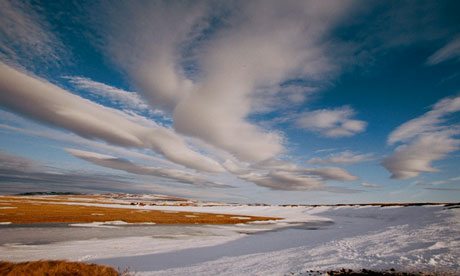
    Frozen ground in Siberia. Permafrost covers nearly a quarter of the northern hemisphere. Photograph: Francis Latreille/Corbis

    The United Nations sounded a stark warning on the threat to the climate from methane in the thawing permafrost as governments met for the second day of climate change negotiations in Doha, Qatar.

    Thawing permafrost releases methane, a powerful greenhouse gas, but this has not yet been included in models of the future climate. Permafrost covers nearly a quarter of the northern hemisphere at present and is estimated to contain 1,700 gigatonnes of carbon – twice the amount currently in the atmosphere. As it thaws, it could push global warming past one of the key “tipping points” that scientists believe could lead to runaway climate change.

    The UN Environment Programme (UNEP) called for the effect to be studied in detail by the Intergovernmental Panel on Climate Change (IPCC), the body of top climate scientists convened by the UN to provide governments with the most up-to-date and comprehensive knowledge on climate change. The next IPCC report will be published in several parts from next year.

    Achim Steiner, executive director of UNEP, said: “Permafrost is one of the keys to the planet’s future because it contains large stores of frozen organic matter that, if thawed and released into the atmosphere, would amplify current global warming and propel us to a warmer world. Its potential impact on the climate, ecosystems and infrastructure has been neglected for too long.”

    UNEP said warming permafrost could also “radically alter ecosystems and cause costly infrastructural damage due to increasingly unstable ground” and called for national monitoring systems to be put in place by countries with permafrost, including Russia, Canada, China and the US.

    Most of the current permafrost formed during or since the last ice age and extends to depths of more than 700 metres in parts of northern Siberia and Canada. Permafrost consists of an active layer of up to two metres in thickness, which thaws each summer and refreezes each winter, and the permanently frozen soil beneath. As temperatures in the Arctic are rising faster than elsewhere, this could increase the danger of permafrost melting. Warming permafrost could emit 43 to 135 gigatonnes of carbon dioxide equivalent by 2100 and 246 to 415 gigatonnes by 2200, according to the report, and emissions could start within the next few decades. Permafrost emissions could ultimately account for up to 39% of total emissions, according to the report.

    UNEP’s report came as governments argued over the future of the Kyoto protocol at the Doha climate talks. One of the main aims of the talks is an agreement to continue the protocol beyond the end of this year, when its current provisions and targets expire. But only the EU and a handful of other relatively small emitters, including Australia, Norway and Switzerland, have agreed.

    Japan was once a strong defender of the protocol, taking pride in the fact that it was negotiated there. But the country has now abandoned it, in part because of fears that its neighbour, China, has taken a competitive advantage because it is not obliged to reduce its emissions.

    Masahiko Horie, of the Japanese negotiating team, said: “Only developed countries are legally bound by the Kyoto protocol and their emissions are only 26% [of global emissions]. If we continue the same, only one quarter of the world is legally bound and three quarters of countries are not bound at all.”

    He said it was more important to Japan to formulate a new framework that would require action on emissions from developing as well as developed countries. At the talks, governments are expected to draw up a work plan that would set out how they will draw up such a new global agreement by 2015, coming into force in 2020.

    But many developing countries want developed countries to continue with Kyoto beyond 2012 as part of any deal. Andre Correa do Lago, head of the Brazilian delegation, said: “If rich countries which have the financial means, have technology, have a stable population, already have a large middle class, think they cannot reduce [emissions] and work to fight climate change, how can they ever think that developing countries can do it? That is why the Kyoto protocol has to be kept alive. If we take it out, we have what people call the Wild West. You are not going get the [emissions] reductions necessary.”

    The talks will continue until the end of next week.

  • The Fat of the Land MONBIOT

    The Fat of the Land

    Posted: 26 Nov 2012 11:40 AM PST

    Robbing the poor, trashing the natural world: Europe’s farm subsidies are an obscenity.


    By George Monbiot, published in the Guardian 27th November 2012

    There’s a neat symmetry in the numbers which helped to sink the European summit. The proposed budget was €50bn higher than the UK government could accept(1). This is the amount of money that European farmers are given every year(2). Britain’s contentious budget rebate is worth €3.6bn a year(3): a fraction less than our contribution to Europe’s farm subsidies(4).

    Squatting at the heart of last week’s summit, poisoning all negotiations, is a vast wobbling lump of pork fat called the Common Agricultural Policy. The talks collapsed partly because the president of the European Council, pressed by the Francois Hollande, proposed inflating the great blob by a further €8bn over six years(5). I don’t often find myself on their side, but the British and Dutch governments were right to say no.

    It is a source of perpetual wonder that the people of Europe tolerate this robbery. Farm subsidies are the 21st century equivalent of feudal aid: the taxes mediaeval vassals were forced to pay their lords for the privilege of being sat upon(6). The single payment scheme, which accounts for most of the money, is an award for owning land. The more you own, the more you receive.

    By astonishing coincidence, the biggest landowners happen to be among the richest people in Europe. Every taxpayer in the EU, including the poorest, subsidises the lords of the land: not once, as we did during the bank bailouts, but in perpetuity. Every household in the UK pays an average of £245 a year to keep millionaires in the style to which they are accustomed(7). No more regressive form of taxation has been devised on this continent since the old autocracies were overthrown. Never mind French farmers dumping manure in the streets: we should be dumping manure on French farmers.

    It would be unfair to stop there. There are plenty of people in the UK who deserve the same treatment. Last year the House of Commons environment, food and rural affairs committee, in a bizarrely unbalanced report, maintained that the farm subsidy system does not go far enough(8). It wants to supplement payments for owning land with a resumption of headage payments: money for every animal farmers cram into their fields.

    This nonsense outfrenches the French. There were excellent reasons for phasing out headage payments in 2003. They provided an incentive to load the hills with as many animals (mostly sheep) as possible, regardless of the impact on the natural world and the welfare of the sheep. The extra sheep flooded the market, bankrupting the farmers whom the payments were supposed to protect. The committee’s proposal accords with a long-standing and idiotic European principle: the less suitable a region is for farming, the more money is spent to ensure that farming persists there. This is the rationale for such extra subsidies as Less Favoured Area payments.

    This approach is justified by a groundless claim: that farming, particularly in the uplands, is required to protect the environment. The European Commission maintains that farming is essential to “combat biodiversity loss” and to reduce emissions of greenhouse gases(9). The parliamentary committee claims that fewer cattle and sheep in the hills has led to “undergrazing”, which has caused such horrors as the growth of bracken(10). How nature managed to survive for the three billion years before humans arrived to look after it is anyone’s guess.

    These statements are seldom accompanied by anything resembling a scientific reference. They reflect a biblical view of human stewardship. It would be lovely to believe that hill farmers, the landholders with whom it is easiest to sympathise, are delivering only blessings, but this is pure wish fulfilment.

    Flooding of the kind now blighting the UK is exacerbated by grazing in the hills, which prevents trees and scrub from growing(11). The sparser the vegetation with which the hills are clothed, the faster the water runs off. Woodland and scrub preserve more carbon – both above and below ground – than pasture does(12). There has been a catastrophic decline in farm wildlife over the past few decades, as a result of grazing, drainage, sheep dip residues poisoning the streams and farmers’ clearance of habitats(13). Last week’s shocking report on the state of the UK’s birds shows that while 20% of all birds have been lost since 1966, on farmland the rate is over 50%(14).

    The subsidy system doesn’t just encourage this destruction: it demands it. A European rule insists that to receive their main payment farmers must prevent “the encroachment of unwanted vegetation on agricultural land.”(15) In other words, they must stop trees and bushes from growing. They don’t have to grow crops or keep animals on the land to get their money, but they do have to keep it mown(16). All over Europe, essential wildlife habitats are destroyed – often on agriculturally worthless land – simply to expand the area eligible for subsidies(17).

    The European Commission maintains that subsidies are required to help farmers “contribute to growing world food demand, expected … to increase by 70% by 2050.”(18) But if world food demand is expected to grow by 70%, why do we need subsidies? Not long ago, farm payments were justified on the grounds that world demand was low. Now they are justified on the grounds that world demand is high. The policy comes first, the justifications later.

    While David Cameron is right to press for major cuts, he is simultaneously seeking to goldplate the injustice, by opposing the only vaguely progressive measure in the EC’s proposals for reform. The commission suggests capping the money farms can receive, at a maximum of €300,000(19). This, our government complains, would discourage the “consolidation” of land(20). Britain already has one of the highest concentrations of land ownership on earth(21). How much more “consolidation” do we need? And how much more brazenly could Cameron favour the interests of his aristocratic chums?

    Europe is in crisis. It is in crisis because the money has run out. Essential public services are being cut (often unjustly and unnecessarily), but at the same time €50bn a year is being paid to landowners. This spending is so gross, so nakedly indefensible that it’s hard to understand why it does not obsess activists across the political spectrum: from UK Uncut to the Tax Payers’ Alliance. Seldom in the field of human conflict was so much given by so many to so few.

    www.monbiot.com

    References:

    1. http://www.guardian.co.uk/world/2012/nov/23/eu-summit-breaks-up-budget

    2. http://www.guardian.co.uk/world/2012/nov/21/eu-budget-battle-brussels

    3. http://www.guardian.co.uk/world/2012/nov/21/eu-budget-battle-brussels

    4. Last year, Defra told me the British contribution is £3.6bn. 31st August 2011, by email.

    5. http://www.guardian.co.uk/business/2012/nov/23/eurozone-crisis-eu-budget-summit-cameron#block-50af74d9b579cb0f059747d0

    6. http://en.wikipedia.org/wiki/Feudal_aid

    7. Defra, 31st August 2011, by email.

    8. House of Commons Environment, Food and Rural Affairs Committee, 16th February 2011. Farming in the Uplands. Third Report of Session 2010–11. http://www.publications.parliament.uk/pa/cm201011/cmselect/cmenvfru/556/556.pdf

    9. European Commission, 18th November 2010. The CAP towards 2020:
    Meeting the food, natural resources and territorial challenges of the future. COM(2010) 672 final. http://ec.europa.eu/agriculture/cap-post-2013/communication/com2010-672_en.pdf

    10. House of Commons Environment, Food and Rural Affairs Committee, 16th February 2011. Farming in the Uplands. Third Report of Session 2010–11. http://www.publications.parliament.uk/pa/cm201011/cmselect/cmenvfru/556/556.pdf

    11. For example, compare Figure 20.22 in Chapter 20 of the UK National Ecosystem Assessment with Figure 13.14a in Chapter 13. The increase in flood events bears no relationship to changes in rainfall. The other major change in that period has been a massive increase in stocking rates in the catchment of the Wye. http://uknea.unep-wcmc.org/Resources/tabid/82/Default.aspx

    12. Scottish Executive Environment and Rural Affairs Department Environmental Research, 2007. ECOSSE – Estimating Carbon in Organic Soils Sequestration and
    Emissions. http://nora.nerc.ac.uk/2233/1/Ecosse_published_final_report.pdf

    13. See Figure 20.11 of Chapter 20 of the UK National Ecosystem Assessment. http://uknea.unep-wcmc.org/Resources/tabid/82/Default.aspx

    14. http://www.rspb.org.uk/Images/SUKB_2012_tcm9-328339.pdf

    15. European Commission, 2009. Good Agricultural and Environmental Conditions

    http://marswiki.jrc.ec.europa.eu/wikicap/index.php/Good_Agricultural_and_Environmental_Conditions_%28GAEC%29

    16. The UK government interprets this (GAEC 12) as follows: “You must cut scrub and cut or graze rank vegetation on the whole area of your agricultural land that you do not use for agricultural production at least once every 5 years, in order to prevent encroachment of scrub”. http://rpa.defra.gov.uk/rpa/index.nsf/293a8949ec0ba26d80256f65003bc4f7/764beac195015cca802573aa00535bc4!OpenDocument

    17. See Miles King, December 2010. An Investigation into Policies Affecting Europe’s Semi-Natural Grasslands. The Grasslands Trust. http://www.grasslands-trust.org/uploads/page/doc/European%20grasslands%20report%20phase%201%20final%281%29.pdf

    18. European Commission, 18th November 2010. The CAP towards 2020:
    Meeting the food, natural resources and territorial challenges of the future. COM(2010) 672 final. http://ec.europa.eu/agriculture/cap-post-2013/communication/com2010-672_en.pdf

    19. Department for Environment Food and Rural Affairs, December 2011. CAP Reform post 2013: Defra discussion paper on the impact in England of EU Commission regulatory proposals for Common Agricultural Policy reform, post 2013.

    http://www.defra.gov.uk/consult/files/111212-cap-reform-consult-discussion-paper.pdf

    20. Department for Environment Food and Rural Affairs, January 2011.
    UK response to the Commission communication and consultation “The CAP towards 2020: Meeting the food, natural resources and territorial challenges of the future”. http://archive.defra.gov.uk/foodfarm/policy/capreform/documents/110128-uk-cap-response.pdf

    21. Kevin Cahill, 2002. Who Owns Britain. Canongate. He reports that 69% of the land is owned by 0.6% of the population.

    You are subscribed to email updates from George Monbiot
    To stop receiving these emails, you may unsubscribe now.
    Email delivery powered by Google
    Google Inc., 20 West Kinzie, Chicago IL USA 60610
  • Bishop’s position is untenable: Albanese

    Bishop’s position is untenable: Albanese

    AAPUpdated November 27, 2012, 3:59 pm

    Federal Labor says Julie Bishop’s position as deputy opposition leader is “untenable” after she accused Prime Minister Julia Gillard of criminal conduct when she was a lawyer in the 1990s.

    Ms Bishop has claimed that Ms Gillard deliberately did not open a file when she helped set up a union slush fund because she wanted to hide the fact it would be used to “siphon” money.

    The association was “unauthorised” and in breach of West Australian laws. Ms Bishop on Tuesday also admitted she met the notorious former Australian Workers’ Union bagman Ralph Blewitt on Friday.

    “The deputy leader of the opposition thinks it’s acceptable to accuse the prime minister of engaging in a criminal act on the basis of her star witness being this self-confessed fraudster and yet no evidence has been produced to back up that claim,” cabinet minister Anthony Albanese told reporters in Canberra.

    “Julie Bishop’s position as deputy leader of the opposition is simply untenable.

    “(Opposition Leader) Tony Abbott either has to back her up 100 per cent or take action and dismiss her.”

    Mr Albanese said Ms Bishop had needed to “put up or shut up”.

    “There are consequences for Ms Bishop’s political situation if it is not backed up.”

    Whether Ms Gillard might take legal action was a matter for the prime minister, Mr Albanese said.

    He also called on Ms Bishop to further explain who instigated Friday’s meeting with Mr Blewitt and if anyone from Mr Abbott’s office was present.

    Ms Bishop showed an “extraordinary lack of judgment” in meeting the former AWU official and making serious accusations without being able to back them up.

    The Labor MP further wants to know “what has brought him (Mr Blewitt) back to Australia” to speak with the police and media.

  • GET-UP Reef update: it’s working

    Reef update: it’s working

    Inbox
    x

    GetUp!
    2:04 PM (9 minutes ago)

    to me

    Dear NEVILLE,

    Well, it seems to be working.

    Within a day of launching our new ad about the Great Barrier Reef World Heritage Area, our phone was ringing with Government MPs trying to convince us to pull the campaign. We’ve never seen a response quite like it — and it proves our strategy is cutting through.

    Click here to see the ad, featuring scary new footage of the threats to our Reef: https://www.getup.org.au/campaigns/mining/gladstone/watch-this-video-now

    1,623 GetUp members have already chipped in to put this ad on cinema screens across Queensland, but we’re locking in the final ad buys over the next week. Every extra donation means more voters will see this message – and that means more leverage for our campaign. A $42 contribution can pay for five days worth of cinema ads this Christmas blockbuster season.

    We’re not asking for much. All Environment Minister Tony Burke has to do is commission the independent scientific review of mining operations on the Reef that UNESCO have asked for. So far there’s no word about the scientific review, but if it is planned, the Government will have our congratulations, we will withdraw our ads immediately, and offer all those GetUp members who have donated a full refund. Until then, it’s up to all of us to ramp up the pressure:

    https://www.getup.org.au/campaigns/mining/gladstone/watch-this-video-now

    In hope,
    the GetUp team.

    —original email—

    We just got back from filming this video in Northern Queensland, and we can’t believe what we saw. The damage being done to the Great Barrier Reef World World Heritage Area will shock the country. Check it out here: https://www.getup.org.au/campaigns/mining/gladstone/watch-this-video-now

    Dear NEVILLE,

    The Great Barrier Reef is already under great pressure from climate change. But to make things worse, the Australian Government is giving Gina Rinehart and others the green light to build the world’s biggest coal export facility at Abbot Point, right on the edge of the Reef.

    Near Gladstone they’re literally cutting channels through the seafloor for huge coal ships in a practice known as dredging. It releases toxins trapped in sediment which then find their way into our food chain. Locally, the effects are clear: fishers are bringing in catch that are so sick it’s not safe to sell. Globally, we are losing one of the natural wonders of the world, and doing it so we can export more coal to warm the planet. It’s absolutely crazy!

    There’s something we can do about it. Environment Minister Tony Burke keeps saying publicly that he wants to save the Reef. He’s trying to walk both sides of the street – saying he’ll save the Reef but at the same time approving massive new coal and coal seam gas terminals – and so far he’s getting away with it, because only locals know what’s really going on. Together, we’re going to change that, and show both major parties that voters will know what they doing to the reef:

    In our new ad, new footage and scientific interviews show Australia what’s really going on. Please watch and join the campaign now.

    https://www.getup.org.au/campaigns/mining/gladstone/watch-this-video-now

    Here’s the plan: there’s an election not far away. Queensland is full of important marginal electorates. The Great Barrier Reef employs 10 per cent of the population of Gladstone and adds $5 billion to the State’s tourism economy annually – we’re talking major economic ramifications, not just conservation – and politicians know it.

    That’s why we’re kicking this campaign off by blanketing cinemas across Queensland. If we raise enough we’ll screen it in Tony Burke’s electorate too. Are you able to help this thing go big?

    https://www.getup.org.au/campaigns/mining/gladstone/watch-this-video-now

    Our Environment Minister Tony Burke and his government really don’t want destroying the Reef to become their legacy. Neither do we.

    Thanks for standing up for the Reef,
    the GetUp team.


    GetUp is an independent, not-for-profit community campaigning group. We use new technology to empower Australians to have their say on important national issues. We receive no political party or government funding, and every campaign we run is entirely supported by voluntary donations. If you’d like to contribute to help fund GetUp’s work, please donate now! If you have trouble with any links in this email, please go directly to www.getup.org.au. To unsubscribe from GetUp, please click here. Authorised by Sam Mclean, Level 2, 104 Commonwealth Street, Surry Hills NSW 2010.

  • OXFAM Arms Trade Treaty: Wrapping up in 2013? Inbox x Oxfam Campaigns campaigns@updates.oxfam.org.uk 1:08 AM (8 hours ago) to me Oxfam Oxfam and the Arms Trade Treaty | Control Arms Forward to a Friend Can’t read this email? Arms Trade Treaty

    Arms Trade Treaty: Wrapping up in 2013?

    Inbox
    x

    Oxfam Campaigns campaigns@updates.oxfam.org.uk
    1:08 AM (8 hours ago)

    to me
    Oxfam Oxfam and the Arms Trade Treaty | Control Arms
    Forward to a Friend
    Can’t read this email?
    Arms Trade Treaty Control Arms
    World governments agree to a new Arms Trade Treaty conference
    Dear Neville,

    Earlier this month, world governments agreed to a new Arms Trade Treaty (ATT) conference planned for early 2013.

    157 governments at the UN General Assembly in New York voted in favour (there were 18 abstentions and no votes against). This new conference means leaders plan to build on the strong progress made in July.

    The new ATT conference will take place 18–28 March 2013. It’s vital that the UK government continues its support for a treaty that will help reduce the devastating effects of armed violence.

    Take action: Ask your MP to write to Foreign Office Minister Alistair Burt to support a stronger Arms Trade Treaty

    Countries didn’t agree to a “non-veto” rule, which is disappointing as it means any one country could block the treaty being agreed in March.

    But there’s good news: the Control Arms campaign fought hard and won agreement that if the treaty gets blocked it can go to the UN General Assembly for a majority vote – which means there’s a strong chance we’ll get a treaty agreed in 2013.

    We still have a long way to go, and the current Treaty text needs to be strengthened if it’s going to be a truly effective control of the international arms trade. But with a second conference confirmed for early 2013, and agreement on how to counter countries who may still want to block progress, there’s much to be positive about.

    Oxfam will continue the campaign leading up to March, and we’ll be in touch with you in in early 2013 for the next phase.

    Thank you for your continued support in the fight to agree a strong treaty. We look forward to campaigning with you again in the new year.

    Anna MacDonald
    Oxfam Head of Arms Control

    Join us on Facebook

    Follow us on Twitter

    Oxfam What we do Get involved Shop Donate
    Join Oxfam online Facebook Twitter YouTube Flickr Google+
    Privacy Policy |   Unsubscribe |   Add us to your address book

    Visit us at www.oxfam.org.uk

    Questions or feedback?

    Email us at campaigning@oxfam.org.uk

    Oxfam
    Oxfam is a registered charity in England and Wales (no 202918) and Scotland (SC039042) and a company limited by guarantee registered in England No 612172 at Oxfam House, John Smith Drive, Cowley, Oxford OX4 2JY.
    Oxfam GB is a member of Oxfam International.
  • Doha 2012: US claims ‘enormous’ efforts to cut carbon emissions Two weeks of talks aim at securing a treaty by 2015 to cut greenhouse emissions Share14 inShare.1 Email Fiona Harvey, environment correspondent The Guardian, Monday 26 November 201

    Doha 2012: US claims ‘enormous’ efforts to cut carbon emissions

    Two weeks of talks aim at securing a treaty by 2015 to cut greenhouse emissions

    Doha 2012 climate change summit

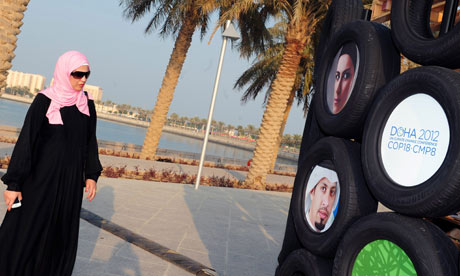
    Almost 200 governments are gathering in Doha in an attempt to reach an agreement on climate change. Photograph: EPA

    The US is claiming credit for “enormous” efforts on climate change – delivered in part by the carbon reductions from its investments in the controversial practice of “fracking” for shale gas.

    The claim came as nearly 200 governments gathered in Doha, Qatar, for two weeks of talks aimed at forging an agreement on the climate. Governments have until 2015 to draw up a binding treaty, the first since the 1997 Kyoto protocol, to cut greenhouse gas emissions and avoid dangerous global warming.

    Jonathan Pershing, a senior negotiator for the US, said: “Those who don’t know what the US is doing may not be informed of the scale and extent of the effort, but it’s enormous.”

    The United Nations’ top climate official, Christiana Figueres, called on countries to step up their efforts to reach an agreement. The Kyoto protocol took five years to draft, so the new deadline is tight, and scientific warnings have grown more stark in recent years.

    In the past few weeks alone, authorities including the World Bank and the International Energy Agency have warned that the world is heading for unprecedented warning – of between 4C and 6C – if current trends are not reversed.

    Levels of warming on that scale would result in droughts, floods, heatwaves and fiercer storms, as well as declining agricultural productivity, plant and animal extinctions, and widespread human migration, according to scientists.

    Figueres said it was still possible for the world to cut emissions in time to avoid such a fate, but that it would take urgent action. She said: “Expert analysis consistently says that we do have the possibility to keep on track and that to act now is safer and much less costly than to delay.

    “In the last three years, policy and action towards a sustainable, clean energy future has been growing faster than ever. But the door is closing fast because the pace and scale of action is simply not yet enough. So Doha must deliver its part in the longer-term solution.”

    The host of the conference, Abdullah bin Hamad al-Attiyah of Qatar‘s Administrative Control and Transparency Authority, said: “Climate change is a common challenge for humanity. We must work in earnest for a better future for present and for future generations. We have a precious opportunity over the coming days, and we must make full use of it.”

    But Qatar has drawn criticism because it has the highest emissions per capita in the world, owing to its oil and gas wealth, and high use of energy for air conditioning, desalination and other technologies. Attiyah responded: “We should not focus on the amount per capita but on the total per country.”

    The US has often been painted as the villain in the annual United Nations climate talks, since it signed the Kyoto protocol in 1997 but then failed to ratify it, and as under George Bush’s presidency climate sceptics were in the ascendancy. The Obama White House has taken a different view, but developing countries complain that the US has not taken on sufficient responsibility for cutting emissions and aiding the most vulnerable nations.

    Pershing defended the US’s record, saying that more effort was on its way. He said: “[Our efforts so far] doesn’t mean enough is being done. It’s clear the global community, and that includes us, has to do more if we are going to succeed at avoiding the damages projected in a warming world.”

    Greenhouse gas emissions from the US have fallen sharply in recent years, owing to the replacement of coal-fired power generation by gas in the US, following its widespread adoption of shale gas.

    By contrast, a new analysis by HSBC has found that China’s greenhouse gas emissions are unlikely to start falling before 2030, which could put the 2 degree target out of reach. China’s increasing role in emissions, compared with the decrease in the US, could redraw the battle lines of the talks.