Within two decades, 60 percent of the world’s population will live in cities, and coping with the resulting urban drinking water and sanitation issues will be one of the greatest challenges of this century. A new study presents a new conceptual framework that addresses characteristics of watersheds that are affected by urban land uses.
Within two decades, 60 percent of the world’s population will live in cities, and coping with the resulting urban drinking water and sanitation issues will be one of the greatest challenges of this century. A new study presents a new conceptual framework that addresses characteristics of watersheds that are affected by urban land uses.
An active region on the sun, numbered AR 1504, rotated into view over the left side of the sun on June 10, 2012. The region fired off two M-class flares and two coronal mass ejections (CMEs) on June 13 and June 14, 2012.
An active region on the sun, numbered AR 1504, rotated into view over the left side of the sun on June 10, 2012. The region fired off two M-class flares and two coronal mass ejections (CMEs) on June 13 and June 14, 2012.
The Green Games … part of the UN Rio+20 environmental summit. Photo: AFP
On what was supposed to be the final morning of the 2009 Copenhagen conference on climate change I came as close as I ever have in my adult life to hitting someone.
The leaders of the world remained locked in a room, my deadline was approaching, there was a large blank space on the front page of the paper and it was almost impossible to figure out what was going on. In the distance I spied someone who would be able to tell me.
But as I tried to fight through the huge crowd a man wearing a woolly jumper and bearing pamphlets barred my way to insist I attend some kind of irrelevant greenie side event. And with my source disappearing into the melee, he wouldn’t let me past.
Advertisement: Story continues below
In the end I managed to get around him without resorting to violence, and my source revealed that the Chinese Premier, Wen Jiabao, had not showed up for the talks even though he was already in the building, which told me all I really needed to know.
But after Copenhagen I was not the only one wondering about the value of such environmental mega conferences.
The first one I attended was the original Rio de Janiero ”earth summit” 20 years ago, which at the time seemed to achieve only a watered-down set of outcomes.
But now that meeting – held in the optimistic glow after the fall of the Iron Curtain – is judged to have been a reasonable success. It did at least reach agreement on three legally binding global treaties – on climate change, biodiversity and desertification – and on an international ”agenda” for sustainable development.
Global environmental problems have become worse. In the latest edition of Nature, a group of leading scientists argue that by the end of the century we may be approaching a global ecological tipping point marked by extinctions and rapid changes in ecosystems.
But at least in 1992 the leaders of the world were able to agree on what they aspired to do, even if they subsequently failed to achieve it.
When even more world leaders – about 120 at last count, the Prime Minister, Julia Gillard, among them – return to Rio next week – it is in an age of global economic crisis and weariness with environmental talkfests. The highest hopes are that the leaders will agree to negotiate some new non-binding agreements in coming years. And even those underwhelming aspirations may be dashed.
Australia, for example, is keen for countries to finally agree on the start of a new negotiation on rules for the use of deep oceans outside countries’ 200 kilometre territorial zones. But a line-up of nations keen to protect their fishing and whaling (Canada, the United States, Japan, Russia and Iceland) are not too keen on that plan.
The meeting will seek to agree to start talks on a set of ”sustainable development goals” – targets for rich and poor countries alike to take effect in 2015 when the ”millennium goals” reach their expiry date.
Sustainable development goals sound pretty waffly, but the millennium goals were at least useful in holding governments to account for things like promised levels of spending on overseas aid, and sustainable development goals could serve a similar purpose.
But even an agreement to try to reach an agreement on such goals could founder on the perennial north south divide.
According to The Hindu newspaper the Indian government’s strategy for the Rio summit is to ”prevent any attempt to pin down specific goals or targets regarding sustainable development”. India will even oppose a decision on what ”themes” any goals might cover.
At the first Rio meeting, the gap between developed and developing countries was recognised in the climate change convention, which effectively promised that rich countries would act first, and when poor countries did do something, the rich countries would pay. It’s a principle that gridlocked climate talks for decades, and to which the developing world remains wedded, despite the huge geopolitical shifts over the past two decades. And at this meeting the developing countries will also have the weight of numbers. George Bush snr attended last time, but President Obama is sending the Secretary of State, Hillary Clinton. Deeply mired in Europe’s financial woes, neither the British Prime Minister, David Cameron, nor the German Chancellor, Angela Merkel, is going either. But the leaders of India, Russia, China and of course host nation Brazil will be there.
Multilateral decision-making is foundering in a time of geo-political change, as the US retreats from its leadership role and China refuses to take any lead.
In such a situation grand, legally binding deals become impossible. Messy ”bottom up” pacts on goals or targets or unilateral pledges that taken together might add up to something are the best negotiators can hope for, and even they are difficult to achieve.
Which might be why another objective of the Rio summit is to reform the bodies through which the United Nations makes decisions on the environment, institutions which are weak, in part because they require 100 per cent consensus to agree on anything.
Rio+20 is shaping as the same crazy mix as the first meeting, UN delegates and national negotiators rubbing shoulders with Amazonian Indians bearing blowpipes, environmentalists staging television stunts with polar bears and melting ice sculptures, endless motorcades bearing national leaders, the Rainbow Warrior in the harbour, and a blanket presence of the Brazilian army on the streets.
The UN Secretary-General, Ban Ki-moon, is talking down expectations while still trying to sound positive.
”Even now there is more disagreement than agreement on the details of the so-called ‘outcome document’ that will emerge,” he concedes. ”Yet that will not be the defining measure. Far more important is what the Rio conference has already accomplished. And that is to build a global movement for change. Rio+20 is a milestone on a long road.”
Which is a nice way of saying the final document the conference is supposed to produce has a name, ”The Future We Want”, but no agreed content. Surely the future we want is not one of endless low-achieving environmental meetings.
But the alternative is for world leaders to do nothing as sustainable development becomes a more elusive goal, and that could be even worse.
A question has been troubling astronomers: Why won’t the supernova explode? While real stars blow up, computer models of massive dying stars do not result in much of a bang. NASA has launched a new observatory named “NuSTAR” to seek out the missing physics of stellar explosions.
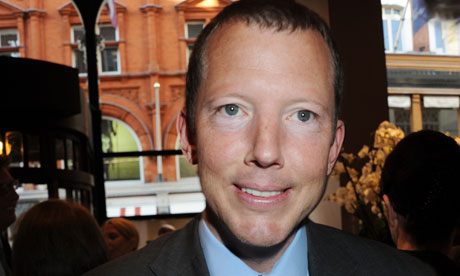
Financier Nat Rothschild has stepped down as co-chair of Bumi after calling for it to reform its balance sheet. Photograph: Richard Young /Rex Features
Indonesian mining company Bumi, founded by financier Nat Rothschild, was on Thursday accused of human rights abuses at a heated annual general meeting.
Campaigning shareholders raised concerns over the alleged dumping of coal and chemicals into coral reefs, the mistreatment of workers and the company’s lack of transparency.
But they were left disappointed after the board, which had co-chairman and biggest shareholder Indra Bakrie missing from the meeting, accused the representatives of “grandstanding” and “ranting”.
After the meeting the campaigners, who go to around 20 mining AGMs a year, said Bumi’s was one of the most poorly organised and least transparent they have attended. It lasted just 42 minutes.
Rothschild recently called on the company’s chief executive, Ari Hudaya, for a “radical clean up” of the firm’s complex ownership structure which involves some of the biggest businessmen in Indonesia.
During the AGM in London – the first time the FTSE-listed firm has held the shareholder meeting in the UK – Roger Moody from Nostromo Research was accused of “ranting” by the company’s senior non-executive, Sir Julian Horn-Smith.
Moody raised concerns over the company’s transparency but, in heated exchanges, he was told by Horn-Smith: “I will not be lectured to about human rights but will hear specific substantive points that you feel should be investigated.
“These are important questions, by the way, so don’t misunderstand me because I’m not being dismissive, but let’s do it in a way where we can engage and do something about it and address the points, rather than grandstanding.”
He added: “I think you have come here with a policy of not wishing to engage with us. If you wish to engage with me I am happy to engage with you and any other shareholder who has a matter of such seriousness. We are not here to have a debate about human rights that will go on for several hours.”
Chairman Samin Tan added: “The transparency is exactly why we are here. Things cannot be changed overnight.”
Andrew Hickman, from Down to Earth, raised concerns over recent reports of coal and chemicals being dumped in a coral reef in Indonesia by the company.
He said: “This happened at various times and we’d like to know what is the credibility of the company if that is allowed to happen?”
Graciela Romero from War on Want added: “I understand from March 2011 there were workers who were mistreated after striking in order to have collective bargaining.”
But the board said it was the first they had heard of the allegations and therefore could not respond immediately and would be happy to meet to discuss them in private.
After the meeting Hickman said: “I am quite shocked. The fact Bakrie doesn’t take the time to come here is disgraceful. You’d have thought he would have faced up to the questions.”
Richard Solley, from the London Mining Network,said: “The AGM was unique for its level of discourtesy and obfuscation. I’ve been to many mining AGMs and the thought that they would not have an answer to our questions is ridiculous. Bumi’s refusal is unacceptable.
To suggest they don’t know about the issues we raised, despite press reports and mentions in parliament, is ridiculous.”
The company, which floated in 2010, had started trading at £10 a share and raised $1.1bn. On Thursday it closed at £3.15.
It was set up through a cash shell launched by Rothschild to fund acquisitions in the mining industry, but has been criticised for its complicated structure which involved the Bakrie family.
It led to Rothschild writing to the chief executive last year calling for reforms of its balance sheet.
But rather than take the advice, the board instead attempted to oust Rothschild as co-chairman. In the end the financier stepped down as co-chair, but maintains a position on the board.
At Thursday’s meeting he sat at the far end of the long table laid out for the board at the Insititute of Directors and afterwards declined to discuss his previous misgivings. He said: “It would be inappropriate for me to comment.”
A spokesman for company said: “We listened to the points raised and will be happy to engage.” He added that Bakrie was unable to attend the proceedings because of other business commitments in the Far East.
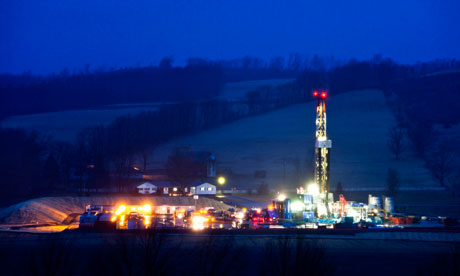
A hydraulic fracturing drill rig in Troy, Pennsylvania. Scientists don’t yet know why it appears storing fracking by-product underground carries a higher seismic activity risk than fracking itself. Photograph: Jim Lo Scalzo/EPA
Capturing carbon dioxide and storing it underground could give rise to small earthquakes, according to a new report from the US National Research Council.
But the authors said there was too little research to be firm on the findings, and called for more work to be done.
The report examined sites where hydraulic fracturing – the practice of blasting dense rocks apart with water, sand and chemicals in order to release tiny bubbles of natural gas trapped within them – had been used. The authors found that fracking in itself carries only a low risk of causing earthquakes of sufficient magnitude to be felt by people.
The finding comes despite a report into the only major shale gas fracking site in the UK, near Blackpool, that found two earth tremors – far too small to do any damage but enough to be felt in nearby villages – were directly linked to the fracking activities.
However, the US report did find evidence that where wastewater was injected underground as a by-product of fracking – a procedure not used in the UK – earthquakes could occur. It is not clear why injecting wastewater underground carries a higher risk of seismic activity than fracking in itself. But the finding has clear implications for carbon capture and storage (CCS) technology, because that process would also require the injection of large volumes of gas or liquid – in the case of CCS, carbon dioxide under high pressure.
The authors called for more research to show whether these problems occurred with carbon capture and storage and whether they could be avoided.
The report also noted that despite the potential for earthquakes, no significant damage had been caused by fracking in the US. However, some tremors have been felt – similar to those in the Blackpool region – and have given concern to local residents.
The scientists said: “Technologies designed to maintain a balance between the amount of fluid being injected and withdrawn, such as most geothermal and conventional oil and gas development, appear to produce fewer induced seismic events than technologies that do not maintain fluid balance.”
They recommended closer oversight of such activities.


 Email
Email